
This week, my attention moved toward a tool I had postponed exploring for some time: Obsidian. It belongs to a familiar category of productivity environments built around markdown files, plugins, graph views, and increasingly sophisticated methods for organizing information. My first reaction was practical rather than reflective. Rather than exploring the environment directly, I initially treated it as another candidate for delegation: another system that AI could populate, organize, and structure faster than I would manually.
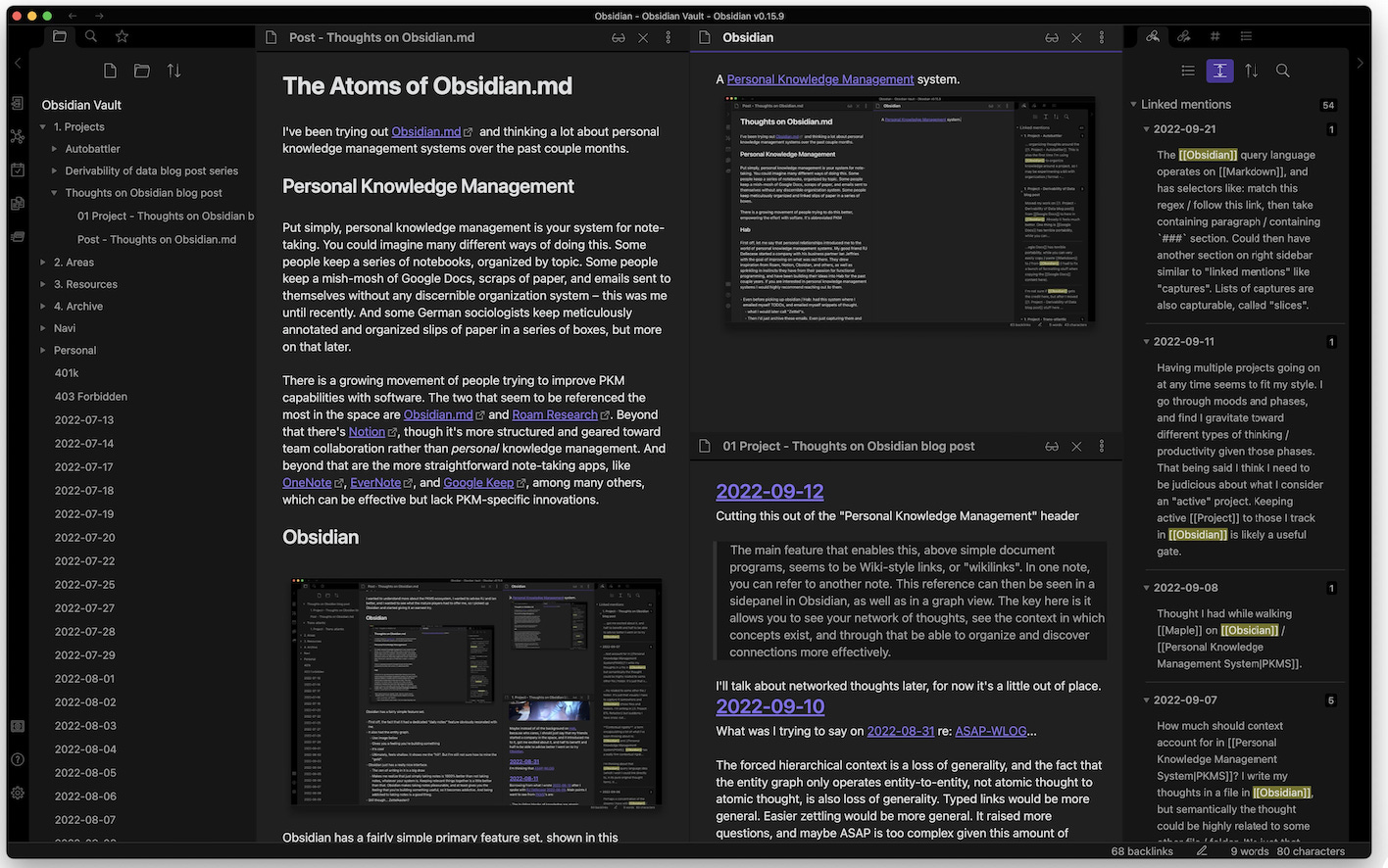
After spending time configuring workflows and observing how information actually moved across the vault, something else became visible. The interesting part had not appeared yet.
In technical education and research, we often assume that accumulating information naturally produces understanding, yet these two processes do not necessarily progress together. What gradually emerged was that structure reduces friction between pieces of work that would otherwise remain disconnected—or connected in ways that remain hidden until enough continuity exists to expose them.
This environment reflected a pattern I knew well and increasingly recognized elsewhere. Obsidian becomes particularly interesting when operating inside articulated workflows supported by AI systems such as Claude or Codex, because the temptation is immediate: establish architecture first, introduce governance early, automate categorization, and allow the system to generate order before enough work exists to justify it.
I followed that instinct. I created structure, installed plugins for text, tables, and graph exploration, and introduced layers of organization intended to support future work. The result became visually convincing almost immediately: a vault rich with links, categories, and apparent completeness.
Yet the more complete it appeared, the more difficult it became to understand.
Connections multiplied before they represented meaningful relationships. Graph density increased without necessarily improving interpretation. Instead of revealing the shape of reasoning, the structure started generating its own noise.
Reducing the system and rebuilding with fewer assumptions made a different mechanism visible. The difficult part of system design is rarely deciding how to store information; it is deciding what deserves to remain connected. By reducing structure and allowing projects to emerge gradually, notes stayed attached to active work rather than anticipated work.
Inside a graph-oriented environment, documentation also started behaving differently. Notes stopped representing outputs and became records of transitions between stages of work.
A project proposal connected to reviewer comments. A methodological reflection linked to a modelling decision. An experiment attached to a future teaching idea.
Retrieval gradually became less about locating where something had been stored and more about reconstructing why something existed in the first place.
This week discussions also focused on the new Ebola strain outbreak, the Bundibugyo (BDBV) strain, visible case counts and reported deaths. Yet outbreak monitoring rarely depends on numbers alone. Visible counts are usually the surface layer of a larger coordination process where definitions evolve, surveillance expands unevenly, reporting changes across regions, and interpretation begins before the system itself stabilizes.
When people talk about the “velocity” of an outbreak, they usually do not mean physical speed. They mean the rate at which transmission grows over time. There is no single formula. Epidemiologists usually combine several signals.
The simplest starting point is growth in cases:
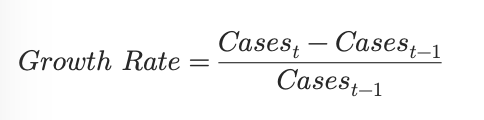
Example:
Day 1 → 100 cases
Day 7 → 150 cases
Growth rate = (150 − 100) / 100 = 50%
But this alone is often misleading because more testing can also increase counts. A more informative measure is the effective reproduction number (Rt):
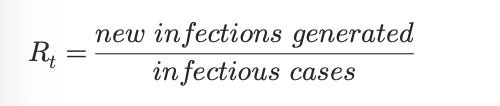
Interpretation:
Rt > 1 → outbreak expanding
Rt = 1 → stable transmission
Rt < 1 → outbreak shrinking
If Rt = 2, each infected person infects two others on average.
This week left me with a position that still feels provisional but increasingly difficult to ignore.
External systems—knowledge vaults, analytical workflows, outbreak dashboards, AI-assisted environments—seem to be becoming less about storing information and more about preserving reasoning across transitions. Their value rarely emerges from accumulation alone. It appears when relationships remain understandable even while surrounding conditions continue changing.
Under those conditions, structure becomes less about imposing order and more about maintaining enough continuity for future decisions to inherit context rather than start again.
In technical environments, movement itself often creates the system. The most useful environments may not be the ones that remember everything, but the ones that help us understand what should remain connected as understanding continues to evolve.
Returning to my notes at the end of the week, what remained with me was not the Obsidian graph view itself or the mechanics of note-taking. It was the realization that useful systems seem to emerge when connections remain attached to active thinking rather than anticipated completeness, leaving enough continuity for future decisions to inherit more than stored information.
Until next week.
Thank you for reading. This series continues as we learn to build structures that allow reasoning to persist while understanding continues to evolve.
⸻
Reflective Note: As I continue moving between infrastructure and insight, I increasingly see that the real task is not simply completing projects but observing whether the structures we build today remain capable of supporting decisions we have not yet encountered.
Comments
Nothing yet. Say the first thing.
Sign in to join the conversation.