
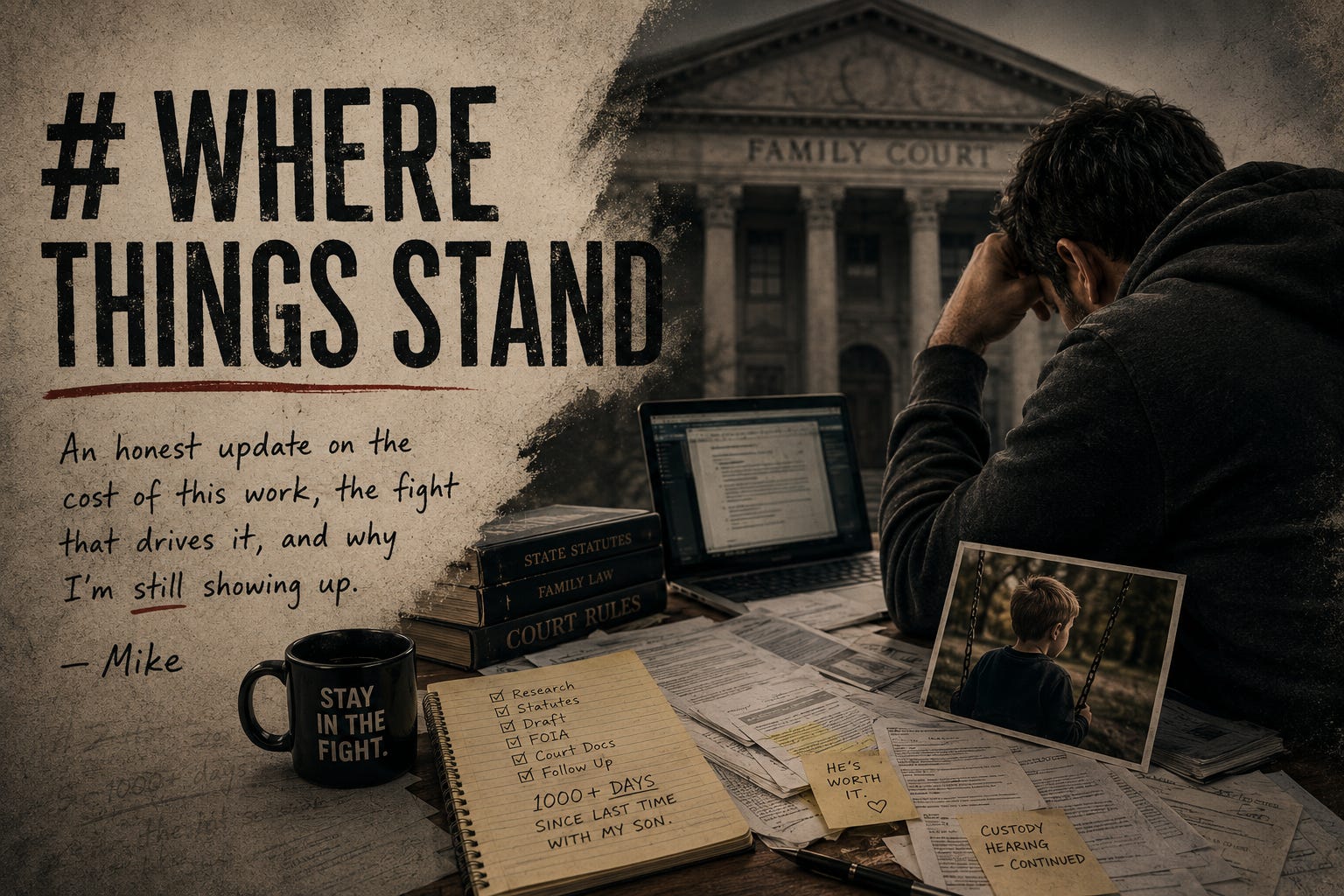
I’ve been losing paid subscribers lately, and I want to tell you why, instead of pretending it isn’t happening.
Some of you probably followed me over from Medium, before they suspended me for using individual names from real cases — or because an attorney complained; I was never entirely sure which. Writing about real cases is risky. Not every platform is built to allow it, and Medium wasn’t, not for what I was doing. Getting cut off there also meant losing the earnings tied to that account overnight, with no warning that held up to what actually happened. Substack has been different — a better platform for actually interacting with people, one that opened up my network in a way Medium never did, and without that same fear hanging over every piece I published.
Some of it is probably just the normal churn of a small publication. But if I’m honest with myself, some of it is me. I haven’t been able to put in the time I want to put into this — not because I’ve stopped caring; I care about this work more than almost anything else I do, but because I’m splitting myself across things that don’t leave much room for each other.
I’m in the middle of fighting for my son in a family court system I now understand from the inside, in ways I never wanted to. I’m trying to hold down or find work that pays enough to keep going. I’m trying, some days successfully and some days not, to take care of myself in the middle of it. And then there’s the writing — the research, the statute-checking, the drafts that sit half-finished because I ran out of hours in a day that already ran out of hours twice before.
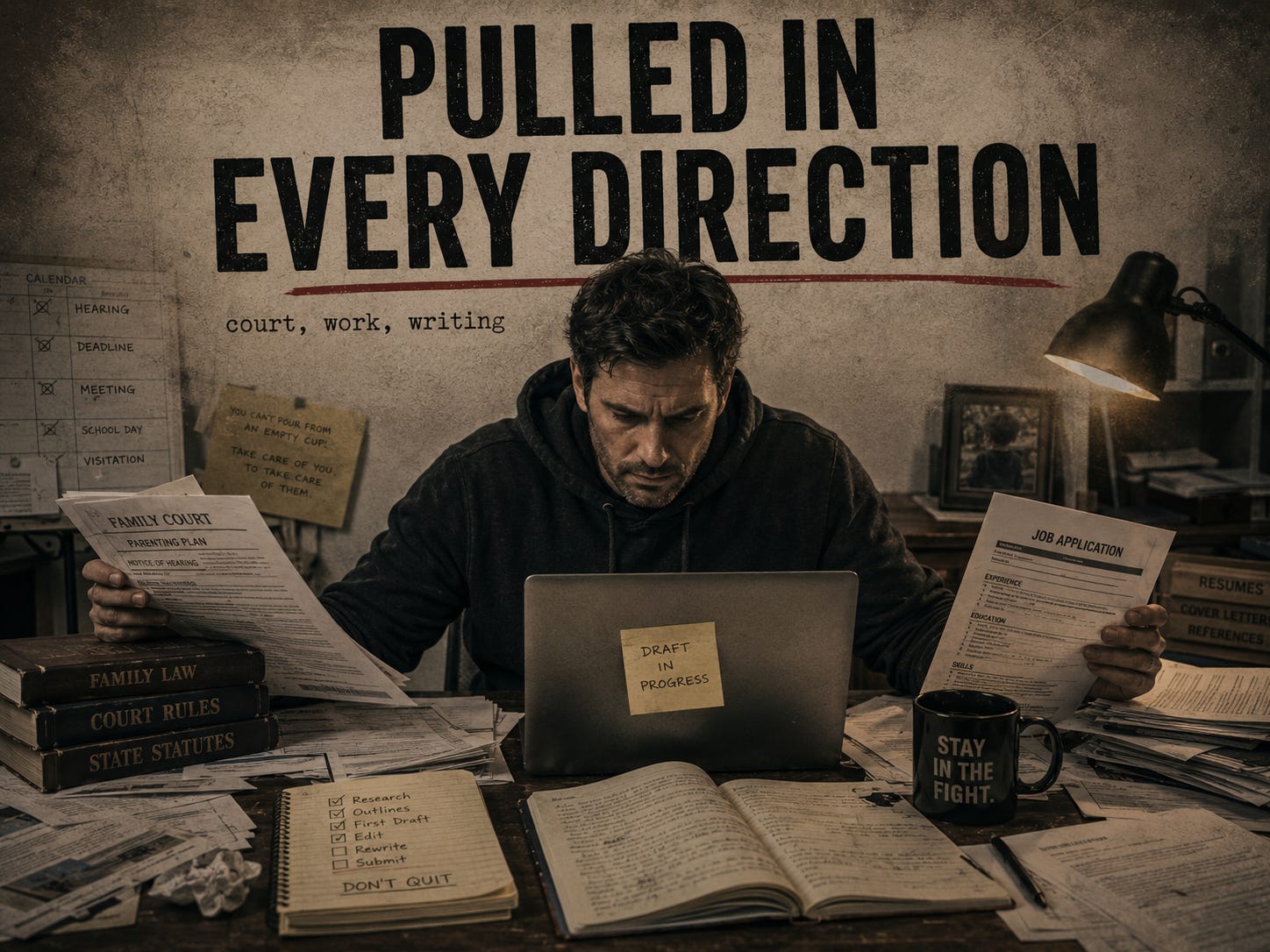
When a paid subscriber leaves, I feel it as a verdict: not enough value, not enough time invested. That’s probably not fair to myself, but it’s how it lands. I wanted you to know that, because I think readers of a publication like this one — people who’ve been through their own versions of family court, custody fights, the specific exhaustion of trying to be a parent while a system decides whether you’re allowed to be one — deserve honesty about what’s actually happening on this end of it, not just polished output that pretends to appear out of nowhere.
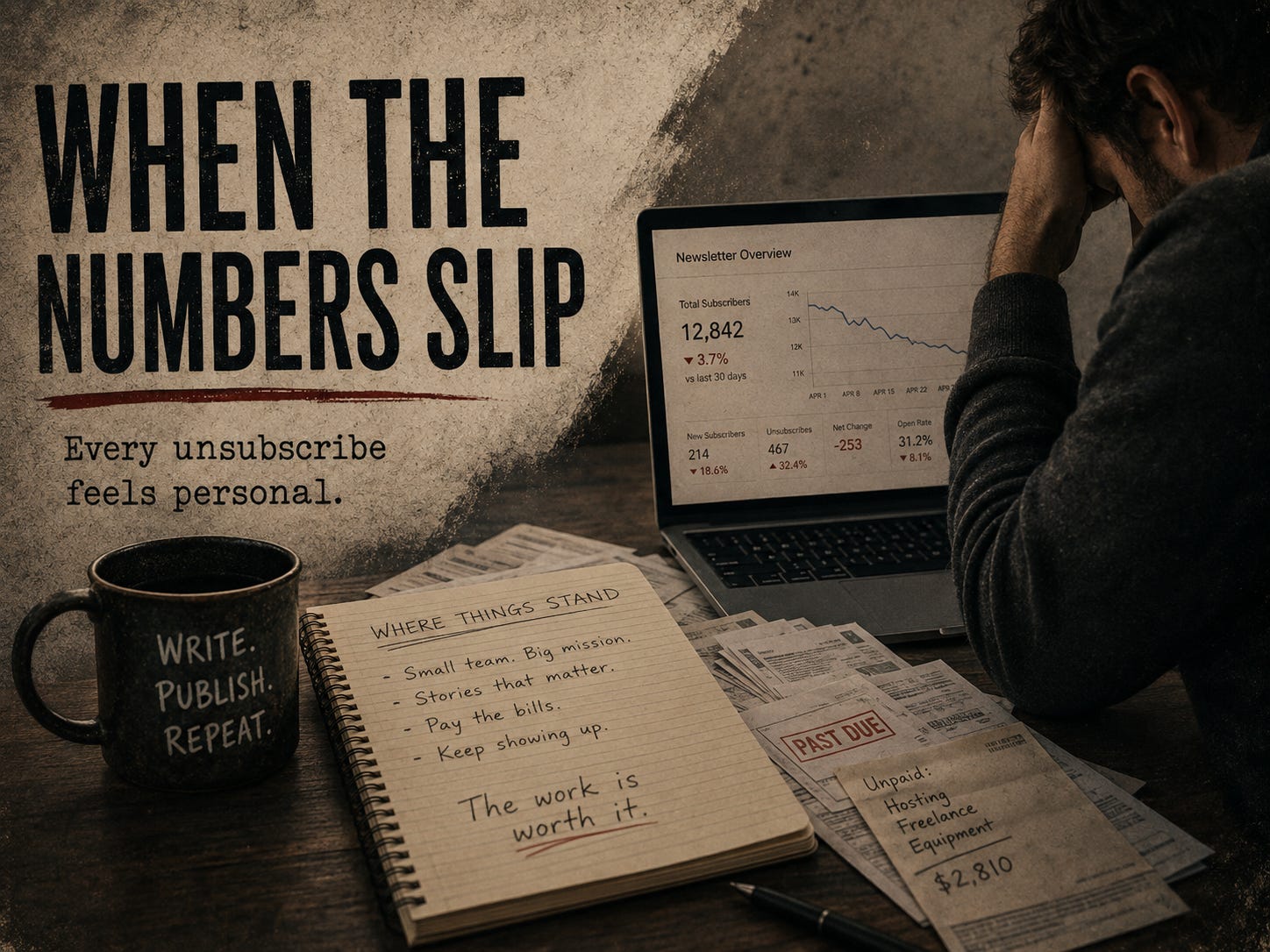
Most months, I don’t make ends meet. That’s not a figure of speech. It means bills that don’t get paid on time, meals that get cheaper and more repetitive, nights I stay in because going out costs money I don’t have. I’m not telling you this for sympathy — I’m telling you because it’s the actual, unglamorous shape of what “struggling to support myself while doing this work” looks like, and I’d rather you know that than imagine some more dignified version of it.
I’ve tried to widen the net — writing about sports, politics, business, the economy, technology, disabilities, health, whatever I could find a market for — hoping something outside this specific beat would bring in steadier income. It hasn’t made things easier. Mostly it’s spread me thinner without moving the needle: similar traction, more hours. The politics writing has at least paid off in a different way — it keeps me closer to the legislation that actually touches family courts, which feeds back into the real work. But politics is a crowded field, and a lot of people are already writing it, often louder than I can. I don’t have a good answer for why someone would pay me for that instead of anyone else.
I know what tends to sell, in theory — get-rich-quick content, wealth-building, the whole genre of “here’s how you get ahead.” I have no business writing any of that, and readers would be right not to trust me if I tried. So that’s not the way out either.
I also built out a standalone website, hoping it would grow into its own thing beyond Substack. It hasn’t driven the traffic I expected. Most of the actual community — the people reading, replying, sticking around — is still here, on Substack. So even the infrastructure I’ve built hasn’t spread the load the way I hoped.
None of this is free to produce, either. The website has its own costs. So do the tools I use for research. So do the court documents and FOIA requests I file to make sure what I’m writing is sourced from the actual record and not someone’s secondhand account of it. Doing this the right way costs money before it ever earns any.
And there’s a particular difficulty in asking this community, specifically, for money. Most of you found this newsletter because something happened to you or someone you love in family court. You are, disproportionately, people who’ve already been drained financially by the system I write about — legal fees, lost custody time, lost jobs, lost stability. Asking people who’ve been through that to pay for the writing about it is not the same as asking a general audience to support a general publication. I know that. I feel the weight of it every time I even consider a paid tier.
Here’s the thing I keep going back and forth on. Everything on Father & Co. is free. I made it that way on purpose — I hate the idea of paywalling something that might actually help someone: a citation they need, a framework for understanding what’s happening to them, the simple relief of reading something that doesn’t take a side and doesn’t treat their situation like a talking point. Some of the people who need this work most are in exactly the position I’m in: stretched thin, short on money, trying to get through a system that costs everything and explains nothing. Putting a wall in front of that feels like it defeats the purpose.
But I also can’t keep doing this work at the level I want to without some way to sustain it. So I’m torn — not performing indecision, actually torn — between opening up paid tiers for some of this and keeping the door open for the people who can’t pay. I don’t have a clean answer yet. If you have thoughts on how to do that without shutting out the people this is for, I’d genuinely like to hear them.
Being open here isn’t free, either. It’s been almost 1,000 days since I’ve had my court-ordered time with my son. What I write gets read by people on the other side of my custody case, and it gets used the way you’d expect. That’s part of why some of this has been hard to say out loud, and part of why some pieces have taken longer than they should have, or not gotten written at all.
I’ve thought about quitting. More than once. But I don’t think quitting the writing would just be quitting a newsletter. I think it would be the beginning of giving up on the fight for my son — because this work is tied to that fight in ways that aren’t always visible from the outside. Researching the statutes, tracking the legislation, understanding exactly how this system works and fails, isn’t separate from trying to get back to my son. It’s part of how I stay in the fight instead of drowning in it. If I stop writing, I’m not sure what’s left holding that fight up on the days I don’t have much left in me.
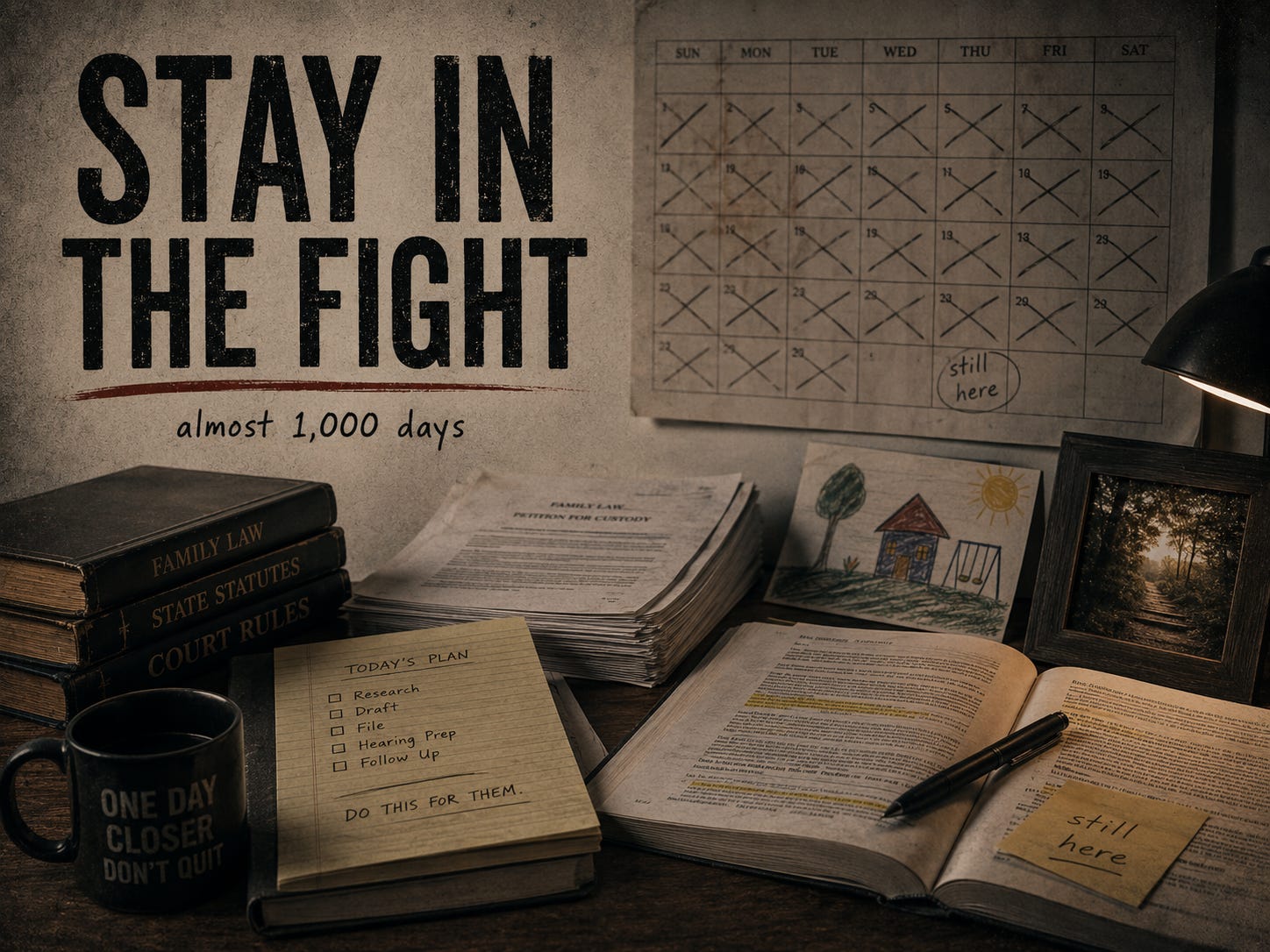
And some days, I don’t have much left in me. I’m not always mentally strong enough to do this work at the level I want to do it. That’s not an excuse I’m handing you for the pieces that came out thin, or late, or spread out, or not at all — it’s just the truth of it. I don’t have it together as often as the writing might make it seem.
So: if you can support this, it helps, and I won’t pretend otherwise. If you can’t, or if this hasn’t been giving you what you hoped it would, I understand that too — genuinely, not as a line. Either way, I’m still here, still doing the work, still trying to do right by it. I just wanted you to know what that’s actually cost, and why some weeks it’s shown.
— Mike Phillips (editor@fatherand.co)

Father & Co. offers non-legal document review and organization for people representing themselves. This includes clarity, structure, neutral tone, and timeline organization — not legal advice or representation.
Submissions are reviewed with care and discretion. We respect privacy and handle sensitive information responsibly.
Help support my research and writing on the family court system and other related topics.
Check out Fatherand.co for other ways you can donate or support the cause. Every little bit helps.
Comments
Nothing yet. Say the first thing.
Sign in to join the conversation.