
Growing up, my mother was strict about my friendships. Not in a controlling way, but deliberate. She would ask questions. Who are they? What do they care about? She had one line she returned to, the way mothers return to the lines that actually work: you are the company you keep. I rolled my eyes at it the way every teenager does, and then spent the next two decades watching it be true.
I spoke tech in Bangalore. Not because I studied it, but because I was surrounded by builders, by people who thought in systems and shipped things and measured everything. That energy absorbed into the way I talked, the problems I found interesting, the ambition I thought was normal. I moved to Goa and the conversation shifted entirely. Now I speak art, creativity and fitness, slow mornings and ocean light. Same person, different orbit, different output.
The people you spend time with don’t just influence you. They calibrate you. Your sense of what is possible, what is interesting, what is worth making, it all gets shaped by proximity. Jim Rohn put a number on it: you are the average of your five closest people. That has always felt reductive to me, but the underlying observation is correct. You become legible through your associations.
And what is true for people is true for brands. The difference is that almost no brand is thinking about it this way.
Most brands today believe their company is the creators they work with. And that is not a wrong belief, it is just an incomplete one. Creator partnerships are good for awareness. They get your product in front of rooms you have not built yet, on the backs of trust you have not earned yet. The influencer marketing industry hit $24 billion in 2024 for exactly that reason. Borrowed attention, at scale.
But attention is not the same as belonging. And belonging is not something a creator can transfer to you.
When a brand seeds a creator, it rents a moment. When a brand builds a genuine partnership, a friendship with another brand, it earns a position. The first is an ad. The second is an association. Ads expire. Associations compound.
The numbers make this plain. Engagement rates on Instagram have dropped every year since 2021, falling from 2.18% to 1.59% in 2024. Audiences have become fluent in the grammar of the paid post. They can clock the gifted package, read the caption written in a brand brief voice, and scroll past it in the time it takes to blink. The transactional model has become visible to the people it was designed to reach, and that visibility has ended its effectiveness.
Meanwhile, nearly half of brands (49%) that undertook a genuine collaborative drop reported a direct boost in revenue. Another 45% saw measurable increases in brand awareness. Brands with mature collaboration strategies are seeing annual partnership revenue grow at over 50% year-on-year. The Marketing Science Institute found that brand partnerships can boost visibility by up to 30%.
This is not a marketing tactic that works sometimes. It is a shift in how brand equity gets built. And most brands have not caught up.
Here is the leap I want to make, because I think it reframes everything: your collaborators are your character witnesses.
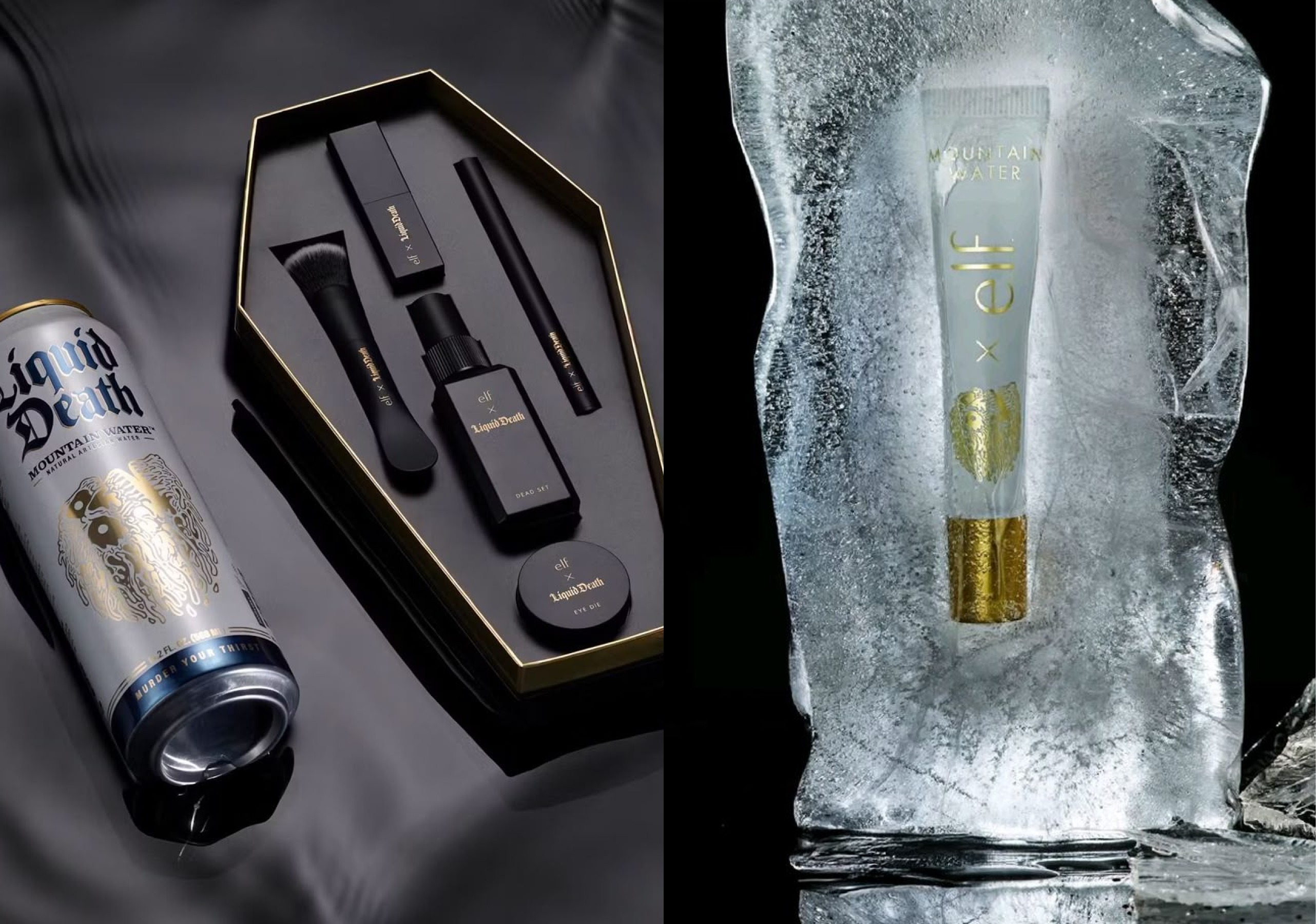
When e.l.f. Cosmetics, a Gen Z-loved accessible beauty brand, decided to co-create a makeup vault with Liquid Death, a canned water company built entirely on black metal imagery and irreverent humor, the beauty industry was confused. These two brands shared no obvious demographic, no product overlap, no logical business reason to be in the same room. The collection was called Corpse Paint and it came in a coffin.
It sold out in 45 minutes. 68% of purchasers were completely new to e.l.f.
Sixty-eight percent. That is not an audience that was reached through paid media alone. That is an audience that self-selected into a brand they had never bought because of what that brand’s association with Liquid Death communicated. It communicated: we are not precious about ourselves. We are not playing by the beauty industry’s rules. We are the kind of people who think this is funny and we are still serious about our product. The collab revealed that underlying identity. And the Liquid Death audience, already primed to trust brands that reject convention, walked straight in.
This is what the best brand collaborations do. They do not say “look at us.” They say “look at who we know.” And the audience draws its own conclusions.
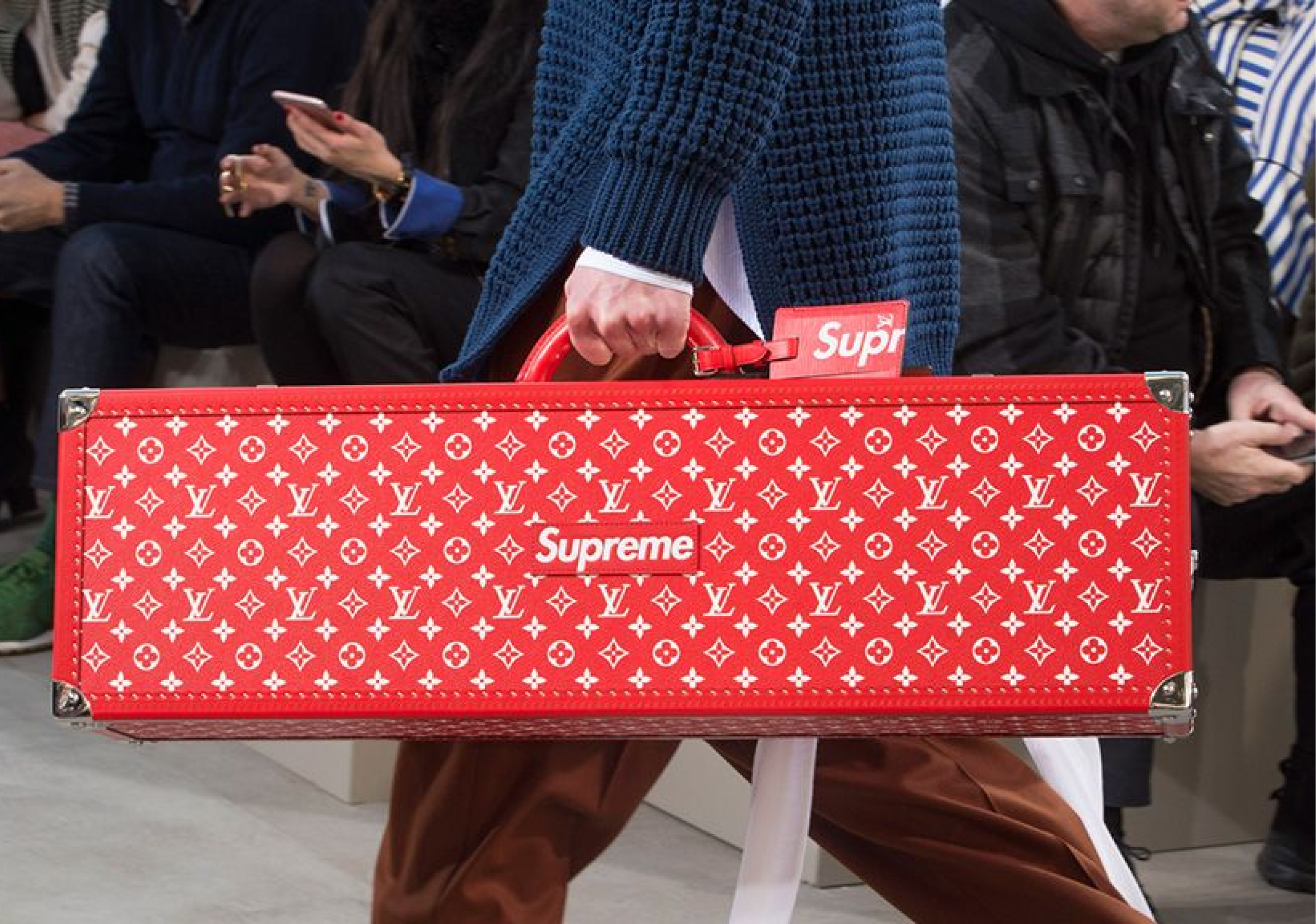
The Louis Vuitton x Supreme collection in 2017 worked on the same logic, scaled to a different magnitude. Over 30,000 people registered interest for a production run of under 5,000 units. Items initially priced between $600 and $6,000 now sell on resale markets at 300 to 500% of their original retail price. That is not just scarcity. That is two worldviews, one built on centuries of French savoir-faire and one built on New York skate culture, fusing into an artifact that people wanted to own permanently. The collaboration moved culture. The revenue followed culture.
The brand that collaborates well is not just building awareness. It is building an extended product universe. Every well-chosen partner opens a new category of objects that can live inside the brand world and give consumers a new way to inhabit it. A coffee brand that collaborates with a ceramics studio now has mugs. A fashion label that collaborates with a bookshop now has a reading list, perhaps an edition, perhaps a tote. A skincare brand that collaborates with an architect makes an object that lives on a bathroom shelf and communicates something no serum bottle alone ever could.
You cannot build that world alone. No new brand has the range. What you need are collaborators who extend the world in directions you cannot reach by yourself, who add rooms to the house you are building.
This is the idea that I think most brand strategy misses entirely. A brand is not just a product and a visual identity and a tone of voice. A brand is a world. A set of values, references, aesthetics, and ways of being that a person can inhabit. The strongest brands are the ones where the consumer does not just buy the product. They buy the way of life the product points toward.
And the vehicle for this is not just campaigns. It is merchandise. It is objects. It is the physical things that can live inside someone’s life and carry the brand’s associations into new contexts.
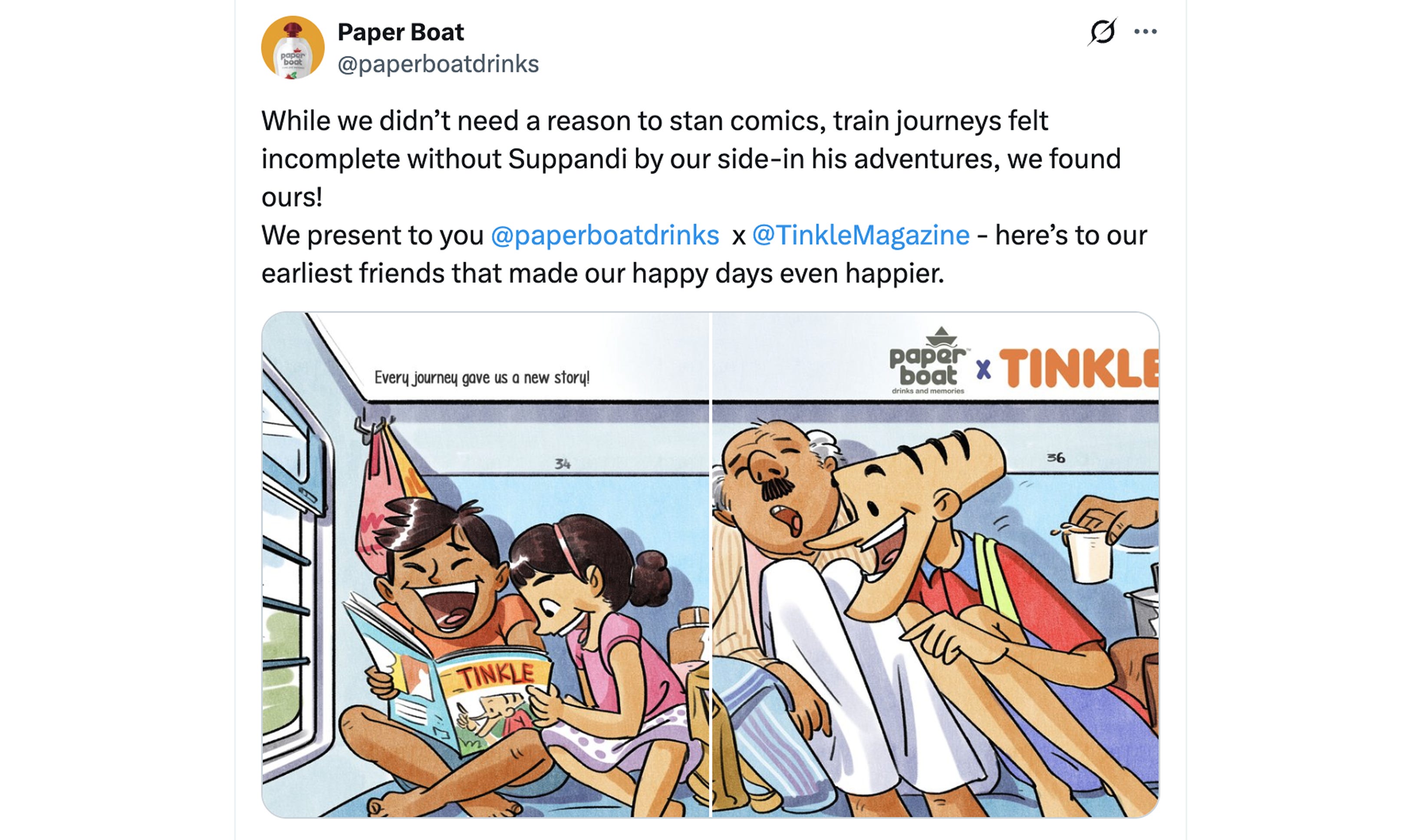
Paper Boat understood this instinctively. The brand is built entirely around one emotion — the specific ache of an Indian childhood, aam panna and jaljeera and the particular quality of summer afternoons in the 90s. That world has a feeling, a visual language, a set of cultural references that belong to it. When Paper Boat collaborated with Tinkle, it was two brands saying: we live in the same world. Tinkle’s illustrated characters appeared in Paper Boat’s seasonal content, Holi stories, comic strips, weaving the drink into the exact childhood memory both brands were built to evoke. Neither brand gained just audience. They reinforced for each other what their world actually was. That is what the right collaboration does. It expands your reach and deepens your world.
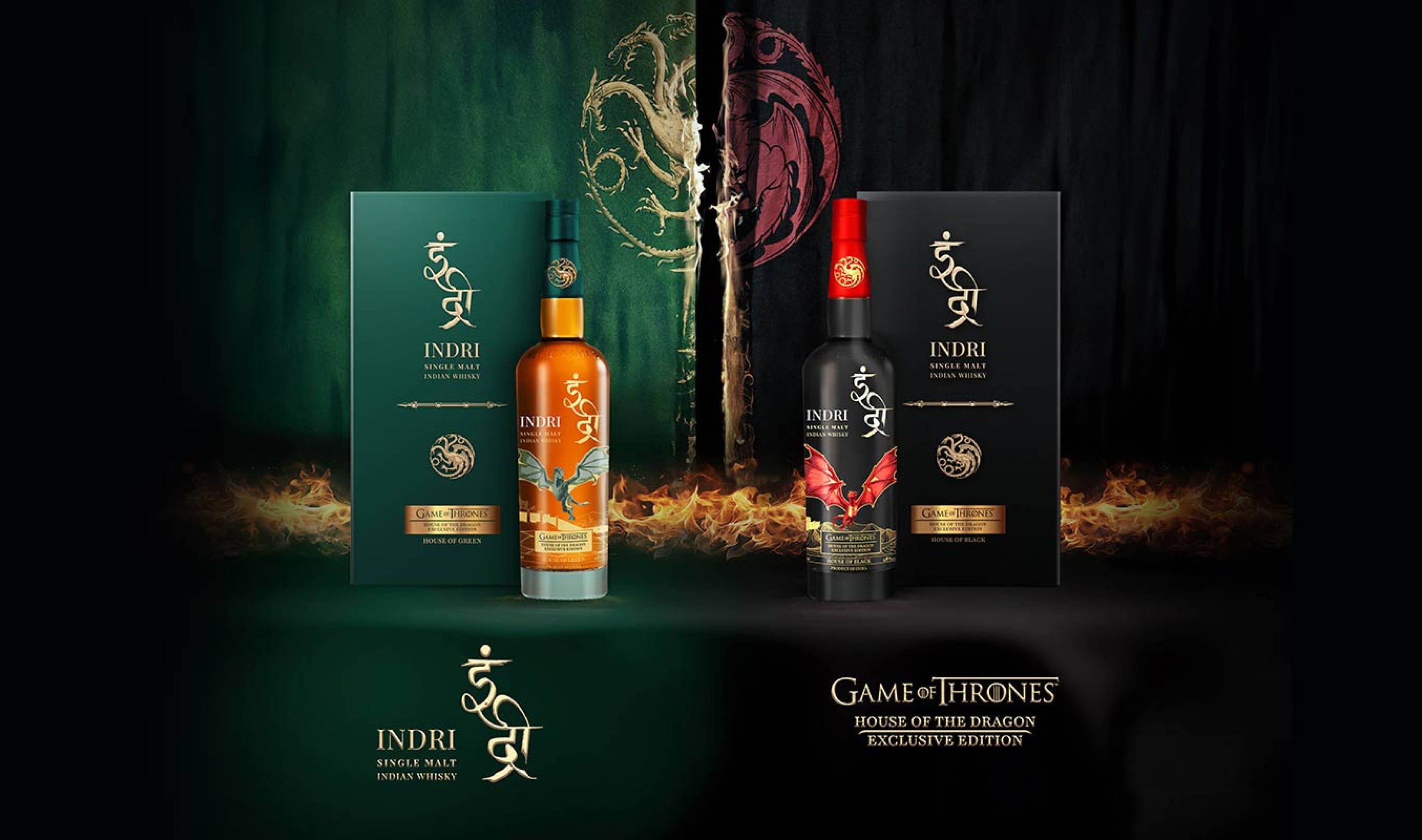
Indri took this further and made it physical. India's fastest-growing single malt whisky partnered with HBO for two limited-edition expressions tied to House of the Dragon — House of Black, peated, and House of Green, unpeated. The bottles became collectibles. Not because of scarcity alone, but because two worlds with the same DNA had fused into an object: legacy, craft, bold identity, the feeling that something was made by people who cared about the thing they were making. Indri moved off the bar shelf and onto the display shelf. That is the difference between a product and an artifact. The collaboration gave it the latter.
Which brings me to the question I keep asking: The Indian brand ecosystem is one of the most exciting in the world right now. So why are most of our brands still building alone?
India now has over 800 D2C brands. The market exceeded $80 billion in 2024. Indian D2C startups attracted over $5 billion in funding across 520 deals since 2021. The brands are here. The capital is here. The consumers are here and proven — the Indian consumer will pay to own a piece of a world they love.
But when you look for brand-to-brand creative collaborations — Indian brand meets Indian brand, different categories, shared values, unexpected pairing — there is almost nothing. What exists is mostly safe: a beauty brand partners with a platform, a fashion label signs a celebrity, a D2C startup runs a discount bundle with another D2C startup. These are distribution moves dressed up as collaborations. They expand reach. They do not build worlds.
The white space sitting right here, inside India, between 800 brands that are building in the same cultural moment, many of them speaking to the same consumer with adjacent values and complementary aesthetics — that space is almost entirely untouched.
This is also an opening for international brands trying to enter the Indian market — the right Indian brand partnership is a more credible entry point than any campaign. And for Indian brands with global ambitions, collaboration is not a side strategy. It is the most direct route.
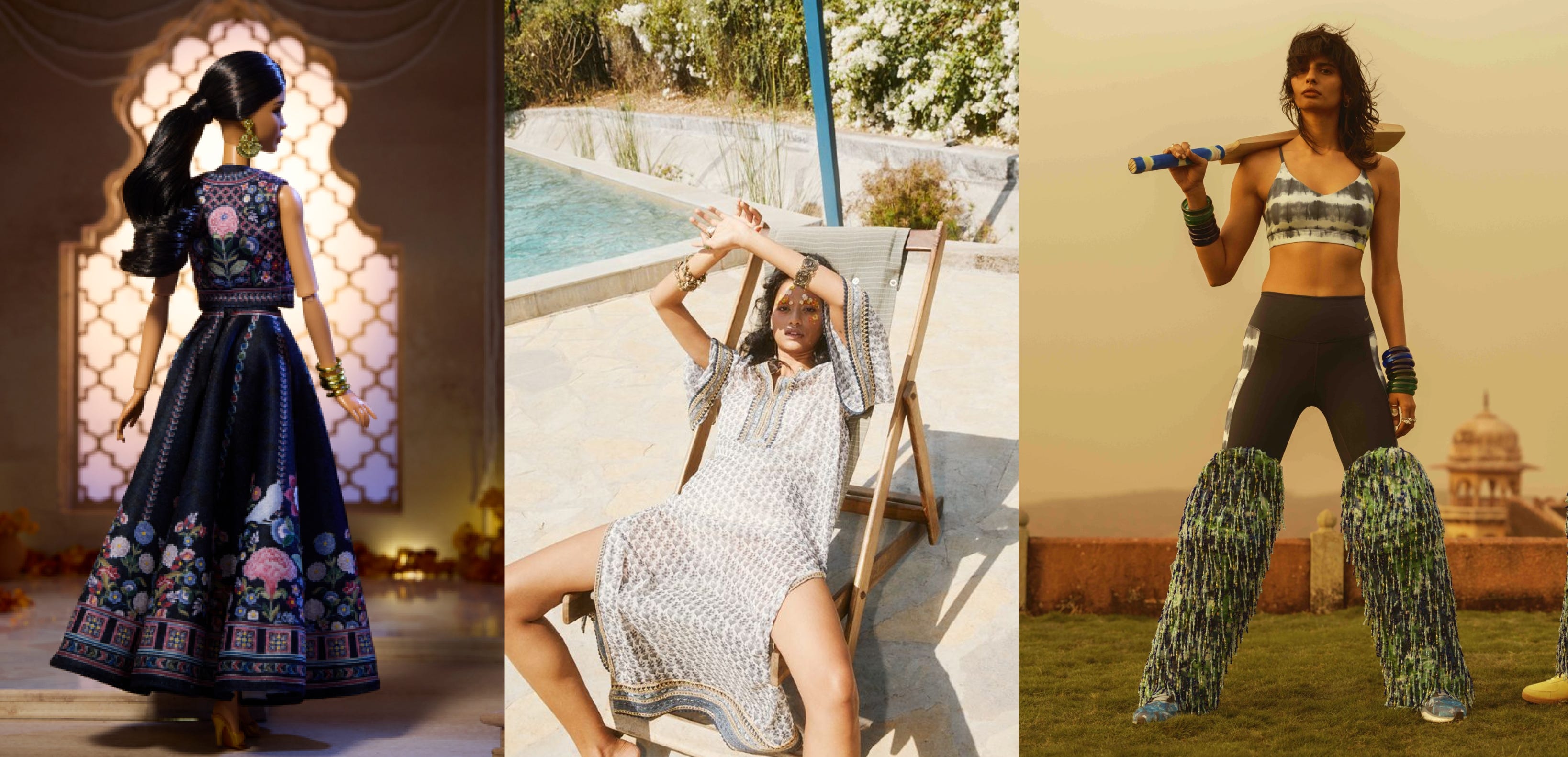
Mattel partnered with her to design a Diwali Barbie — the first time the brand had ever worked with an Indian designer — Indian craftsmanship landed in the hands of children across the world. Not through an export strategy. Through a collaboration. Both brands understood that the right partner does not just open a new market. It reframes how an entire country’s design language is perceived globally.
Sabyasachi x H&M in 2021 moved a different kind of culture entirely. The Indian internet accused him of selling out. The collection crashed H&M’s website and sold out the same day. But the number that mattered was not the sellout — it was that H&M, present in 74 countries, carried a Sabyasachi designs for the first time in its history. Indian craft entered that distribution network as a deliberate act. The collaboration was a business move dressed as a geopolitical statement dressed as a product launch. All three were true simultaneously.
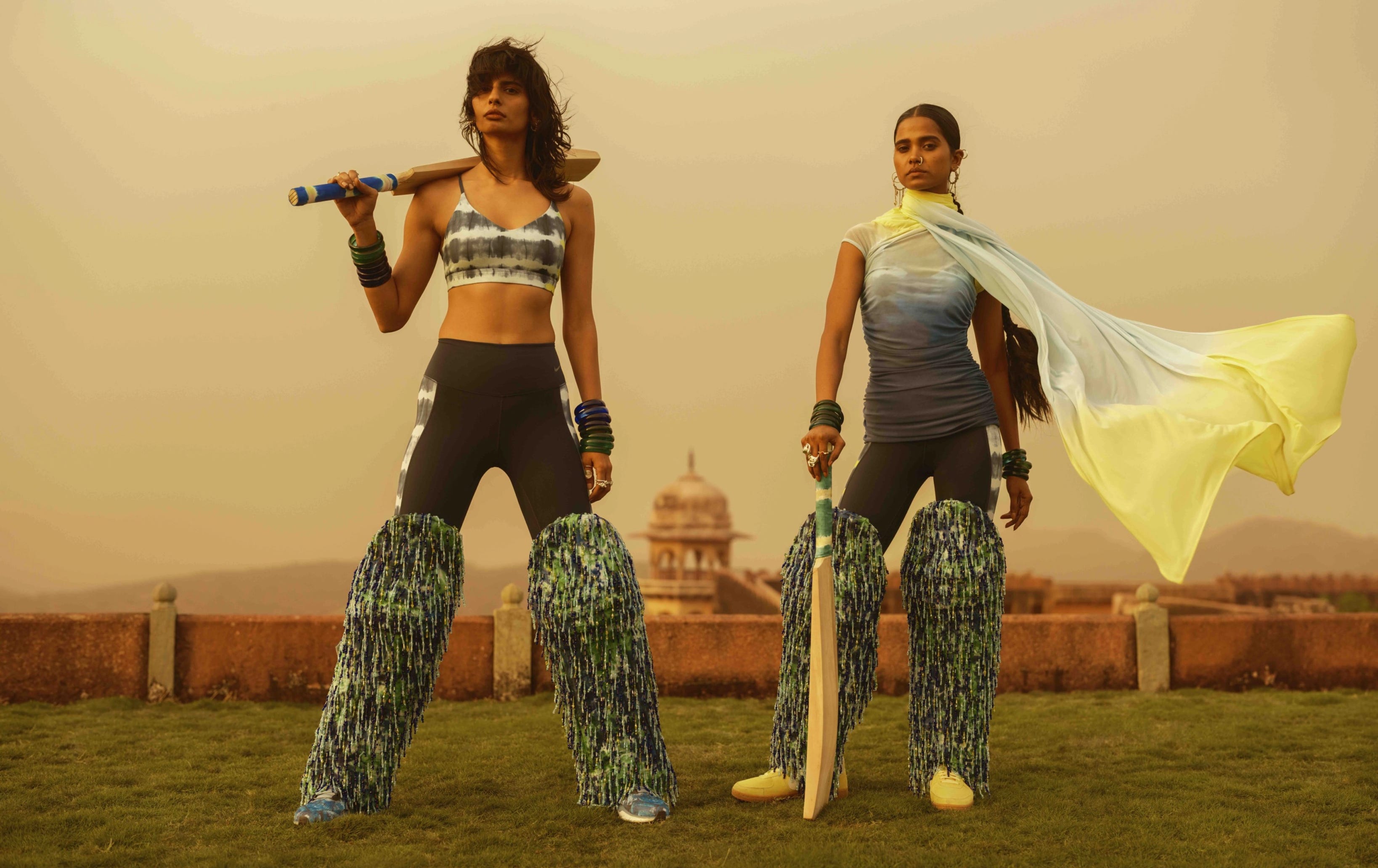
Nike collaborated with Nor Black Nor White, an Indian streetwear label built around endangered Indian textiles and handlooms, not for distribution but for cultural legitimacy. A global giant chose an Indian brand as its entry point into a cultural space it could not access alone.
The question for the next generation of Indian brands is not whether brand collaboration works. It is why, with so many brands building so loudly, so few of them are building together.
Not every collaboration needs to begin at full commitment. The strongest brand relationships follow the same arc as any meaningful relationship. You do not propose on the first date.
The low-lift is the introduction. A shared discount, a bundle, a newsletter swap, a mutual story. Two brands telling each other’s communities: we think you will like these people. This costs nearly nothing. It is also the most underused tool in contemporary brand building. 71% of consumers enjoy co-branded partnerships, and 43% say they would try a product from a brand they already liked if another trusted brand endorsed it. The low-lift is where you test for chemistry. Does the audience respond? Does it feel natural? Do you actually like these people?
The mid-lift is the shared story. A co-produced event, a campaign built around a common belief rather than a common product, a creative project that belongs to both brands equally. A wellness brand and an architecture studio hosting a slow Sunday morning. A fragrance house and a bookshop building a curated reading list. A coffee roaster and a fashion label producing a seasonal editorial together. This is where personality starts to transfer. The Ganni x New Balance collaboration generated $2.1 million in media impact value across 659 placements by doing exactly this: combining fashion’s cultural precision with sportswear’s community infrastructure. Neither brand could have produced that alone.
The co-create drop is the full marriage. A collaboration does not end with a campaign. It can generate an entire category of objects. You design something together that neither brand would have made independently. You share the risk, the credit, the cultural moment, and the merchandise opportunity. This is the level at which collaborations stop being partnerships and start becoming cultural events. The announcement alone generates earned attention no paid campaign can replicate. This is where the merch lives, the objects, the limited drops, the artifacts that outlast the campaign and sit on someone’s shelf for years.
There is a word that keeps appearing in the collaborations that actually work: unexpected. e.l.f. x Liquid Death. Supreme x Louis Vuitton. Heinz x Absolut, which produced a vodka pasta sauce that generated over 500 million social media impressions across 30 countries and spiked sales across Heinz’s entire pasta sauce range by 50% in the period following the launch. None of these pairings are obvious. All of them are, in retrospect, inevitable.
The instinct to pursue the safe, logical collaboration, two brands with matching aesthetics and overlapping audiences, produces the least interesting results. The most generative partnerships have productive tension. Some surface incompatibility that, when resolved through a shared creation, produces something the market has not seen before. The resolution of that tension is the creative act.
This is also why the most interesting direction for collaboration is not horizontal but cross-domain. A restaurant and a bookshop. A skincare brand and a furniture maker. A fashion label and a music studio. The most significant collaborations of the last decade have almost all crossed categories. They introduce a brand to a community that had no reason to encounter it, through the bridge of a partner that community already trusts.
What this requires is not budget. It is taste, genuine relationships, and the confidence to build something that will not appeal to everyone. The e.l.f. x Liquid Death collection was not designed to appeal to everyone. That is precisely why it worked.
The old brief was: how do we get in front of more people? The new brief is: which brands, seen at dinner with us, would make people think better of us?
This is the actual strategic question. In a market where audiences are sophisticated, skeptical, and algorithmically saturated, the most powerful signal a brand can send is not what it says about itself but what its associations say. The era of reach is not over, but reach without meaning is increasingly expensive and increasingly forgettable.
The collaboration era is about meaning. Brands that still optimize for only reach while the market has shifted to meaning will spend more to say less.
The brands worth watching right now are not the ones with the most creator partnerships or the largest seeding budgets. They are the ones with the most interesting friends. The ones building worlds, not just campaigns. The ones whose collaborators function as character witnesses, each one telling the audience something the brand could not quite say alone.
My mother was right. You are the company you keep.
Ask which collaboration would be the most bold and unexpected, and still be completely true to your values. Not your audience. Your values. That answer is usually the one worth building.
👋 Hi, I am Fatema Raja — a designer, creative director, and writer working with brands on identity, strategy, and creative direction. Every week on Layer by Layer, I write about design, brand, and culture.
No posts
Comments
Nothing yet. Say the first thing.
Sign in to join the conversation.