
There is a particular kind of spending guilt that belongs to a specific generation of Indians. The guilt of buying something good when something cheaper would have done. The guilt of not waiting for a sale. The guilt that arrived whenever money left the house without a fight.
That guilt was not irrational. It was shaped by a generation that lived through genuine scarcity, that watched money disappear and understood spending as something to be earned, justified, defended. For them, choosing the cheapest option was not settling. It was responsible. And for decades, Indian brand strategy was built entirely around this psychology: either build cheap and serve the masses, or build aspirational and seduce the few who wanted to feel rich. Most brands picked a side and stayed there.
Their children grew up watching this. They absorbed the instinct, the deliberateness, the scepticism, the insistence on knowing what you are getting, but they grew up in a completely different information environment. One where you can look up what an ingredient actually does. Where a review from someone in the same city with the same skin type is two scrolls away. Where a three-minute video explains, precisely, why one mattress is worth four times another. The instinct is inherited. But the new tools have radically moved the goalpost of what value means.
India’s consumer market is on track to reach $4.3 trillion by 2030. The shift from unbranded to branded products alone is expected to unlock $600 billion in new consumer spending. That is not money moving toward luxury, and it is not money moving toward discount. It is money moving toward value, a word that means something entirely different today than it did twenty years ago. Understanding that shift is where the mid-premium branding lives. Discernment is the new brief.
The generation that felt guilty about spending raised children who became very good at justifying what they spent it on.
The mechanism of change was not simply rising income. It was information. Economic liberalisation in the 1990s exposed Indians to global quality standards for the first time, planting a concrete reference point for what better actually looked like. Digital access did the rest. Nearly 65% of Indian consumers now check online reviews before making a purchase, collapsing the information asymmetry that had always allowed low-quality products to hide behind low prices. And the generation that grew up inside this environment, 377 million Gen Z consumers with a collective spending power heading toward $2 trillion by 2035, arrived at adulthood treating global standards not as aspiration but as baseline. Sixty-eight percent of them are price-conscious at the point of initial purchase. Eighty percent will pay a premium once they are certain of quality.
Price sensitivity did not disappear. It became conditional. And the condition is simple: prove it. Show me the value, and I’ll buy it. That is what the old brand categories miss. The binary of cheap versus aspirational assumed a consumer who either could not afford better or was dreaming of status they had not yet reached. The majority of consumer who actually exists today is neither. They have the money to upgrade and the knowledge to interrogate whether the upgrade is real. They are not looking to be seduced or to save. They are looking to be convinced.
The question this consumer is asking is not is this the cheapest? It is not is this aspirational? It is something more disciplined: is this worth it?
Worth it means, durable, clean. Made with a point of view. A product they will not be replacing in six months. There is a concept sometimes called the poverty premium, which names the hidden cost of buying cheap: cheap shoes replaced every season cost more than good ones over three years, skincare that does not work gets repurchased four times before the consumer finds something that does, a bad mattress gets thrown out. The value-conscious Indian consumer has absorbed this logic. They are not hunting for a bargain. They are hunting for the thing that holds up, so they only have to choose once.
Research confirms that India has moved from a price-sensitive market to a value-sensitive one, where quality, brand reputation, and longevity outweigh the instinct to find the lowest number.
The Indian mid-premium consumer is not simply trying to make a good choice. They are trying to make a knowledgeable one, a smart one, and they want the product to make that visible.
When someone buys a serum because it contains 10% Niacinamide at a clearly listed concentration, they are not just purchasing skincare. They are demonstrating, to themselves first and to anyone who asks, that they understand what they are buying. When they order single-origin coffee from a specific estate in Coorg, they are not just choosing a beverage. They are choosing to be the kind of person who knows what single-origin means. When they invest in a memory foam mattress with a 100-night trial, the trial itself is the signal: this brand believes I am capable of evaluating quality. That belief is part of what they are paying for.
The purchase becomes proof of a particular kind of intelligence. Not financial intelligence, not I can afford this, but quality intelligence: I know what this is worth. I understand what to look for. I chose well.
This is a fundamentally different status signal from traditional aspiration. The previous generation’s premium consumption said: look how much I spent. The mid-premium consumer today is saying look how well I understand value. The flex is not the price tag. The flex is the discernment. It explains why this consumer is not drawn to conspicuous luxury. What they want is to be seen as someone who did the research, read the label, knew the difference, and chose deliberately.
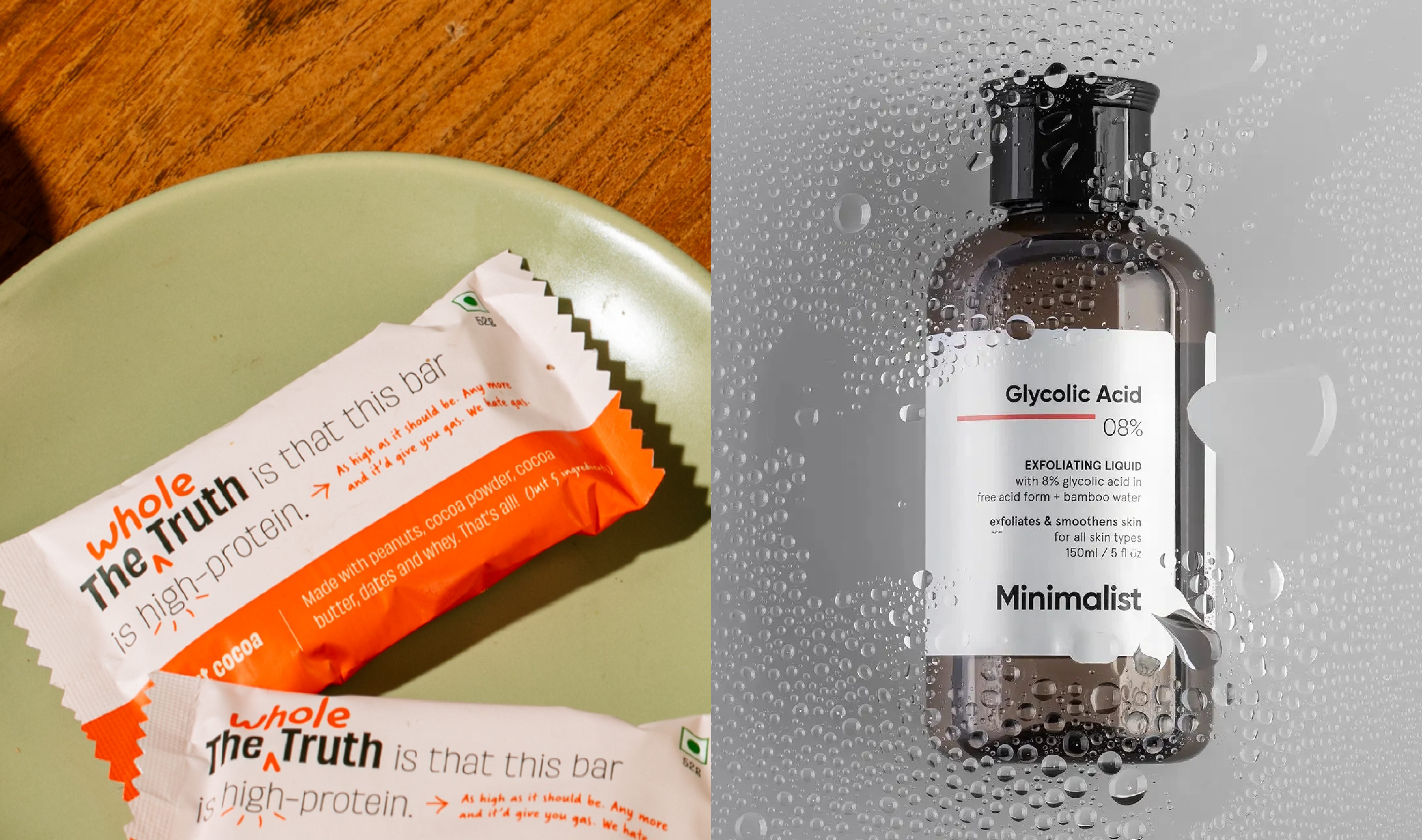
Sociologist Pierre Bourdieu called this cultural capital: the accumulated knowledge, taste, and judgement that defines how a person moves through the world. In India’s mid-premium market, cultural capital is increasingly expressed through informed consumption. Knowing your ingredients. Understanding your materials. Being able to articulate, with specificity, why what you bought is better than the alternative. The consumer who buys Minimalist does not just own good skincare. The person buying The Whole Truth is not buying a protein bar. They own the vocabulary that comes with the product.
This changes the brand brief entirely. A rational justification for the price is table stakes. The deeper play is giving your consumer something to know, not just a better product but a reason they can explain. The brands doing this well areselling an upgraded self-image. They are helping their consumer become smarter and rational in the way they spend.
Brands that have understood this do not compete on discount or aspiration. They have made their value legible, through brand message, packaging, content. The quality claim is readable in the object itself, in the label, the material, the design, and the communication.

Minimalist is the clearest example of a brand that built this from scratch. It entered a category, skincare, that had run entirely on borrowed authority: celebrity faces, vague promises, aspirational packaging. Minimalist stripped all of that away. Active ingredient, concentration, function, printed on the front of every bottle. The design was spare and clinical not because someone made a mood board, but because the design was the argument. It told the consumer: you do not need someone famous to tell you this works. The bottle tells you. The brand grew 89% in FY24 to ₹350 crore and was acquired by HUL at ₹2,955 crore, arguably the fastest consumer brand acquisition in Indian personal care history, in a category where the previous playbook was celebrity endorsements and opaque ingredient lists.
Wakefit took the same logic and applied it somewhere far less obvious: mattresses. A category where consumers had no vocabulary, no frame of reference, and no choice but to trust the salesperson standing in front of them. Wakefit built that vocabulary itself: spinal alignment, motion isolation, memory foam density. Then it went further and offered a 100-night trial, which was not a marketing gimmick but a structural statement: we are confident enough in this product to let you be the judge. What Minimalist did with a label, Wakefit did with a policy. Both moved authority to the consumer. The company crossed ₹1,000 crore in revenue in FY24, in a category most people would have called unexciting.
It is also worth noting where this shift is happening, because the assumption that it is a metro story is wrong. Minimalist gets roughly 50% of its customers from Tier 2 cities and beyond. Wakefit has deepened its expansion well outside the major metros. The value-conscious, information-equipped consumer is not concentrated in Mumbai and Bangalore. In some ways the logic is even more acute outside the metros, where the poverty premium has always been more visceral and the hunger for a product that simply does what it says runs deeper. The mid-premium opportunity is not a tier-one story that will eventually trickle down. It is already a pan-India reality.
The Whole Truth extended the same principle into food and, in doing so, revealed how far it can travel. Nutrition bars in India were either imported and inaccessible, or domestic and untrustworthy, packed with ingredients the consumer could not pronounce and claims they could not verify. The Whole Truth made one decision: every ingredient, listed on the front, nothing hidden. If you cannot say it plainly, you do not put it in. The packaging became the credential. What is interesting about The Whole Truth relative to the previous two examples is that the product itself is not technically complex. There is no foam density to learn, no concentration to evaluate. The brand built trust purely through it’s packaging and communication strategy — and discovered that this alone was enough to command a premium in a crowded, commoditised category.
Two global brands have read the same Indian consumer correctly, and their numbers in this market tell the same story from the outside in.
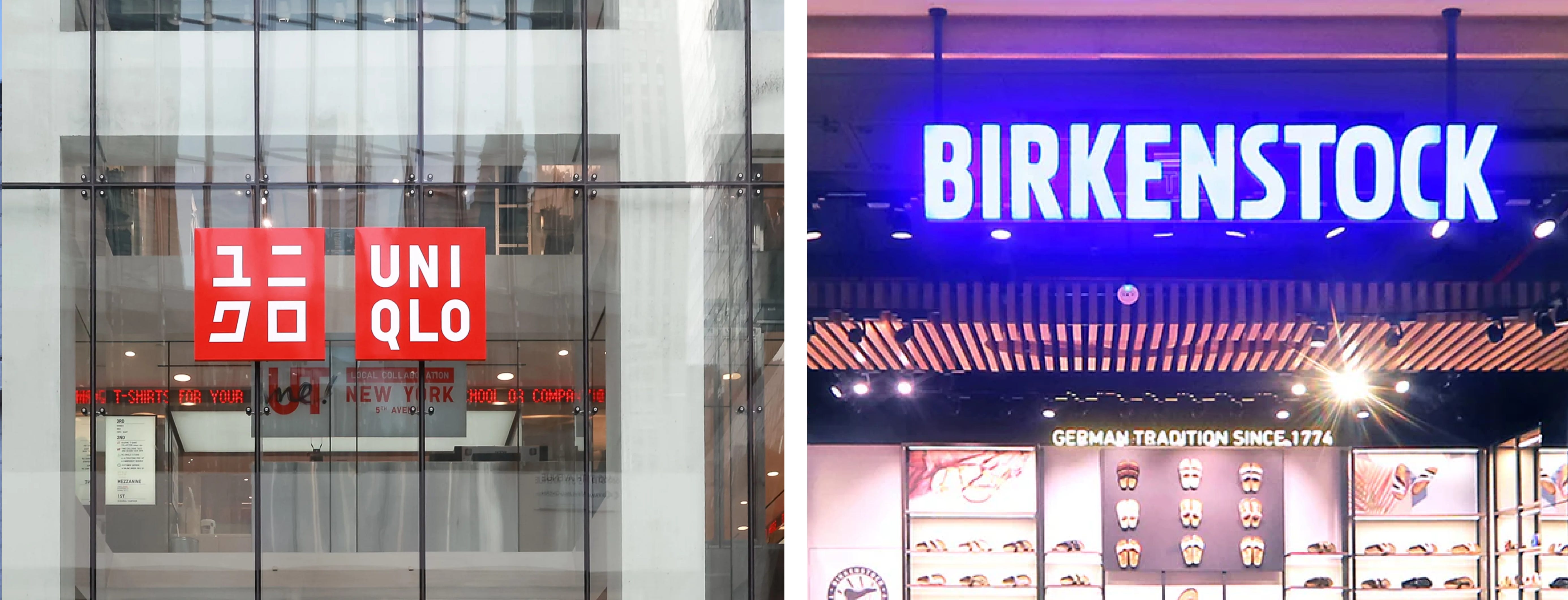
Uniqlo entered India in 2019 selling what it calls LifeWear: functional basics engineered around specific problems. HeatTech that genuinely keeps you warm in a Delhi winter. Airism that handles Mumbai humidity. Fabrics with a technical rationale, not a trend rationale. The brand does not ask you to look aspirational. In FY25, Uniqlo India surpassed ₹1,100 crore in revenue, a 44% increase year on year, making India the brand’s fastest-growing market globally. It has achieved nearly 60% compound annual growth since launch. Not by being cheap, and not by being luxury. By being useful in a way the consumer could understand and explain.
Birkenstock entered India the same year with a 250-year-old product whose value proposition has never changed: a cork-and-latex footbed that molds to the exact shape of your foot over time, engineered for orthopedic support, resoleable, built to last years rather than seasons. The consumer pays more upfront. The case for why is written into the construction of the shoe itself. Birkenstock now operates 50 stores across 27 Indian cities, opening 15 of those stores in a single year. When the brand’s India MD described the consumer response, the word used was not aspiration. It was appreciation — for quality and comfort, for a product that does exactly what it says it does, for as long as it says it will.
Neither brand leads with fashion. Neither brand competes on price. Both give the Indian consumer something more useful: a coherent reason, an upfront value proposition to spend more, built into the product itself.
Three different categories. Three different products. Two global benchmarks. One insight: the consumer who has grown up with information parity wants to spend on brands that provide an upfront value.
The mid-premium space is not about looking expensive. It is about looking smart. These are entirely different design problems.
Looking expensive requires a particular grammar: weight, restraint, shine, the quiet signals of luxury. Looking earned requires something else, which is legibility. The consumer must be able to read the quality claim in the object before they have read a single word of copy. The stitching, the weight of the paper, the ingredient on the label, the heft of the packaging as an evidence of value. They are the visual and tactile proof that the price is not only justified but comprehensible.
Most legacy Indian brands are still deploying the wrong grammar. Gold foil and celebrity faces in categories where the consumer is no longer asking will this make me look better? They are asking will this work better, and can I understand why?
Premium brands in FMCG are already growing at roughly twice the rate of their non-premium counterparts, and the brands driving that growth are the ones whose packaging answers a question. The design that wins in this market demonstrates substance. It furnishes the consumer with the vocabulary to explain their purchase, and then lets them feel smart for having made it.

One caution follows from all of this. This consumer is also the hardest to fool. The same information access that allows them to identify a genuinely good product allows them to identify one that is merely performing goodness. Science-backed has already become a marketing line that can mean very little. Clean packaging and ingredient lists have become an aesthetic that some brands adopt without the underlying honesty to support it. A consumer who has learned to read labels will eventually learn to read which brands are using transparency as a positioning strategy rather than an operating principle, and they will not forgive the difference. The brands that win this market over the long term are not the ones that look honest. They are the ones that are.
By 2030, 80% of Indian households will be middle-income, and the middle class will drive 75% of all consumer spending. [Half of all incremental spend in that period will go toward upgrading within categories people already buy, not new behaviours, not new categories, just better versions of what is already in their lives. This is a consumer who has outgrown the cheapest option and is now looking for the most defensible one.
The generation shaped by spending guilt did not produce consumers who stopped caring how money leaves the house. It produced consumers who are extraordinarily good at knowing whether it should. They want quality that holds up, ingredients they can name, materials that last, design that communicates value before it communicates status. They want to spend well, and they want to feel smart for having done it.
The brands that earn this consumer are the ones that take their intelligence seriously, building the product as the argument, the design as the evidence, and the brand as the vocabulary the consumer borrows to explain themselves. And the $600 billion sitting between cheap and aspirational belongs to the brands that get this right.
Fatema Raja is a designer and creative director working with South Asian brands on identity, brand strategy, and creative direction. She writes Layer by Layer, a weekly publication on design, brand, and culture.
No posts
Comments
Nothing yet. Say the first thing.
Sign in to join the conversation.