
As I’m rewriting this piece, an image comes to my mind from our visit to Ireland in early 2026. Insistent clouds parted long enough to see the sky framed beautifully by empty windows, which gave me a profound impression of how much of what we intend to build looks better in its ruinous state, and many of the stone walls we erect put a barrier between us and the truth. Stone walls adorned with a patina of verdant moss, cotton-glowing sheep grazing just up to the threshold to a former holy site — and then the sky opens up.

It’s not that we don’t need physical churches, but they, obviously, are not strictly speaking the lifeblood of the Church itself. The building could just as well be a house — or, under persecution, a cave. Or, for some evangelical Americans, a slightly reworked strip mall that tends to make one feel simultaneously subterranean and fugitive. At their best, holy spaces are a withdrawal from the constant bombardment of ordinary sense perception, bringing our attention back to the singular idea from which the universe is an iteration. The darkening effect of a cave simulates the withdrawal from the world of sense-impressions, which is why I despise floodlit holy spaces. Dark spaces make people immediately quieter and bring focus. And a priest without a microphone makes people stay quiet so they can here — but before this turns into a rant about spiritual attentiveness and liturgical forms, I must return to the topic at hand: the entire world is already a cathedral, but we can’t perceive it as such if we are hypnotized by sense-impressions and how they make us feel — any more than a child playing with toys in a pew can appreciate the Eucharist. It’s easy to lose sight of the fact that the entire world is a macrocosmic cathedral. And here down below, the body itself is a microcosmic temple. But we forget this, so we develop a uniquely human need for a manmade space where we can enter that reminds us of what is already being proclaimed by stones to stars. It’s temples all the way down. “The hour is coming when neither on this mountain nor in Jerusalem will you worship the Father.”1
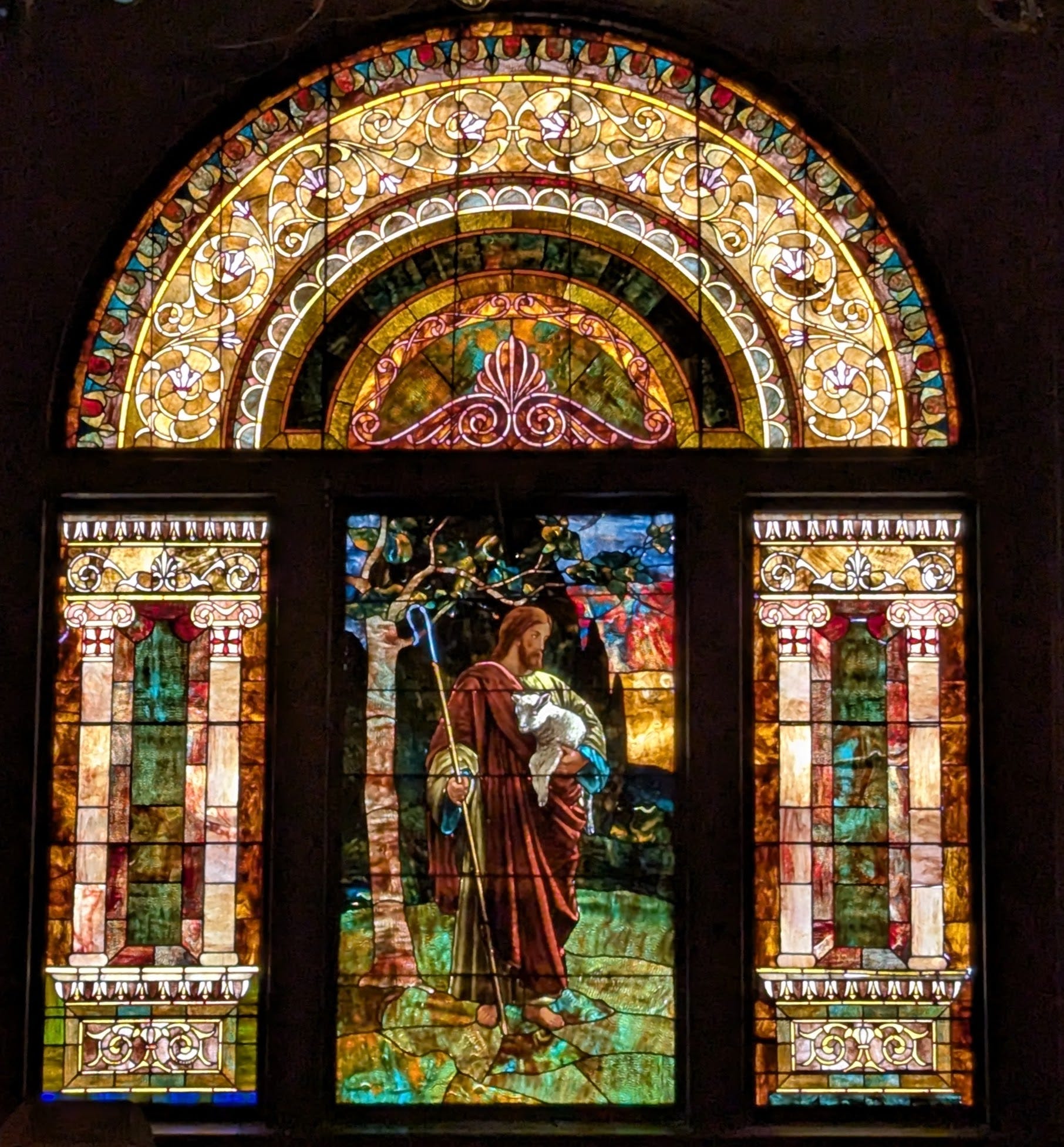
Much the same is true of intellectual prowess: there is the plant in front of our eyes, and the entire universe as a whole, and yet we feel compelled to create a third world that is neither the whole nor the part, but an addition. We need human constructions because we lack a proper appreciation for dandelions and deep-space nebulae. Like boldly colored cartoons for children, we need cathedrals of exaggerated depictions that make everything clearer so we can appreciate it in our small-mindedness.
The bodies of the men who built cathedrals contained more divinity and wisdom than any building they left behind, but it is the building we remember. It is, after all, the human being that is the imago Dei, not any construction of our own. But there are those of us who fixate on the human constructions as the bastions of truth, which always have flaws, rather than creation itself. Similarly, academic writing tends to structure itself by first establishing a conclusion and a declarative thesis statement, and only subsequently building an argument to support the predetermined conclusion, which was, naturally, merely a point of departure. Because this is an inverted form of writing, people seem to fail to notice that this is a complete and utter inversion of thinking. This is imposed on people precisely at the moment when they are most likely to question things — at college:
“Most people think only once in their lives, usually when they are at college. After that their minds are made up, and their decisions, utterances and endless repetitions of views that have in the meantime become obsolete, outworn, unsound. This applies to politics, scholarship, the arts as well as to social service. Views, just as leaves, are bound to wither, because the world is in flux. But so many of us would rather be faithful to outworn views than to undergo the strain of reexamination and revision.”2
I remember becoming quite good at this backward way of academic composition. I would study the curricula and, within the first week of a semester, formulate tentative thesis statements for each prospective paper. Once I had identified my conclusion, I merely had to pay attention to the original sources I was reading and extract anything that supported the predetermined thesis statement. Of course, writing towards a thesis statement does not embody proper thinking, but rather rationalization of a preselected assertion. I mean this with all due respect for several excellent professors, but the indictment remains against the form itself. Genuine thinking happens all the way up to the intuitive flash that delivers the original idea, and ceases as soon as one begins defending the same idea as a foregone conclusion.
If you were to apply the same strategy to the sciences, it would amount to choosing a hypothesis and then sifting through data: ignoring whatever doesn’t support your position, and selectively citing anything that might bolster your foregone conclusion. This, of course, would be anti-science, but it is a common practice nonetheless in academic composition. Writing an arbitrary conclusion before having wrestled with angels, like trying to erect a cathedral without any supports and then putting up supporting scaffolding only after the building is complete.
For example, in the documentary Behind The Curve (2018), there are some remarkable people who were duped by the flat Earth theory. In many ways, they seem like ordinary people, but once you have an idée fixe, it doesn’t matter how much data you have to the contrary: your mind is made up, and thinking has ceased. In this documentary, a group of flat-earthers attempts to test the flat-earth hypothesis with a clever experiment. You have to credit these citizen scientists for recognizing this test as a viable way to prove or disprove the flat earth theory. Unfortunately, once they get data they don’t like — as they inevitably must because the Earth is not flat — rather than changing their minds, they decide there must have been a “flaw” with the experiment! Alas, such is our world.
Remember, that’s with what can be empirically verifiable, and we can live in denial of the patently obvious — imagine the realm of invisible ideas where there is absolutely nothing to hold yourself accountable but your own rigorous sense of self-criticism, which is precisely what even good colleges seem to try to lobotomize in writing, even where they may encourage it in classroom settings. Healthy writing should proceed from inspired thought to inspired thought. There is more in common with lectio divino — the method of prayerfully reading to unfold richer meanings — than higher criticism. This is a slower form of writing, one that progresses unpredictably, led, so to speak, “by the spirit.”
Instead of allowing organic development, people tend to find a single novel position early in their careers and then spend the rest of their careers tenaciously defending it against all odds. We offer people little incentive to practice intellectual humility, to retract earlier errors, and I don’t even know if most people would know how to reconsider the foundations on which they built their lives.
We have to ask ourselves: what is thinking? So let us return to the formation of a thesis statement: a curious soul considers this, thinks about that, and at some point or other a lightbulb goes off: an idea has occurred! Unfortunately, we don’t get to see the actual process of thinking that led to that epiphany, which would be the juicy part. Quite the contrary. A good academic does their absolute best to “cover their tracks” by making it appear as if proposition A led to proposition B, which led them inexorably to their conclusion, proposition C. But this is an inversion. There were countless events, however distantly connected, that coalesced in a special moment of revelation which disclosed a single new idea. Whether that idea is correct or not is a question for another time, but the point is that few people really think the way they write.
If we believe that the universe is a metaphor for Love, then the real “stuff” of the universe is not abstract syllogisms but poetry.
If we’re honest, or if we’ve paid attention to the precognitive process by which we arrive at that inspired new idea, that often barely noticed fumbling is thinking in its proper sense. The various machinations of arranging those ideas are the work of afterthoughts. But as Prometheus carries the fire of initiative, it is his brother Epimetheus (lit., “afterthought”), who follows behind. Revisions of critical afterthought are indispensable, but by themselves are merely reactive and utterly uninspired. Similarly, inspiration without self-criticism can wander far afield, lacking grounding in reality. Perhaps this is the serpentine character of confirmation bias: if we repeat something often enough, no matter how false it is, we come to believe it is true.
This is why, at least for me, being rooted in farming and gardening “grounds” me in a way that holds me accountable in a way that no ivory tower isolation could. If I am wrong, plants die, and animals get sick. There’s a saying that you shouldn’t trust a physician who can’t fix a broken chair — which I’d extend further: because the soul is far more complex than a potted plant, you shouldn’t trust a theologian — or a priest, or a psychologist — who can’t keep plants alive. The natural feedback loop of trying my ideas on organic life has disciplined a more cautious, lawful imagination in me, which is inherently “conservative” — in an apolitical sense. For example, if you make beer, the delay for educational feedback is perhaps once a month. If you bake bread regularly, the feedback may be as often as once a day. If you make compost, you’ll learn new things maybe once or twice a year. But with abstract intellectual speculation about, say, the afterlife, we won’t know from experience until we die. Yet people speak with such confidence about where they’ve never been. They all disagree with each other, and they can’t all be right.
An abstract symmetry in theology, if unreal, is an equally unreal abstract salvation.
Thus, I exercise greater caution about bold claims the further afield ideas wander from creation. I have begun extending this so far that I try, as much as possible, to think in terms of created life itself: rather than imposing artificial categories, thinking about the universe in terms of itself. This means to conceive of Earth evolution in terms of embryology, or spiritual life in terms of organic plant growth, death in terms of winter, not to “reduce” spiritual life to naturalism, but to use what I myself did not fabricate as iconography of spiritual life. More fundamentally, if we believe that the universe is a metaphor for Love, then the real “stuff” of the universe is not abstract syllogisms but poetry. For something to be true, it must rhyme inwardly, not just check the right boxes for abstract intellectual symmetry. Why? Because there is virtually nothing in the created world that is really and truly symmetrical. Every tree grows lopsidedly, every face is somewhat asymmetrical — even your heart lives on one side of your chest and not the other. Truth, as such, is never the dead lukewarm center, but always somewhere off-center. Our fastidious desire for (merely) intellectual consistency, like the rigid layout of a grid, is itself the aberration. An abstract symmetry in theology, if unreal, is an equally unreal abstract salvation.
“Do you know about the Holocaust?”
“In a general sort of way.”
“And your father? Did you know your father?”
“In a general sort of way.”
Knowledge, untouched by experience, is like an outline without any colors. But we are not after salvation in a general sort of way, are we? True knowledge, of whatever sort, evokes tears. Anything less, we should fear for our souls.
Every idea shared, to the soul/soil that is ready, is a germinal seed waiting to unfold.
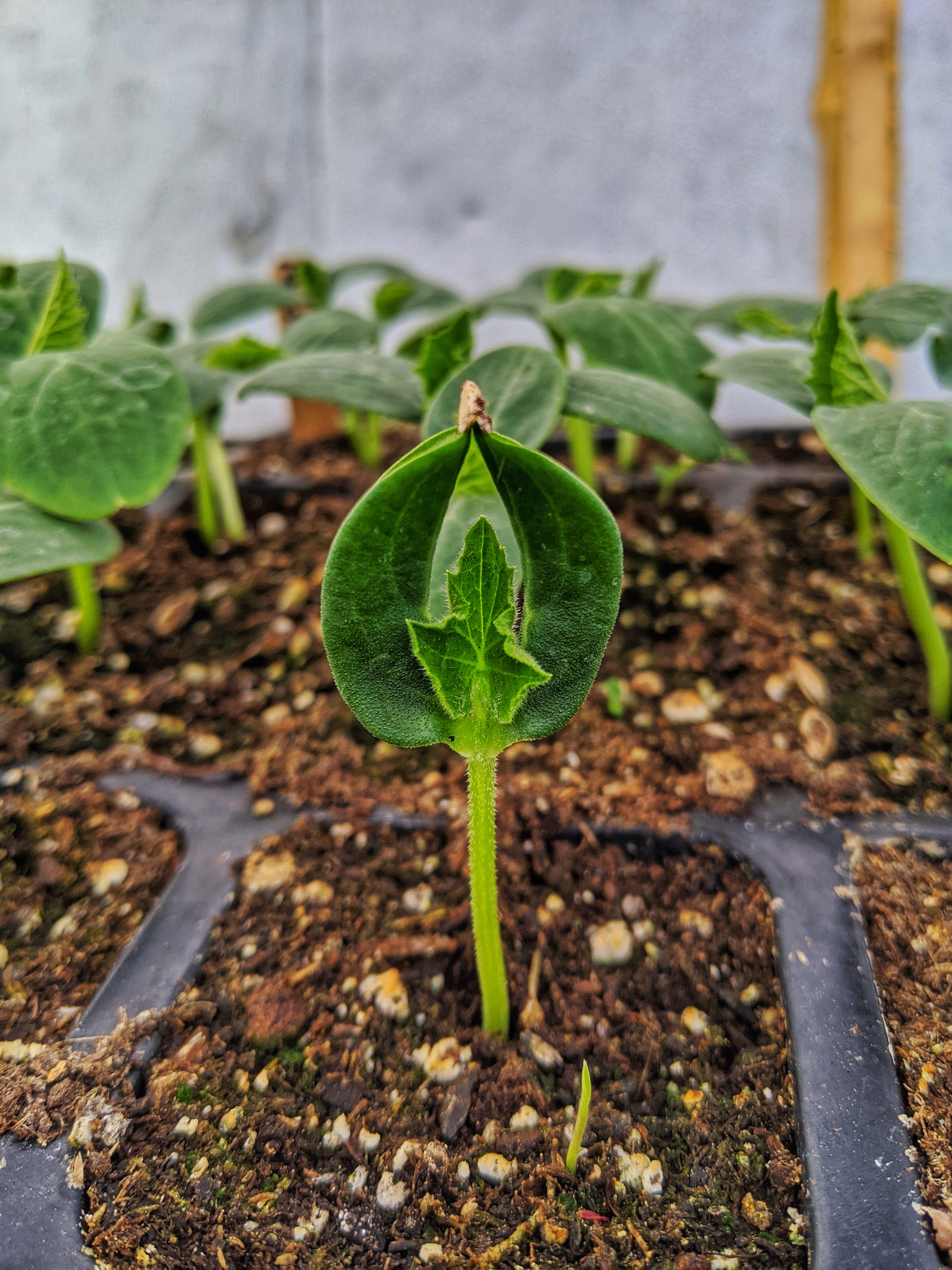
If you go online, there’s absolutely no guarantee what you’re reading isn’t slop, or delusional paranoid ravings. But remember: if you go into Nature, you have a wealth of information that exceeds the entire internet, and none of it is false. Which is to say, words have a tendency to beget more words rather than to compel us to action. If you were to abstract any moral lesson from this, I would hope it would be: go back to Nature, look, look, and look again, and let Nature surprise you. This is the problem: what is essential cannot be communicated except to those who are ready. This is why Jesus spoke in parables. The chaff of dry concepts is not enough to bring new life; there must be a germination within. This is a difficult concept because it means, as Rilke says, “you must change your life.” The “folly of preaching” is that we must spread ideas, even though the ignorant grasp at analyzing the husks as if that is the important part. But no amount of mere knowing is enough if it does not germinate. Every idea shared, to the soul/soil that is ready, is a germinal seed waiting to unfold. One such idea may take root in a ready soul/soil, but we cannot pre-judge the quality of the recipient. We do not know which thought will chance to germinate in another’s soul, but images imbued with life — parables — have the power to provoke feeling in a way that dry ideas rarely do and, at the same time, bar those without inner life from comprehending them as more than silly stories.
I trust people who become less doctrinaire as they age yet more committed to courtesy, realizing that who we have to benefit or harm are chiefly those we interact with.
An example of someone who was ever open to development was Goethe:
“‘People always fancy,’ said Goethe, laughing, “that we must become old to become wise; but, in truth, as years advance, it is hard to keep ourselves as wise as we were. Man becomes, indeed, in different stages of his life, a different being; but he cannot say that he is a better one, and, in certain matters, he is as likely to be right in his twentieth, as in his sixtieth year.”3
Unlike many academics, Goethe was quite comfortable revising his ideas, or even scrapping earlier ones altogether and admitting his error. Vivacious thinking is not strictly speaking something that the young do. Quite the contrary: the young are some of the most doctrinaire people you’ll find before they have made their lives their own. As Bob Dylan famously sang, “I was so much older then / I’m younger than that now.” It is through visiting and revisiting writing time and again that what emerges is not merely the product of a single fleeting mood, but becomes a polyphonic chorus of a complexity greater than any one of my passing moods. So I revise in the morning on one day, the evening on another, in the middle of the night again…
It is easier to feel more certain as we age, especially with the internet arming us, though I trust people who become less doctrinaire as they age yet more committed to courtesy, realizing that who we have to benefit or harm are chiefly those we interact with.
The “filter bubble” on search engines like Google is designed to give us results similar to past results, which progressively locks us into former versions of ourselves. To be good consumers (and easy to market to), the Machine requires predictable behaviors and, by definition, uninspired thinking. For example, when that poor soul Dylann Roof searched “black on white crime,” Google sent him to Stormfront, a notorious den of uninspired disinformation and racial violence; Google had failed to direct him to, say, the Library of Congress statistics, whose real numbers would likely have bored him to death and possibly saved lives. But it wasn’t just the single visit to some neonazi website: Google then kept feeding our poor Roof more and more websites like what he’d already visited, accelerating his radicalization until he walked into a church and murdered Sunday morning churchgoers. The Machine is designed to make you more like who you were in the past, which is to say, to kill whatever spontaneous life is in you. As Carl Mitcham says, “Whatever is willed calls forth its appropriate technology.” The question then is: what do we want? Because we will likely get it, and if it is not good, we will be disappointed.
Only by loving a thing can we know it truly, and this includes our enemies, who we must refrain from slandering.
Everything about our individual “feeds” on our computers now is algorithmic, tailored to each of us in such a way that it often feels — chillingly — serendipitous. To be clear: it’s not. It’s just familiar, and things adjacent to the familiar. But as we conform more and more to algorithms, we think less and less, which is the nature of pre-formed thought. Even dating websites, which are designed to pair you with people who share your current likes and dislikes, could be quite effective in making a comfortable match, but quite possibly one that thrives by not challenging itself. I remember during the COVID shutdowns being advertised online dating services whose tagline — I kid you not — was “It’s time to leave.” Imagine a search engine that would push back and propose additional carefully sourced facts with proper citations — YouTube videos aren’t news, journalism, or any source of reliable truth — one that was built not to accelerate atomization or extreme views unmoored from reality, but a service that would question people’s trends by offering balancing nuance?
Call them viruses, memes, logosmoi, or qlippoth, but they are all unwholesome fragments of former life that would gladly take over our personality.
Let’s return to the epiphany of thinking — the Eureka! moment. Living thought is rarely in syllogisms. Syllogisms, like ash rendered from a plant by burning it, are formed after the fact. We might read a book, watch a movie, or see something behaving badly. At first, we can’t quite articulate what unsettles us, but a feeling of dis-ease follows us around. As long as we persist with this uncomfortable feeling, we will visit and revisit that nebulous form of thought until, finally, it “snaps” into focus. Out of a vague, uncomfortable feeling emerges a new thought. And yet it is precisely this discomfort which is the essence of thinking that people are so desperate to dumb down without engaging by prematurely labeling anything we dislike, so the uncomfortable feeling goes away — for now, at least — or by reaching for some drug to dull consciousness. As Owen Barfield writes,
“[I]nspired thinking […] assumes the utmost intensity of feeling as a necessary pre-requisite. There was no other way to reach it. It can only begin when feeling has become too powerful to remain only personal, so that the individual is compelled by his human nature, either to think in reality, or to find, more or less instinctively, some suitable device for dimming his consciousness.”4
There is no more popular opiate than labeling — people, movements, reducing an organic whole to ash and itemizing its contents as if their periodic elements can tell you anything about the life of a plant — but that is not thinking. To know a plant, one does not burn it: one feeds it, waters it, tends it. Only by loving a thing can we know it truly, and this includes our enemies, who we must refrain from slandering.
So where is this piece going? In a sense, I have no particular idea, though I hope it surprises me. Rereading this now as I edit, I am surprised by what chose to find its way here. By trying to articulate what I feel, I tend to find out what I think — and even change my mind in the process. A first draft rarely has the full picture, and innumerable revisions are required to clarify precisely what I think out of the provocative amorphous feeling. I knew, when I began writing this, one simple thing: real thinking is completely the opposite of academic writing. If the end of the piece doesn’t transform its author, it’s not likely to be anything new, but a repetition of dead thoughts yet again, and it’s therefore unlikely to transform you either. Imagine a seed, full of complex protein and DNA — then consider a fragment of this organic whole, a virus. These are husks that perpetuate their parasitic existence by preying on the living. Call them viruses, memes, logosmoi, or qlippoth, but they are all unwholesome fragments of former life that would gladly take over our personality. What often passes for “thinking” is a kind of contagion in which the sick person insists they are healthy and that everyone else must become like him for society to be “healthy” — yikes!
As I type the word “born,” I am back in the garden in my mind, picturing an unfolding tomato plant erupting into blossom.
Where should this line of inquiry go next? To quote The Detectorists (BBC), “everything’s a sign when you want it to be.” If we’re seeing signs, we’re looking for confirmation of what we already feel is true. In writing, I sense a discomfort in my chest that also extends to my belly. There is a normative feeling — a desire — here that wishes to speak to something, but without being named properly, it remains an experience in which I myself am submerged, and one I cannot yet communicate. As I wrestle with how to articulate this to you, dear reader, I think of working in our organic garden, with plants and vegetables, and how there’s always more to learn there. My imagination leaps to green leaves, butterflies, and softly colored flowers — and then a flash of a quote from Alan Chadwick: “Never anticipate. Never expect. Never know that the next season is going to be the season because it won’t be a season, it isn’t.” Alan Chadwick, Reverence, Obedience and the Invisible in the Garden: Talks on the Biodynamic French Intensive System (Asheville, NC: Logosophia, 2013), 108
This evokes familiar feelings of that gray book by Shunryu Suzuki, Beginner’s Mind, and that surprising blank page in the middle that leaps out with a strategically placed image. I recall catching my breath with delight, immersed in words, then surprised into pictorial form. This then lifts me back to Ananda Coomaraswamy’s work Buddha and the Gospel of Buddhism, which culminates in the description of Zen as the quintessential religious experience. I am now remembering the old edition I bought twenty years ago that arrived by mail, permeated by years of incense being stored on a shelf in some New Age bookstore whose branding was stamped inside. This then takes me to Robert Thibodeau’s remarkable Mayflower Bookstore that I visited in Michigan, not far from where Eminem grew up. His original store was burned down by some religious fundamentalists who didn’t like his Osho collection (I don’t like Osho either, for that matter, though I don’t tend to burn down bookstores myself).
You’ll find in many of my pieces the latest resting point of my thinking on the way to something else.
Then I scroll back up through the piece I’m writing for Substack. I feel like I am closer to articulating something, even though I have not yet framed it precisely in its clear final words. I paste an earlier piece I’d written about subjectivity and thought, from which I had just lifted a Barfield quote I’d already used before:
The Ethics of Jazz
·
July 4, 2025
“All eras in a state of decline and dissolution are subjective; on the other hand, all progressive eras have an objective tendency. Our present time is retrograde, for it is subjective.” - Goethe, as quoted by Peter von Eckermann, Conversations with Goethe
And now I notice I’ve shifted to the present tense. Now I am in a realm of feeling concerned with the present. Thought is invariably about the past, imagination about the future, but feeling is the space from which thoughts are born. As I type the word “born,” I am back in the garden in my mind, picturing an unfolding tomato plant erupting into blossom. Leaf and stem rising up, then contracting, tightening into a bud, and bursting forth — only to repeat again (we grow indeterminate tomatoes, and perhaps that’s what kind of thinker I am). I now begin to think about the future of this piece and what it will look like once it’s blossomed and its sweet fruit has set. And I see:
A rich, nuanced taste in the mouths of readers, sweet-scented, aromatic juices — an energizing sensation and a picture of liquid light coursing through your veins. There you are: you. Now that you are here, I find myself surprised. Perhaps you were here from the beginning — and of course you were, if you’ve read this far! — and all of this was teleologically destined.
The kind of Reason that can be put in service of anything is already something sinister.
If we look at a flower, we see something that emerges as a rupture, a dramatic “break” from the rhythmic process at work in leaves and stems below. So it has become a thought. Flowers do not make flowers except by making roots, stems, and leaves in a new plant. The kinds of “thoughts” that can be copied from another are barely thoughts at all, but like ash in the mouth. What we have in academic writing, where the conclusion is foregone, and the preceding arguments are reverse-engineered, is not merely an inverted form of thinking; it is anti-thought. (I let Grammarly correct a red-lined typo here)
While visiting Ireland in early 2026, I noticed how many books and bookstores there were, but so little philosophy or theology — and virtually no esoterica. Where books did tend towards matters of theory, they were always also united with practical life: political action, political history, and an abundance of poetry and fiction… No, and then I decide this is going in the wrong direction, and that segment could be its own piece. You’ll find in many of my pieces the latest resting point of my thinking on the way to something else. In today’s piece, I am trying to share the process itself, which is, of course, never linear, but is guided by a desire to articulate and an unformed feeling.
Though I hesitate to use the term, thinking that it is foregone, as anti-thought, it is Satanic: it is Reason enslaved to my own opinion and turned against others, rather than Reason turning against my own opinions. As William Law, the chief expositor of Jacob Boehme’s work in English, suggested, Reason is the Serpent itself. Which is to say: the kind of Reason that can be put in service of anything is already something sinister. But this is the character of much academic writing: eliminating surprises, systematizing life: killing all the dandelions. Here again, I surprise myself, because while I have read the Complete Works of William Law (minus the private correspondence at the end), I find another articulation very much like what I remember Law saying, but this from Fr Bede Griffith, a passage that is new to me as I type now:
“The Fall of Man is the fall from this Ground, this Centre of freedom and immortality, into subjection to the senses and this material world, and Reason is the serpent. Reason can either be subject to the eternal Law, the universal Reason, and then it becomes Wisdom, or it can seek to be the master of the world, and then it becomes demonic. It is the demon of the modern world. In every generation the Fall of Man is repeated, but never, perhaps, on a wider scale than today.” Bede Griffith, The Return to the Center
I don’t think I could say it better than that. Now we return to the “piety of thought,” questioning, which is never self-satisfied. But what does any of this matter? I am a farmer, and most of my life is outdoors. Ah… there it is. Goethe said, “Words beget words.” This is why people can talk about anything endlessly and effect no real change in the world. It doesn’t matter if I insist I’m write right, what matters is that there is a new birth within me. St. Thomas Aquinas called his work “straw” that preceded his spiritual experiences. But let us not consider this belittling of all of his discursive reasoning, because it was aiming to overcome itself, as a plant aims to overcome itself in a flow; discursive reasoning is the green stem whose wrestling produces the wheat, and which becomes straw once vitality has passed out of it into the blossom and grain. Discursive reasoning becomes holy straw because of the seeds of intuition it helped produce, even though, like Moses leading the Israelites, discursive reasoning cannot follow into the promised land. The life that is above the flower is so unlike everything that preceded that everything must be considered anew, and none of the limbs used to crawl can be employed in flight. Straw all our thoughts may be, but if they serve as a bedding in a manger, they become holy in their service of the divine.

Abraham Joshua Heschel, Moral Grandeur and Spiritual Audacity
Goethe, as quoted in Conversations with Goethe by Eckermann
Owen Barfield, Poetic Diction, pg. 13
No posts
Comments
Nothing yet. Say the first thing.
Sign in to join the conversation.