
“Using ChatGPT to complete assignments is like bringing a forklift into the weight room; you will never improve your cognitive fitness that way.” — Ted Chiang, Why A.I. Isn’t Going to Make Art
I highly recommend contemplating the following piece from Eugene Terekhin where he engages Tolkien’s perhaps surprising dislike of theatre. While I had not encountered Tolkien’s words on the subject, I had seen these same ideas from the inspiring source of fellow Inkling Owen Barfield, namely the work of Goethe and Rudolf Steiner.
To quote Eugene:
“Drama is naturally hostile to Fantasy.” — On Fairy Stories.
But then, after giving it some thought, I couldn’t help but agree.
He explains his reasoning like this:
“…the characters, and even the scenes, are in Drama not imagined but actually beheld…” — On Fairy Stories
Quite right! Samuel Coleridge approaches this in his own way as well: “The romantic poetry—the Shakespearian drama—appealed to the imagination rather than to the senses, and to the reason as contemplating our inward nature, and the workings of the passions in their most retired recesses.”
But Goethe seems to be even closer to Tolkien’s articulation:
“Goethe himself described quite intimately how he allowed Shakespeare’s spirit to work on him. Goethe liked to receive Shakespeare, not by seeing his plays acted on the stage, but by having them read to him in simple, quiet recitation. He would sit listening—his eyes closed—lifting himself out of the sphere of everyday intellectual life and sinking deeply into the fullness of his inner humanity. Such was the way in which Goethe wanted the Shakespearean spirit to enter into him.”1
For me, the best production of The Lord of the Rings is not the work of Peter Jackson, but the BBC audio version. Performances that show everything for you, and do not require you to complete the picture in your own imagination, leave the blood cold.
Paradoxically, listening to the BBC audio without anything but the image on the cover of the cassette cases as a locus for my imagination, I have more vivid memories of images from that experience than I will ever have from the LOTR films.
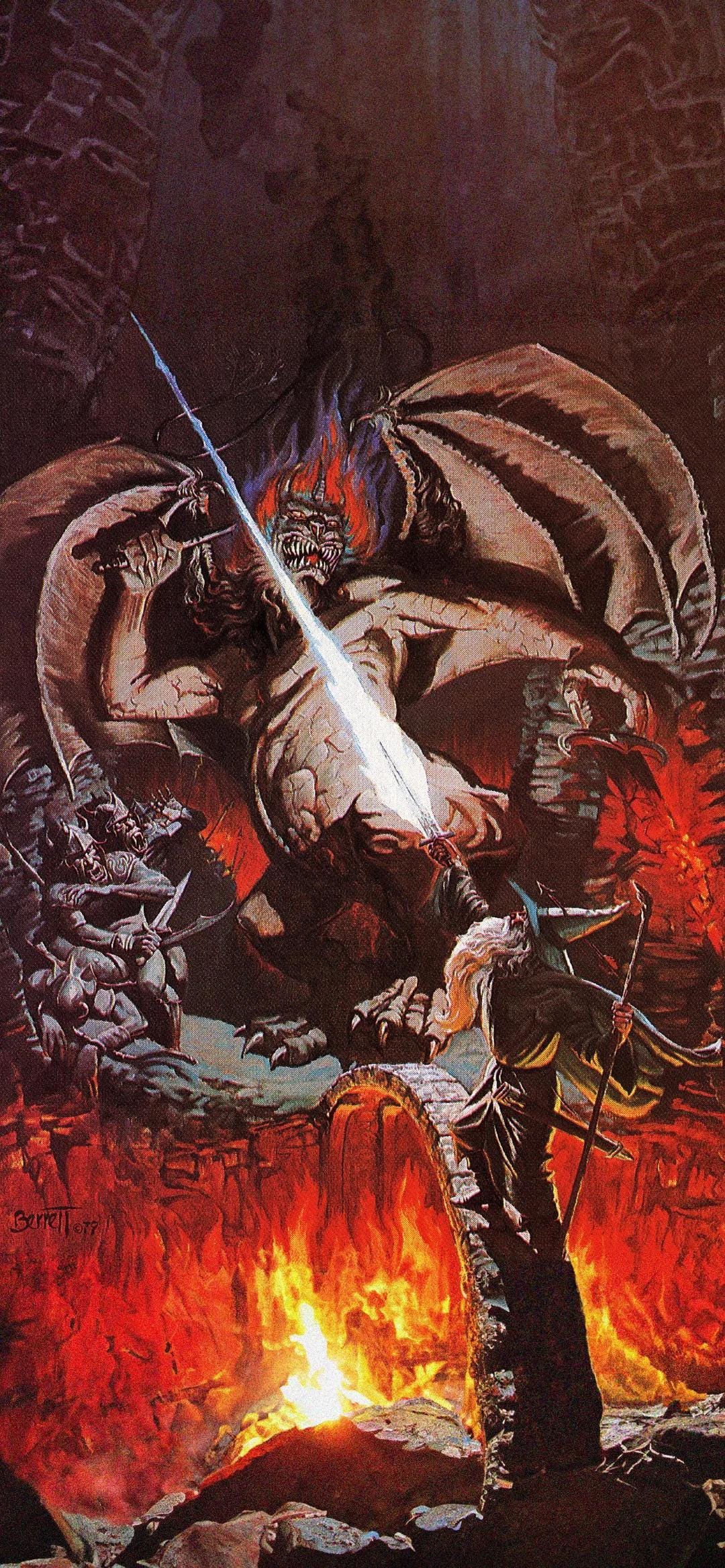
This is a difference in character for the two distinct media. That said, there are many arthouse films that “leave much to the imagination” — Peter Jackson was never such a director nor ever made any pretense to be, which is precisely why his films are so popular: virtually all the (enormous) work of worldbuilding is done for you.
People don't generally like going to movies to expend effort — any more than most modern people like cooking their own food! Now, to be fair to LOTR nerds, they often bring their own expansive imagination to the movies if they have already gone through the grueling effort of imagining that entire world themselves by reading the book.
But, for me, the more “complete” a world a film attempts to depict, the less believable it is precisely because it pretends to be complete; its incompleteness becomes all the more noticeable. The old BBC Narnia films, in spite of mediocre effects, are far more compelling than the new because, from the beginning, they depict, as Coleridge might say, “a semblance of truth sufficient to procure for these shadows of imagination that willing suspension of disbelief for the moment, which constitutes poetic faith.”
By contrast, anything that poses as a “complete” depiction tends to emphasize its own glaring inadequacies. Due to technical limitations, older movies had no choice but to imply much larger worlds. Now, with drone footage, CGI, and AI slop, entire continents are depicted — often in the most implausible ways.
The dead text in front of us always requires that we imagine it for ourselves. When people want “pictures” in books, what they are really confessing is a weakness of imagination — which is a laxity of will. The necessary incompleteness of text requires me as the reader to finish it with my own embellishments. Incompleteness in art requires the viewer to add himself to it. Completeness in art tends to reduce the participant to a mere spectator. Art like this should imply an entire world, not depict one.
In this sense, what Tolkien suggests for art is closer to iconography, where rules are employed to make things often less “realistic” and point to something other than themselves. An icon implies an entire spiritual world, but it cannot depict that world except as an outline. We encounter a paradox: an image on the way to completeness can often be more powerful than the final polished version. Why? Because it demands that you participate with your own effort and finish the picture within yourself:
Similarly, Steiner emphasizes the spareness of theatrical stages in the past:
“While we are on the subject of stage décor, it is a real delight to carry one's mind back to Shakespeare's time. No refinements of stage-setting were possible then! They would place a chair on the stage and write on it: Here is an alehouse!—and leave the rest to the imagination of the audience. But this imagination is simply not there in our modern audiences.”2
Continuing elsewhere:
“Man ist heute vom Schauspiel aufs Kino gekommen: da braucht man nicht mehr aktiv zu sein.”
“Today one has passed from theater to cinema: there one no longer needs to be active.”3
As Coleridge says, “These, and all other stage presentations, are to produce a sort of temporary half-faith, which the spectator encourages in himself and supports by a voluntary contribution on his own part, because he knows that it is at all times in his power to see the thing as it really is.”4
Consistently, Steiner advocates bare-minimum depictions when giving lectures, so the audience would be forced, out of their own inner qualities, to complete the picture themselves. In childhood education, Steiner suggests: “Then we try to help the children realize that the figure is incomplete and, using every means possible, get them to complete it themselves.”5
In fact, all of Steiner’s work can be typified as this tendency: he provides a sketch, or a gesture, and leaves it intentionally incomplete so you have to add to it. Simply take two works: Magic: Black and White by Franz Hartmann and Theosophy by Rudolf Steiner. They both, with little exception, point to the same worldview — but Hartmann spells everything out.
Steiner, though, who is notoriously incomplete, refuses to define his terms. For example, he says, “When do you inoculate them with dead concepts? When you continually give them definitions, when you say, ‘A lion is …,’ and have them memorize this, then you inoculate children with dead concepts. You assume that when the children are thirty years old, they will have exactly the same concepts you now teach. This means that continual defining is the death of living instruction. Then, what must we do? In teaching, we should not define, we should attempt to characterize. We characterize when we look at things from as many points of view as possible.”6
The difference between Steiner and other authors is not merely conceptual differences, but an entirely different approach. Imagine two people who wish to arrive at the same goal, but by different ways. One person wants concepts neatly delivered, without effort, like someone shopping in a grocery store. There is nothing necessarily wrong with this, assuming ethical supply chains. The second person decides they want to experience the entire process, so they plant tomato seeds and tend them with the sweat of their brow.
Now, who is better? It’s a teach-a-man-to-fish kind of situation. Arguably, they both receive delectable tomatoes, and we can even imagine a co-op where the grocery store sells the exact same tomatoes. Do you see what one person gains through experience that the other does not? One knows how to buy a tomato, another how to grow tomatoes — and both enjoy the tomatoes. But the one who arrived at the fruit by growing them himself through his own effort will likely appreciate them more. Similarly, people who have primarily learned by assimilating ideas from other people: if you deprive them of their books, they will soon discover they don’t know how to generate new ideas at all — they’ve always been getting them prepackaged at the store.

Such is the difference between Steiner, requiring his audience to exercise their inner capacities, and most authors who deliver to you the concepts they found through their own effort — neatly shrinkwrapped. Steiner says about his own writing that it is not like ordinary writing — it requires that you become a “gardener” of ideas, not just a consumer of ideas from books.
Heidegger famously discusses a pair of shoes — of course, wrongly identified as a peasant woman’s shoes when they belong to the painter — that Van Gogh painted and all they imply:
“There is nothing surrounding this pair of peasant shoes in or to which they might belong—only an undefined space. There are not even clods of soil from the field or the field-path sticking to them, which would at least hint at their use. A pair of peasant shoes and nothing more. And yet—From the dark opening of the worn insides of the shoes the toilsome tread of the worker stares forth. In the stiffly rugged heaviness of the shoes there is the accumulated tenacity of her slow trudge through the far-spreading and ever-uniform furrows of the field swept by a raw wind. On the leather lie the dampness and richness of the soil. Under the soles slides the loneliness of the field-path as evening falls. In the shoes vibrates the silent call of the earth, its quiet gift of the ripening grain and its unexplained self-refusal in the fallow desolation of the wintry field.”7
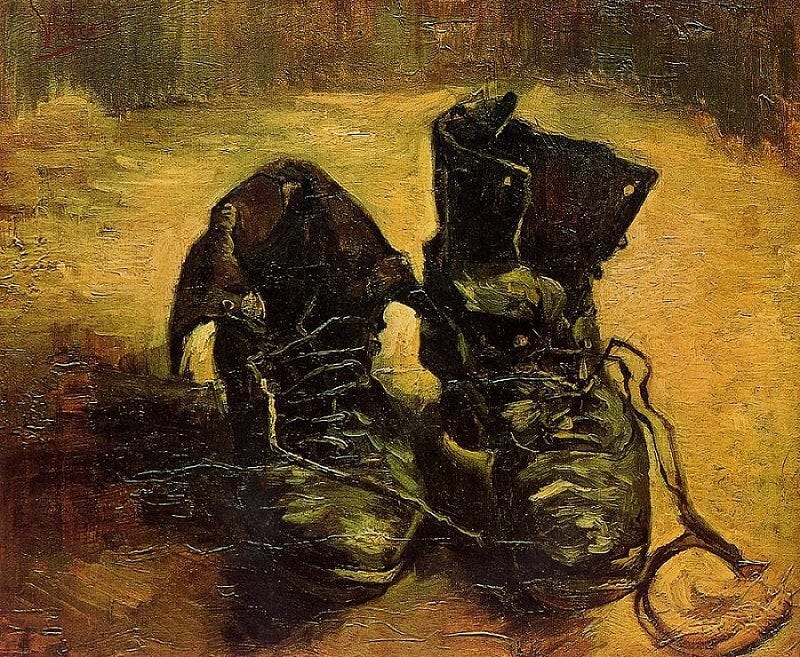
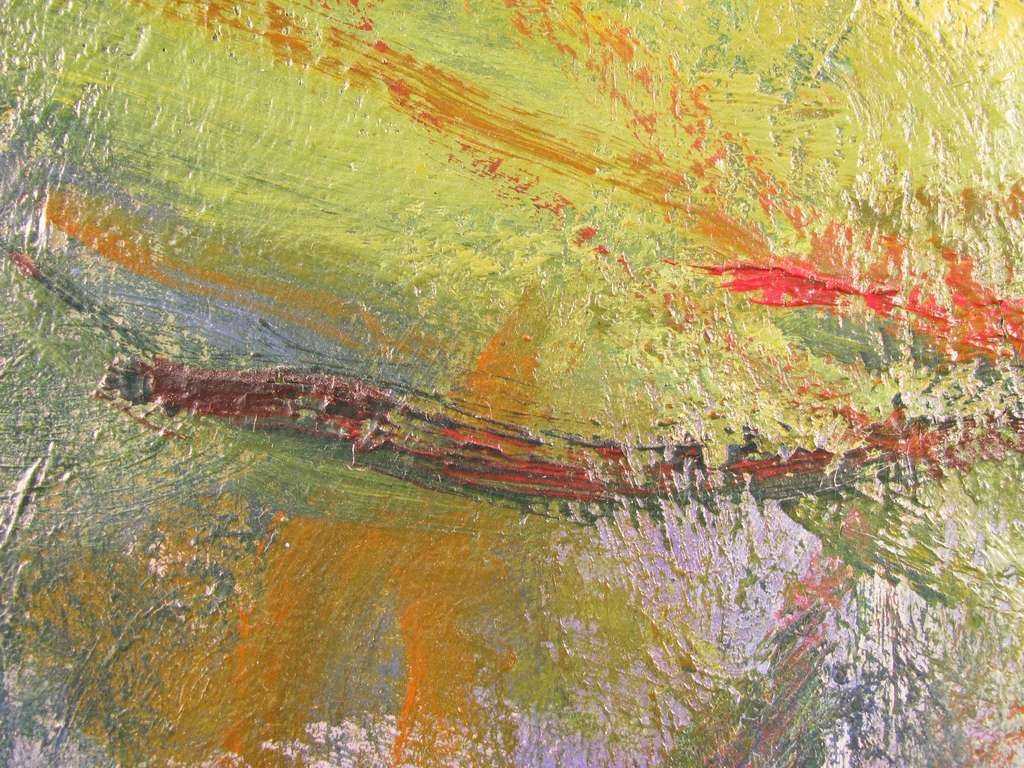
Through this lens, Steiner’s work remains perpetually incomplete, awaiting the right participant to complete it with their own imaginations, which will invariably be personal and a unique articulation. When Anthroposophists — or critics — act like Steiner’s words are conclusions — or maxims to be believed — they are reducing an impression’s artwork to the nature of his brush strokes, losing sight of the whole picture. “You are not required to believe what I tell you but to think it.”8
One can understand how, as the esoteric rumor mill goes, the Rosicrucian Brotherhood approached him to promulgate conventional Rosicrucian maxims, but he declined — he had too much of himself to add to things, and did not believe in rote memorization as a meaningful path of initiation. As such, the mantle fell to Max Heindel, author of The Rosicrucian Cosmo-Conception. One should remember that these are temperamental differences, not that their ideas fundamentally disagree (the first edition of Heindel’s book is dedicated to Steiner, for example). Now, we must systematize what we perceive — or we cannot comprehend it at all! — but merely having labels without the vitality of experience leaves everything hollow. This does not mean that Heindel’s project is incorrect, but reading his book does nothing towards developing the inner capacities — though it does tell you they exist.
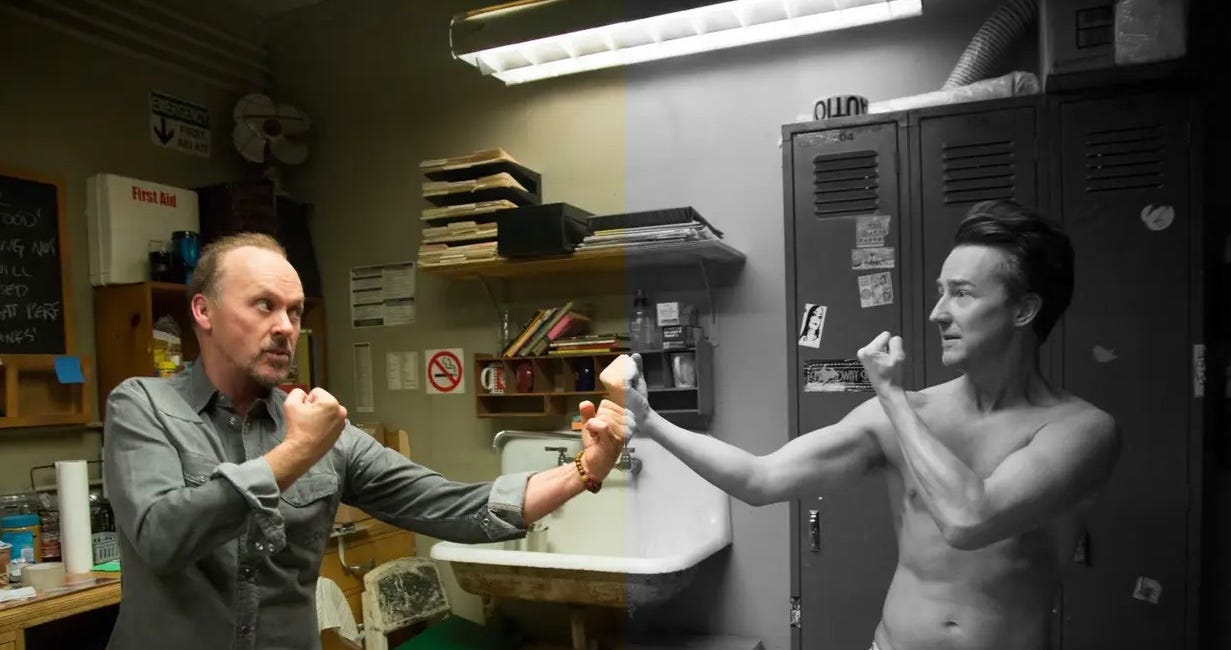
If someone has ever read stories to you as a child, what is drawn out of us in that setting is more than if everything is fully depicted for us. This is why audiobooks are quite serviceable for exercising the imagination. I imagine less actively when an imagination is depicted fully prefabricated. When I read a book, that requires the most effort (imagination is will); when I see a black-and-white film, that requires less imagination; when there is audio, even less; Technicolor —even less imagination is required, and now we're all the way to IMAX. In Brave New World, Huxley predicts the immersive experience to go even further: “You’ve got to choose between happiness and what people used to call high art. We’ve sacrificed high art. We have the feelies and the scent organ instead.” At least a play on a stage requires some imagination — some suspension to participate in what is being viewed. Now? Watching TV takes barely more energy than sleeping — it’s no surprise exhausted people watch so much of it.
Reawakening to Colors
·
January 19, 2024
I’m trying something a little different today. I hope you enjoy it.
Countering this impulse, we will wrap up with a passage from Steiner, typical of the idea that in the experience of the living art, the viewer must be transformed by the participatory effort of striving towards comprehension:
“This book cannot be read the way people ordinarily read books in this day and age. In some respects, its readers will have to work their way through each page and even each single sentence the hard way. This was done deliberately; it is the only way this book can become what it is intended to be for the reader. Simply reading it through is as good as not reading it at all. The spiritual scientific truths it contains must be experienced; that is the only way they can be of value.”9
Martin Heidegger, “The Origin of the Work of Art,” in Poetry, Language, Thought, trans. Albert Hofstadter (New York: Harper & Row, 1971), 33–35.
Rudolf Steiner, Theosophy: An Introduction to the Supersensible Knowledge of the World and the Destination of Man, GA 9, Chapter IV, “The Path of Knowledge.”
No posts
Comments
Nothing yet. Say the first thing.
Sign in to join the conversation.