
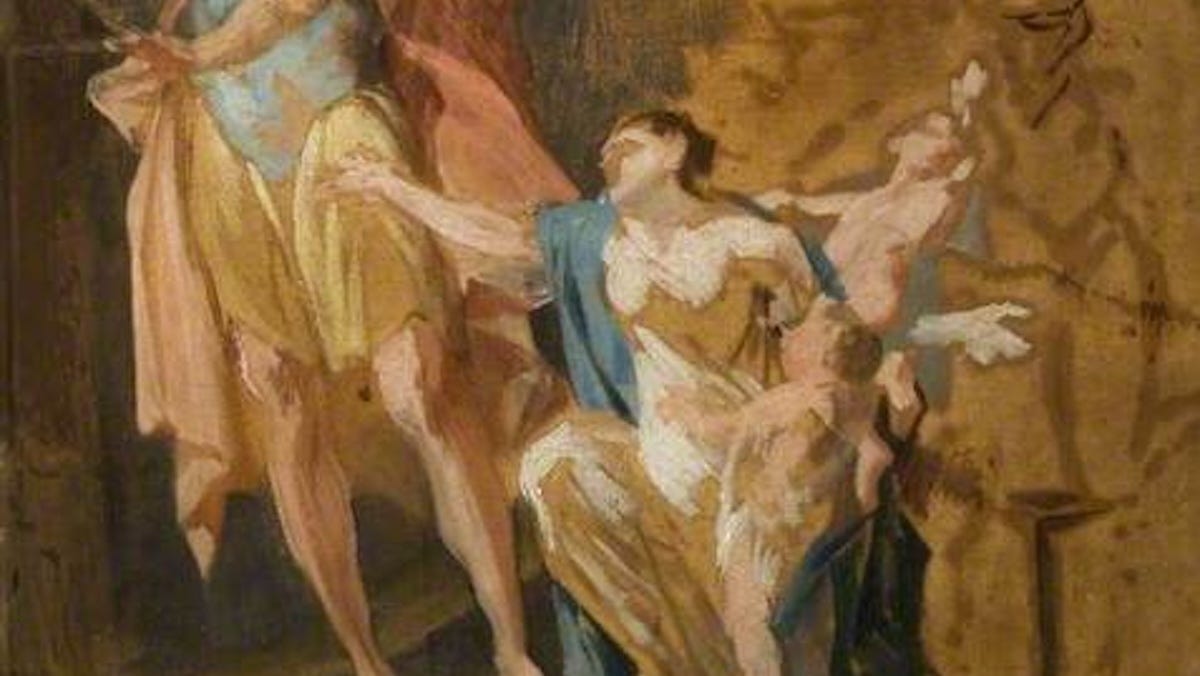
This week, Nadya Williams revisits the myth of Medea and asks: can we learn something about maternal wellbeing from Medea’s tragic life?
Nadya Williams
The unnatural nature of stories like Medea’s continues to fascinate and horrify us more than any other aspect. Like the Athenians of Euripides’ day, we cannot help but wonder: what kind of mother could do such a thing? We come across this kind of story in the modern news and stop cold in horror. Sometimes the modern stories focus on the inadequacies of mental health support for postpartum women—such as in the tragic story of Lindsay Clancy, who killed her three children in an alleged fit of postpartum psychosis.
But perhaps there is a simpler and more basic lesson to this tale. What Medea most wanted was for her husband and the father of her children to love her. When he abandoned her instead, it broke her in a way that is worthy of being pitied.
This September 17-19, Fairer Disputations Featured Authors and friends are convening in Rochester, New York to find a better way forward for women. Space is limited—but we’d love to have you join us!
First, Emily A. Hancock engages with Esther Berry’s recent Fairer Disputations piece, “Feminism Names a Problem,” pointing out some of the unique vulnerabilities women face and some concrete steps that can be taken towards bringing women justice.

Emily Hancock
Feminism arose in a time where marriage was the standard and women needed legal and social options for when their husbands harmed them or their children. Today, less and less people are married. I acknowledge that feminism has contributed to this fact and I acknowledge that marriage is an objective good. This doesn’t change the fact that today we have a society where less women are married and they still need protection from abusive men and they still deserve meaningful advocacy. I also believe that a version of feminism that encourages and supports marriage, respects the innate differences and gifts of men and women, prioritizes the work of motherhood and values family, advocates for women in the childbearing continuum, and does all of this from a foundation of sex realism is possible and is also an objective good.
Next, in The Washington Times, Katy Faust tells the stories of three women failed by surrogacy laws that protect the buyer at the expense of the surrogate and baby.
Katy Faust
Fertility clinics build detachment recommendations into their surrogate counseling. One surrogacy website offers counseling for the surrogate who may find it “emotionally challenging” to let go of the baby. Another agency encourages support for the surrogate in “managing [her] emotional attachment.”
That counseling is itself an admission. Women bond with the babies they carry.
All three surrogates had lives outside these pregnancies. Yet they bonded deeply enough to resist lawsuits, seek specialized medical care, fight custody battles and even pay for a baby’s funeral.
The Betrayals of Modern Feminism, Restoring the West by Ayaan Hirsi Ali
The Children Divorcing Their Parents, Noelle Mering and Louise Perry, Maiden Mother Matriarch
Bring Back Shame (You’re Not Oppressed Because You Like Choking Women), B Connolly, A Domestic Scholar
On the Disaster of Transgender Medicine, Benjamin Ryan, Unreported Truths
ICYMI: Nadya Williams reviews Daisy Dunn’s The Missing Thread: A Women’s History of the Ancient World and asks us to consider who is actually involved in “making history.”
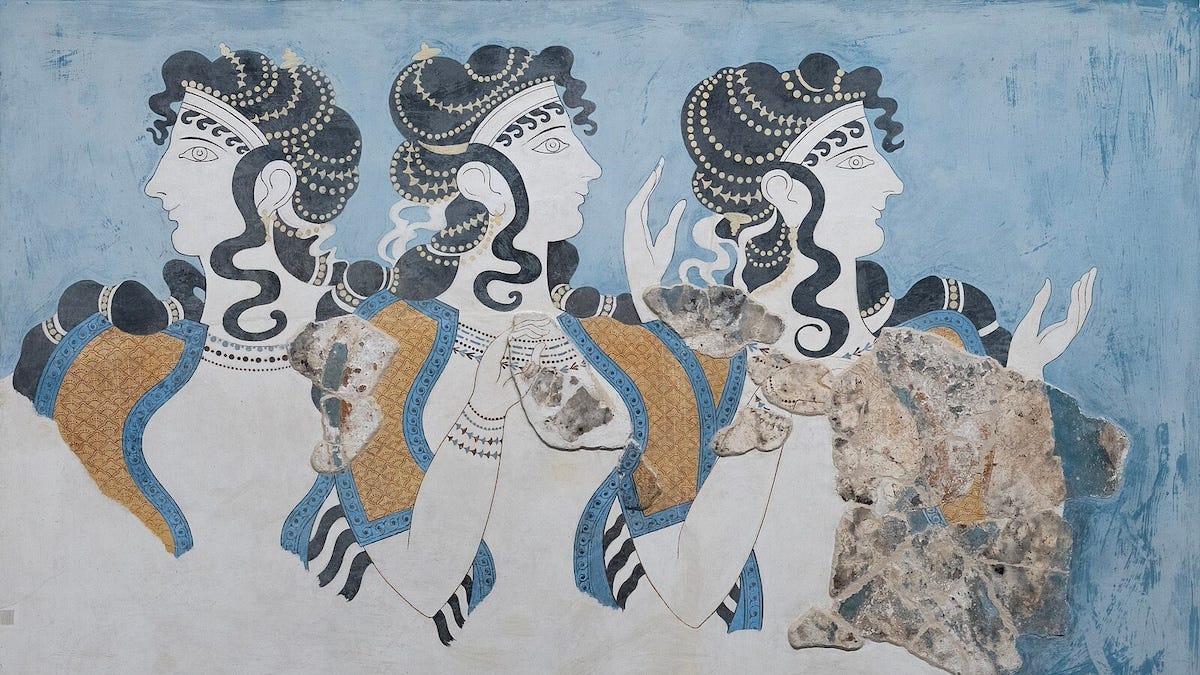
Nadya Williams
Surely this narrative, even when we bring women into it more prominently, shows exactly what we have known all along: that in the ancient world, it was mostly men who called the shots. Indeed, that is the complaint articulated by another reviewer, Sarah Ruden. Can we really conclude after all this that women shaped ancient history, Ruden wonders?
It is a worthwhile question, and one with direct applications for us today.
Comments
Nothing yet. Say the first thing.
Sign in to join the conversation.