
Reader’s note: This piece was originally published in 2024, but remains relevant and deserves a re-share.
A while back I created a survey that covered many questions having to do with the general life arc of fellow autistics, especially those who are late diagnosed or self-identified. I received hundreds of responses and was fascinated - but not surprised - to learn that the majority of us experienced an arc that was essentially the same in many crucial ways. Of course the finer details will always be different because we’re dealing with individual life experience, but there was a basic framework - and the following is that framework.
If you are looking for more insight into your autistic experience - including how to step into autistic joy, check out my 56 module course on Navigating Autism Late In Life.
We begin with the sense that we are, in a word, different. Something is off yet we can’t quite put our finger on it. Due to the nebulous nature of this difference, there’s no way to solve the problem - we just know there is one. There’s a tangible yet ineffable dissonance between ourselves and our peers.
Some of us may be able to ‘fit in’ but there’s a certain amount of anguished effort that constantly goes into it, and even with our very young and nascent minds we understand that this is not as much of a problem for anyone else. This isn’t to say that other kids don’t struggle socially or academically, it’s more that ours is a unique and hazy set of challenges that aren’t necessarily so obvious that they warrant a great deal of attention. Much, if not all, of the struggle is internal and internalized. This is how The Autistic Mask develops - and it usually does so at a very early age (especially for females).
By the time we are in school up until pre-teen years, we’ve begun repressing who we really are so that we can avoid being bullied and ostracized. Chances are, however - we’ve been singled out on numerous occasions anyway despite our immense efforts. Again, we never really understand why - there are numerous occasions from my own childhood / teenage experience where I was bullied and I had no idea what it was about me that made me stick out like a sore thumb. I looked the same as everyone else, dressed the same - but there was something about my personhood that attracted unwanted attention. I did all I could to blend in as best as possible - even down to mimicking others’ hair styles or hand gestures, so I could get by.
Bit by bit, the authentic self in any social realm goes by the wayside and The Mask is what takes hold. We aren’t even necessarily conscious of The Mask, because we’re not old enough to have developed a strong sense of self that could be covered up / splintered by such a facade, so it is typically an entirely unconscious endeavor that takes us away from ourselves.
This usually means there is person A who is present at school, and person B who collapses at home. Many autistics in the survey noted that when they got home they’d either meltdown, or collapse - aka shutdown. I have always been more of a shutdown type, and gratefully being an only child I could do this - I’d shut myself in my room and tend to all of my special interests, or zone out watching TV. Unbeknownst to me, this was a coping skill, a way to bounce back. Some children are not afforded this crucial time ‘off’ and this tends to be when meltdowns ensue.
In school, we likely have what’s known as a ‘spiky skillset’ - gifted in some subjects, but experiencing learning disabilities in others. Responders to the survey reported all kinds of different subject strengths and interests, but it seemed the more they excelled at one subject, the more another would suffer. In terms of energy output, this makes sense of course. But it doesn’t explain the learning disabilities - in some subjects, we just seem to lack the ability to learn - it just doesn’t compute. This obviously can lead to a great deal of frustration and embarrassment for us, especially when our peers are much more evenly spread in their abilities. We may be seen as ‘lazy’, ‘bored’ or ‘restless’ - we may have dyscalculia (difficulty with math), dyslexia (difficulties with accurate and fluent word recognition) or dyspraxia (difficulty with physical coordination).
Elementary school is difficult, but high school tends to be much worse. This has to do with the social demands that become much more complex and nuanced, which means that in turn The Mask must adapt to endure these additional challenges. This, plus the increased difficulty in balancing multiple school subjects, a job (in some cases), puberty and sexuality - it all starts becoming too much to handle. Hiding who we really are whilst juggling all of the above begins taking its toll. Many responders to the survey said they experienced their first autistic burnout at this time (though of course they didn’t know it to be autistic in nature then). Some said they dropped out of school as a result. This also happened to me. Others said they developed eating disorders as a way to control something in their lives which felt increasingly untenable. Many were diagnosed with anxiety and depression - which aren’t totally inaccurate - as heightened anxiety and depression are unfortunately concurrent with the general autistic experience - but it is not the complete picture. Some said they were misdiagnosed with borderline personality disorder or bipolar disorder.
Common rites of passage such as physical intimacy might be delayed, non-existent or forced to due to pressures of assimilation.
It’s no surprise that given our unrecognized support needs, burnout and high levels of stress, the transition into adulthood is often traumatic for undiagnosed autistics. So many challenging variables are suddenly thrust into our worlds: roommates, scheduling, juggling college or university with work and relationships, as well as social obligations - not having our safe nest at home to return to, not having the predictability of our home life. Many responders (including myself) turned to alcohol and drugs to help deal with the chaos and maintain our masks, which are now in their peak performance years.
For autistic women especially, we tend to move around a lot, have numerous jobs and romantic partners and / or social circles, as we are acutely aware of how we do not fit in anywhere and our anxieties in many environments are at an all-time high. No amount of exposure therapy, pep-talks (or brutal, self-critical inner dialogues) make it any easier. We turn the dagger inwards and blame ourselves for the difficulty. Our masks on the outside may appear bubbly, flexible, fun - but the way we are speaking to ourselves on the inside is anything but. We have known for many years at this point that we struggle immensely in ways that others do not, but instead of being able to blame a neurotypically-centered, ableist society for our suffering, we see ourselves as the odd one out and take it out on our sensitivities. Instead of listening to the inner compass that tells us to stop, say no, take a break etc we push through because other people seem to be doing this with ease, so why can’t we?
In our adult years we’re also likely struggling nebulously in our relationships - platonic and romantic. Something about the communication is off - we ask too many questions, are too literal, too direct - we put people off with our raw honesty, we find that we accidentally trigger people a lot without trying, we feel the full immensity of emotions and it scares others, our need for lots of alone time puts them off too - sometimes we have long delays in our processing which feels passive aggressive - the list goes on. And of course, over time, our authentic self shines through The Mask as we grow more comfortable with the people we’re with - and many seem unprepared for this. Who we presented ourselves as unconsciously (we were simply chameleoning to fit the current situation, as always) slips and someone else emerges. Often the two people are not totally dissimilar, but the change is enough to cause confusion and conflict. This leads to more breaks in relationships, and we continue to blame ourselves.
By the time we are in our thirties, forties or even later, if we haven’t been diagnosed as autistic already, we’re bone fucking tired. That doesn’t even begin to describe the weariness. A lifetime of masking, hiding the true, authentic self, bypassing the body’s signals and limitations time and again, taking on way too much, not having our sensory issues or needs met for decades, and berating ourselves for not being able to handle what others do - it all comes crashing down. Many who took the survey said that another major autistic burnout ensued, which led them to either self-identify as autistic and / or pursue an official diagnosis. Often there was some kind of tip-off, be it a social media post, a TV show or movie character who is autistically-coded, a book, meeting an autistic person etc - and an AH HA! moment ensued. The dominoes fall, and it suddenly all becomes so clear. Perimenopause was noted as another major revealing factor.
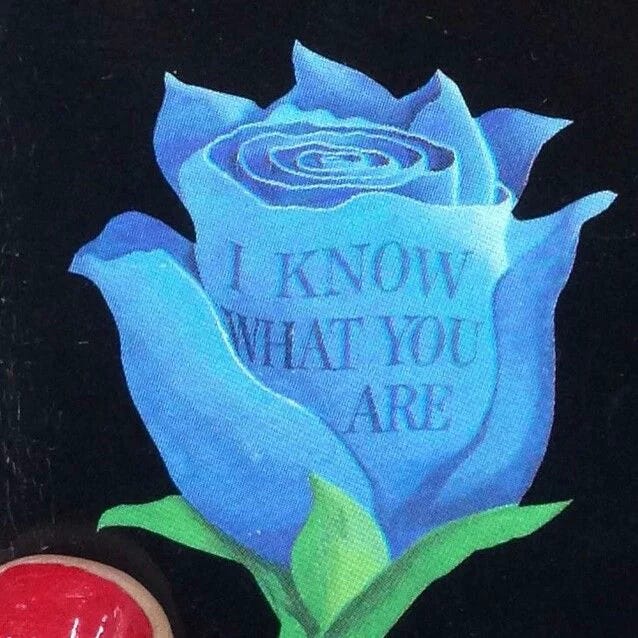
The realization is at once relieving and devastating. And of course it is - our entire idea of who we are in the world is shattered and replaced by what is commonly deemed a disability. Some come to accept themselves as disabled, others do not. As I’ve outlined in many writings on this, I do agree with the definition of autism as a disability in the sense that we are being ‘dis-abled’ by the neurotypical, ableist world at large, as it wasn’t built for people with our neurotype and particular needs. If it had been, we wouldn’t be disabled by it. But it is precisely the reason why we struggle the way we do. And this struggle, post realization, becomes illuminated completely - we finally understand why we’ve suffered through our lives the way we have.
We undergo a gamut of undulating emotions - big mourning, big anger, big resentment, big shock. We relive all of our painful (and even beautiful!) memories with this new context: insert autism here. We may find that regret crops up, wishing that we were diagnosed sooner so that we could have avoided much grief. The undoing process of masking and being hard on ourselves, as well as integrating into the new identity takes a different amount of time for everyone, but the general consensus is - we’re looking at years. And of course, this makes sense. We spent decades erecting certain identities and habits, it takes as long as it takes to undo them and make new ones.
But many responders reported feeling that their lives improved after self-identifying or receiving a diagnosis. They were able to begin unmasking, being kinder to themselves, and creating a life that better suited their needs. In my opinion it is far better to know than to not know, knowledge is power, and power in this case is softness, grace and tenderness.
Until next time, love and wolves.
D xx

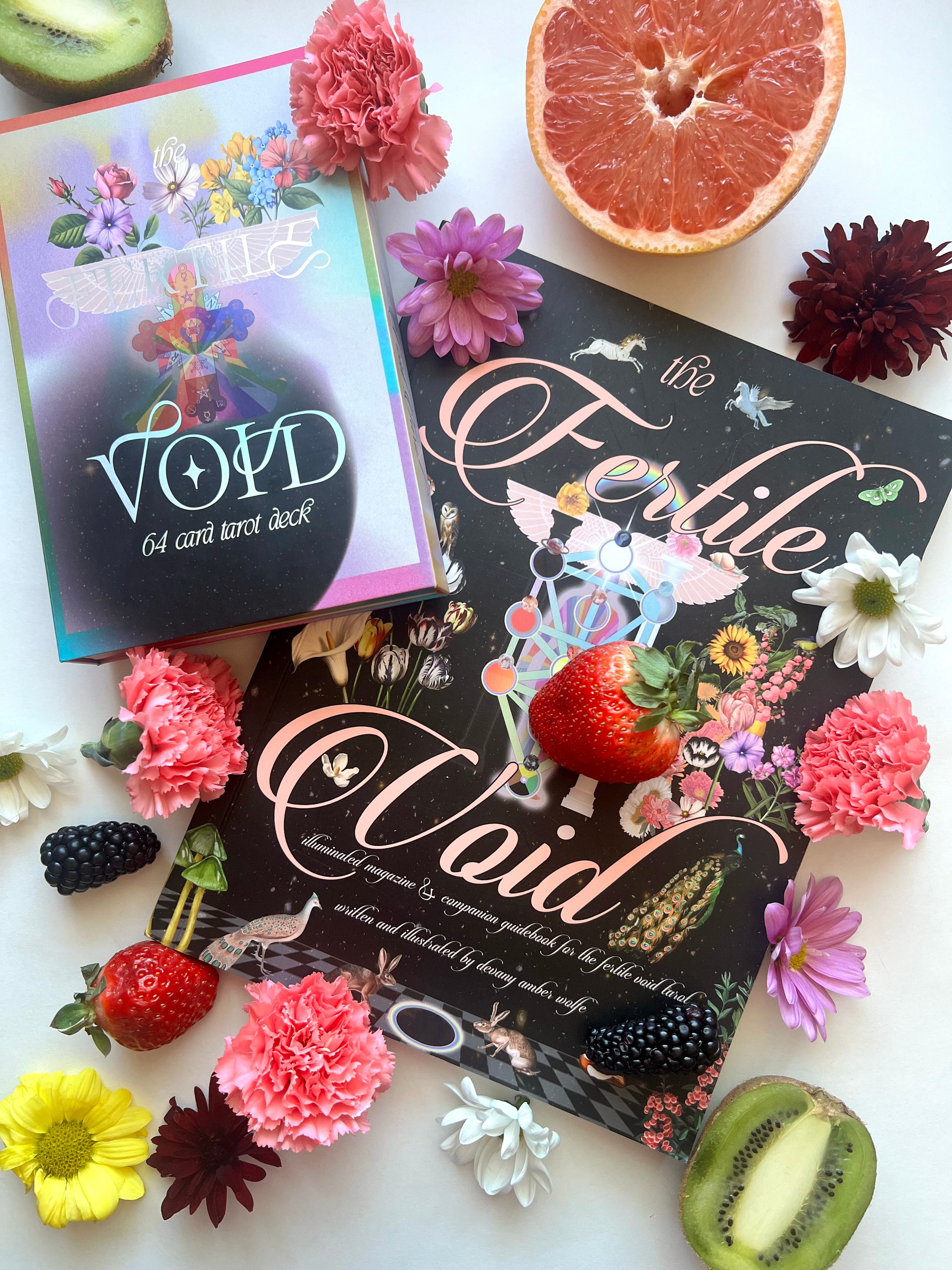
P.S. If you are keen to support my work in other ways, I make internationally bestselling tarot and oracle decks that have been featured in Vogue, Cosmo, InStyle and more!
Comments
Nothing yet. Say the first thing.
Sign in to join the conversation.