
In many ways this piece is a follow up to my recent piece, your illness is not your fault. If you haven’t already, give it a read for a little more context.
I’m 42, and my capacity to handle my life is not the same as it used to be. I’m deep in the trenches of perimenopause, and according to various sources (naturopaths, forums, google) I could (oh, fingers all the way crossed) be a little more than halfway through this absolutely nail-biting rite of passage. Many of you who are in these trenches with me will probably be familiar with Dr. Mary Claire Haver, a menopause specialist. It was through her I learned that women undergoing this phase of life can distill their first ‘symptom’ down to one (nebulous, disconcerting) thing:
“I just don’t feel like myself.”
Of course, this isn’t a symptom like a rash is a symptom. But it heralds The Change nonetheless, because perimenopause is a neurological shift as much as it is a hormonal shift. Wherever you believe the centre of ‘the self’ lives, since perimenopause is systemic, it’s going to affect our notion of identity - especially as it connects to our capacity to handle our lives.
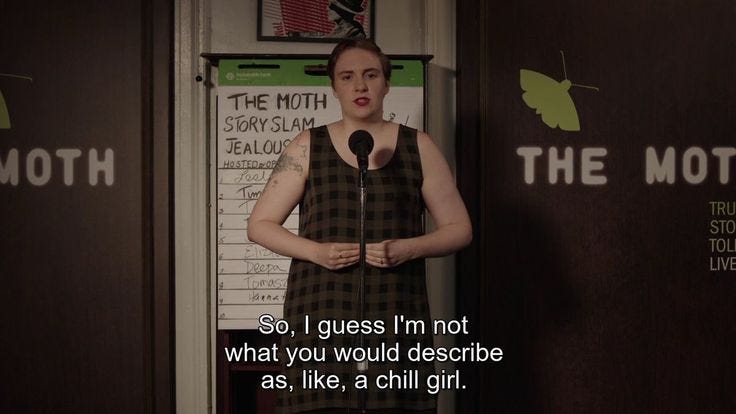
In her recent memoir Famesick, Lena Dunham speaks about her relationship with anxiety. She says that all her life, her nervous system has felt intense, on edge and frenetic. This was - as it always is - pathologized as purely mental and dismissed as being a weakness, or inability to cope. She later discovered that she has Hypermobile Ehlers-Danlos Syndrome, and the physiological landscape of hEDS itself causes anxiety - meaning that, due to dysfunction having to do with connective tissues and the autonomic nervous system, her body was often in some manner of fight, flight or freeze and thus, anxiety. She wasn’t manifesting it, nor was it all in her head. Her own body was sending messages to her brain of alarm, and her brain was simply responding. Y’know, like anyone’s would.
This body-to-brain pathway is heinously dismissed by medical professionals and society at large when it comes to women. I’m not saying anything new when I’m pointing out that our experiences are deemed purely mental, somehow manifested and ‘hysterical.’ We’ve all likely experienced this gaslighting to some degree. It is an inherently ableist framework to assume that all of one’s problems are entirely located within the skull - as of course, in ableism, the celebration is of the healthy, perfectly functioning body. One that does not have monthly fluctuations like a woman’s does. One that does not experience health problems. We are expected to work like dogs then die behind the shed, never showing weakness or illness.
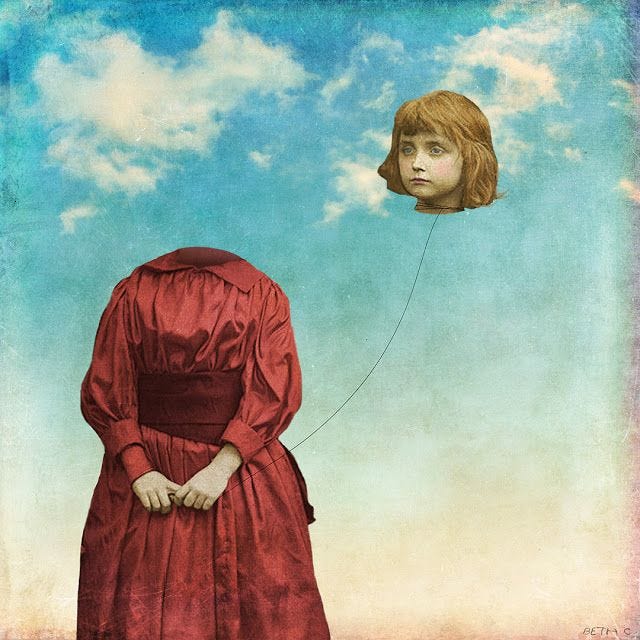
In abelism, the body doesn’t exist if it is ailing to any degree because it is no longer the ideal body. Ableism, at its root, is fear of death and rot. So therefore an ailing body is ignored, made invisible. This is why the brain becomes the culprit for women - this is why they tell us it’s all in our heads.
Just like with Ehlers-Danlos or any other illness that affects the nervous system, the physiological landscape of perimenopause creates instability in the ANS, especially for anyone who is sensitive to any degree, neurodivergent, or has experienced trauma (ok, so, all women then?)
Think about it - throughout your pre-menopausal years (from your first bleed to peri) estrogen and progesterone are abundant, and your cycle - no matter what your normal was - is at least somewhat predictable and reliable. It is not only the abundance of hormones that creates capacity in the nervous system, it is the agreement your body has with its own cycle. Predictability = safety.
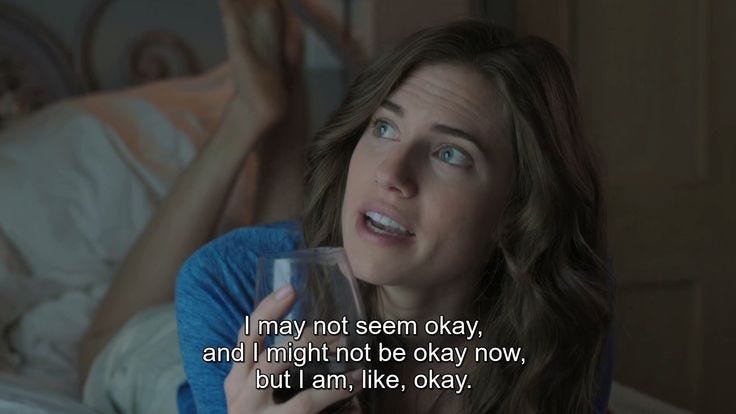
Unpredictable hormones and an ever-shifting landscape creates instability which lowers capacity and increases anxiety. It truly is that simple but we do not honour it.
Midlife is a major challenge for women because of this. We arrive in this phase depleted and in desperate need of a cocoon, but that is not what we’re afforded. In the not-too-distant past, women in perimenopause were institutionalized, and even as recently as the early 1990s when the Women’s Health Initiative (WHI) launched a study on the safety and efficacy of hormone replacement therapy (HRT). The results were deliberately skewed to make way for the newest ‘revolution’ in medical science: antidepressants. Women were fear-mongered out of taking the HRT (which was actually helping them) due to over-inflated claims about cancer risk, and encouraged instead to take the antidepressants.
Again, it’s all in her head.
When the female body does not perform as well as a man’s there are systemic, social, and existential consequences. A healthy woman’s body may be, in her own way, on par with a man’s for decades due to the relentless pressures of the patriarchy and her abundant hormones. But once she enters this phase, she is not given the break she so sorely needs and deserves. Most women crash-land into perimenopause and become furious with themselves and their sudden inability to cope with their lives. They’re told by sources everywhere to simply ‘deal’ with their anxiety and move on. There is nothing out there, save for the following list that I came across, which actually suggests we slow down and take things off our plates.
In their book Wise Power: Discover the Liberating Power of Menopause to Awaken Authority, Purpose and Belonging, authors Alexandra Pope and Sjanie Hugo Wurlitzer outline their Menopause Ground Rules:
“During menopause, you’re out of the pace of normal life. You’re in an emotionally loaded, somewhat less resourced, physically demanding place. You’re likely to have less physical energy, feel more sensitive, and have way less capacity for dealing with things. You aren’t equipped for worldly stuff.
But this state is part and parcel for the ingredients necessary for you to evolve into your new self.
Strip back your life to the essentials. Seek cover, hang low, so you can tend to yourself.
Slow right down. Do less. And do whatever you do more slowly. Take your time with things.
Stop. Rest. Have periods of doing nothing.
Carve out pockets of time alone. Be quiet with yourself.
Create simple routines that nourish and hold you. Focus on the most straightforward daily tasks and keep the basic rhythm going. Having some daily work that you turn to can hold you. But you can’t be pushing yourself or driving new plans.
Gather with likeminded folk. Be with people who are going through menopause, or who get what you’re experiencing.
Cut yourself as much slack as possible. Drop perfectionism and let yourself be “below par.” You can always return to your high standards later.
Don’t make ambitious plans. Drop your goals for a while. The old “set a goal and push yourself towards it” won’t work now.
Be flexible with yourself. Give yourself permission to change your plans at anytime.
Engage in pleasurable activities. Find what brings you comfort, joy or satisfaction and do it.
Never underestimate the power of small, or tiny acts of self-care.”
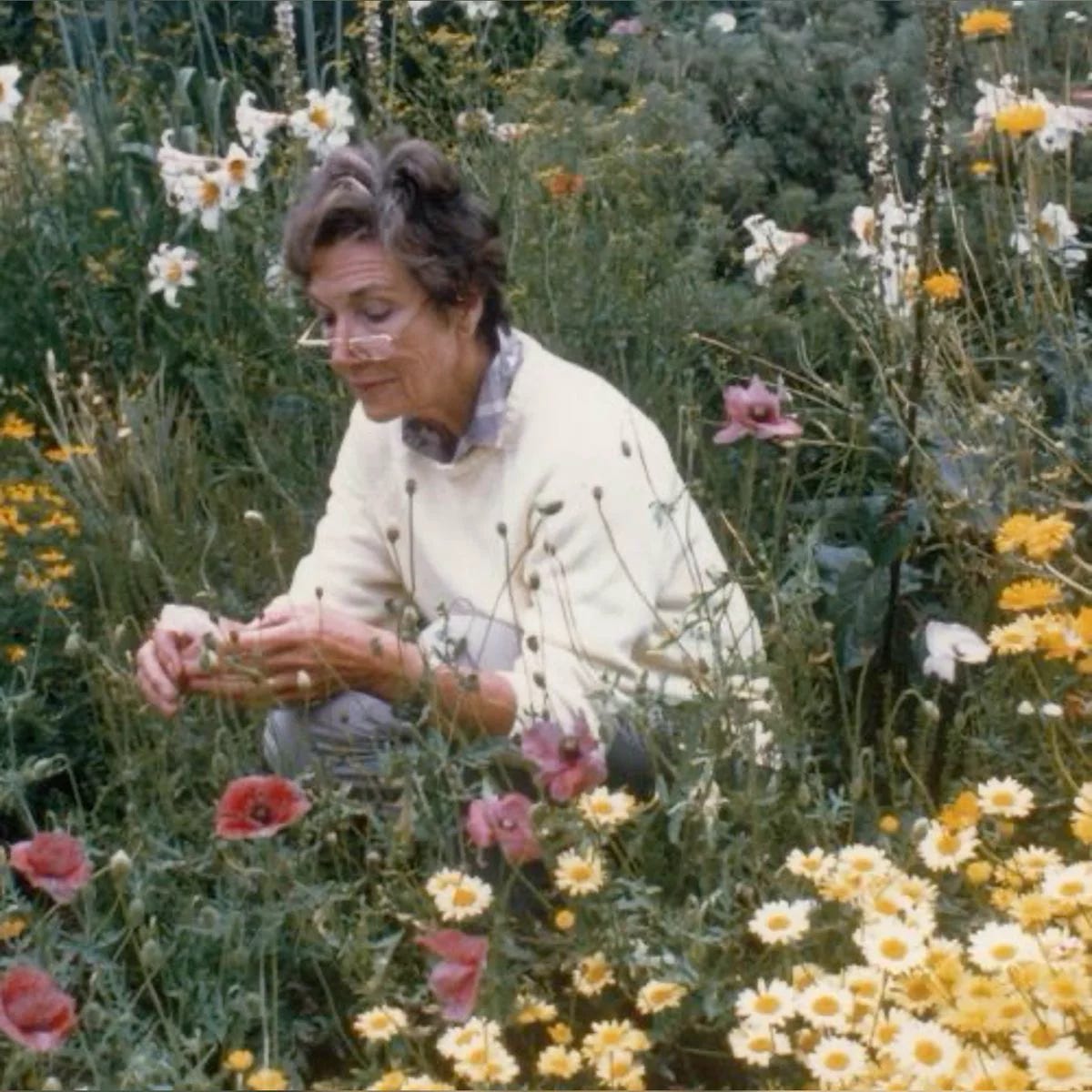
I’ve shared this list before and I will periodically because I feel it is a life-line - a potent reminder that it is absolutely NORMAL to have less capacity in perimenopause. Your brilliant, miraculous body is doing so much behind the scenes. It’s not like you have one hundred buckets of capacity to draw from - you have one. The bucket of the body, mind and spirit. When resources are being used to try and balance, internally, a myriad of physiological processes that you’re not even consciously aware of - of course the bucket is going to be depleted. Of course there are going to be difficulties. Of course there are going to be symptoms such as ‘not feeling like yourself’ or anxiety. Whatever is left over, resource-wise, is what gets applied to life, and it’s less than we’re used to.
Again, and as always, this is a systemic problem not an individual one. If we lived in a matriarchy you could damn well bet that so, so, so many things would be different - and better, and healthier - for not only women but the entire world (permit me to go on a small side-quest for a moment):
The earth would be taken care of, and stewarded. We would embody this stewardship role without question, tending to all flora and fauna, bodies of water and the air we breathe with precision and grace
We would NOT have capitalism as our dominant system
The work we did engage in would be set to the natural rhythms of the earth and the body, making lots of space for ebbs, lulls, inner wintering, illness, aging
Aging women would be CELEBRATED and REVERED, not made to feel irrelevant, disgusting and useless
Young women entering their menstrual years would be guided by crones, and there would be red tents (menstrual huts) everywhere. (Side note, I read a post by one of my favourite astrologers Rob Brezsny, who shared a letter he once wrote to Oprah - imploring her to use part of her immense wealth to buy up all of the abandoned fast food buildings around the United States and turn them into red tents. Oprah won’t do this, but I promise you, that if I ever amass a lot of wealth, I will).
Community would be thriving, and when a woman entered perimenopause she would be allowed to leave society for her cocoon phase, embodying only a truncated and humble set of responsibilities (as much as she wanted, essentially).
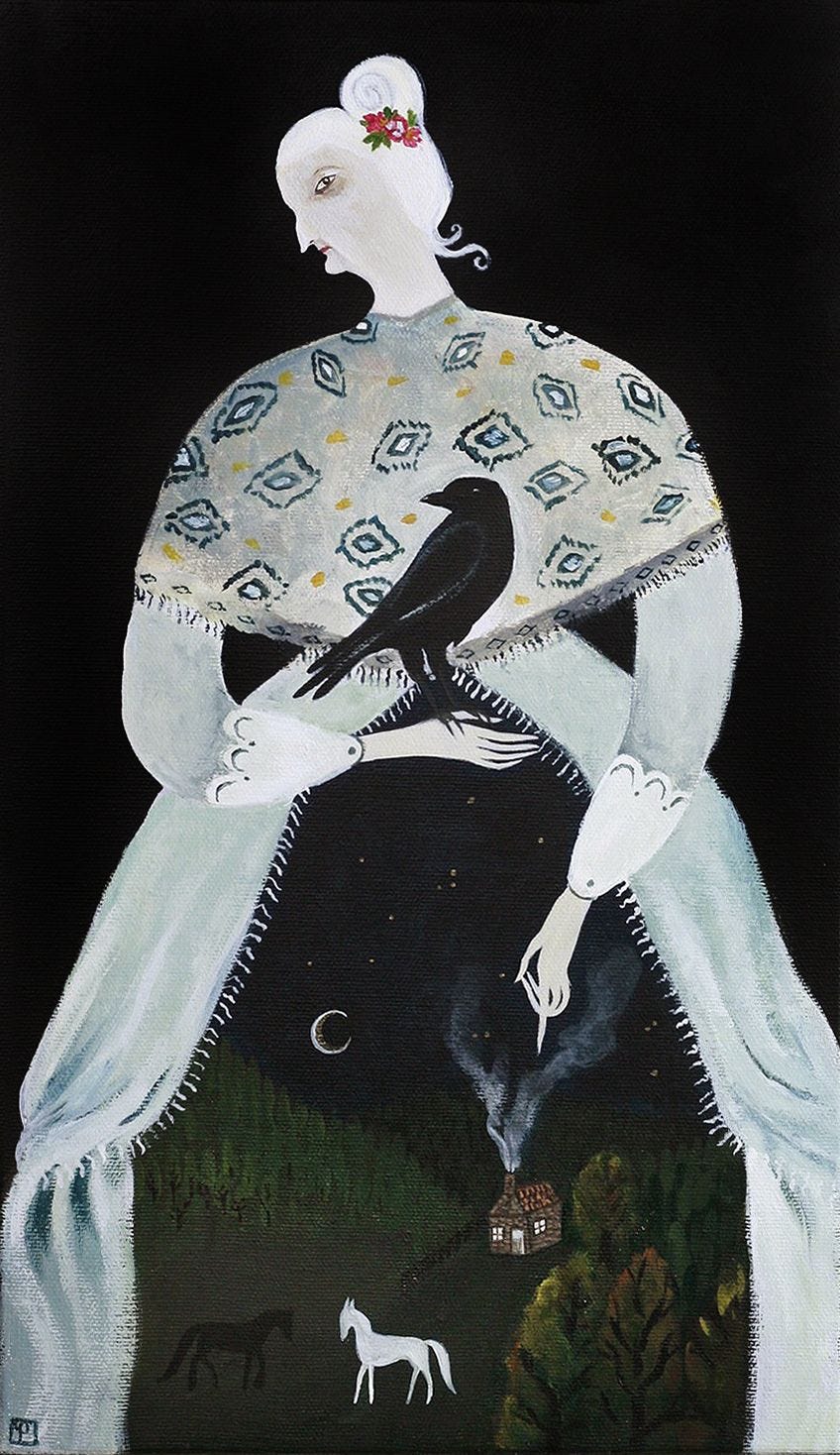
There are more bullet points to this list, but I was attempting to arrive back at the main thrust about this being a systemic issue, not an individual one. The fact that we crash-land into perimenopause and find ourselves flailing in the life we created whilst more resourced is not our fault. The fact that our system is so inflexible when we need to downsize is not our fault. The fact that our bodies are struggling to keep up is not our fault.
Nor is it all in our heads - not even a little bit.
I know a lot of you who read this column of mine are not yet in peri - but my hope is that once you do arrive there, you’re able to give yourself all of the grace, permission and unconditional love that you require to walk, crawl, hobble or slither across this bridge.
I’m considering creating an online course that does a deep dive into women’s cycles and working with our inner seasons - especially during this phase of life, and for those who are neurodivergent.
Until next time,
Love and wolves.
D xx
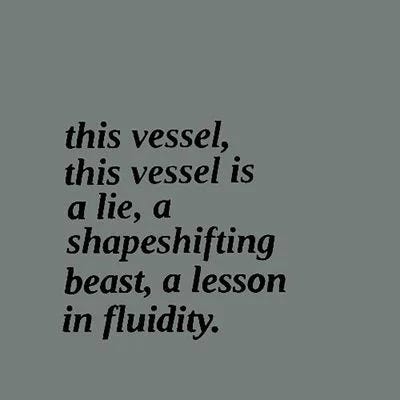
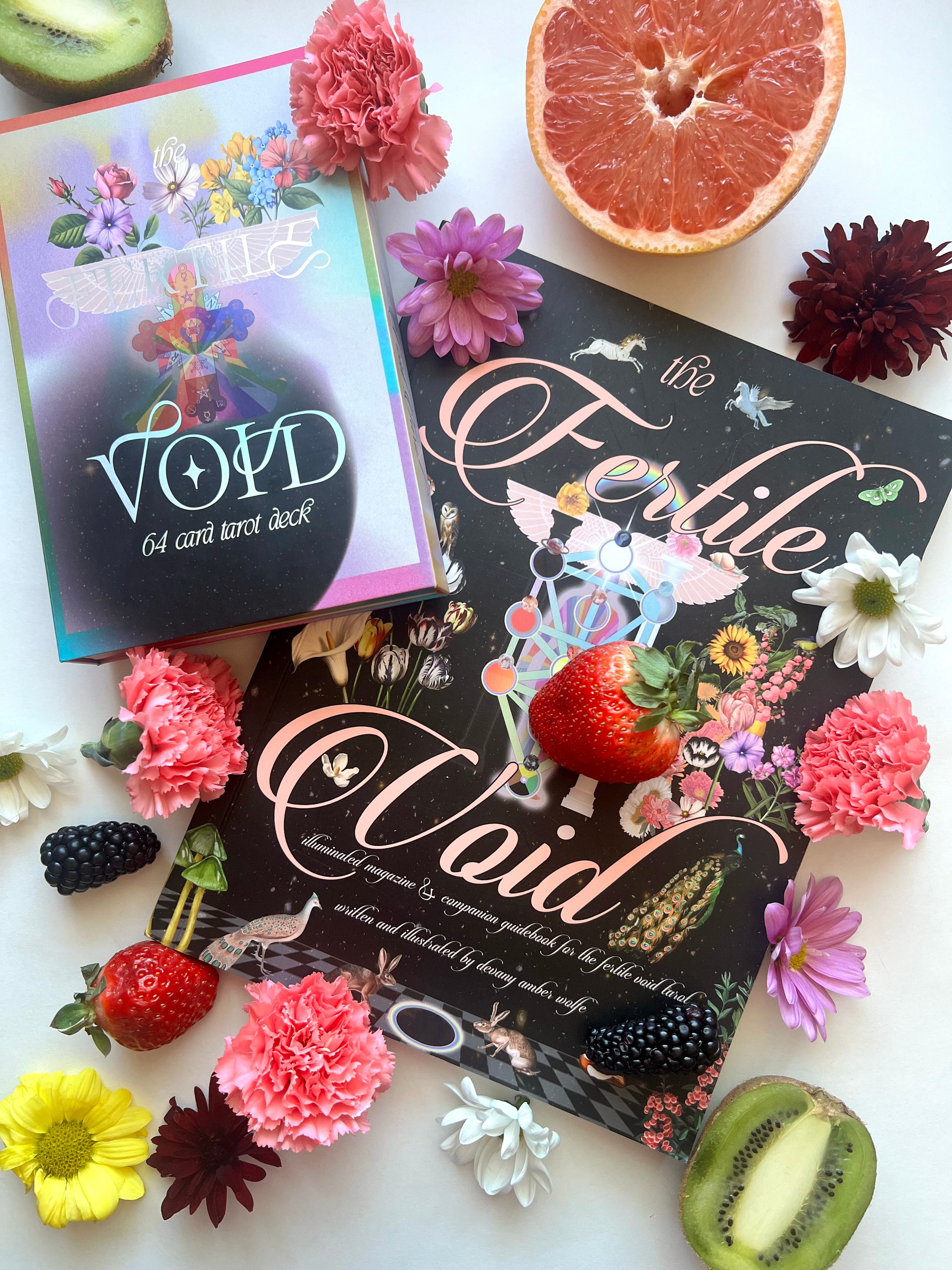
P.S. If you are keen to support my work in other ways, I make internationally bestselling tarot and oracle decks that have been featured in Vogue, Cosmo, InStyle and more!
Comments
Nothing yet. Say the first thing.
Sign in to join the conversation.