
Two very clear themes in today’s edition: pollution and the appalling way some men treat women.
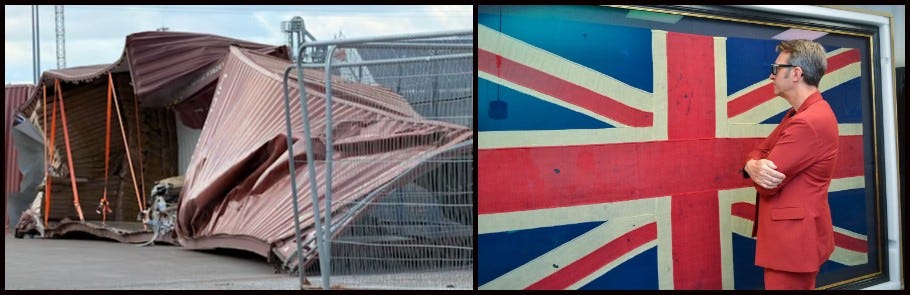
I’ve taken a closer look at the shipping accident two weeks ago which caused a billion tiny plastic pellets to be released into our waters.
More than three years ago there were high level talks on the packaging requirements for plastic pellets in freight containers. Today fingers are being pointed and questions are being asked after two vessels collided in the Port of Tyne. But it looks to me as if we’re not asking all the right questions - and we’re sometimes asking the right questions of the wrong people.
Teenagers, army recruits and MPs all tell similar stories today - about the violent misogyny they face on a regular basis.
A group of young Tyneside women have made a film which has been sent to the Prime Minister. One of them tells of a ‘rape list’ where boys ranked girls they wanted to assault.
The BBC has published an investigation into allegations of rape and sexual abuse against female recruits at an Army training college in Harrogate. And there are further shocking instances of what our female politicians have to endure.
We have an uplifting tale about organ donation - how a 14-year-old has saved five lives. There’s also the story about a unique piece of history that has been secured for the region and what the Government’s new mental health announcement means for the North East.
And we’ve got Bob Mortimer in the ad break as well!
It’s being called Europe’s worst plastic pollution incident of its kind. The consequences, we are warned, will stretch way beyond the clean-up operation on our beaches where an army of volunteers are doing a brilliant job of clearing up the tiny plastic pellets that have washed up on our shores.
Nurdles. The pellets are called nurdles. Like me, you may not have heard of them until recently but they are used to manufacture most everyday plastic products. A collision at the Port of Tyne on Sunday July 19 is where our nurdle story began.
Up to a billion of them are thought to have got into the water at the Port of Tyne, millions of them within five seconds of the departing Wind Orca hitting the side of the berthed BG Orange and slicing open containers “like a can of beans”.
I said this was a massive environmental issue, but it didn’t feel like it because the lack of media attention (Eyes & Ears 24.07.26). I’ve read a lot about the incident and what’s happened since. Fingers have been pointed, questions asked. Shouldn’t Port of Tyne have acted sooner? Why have the councils not done more to help with the clean-up? Surely the mayor can do something?
I’ve not seen much about Cadeler, the company which owns Wild Orca and caused the damage in the first place. That damage also resulted in a crane to topple and an operator fall 115 ft, breaking several bones and requiring a hospital operation. He is now recovering at home, I’m pleased to report.
And what about BG Freight Line, the owner of BG Orange? Under maritime law’s ‘polluter pays’ principle the company should be footing the bill for the clean-up and seeking redress afterwards.
Surely public pressure should be on those two companies to do what it takes, for as long as it takes, to sort this environmental mess out. If this incident happened at sea we wouldn’t be questioning the actions of ports and public authorities.
Millions of nurdles got into the Tyne in five seconds. That doesn’t sound like they were bagged or packed into separate crates inside the shipping containers. Why ever not? We wouldn’t be looking at a massive ecological issue right now if it was a few dozen crates that had to be fished out of the river rather than millions and millions of tiny pellets being projectile vomited into the water.
Nurdles are not currently classified as dangerous cargo, so there are no mandatory requirements for how they’re packaged inside a container or where that container is stowed on a ship.
We could have expected some regulation by now. Following the catastrophic spill from the X-Press Pearl off the coast of Sri Lanka in 2021, several countries proposed that nurdles be formally classified as an environmental hazard which would require them to be safely packaged and stowed, and clearly documented so carriers know what they were carrying.
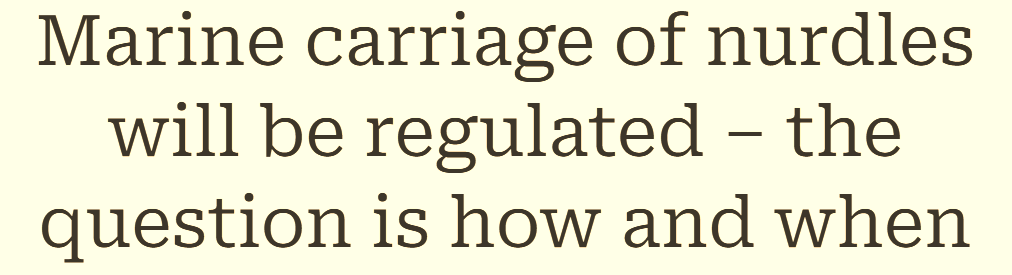
The headline above is from April 2023 and was published by Norwegian-based Gard, one of the world’s largest marine P&I (Protection and Indemnity) insurer.
The article starts: “To reduce the risk of large nurdle spills experienced in recent years, the regulatory work is now focussing on packaging requirements for plastic pellets within the freight container, notification to the carrier so that containers containing plastic pellets can be identified quickly to aid recovery, and stowage requirements for containers containing plastic pellets.”
The article goes on to highlight ‘The debate over packaging’ and addresses the issue over whether the use of “single bags” are adequate.
“Plastic pellets should be packed in good quality packagings/bags with a maximum mass of [25 kg] per package/bag. The use of single bags should be avoided”. ‘Single bags’ refers to using a single plastic liner within the container. When the steel container is pierced, so is the plastic liner resulting in spill of nurdles even when the container itself remains on board.
So, were the nurdles on the BG Orange containers stored in single bags? Port of Tyne chief executive Matt Beeton told ITV’s Kris Jepson: “As the Wind Orca moved away, it hit the side of the BG Orange and went right down the side. In doing so, cutting holes in the hull, and ripping open some of the containers as well. Two of those containers had nurdles in, it sliced them open, damaged a whole host of other containers and within about five seconds, about 17 tonnes of nurdles were emptied into the Tyne.”
I think it reasonable to ask questions of owners BG Freight Line (part of the Peel Ports Group) about how they package nurdles and if their policy has changed in any way since April 2023.
Environmental experts have warned that the spill of plastic pellets into the river Tyne has to be treated as a long-term ecological issue – not just an immediate clean-up challenge.
Sophia Stovall, chief executive of the Tyne Rivers Trust, said: “It is far too early to know the full environmental consequences of this incident, but experience from other major nurdle spills suggests it is unlikely to be remembered solely as a short-term clean-up problem.
“They are extremely difficult to recover completely once they enter a river or marine environment and can be transported by tides, currents and wind, become trapped in habitats and continue to move through the river, estuary and coastline long after the initial incident.”
Nurdles are usually between 1mm and 5mm in size and used as the raw material to manufacture many everyday plastic products. Their small size and appearance mean they can be mistaken for food by fish, seabirds and other wildlife – and their impact extend up through the food chain.
A group of young women from Tyneside have made a short film with This Life Collective highlighting the violent misogyny they face, including explicit sexual language and rape threats often disguised as “banter”. One girl told of a ‘rape list’ where boys ranked girls they wanted to assault.
Victims Minister Alex Davies-Jones said she was “horrified but sadly not surprised”, linking it to a rise in peer-on-peer sexual offences. The North East has the highest rate of violence against women and girls in England.
A specialist teacher with 30 years’ experience in schools said the rise of toxic masculinity among social media influencers had a serious impact on “disenfranchised boys”. The film has been shared with the Department for Education and the Prime Minister. Director Sue Davison hopes the girls can inform future policy discussions.
Calls are growing for an independent inquiry into an Army training college for teenagers following allegations of rape and sexual abuse against female recruits. Four young women told the BBC they were sexually assaulted and harassed while attending the Army Foundation College (AFC) at Harrogate in North Yorkshire.
South Shields MP Emma Lewell, who sits on the Defence Committee, said: “If this was any other school or residential environment for children, it would have been closed down.”
Overwhelming levels of threats and abuse are creating a dangerous environment for politicians, their staff and families, says Morecambe and Lunesdale MP Lizzi Collinge.
Anger was being “whipped up and personalised” as part of everyday political debate with staff members having to shield her from violent correspondence. She was speaking days after Labour colleague Bridget Phillipson, the MP for Houghton and Sunderland South, said she had turned off comments on her Facebook page over abusive comments.
The importance of talking about organ donation has been highlighted by the family of a 14-year-old boy who died after a vehicle overturned on a farm. Five lives were saved thanks to Aaron Anderson from Consett. A fortnight before his death, he had told parents Donna and Craig he supported organ donation.
The NHS, which wants people to discuss their preferences with family members, said 63 people in the North East and Yorkshire died last year while waiting for a transplant. Meanwhile, the number of families consenting to organ donation dropped from 69% in 2020-21 to 57% in 2025-26.
Donna told the BBC the decision to agree to donation was easier knowing “that's what he would have wanted”.
You can access the organ donor register here. I just have.
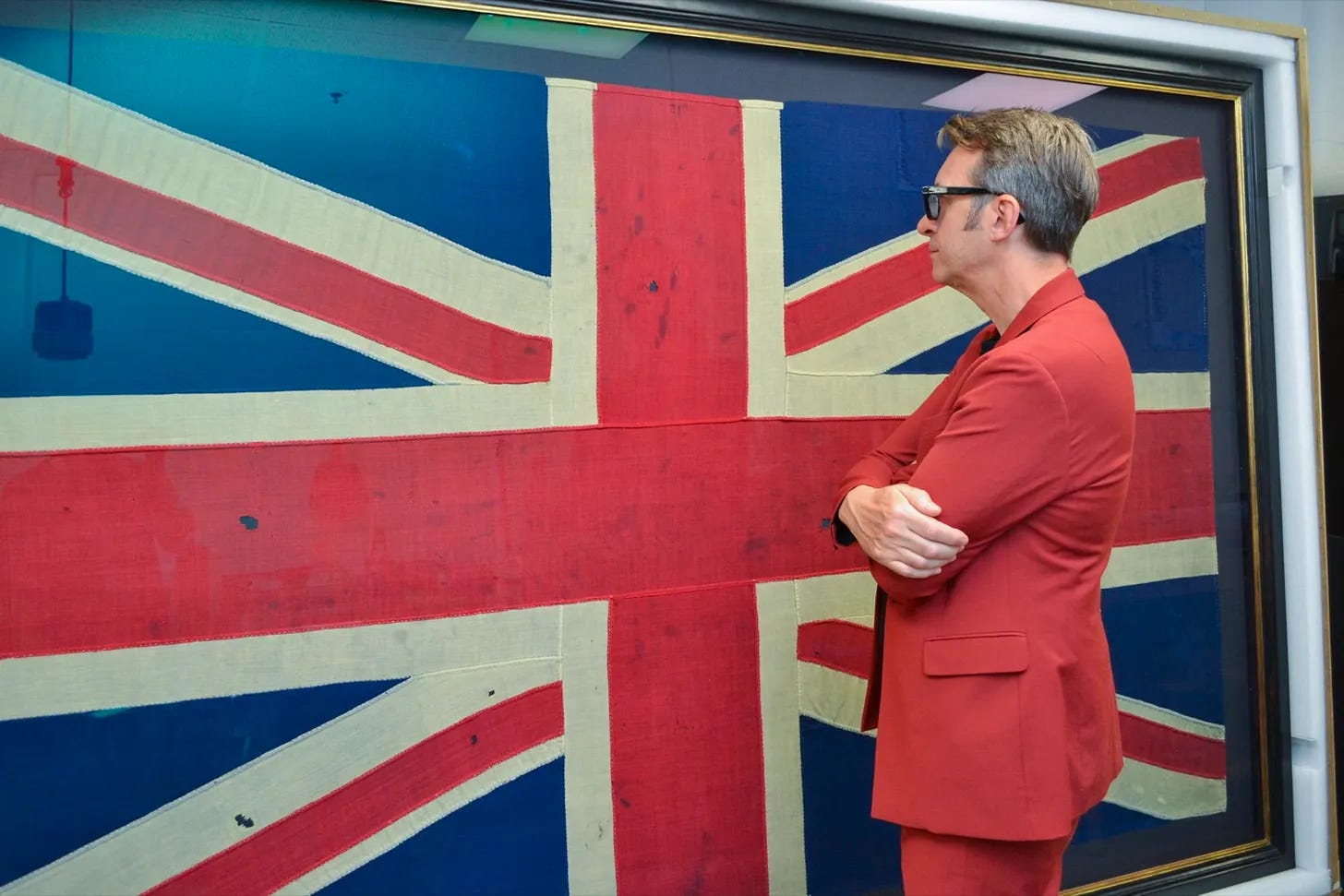
The Union Flag which was flown from North East hero Vice-Admiral Lord Collingwood’s warship at the Battle of Trafalgar has been saved for the region. North East Museums has acquired the flag from HMS Royal Sovereign, ensuring it remains in the UK, with the support of several generous funders.
Newcastle-born Cuthbert Collingwood took control of the British fleet in the victory against the French and Spanish at Trafalgar on October 21, 1805, after the death of commander Lord Nelson. An estimated 500 North East sailors fought in the battle.
The flag was due to be taken out of the country before an export bar was placed on it by the Secretary of State because of its significance to the UK. North East Museums has raised over two-thirds of its £700,000 fundraising target to purchase the flag and create a permanent home for it at the Discovery Museum in Newcastle. Tony Henderson has more on the story here.
The clock is ticking on the Wildlife Trusts and Northumberland Wildlife Trust’s efforts to raise the £30 million needed to buy the largest area of land to be put on sale in England in decades.
David Attenborough has already championed the cause to buy the entire 3,800-hectare Rothbury Estate. More than £20.6 million has been raised and every donation made this month, up to £100,000, will be match-funded by The Dixon Foundation and Ringtons.
A large solar farm near Blackhall Rocks has been approved by Durham County Council’s planning committee despite 67 letters of objection.
Lucinda Bird, whose family owns the land, said the Benridge Solar Farm would help secure the future of their farm by providing reinvestment income. Grupotec Solar UK said the project would also create up to £10 million of construction opportunities for local firms, contribute about £200,000 a year in business rates and establish a £24,000 annual community benefit fund.

A blue plaque marking abolitionist Frederick Douglass’s 1846 lectures at North Shields’ Baptist Church has been unveiled by North Tyneside Council and the North Shields Heritology Project. Douglass, still legally enslaved at the time, was invited by the town’s anti-slavery society. Hundreds of objections have been lodged against a £36m holiday park proposed for Hamsterley Forest near Bishop Auckland, including 70 cabins and a Go Ape course. Andrea Bainbridge of the Hamsterley Forest Action Group said it would turn the area “into a theme park” and threaten wildlife. Gibside, the National Trust’s Grade I listed gardens in Gateshead, has been hit by 30 crimes in a year, including two recent break-ins on consecutive nights that forced the cafe to close. The Enjoy Stockton visitor information centre, which had about 15,000 visitors a year, has closed for good in a move Stockton Council says will save £50,000 this year and £75,000 annually after that. A new production of Shakepeare’s Othello, set in the early 1980s against the backdrop of the Falklands War, is to open at Northern Stage in Newcastle next month ahead of a national tour. Durham council is to spend £1.5 million on filling potholes on county roads over the next three years with half the money spent in 2026-27. Councillor Tim McGuinness, cabinet member for rural, farming and transport, said: “This will be a game changer.”
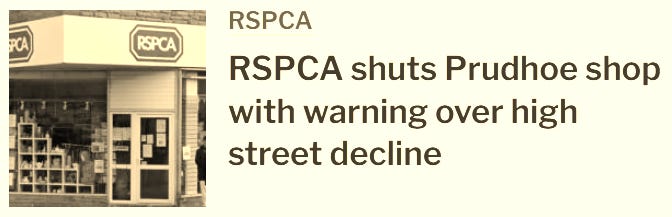
People often moan about high streets being full of charity shops, nail bars, bookmakers and vape shops. Now it’s charity shops warning about the decline of our high streets.
Blyth Celebrates, the programme of events, festivals, performances and cultural activities that was part of a wider regeneration initiative called Energising Blyth, attracted a total audience of some 90,000 during its inaugural year.
Funded by Northumberland County Council, it also helped to establish the town as one of the county’s emerging cultural destinations, according to those who monitor these things. No wonder it’s coming back, writes David Whetstone in Cultured. North East.
British Steel is starting 70 new apprentices and graduates next month after receiving more than 1,000 applications. North East-based Develop North is entering its tenth year with an expanded investment strategy and strong pipeline following solid interim results. Northumberland engineering and technology company Osbit has appointed Nigel Ward as MD following Robbie Blakeman and Brendon Hayward’s decision to step down from running the business. Durham planning committee has rejected Amazon’s bid for a 125-metre wind turbine at its Bowburn fulfilment centre because it would impact views of Durham Castle, Cathedral World Heritage Site, the Durham City Centre Conservation Area and the living conditions of nearby residents. The Scotch Corner Designer Village was approved in 2015. It has since had opening dates pushed back from 2021 to 2023, then 2024, March 2026, and spring 2027 - it’s now said to be autumn 2027. Aberdeenshire subsea ROV inspection and intervention company Film-Ocean has opened an operational and project delivery office at the Cobalt Business Exchange near Newcastle. Ceilings manufacturer Zentia, the Gateshead firm formerly known as Armstrong Cork Company, which folded in June with the loss of 170 jobs could be bought out of administration by a new owner.
You’ve probably heard Romesh Ranganathan ask (countless times): “What has the BBC ever done for me” - although I never tire of hearing him say “Bog off, Du Beke” at the end.
Here is one of a series of ads the BBC aired in the mid to late 90s promoting itself as the channel of diversity. And they couldn’t have asked anyone better than Vic Reeves and Bob Mortimer who perform some hilarious spoof BBC programme trailers.
People needing immediate care for mental health problems will be able to access specialist walk-in hubs close to their home. Ministers have set out plans to create a network of nearly 200 community mental health centres and mental health A&Es by 2029.
The aim is to give those experiencing a mental health crisis or significant distress somewhere to go to get help when they need it - with plans to open dozens of the hubs in high street locations like banks and libraries.
Many of the hubs are expected to be open seven days a week and some will have short-stay bed facilities. Six areas have trialled the approach since 2024.
The government is also pledging to set up another 59 dedicated mental health A&Es, on top of the 23 which are already operational. Many will be attached to existing A&Es.
Prime Minister Andy Burnham said: “Nobody should be left to struggle with their mental health alone. But every day, thousands of people are waiting months for help, then finding the only door open to them is a busy A&E. These new centres will be a lifeline for so many.”
The chief executive of the Centre for Mental Health, Andy Bell, said he was delighted that the government was taking action on mental health after it had been neglected by successive governments - although he was concerned that the mental health emergency departments had not been properly tested yet.
In the North East, the Government’s plans will include emergency departments at Lanchester Road Hospital, County Durham, Roseberry Park, Middlesbrough, St Nicholas Hospital, Gosforth and Sunderland. There will be two new community mental health centres in County Durham, and one each in Darlington, Hartlepool, Middlesbrough, Newcastle, Redcar & Cleveland, and Sunderland.
No posts
Comments
Nothing yet. Say the first thing.
Sign in to join the conversation.