
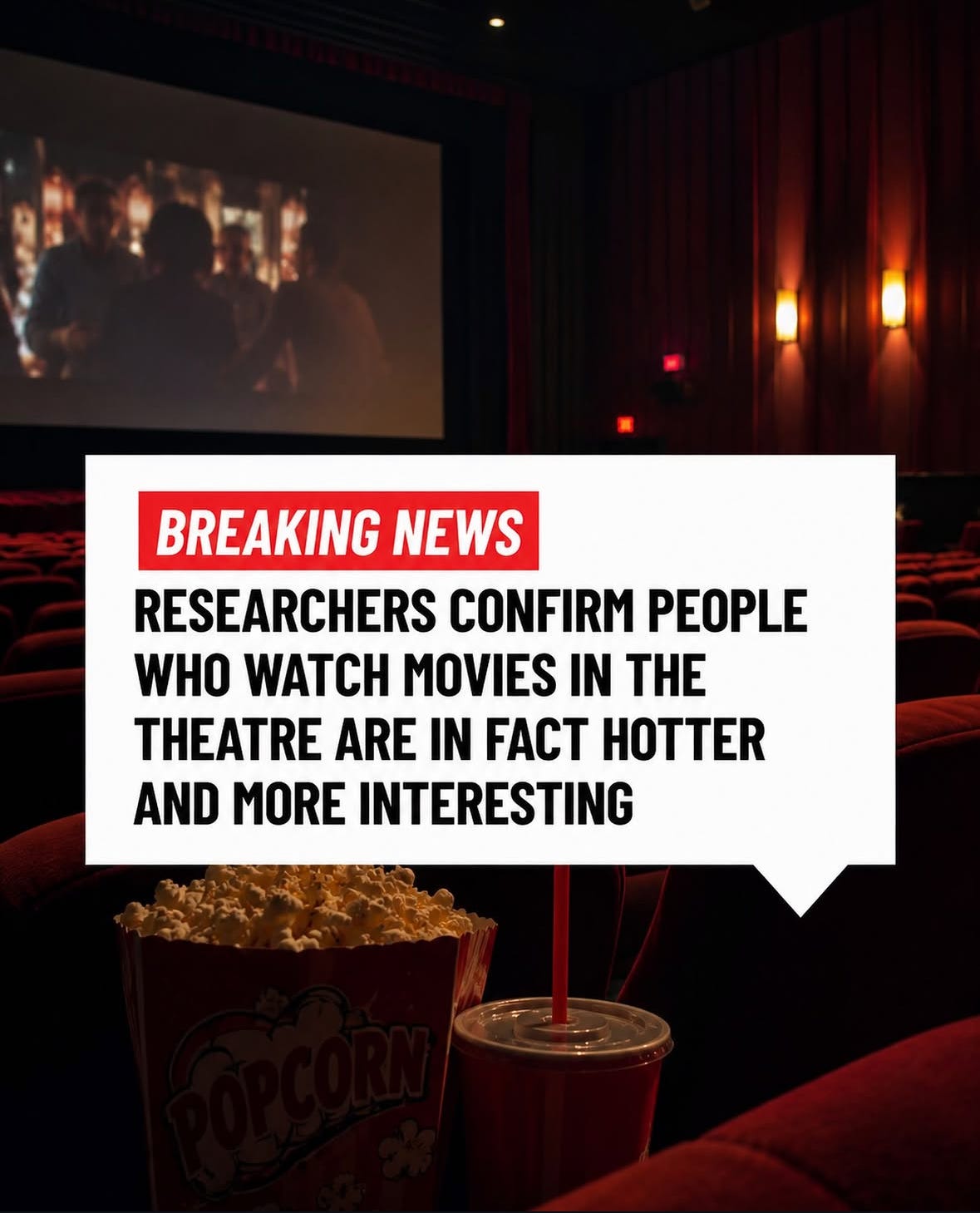
Source: Iconicreleasing on Instagram
Something is happening at movie theaters. As has been well-documented at this point, on the strength of horror releases (Backrooms and especially Obsession), the box office in May and June has seen a kind of boom that it hasn’t felt for some time. While there have been pops, like Barbenheimer and Gentleminions, the increase in attention this Spring on going to theaters is unlike any period we’ve seen since the pandemic.
In 2026, we’ve already seen traditional four-quadrant hits (Project Hail Mary) as well as lega-sequels catering directly at older audiences (Devil Wears Prada 2), but we’ve also seen IP-based films struggling to achieve relevancy (Star Wars Mandalorian and Grogu, and Masters of the Universe) and some IP just demonstrating how powerful nostalgia can still be (the ascendent Toy Story 5). But across all of these releases this year, the common factor has been bustling multiplexes and general cheerfulness in those spaces (other than the bemused teen who barely looks up from their personal phone in order to scan my ticket with the AMC-provided phone. That teenager appears to have never felt joy on this earth).
So, what is happening?
At the traditional multiplex, the answer appears to be a changing of the guard something akin to the rise of New Hollywood in the 1970’s. A group of younger creatives have entered the theatrical space and are creating art that fits a new and different crowd. While some older critics bemoan the development of this movement (which inherently leaves them behind), I think all can agree that the new growth cutting through the forest floor of cinema is inherently good. Obsession, in particular, is quite brilliant as a film (Hear the great Long Take Review episode on it with guest Sarah Hastings) and thoroughly modern in the way it revises horror precedents in a concentrated social commentary that, in every regard, thoroughly entertains. Yet beyond even everything listed, there are nationwide trends that indicate repertory theatrical screening attendance is up and social spaces built around film (film festivals, screening series, trivia contests) are all seeing a boom. People are falling in love with film and film culture again in a way that, as one of their number, excites me deeply.
In my personal life, I am first and foremost a devoted father and husband, and then secondly a hardworking professor who is doing all that I can to help students and my institution navigate increasingly turbulent waters in society generally and higher education specifically. Outside of those primary roles, the vast majority of my free time is spent on my two primary hobbies: reading and watching movies. Last year, according to my tracking apps, I managed to read a total of 146 books (audio included, as it should be) and 604 movies (in theaters or at home). This year I’m on track to “achieve” about the same.
By any reckoning, those are truly deranged numbers. My friends frequently tease me (good naturedly, I hope) that I must have some Harry Potter-esque time turner device or that I must be sneaking novels into the theater with me to double dip every moment. I’m often accused of exaggerating those totals, or mocked as an obsessive (a charge I can’t deny). More than anything, I’m asked how I can possibly achieve that while still being present in my family and maintaining my job.
In actuality, the truth is quite boring: I devote this much time to my hobbies because they bring me great joy. Any hour spent with film spooling through a projector or in the shade with a book cracked open is heavenly to me. I made a decision three or four years ago that this was how I wanted to spend my time, and I’ve worked hard to battle the modern ills of attention scarcity to make it happen and it has been worth it.
Notably, I’ve made a couple sacrifices in order to achieve it. Whenever friends bring up the exciting television shows that they watch, I am completely left out of the conversation. It’s not that I don’t imagine there’s great value in television, I simply found after the heights of peak TV that I was wasting more than I was gaining in many series. (But, of course, I made time for Andor and found it to be the crowning achievement of Star Wars and television in my lifetime). Secondly, I basically left behind my videogaming hobby that I had loved for many years. I still dabble from time to time (and have a mobile game or two for long public transportation rides). Again, I am not criticizing games as an art, I just found that I was getting less from them over time, while I still maintain my respect for those that love it.
But the big answer is, for the most part, I have cut out the mindless scrolling from my life. Within the three or four years of these efforts, the biggest behavioral change I made was leaving most social media platforms, and putting all others on my iPad instead of on my phone. In this way, I broke free of the attention-sucking notifications and have made my time on social media more of a deliberate choice. I have to go pick up a separate device, and am sure that I set it aside once I’ve reviewed my notifications and favorite accounts. Once Instagram starts serving me up mostly ads and suggested accounts, I close out and leave it for the next day. I’m not perfect, but I have started to feel more ownership over my time, and that only adds to the general pleasure I described above.
I opened this blog post with an Instagram image my friend recently sent me. In it, through a faux-ajournalistic design, the joke is made that “Researchers confirm that people who watch movies in the theatre are in fact hotter and more interesting.” A pretty solid joke undoubtedly created by someone who loves movies and/or knew other cinephiles would readily share it and spread it around. I’ve seen many variations of this (always passed along by knowing and kind friends) both about going to the movies and reading. Indeed, the rise of book-stagram (and book-tok) are major driving forces in renewed book culture across the country. Surely other cultures and social groups have adopted the meme as well, but…what if it is right?
The same friend who sent me the meme above was, until recently, a user of online dating apps which, to me, someone who has been happily in a couple for the last 25 years, seem like absolute hellscapes of superficiality disguising itself as an emotional connection. I have deep empathy for anyone navigating this world of modern dating. When he was active, my friend had a running joke going with me over text where the friend would report all the profiles of women that said they were looking for men with “AMC Stubs A-List” (the premium membership that includes 4 weekly screenings) or that were seeking men who loved A24 movies or that wanted to go see movies and talk about them after. He would often kid that I could “Clean up!” if I were on the apps. So, if we shift “hotter” to “more attractive,” I think there’s a case to be made.
The reason of course, seems obvious, and that is the second half of the meme. Yes, a trip to the movies is a very traditional first date, but I would guess that these potential partners are seeking a means of common ground, and the ability to have more to discuss during the date. Of course this could be sports, but that gives a wide spread of potentially attractive and unattractive personalities, or it could be politics (yikes!), or more specific interests, but movies provide a pathway to a particular type of partner: someone curious, someone empathetic, and someone looking for community (all seemingly valuable attributes).
Reading provides the same thing. For myself, even though it has been a long time since I was dating, I can say that the intellectual life my wife and I share started from the humble seed of two nerdy high schoolers going to a book store and picking out novels to buy in pairs to read and discuss later. As our lives have evolved through college, adulthood, and parenthood, books have remained a constant in that life. We still frequently pass cracked spines between us, or point out particularly good audiobooks to help each other pass our commutes. We give each other laughs, good cries, challenging history to confront, and cultural criticism to help reshape our worldviews. Books have been not just a part of our romantic longevity, but the reason for it. Simply stated, it is the pleasure of my life to be in this private book club.
To try and meander toward a point, lest this be a blog wherein I brag about my marriage and my general hotness, let me suggest that the trend I am tracing here is parallel to the current moment we are in with AI. Like internet culture generally, we were all wowed a couple years ago with the major leap of LLM’s and the way they could mimic human language and thought. Yet, if I am reading 2026 correctly, the illusion has worn thin and the shine is off the tools, leading us to recognize that in the methodology of the imitation, AI inevitably is driving human art, language, and increasingly social interaction toward a banal middle road of the most likely, least unique, and most drab forms. As I tell my students all the time, I don’t want an AI paper because it could never be as interesting or special as their unique perspective and voice. Only a few believe me, and so so many try to prove me wrong, but that is a fundamental truth.
This, to me, is the reason behind my voracious consumption of books and movies: it drives me to the unexpected, it rewards my curiosity, and it stretches my ability to see and understand the world. In the darkened space of a movie theater, I see something new, and whether that newness is dumb or spectacular, it becomes a part of who I am, of what I have experienced, and of what I can share with the world. It makes me interesting. In a sea of social media consumption that encourages us to smile and laugh at a soundbite and then move on to the next dopamine hit, languishing in a film or book ensures that I push myself and don’t just suck on the algorithm’s teet of overly digested and repeated content that a million people have seen. Instead, I can share knowledge, wit, or anecdotes across a broad range of topics and have, at my fingertips, a range of ideas and information that I can use to connect with my students, colleagues, friends, and loved ones. This is what makes me interesting.
Yes yes, of course I am still socially awkward and can quickly turn off a crowd in a cocktail party to the point that I actually wonder if the hor d’oeuvres were undercooked. It’s a gift and I won’t ever be able to fully take advantage of these gains due to crippling social ineptitude. But, I can’t deny that I am better because of my reading and film watching, and that is a large part of why I won’t stop. I worry that if I don’t feel that same curiosity about the world, something will be deeply wrong.
One of my favorite jokes (of many) in one of my favorite movies, Rian Johnson’s Knives Out, is when Toni Collette’s vapid influencer self-help guru calls out Benoit Blanc with the beautifully constructed: “I read a tweet about a New Yorker article about you.” In the writing of that joke is a perfect encapsulation of what the social media age has left us all with: a vague memory of a summary about an actual piece of writing about a person. In so many ways, that is what AI gives us as well, though then we add another step. I think we’re sick of it. When I see young people crowding back into movie theaters, I see people looking for experiences and understanding beyond the superficial. A good movie is a communal experience in the unknown. Young people have been force fed their culture superficially for too long, and they are rejecting AI increasingly, and I think they are rejecting the mediation of algorithms. Increasingly, I see them making the choice to change their engagement, grab books and see films, and, over time, I think this will be seen as the turning point in the attention economy.
I’ll close by noting that I recently attended a couple screenings at the Independent Film Festival in Boston (IFF Boston). At the closing screening, festival volunteers passed through the crowd and gave the diehards who had been reserving their seats for an hour or so some fortune cookies as a snack. When I cracked mine open, I encountered for the first time what I now understand to be a rather famous quote from Roger Ebert on the slip of paper inside: “The movie are like a machine that generates empathy.” Two thumbs up on that one, Roger. That’s it in the end, really: I want to be an empathetic person. I want to learn and to understand, and movies and books are the best machine I have for doing so. And you know, greater empathy is really just another way of saying hotter and more interesting.
No posts
Comments
Nothing yet. Say the first thing.
Sign in to join the conversation.