
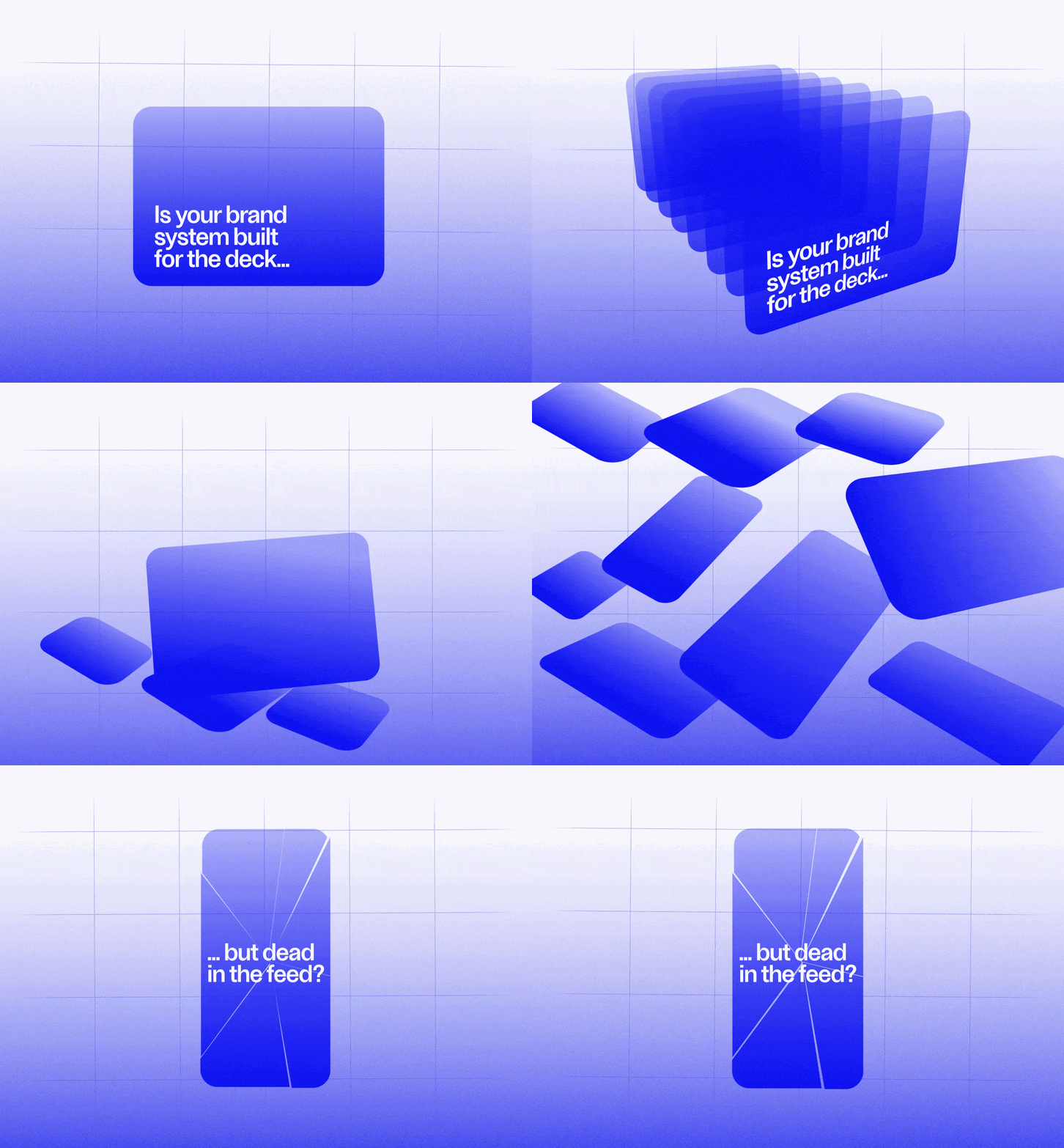
Step foot inside a marketing department working with a branding studio and you’ll hear the constant debate about the role of strategy and design in social. It’s the Head of Brand, wanting to build distinction through consistency against the Head of Social wanting each post to perform and get engagement. Currently, sometimes this is championed; other times, it’s dismissed.
“Social is too executional.”
“Social is too bitsy.”
“Brand work moves too slowly and misses culture.”
“Brand strategy is too academic”
It’s a task many of our clients are asking us to fix and work on after we’ve set the vision of the brand, and it’s something we want our industry to take note of more. System1 recently released a report called ‘The Long and Short (Form) of It' where they speak to this problem and the need for a solution. “TikTok users pay creator ads 39% more attention than they do traditional brand ads (e.g. TVC edits), yet at the same time, they’re able to correctly identify which brand the creator ad is for at roughly half the rate of traditional brand ads.”
Brands can no longer be crafted in solitary confinement, broadcast from the top down. The advent of the FYP means that it’s not just your IG followers who are your audience, but anyone scrolling can come across your content. Brands are crafted from the ground up, where killer creative and entertainment which understands its context rises to the top. Unfortunately (or fortunately?), social is for people, not brands. Effectiveness on social requires holding onto your brand guidelines, but with a loose grip.
Social toolkits need to be built for entertainment first, rather than just assets used in the most compliant ways. A rulebook adapted to the contexts in which audiences and consumers show up now more than ever.
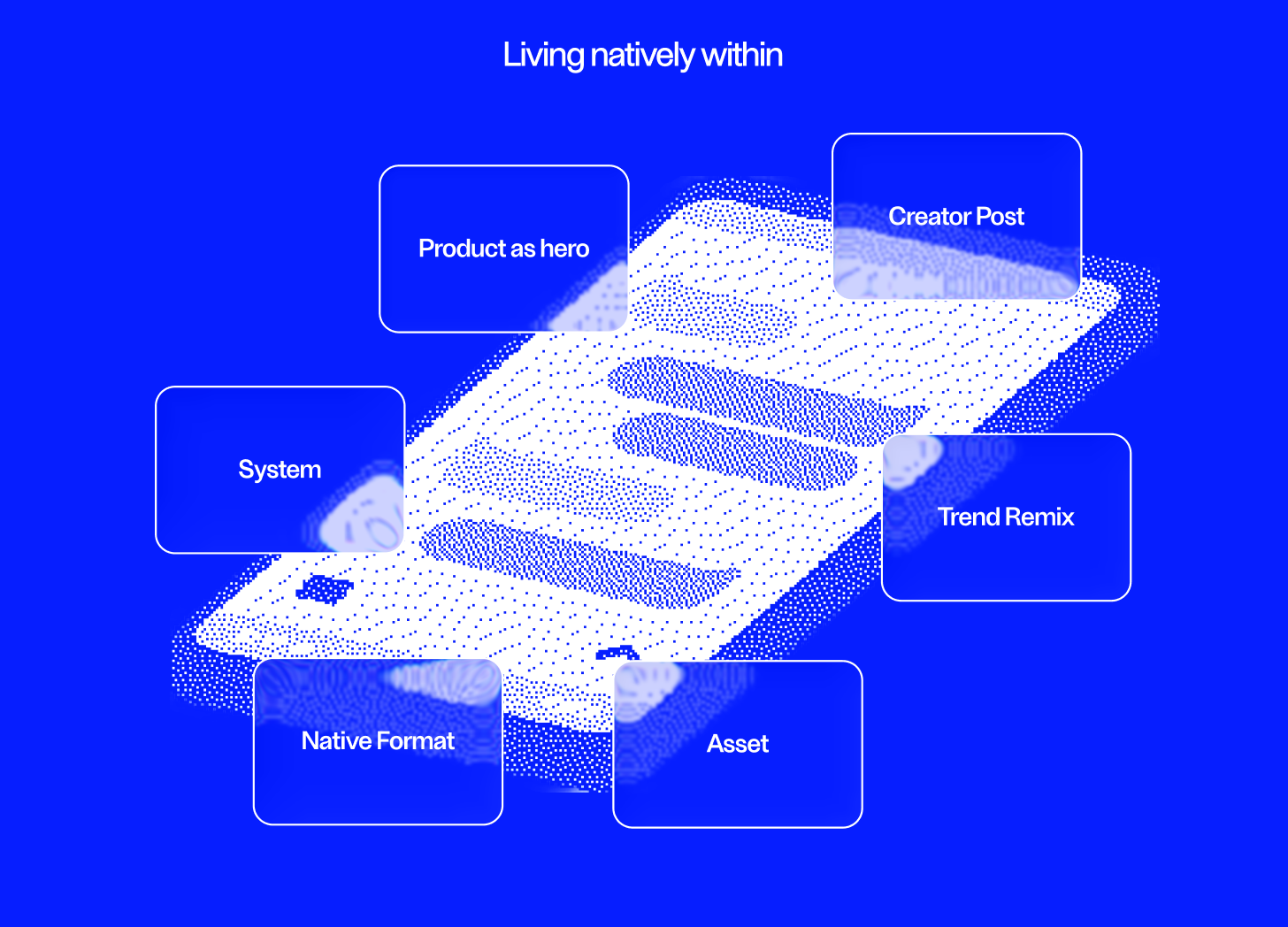
Instead of treating logos, colours, type and sonic cues as things to “apply” at the end, strategy and design should engineer them to show up as everyday characters in the feed.
Fluent devices that creators can play with natively, that work in three seconds, in vertical, with sound-on or off. When toolkits are designed this way with clear, repeatable showmanship (stories, characters, recognisable worlds) and a set of distinctive assets that can be remixed across formats and series brands don’t just stay on-brand, they become entertainingly familiar over time, compounding memory and making the brand feel like a natural part of social culture.
Our thought is, how do we get branding guidelines to work for both sides of the organisation? To show how strategy and design can show out on social and build timeless distinction through timely methods that thrive on social.
It starts with brands taking a sharper point of view on culture and where it is headed. That means understanding the codes of socials, its behaviours, formats, and rhythms.
Loewe leverages online trends on TikTok to build brand capital by often participating in culture rather than interrupting it. Their videos are often deliberately unpolished, and by traditional brand storytelling metrics, they don’t always “make sense.” But that’s the point – they make sense for Loewe’s audience.
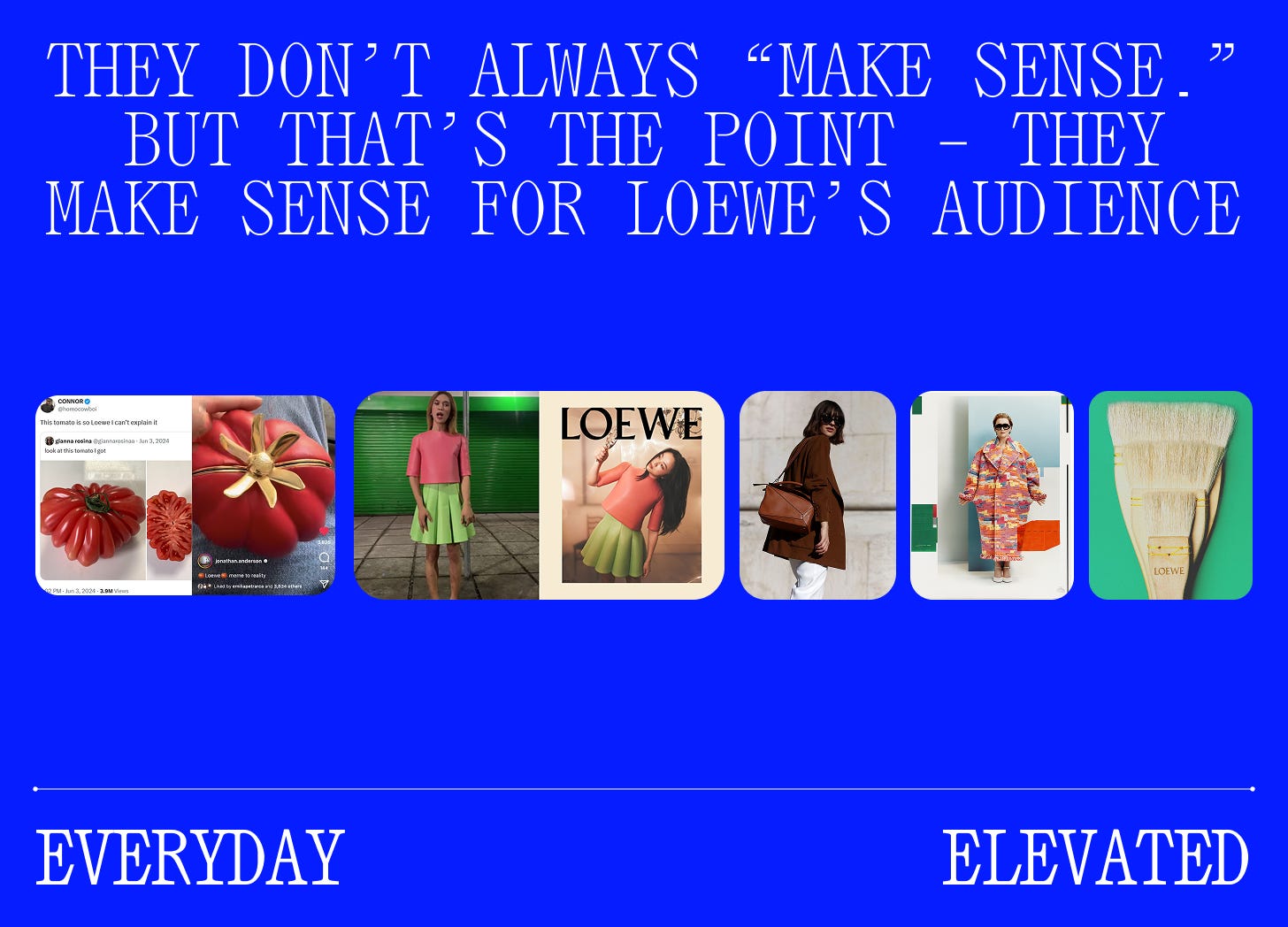
Where possible, it uses product as an entry point into trends; when not, it taps into real moments to stay relevant without forcing it.
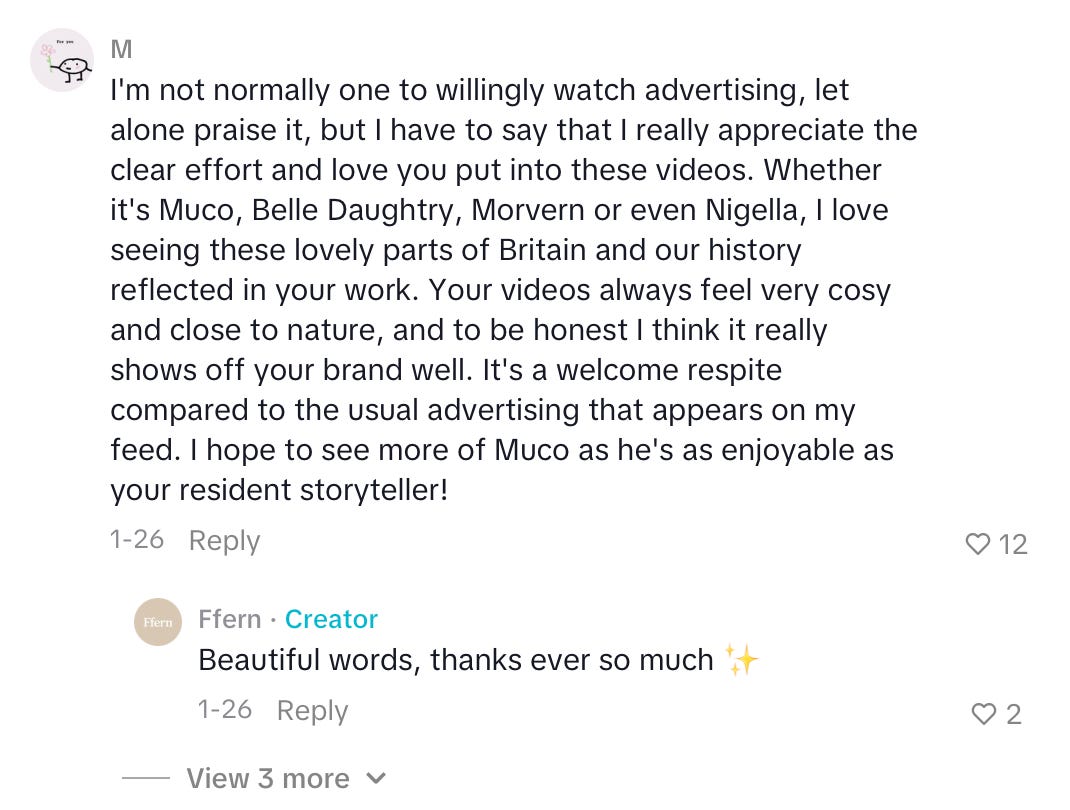
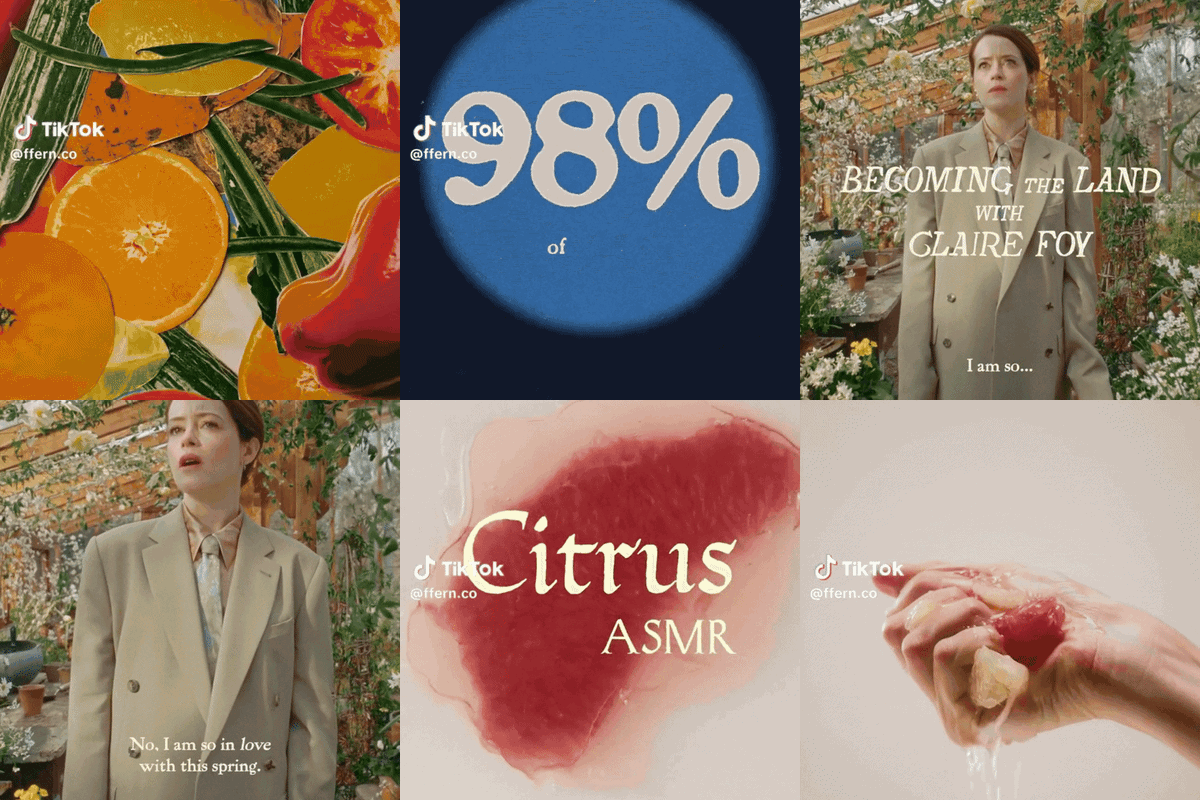
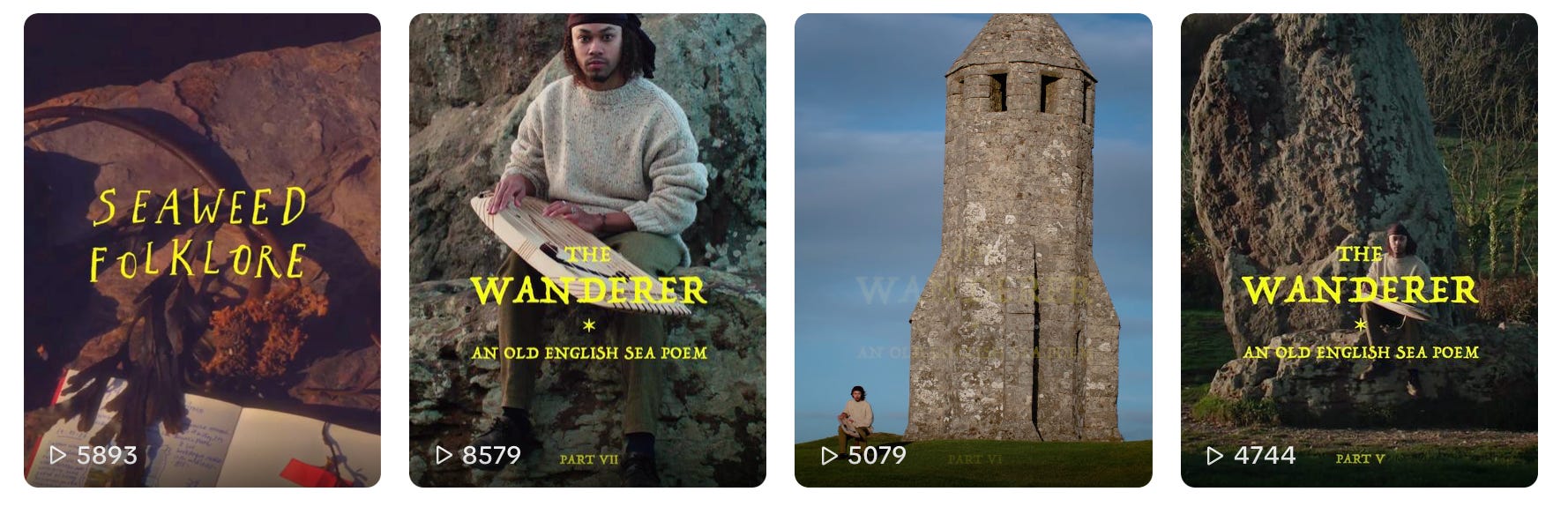
Ffern, a British perfume brand established in 2018 takes a more crafted approach. Every frame is considered. Rather than chasing trends, it builds a distinct world that speaks to specific subcultures - those that value slowness, craft, and intention over constant cultural participation.
Smirnoff, a brand with growing cultural heat, is a stand out example of democratised distinction. In collaboration with Born Social, Smirnoff effectively combines established brand assets with social creative guidelines. Encouraging flexibility to speak the language of social, without sacrificing their identity.
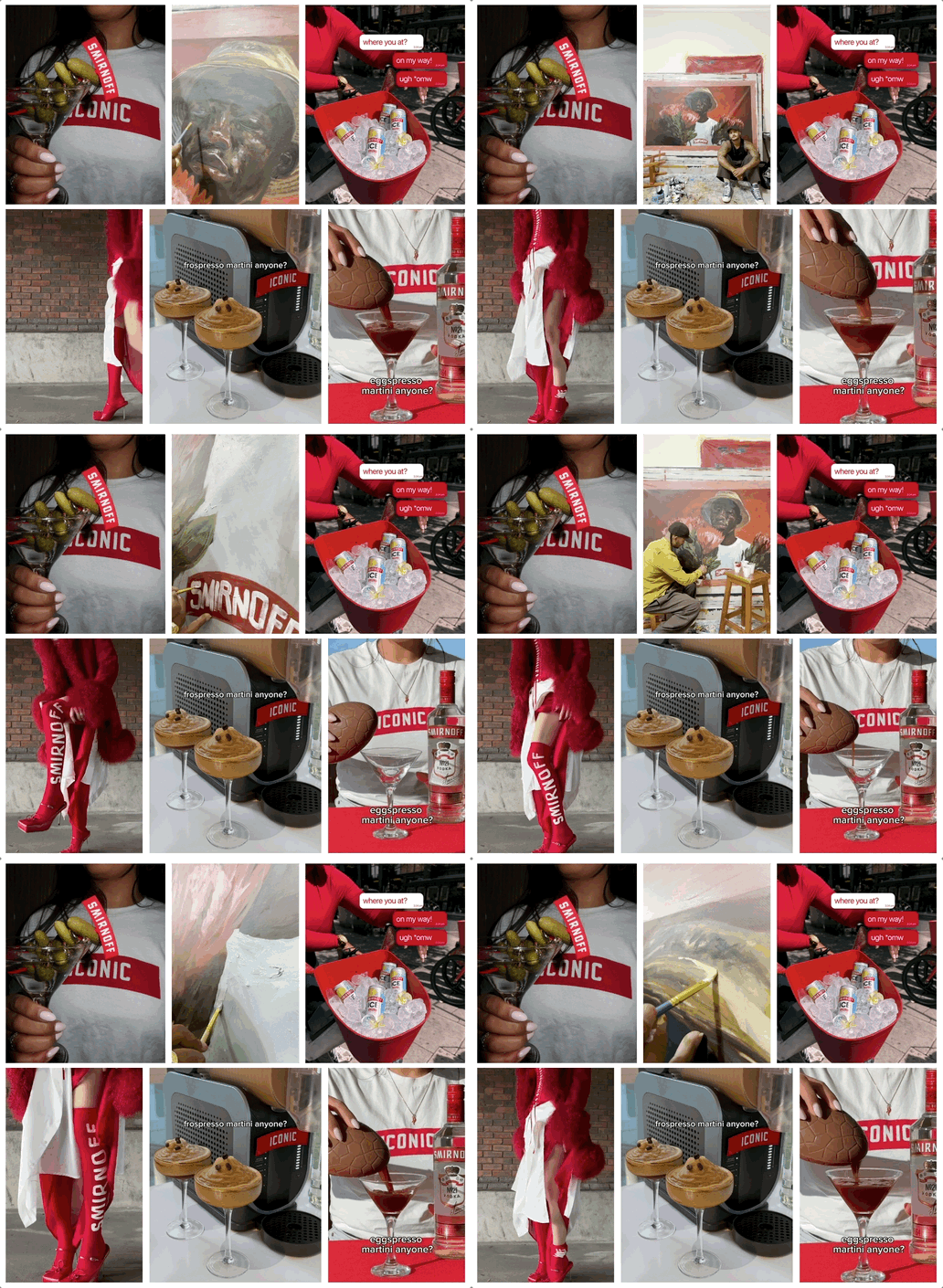
Firstly, Smirnoff’s logo. An asset with enough recognition and brand power that changing “Smirnoff” to read “Iconic” (amongst other messages) still retains the brand’s salience. Doubling down on the red across all content, even through subtle styling and prop details, retains visual cohesion and brand codes. Then there’s their creator collaborations, where putting the keys of the brand identity in the community’s hands to experiment provides a limitless avenue for creativity and expression.
The Coca-Cola Company and Universal Music Group’s Real Thing Records is a strong example that manages to be social and branded. Built with social at its core, it needed maximum flexibility - most of its content is earned and talent-led. That creates a tension: the more earned assets for the brand, the more it risks losing distinctiveness and slipping into the same homogeneous feed patterns.

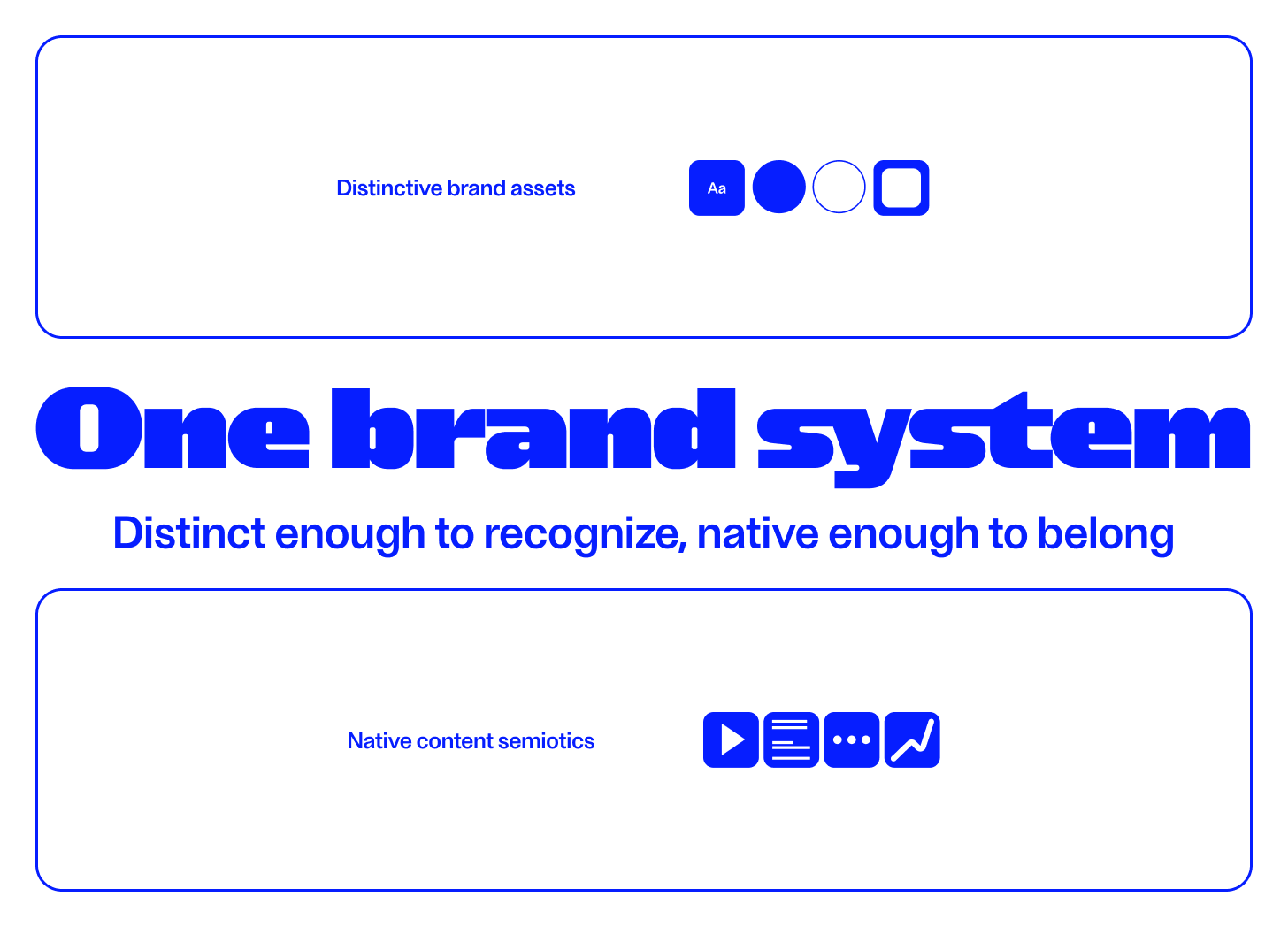
The aim was to resist that. The system balances distinctive brand assets to build saliency, while using the semiotics of native content to ensure everything still feels like Real Thing Records.
As terrifying as it might be to let go of the reins, the most successful brands on social are willing to explore what defines their brand beyond the guidelines.
The most effective brands today don’t debate between “brand” and “social.” They understand that brand building recognises behaviours and at times push against it, while other times pull towards it.
Rather than reinforcing strict boundaries of your visual identity, ask how your identity can best show up in engaging and entertaining creativity. At its best, social works as a tapestry of how your brand can live and travel in the real world. Building a brand system in 2026 is about building tools that can move with social culture (to feel relevant) and against it (to create distinction).
No posts
Comments
Nothing yet. Say the first thing.
Sign in to join the conversation.