
Every creative project begins with a small moment of doubt.
You look at the blank page, the new score, the unfinished idea, and for a moment it feels bigger than you are. This past month reminded me that music and drawing are not so different. They are both about learning how to climb that mountain.
When I first sat down to write this post, I thought I was going to talk about my recent concert with Vlaams Symfonisch Orkest. On May 30 and 31, we performed Beethoven’s Fifth Symphony and Shostakovich’s Fifth Symphony. But the more I reflected on the past month, the more I realized this post is really about something else.
It is about practice and learning which are tough nuts to crack if you are paralyzed by fear.
And it is about how music and drawing keep teaching me the same lessons in different ways.
So lend me your ears, and I will tell you all about it.
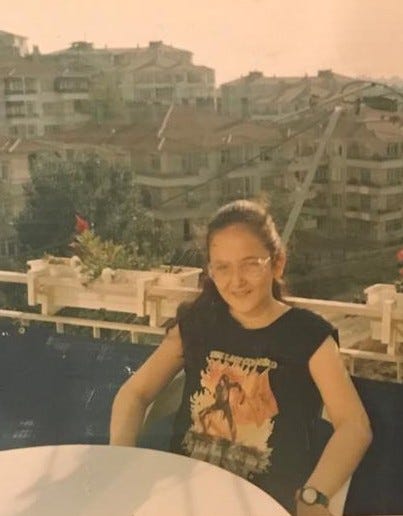
As a child, music was often my closest companion. It gave me comfort, focus, and sometimes just a place to breathe when things felt difficult. I spent many hours listening to classical music, and Shostakovich’s Fifth Symphony was one of the pieces I kept returning to again and again.
There were moments during the concert when I thought about that younger version of myself. I wish I could go back and tell her: don’t worry, one day you will play this.
As amateur musicians, we do not usually get to choose what we play. We play what we can find. Good amateur orchestras are rare, and an orchestra like the Vlaams Symfonisch Orkest, where dedicated amateurs and professionals play side by side, is not something you come across often(I know I am very lucky!). That makes the experience even more meaningful.
So the enthusiasm, the drive, the passion they were all there, but those are not enough to complete a project, although they can give you the adrenaline you need to start. Isn’t this the case when you are starting a new illustration project too?
In both music and drawing, everything starts the same way.
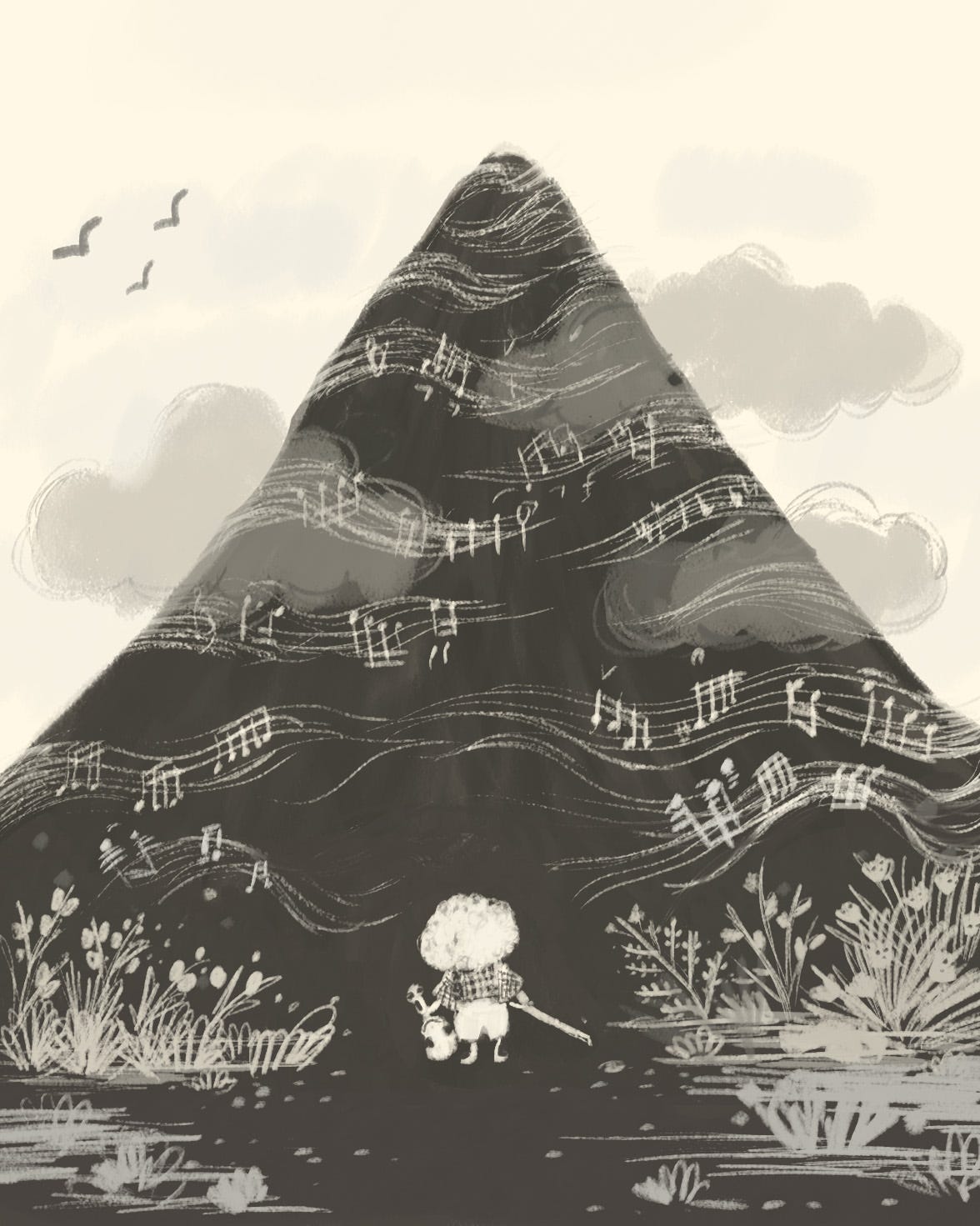
You open a score or a blank page and it feels like a mountain. Too big. Too complex. Too much to understand at once.
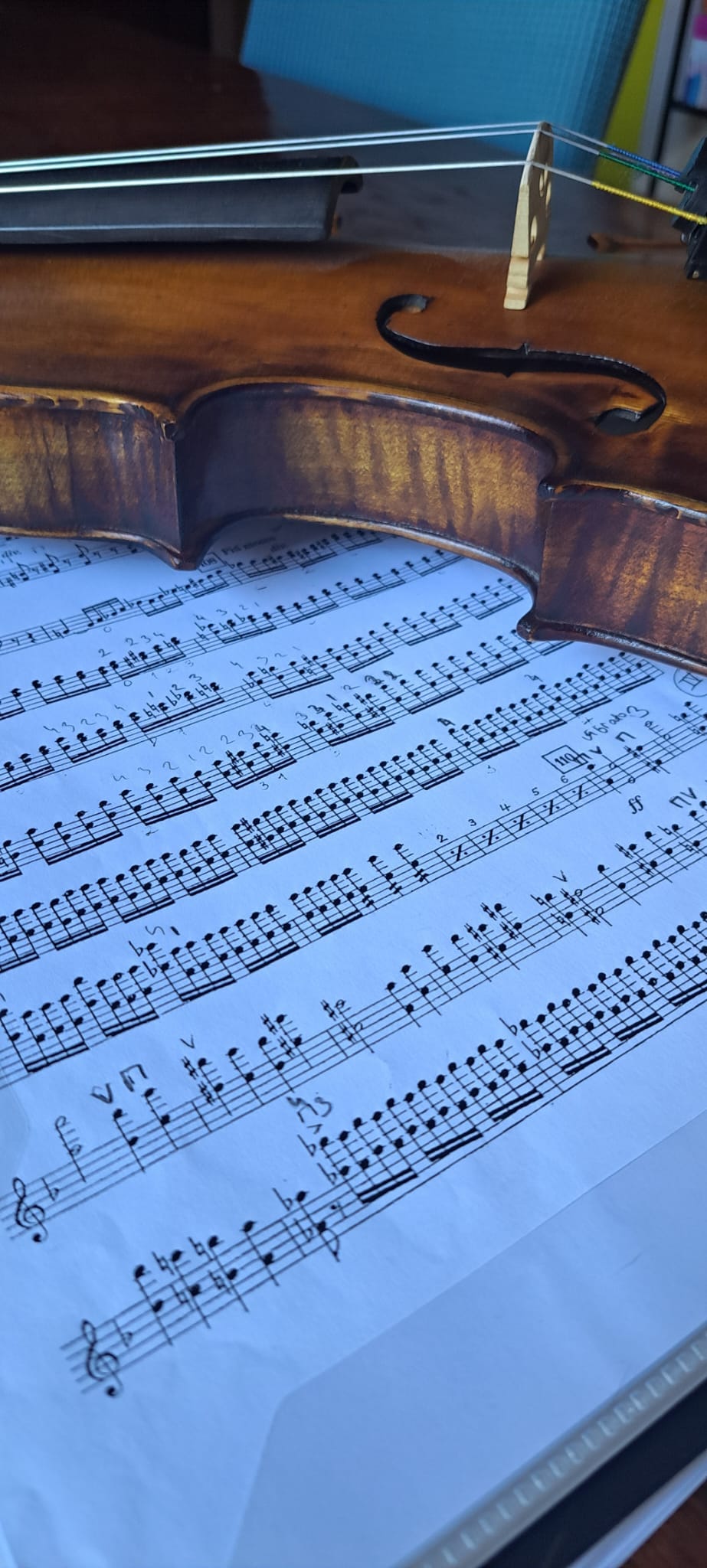
When I opened Shostakovich’s Fifth Symphony, I immediately saw passages that made me hesitate. Fast runs, high positions, difficult rhythms, details everywhere. My first thought was simple: how am I ever going to do this?
The same thing happens in drawing. A new project always feels exciting, but also slightly overwhelming. There is a moment where you wonder if you are capable of it.
But I have learned something important.
The mountain never becomes smaller. You just learn how to climb it.
The biggest mistake in creative work is trying to solve everything at once.
In orchestra rehearsals, we never do that. When something is difficult, we slow it down. We isolate the problem. We repeat it. We fix one thing, then move to the next.
During home practice, I do the same thing. I slow down. Pay attention to what is happening, in the score and in my hands. I try to do it correctly at a slower speed and keep working at it.
Drawing works exactly the same way.
I never try to improve everything in a project at the same time. I separate it into parts. Maybe composition first. Then structure. Then color. Then texture. Then back to the beginning, however times I may have to. If I try to hold everything together at once, I get stuck.
But if I focus on one step at a time, things become possible.
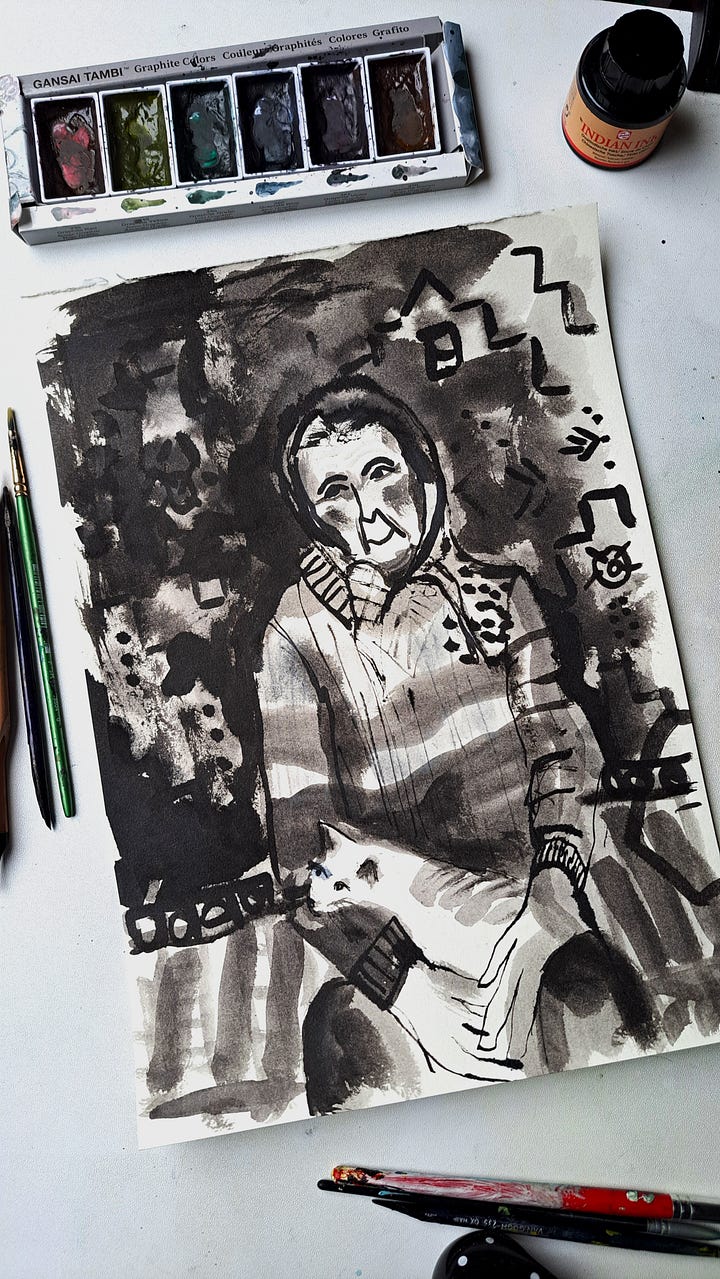
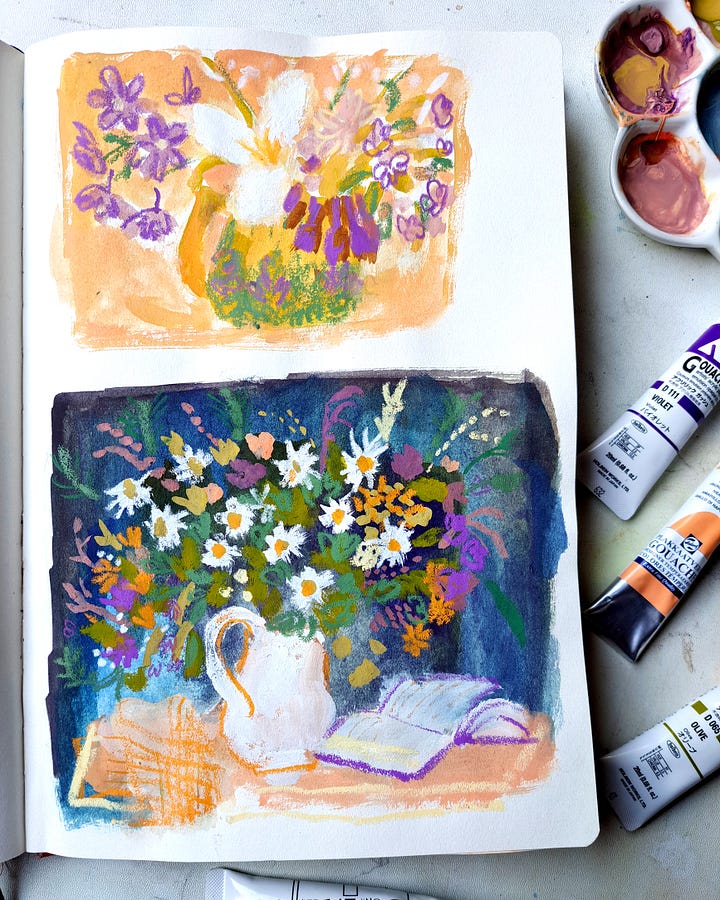
Music constantly reminds me that growth is never a solo process.
In the orchestra, you are always listening. To your section. To other sections. To the concertmaster. To the conductor. You adjust and learn constantly without even noticing.
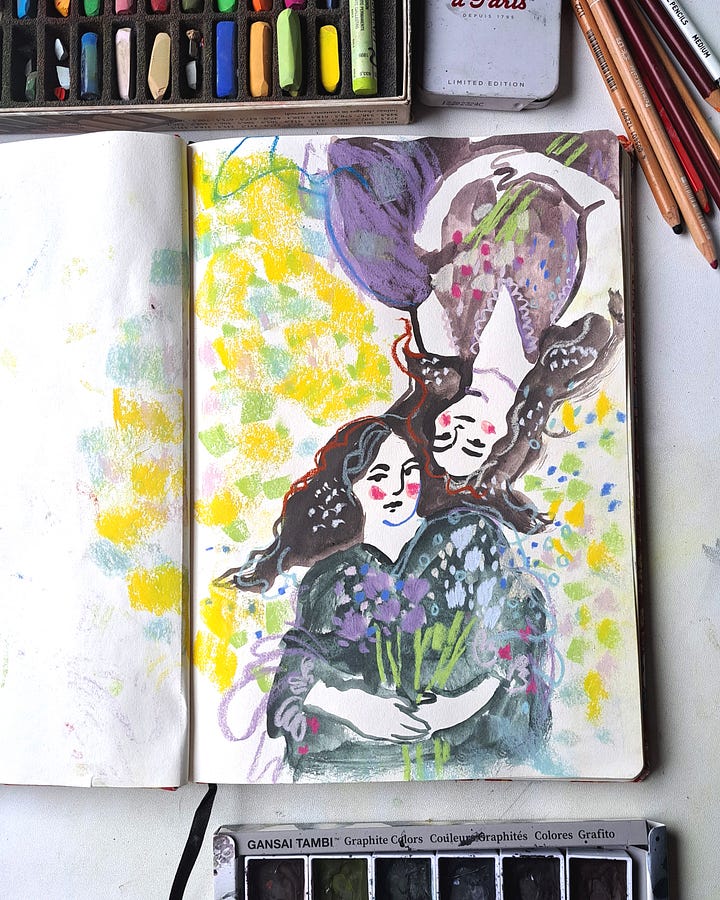
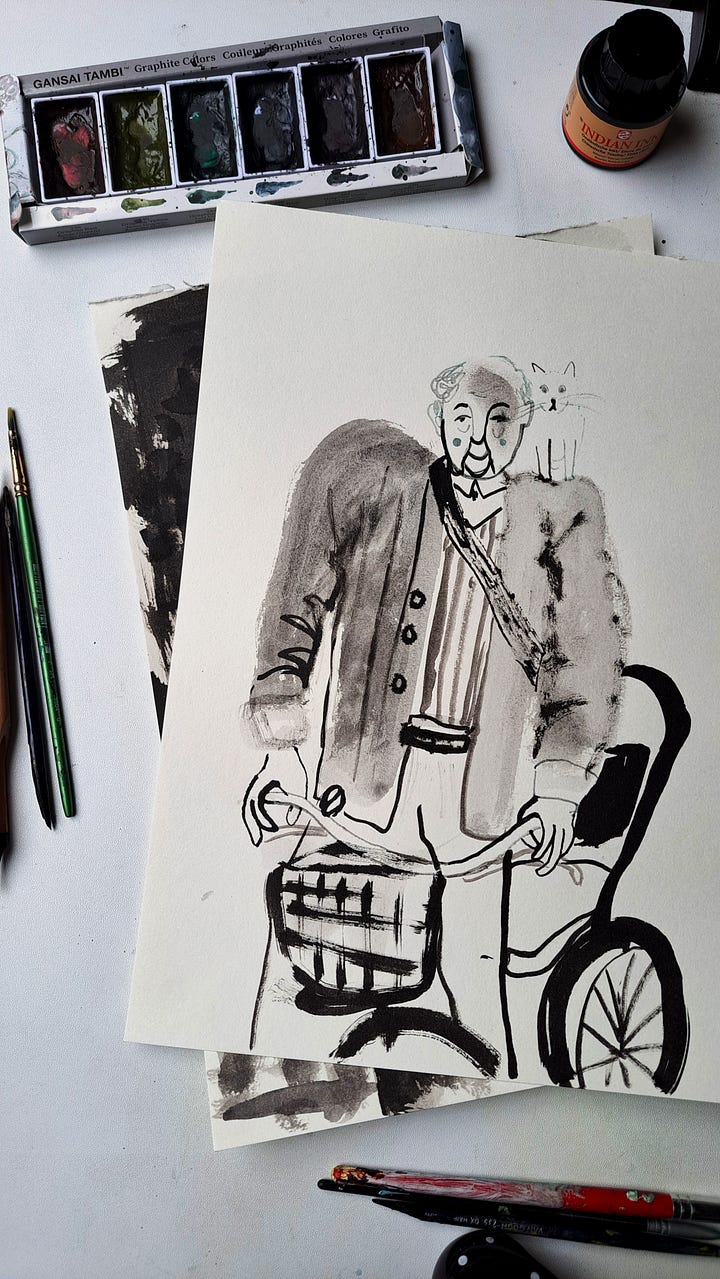
In drawing, it is the same. When I work alongside other artists or observe how they think, I learn new ways of seeing. It pulls me out of my habits.
This is also why I enjoy my “Draw with me” sessions so much.
Everyone that joins these sessions bring their own unique way of thinking and seeing. Each session I see how many different ways of interpreting the same visual are possible and that is very valuable to me.
There’s also something grounding about doing it together. It’s much easier to stay focused in a shared space—you’re less likely to get distracted or cut things short. Like in rehearsal, I stay with it until the conductor says we are done no matter how tired I am. In the same way, I know I’ll spend those 2 hours drawing when I’m in a drawing session, and somehow it becomes easier to commit fully when others are doing the same.
Would you like to join my next Draw With Me sessions? Here are the links for June’s drawing sessions: June 18, Thursday, 20:00 to 22:00 CET
Drawing Water: Waterscapes - Click here for the tickets
June 29, Tuesday, 20:00 to 22:00 CET
Drawing Water: Life Beneath - Click here for the tickets
There is a story about Pablo Casals. Well into his 80s and 90s, when he was already widely considered the greatest cellist in the world, he was once asked by an interviewer why he continued to practice 4 to 6 hours a day.
Casals replied: “Because I think I am making progress.”
That idea has always stayed with me.
Practice is not a sign that you are behind. It is a sign that you are still learning.
In music, there is always something to refine, no matter how experienced you are. In drawing, there is always a new way to see things, or a small detail you notice for the first time. The more you grow, the more the “finish line” seems to move. Once you reach a goal, another one naturally appears in its place.
At first, this might feel endless. But it is not necessarily a bad thing. In fact, this is what makes art and music so meaningful. They are not meant to be “finished” in a final way. Their depth keeps unfolding as we grow with them.
If everything had already been done perfectly, if the best music had already been composed and performed, or the best drawing already made, there would be nothing left for us to explore or express. We would simply be repeating the past.
Instead, there is always more to discover, more to try, and more to understand. And that is what keeps the process alive. This is what keeps us alive.
The second concert was unexpectedly intense.
It was extremely hot outside, and the ventilation in the hall was not good. Before we even started, I was already sweating heavily. My hands, my face, everything. At one point I genuinely wondered how I would stay focused long enough to play well.
I even felt like I might faint.
But then the music started.
And you stop thinking in big terms. You think in small steps. One entrance. One phrase. One page at a time.
And somehow, you make it through.
During the break, I collapsed into a chair backstage and chatted with others about how hot it was. Our concertmaster, who is an amazing professional player, mentioned that she has played in several situations where the conditions were far from ideal, and there were moments when she truly felt like she might not make it through the performance.
But each time, she said, you still finish it. And with that, she gave us a bit of quiet reassurance that stayed with us.
Afterwards, I realized again something I often forget.
You do not really know what you are capable of until you are already doing it.
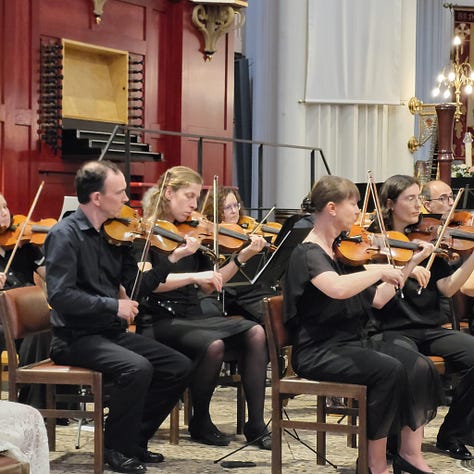
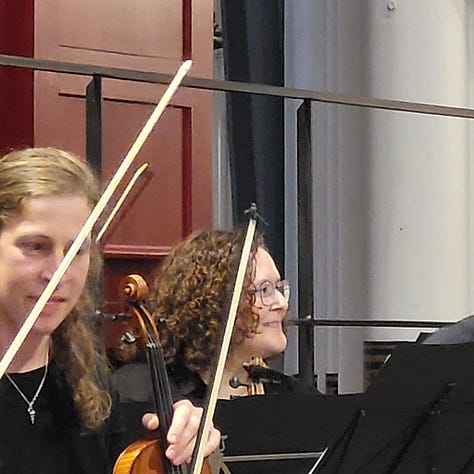
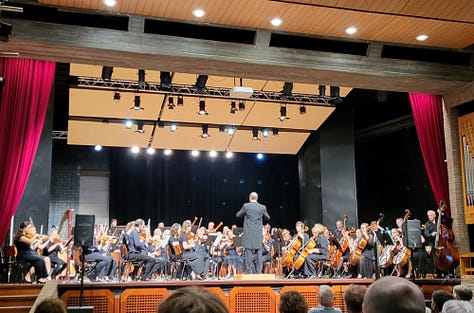
This was more than a concert, it was also a birthday present for me, since our second concert fell on the same day as my birthday.
My mom, sister, uncle and friends had travelled from really far to be there. Seeing them in the audience meant a lot to me. It reminded me that even though creative work can feel solitary, it is never completely alone.
I also felt very grateful for my second violin section. We have built a strong bond over time. There is focus, but also laughter. A lot of laughter, actually. Our group photo before the first concert probably proves that better than anything else.
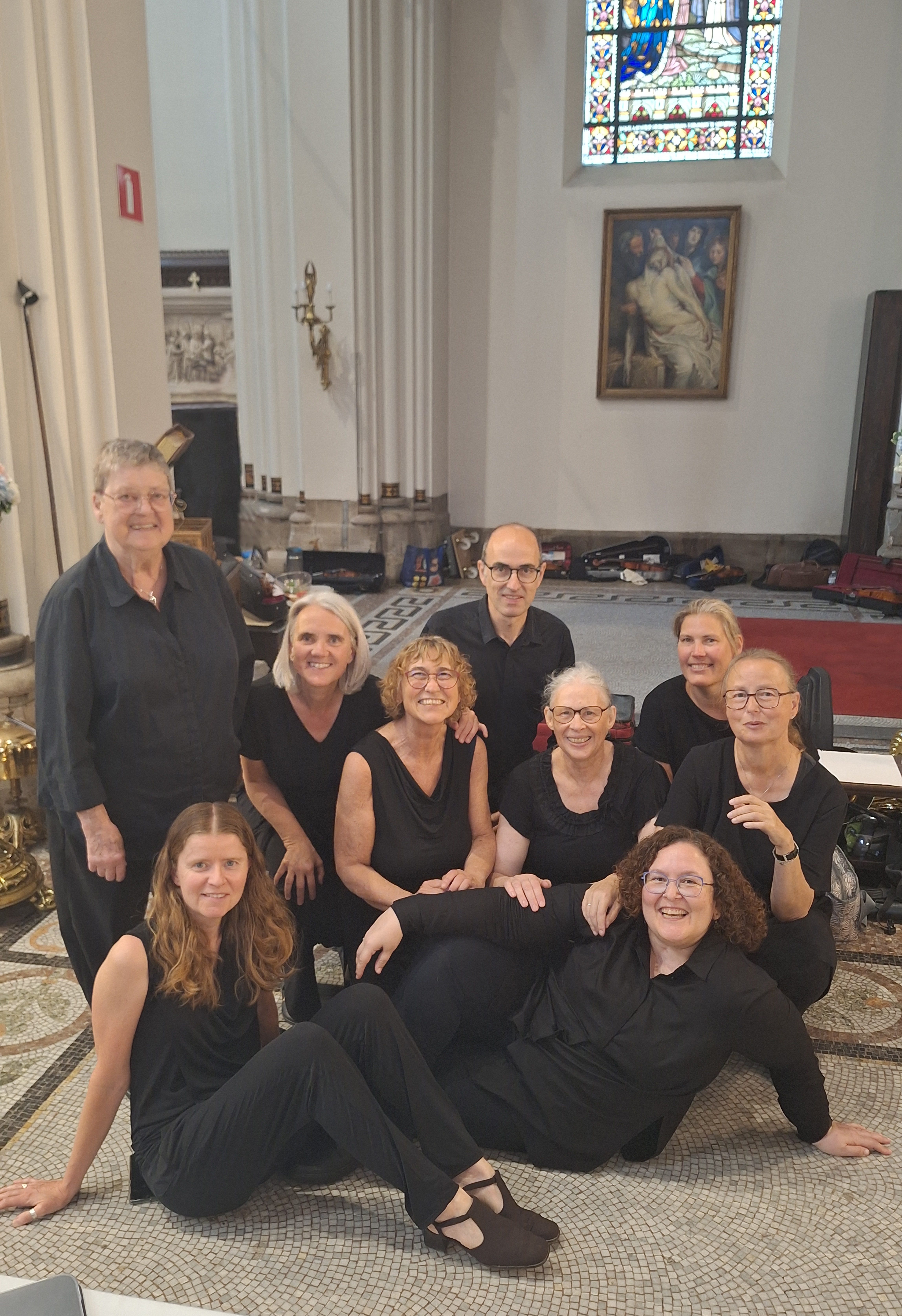
Every time you sit down to create, you bring your support circle there with you, whether they are physically there or not.
Music and drawing keep teaching me the same thing.
You do not need perfect conditions. You do not need to feel fully ready.
You do not need to feel brave and inspired to start. It is normal and perfectly fine to feel scared.
You only need to start climbing the mountain. Don’t feel scared to ask for help, or hold onto a hand that stretches out to you.
And then keep going. One step at a time.
And perhaps that is why I keep returning to both music and drawing. They remind me that progress is rarely dramatic. Most of the time it happens quietly, one rehearsal, one sketch, one small step at a time.
I would love to hear from you. Is there a hobby, skill, or creative practice in your life that keeps teaching you the same lessons over and over again? What mountain are you currently climbing?

Now you can support me by buying me a coffee or (even better) a pencil on Ko-fi!
Whether a coffee, a comment, a share or a simple like, your support gives me encouragement to continue. Thank you!
No posts
Comments
Nothing yet. Say the first thing.
Sign in to join the conversation.