
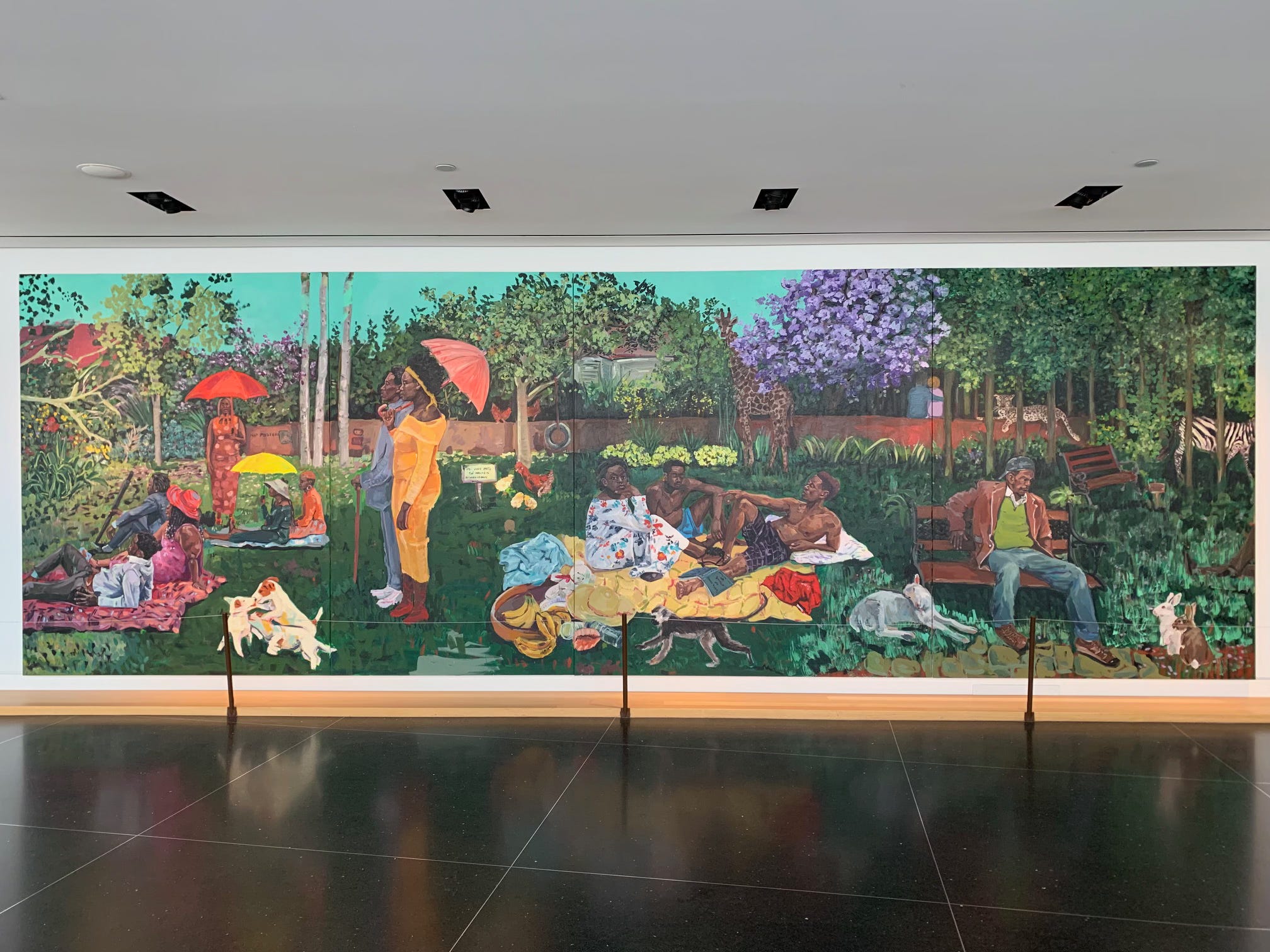
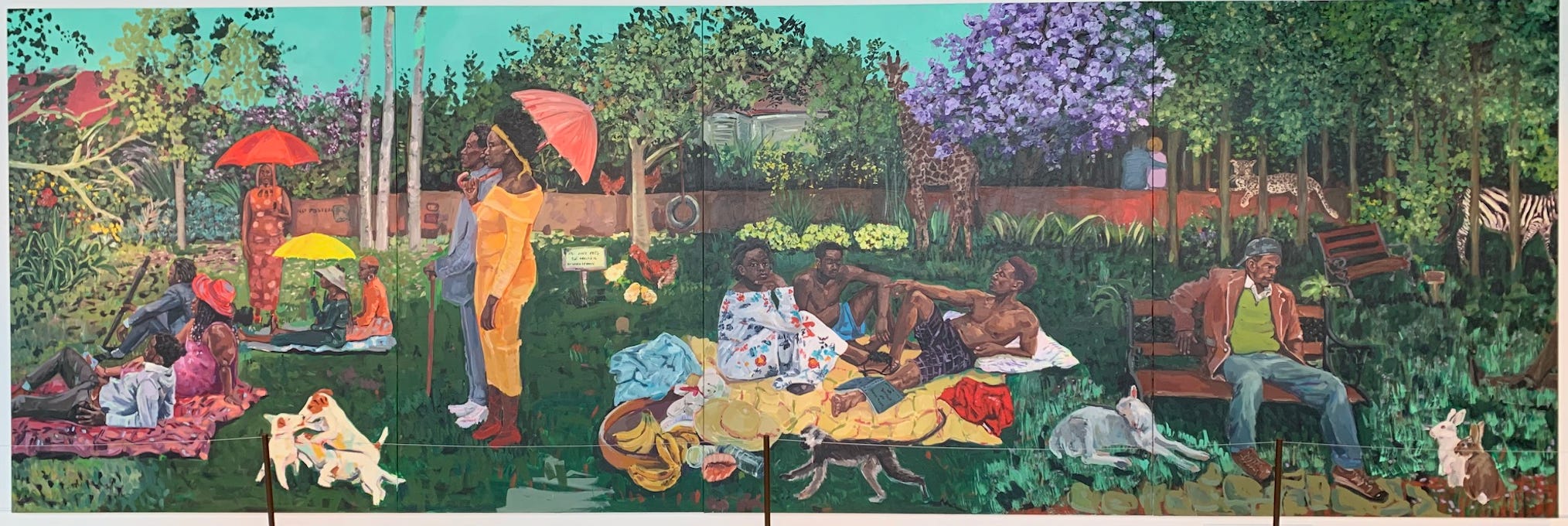
Suddenly, it’s Juneteenth again, and I thought this painting would be a good one for a closer look—containing quotes from past paintings, it’s an art historian’s playground. Home Sweet Home (After Seurat, Manet, and Pippin) by Wangari Mathenge hangs in the entry hall space of the Crocker Art Museum, a floor below the Oceania exhibit I pictured earlier this month. It’s an enormous painting over four canvases, 96 by 290 inches (about 8 by 24 feet) , a good size for an entry hall space. The picnickers and loungers in this verdant park are depicted in perspective but nearly at life size.
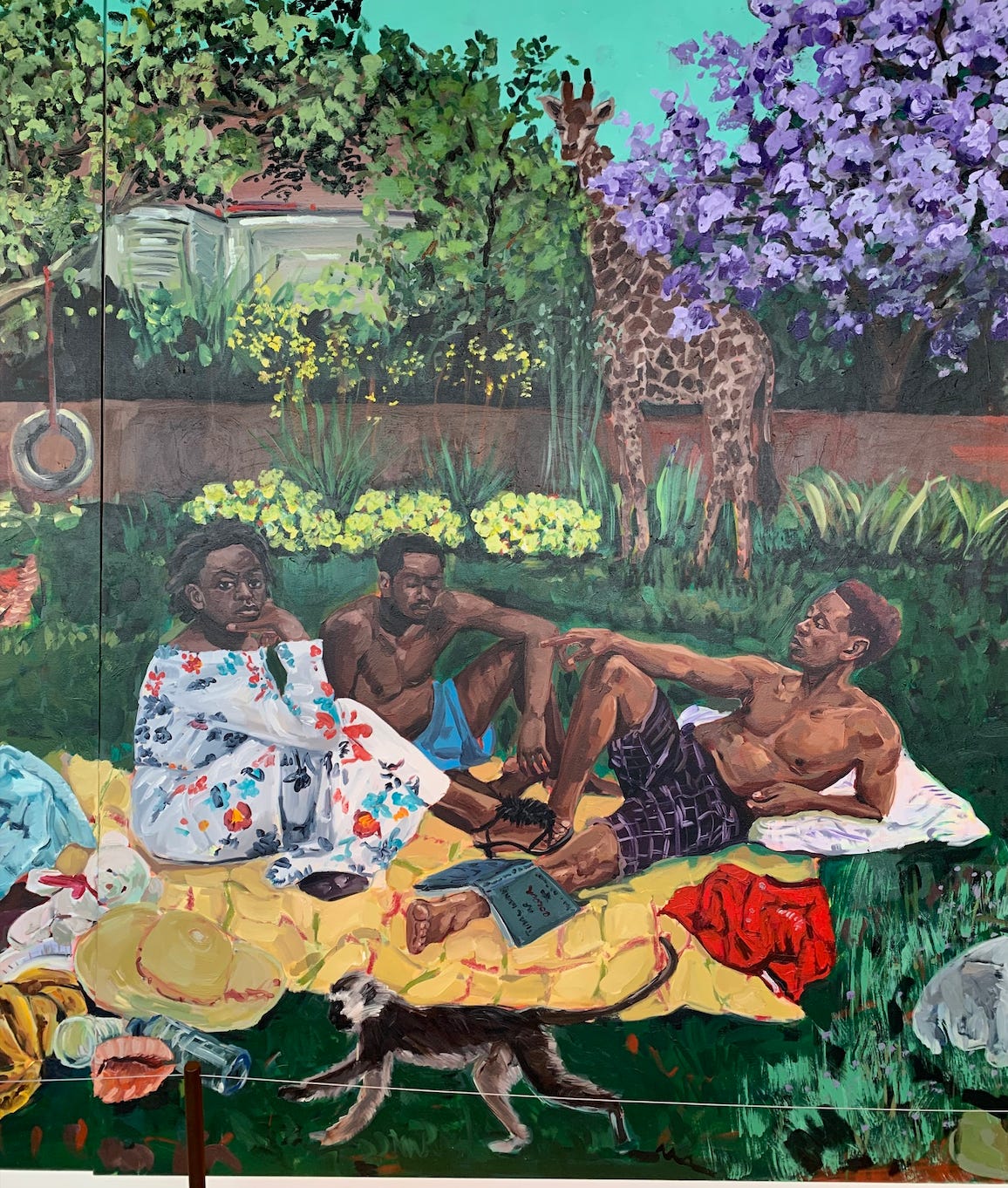
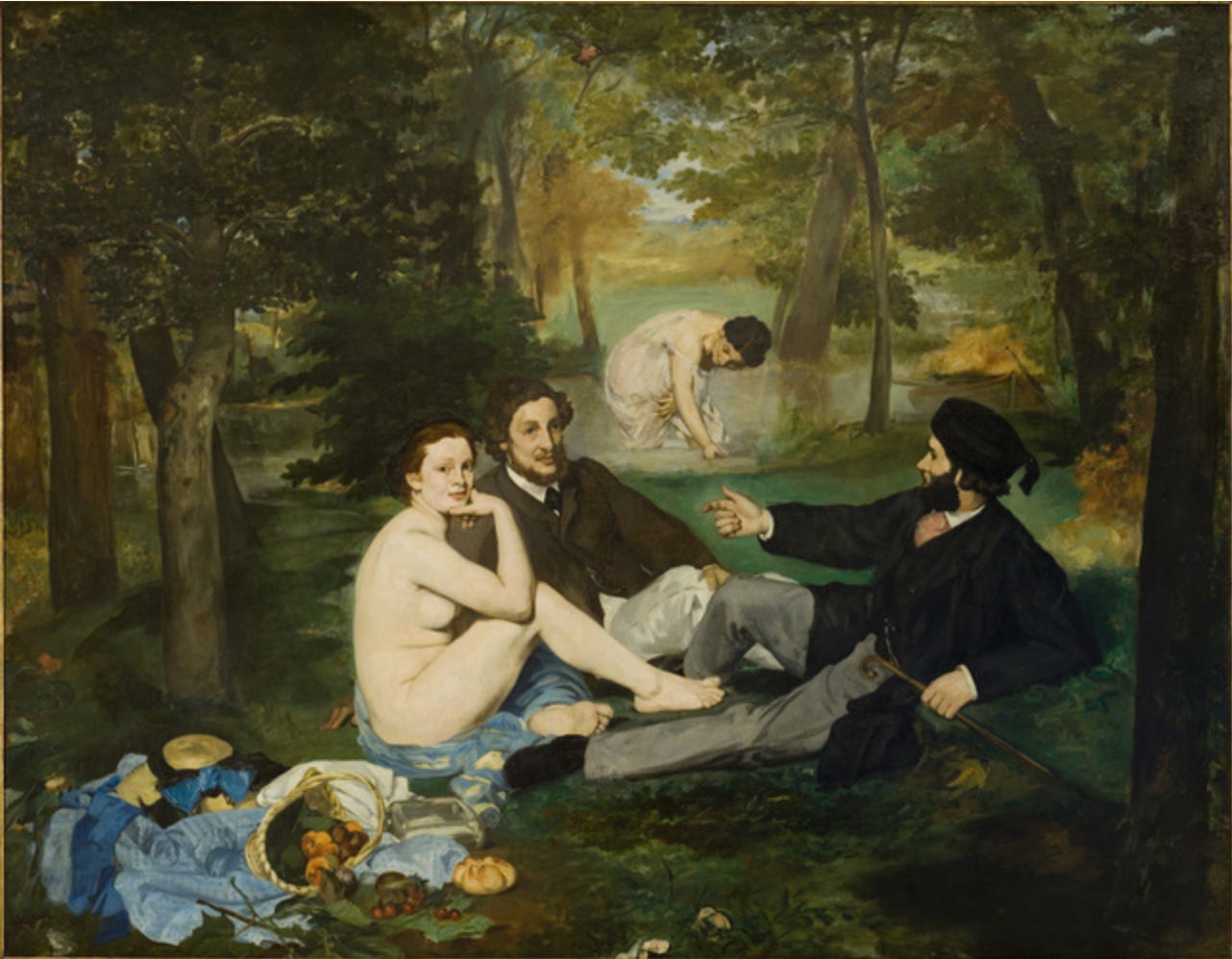
Of course, the first thing I noticed about this painting was the direct quotation of Edouard Manet’s Dejeuner sur l’herbe (Luncheon on the Grass, 1863) one of his most famous paintings. I appreciated Mathenge’s re-interpretation, particularly since Manet himself borrowed his figures directly from a trio of river demigods in a print designed by Raphael. Manet’s painting shocked his 19th century Parisian audience, with its nude woman removed from any mythological setting and placed in their society, including two fully dressed contemporary men.
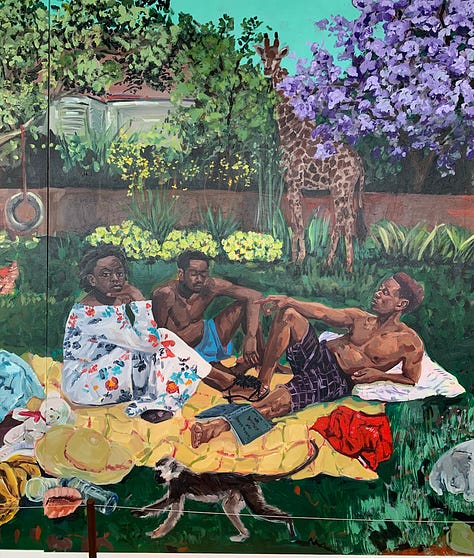
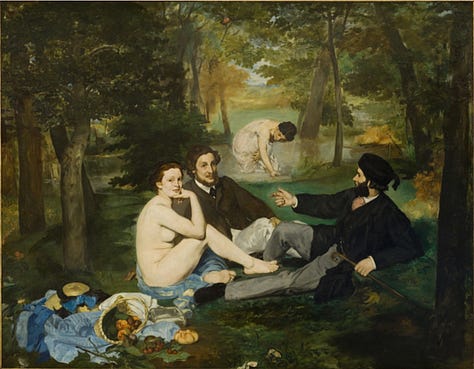
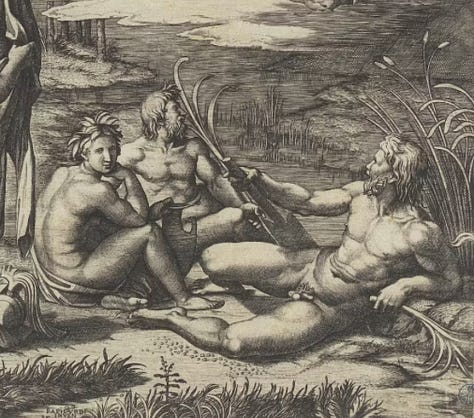
Mathenge reverses Manet’s picnic in several ways. Where Manet included a nude woman, Mathenge painted a woman wearing a bright white dress with blue and red flowers. She still turns to look frankly and knowingly at us the viewers, though. Her male companions are the ones almost in the nude, only in their bathing trunks, possibly alluding back to the river gods in the print. Like Manet, she gives her characters contemporary attire, and depicts recognizable people—in this case, her friends in Kenya, black Africans rather than white Europeans.
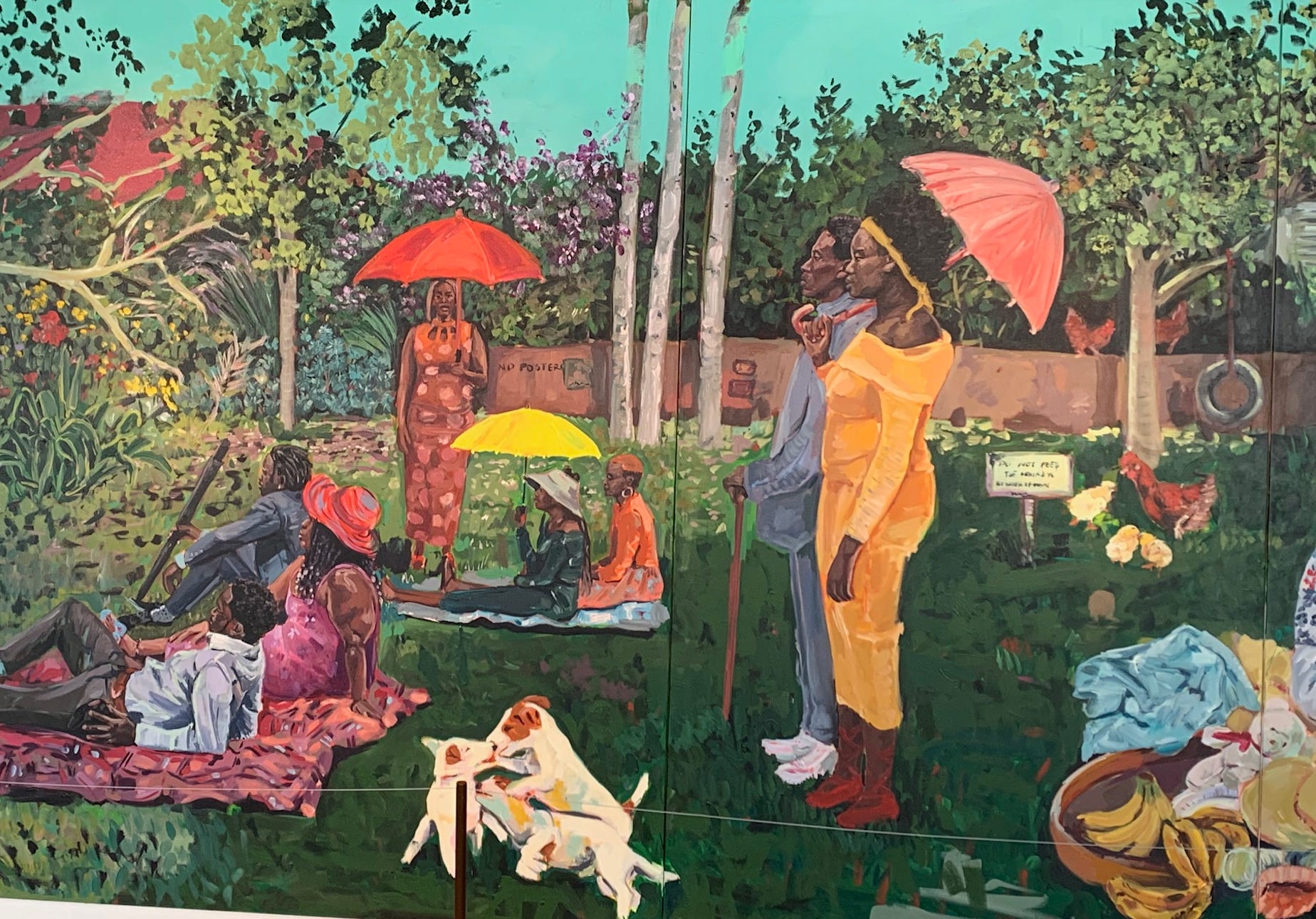
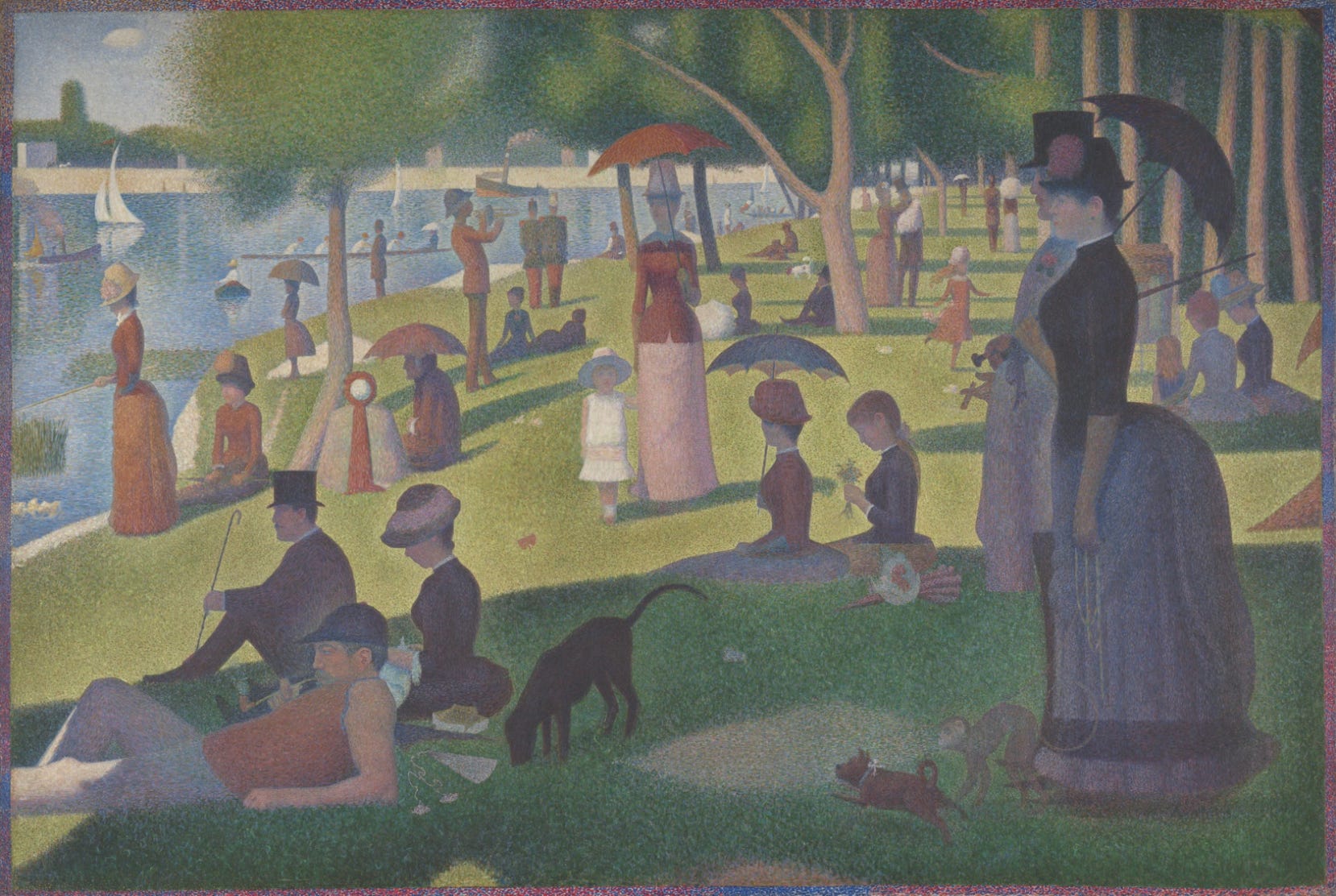
After catching that art historical quotation, I saw the other obvious one: Georges Seurat’s Sunday Afternoon on the Island of the Grand Jatte (1884-6). Mathenge keeps many of the figures posed exactly as Seurat did, while again giving them contemporary dress. This draws attention to how Seurat painted people either in profile or frontally, bringing out the somewhat staid, pieced-together quality of the Sunday Afternoon. His characters don’t interact with each other or with the viewer. Still, I have to say, Mathenge’s adaptation doesn’t make as much narrative sense as the Seurat. The loungers on the pink blanket look out together…towards what exactly? They’re gazing not at a river’s shore, but just at the boundary of a park with more trees. Mathenge removed the watery settings of both the Manet and the Seurat but keeps the trees, adding an abundance of African flora and fauna. It’s more about the quotes of including her friends as the mise-en-scene within these past paintings rather than capturing any actual scene of park-goers.
Having noted that the center third and the left-hand third of this large painting were direct quotes from famous paintings of 19th century France, I expected to find another quote in the right third of the painting; but it wasn’t anything that I recognized. Confused, I looked at the wall label to find that it was, indeed a reimagining of a past art work, a painting by Horace Pippin—definitely not a super famous French 19th century painter.
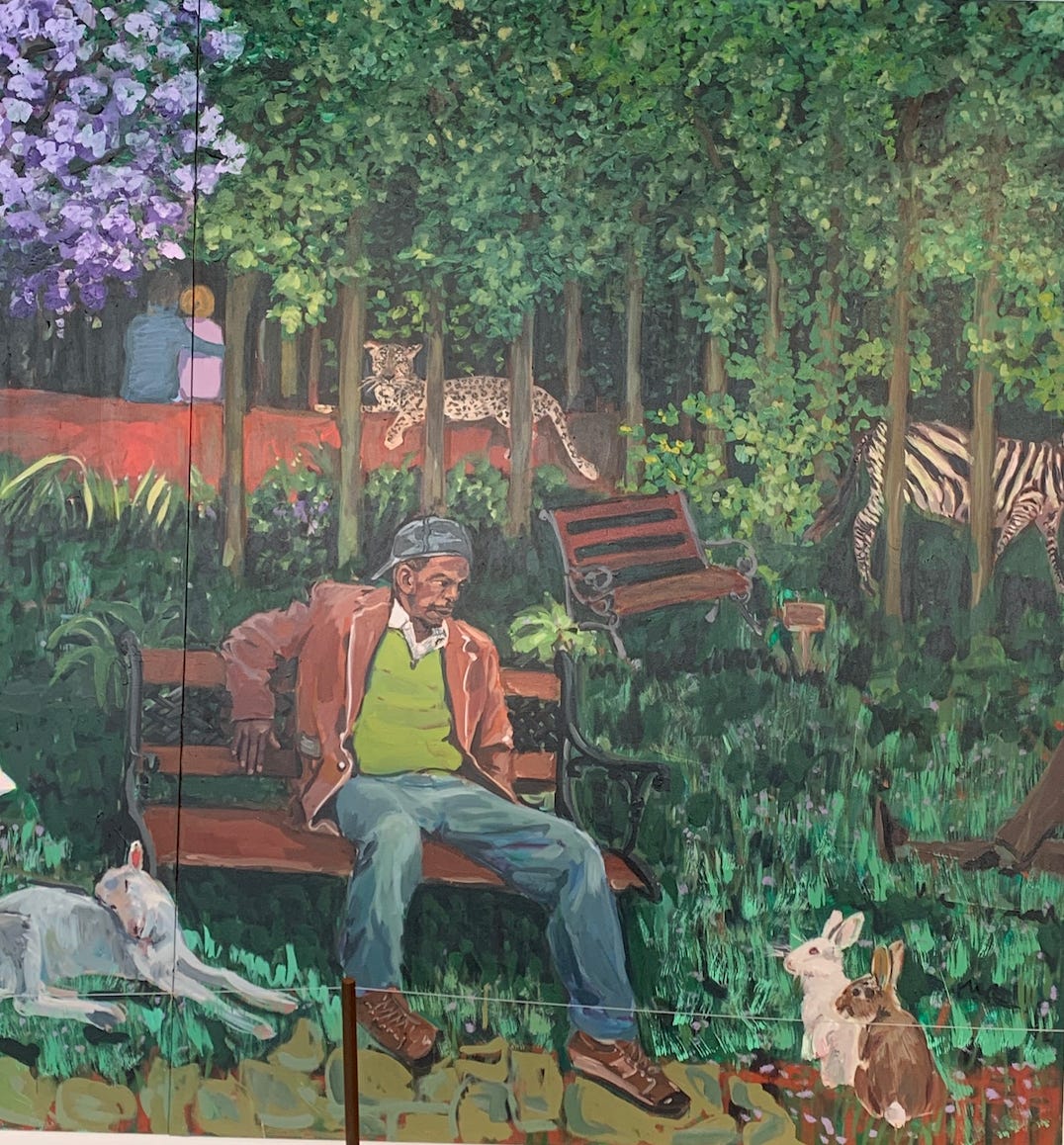
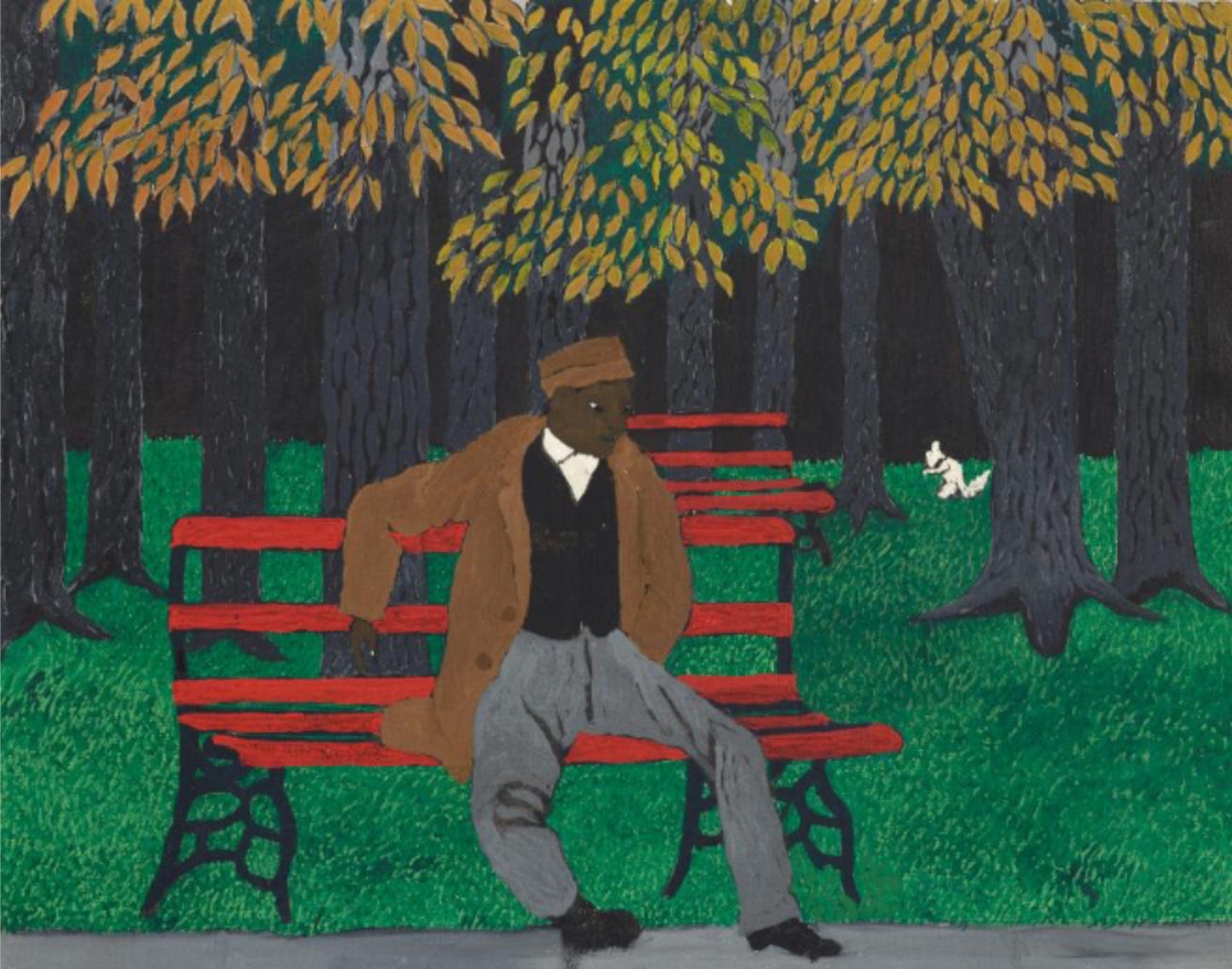
Instead, Mathenge chose to quote a lesser-known Black American artist working in the early to mid 20th century. A self-taught painter, Pippin’s work often alluded to heavy, historical, personally-witnessed subjects, from the fighting of World War I to racial segregation and violence of the early 20th century. The work Mathenge reinterpreted here is one of Pippin’s last works, now in the Philadelphia Museum of Art, of an ordinary guy sitting on a park bench. Maybe he’s being contemplative, or maybe he’s just plain tired. Tired like Rosa Parks tired. Tired of the injustices he saw and experienced over his lifetime as a Black man in America, now appreciating a quiet moment in a tree-filled park under autumn-yellow leaves. By including Pippin’s unstudied work in the same pictorial park-space as quotes from the canonical Manet/Raphael and Seurat, Mathenge elevated Pippen’s experience as a Black artist and validated his vision.
Despite its untrained style, Pippen’s Park Bench still holds a lot of feeling and conveys the particular pose of the man on the red slated bench. Mathenge has copied it in her painting’s counterpart exactly: the man’s right foot resting on the outside edge of his shoe; his elbow propped on the top slat of the bench; the wrought-iron bench structure; the second empty bench in the background. Pippin’s Park Bench Man wears gray slacks, a white collared shirt, a black sweater vest, and a brown jacket with a brown cap. Mathenge’s PBM gets more color, with blue jeans, a lime-green sweater, and a reddish-brown jacket edged with white and white buttons. She kept the white collared shirt but unbuttons it, matching the casual mood of the denim baseball cap worn backwards on his head.
There is so much more we could talk about here with more research, such as…. maybe along with the compositions, Mathenge was also borrowing and updating social context. Seurat’s Sunday Afternoon pictures the new weekend leisure of the rising middle class in France ; we could read Mathenge’s work as such middle-class leisure extended racially or globally. Or we could view her adaptation of Manet in terms of gender, how the seated woman looks at the viewer with a directness: she wears the clothes (even strappy high heels!) and holds power. We could find a comment on increased male loneliness with the guy sitting on the bench, especially in contrast to the couple on the garden wall behind him. There are a lot of directions you could take it, more questions to ask. That’s the thing about learning new artwork, and I’m glad to be at this project, glad to be introduced to the large colorful artworks of Mathenge, who also introduced me to Horace Pippin.
Through the autobiographical title, “Home Sweet Home,” Wangari Mathenge’s painting also tells us her story, as an artist who studied at art schools in the United States in the Western tradition but maintains her love for her origins in Kenya. Based in Chicago, Mathenge staged and photographed these scenes with her friends near the town where she grew up. Home is both Kenya and the artworks that inspire her. Many of her works infuse portraiture with the patterns and colors of African textiles and explore what it is to be an African woman in America. (For another window on this experience, a high recommend for the excellent Chimamanda Ngozi Adichie’s novel Americanah.)
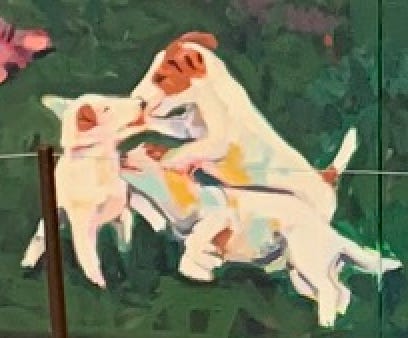

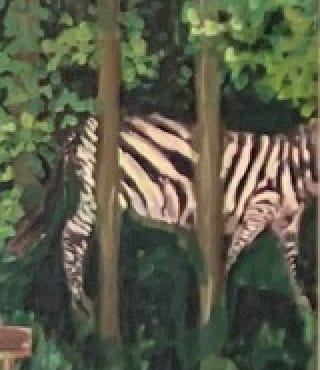

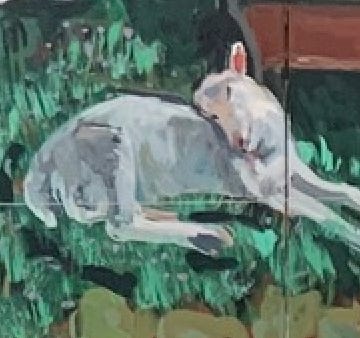
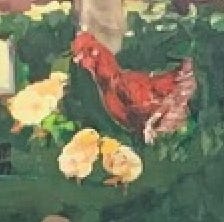
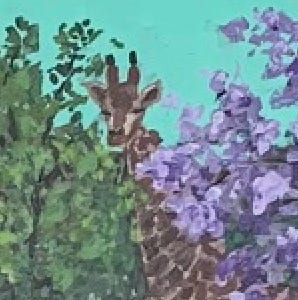
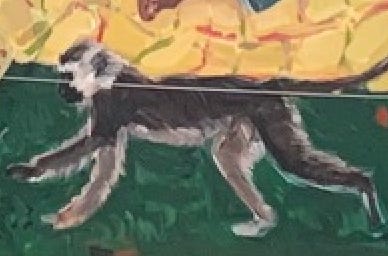
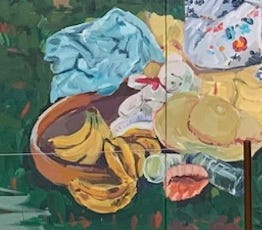
To further tie the scene to Kenya, Mathenge included wild African animals such as a giraffe, a leopard, a zebra, a monkey approaching the bananas and plastic water bottles by the bright yellow picnic blanket. The monkey makes more sense in Kenya than as a pet in Seurat’s painting. Domesticated animals appear, too: dogs tumbling in a frolic, hens with their chicks, a couple of bunnies, and a lamb. The painting appeals to children, challenging them to find all the animals, and even includes enticements such as a teddy bear (amongst the bananas) and a tire swing. Test it out on the kids in your life, to see what they notice in this detail-rich painting!
Know anyone having a Juneteenth picnic? Feel free to share this post with them!
BONUS ARTWORKS:
These animals all together among people in Home Sweet Home (particularly the leopard and the lamb in the same scene) remind me of Edward Hicks’ Peaceable Kingdom paintings, a hope for peace between nations, a hope for a time when the “lion shall lie down with the lamb.”
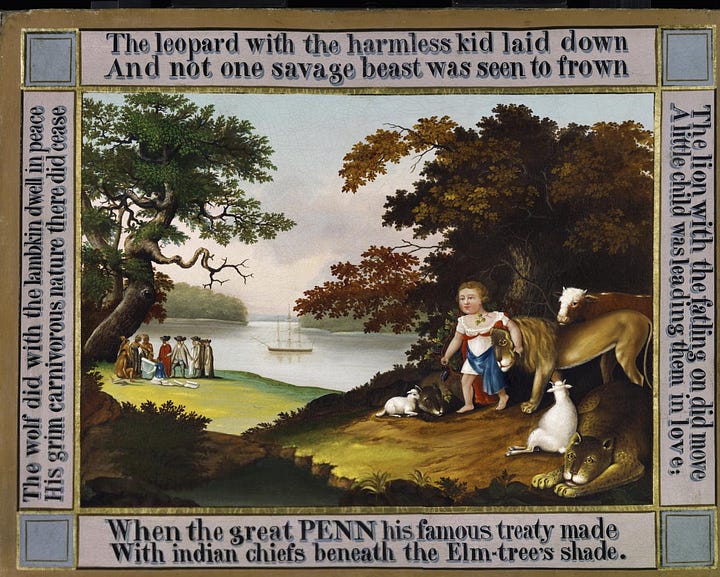

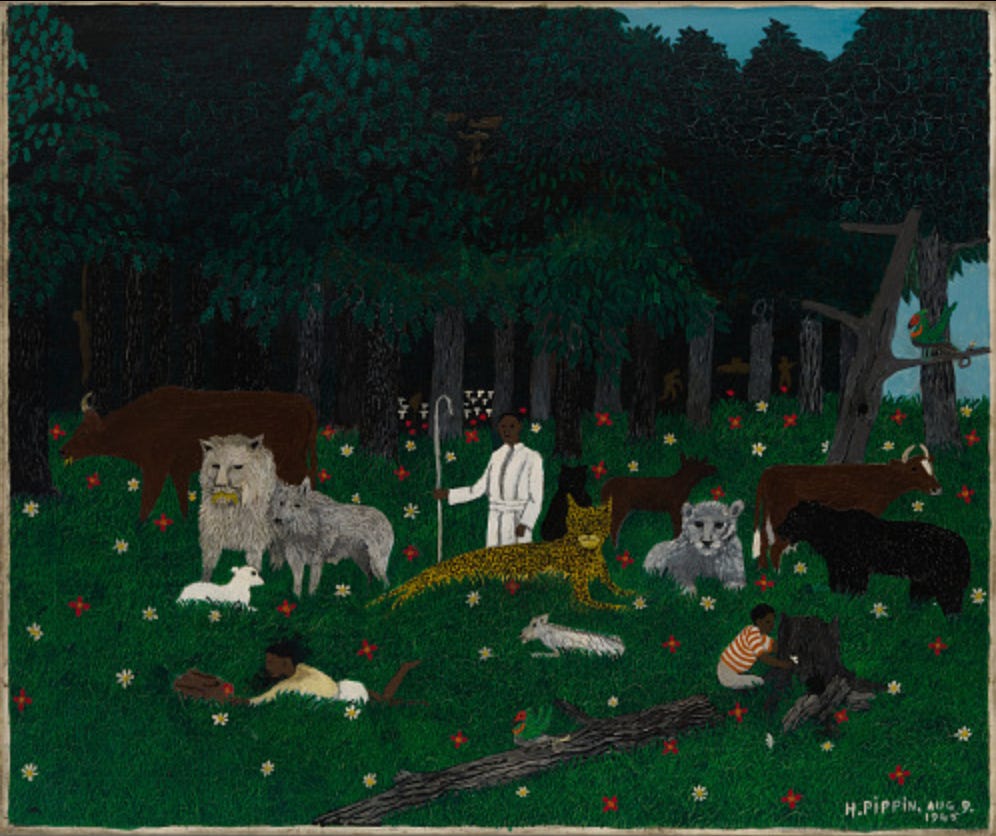
I wonder if the little white squirrelly animal in Pippin’s Park Bench painting inspired Mathenge to add the animals throughout her much larger painting. She may also have known other paintings by Pippin that directly challenged and re-historicized Hicks’ themes. In his Holy Mountain series of paintings, animals and people inhabit verdant spaces peacefully, but with images of 20th century violence behind them, perhaps a commentary about how the treaty between William Penn and the Lenape native Americans did not last. Based not far from Philadelphia, Pippin certainly would have known Hicks’ works.
No posts
Comments
Nothing yet. Say the first thing.
Sign in to join the conversation.