
Men act and women appear. Men look at women. Women watch themselves being looked at. This determines not only most relations between men and women but also the relation of women to themselves. The surveyor of woman in herself is male: the surveyed is female. Thus she turns herself into an object of vision: a sight. — Berger, J. Ways of Seeing. (1990)
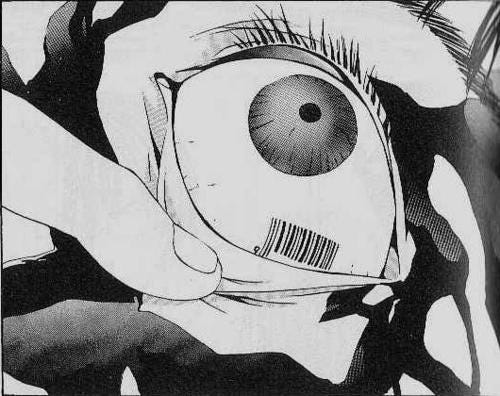
Warren Buffett famously stated Disney was valuable in large part because “the mouse doesn’t have an agent”. The brand has total ownership over the property of its characters. They have no capacity to negotiate.
It is an endlessly alluring proposition for Capital to have objects, rather than subjects. With AI influencers, we are now watching this fantasy of control play out: the removal of labour, and specifically women’s labour, from the process altogether.
What makes this current conversation infinitely grosser than Disney is that the mouse never pretended at humanity. The conversation changes when what’s in front of you resembles a real woman so closely that the line corrodes.
Strip away the futurist gloss and the AI influencer discourse is really a very old story: men building wealth from women’s bodies, panicking only when women get to keep the proceeds.
It’s no surprise that companies want female assets. Or things that look like women. In the collective Western imagination, women have been constructed as the object of the gaze’s desire, and in brand, what else do we sell but desire?
So women’s bodies have always been treated as a commodity men have exploited to build wealth. Marilyn Monroe; the Hefner empire; Trump and Miss Universe. The male gaze has soaked the perspective of the heterosexual male spectator into everything we’ve consumed across generations.
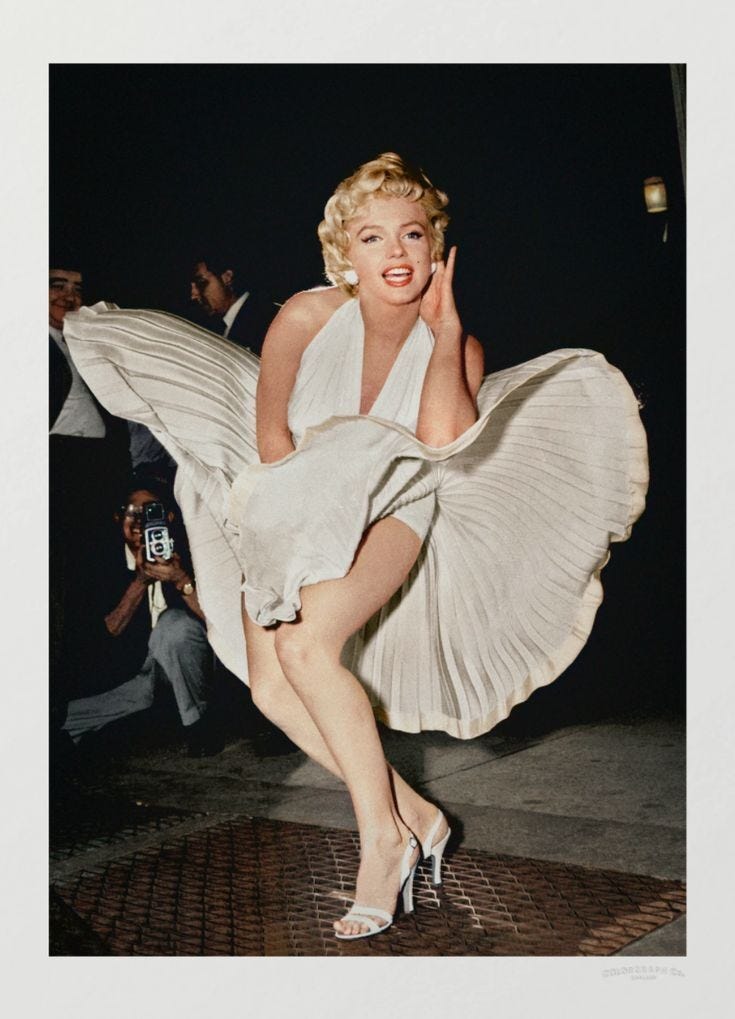
What has changed in the last half century is that women have been able to reappropriate that wealth they generate for themselves, and in doing so achieve some form of emancipation. Once you’ve secured your 500 pounds a month, no man can hurt you, because he has nothing left to give you.
This is why the archetype of “the OnlyFans girl” is suddenly such an affront to so many men. Where was the moral outrage over the porn industry, the outcries of civilisational decline up until this point?
What is ‘immoral’ is merely what shows the world its own shame: the economic reconfiguration of sex and the female body, and who appropriates the value of the sale: a crack in the symbolic order they themselves built and expect to hold.
Everyone came back from Cannes this year with the same observation about the ascendancy of the Creator economy. The doom-and-gloom stories of declining agency influence and budgets make sense when you can see where the money is flowing to.
The total economic value of the creator economy is only going to supercharge in coming years as it begins to pull from legacy media budgets, rather than just creative. Creators are moving from a downstream distribution channel on the media plan to the media plan itself. They are involved in product co-creation, working at all parts of the funnel, even co-investing in businesses (as I have done with Tracksuit).
This is an industry with very high representation of women, where they can regularly out-earn men and do so on their own.
I would invite you to observe the creator economy with a similar mindset that existed during the Space Race. We’re living through a Meta Cold War, where there’s a new, unexplored terrain with infinite possibilities for monetisation.
And it’s precisely the promise of that capital, and the power it represents, that makes this new group of would-be pimps want to be first to plant the flag, to secure their dominion before it consolidates outside their control and slips out of their hands for good.
So what the AI influencer conversation is really about is companies, most often run by men, attempting to reclaim and reappropriate that surplus value for themselves. A master-slave relationship in which the slave has no residual subjectivity left. Because a synthetic asset never had, and never will have, anything social left to lose.
This fantasy of a woman you can fully own is not the fantasy of a man that feels secure. It is happening in the context of a generation of men whose labour has also been made infinitely replaceable - and with it, stripping them of the old scripts that promised them dignity.
AI Influencers, like AI girlfriends, sell that lost dominion back at scale; a synthetic body as a substitute for the security, futures, actual relationships that capital foreclosed on them first.
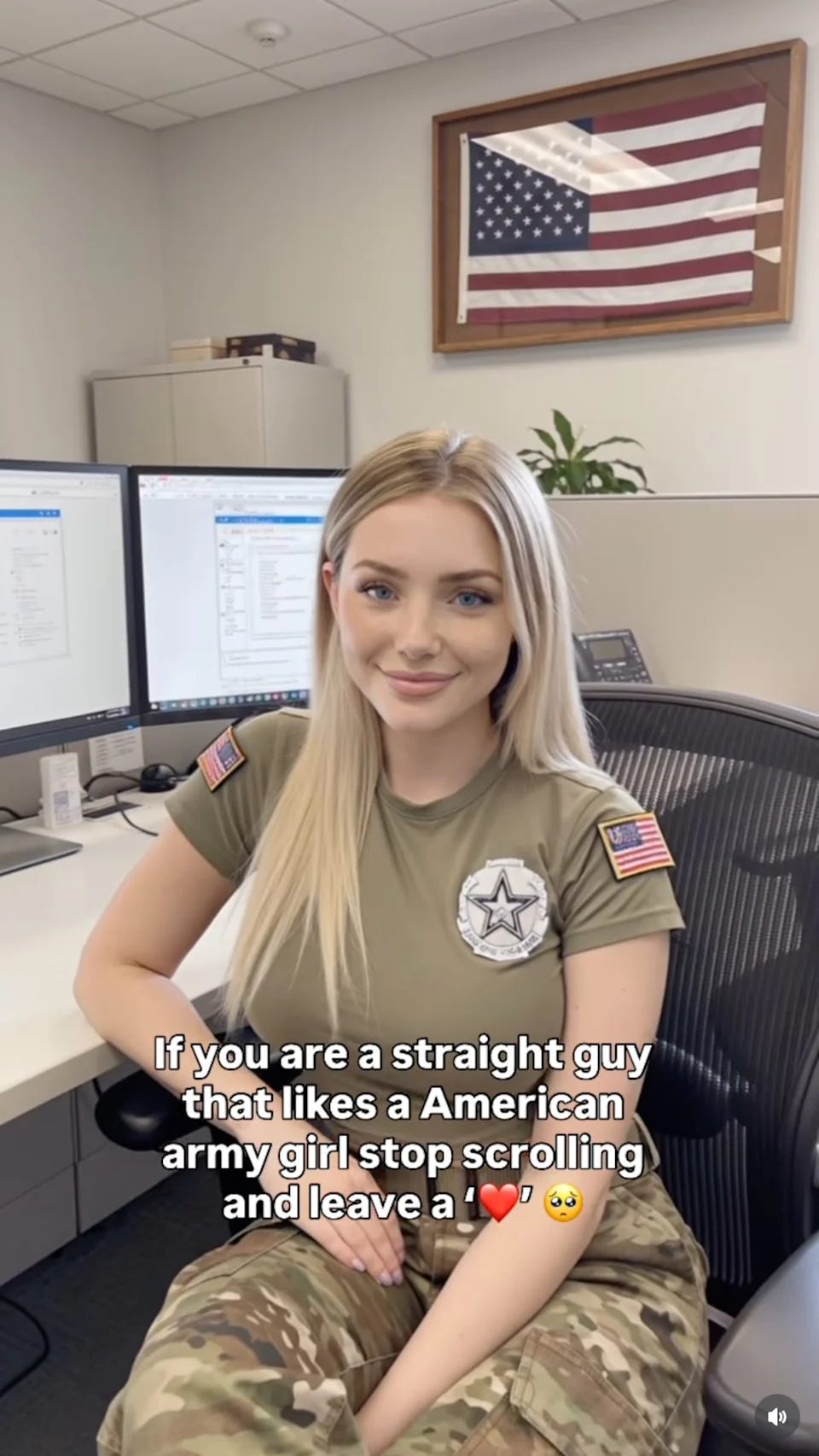
It is telling that despite the infinite possibilities of AI influencer technology - we could have elves and orcs and talking pickles - 99% of AI influencers replicate the exact same archetype: young, flawless, hairless, barely-legal bombshells.
Slop in its truest sense - a regression to the most base ideas possible.
If you can’t tell, this is why I feel this practice is incredibly unethical.
I’ve said this before, and I’ll keep saying it. Influence is based around trust, and trust is difficult to measure, difficult to win, but, most importantly, easy to remove at any given point. What these sloppers masquerading as real people are missing is that power over an asset and authority over an audience are distinct categories that, while they sometimes overlap, never substitute for one another.
This is why influencing has proven to be a more powerful form of brand building than every other form of brand communication, because we trust individual people much more than we trust faceless companies. And that is exactly what an AI influencer represents, even worse than a faceless company: something inhuman pretending at humanity.
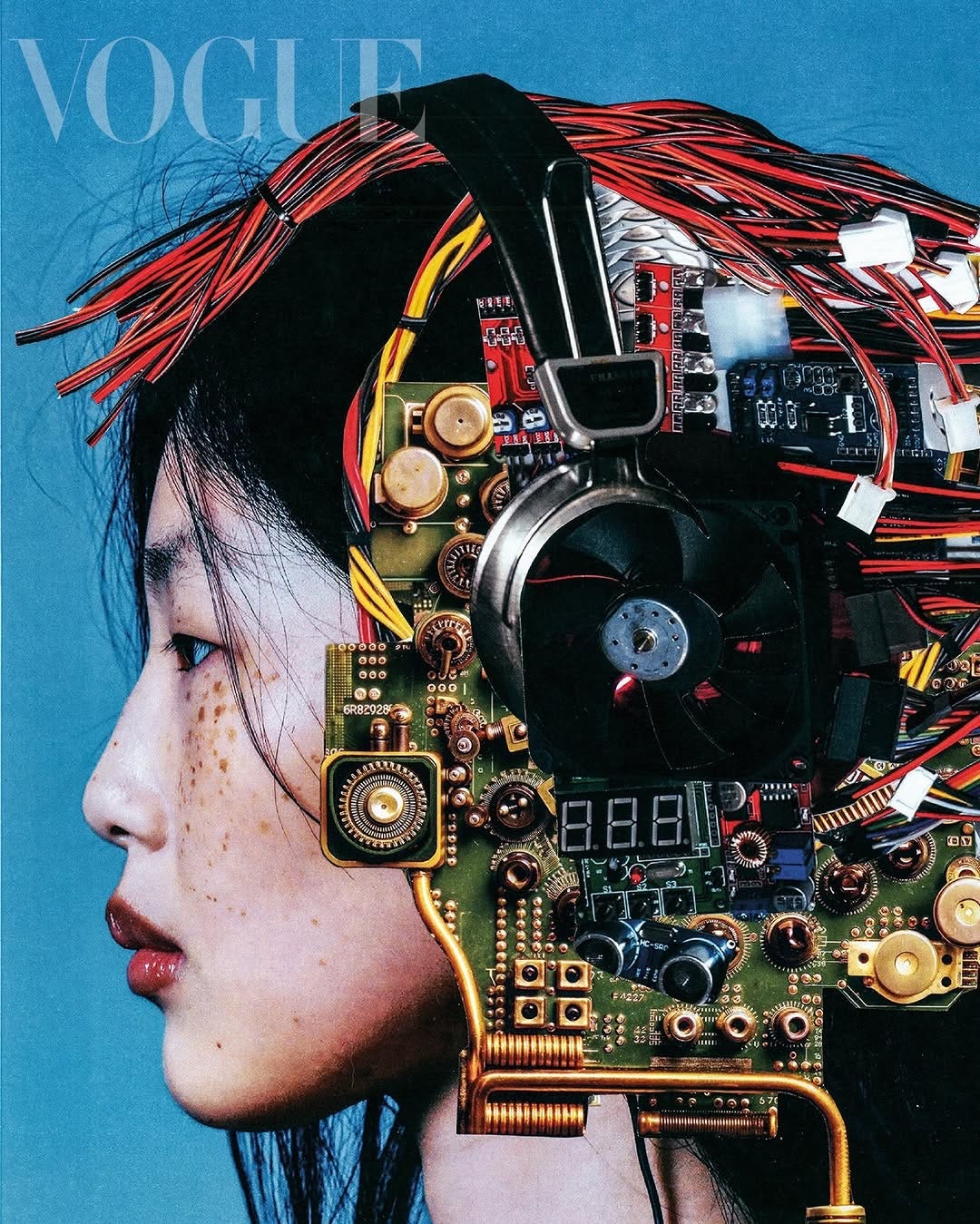
Once the deception is revealed, any semblance of ‘influence’ evaporates. It triggers a very powerful negative emotion - genuine disgust.
And there is a hell of a lot of deception going on with current AI influencers.
Eugen Kneppel recently completed a study showing a number of points which should be alarming to brands considering working with them:
Most AI influencers are hiding engagement data - and are receiving on average ~2.7x less engagement than human-generated posts
Scattered, mostly male audiences with following likely driven by curiosity and aesthetics, not trust or expertise
Users stating clearly they watch creators because they feel authentic, they unfollow when recommendations feel untrustworthy, that most stay for ‘value alignment’. An AI persona fails all three tests
It is easy to think of influencers as vacuous manipulators but the less comfortable truth is that in a consumer society - we like being marketed to. We enjoy buying products and services we feel are relevant to our lives, that reflect our desires, fears, anxieties. Instagram these days is basically a personally curated advertising feed.
Humans have the one thing an AI influencer can never replicate: skin in the game. They stake their entire reputation and livelihoods on what they say, what they do, how they live. That is the basis upon which trust is built with their audiences over time.
There is something incredibly depressing about using the prospects of supposedly godlike technology to reproduce the exact same political and economic scenarios as today. Agentic conversations are particularly droll - building a team of synthetic employees, such that we can somehow add yet ANOTHER middle management layer to the corporate hierarchy.
But with this in mind, I hope what we can recognise is that AI influencers are merely another fantasy of the past with better rendering: the female body restored to pure object, finally cheap enough to own.
The centuries-long striving towards subjectivity is being unwound across industries very quickly. Either we name it for what it is and draw red lines around what we won’t accept, or we wait quietly for our turn at the farm.
No posts
Comments
Nothing yet. Say the first thing.
Sign in to join the conversation.