
Alright, first thing first: we are one week from the South Florida Chariots Car Show in Miami. Esses, Visa, Cash App, and local artist (and Issue 02 cover star) Mark Delmont are throwing a block party / exhibit at Miami’s Riverset Studios that will be the talk of Miami GP Week. RSVP below, and if you’re in town, do not miss it…
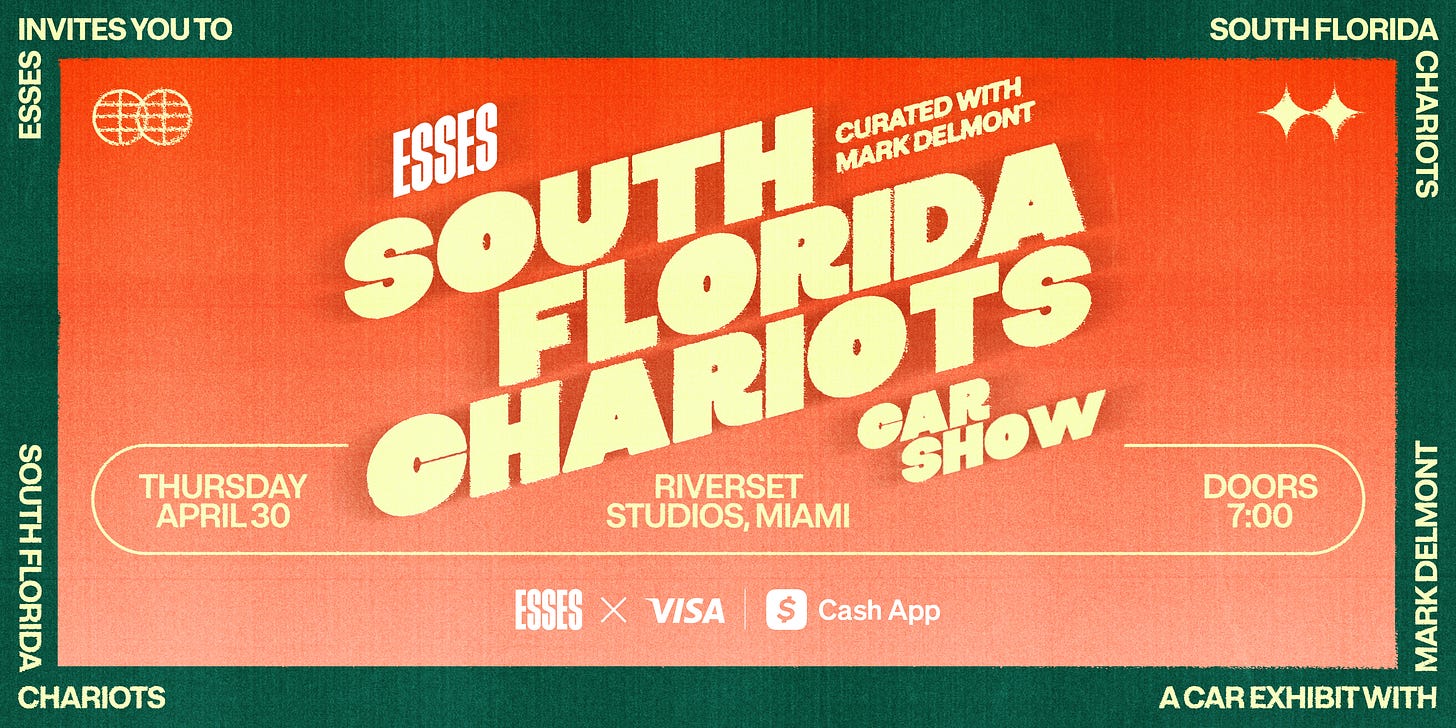
RSVP for South Florida Chariots!
But there’s another event, that because of the unrivaled gravitational pull of the football in America has become must-see TV, starting tonight: the NFL Draft. Set in Pittsburgh and spanning three days, Day 1 of the 2025 draft outrated the 2024 NBA Finals. The NFL is truly on a different plane of existence when it comes to America’s sporting diet.
Yet, for Michelai Graham, writer, former editor at Boardroom, and digital content strategist based in New York City, something funny happened a couple years back: she fell out of love with football and into love with Formula 1. Why? Because “a sport that holds grands prix in Mexico City, Singapore, São Paulo, Abu Dhabi, Japan, and Melbourne cannot build its identity around a single country’s flag, no matter how hard it tries. It cannot demand one kind of patriotism from its fans because its fans don’t share one. The sport belongs to the world.”
I inherited my love of football from a grandmother I never met. It took a global sport racing in two dozen countries to show me what fandom was supposed to feel like.
By Michelai Graham
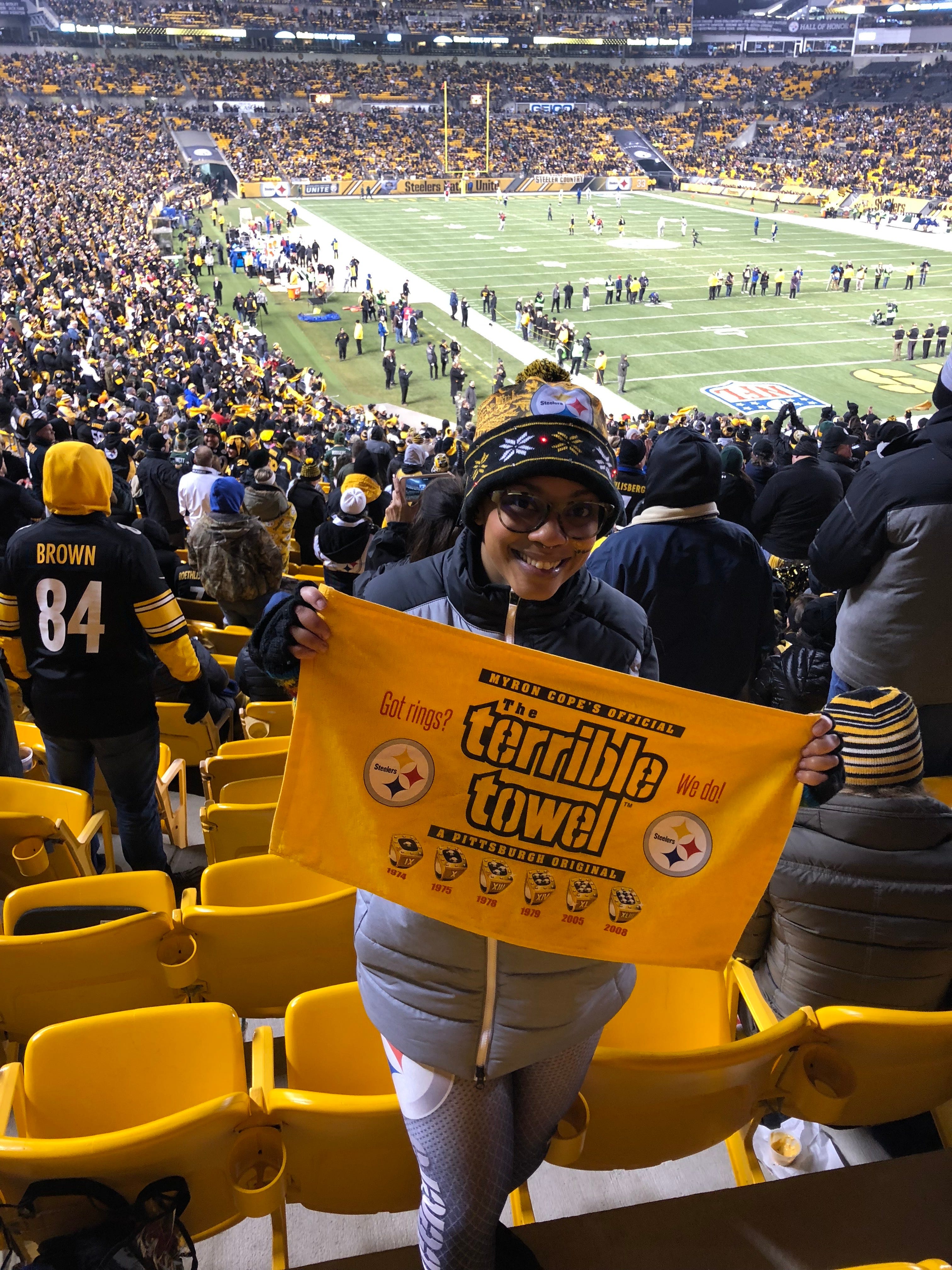
I never chose the Pittsburgh Steelers. They chose me. My grandmother Margaret was a Texas girl who eventually made her way to Santa Monica, California, where my mom was born. But she spent some time in Pittsburgh, the site of the NFL Draft this weekend, at some point in her life. The Steel City is football crazy, so maybe it’s not surprising that even a short stop there got my grandmother hooked on the black and gold.
I never got to meet my grandmother. She passed away when my mom was 17. But I inherited her team, and without knowing it, a small piece of her. For that reason alone, I will be a Steelers fan forever.
Football Sundays were sacred. I can still feel the specific electricity of Super Bowl XLIII in 2009. My mom and I were jumping up and down in our living room as the Steelers edged out the Arizona Cardinals in the final seconds. My mom was a Jerome “The Bus” Bettis girl through and through. I was a Troy Polamalu, Hines Ward, and Santonio Holmes kind of kid. There is something so visceral and nostalgic about those Sundays that I don’t think I’ll ever fully shake.
But somewhere along the way, the NFL started showing me who it really was. Not just as a league, but as an institution — one that had decided what kind of fan it wanted, what kind of player it wanted, and what kind of America it wanted to represent. And it had very little interest in revising that answer.
Colin Kaepernick took a knee in 2016 to protest police brutality, and the league — a league where a majority of players are Black, by the way — responded by effectively ending his career. Owners condemned him. Commissioner Roger Goodell disagreed with his behavior and emphasized the importance of exercising patriotism in the NFL. Kaepernick settled a collusion complaint against the league in 2019 and still never played another snap. Then came Brian Flores in 2022, the Black head coach who sued the NFL, alleging the Denver Broncos showed up to his interview an hour late and hungover, and that the New York Giants called him in as a diversity checkbox while they had already decided on another candidate. Flores’ racial discrimination lawsuit against the league is still playing out in court. The NFL went on to settle a lawsuit in 2021 for using race norming, a practice that assumed Black former players had lower baseline cognitive function, which was used to deny them brain injury settlements.
These weren’t isolated incidents. This is just what the NFL is. A league so committed to its own mythology — the patriotism, the pageantry, the very specific idea of who gets to belong — that accountability has never really been on the table. America’s most popular sport has built an identity around a version of America that was never built to include everyone, and they have defended that identity aggressively when challenged.
I’d be lying if I said the NFL didn’t try to reel me back in. Bad Bunny’s Super Bowl halftime show genuinely almost worked. I watched it, I screamed, I loved every second. But a great halftime performance is not a reformed institution, and I could tell the difference. The blind love I had for that league has been replaced with something more clear-eyed.
I needed to distance myself from the NFL to make room for what was to come. What I didn’t expect was what would fill the space it left behind.
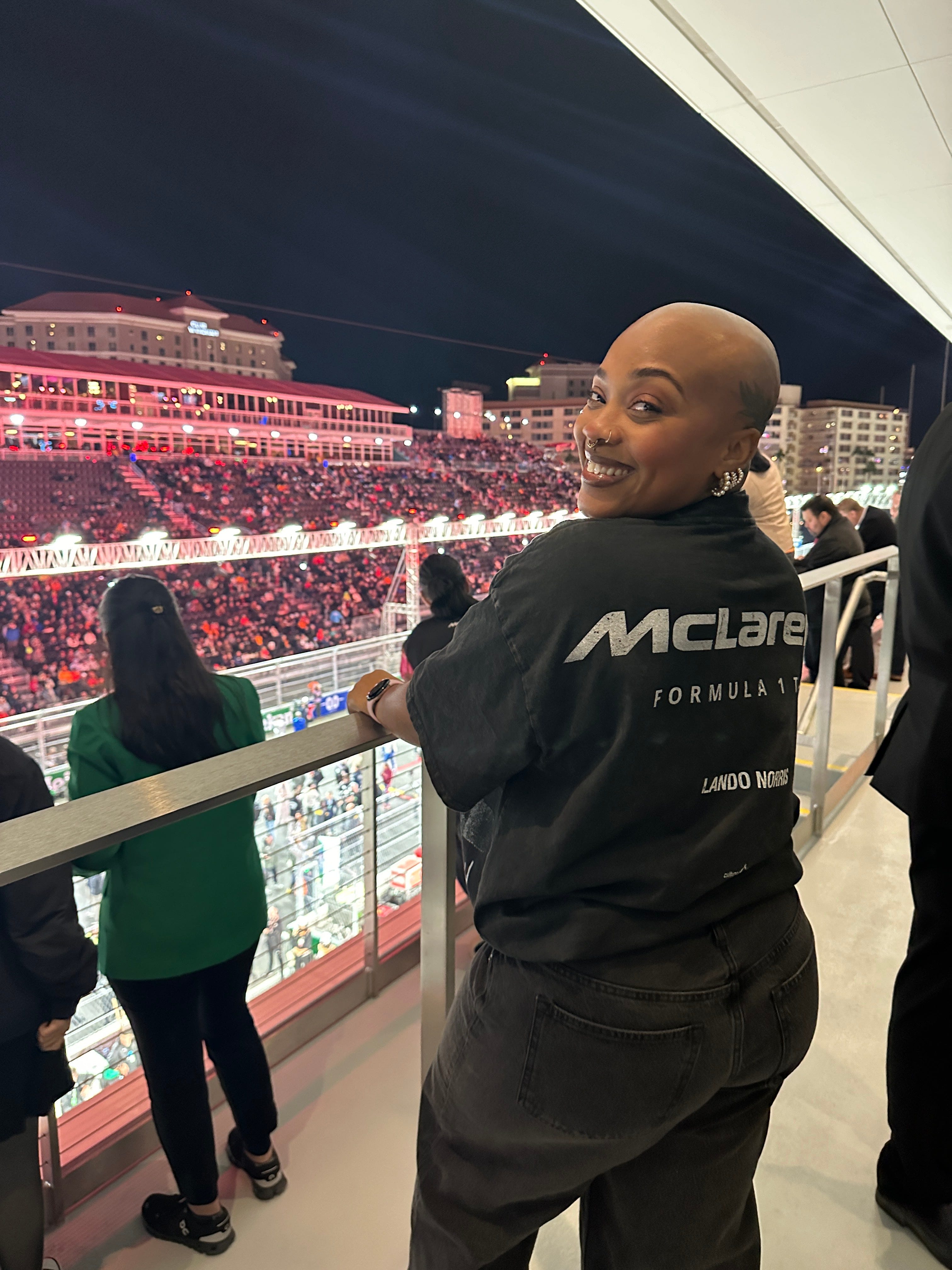
I am a technology reporter with a decade in this industry, and I have built my career on the belief that tech should never be something that leaves people behind. In early 2024, I fell headfirst into Formula 1. Not through Drive to Survive or a specific driver, but through the technology. I’d been invited by a tech company to the Canadian Grand Prix to see how racing data was captured for teams and for the broadcast. When I started pulling the thread on the engineering in F1, I couldn’t stop.
I’ll be honest: I sometimes feel a little sheepish admitting how new I am to this sport. But I am a seasoned storyteller who knows what it means to discover something that genuinely alters your brain chemistry. F1 did that for me.
Here is what I want to say about F1 that I think gets lost in the Drive to Survive discourse, the driver fandom, and the debates about whether the sport is growing too fast: F1 is structurally incapable of the insularity that broke my relationship with American sports. A sport that holds grands prix in Mexico City, Singapore, São Paulo, Abu Dhabi, Japan, and Melbourne cannot build its identity around a single country’s flag, no matter how hard it tries. It cannot demand one kind of patriotism from its fans because its fans don’t share one. The sport belongs to the world. It cannot be gatekept the way the NFL and NASCAR have been gatekept. There is simply too much of it. Too many countries, too many languages, too many entry points, too many corners for too many different kinds of people to find their own place inside it.
And I found mine.
Within F1’s fandom, I discovered something I genuinely wasn’t expecting: Black and Brown women who love this sport the same way I do, who geek out about tire strategy and qualifying laps, who built Discord servers and group chats where I never felt I had to prove myself. In the NFL spaces I’d occupied, being a woman fan often came with an entry fee — prove you know the game, prove you’re a real fan, prove you belong. I have never been asked to prove a single thing in F1, and the women I surround myself with are the smartest I’ve ever known.
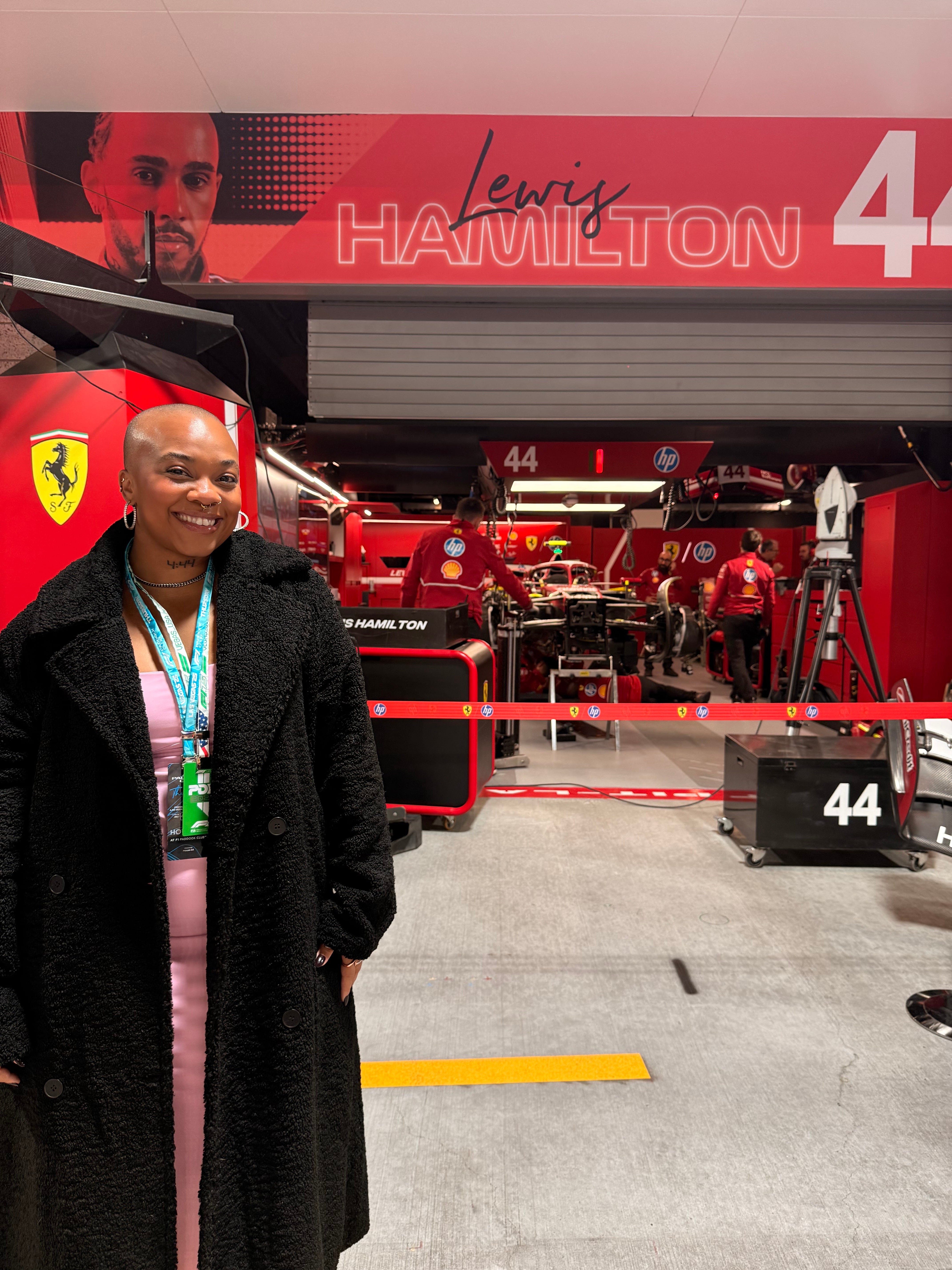
A big part of that is thanks to people like Tasia Johnson, an F1 creator and sports storyteller based in New York, who has built community with intentionality. She fosters conversation. She makes space. She hosts events that bring people together around this sport in a way that feels like a warm embrace. Once I connected with her, my whole F1 world started to expand.
And it just dawned on me. Maybe I love F1 so much because it’s so un-American.
Now, let’s be clear: F1 has its own problems. The lack of diversity among drivers is very obvious, and the sport has a long way to go on representation at the highest levels. Socioeconomically, the sport is absolutely not for everyone. And I am not here to pretend otherwise.
But the American fandom that’s grown up around it built something the NFL never could: a space that didn’t need me to be a certain kind of fan. I am fully embedded now. I have my favorite drivers, but honestly, I’m invested in all of them: the personalities, the feuds, the engineering wars playing out behind the scenes that most casual fans never see. I didn’t get that deeply rooted in the NFL, outside of my mom and the memory of a grandmother I never met.
But I found it here, in a sport that races in two dozen countries and somehow, in all of that vastness, still managed to feel like mine.
No posts
Comments
Nothing yet. Say the first thing.
Sign in to join the conversation.