
Failure is often painted as the ultimate fear—the proof we don’t belong, that we aren’t capable, that the inner critic was right all along. For those of us who wrestle with imposter syndrome, failure is a confirmation of our deepest insecurities.
But what if we’ve been looking at failure through the wrong lens?
What if, instead of being a reason to retreat, it’s actually the most valuable tool for growth?
Imposter syndrome thrives in an environment of unrealistic expectations. It whispers that we need to be flawless, that any misstep will expose us as frauds. This obsession with perfection creates a paralysing fear of failure.
Perfectionism and imposter syndrome often go hand in hand. Brené Brown, in her book The Gifts of Imperfection, describes perfectionism as a defence mechanism: an attempt to avoid criticism, judgment, and blame by getting everything “just right.” But as she points out, perfectionism isn’t the key to success—it’s a barrier to it.
For many, the fear of failure keeps us from taking risks or pursuing opportunities. We play small to avoid the possibility of falling short. Ironically, this avoidance often limits our growth far more than failure ever could.
The way we frame failure profoundly affects how we experience it. Instead of seeing failure as proof of inadequacy, what if we reframed it as part of the learning process?
By normalising failure and celebrating the lessons it brings we can look at it and view it as a sign that you’re pushing boundaries and taking risks .. which are essential ingredients for progress.
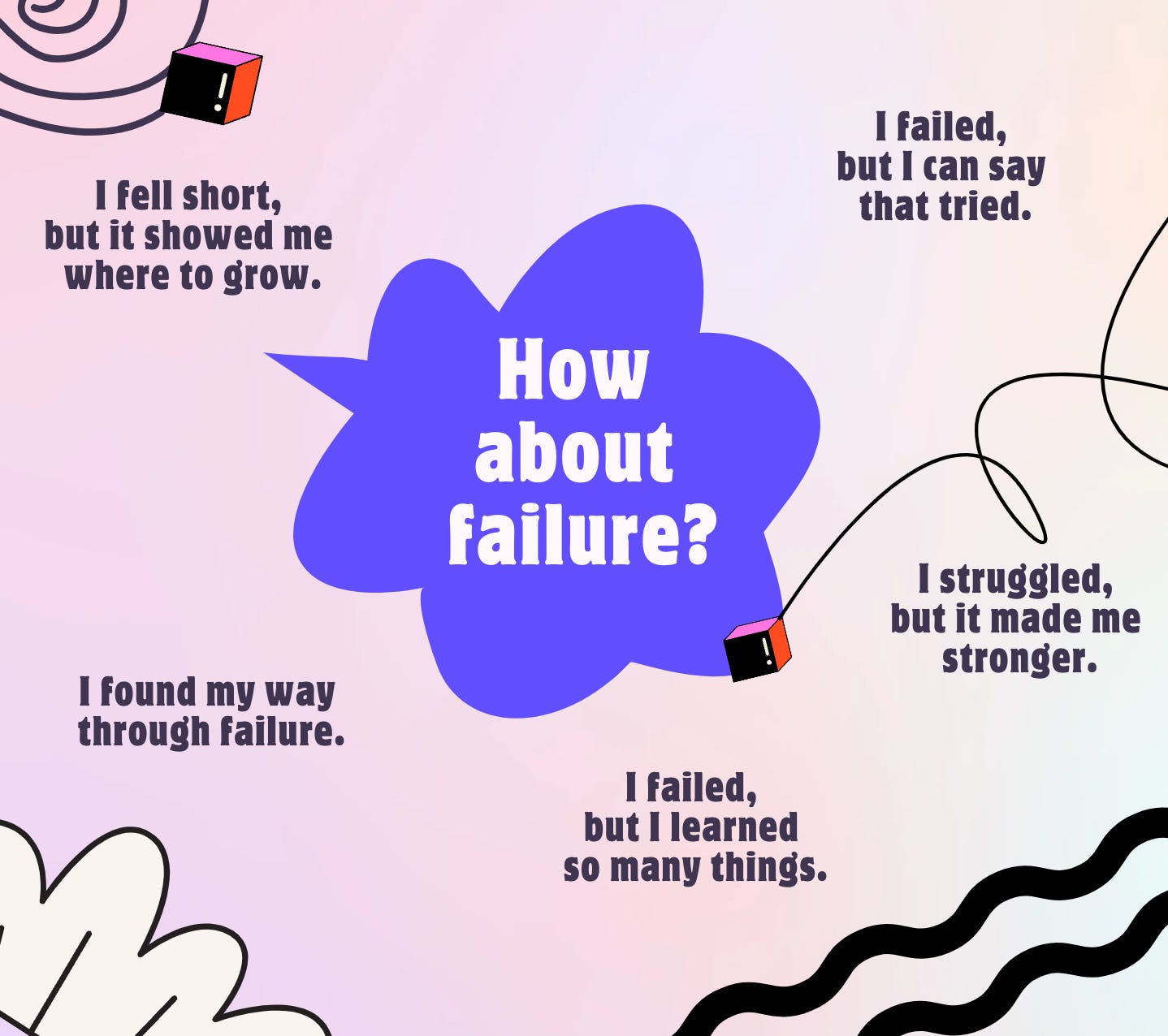
It’s worth remembering that failure only occurs when we’re brave enough to try.
The presence of failure is often a sign that we’re stretching ourselves, venturing beyond our comfort zones, and taking on challenges that test our abilities.
In Dare to Lead, Brené Brown writes, “If you’re brave enough often enough, you will fall.” The key isn’t avoiding the fall—it’s learning how to rise again. Resilience in the face of failure builds strength, confidence, and clarity, all of which help to weaken imposter syndrome’s grip.
Ironically, failure can be one of the best tools for quieting the inner critic. When you experience failure and realise it doesn’t define you, you begin to strip power away from the imposter’s narrative. Each time you recover, you build evidence that you’re capable of handling challenges, even when things don’t go as planned.
This process of recovery shifts the focus from “I failed, so I’m a failure” to “I failed, and here’s what I learned.” Over time, this reframing helps replace self-doubt with self-trust.
Rewiring your relationship with failure isn’t an overnight process, but it’s possible with intentional practice. Start by reflecting on past failures.
What did you learn from them?
How did they shape your growth or lead to new opportunities?
It can also help to normalise failure by discussing it openly. Sharing your experiences with trusted colleagues or mentors not only builds connection but also reinforces the reality that failure is a shared human experience, not a personal flaw.
Finally, experiment with reframing failure as feedback. Instead of asking, “What did I do wrong?” try asking, “What can I do differently next time?” This small shift in perspective transforms failure into a tool for continuous improvement.
How has failure shaped your journey? Have you found ways to use setbacks as stepping stones for growth? I’d love to hear your reflections.
No posts
Comments
Nothing yet. Say the first thing.
Sign in to join the conversation.