
Whether intentionally crafted or passively absorbed, everyone has an image. It's how people describe you when you're not in the room. It's the shortcuts others use to interpret your competence, your presence, your potential.
The mistake many people make is assuming that image is a byproduct of performance alone. If I just do good work, people will notice. But that’s not how it works. Your image is shaped not just by what you do, but by what others notice, remember, and share about you.
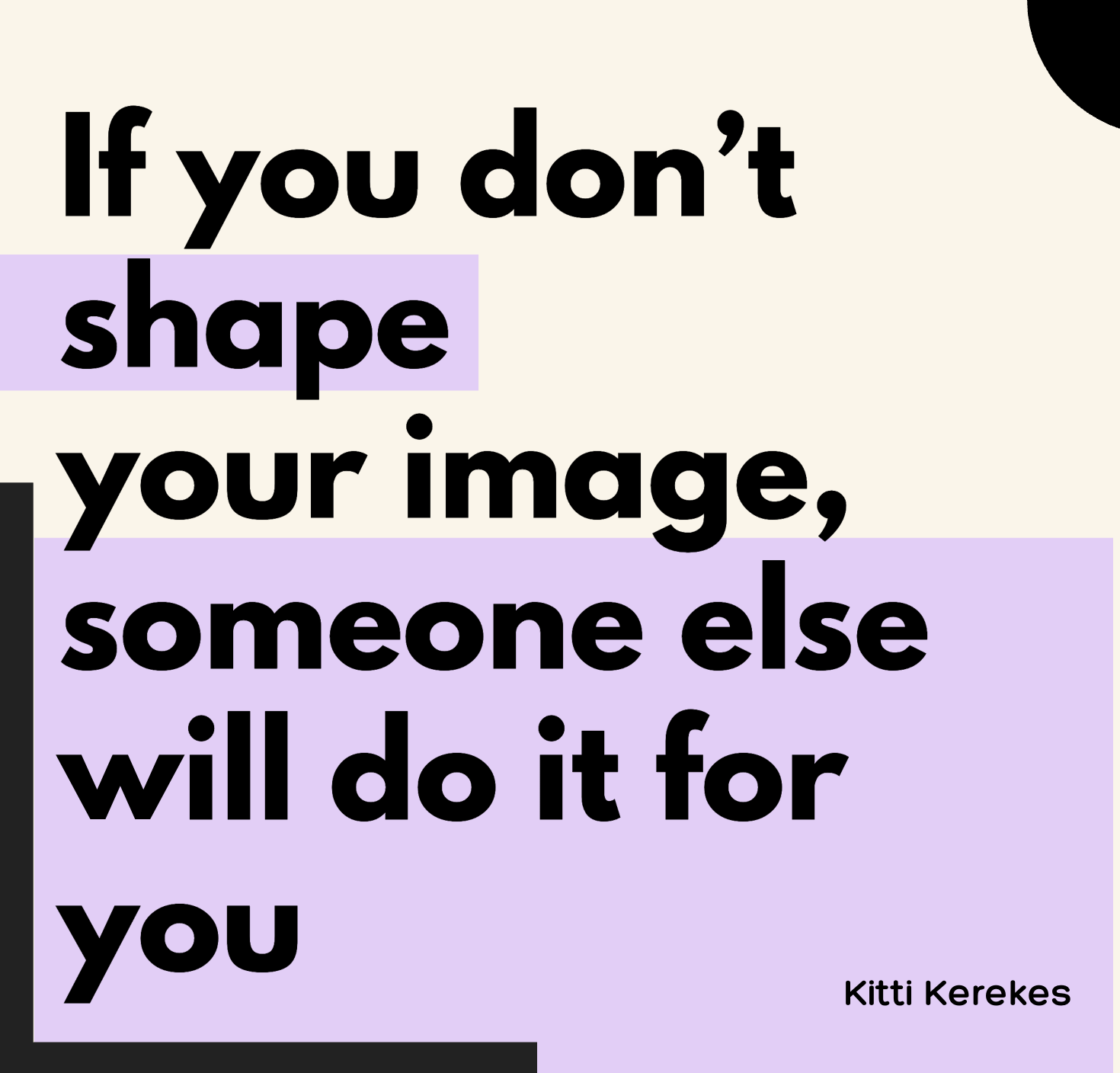
Carla Harris, in her widely referenced TED Talk How to find the person who can help you get ahead at work, says it plainly: “Perception is the co-pilot to reality.” If you don’t manage how you’re perceived, someone else will do it for you—and they may not get it right.
Let’s clear something up: curating your image doesn’t mean becoming someone you’re not. It means aligning what you intend to be known for with what others actually perceive.
This can be as subtle as how you speak up in meetings.
Do you offer strategic input or get lost in the details?
Do people see you as a fixer, a builder, a challenger, a collaborator?
Herminia Ibarra, in her book Act Like a Leader, Think Like a Leader, talks about the “outsight principle”—that you don't become a leader by introspection alone, but by acting in ways that others begin to recognise as leadership. Your image is a reflection of repeated signals. The more intentional you are with those signals, the more control you have over your professional narrative.
For many, the idea of managing their image feels self-promotional or uncomfortable. But at its core, it’s about clarity. If people don’t understand your strengths, your growth ambitions, or the value you bring, they won’t know where—or how—to involve you.
It’s not about shouting. It’s about signalling.
Do you want to be seen as strategic? → Make space to talk about outcomes, not just execution.
Do you want to be seen as a future leader? → Take initiative on cross-functional efforts.
Do you want to pivot careers? → Start showing up in ways that hint at your next move, not just your current role.
Every email, meeting, comment, and collaboration sends a signal. People piece those signals together and form an impression. Over time, those impressions become your image.
This means you have more influence than you think. You don’t have to overhaul your personality. You just need to be intentional about what you want to be known for—and start acting in ways that reflect it.
Think about:
What do people consistently come to you for?
How do you show up under pressure?
What’s your default tone in a room? Calm? Decisive? Hesitant?
What would you like your name to be associated with?
None of this is about being performative. It’s about being legible.
If you’re exploring this topic further, here are a few places to start:
Carla Harris’s TED Talk: How to find the person who can help you get ahead at work.
Herminia Ibarra’s Act Like a Leader, Think Like a Leader is essential reading for anyone stepping into leadership.
The Squiggly Careers Podcast by Helen Tupper and Sarah Ellis often discusses how to build visibility and shape your narrative with authenticity.
Adam Grant’s podcast WorkLife includes several episodes on how perception shapes influence and success inside teams.
The work you do builds your credibility. But how people talk about you—that’s image. And it’s shaped not just by results, but by consistency, clarity, and how well your intent matches what others see.
Creating your image doesn’t mean being fake. It means being seen—for the right reasons.
How do you think about your own image at work?
Have you ever shifted how you show up or what you signal?
Leave a comment below – sharing is caring!
No posts
Comments
Nothing yet. Say the first thing.
Sign in to join the conversation.