
In most working lives, there’s no shortage of things to do. The inbox never empties. The calendar stays crowded. The notifications don’t stop. It’s easy to fall into a rhythm of getting things done, ticking tasks off the list, and keeping the wheels turning. It feels productive … because it is productive.
But there’s a quiet trap hidden in this sense of motion. When we focus entirely on doing, we risk losing sight of whether we’re doing the right things. We become tactical by default, reacting to the next immediate task without pausing to consider the broader purpose.
This isn’t a new problem. Peter Drucker, the father of modern management, famously said, “There is nothing so useless as doing efficiently that which should not be done at all.”
Thanks for reading Essentially Leading! This post is public so feel free to share it.
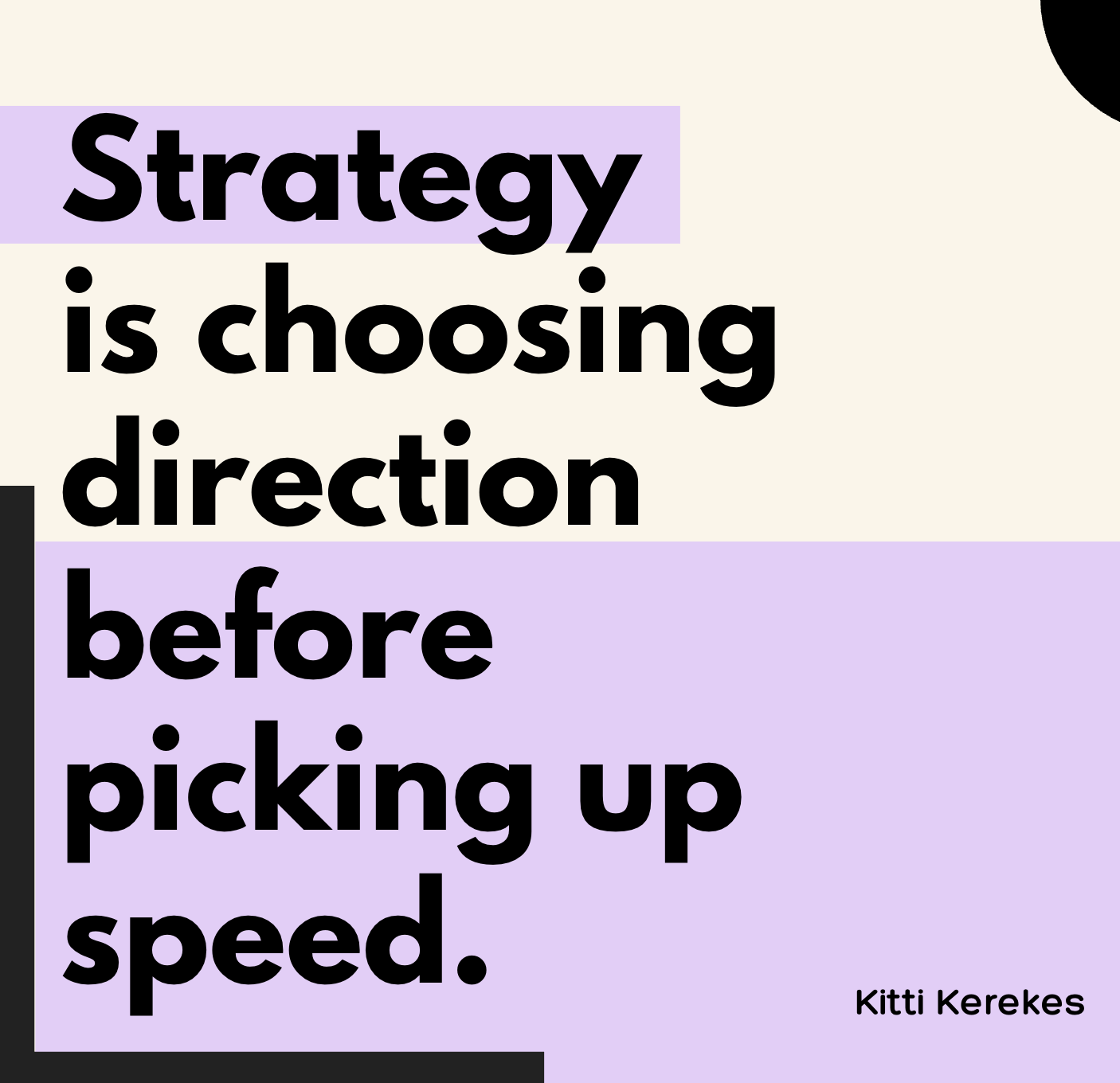
Strategy can feel abstract – like something reserved for executive retreats or five-year plans. But in reality, strategic thinking is about alignment. It’s about understanding why we’re doing what we’re doing, and how today’s actions connect to long-term goals.
The difference between tactical and strategic work often comes down to time horizon. Tactical work solves today’s problems. Strategic work considers tomorrow’s possibilities. Both are necessary, but one without the other is incomplete.
A team can run daily stand-ups and still lack a shared vision. A company can hit its quarterly targets while slowly becoming irrelevant. And an individual can be flat-out busy while quietly drifting.
Strategic thinking demands a different pace. It often involves uncertainty, trade-offs, and thinking in probabilities rather than certainties. It can feel less rewarding in the short term because the payoff is delayed and harder to measure.
Tactical work, by contrast, is clean and measurable. You can see when it’s done. It offers closure. But too much of it without strategic intent creates what Oliver Burkeman, in Four Thousand Weeks, calls “the efficiency trap”—getting better at doing things that might not matter.
To become more strategic, you don’t need to overhaul your entire workflow. What’s often needed is space—intentional pauses to reflect, reassess, and reconnect with what matters most.
This might look like setting aside time each week not to do anything, but to think. Or stepping back to ask: if I repeated today every day for the next year, would I end up where I want to be?
In Essentialism, Greg McKeown advocates for “the disciplined pursuit of less”—not inaction, but focused action. Strategy isn’t about doing more. It’s about doing less, better.
If this resonates, there are some rich resources to explore. Roger Martin’s book Playing to Win offers a practical framework for making strategy a daily habit, not a distant plan. Annie Duke’s Thinking in Bets is another brilliant read on making decisions when the future is uncertain—essential reading for anyone navigating ambiguity.
For auditory learners, the The Knowledge Project podcast by Shane Parrish often explores how top thinkers balance execution with long-term thinking. The episode with investor Marc Andreessen is especially insightful on strategic leverage.
Being tactical or strategic isn’t about choosing one over the other. It’s about knowing when to zoom in and when to zoom out. Tactics keep you in motion; strategy ensures you’re heading somewhere that matters.
In a world that often rewards speed, taking the time to be strategic might feel like slowing down. But it’s the kind of slowing down that ensures the work you’re doing isn’t just keeping you busy—it’s taking you forward.
I’d love to hear your thoughts on this topic. How do you balance tactical execution with strategic clarity in your own work? What helps you zoom out when things get busy? Leave a comment – I’d love to hear from you.
No posts
Comments
Nothing yet. Say the first thing.
Sign in to join the conversation.