
The month of July in my Zone 3b garden always starts out with a bang: the peonies and roses are in bloom, the strawberries are coming in by the bucketful, and all of the broccoli is ripening at the same time. It’s beautiful and chaotic and everything I dream of during the darkest days of winter.
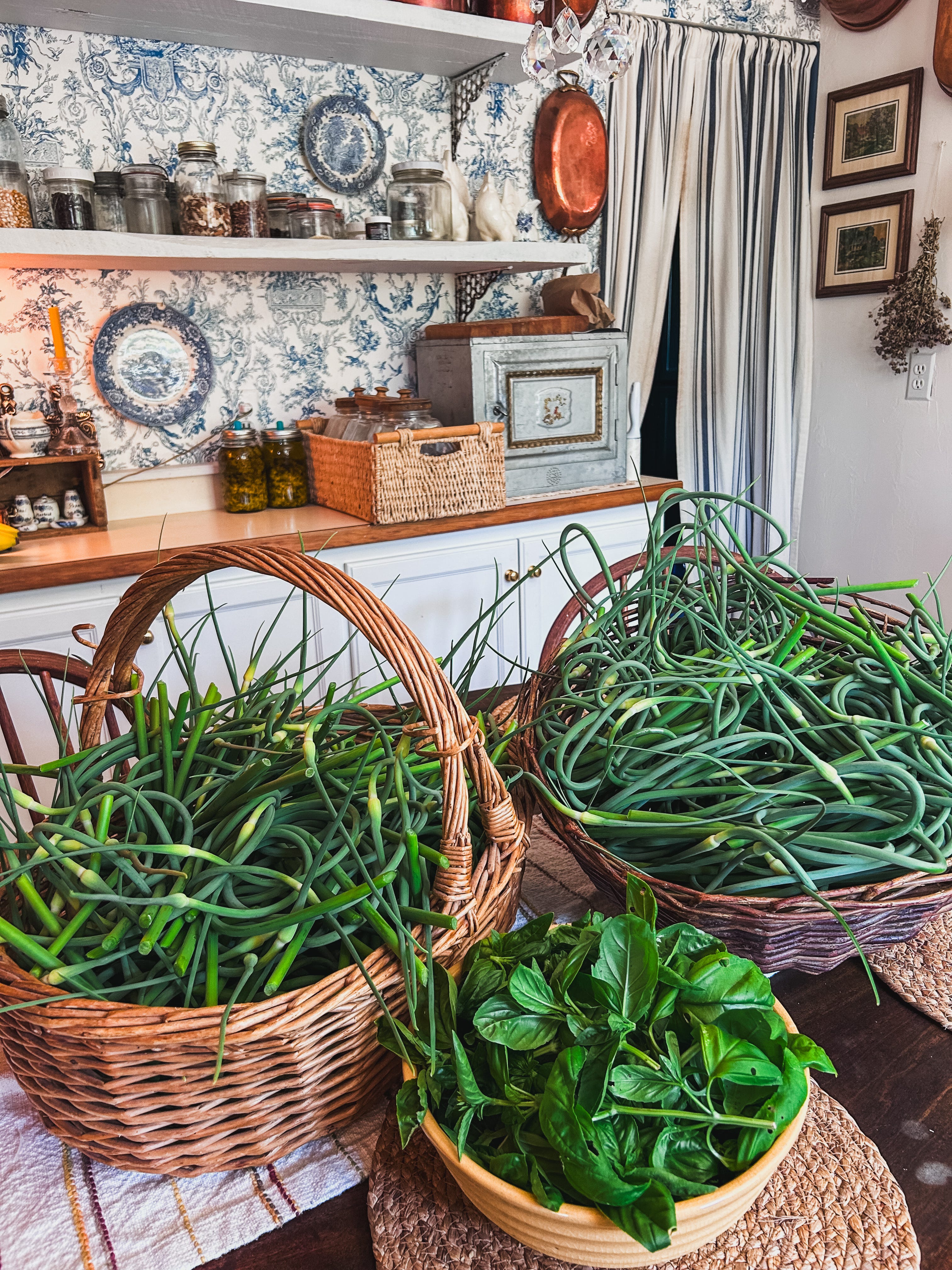
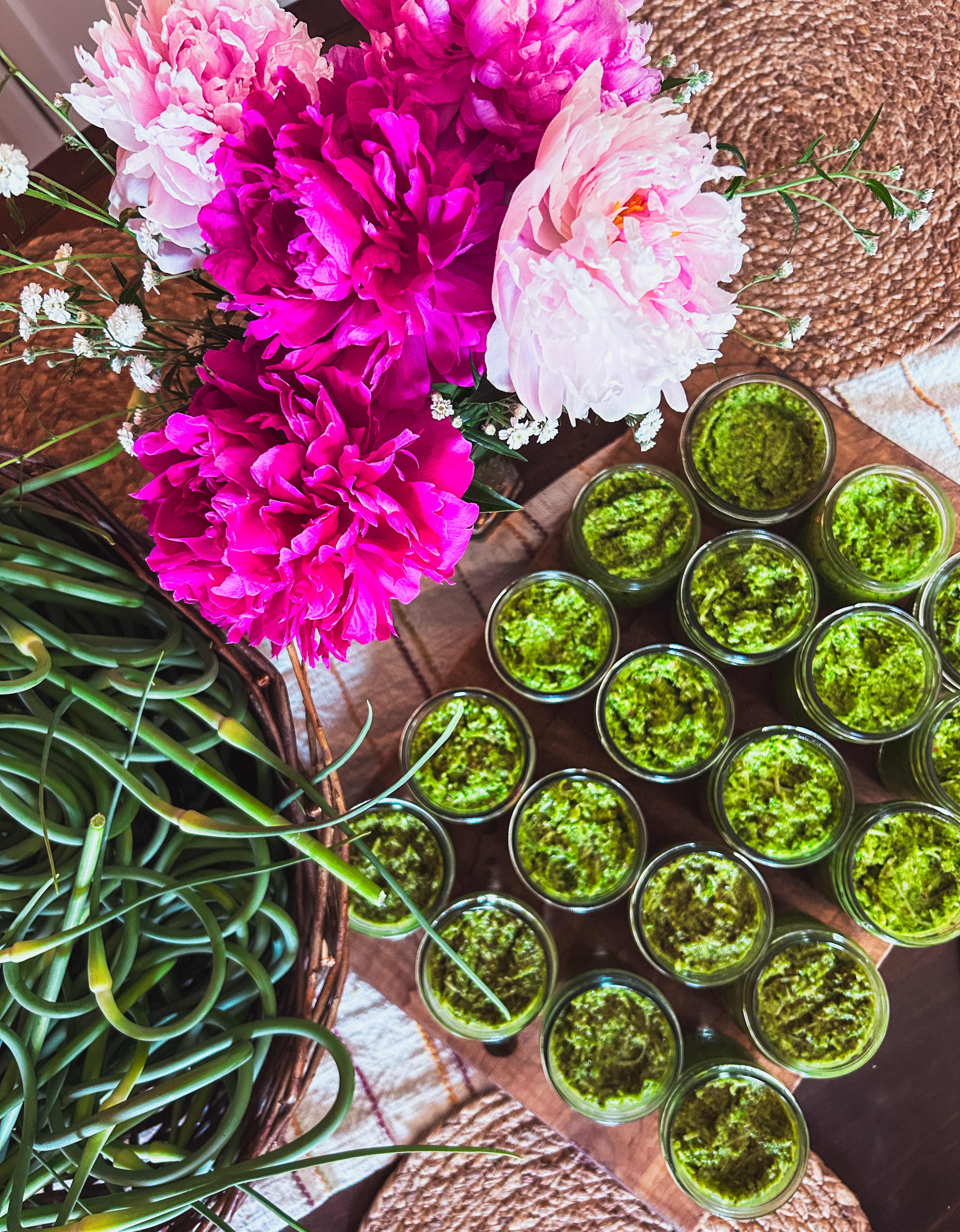
Before the month is half over, I’ve pulled all of the garlic scapes, processing them into pesto, compound butter, and have blended the rest with olive oil to use as flavor bombs in future soups.
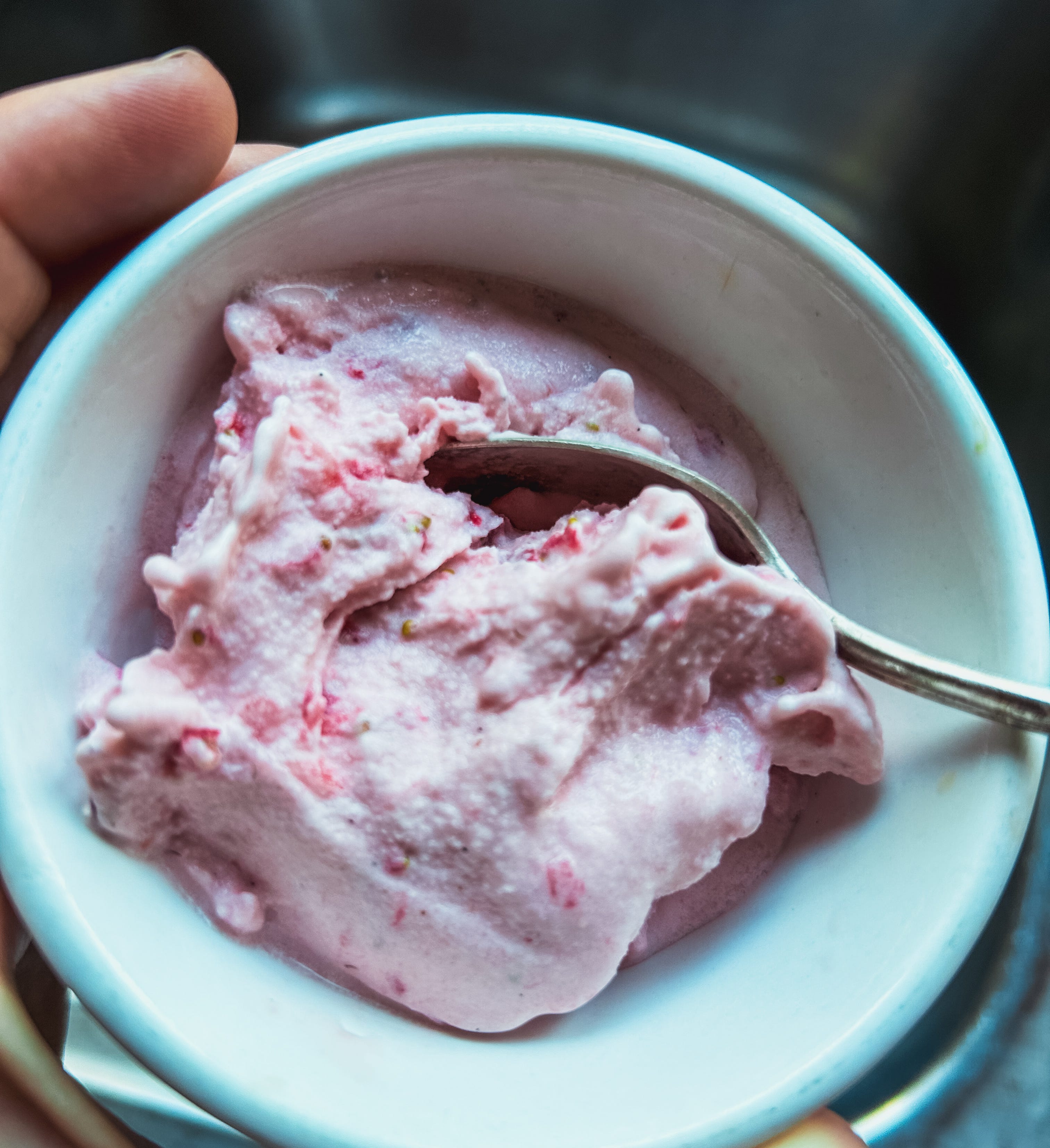
I ended up with eight gallons of strawberries this year- my best season yet. I made several batches of homemad gelato, as well as jam and my favorite starawberry rhubarb lemonade which I shared with you earlier this month. The rest are in the freezer to be processed when the heat of summer has passed.
The garden, while productive, has had its fair share of pests this year. Weather-wise, it’s been rather chaotic. We had a very long winter, almost no spring, and we didn’t get any heat forever. But then we got high temps, drought, and forest fire danger. I imagine this all plays into the pests we’re seeing this year.
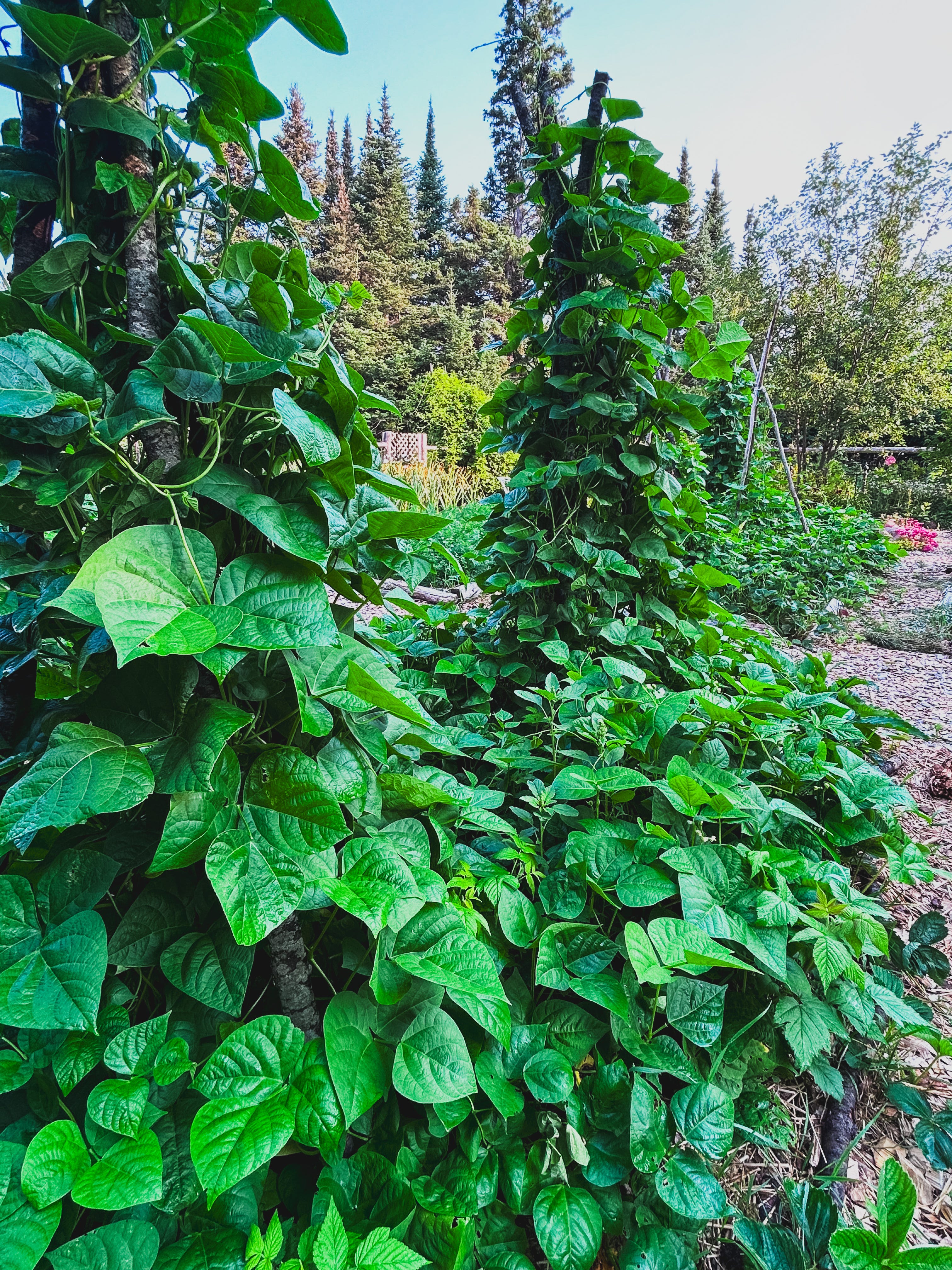
I have several ant nests all over my garden- and property, for that matter. So many ants. It’s also been a year of worms: cut worms earlier this season in the corn, but thankfully after losing about 3 dozen plants or so, they got big enough that the worms couldn’t do much more damage. We have cabbage worms and some other type of worm that’s been trying its best on the pole beans, which thankfully are unphased thus far and are doing just fine. Slugs decimated a few of my broccoli plants while the majority fared just fine. I haven’t had as many slugs as I have this year in a very long time.
But I’ve only seen a few blister beetles on the potatoes this year, whereas I usually have dozens. And I’ve also not seen a lot of grasshoppers, which we also typically have plenty of.
Chipmunks have been mowing down my carrots, chewing off the tops. Thankfully I always plant a lot of everything, so I can afford to lose some. But it’s irritating nonetheless.
I have two beds of garlic, one that was planted from my own garlic seed that I’ve been saving and planting for the past 12 years- and that bed looks amazing. But I decided to try out a new variety this year, so I ordered garlic seed from Keene Organics, and while I know that new seed won’t produce as well as what I’ve been saving and replanting for years, I’m a little disappointed in how that bed is doing. It seems to be dying back already, whereas my other bed is not at all. And since I always replant my biggest garlic cloves, I will likely harvest and store the garlic for the new bed and replant most of the garlic from my other bed.
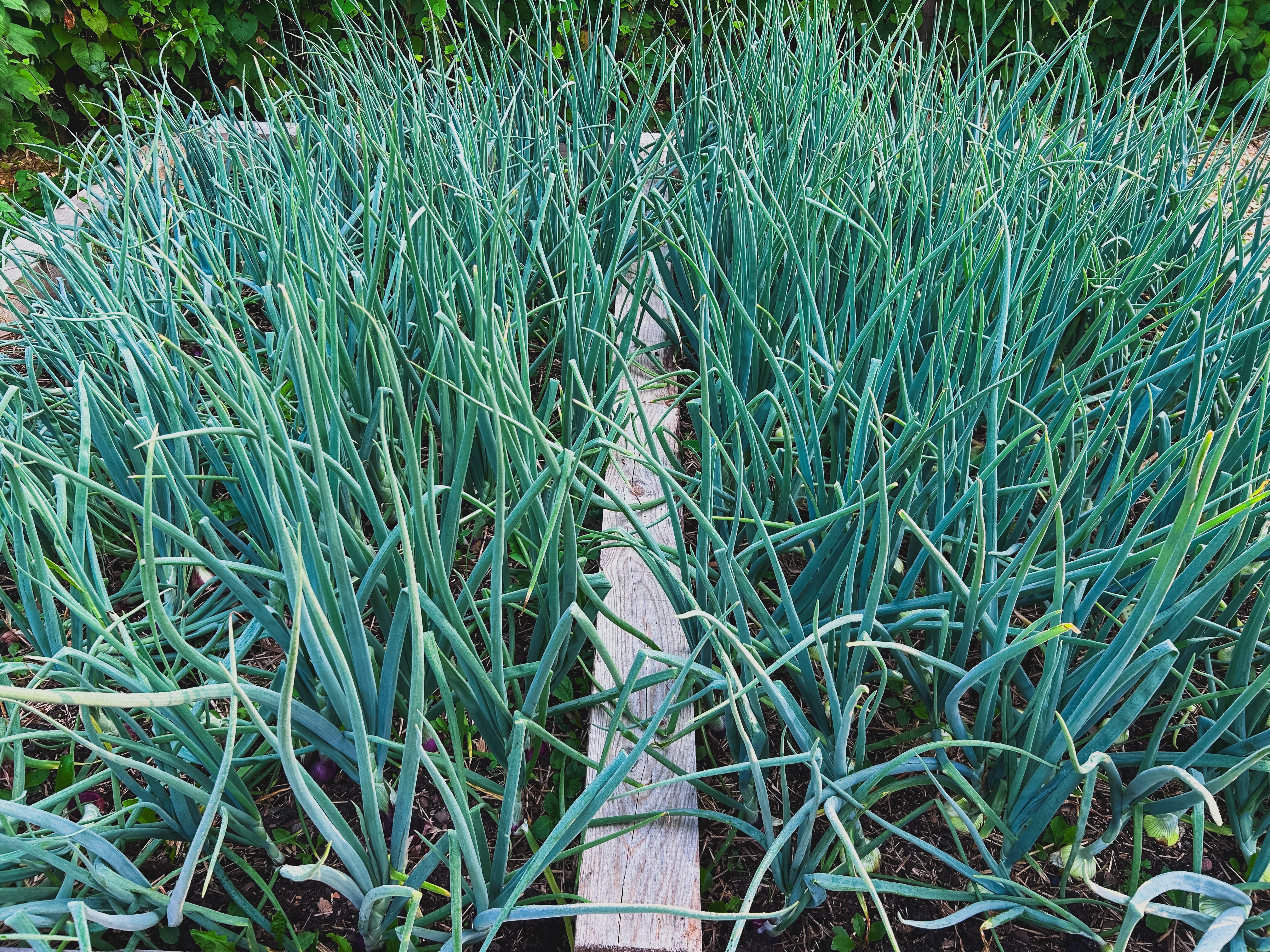
The onions and shallots look great. As mentioned in my Onion Growing Guide, I plant dormant onion and shallot plants from Dixondale Farms. This year I’m growing Patterson (yellow storage variety), Redwing (red storage variety), and Traditional Shallots.
The potatoes, despite having a slow start with the cold soil this spring, also look good. I planted Yukon Gold, All Blue, and Pontiac. I usually plant Kenebec, but I’ve been dealing with some rot with those and opted not to grow them this year. The Golds are my favorite and store super well, as do the blues. I only plant reds for fresh eating as they don’t store quite as well.
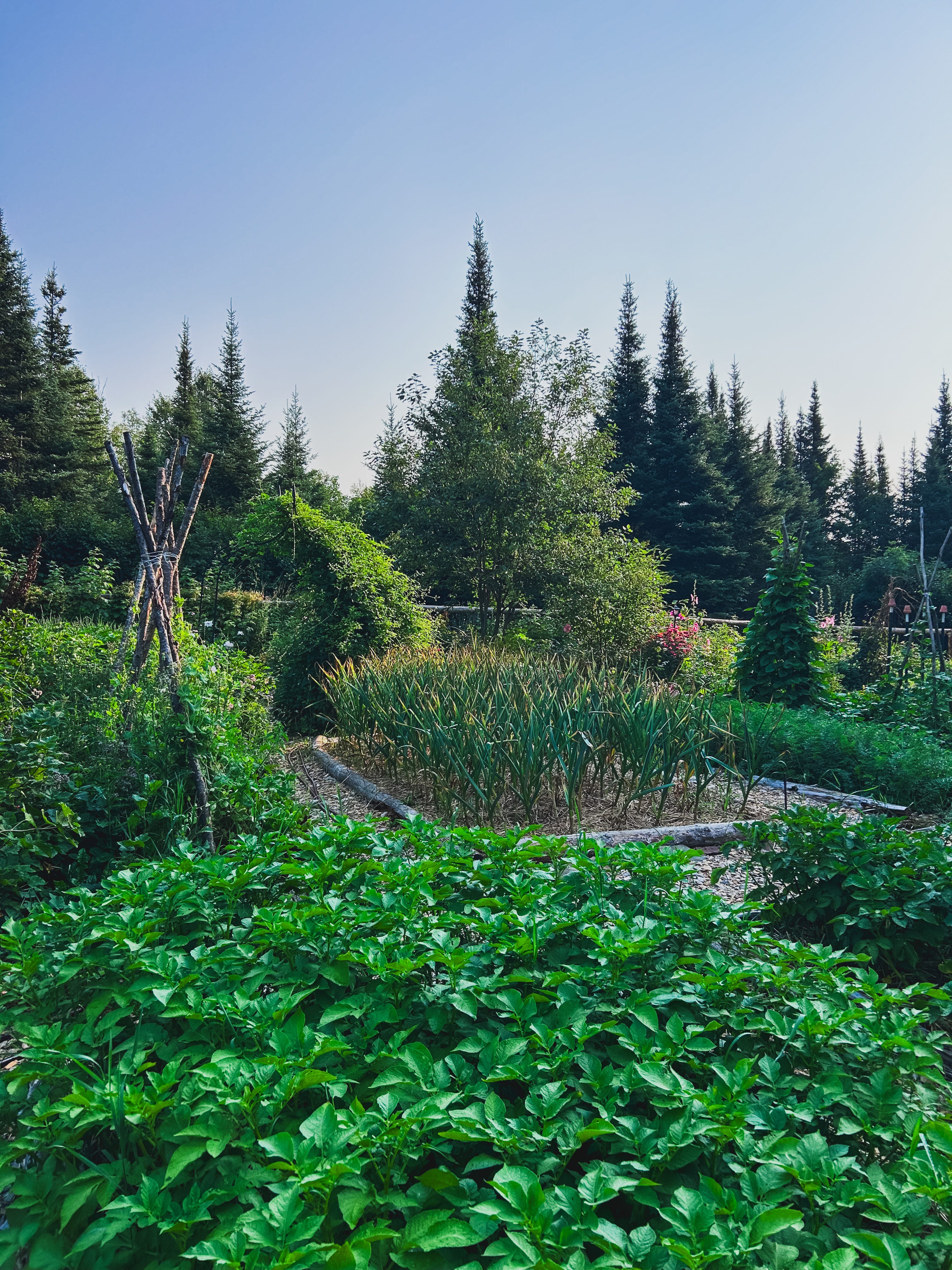
Most of the sugar snap peas have been harvested, and I’ve been fermenting them (I will share the recipe below). Fermented snap peas in the shell are my favorite way to enjoy them, so I hope you like them too! The shelling peas will be picked by the time this newsletter goes live, hopefully blanched and in the freezer.
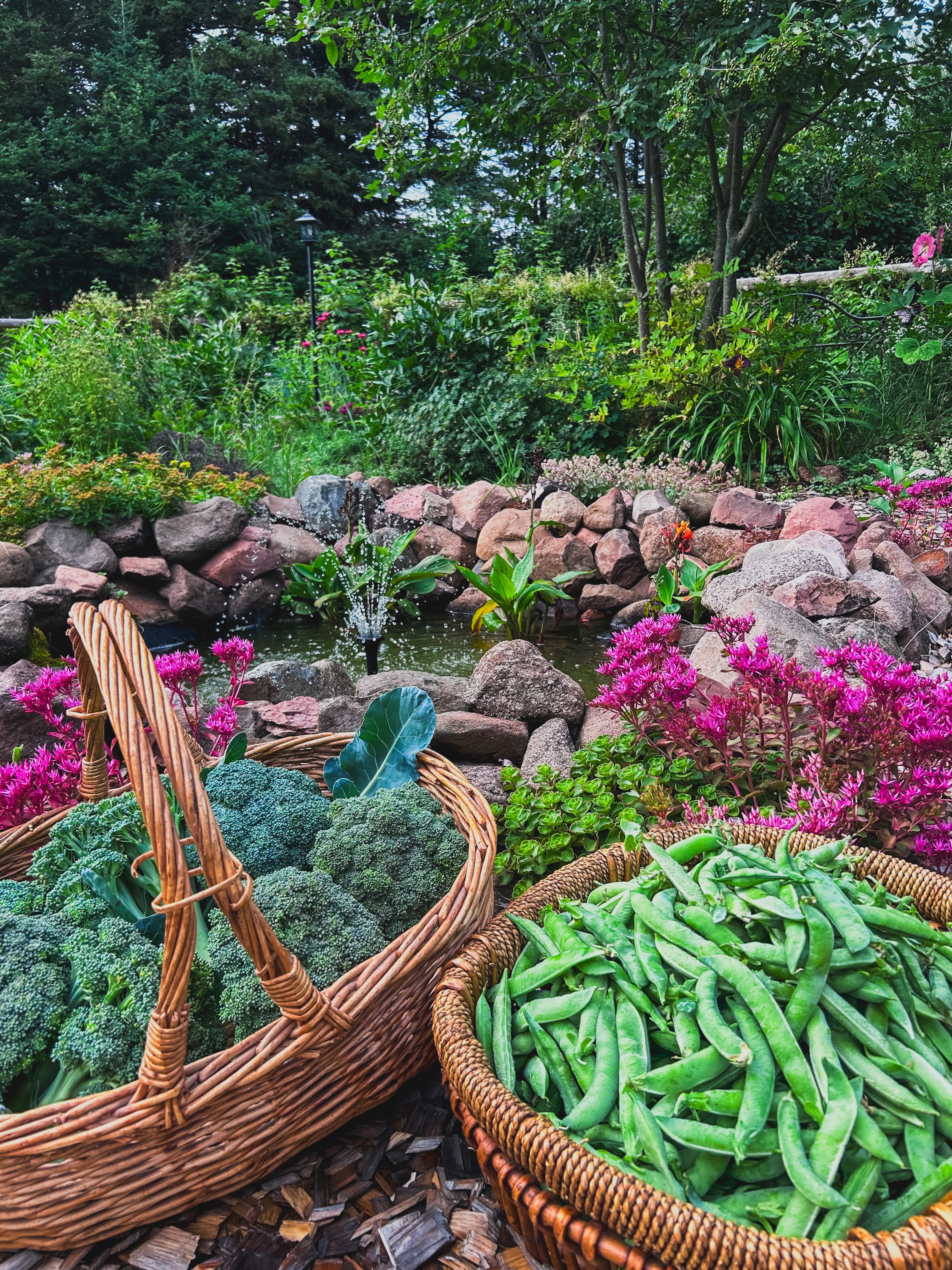
I planted my most favorite squash- Sweet Meat Squash- along the north side of my corn patch. The east side has Sugar Baby Pumpkins, while the west side has a fun mystery mix that I found on Amazon. They’re already creeping and crawling their way through the corn and up the stalks. It’s likely to be a bit of a mess, but in the end I’m expecting to have way more pumpkins and squash than I could possibly need.
The corn itself looks amazing. “Knee high by fourth of July” is almost never achievable here as we have to plant later than most, but I’m happy to report that it’s “shoulder high by the end of July”! I’ll take it. We have to pray that we don’t get a frost that first week of September. There is a full moon August 28th, and if there’s ever a chance of frost, it’s typically around the full moon. If we can escape that one, the next is September 26th. Call it a myth or not, this gardener knows that frost loves to strike alongside that full moon. Even so, we plant a massive plot of corn knowing full well we might never taste any of it. It’s a risk we’re willing to take.
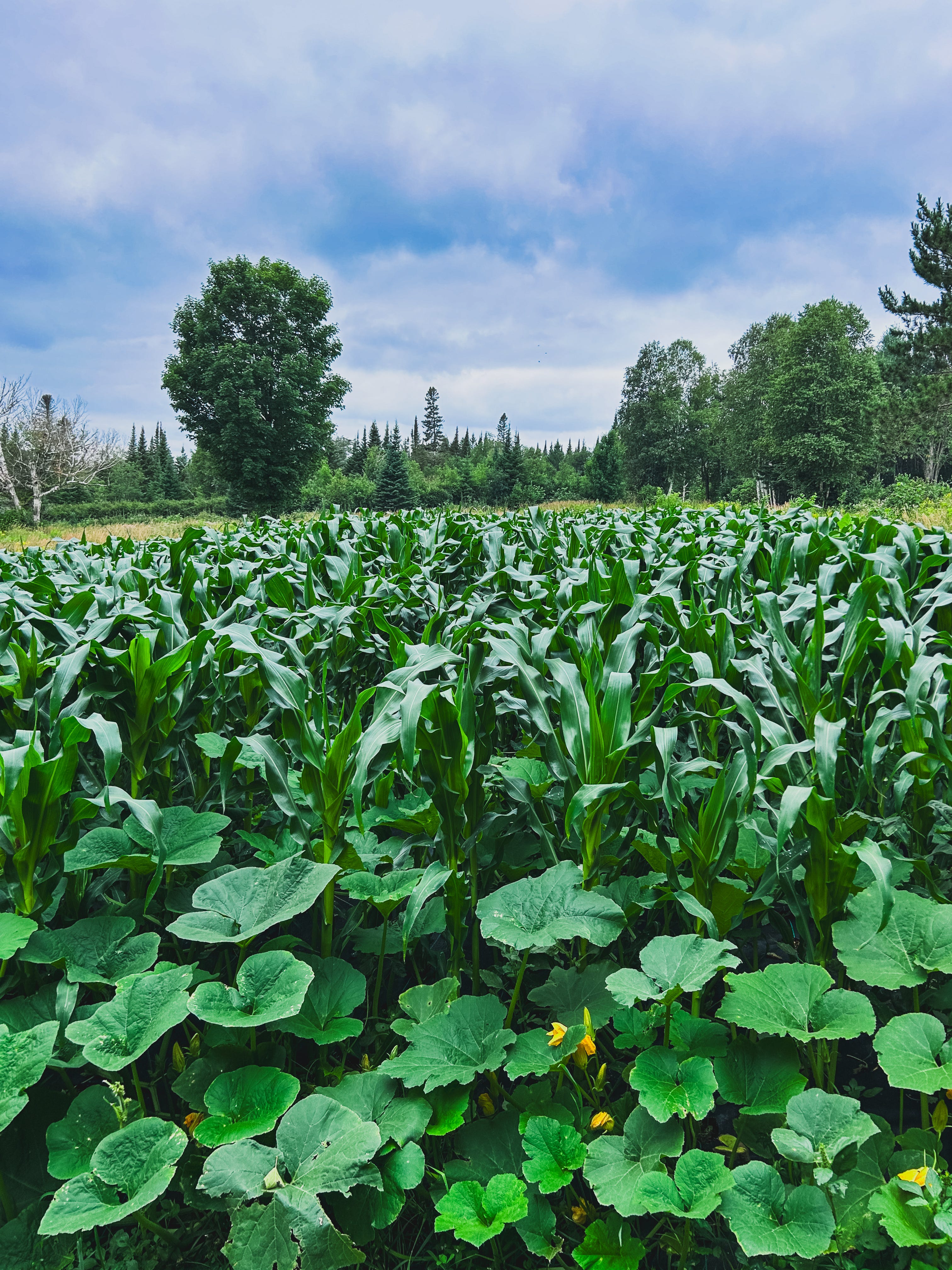
The tomatoes in the high tunnel are starting to look better. They didn’t seem to be getting very tall, and yet producing fruit. I think they were a bit stunted by the heat and likely needing more water than I was giving them. Since I’ve started watering more, they seem to be gaining some height.
My only real complaint thus far as far as crops is the cucumbers. They were the very last thing I planted, and I put them in a bed that gets a bit too much shade. My currant bushes on one the right, hollyhocks and rhubarb on the left, raspberries and a snowball bush at the back. They just don’t look very promising, but I had an incredible cucumber year last year and so I remind myself that you don’t get to have it all every year.
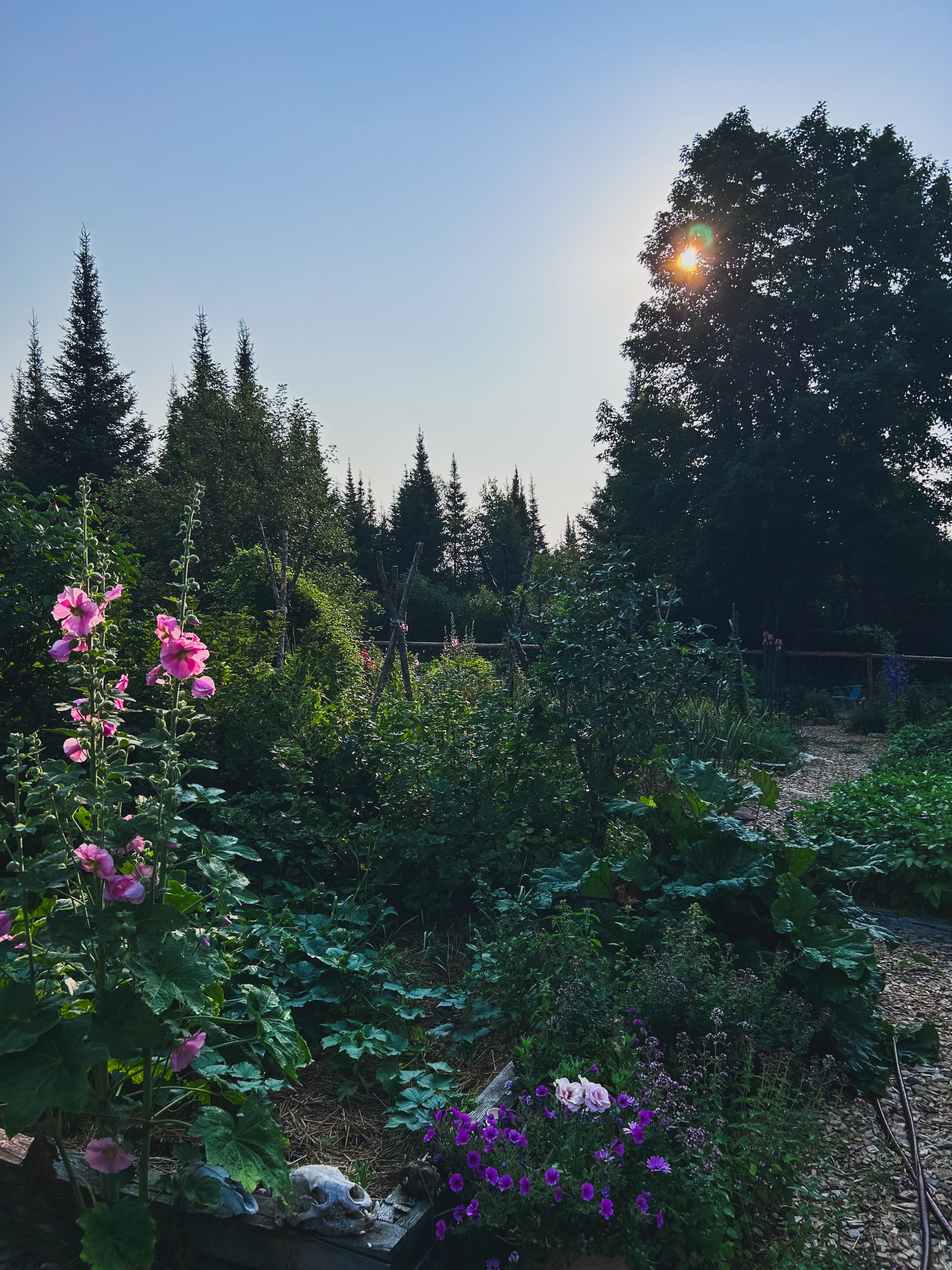
The end of July brings with it a bit of wildness in the garden. Things start flopping and dying back. The honesuckle has finished blooming, and the Sweet Autumn Clematis that shares a trellis with it has fully taken over and just starting to bloom. It’s stunning.
The roses have mostly finished blooming, save for the New Dawn climbing rose, which keeps on going. Hollyhocks just started blooming, and the milkweed is full of monarch caterpillars on the brink of forming their cocoons. I have more bumblebees this year than ever, and have seen more monarch butterflies than in years past, which makes me feel so hopeful.
The bee balm, daylilies, Asiatic lilies, and all of the sedum are blooming. Coneflower, cosmos, and phlox are just about ready. And with them, the hint that fall is just around the corner. Can you believe it?
I have fallen in love with homemade ice cream this month. Although I’m not new to making ice cream, I’ve been having so much fun discovering simpler recipes that allow me to whip up a special treat at a moment’s notice.
I was first inspired to delve into the world of homemade ice cream by Tara Couture at Slow Down Farmstead, who introduced me to the idea that ice cream could actually be a health food. Plenty of egg yolks, raw cream, a bit of honey, fruit. I ended up purchasing the book The Perfect Scoop*, using the custard base for all of my ice cream endeavors. But making a custard base requires time- time cooking on the stovetop, straining, cooling down in an ice bath, and chilling in the refrigerator for hours. Which is all good and well when you plan ahead and have made the time for it.
But I’ve found with each summer that passes, I have less forethought and am often flying by the seat of my pants during those short, blissful months.
Yet I still want to eat ice cream.
So I’ve been setting aside the creamy custard for this season, and opting for a much more simplified process involving cream, milk, sweetener, and sometimes fruit. One that I can stir all of the ingredients together and immediately pour into my ice cream maker, no chilling required (other than the ice cream maker bowl needing to be well frozen in advance- mine happens to live in my chest freezer at all times, so that’s never a problem).
*Affiliate link. I only share links to products I’ve purchased myself and love. If you use my link to make a purchase, I receive a small commission at no cost to you. Thank-you.
Strawberry Ice Cream (note: I swap whole milk for the half and half and it turns out perfect).
Raspberry Ice Cream (note: I decrease the sugar from 1 cup to 3/4 cup and add in 2 Tbs honey. I also swap the half and half for whole milk. I also made this recipe with half wild raspberries and half blackberries).
Vanilla Ice Cream (note: decrease the sugar by 2 Tbs and sub in 2 Tbs honey. I used vanilla bean paste rather than extract- it gives a stronger vanilla flavor. Yum!)
Currant Ice Cream (this one is a custard base recipe, but I have a lot of currants this year and was excited to try something new!)
I was so blessed to be able to go blueberry picking with a couple of friends last week and then again this week. We have a lot of wild blueberries in our area, but year to year it can be hit or miss regarding their fruitfulness. After a couple of lousy years, I wasn’t sure what to expect. So far, I’ve brought home around three gallons of blueberries with at least another good picking week to go.
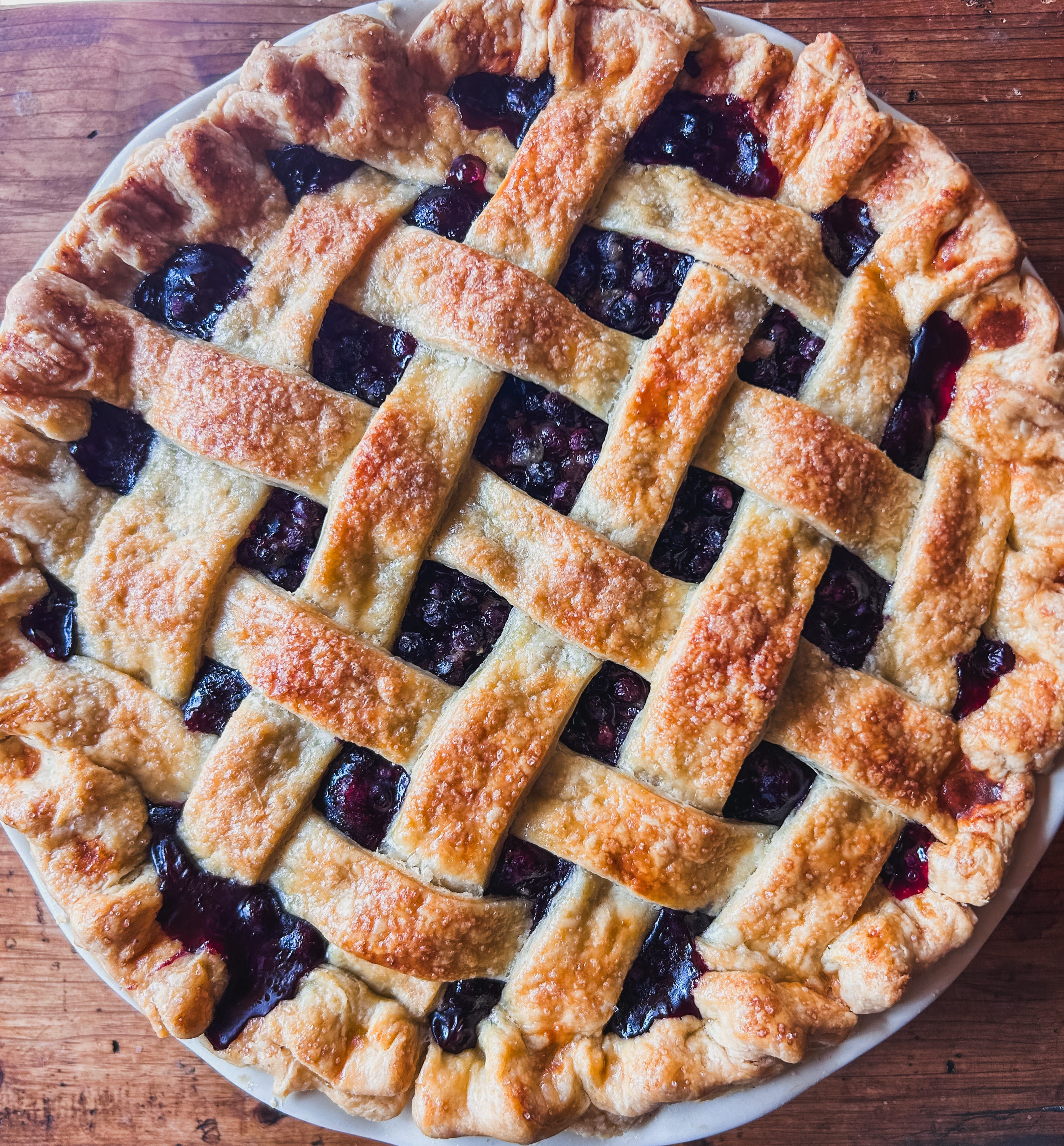
I have a few recipes that are at the top of my list when fresh blueberries are in season. The first is a Blueberry Breakfast Cake recipe that I only ever make with fresh wild blueberries. Tame or frozen berries are too juicy and make the cake wet. But small, firm, fresh wild blueberries are perfect. Here is that recipe for you:
The next on my list would be Blueberry Crisp. I’m sure we all have our go-to crisp recipes, and mine is an old favorite.
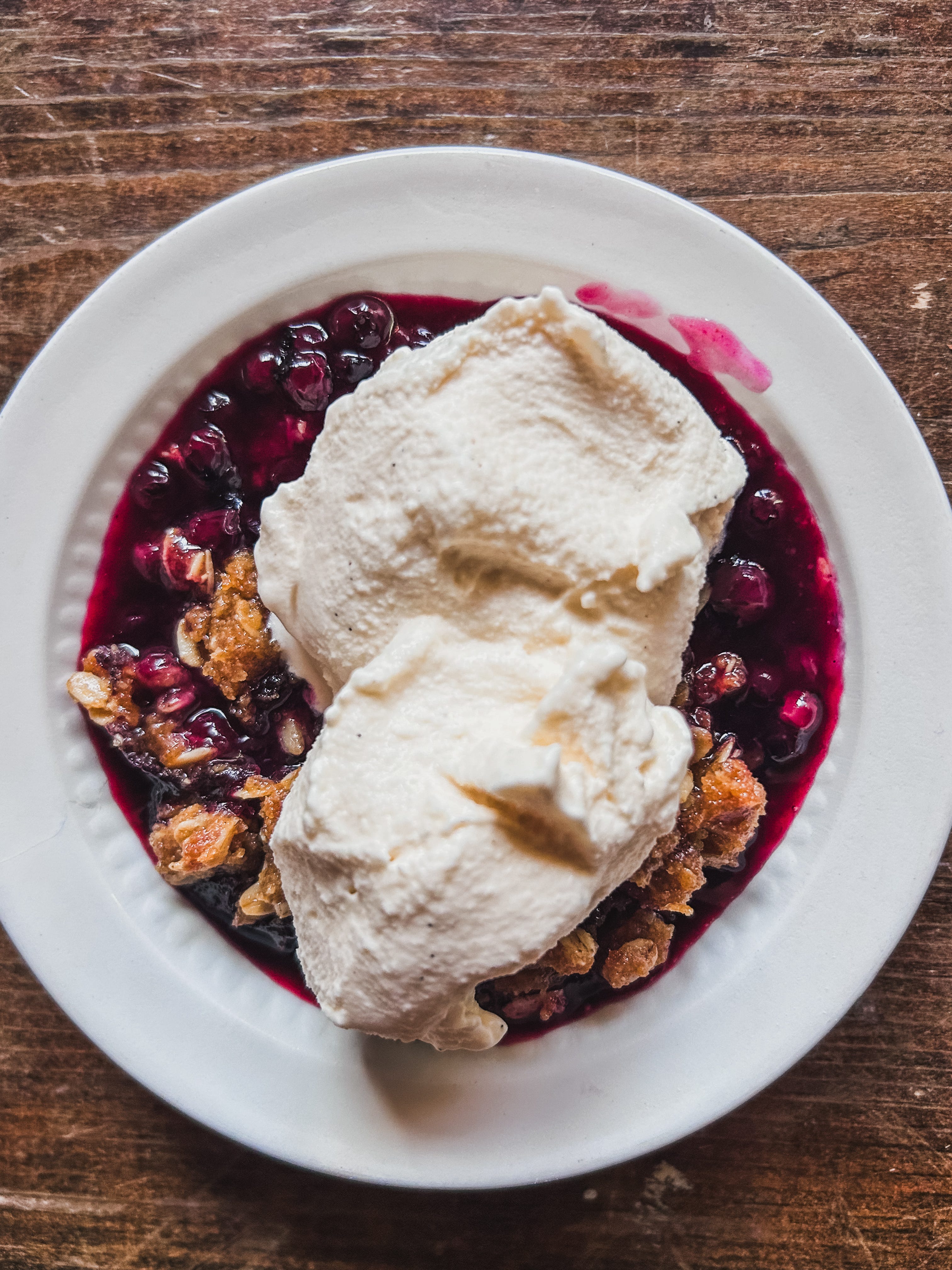
Blueberry Crisp
Ingredients:
4 cups fresh wild blueberries
3/4 cup sugar
2 Tbs. cornstarch
1 cup water
2 Tbs. lemon juice
1/2 tsp. vanilla extract
Crumble Topping:
1 cup flour
1 cup rolled oats
1 cup brown sugar
2 tsp. cinnamon
pinch of salt
10 Tbs. melted butter (1 stick + 2 Tbs.)
Directions:
Preheat oven to 350 degrees F.
Grease an 11”x7” (or equivalent) baking dish; spread berries in the bottom of the dish.
In a small saucepan over medium heat, combine the sugar, cornstarch, water, and lemon juice, stirring constantly and cooking until it is thick and clear; then add in the vanilla.
Pour the mixture over the blueberries and gently stir until evenly distributed.
Combine the dry ingredients for your crumble in a bowl; add in the melted butter and mix together until crumbly. Sprinkle the crumble over top the blueberry mixture.
Bake 45 minutes until blueberry mixture is bubbling and the top is golden brown.
Cool slightly before serving.
I’ve tried a lot of ferments in my day, and sugar snap peas in the shell is definitely my personal favorite. I love to add in fresh garlic and dill, maybe a pinch of crushed red pepper. So good!
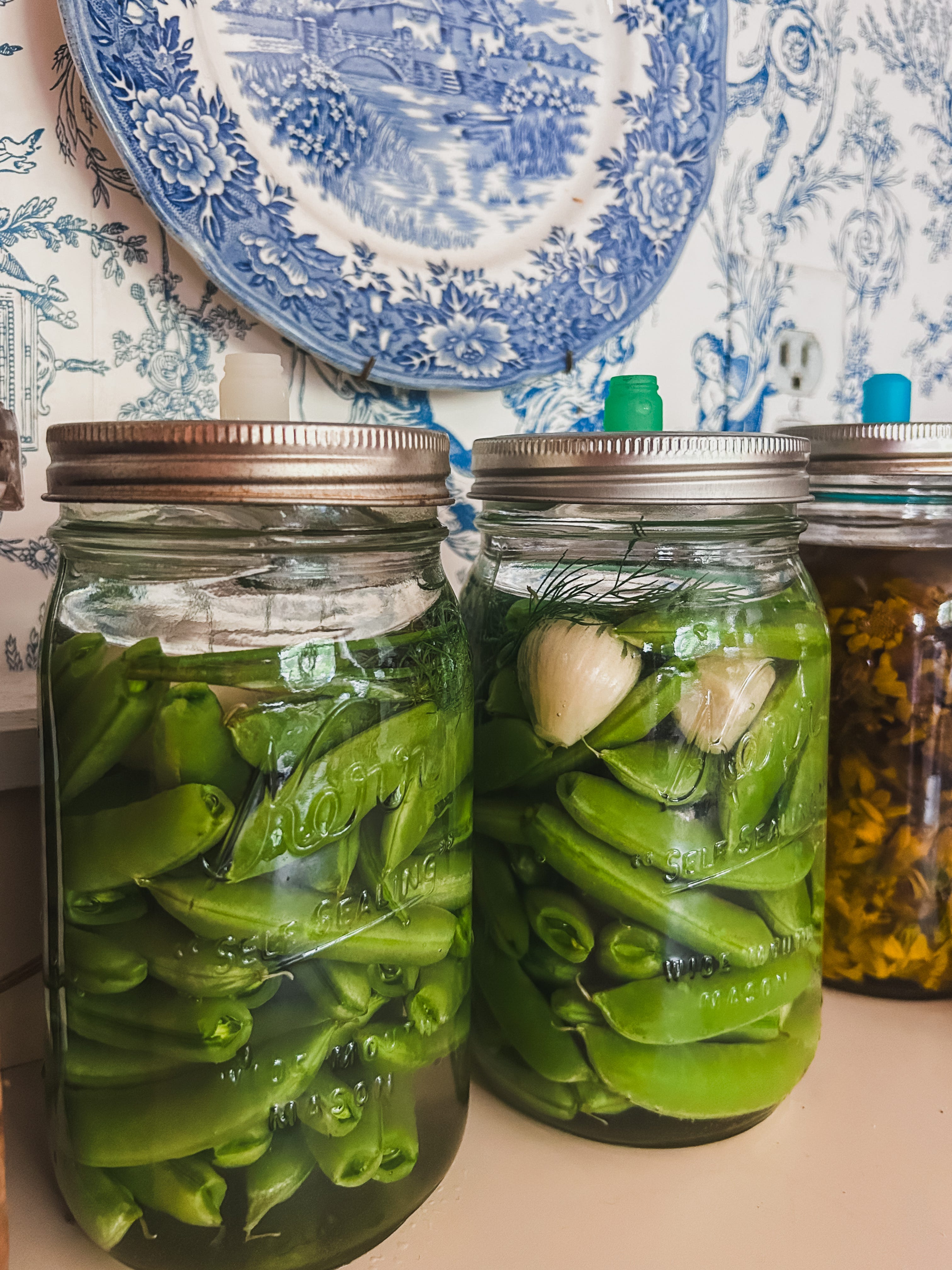
Ingredients:
2.5 Tbs coarse kosher salt per quart of water
sugar snap peas in shell
garlic
dill
crushed red pepper (optional)
Directions:
Stir the salt into warm water until dissolved; cool completely.
Remove the ends and strings from your pea pods. Add 2-3 cloves of garlic, 1/4 tsp. red pepper (optional), and 1 sprig of dill per jar. Put as many pea pods as you can into your jar, leaving 1.5 inches headspace. Pour the brine over until completely covered. Add a fermentation weight and fermentation lid. Set on the counter for 4-5 days or until the taste is strong enough for you. Once they’re finished, remove the weight and fermentation lid and affix a normal canning lid and band. Refrigerate.
Around the Farm
It’s been a very busy month around the farm. Eighty-five broiler chicks that will provide a year’s worth of meat for our family of five arrived July 7th. Each of us have our jobs when it comes to the animals, and tending the meat birds has always been mine. I’ve been so pleased with the quality of birds from Dahline Poultry. After going through the Covid years of terrible stock from a number of hatcheries, it’s so refreshing to receive birds that are healthy, robust, and most importantly- not dying. I can’t tell you how many birds we’ve lost over the years until I discovered this hatchery. And the best part is they ship to your home! No more early morning phone calls from the post office after chicks have traveled three days in the mail. Dahline uses Spee-Dee delivery; the chicks are loaded on the truck that morning and delivered to your home a few hours later. It’s amazing.
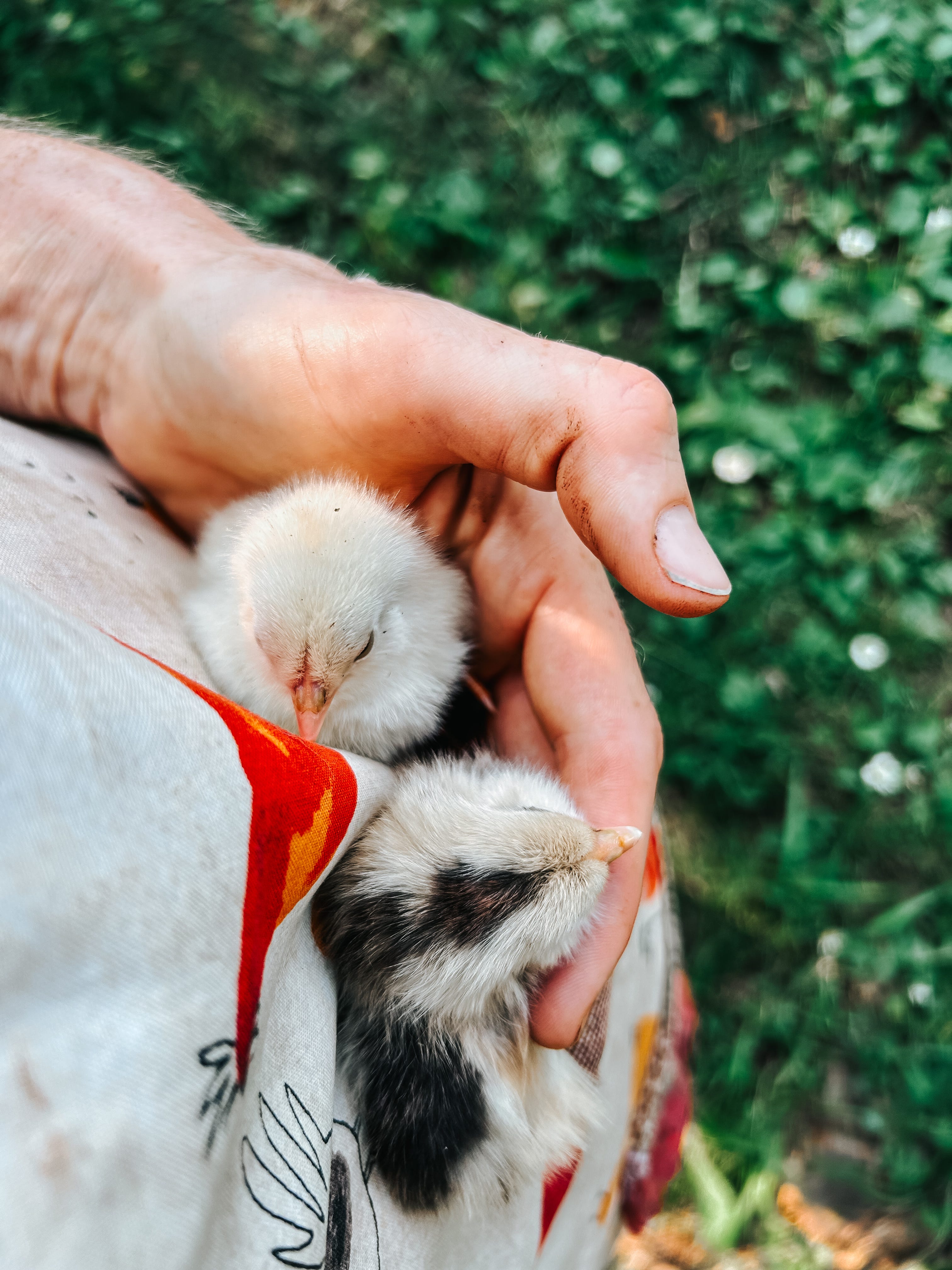
And speaking of chickens, we’ve had several laying hens sneak off and show up with baby chicks this month. There have been six different sets of chicks, totaling around 50 babies so far. There’s nothing that warms my heart like a mama hen scuttling around the yard with her fluffy youngsters in tow.
Our three feeder pigs are growing like weeds, and are so thankful for their shady home in the woods as we’ve survived some of the hottest temperatures we’ve ever experienced here. It’s been brutal.
I’d been hoping that I would have some calf stories to share with you before the month’s end, but unless something happens tonight, I’m sad to say we’re still waiting. Our boss cow Pearl is due with her fifth calf and looking like she’s ready to go at any moment. Her daughter Rain is expecting her first calf and was due last Saturday. I’d thought with the full moon last night and the early morning thunderstorm that we might see some action. So at three o’clock this morning, I headed out with the spotlight and took a peek. They were just looking at me like, “What do you want, lady? Get back in bed.”
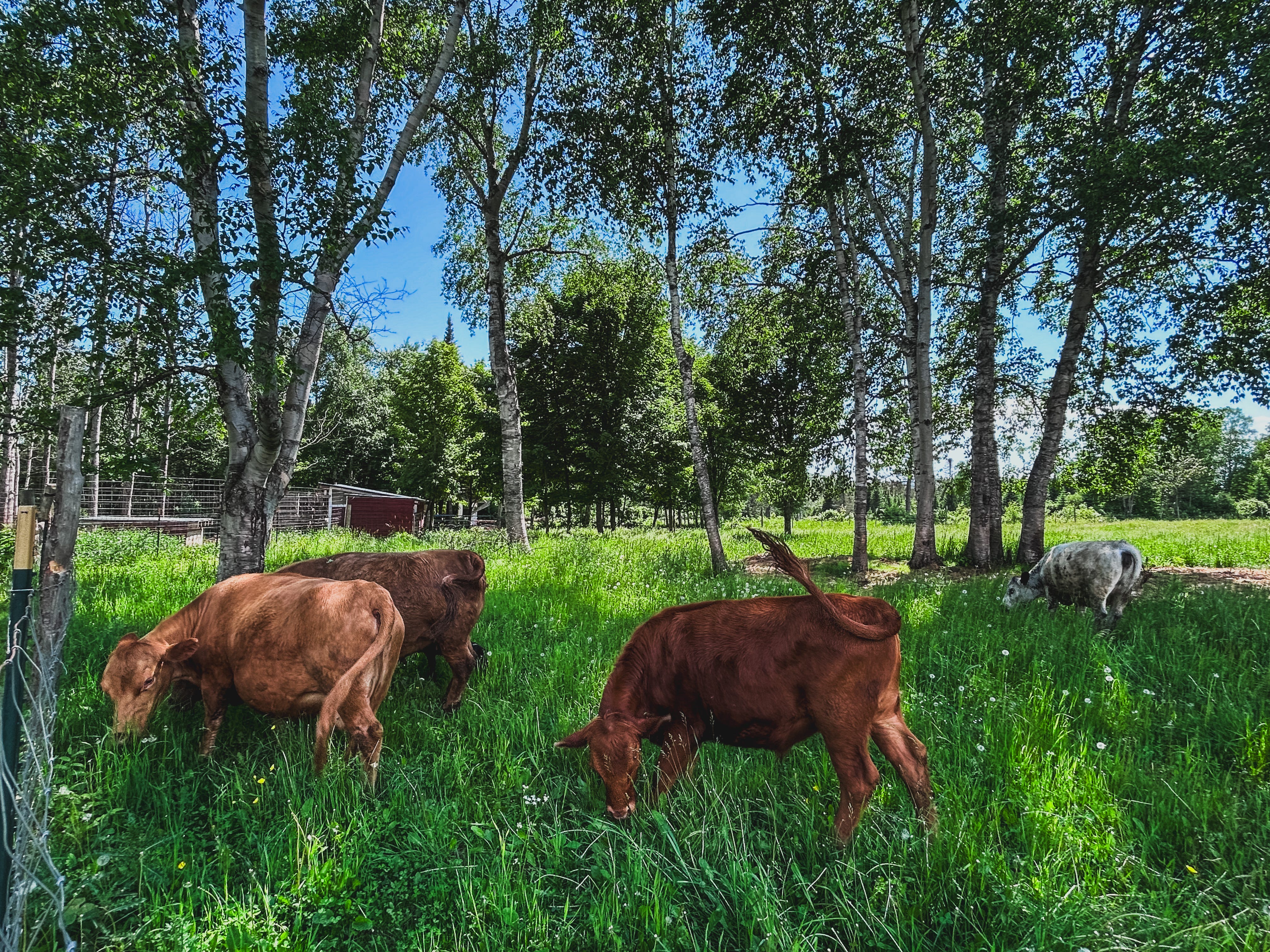
We’re hoping for a heifer calf out of Pearl to keep as a future breeder. It will be our first registered Dexter calf, and learning the paperwork side of all that felt a bit overwhelming. But as my husband and I look to our inevitable future of what our lives look like with what will be fully grown teenagers/young adults and not needing to grow as much food as we once did, we’re wanting to keep our options open regarding the cows. Maybe that will be selling registered stock. Maybe that will be selling cuts at the farmer’s market. We’re not sure, so we want to be breeding and registering our stock and building a breeder’s portfolio just in case we want to go in that direction.
It also led to some discussion about our farm name. We chose the name Yellow Birch Hobby Farm back in 2013 when I first started my blog. Perhaps it was more of a hobby back then, but it became so much more than that. In fact, I just recently had a conversation with a non-farming friend about raising animals and gardens and all of the work involved. He said, “Well, that’s, like, your guys’ hobby, right?”
It made me pause. Calling it a hobby makes it seem like something we do for fun like crocheting or scrapbooking. But it’s not always that fun, it’s hard, and so much of our life revolves around it. It’s a lifestyle. It’s a choice. It’s how we have nourished our family for years.
The word hobby does not sit right with me. But Yellow Birch Farm was already taken, even way back when we chose our name. So as my husband and I were talking this through, and as we were filling out paperwork for the American Dexter Cattle Association with the cursor blinking on Farm Name, we were like, “What do we call ourselves then?”
The Yellow Birch portion of our name comes from the handful of yellow birch trees on our property; a tree that was mostly logged out of our area decades ago for their beautiful veneer. You hardly ever see them and we have two massive, old yellow birches on either side of our house, with younger specimens scattered elsewhere. I felt strongly about keeping that part of our name.
So we settled on Yellow Birch Dexters. Simple. Although I’ve done a CSA in the past, I don’t think we will ever do any other farm business besides cattle, so it just seemed right.
Which means our breeder prefix for all of our registered stock will be Yellow Birch (insert name).
I hope that come the next newsletter, I will be able to report that two fresh calves have safely arrived and that all are doing well.
Forage for wild medicinal plants: yarrow, mullein, wild bergamot, spotted jewelweed, red clover, St. John’s wort, and fireweed are all ready in my part of the world this time of year. Do a quick search for what might be growing near you.
Dry and freeze herbs. Many herbs are wanting to flower right now; get them before they lose flavor and potency.
Forage for wild berries. It’s berry season, ready or not! In my neck of the woods, we’re picking wild blueberries, raspberries, June berries, and thimble berries.
Get started on garden bed cleanup. I will be pulling out all of the peas in the next week, and soon the garlic. These beds will need to be top-dressed with manure or compost and prepped for the next season. Some of you might be looking at sowing some fall crops. Now is the time to do both!
Get ready for preserving. Wash jars, toss rusty canning rings, take inventory of your canning lids. This is all work that can be done before the rush of canning season is upon us.
Freezer cleanout/prep: If you haven’t already, clean out what you don’t want or won’t use from your freezer. Getting your freezers organized and cleared before you start piling the new on top of the old will save you a lot of frustration.
Enjoy. Summer is flying by. I’ve been trying to take as many opportunities as possible to simply be. To be in a lawn chair watching the cows. To be in the garden, just to look around. To walk through my little corn field. To lay in the sun, to swim, to slow down. These beautiful days will be behind us before we know it.
I hope your July has been a beautiful one. Thank you as always for reading. See you soon,

Comments
Nothing yet. Say the first thing.
Sign in to join the conversation.