
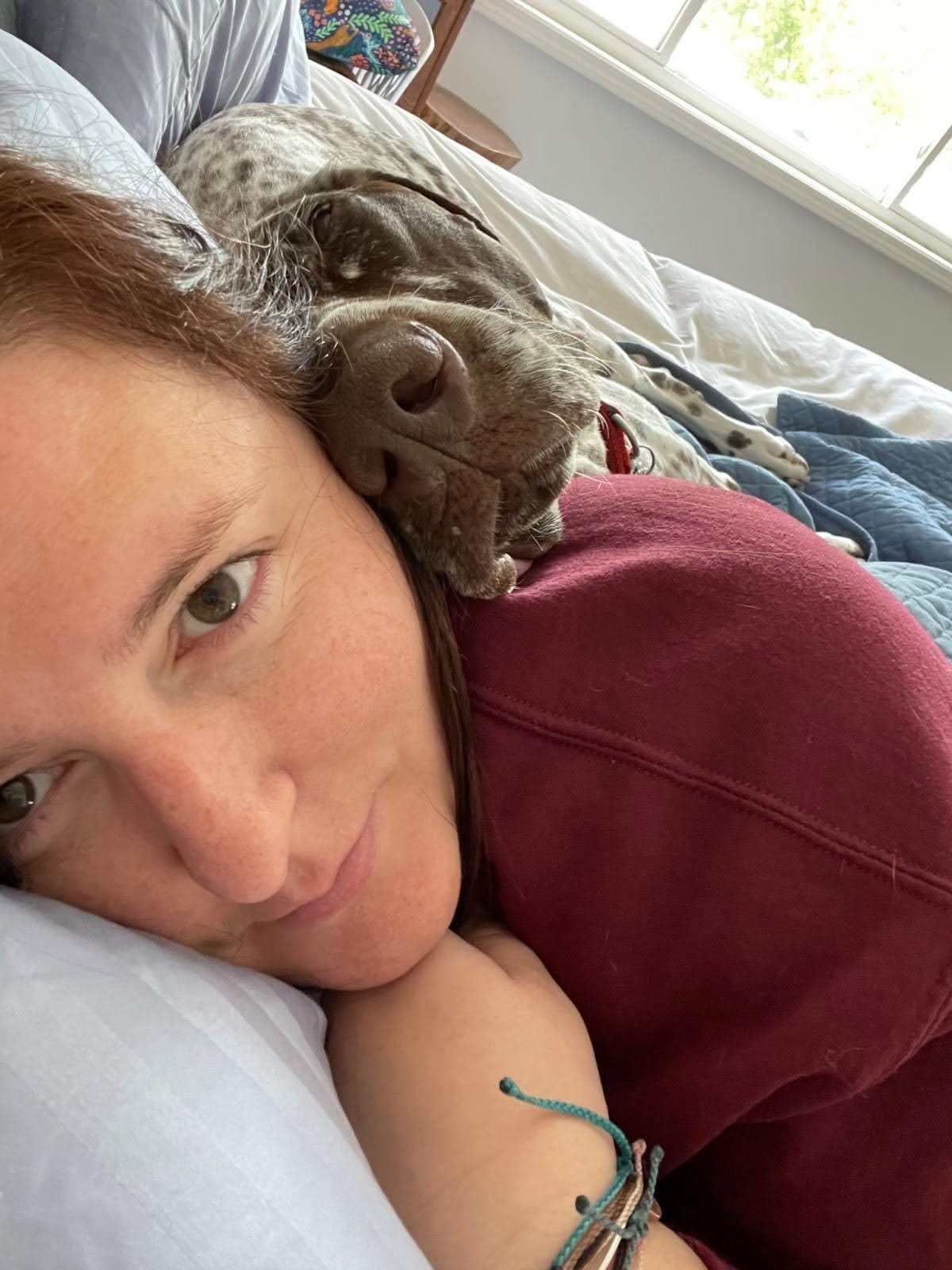
There was a time in my life when I trusted my body only because it could move.
I hiked. I walked my dog. I trained for the occasional triathlon. I even took a jogging class in college (which, in hindsight, feels like my Enneagram Seven was showing, but here we are). Movement was how I regulated. It was how I burned off stress, anxiety, energy. Everything.
And then my body changed.
In 2009, I had an osteotomy to try to fix an ankle that wouldn’t stop giving me trouble. My right ankle leaned outward in a way that made stability nearly impossible, so the plan was to realign it and “solve the problem.” Except it didn’t. By 2011 I was back in surgery, and at 31 they were already talking about fusing my ankle, because what had been done made things worse.
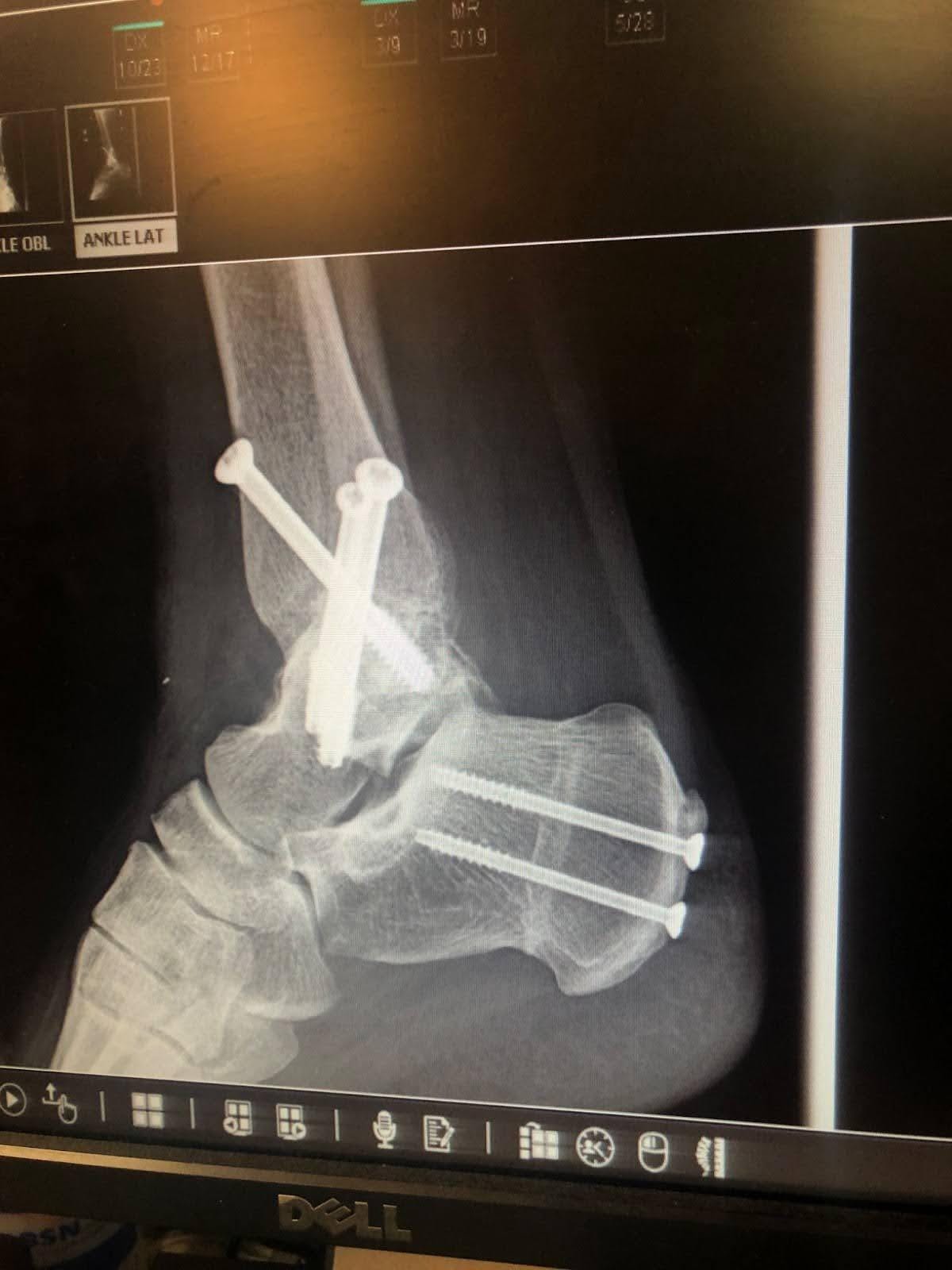
I stopped running for a while and it helped… until it didn’t.
Pain is tricky like that. If it quiets down long enough, you start to believe you’re fine again. So I went back to running. I carried and birthed two babies. I pushed through. And eventually I hit the point where pushing wasn’t an option anymore.
In 2019, I had another surgery with a new doctor who genuinely wanted to salvage what he could. When that didn’t hold, I had a full ankle fusion in 2020.
And this is the part I was not prepared for.
Not the pain. The stillness.
Three months in bed. Eight weeks with my ankle fully elevated. A body that could no longer do the one thing I had always relied on to feel like myself.
Move.
Have you ever spent a quarter of a year in a bed? I do not recommend it. But if you have, you already know what I’m about to say.
My nervous system didn’t just struggle. It revolted.
I was anxious, overstimulated, angry, depressed. It felt like being trapped inside a body that was buzzing with energy and had absolutely nowhere for it to go. Movement had never just been something I enjoyed; it had been my primary way of regulating. And without it, I didn’t have a backup plan.
My body didn’t gently ask me to slow down. It slammed on the brakes, and I had absolutely no idea how to be inside it.
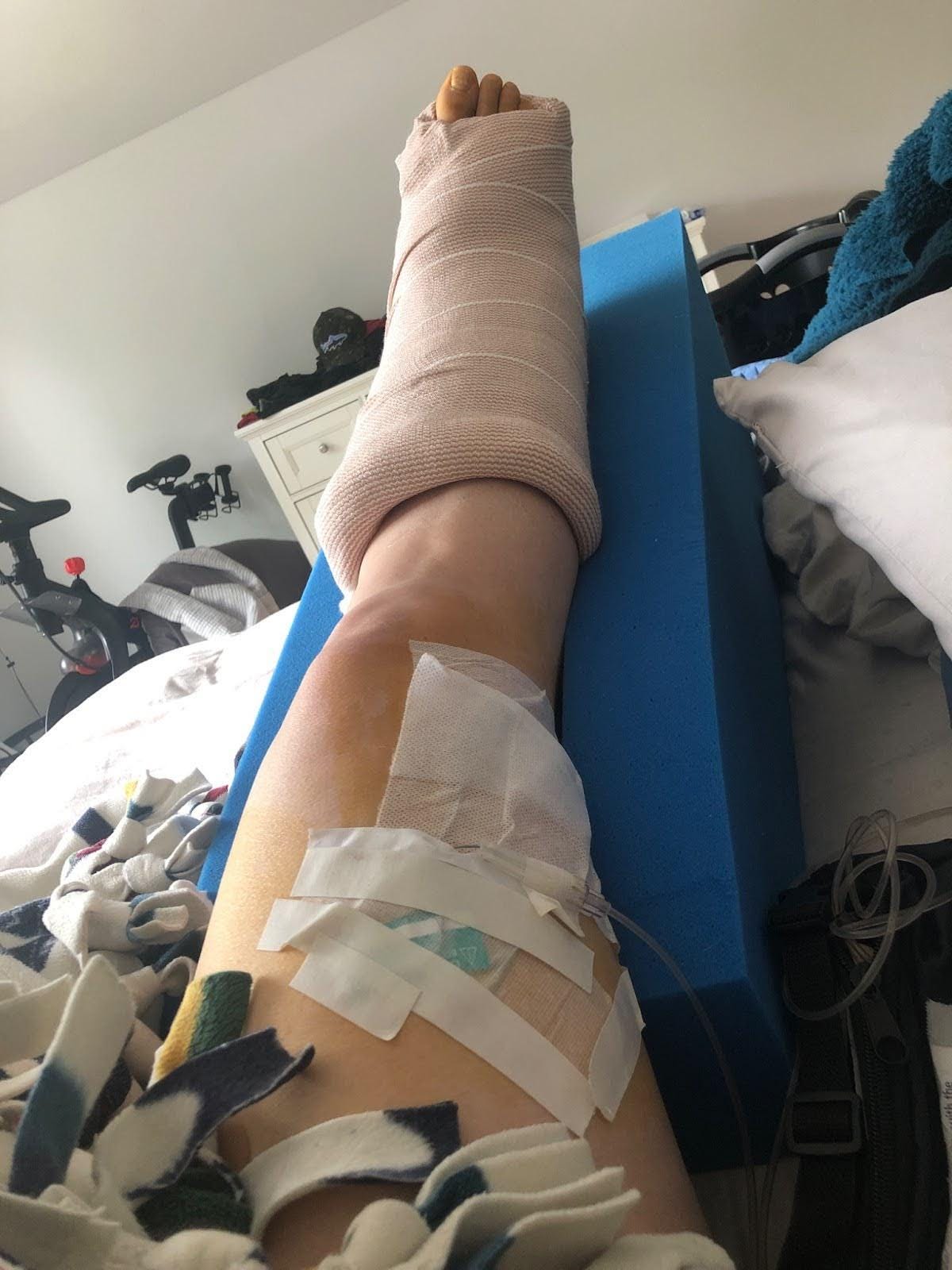
That was the beginning of my very messy, very unpolished, very desperate entry into somatic work. Exercise had always been how I released, how I came back to myself, how I metabolized life. Now I needed something that didn’t rely on pushing, overriding, or pretending I wasn’t in pain.
I was wildly under-resourced (except for my exceptional therapist who held me through it). So much of this was trial and error, fumbling in the dark, trying to find any way to create even a little bit of relief in my body.
When I was finally cleared to start putting weight on the ankle, the pain was so intense they slowed me back down again. Crutches for another 12 weeks. The first week I started walking in my boot, I got shingles. From stress. From pain. From everything my body had been holding.
If there was ever a moment my body made itself undeniably clear, that was it:
You cannot keep doing this the way you’ve always done it.
It took me over 18 months to learn how to walk again. Not back to who I was before, but into a new normal I never would have chosen. One that includes a brace on my ankle every single day, a cane on the days my body just can’t carry me the same way, and pain as a constant part of my day.
That’s the reality I live in now.
Back then I thought I knew my body because I could push it. Because I could move it. Because I could override it when needed. What I was actually doing was relying on one very specific form of regulation. And when that disappeared, so did my sense of stability.
That season didn’t just change how I moved. It changed how I understand bodies, entirely. It’s why I care so deeply about capacity now. Why I talk about nervous systems the way I do. Why I don’t believe in behavior change that ignores what your body can actually hold.
Because if your only way of coping, releasing, or functioning depends on conditions being just right, your system is always one disruption away from collapse. Trust me on this.
Now that my body has more capacity, now that it can actually hold what moves through it, I can process life in a way that feels different. Not easier in the way influencers like to package healing. Steadier. More resourced. More honest.
And I’m writing this to you from bed on day three of a pain flare I just can’t shake. This is still my reality.
It sucks to live in a body with limited mobility. It sucks to navigate chronic pain every single day. I’m not going to spin that. I’ve cried more tears than I can count over what I can’t do anymore; walking my dog the way I used to, hiking, running, jumping, even something as simple as walking down an incline or standing on my tiptoes.
That grief is real. It still moves through me.
And also.
My nervous system is strong as hell.
Not because I pushed it there. Not because I overrode it into submission. But because I learned how to be with it.
It’s more agile. More responsive. More reliable. I trust myself now in a way I didn’t before. Not because life got easier, but because my body can actually hold what life brings.
That’s the part I care about. Because no one should have to learn this the way I did. No one should have to be forced into stillness, into pain, into complete system overwhelm just to finally understand how to be in relationship with their body.
There are ways to build capacity without burning everything down first.
That’s the work I do with clients every day… building capacity in real bodies, with real constraints, without bypassing what’s hard. So if this is where you need support, I’m glad you’re here. I’ll keep sharing so you can keep expanding.
If something in this story landed, I’d love to know what. Drop it in the comments or hit reply.
With love,
Erin
Comments
Nothing yet. Say the first thing.
Sign in to join the conversation.