
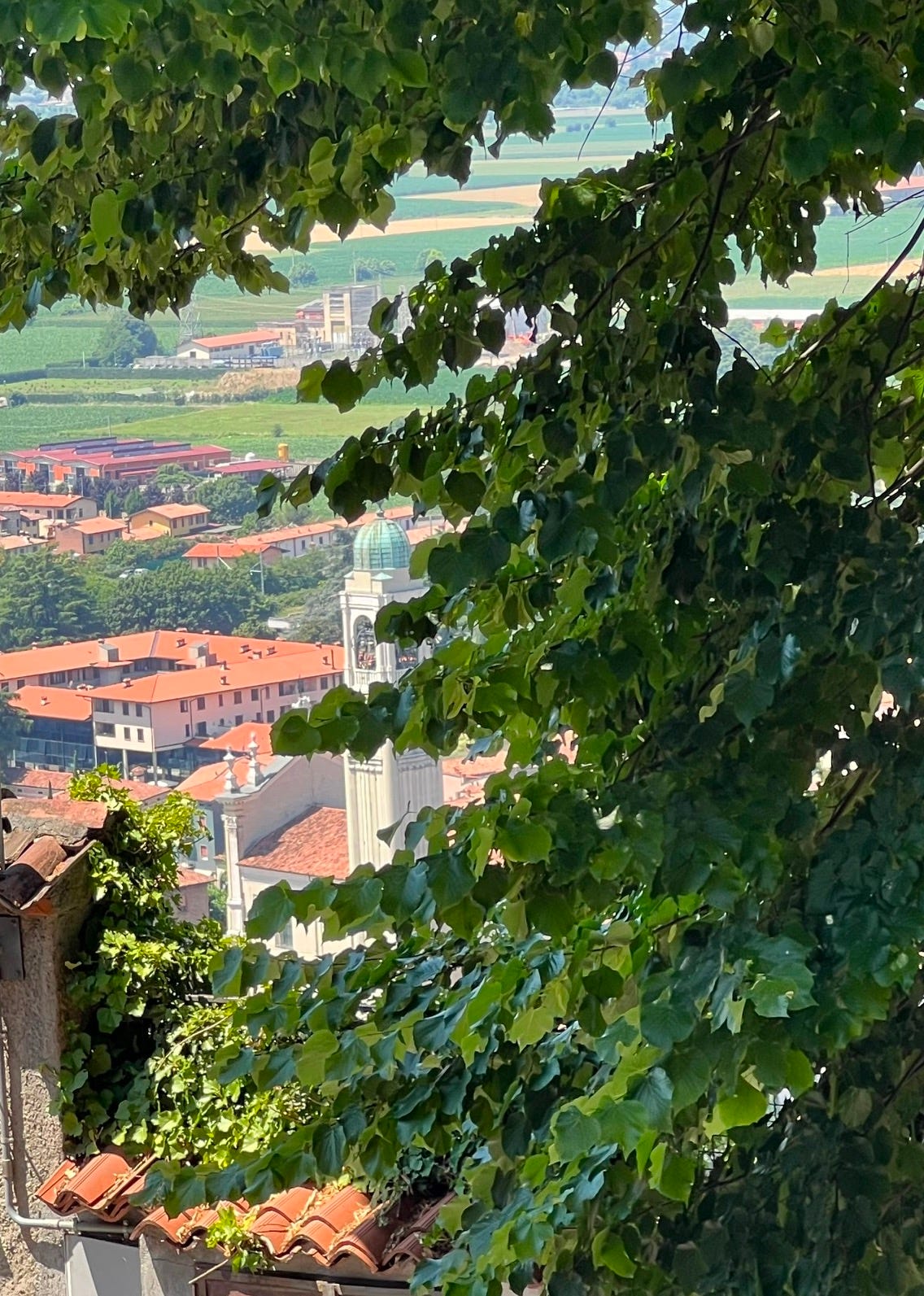
Despite being at the center of one of Italy’s most prized wine regions, Rovato in the northern province of Brescia is not a blissfully bucolic place. Montepulciano or Chianti it is not. Even Valdobbiadene in the Veneto, terrain of the mass-produced prosecco, is more scenic, at least in the storybook sense of rolling hills wrapped in vines and uncluttered by the industrial necessities of 21st-century life.
By contrast, the historic capital of the Franciacorta region—home to the sparkling wine that is Italy’s closest cousin to champagne—is a midcentury monument to Northern Italian ambition and productivity. Looking across the flat farmland, 16th-century church towers rise into the hazy skies next to smokestacks and utility poles, vineyards ripen alongside logistics centers, and any panorama of a villa guarded by cypress trees will have in its background a sprawl of modern suburban houses. Winemaking in this area would appear to be a ground-level endeavor, not a lofty calling. Historically speaking, the lofty calling was for a different line of work.
The Convento of the Santissima Annunciata sits 800 feet above the town of Rovato, sequestered in the green shade of Monte Orfano (literally, the “orphan mountain,” so named because it rises up completely alone out of the plain), on a site near an ancient Roman fortification. In 1449, two friars from Brescia applied for the right to form a community dedicated to the service of Santa Maria, and began construction of what four years later would become the home of 11 brothers: a church and living quarters burrowed in the hillside. One reaches it by bouncing up a wooded, stony path better suited to a medieval camino than driving.
C and I made the kind of ignoble entrance into the convent that I’ve become accustomed to in Italy. Unlike the luxury resorts where one pulls into a driveway lined with lemon trees and Ferraris, the kind of places C and I frequent usually present themselves as mysteries to be solved. Are you sure this is an actual road? Do you see an entrance somewhere? Where are we supposed to leave the car?
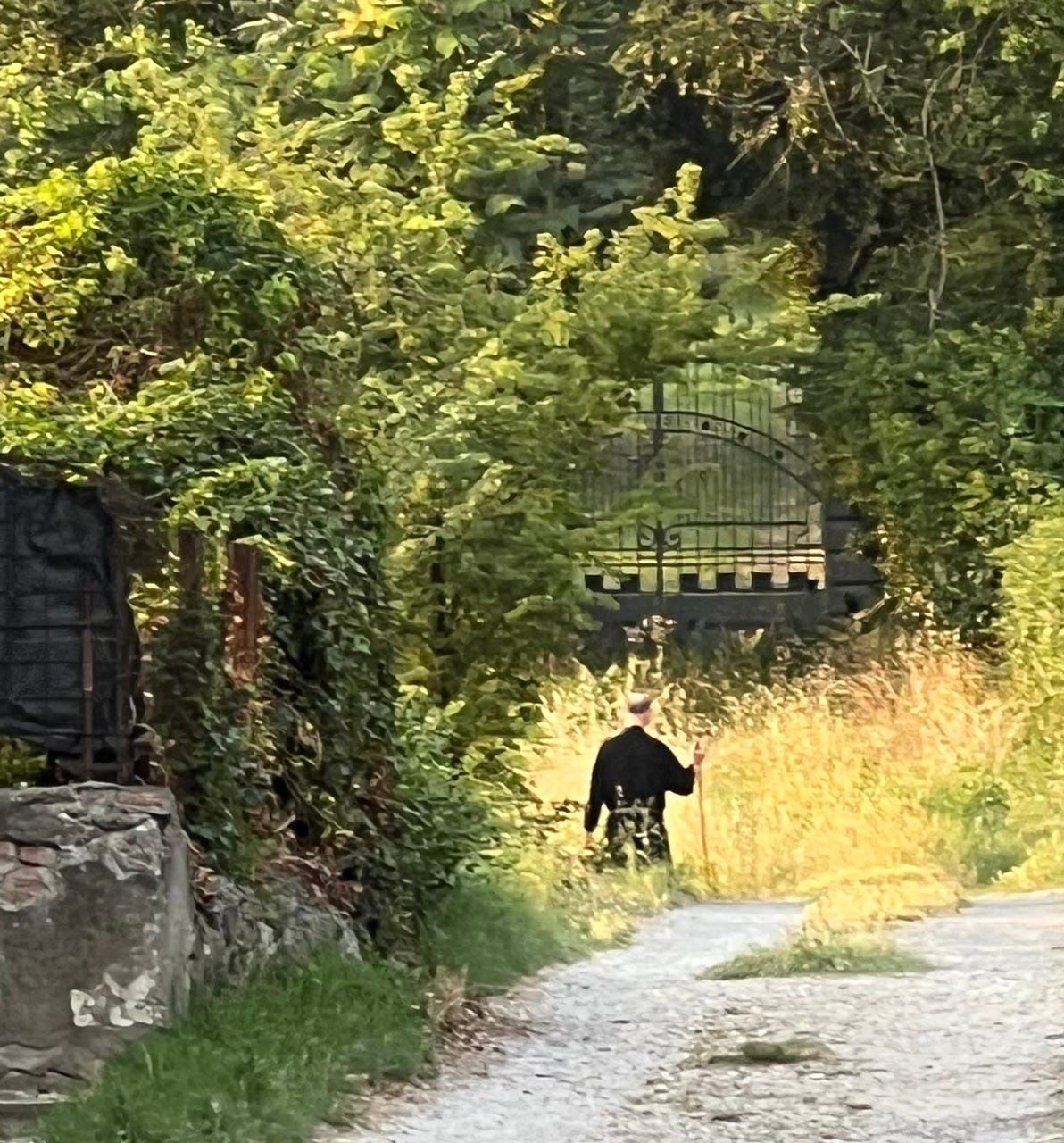
In this case, we had prematurely grabbed a parking spot in what turned out to be the service entrance, behind the weed-covered stone wall on the back of the church. I wandered over to an iron gate (locked) and peered into a silent, empty cloister. Then I circled back and was just about to push my way into what turned out to be a garden shed when a slight little man emerged, flustered, with black hair cut into the shape of a mixing bowl. When I explained that we were looking for the entrance to the convent, he quickly took control and began a monologue that would continue for the next 20 minutes.
Walking me back to the same gate I’d just tried, he explained that he worked for the monks still living there, Ermanno and Stefano. The two shared a house adjacent to the convent now that the original living quarters had been handed over to people on wine tours or sightseers visiting nearby Brescia or Bergamo. When he too found the gate locked, he beckoned us on through a heavy wooden door, the kind that seems to promise no return, but which granted passage down an echoing brick corridor where time-worn stairs turned a corner from quotidian to revelatory:
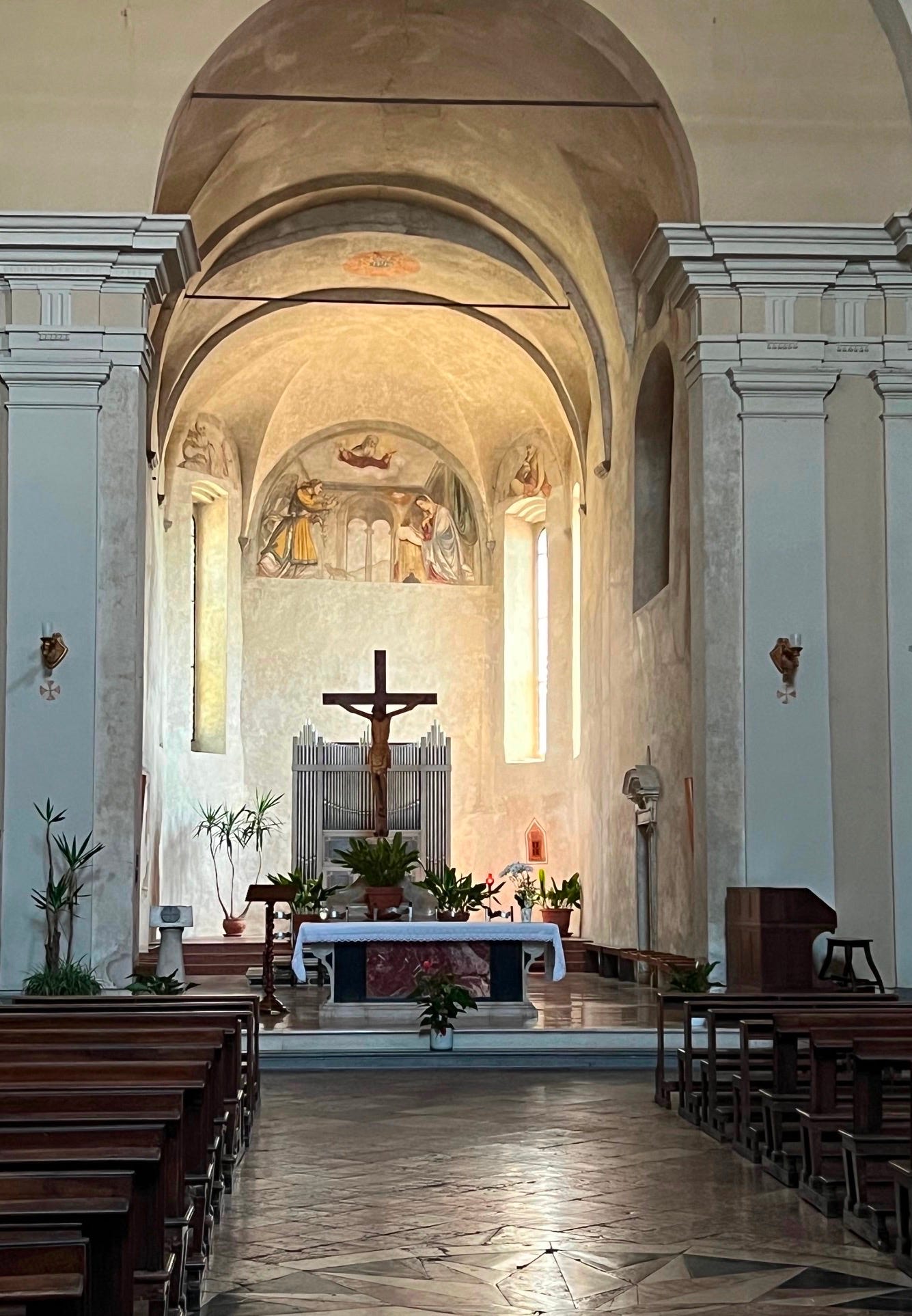
The interior of the Chiesa della Santissima Annunciata is as deceptively simple as the lives of the frati who built it—a straightforward central nave flanked by small chapels that line both sides. Yet even in the torpor of a sultry Friday morning with only the caretaker as a guide, it was impossible not to sense that this place was special, something more than a remote country church for a small band of friars.
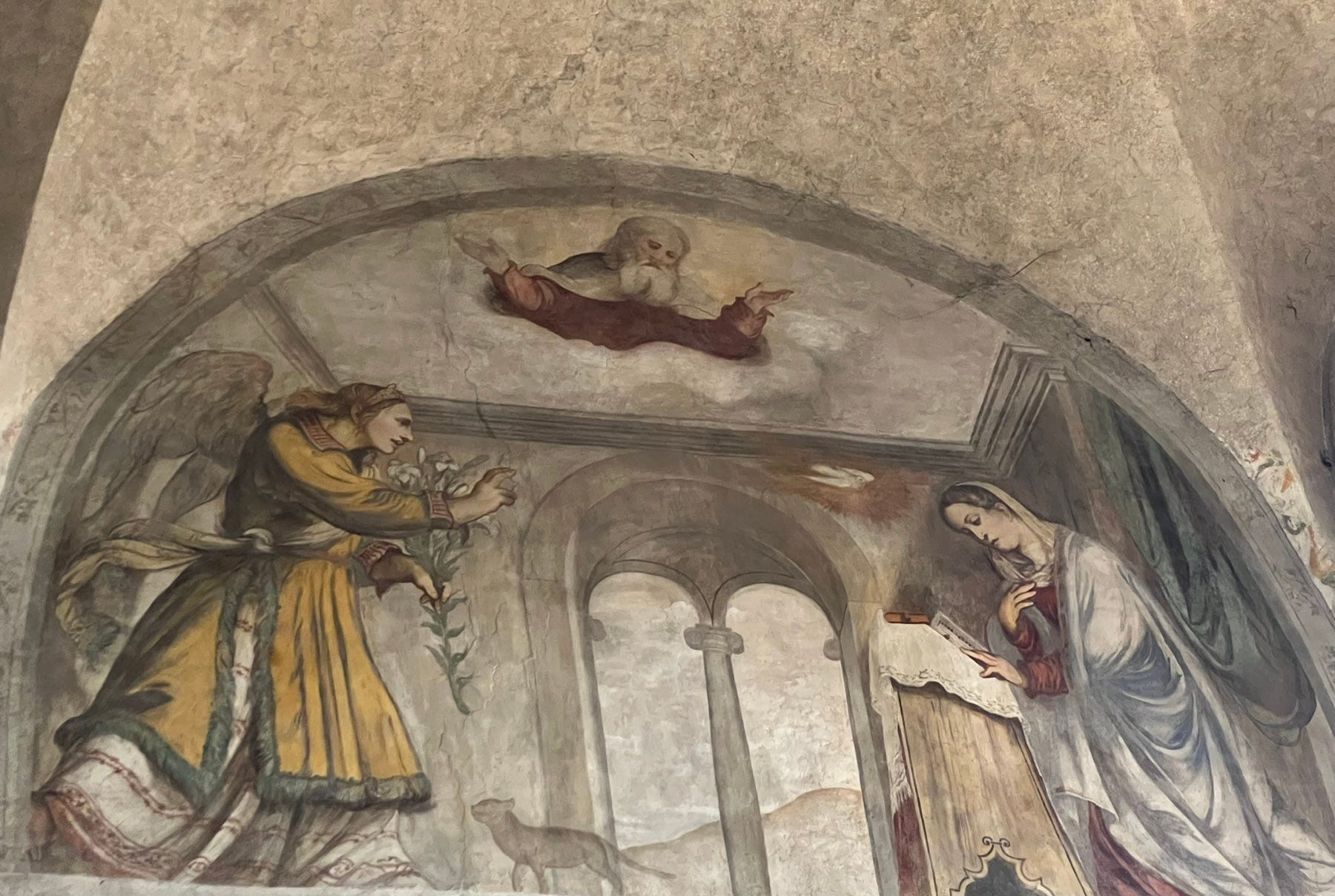
In fact, the Annunciata was a Renaissance intellectual hub, drawing philosophers and mathematicians, the Emperor Charles V, and Luigi Gonzaga from the noble family of nearby Mantua. It also attracted some of Northern Italy’s most important artists. The fresco behind the altar was done by Girolamo Romanino; the wooden crucifix below it may be from the Florentine school of Donatello. A depiction of San Sebastiano to the left of the altar is believed by many to be a work by Andrea Mantegna, who most famously did the frescoes of the Camera degli Sposi of the Gonzaga’s Ducal Palace.
Our self-appointed guide walked us through each work like a man who had spent solitary hours looking up at them and who knew them now as familiar old friends. In Romanino’s Annunciation fresco, which depicts the moment when an angel informs the young virgin that she will give birth, he pointed out the small black cat lurking at the bottom of the scene—a detail, he explained, meant to emphasize the element of surprise breaking up the quiet of day-to-day life.
In response to the plague that struck the village in the early 1600s, the convent and church were turned into a hospital—five monks, out of a fraternity of 20, died in the effort to help the victims. It was during that time, our friend explained, that the walls were disinfected with quicklime and the frescoes we see today were plastered over. They would not be rediscovered until the 1960s.
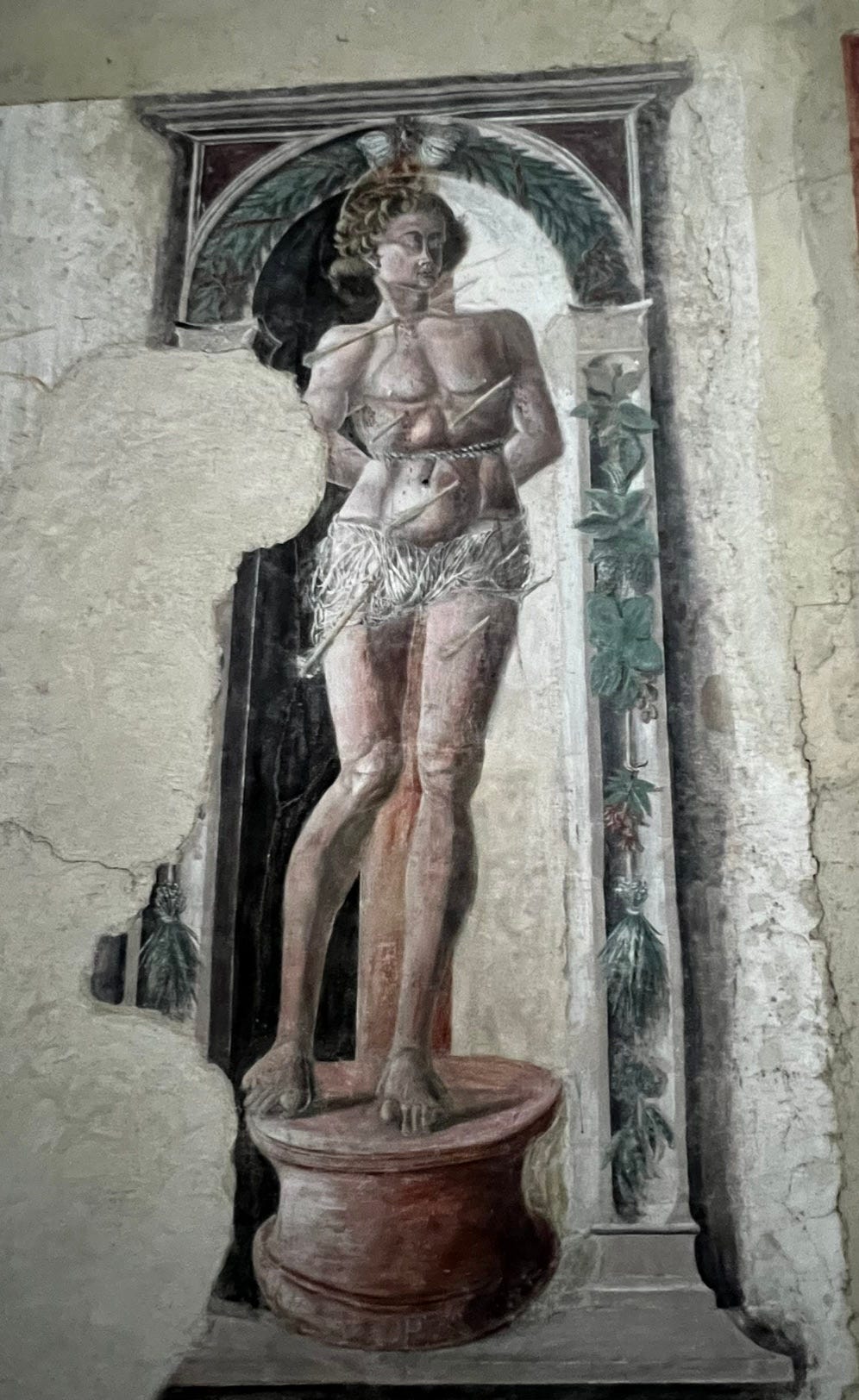
As he directed us from chapel to chapel, our unexpected host made no effort to hide the bitter notes in the history of what had once been a pilgrimage site for 15th-century faithful: the convent shuttered and auctioned off by the Republic of Venice in the 1700s; a wooden altarpiece replaced by a copy (the original is in Villa Cagnola in Varese), a missing marble altar nabbed in a midnight art heist, stolen while the monks slept next door. Time had taken its toll on the Annunciata, which made its modern-day redemption that much sweeter.
When at last he swung open the doors at the back of the dusky church and stepped into the midday summer sun, our man blinked hard and finally paused long enough to take a well-deserved breath. I could see now that the church’s doors opened directly into a large, easily accessible parking lot located about 50 yards from where I had chosen to pull in. The check-in for the convent was just down a small set of stairs, clearly marked. Like the convent itself, we had taken a long but illuminating road to get almost to where we started.
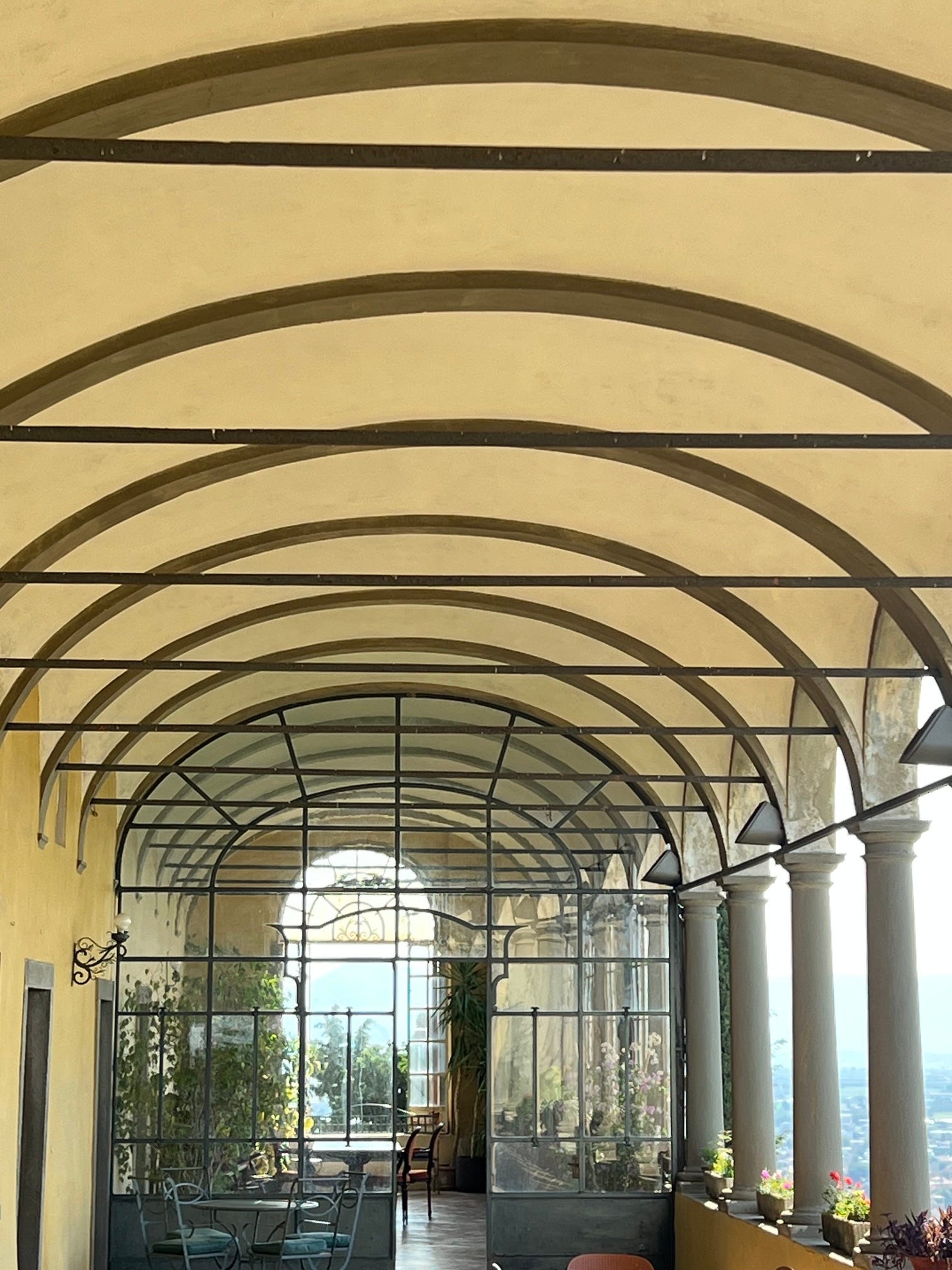
It was in 1959 that the Convento of the Santissima Annunciata came full circle and was repurchased by the Order of Servants of Mary, who began a restoration of the entire property. By the early 1960s, the convent was once again a place of monastic life. Fortuitously, that was the same moment that Rovato was embarking on a rebirth of its own, led by enologist Franco Ziliani and the Cantina Guido Berlucchi, who produced the first bottle of Franciacorta.
The Annunciata contains the area’s oldest vineyard, a 5.5-hectare plot once split by an ancient fig tree. Officially it dates back to 1500, shortly after the monastery was built, though some of the ancient terracing likely goes back 500 years before the monks arrived. According to Virgil and Pliny, the ancient Romans recognized that Monte Orfano created a unique microclimate, intermingling the freshness of the Alpine air with the warmth of the Mediterranean. Nature’s blessing was not lost on the friars.
Probably looking to balance their devotional studies with something more tangible, the brothers of the convent became experts in working the land and in enology as well, with historical accounts noting their abundance of olive trees, in addition to figs and grapes of the highest quality. They created an underground cantina, as well as a large common barrel for themselves. On religious holidays, they held a market under the church’s long portico.
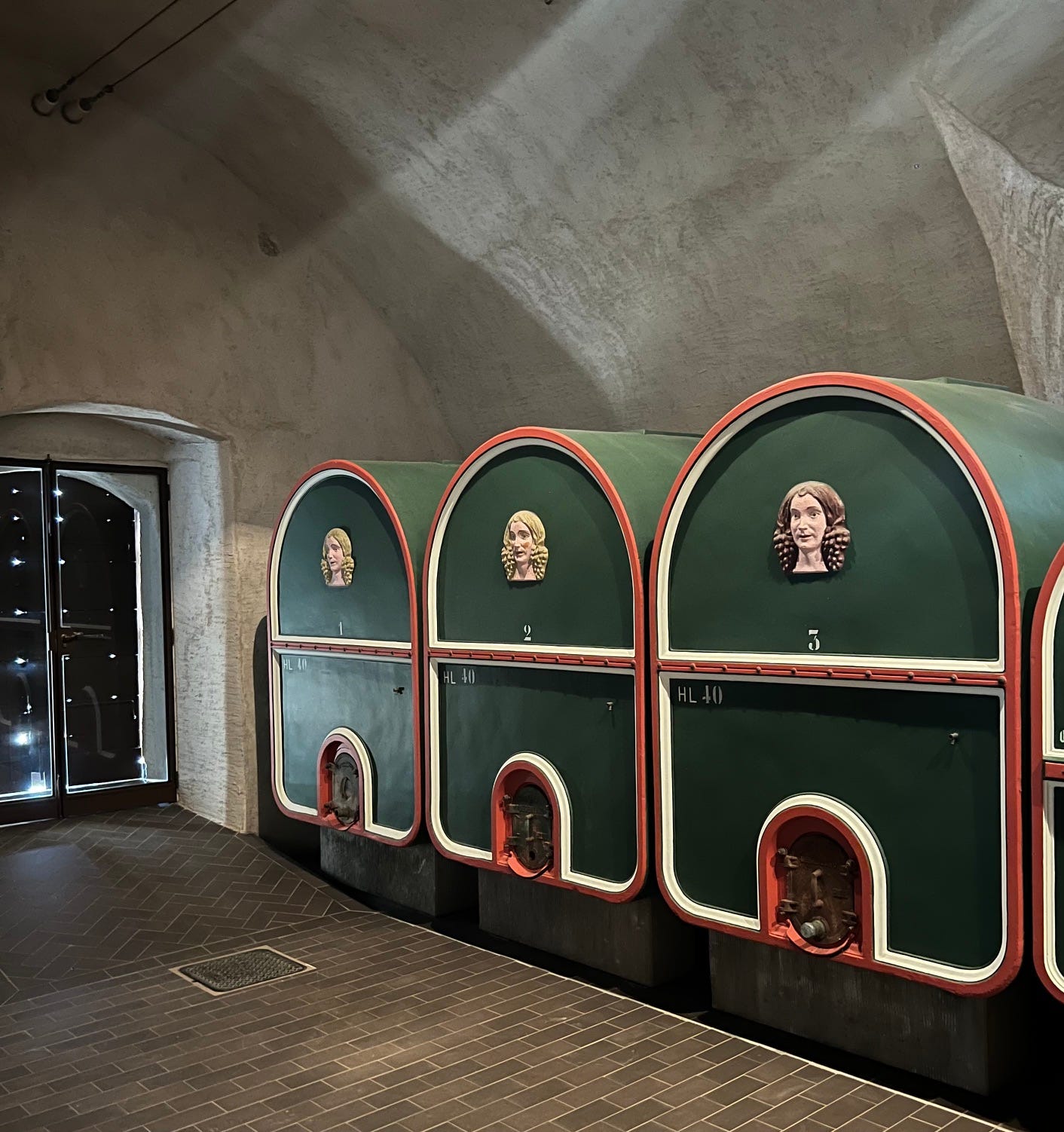
As Rovato reinvented itself in the 1970s into one of Italy’s wine destinations, the convent on the hill and its ancient vineyards stood as a prized jewel, both for its terroir and its history. In 1984, the aging Friar Sebastiano decided to entrust the management of the vineyard and the convent complex to his friend, local wine entrepreneur Vittorio Moretti.
Today, Moretti’s Bellavista winery has regenerated the old vines to produce an elite, single-varietal chardonnay that bears the name of the Convent. From another vineyard next to the complex - a smaller, south-facing plot - the company produces a merlot called Zuanne, the fruits of a friendship between Moretti and sports journalist Gianni Brera. When we ordered it at Dispensa, the local hipster wine bar and osteria, the sommelier deemed it the best red in the region.
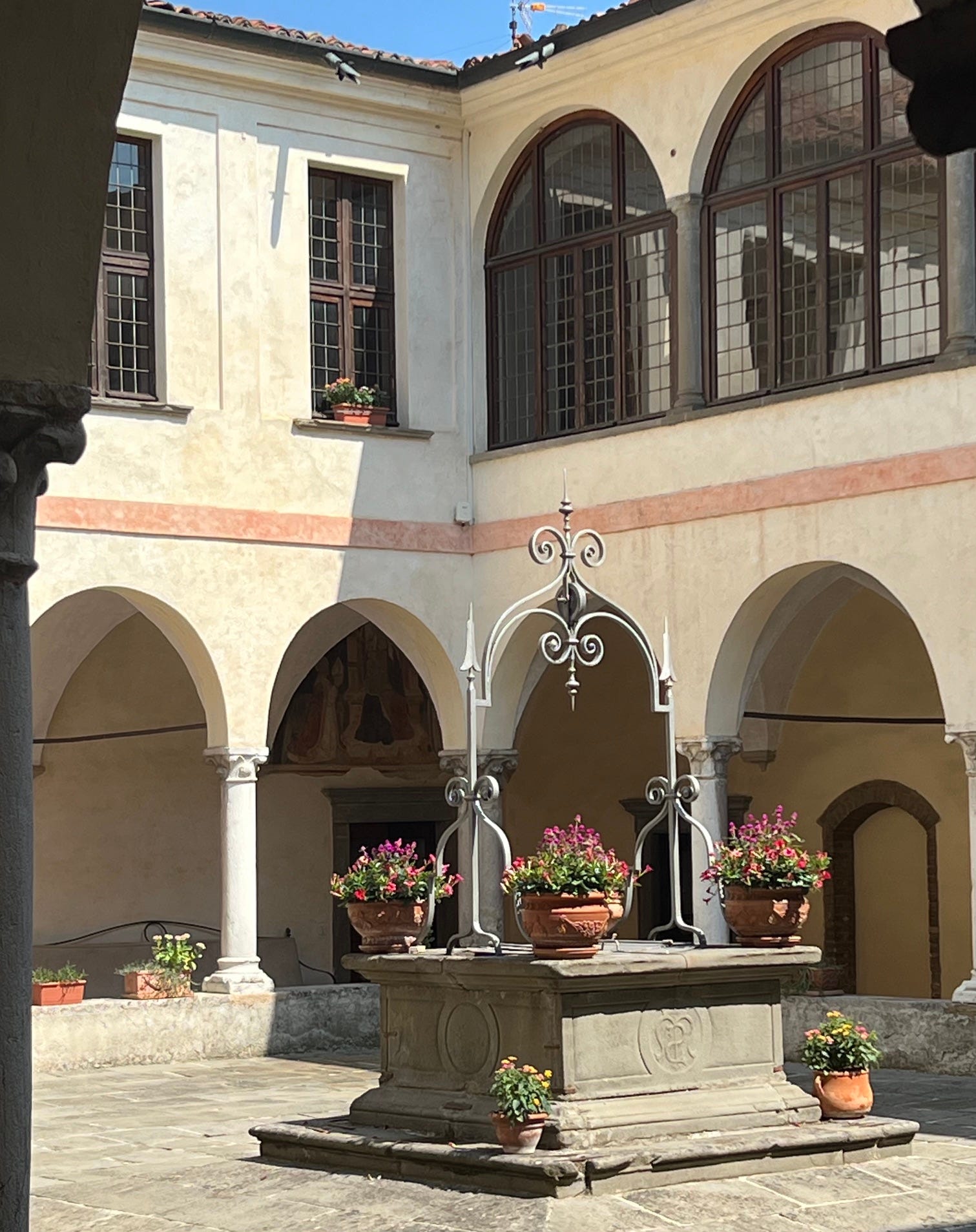
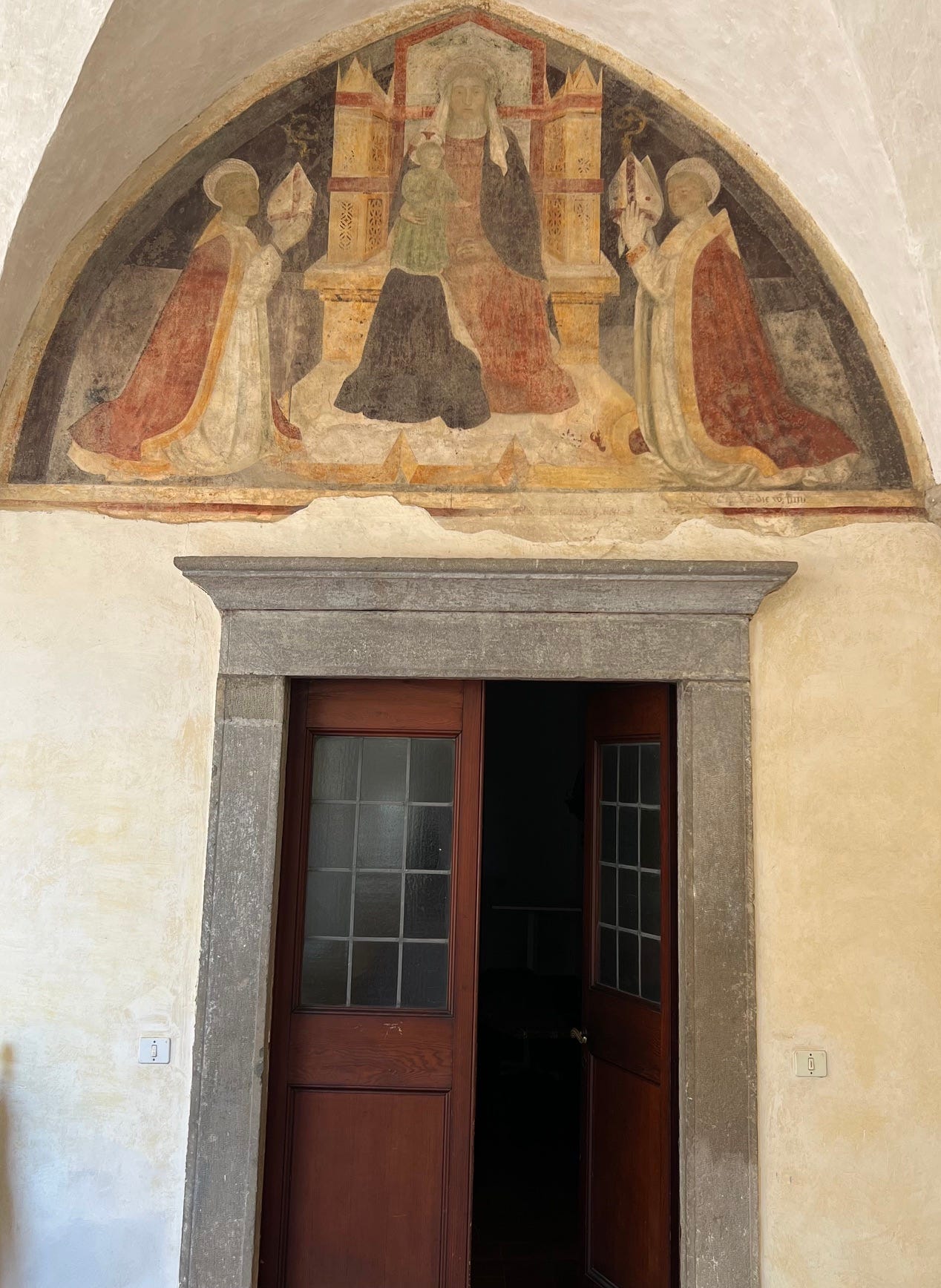
Having finally found the check-in, we stayed three nights at the Convento della Santissima Annunciata, now gently restored in a way that is at once simple, elegant and infinitely comfortable. After a day of sightseeing in bustling Bergamo with our Italophile friends the De Simones, I couldn’t resist sitting in the convent’s austere cortile, the same one I first saw through a locked gate—the late-day sun baking the cistern in the center, the shade of the loggia offering refuge, 15th-century frescoes of the Blessed Virgin keeping watch over each of the four corners. I thought of how many of the best things in our world are born, or reborn, in the quiet of places like this.
From the ripening of the grapes on the hillside to an angel’s intrusion on a young girl studiously reading a book in the company of her cat, it’s in the solitude that inspiration strikes, like a fountain of effervescence that flows beneath the most placid surface. Like a wellspring of creativity bubbling up from the bottom of a wineglass.
No posts
Comments
Nothing yet. Say the first thing.
Sign in to join the conversation.