
There’s no getting past it. At least from the standpoint of an American in Europe, the timing of the USA’s 250th anniversary is more than a little cringe. It’s like celebrating your teenager’s 16th birthday two days after he got drunk and wrecked the family car. Clearly, the country is going through an awkward phase at the moment.
And no one on the Old Continent seems particularly eager to cut us any slack. Yes, of course, we’re young—at least by the standards of civilizations that measure themselves in thousands, not hundreds of years. But the arrogance of youth only goes so far as an excuse. If you throw your weight around like a bull in a china shop, you have to expect to pay for what you break.
Things are pretty well turned upside down at the moment. In Italy, President Trump’s allegations that Prime Minister Georgia Meloni was “begging him” for a photo op at the G7 summit incited a furor even among people who otherwise loathe the Italian leader.
A few days later, in an interview on Fox News, NATO Secretary-General Mark Rutte tried to assuage Trump’s umbrage at the failure of Europe to support Operation Epic Fury by reminding the U.S. president that more than 500 U.S. aircraft had taken off from American military bases in Italy. Except that Meloni had previously assured the Italian public that their country would not be involved at all in the highly unpopular war. You could almost hear the Italian Prime Minister thinking: Are there any other loud-mouthed men who’d like to grab a mic and make my life just that much more difficult?

To be sure, Europe isn’t in top form at the moment either. If America is the petulant teenager with an appetite for destruction, Europe is the depressed, middle-age brother still not quite ready to move out his parents’ basement. To live here is to wake up every morning to a new front page story on the latest Trumpian outrage, but search the Corriere della Sera in vain to find any real national strategy for reviving what is presently an economy in hibernation. Politicians on both the left and right greatly prefer pan-European discussions on “competitiveness agendas” to actually getting in the game.
Even as recently as ten years ago, the Europeans and Americans might have been able to celebrate together. After all, in many ways Western Europe is partly an American accomplishment: the remaking of a war-devastated continent in record time.
Italy in particular was extended a helping hand to pull it into a new epoch— Italians got a unified country, an experiment in democracy, and the myth of La Dolce Vita. Americans got a loyal ally and vacations with takeaway spritzes. As a Yank now living happily in a country not my own, one which has afforded me a window into a place of breathtaking beauty and cultural richness, I would be the last one to complain about the bargain.
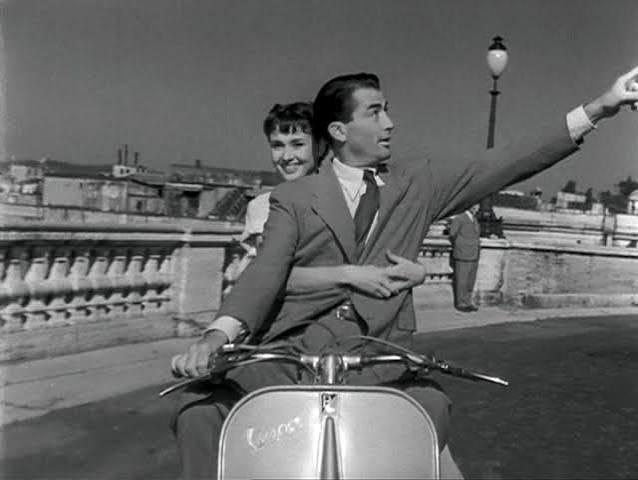
This truth must be acknowledged. The contribution of America to liberating and supporting postwar Europe is a part of what has led people like myself to be here now. My life lived Italian would be impossible without the historical investment of the Marshall Plan and the present-day opportunities offered by the United States economy. In this fraught historical moment, I can’t say that in every instance I’m proud to be an American. But I’m always intensely, unequivocally grateful.
Despite the turbulent ocean of trouble roiled up between the United States and Italy, I think that sense of gratitude toward America still persists among most Italians as well. When I’m quizzed on a daily basis about the current situation in the U.S. by friends, neighbors, my butcher or my doctor, it’s never with a tone of anger. It’s with a sense of confusion, bafflement, and genuine concern. Most of our long-time allies feel not so much angry as ghosted. What happened to the country they thought they knew, even admired?
So perhaps as an alternative to fighting about cancelled performances by Young MC or staring too long into the Reflecting Pool, America would be better to use its 250th anniversary to contemplate the ultimate coming of age question:
What do you want to be when you grow up?
In fact, it’s a profoundly American question. To many Europeans, the idea that people can freely choose their destiny, regardless of the starting points of family, class, race and gender still feels hopelessly naive. In contemporary Italy, such a query is almost painful, a reminder to a generation of young people that their options seem suffocatingly narrow.
It’s also a question that reflects national values as much as personal ones. As Americans, we believe we have at least some autonomy in shaping our society. So what do we want our country to be? Rich? Powerful? Feared?
Or do we aspire to remain a very real—albeit wildly imperfect—symbol of hope to the world? A slightly unruly, sometimes uncouth, often overly optimistic dream factory, as improvised as jazz and as celebratory as a Fenway crowd singing “Sweet Caroline”. A land where the shared values of life, liberty and happiness still manage to be pursued across every social and historical barrier.
A place that even people who have never touched its shores can recognize as home?

To everyone who celebrates the Fourth of July, whether inside the U.S. or outside of it, I wish you a wonderful holiday. Enjoy your barbecue or Main Street parade or just an afternoon spent in air-conditioned comfort (which sounds pretty good to most Europeans at the moment). You can even give a spin to “Bust A Move” and imagine you’re watching Young MC.
For my part, I think I’ll take a walk through one of the ancient ruins that can be found in every corner of Italy, testaments to the fact that history is the quintessential long game, more accurately measured in centuries than 24-hour news cycles. Much of what we view as crisis is not. Most of the time, this too will pass.
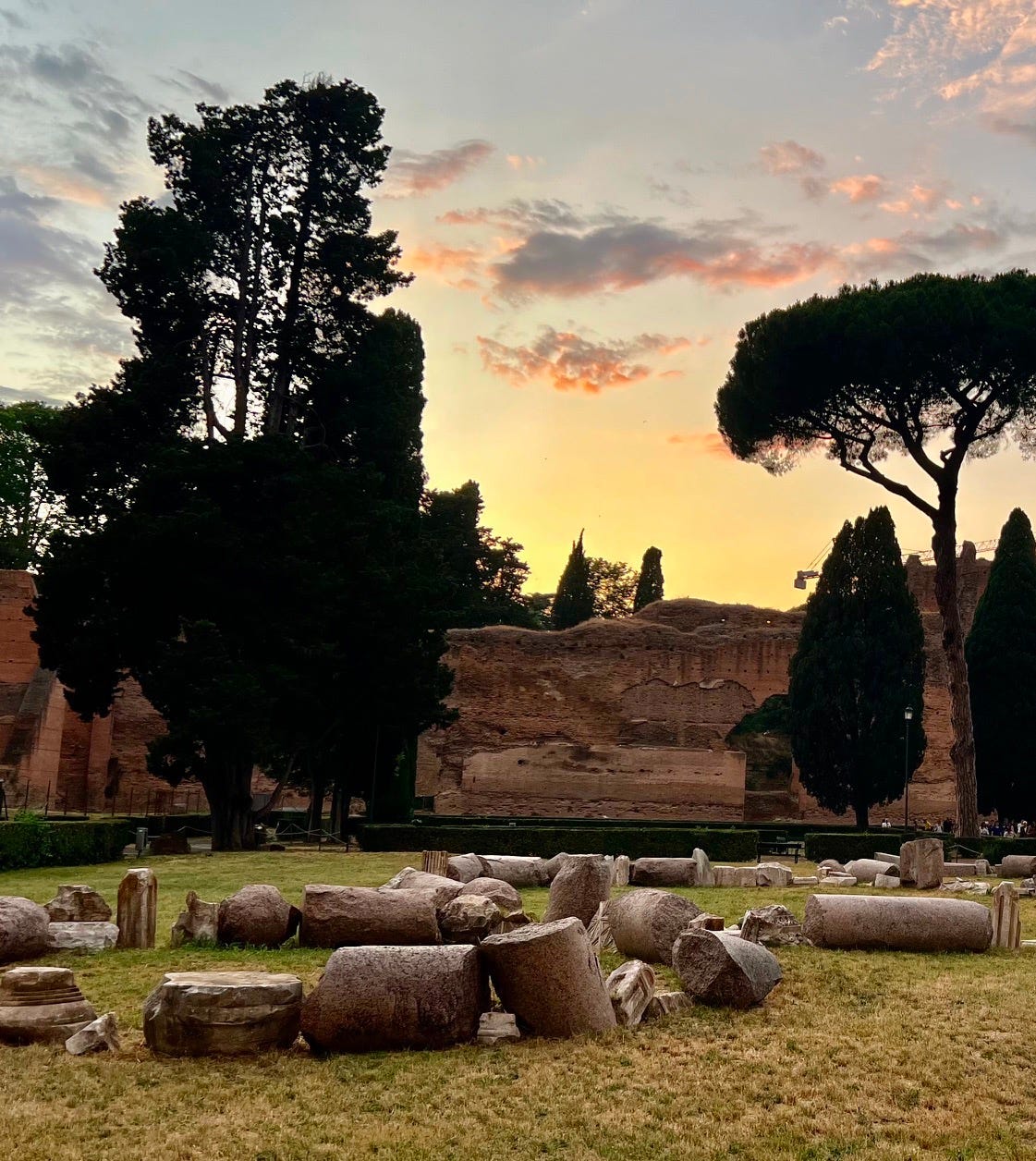
And yet those toppled gates, solitary columns, and empty stadiums are also a reminder that decisions matter. No empire is as invincible as it claims. A sense of privilege corrodes and corruption destroys. Not celebratory thoughts perhaps, but valuable nevertheless.
All a part of growing up.
No posts
Comments
Nothing yet. Say the first thing.
Sign in to join the conversation.