
It seems to go with the territory.
No matter how powerful they may be, there’s something in the back of every ruler’s mind that can’t help contemplating their own expiration date. Joseph Stalin had his “secret rooms” for an emergency retreat, one of them located beneath a metro station. Napoleon made plans to escape to America and become a farmer in New Jersey. Even the Renaissance popes had their secret passage from the Vatican to the fortifications of Castel Sant’ Angelo. Call it caution, paranoia, or maybe just a healthy sense of historical precedent. But if you happen to rule the world, it’s worth planning for some worst-case scenarios.
Not that most of these plans work out the way they were intended. The bigger you are, the harder it is to pull off a good getaway.
On April 25, Italy will mark Italian Liberation Day, the Anniversario della Liberazione, a rather oddly celebratory holiday to commemorate what was on some level a national defeat. The date corresponds to the same day in 1945, when Italy’s partisan fighters mounted attacks and forced the surrender of the North’s Fascist-controlled cities, just days before the Allied forces would arrive. Milan fell on April 25th and Venice and Turin on the 27th.
At the same time, the partisans issued legislative decrees assuming power and establishing the death penalty for all Fascist hierarchs and other collaborationists of the Nazi occupiers. That included the highest of Fascist hierarchs, Benito Mussolini.
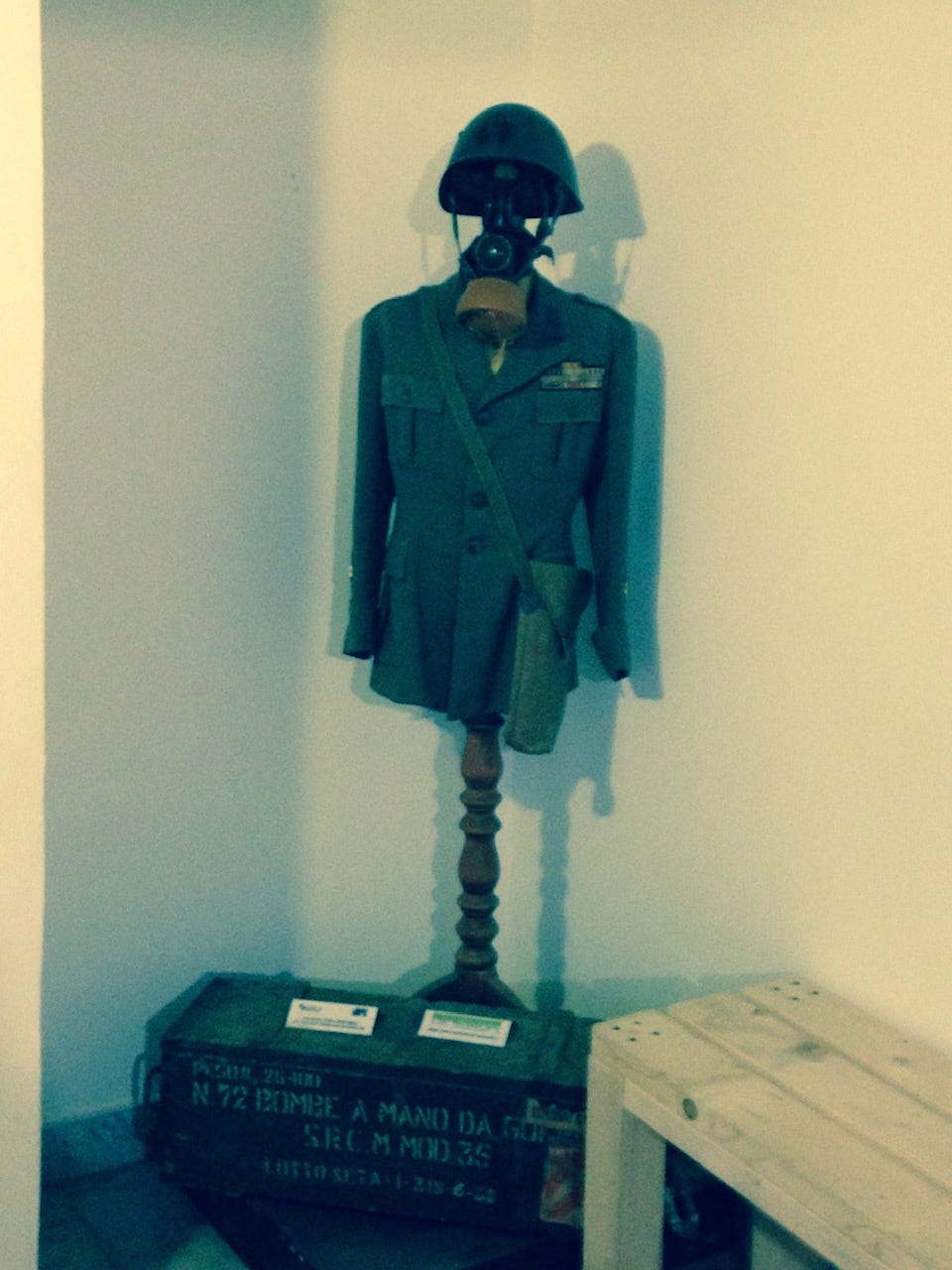
Two days later, Il Duce, the domineering figure who was the very face of Italy for more than twenty years, was arrested as he tried to escape to Switzerland disguised as a German soldier.
But fleeing in full costume was not the original contingency plan.
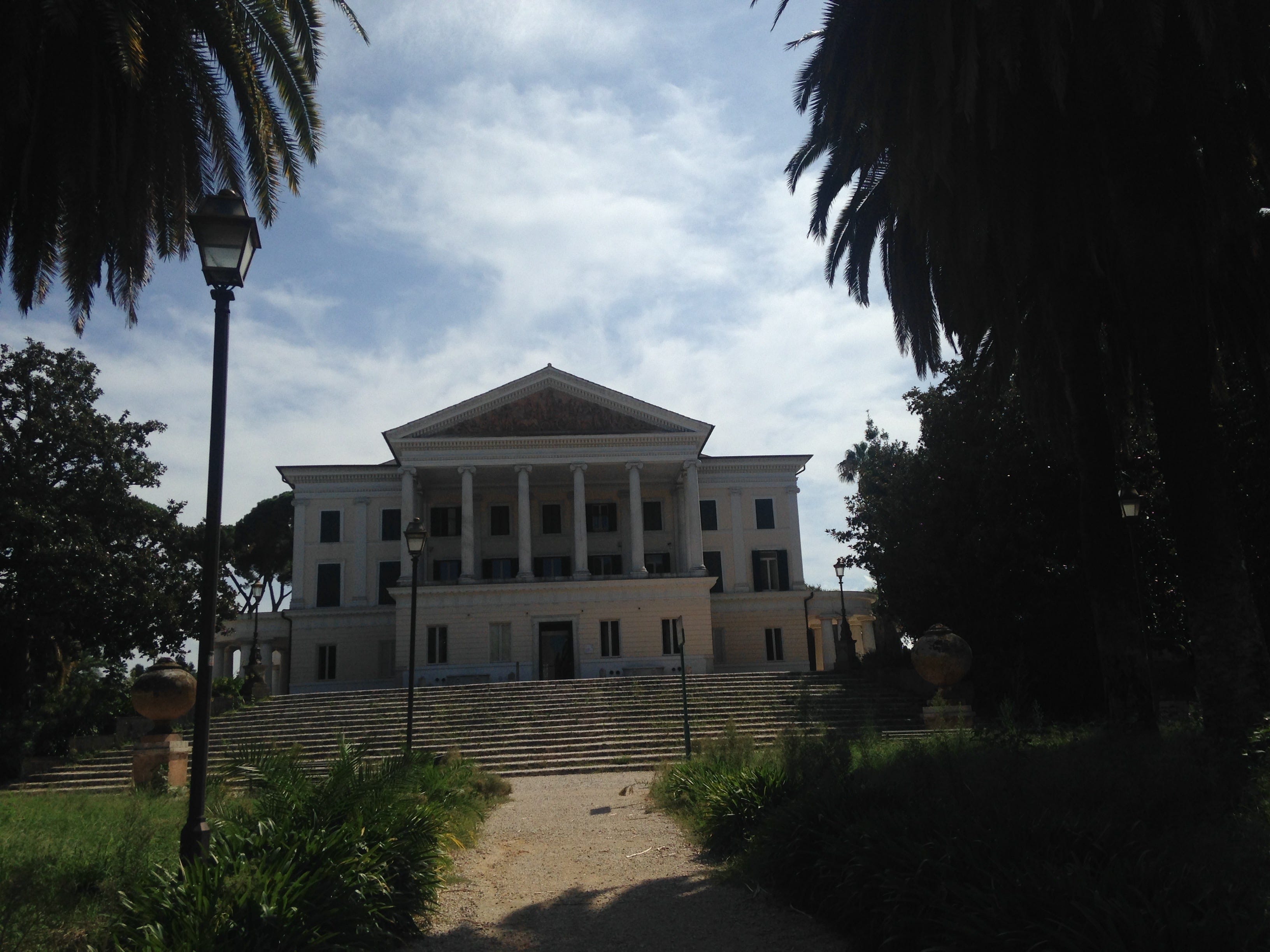
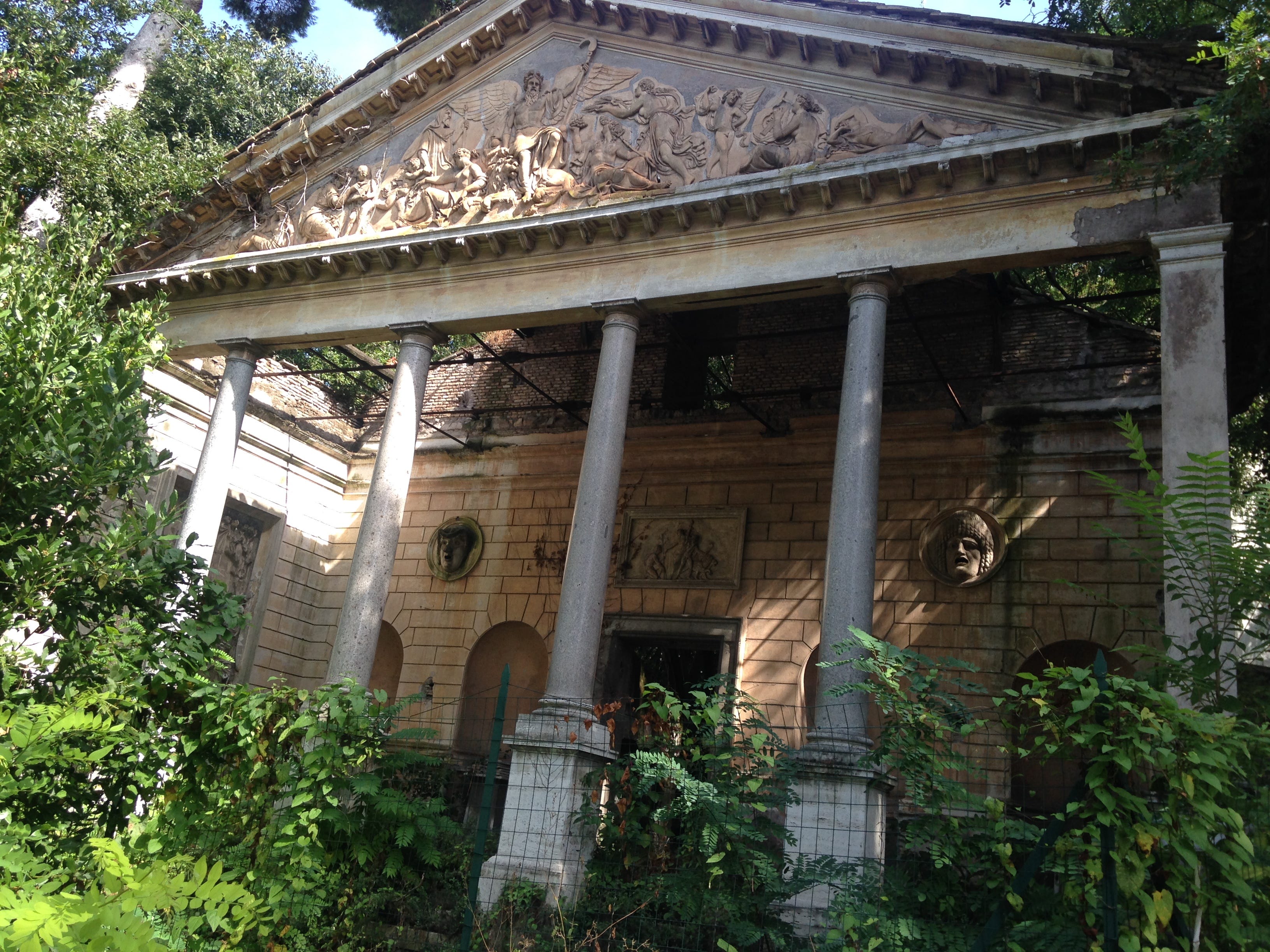
Although he played no role in constructing it, there’s something about Villa Torlonia in Rome that’s sufficiently weird, indulgent, and over-reaching to make it a fitting home for a man like Mussolini, which in fact it was during his most powerful period from 1925 through 1943. Originally designed by Neoclassical architect Giuseppe Valadier, the residence was initiated in 1806 for the banker Giovanni Torlonia and subsequently finished by Giovanni’s son Alessandro.
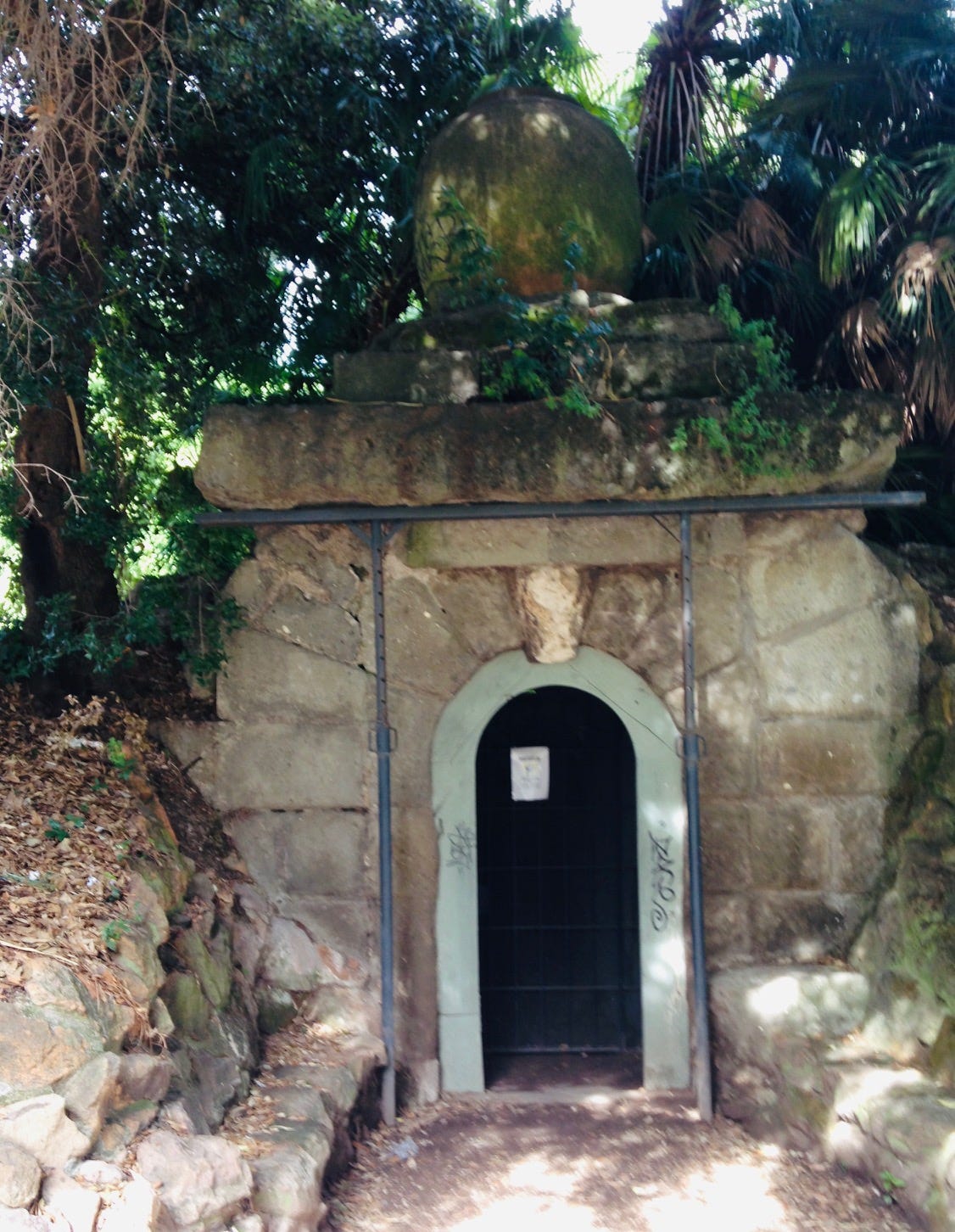
The place has a slightly Magic Kingdom quality about it, with features like the False Ruins, the Temple of Saturn, and the Tribuna con Fontana. There was also a theatre and orangerie (today known as the Lemon House). The most eccentric buildings were done by Giuseppe Jappelli, including the Swiss Hut (later rebuilt as the Casina delle Civette), the Tower and the Moorish Grotto. And for good measure, Alessandro threw in two pink obelisks to celebrate his parents.
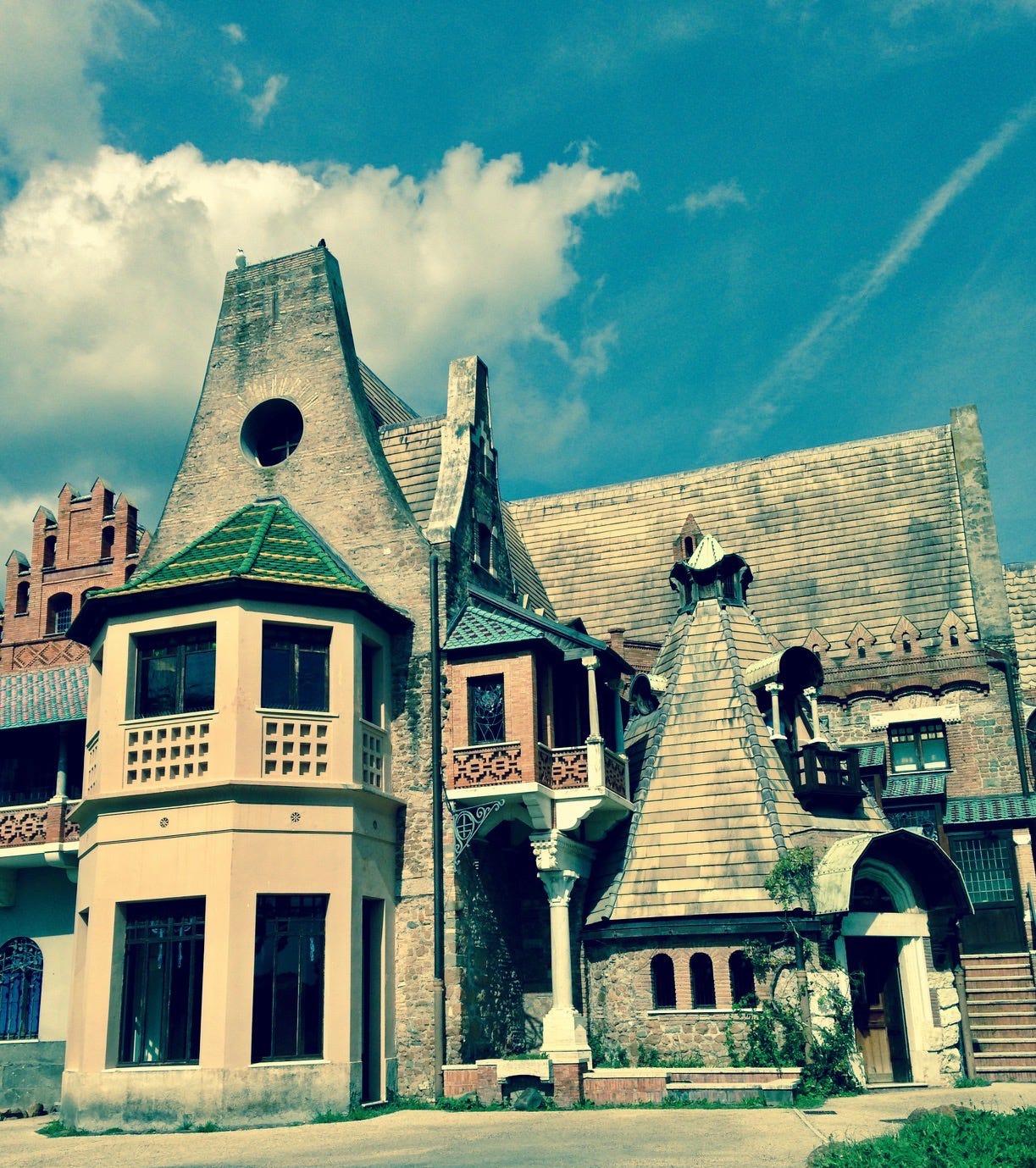
Ironically, the most interesting thing on the property wasn’t anything built by the Torlonias. In 1919 a large underground third and fourth century Jewish catacomb was discovered in the northwest section of the grounds, containing at least 3800 graves. Those were still there in the backyard when Mussolini arrived in 1925.
He came on the invitation of principe Giovanni Torlonia Jr., the last heir to Alessandro and at first the leader used the main building, the Casino Nobile, only for official meetings. It wasn’t until 1929 that he, his wife and children moved into the first floor residence.
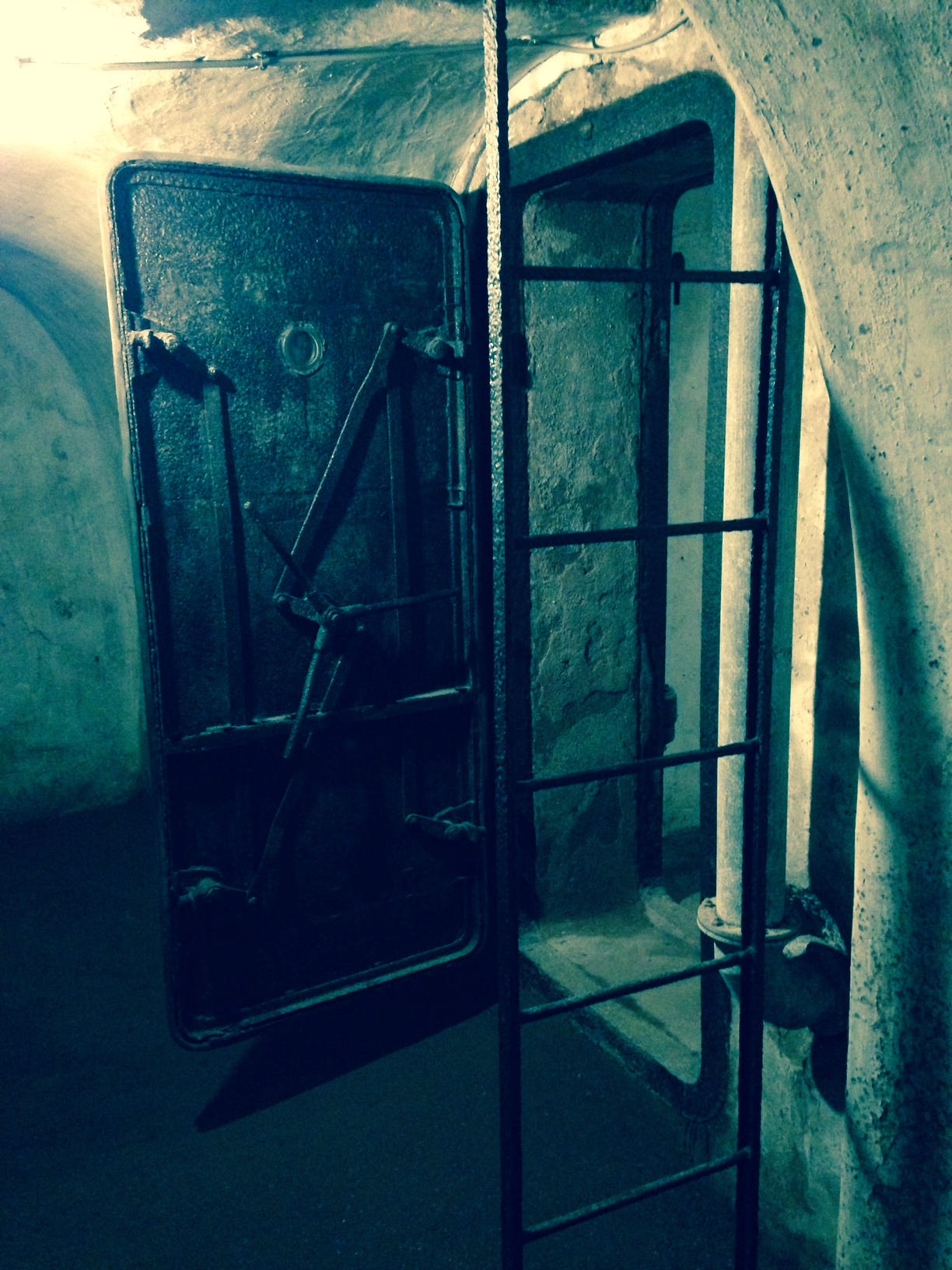
Despite a penchant for bellicose pronouncements (“If I advance, follow me; if I retreat, kill me; if I die, avenge me”), when World War II officially began in 1939 Mussolini soon began searching the sprawling grounds of Villa Torlonia for a hiding spot, just in case. He found it in an already existing underground cantina located under a man-made lake installed in the 1800’s. Soon the space had been equipped with anti-gas doors, an air-filtering system, and electric lights.
But even those upgrades couldn’t hide some glaring flaws. Accessible only from an entrance 150 yards from the residence, and situated beneath a lake easily visible from the air, it was a little like building your nuclear fallout shelter a block away from your house—then installing a skylight.
Within a year, a second project was underway, to be placed directly under the Casino Nobile ballroom. Someone should have told him that nothing is more suspicious than men who can’t dance devoting inordinate attention to their ballroom.
By the time America entered the war at the end of 1941 and the wheels began to come off the Axis, Mussolini had decided he needed something yet still more secure. This time the Corpo Nazionale dei Vigili del Fuoco (the national organization of firefighters— even now in Italy, the fire department has duties that go far beyond putting out flames) was summoned to construct a state of the art anti-aircraft bunker to be located beside the residence, at a depth of 21 feet.
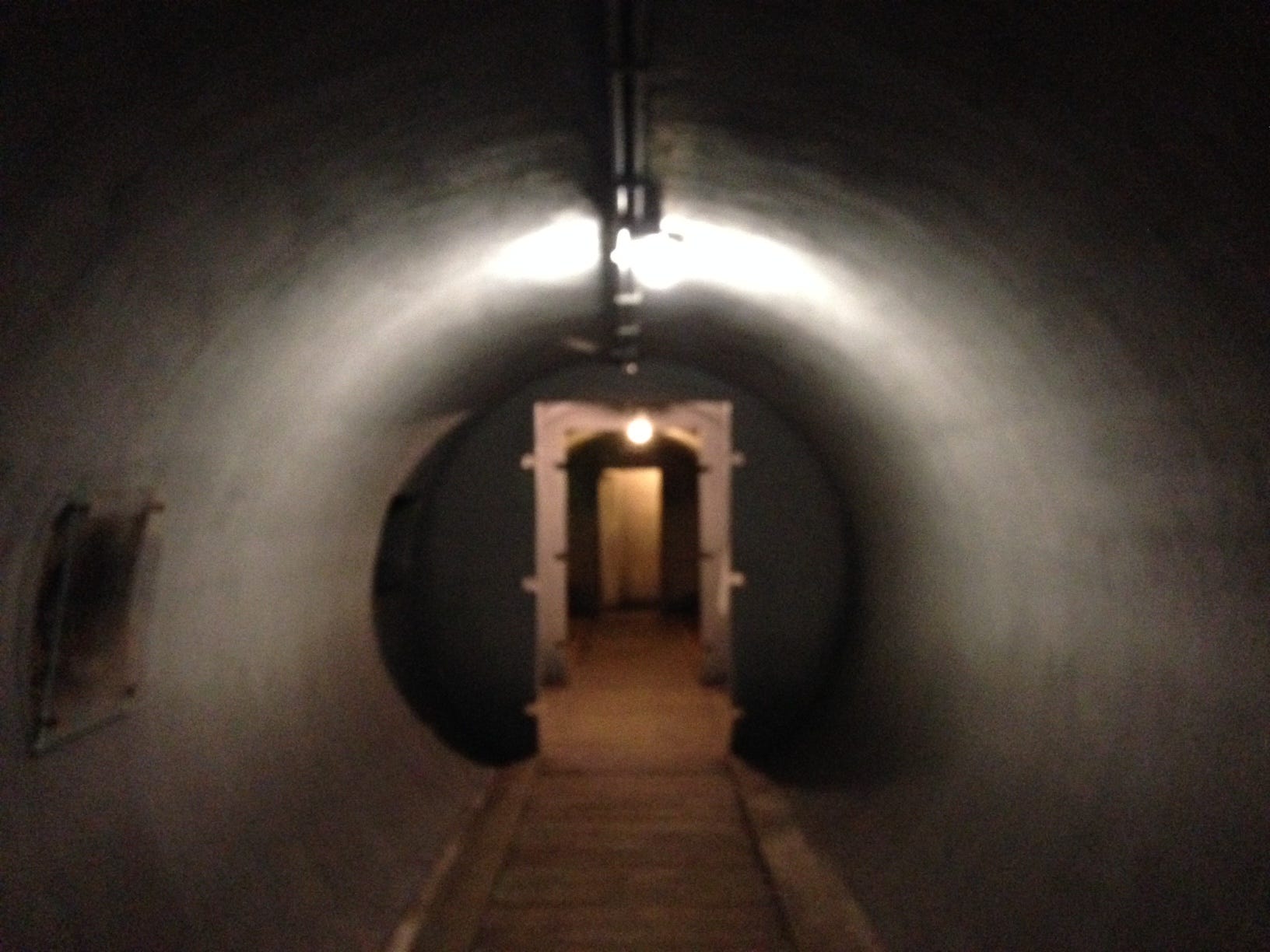
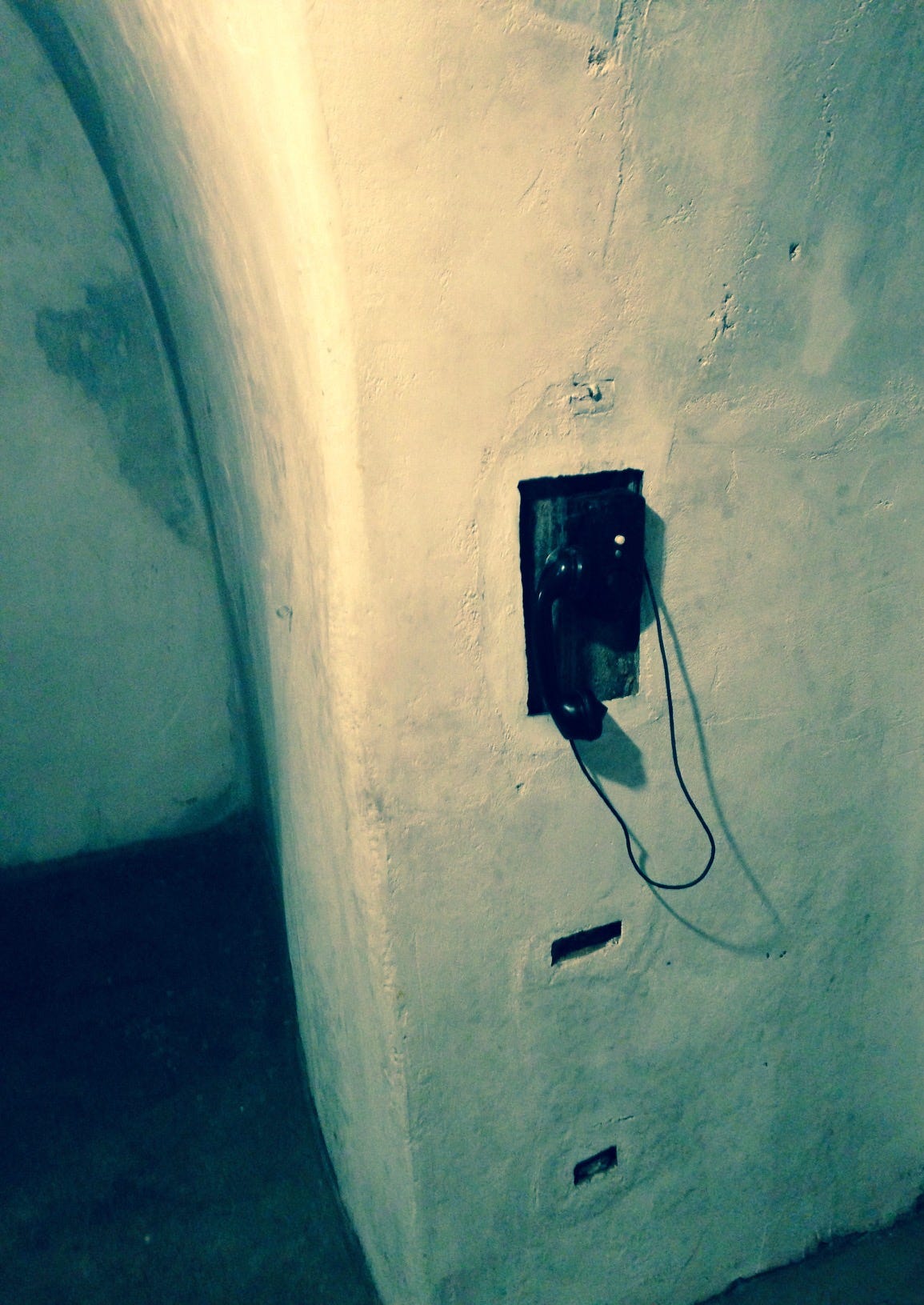
Accessible from the basement of the Casino Nobile via a long stairwell, the bunker was shaped as a cylinder with walls thickened by 13 feet of reinforced concrete. It had several rooms and two exits, the second of which you approached through an underground tunnel.
I visited the bunker a decade ago, at a time when Villa Torlonia had fallen into undeniable disrepair: the park overgrown; the buildings ill-kept. It’s since been restored by the Municipality of Rome and the bunker has become an “interactive experience” that includes an earth-shaking effect to let you feel what it would have been like during the Allied bombing raids.
Personally, I preferred it languishing in that uniquely Roman mode of benign neglect. It lent a sense of the ephemeral: one day the garden of the emperor, the next day a tangle of wildflowers and weeds.I don’t particularly need to simulate a bomb dropping on my head. The way things are going, we all may get our moment for that.
Anyway, Mussolini wasn’t even at the villa when the bombs arrived. After the Allied forces invaded Sicily in July of 1943, the Italian leader, depressed and beset with severe gastritis, met with Hitler at Lake Garda where the Führer berated him for Italy’s poor military performance. The meeting was cut short by the news that Rome was being bombed. As he returned to the capital on his personal plane, Mussolini could see the eastern parts of the city still burning.
The bunker wouldn’t have helped him much. In an instantly relatable twist for anyone who ever restored a house in Italy and invited friends to come for the first summer, Mussolini’s refuge was still a work in progress when Rome was attacked, having run into structural problems (a tunnel to a secret room used by Alessandro Torlonia had to be demolished) and wild cost overruns. A most Roman ending for the man who had promised to restore the Empire. Two days after the bombs fell, Mussolini was stripped of power and arrested. He never returned to Villa Torlonia.
Given the current political situation in Italy and the historical social and economic conflicts at the core of the Italian experience, it’s not so surprising that Liberation Day is a controversial holiday. Since the mid-1950’s, the neofascist parties and their derivatives have been advocating for the its abolition. The Fratelli d’Italia, the party of current Prime Minister Giorgia Meloni, approaches the day with the all the enthusiasm one brings to their yearly well-man visit with the doctor.
That’s too bad for many reasons. But most of all because Liberation Day is a reminder that ultimately there is no hiding from the jaws of history and the fundamental moral laws of punishment and redemption. Here is the man who once vowed that he and his supporters would carry “a dagger between our teeth, a bomb in our hands, and infinite scorn in our hearts ” captured along with his mistress in mid-flight on April 27, 1945. The two of them would be hung the next day by their heels, dangling outside a gas station in Milan’s Piazzale Loreto.
And here are the people in the streets and the public squares— their cities in ruins, their government in chaos, their country in the midst of civil war— who found not loss but liberation in the moment they rediscovered their collective power. Journalist Paolo Monelli compared it to “the scream of a mute who gets his voice back after twenty years.”
Moments like that are a thing to be remembered and celebrated. And not only in Italy.
No posts
Comments
Nothing yet. Say the first thing.
Sign in to join the conversation.