
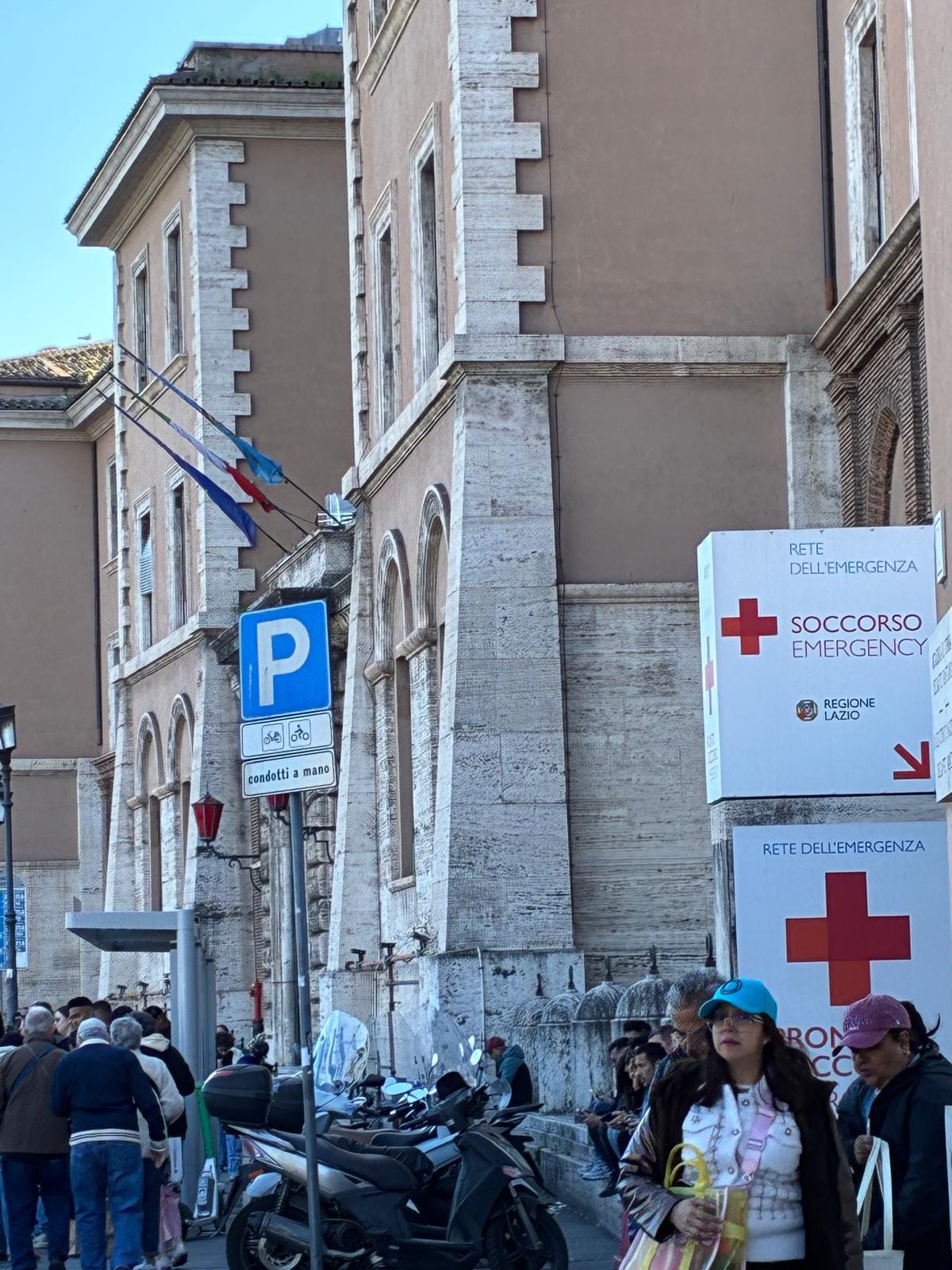
If there’s one place in any country no one wants to find themselves, it’s an emergency room. Doctor’s office runs a close second. Of course we’re all curious about how medical services work in other places. But most of us would prefer our information second-hand.
People thinking to move or buy property in Italy often ask C and me about Italy’s health care system: how does it work, who qualifies for the national plan, how does it compare to the US? Good grown-up questions. As someone who can barely make it past the first page of an insurance plan, I rarely have answers. Most of the time I just change the subject.
Until I can’t. The problem with health care is that when something happens, no other subject matters. That’s true in a dire emergency certainly. It’s also the case with more mundane problems. I returned to Rome last week from the US with a couple new English language books and a severely twisted ankle—not the most exciting ailment, but one that grabs your attention and holds it like a Vise-Grip. Especially when you exit a 10 hour flight with your lower leg looking like the stump of a tree.
And so last week I commenced my exploratory excursion into the Italian health care universe with a Pronto Soccorso (emergency room) visit to Ospedale Santo Spirito in Sassia near St. Peter’s Square. The hospital is the oldest in Europe, dating back to 727, when it was created to provide lodging and care to pilgrims coming to visit the tomb of St. Peter. A historically apt choice then for an American transplant nursing a travel wound.
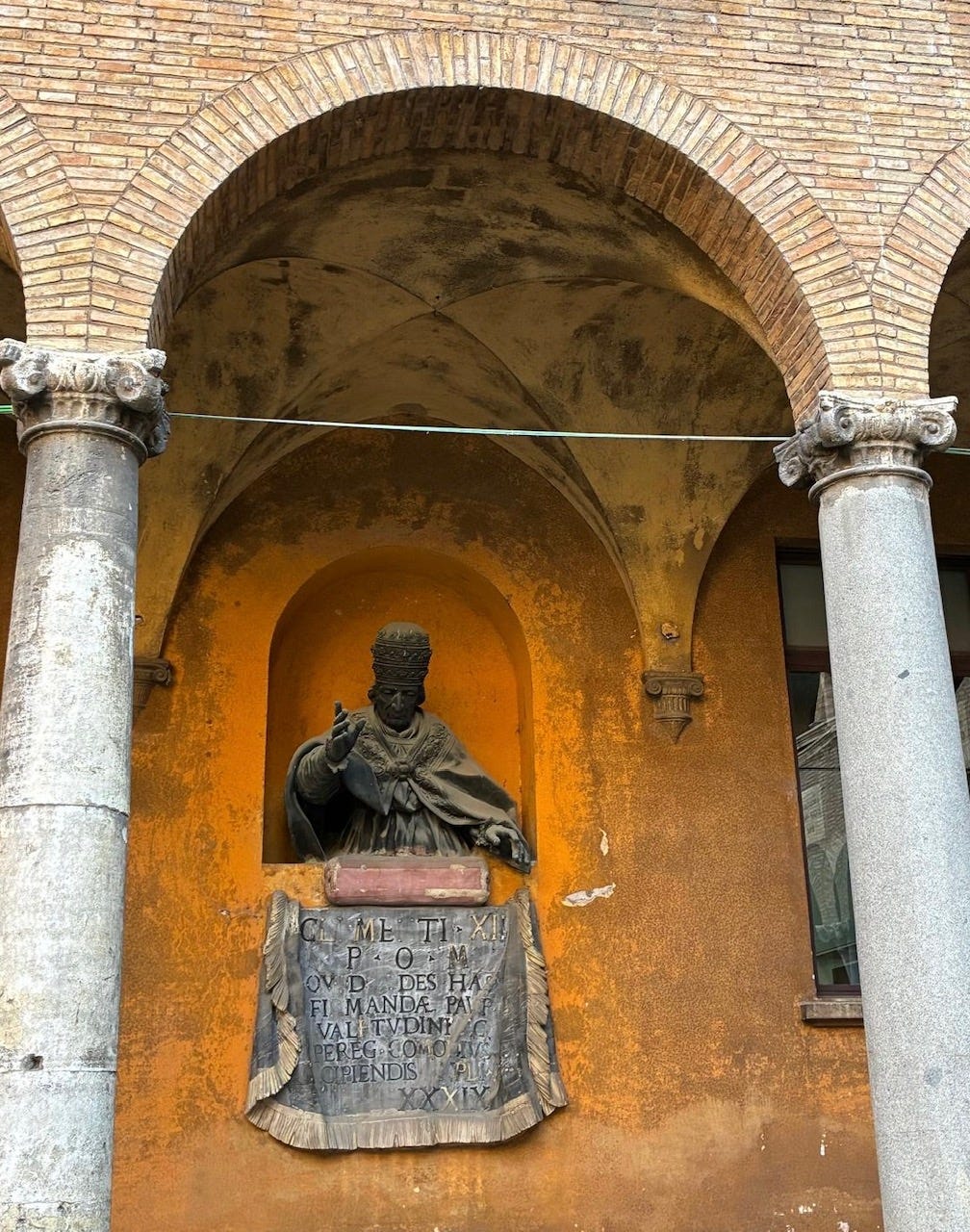
Here’s where it should be noted that this little snapshot of medical care in Italy is nothing more than anecdotal: one waddling wanderer’s search for succor and some x-rays in a very particular place and time. Italy’s medical industry is a parking garage with endless levels: there are old big city hospitals and new suburban ones; clinics and private doctors and in our little town in Le Marche, plenty of doctor’s offices that open one or two mornings a week, with the local dottore or dotteressa hosting the most popular coffee klatsch in the village. Any query about the quality of care in Italy would have to be qualified by where you live, what you need, and unfortunately, how you’re paying (or not paying).
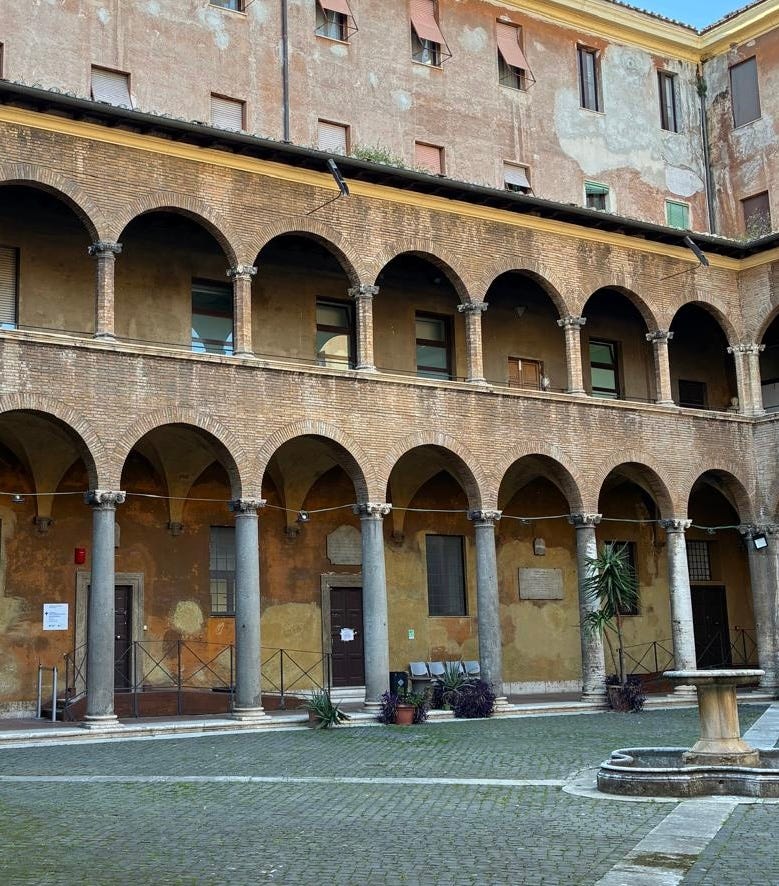
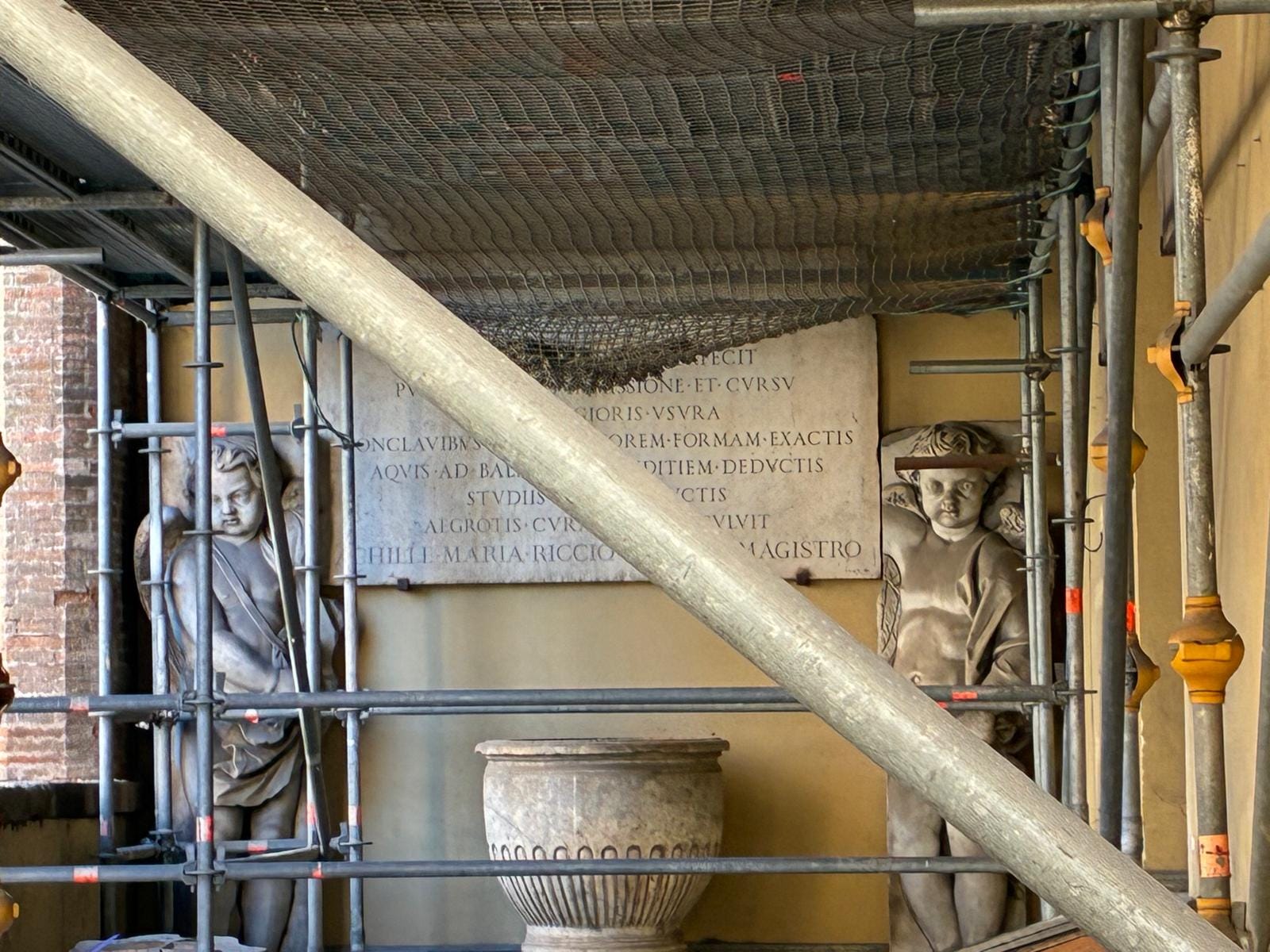
Despite its storied history, having officially been designated a “hospital” by Pope Innocent III in 1198, Ospedale Santo Spirito in Sassia is probably about ready for a redo. As you approach, there’s a lovely if quietly crumbling courtyard (nothing wears decay better than a Roman cortile) but the actual entrance to the emergency room is almost completely unmarked, suffocated by scaffolding and squashed into a corner.
Having had a nut allergy all my life, I’ve sampled emergency rooms in many cities across America, so I can confidently say that Santo Spirito in Sassia is not much different than what you’d experience in New York or Chicago on a busy Thursday night. Same mix of characters, same Beckett-like air of resignation, same seen it all staff fueled on espresso and gallows humor.
The only difference here is that you go it alone. Except when patients are elderly or children, anyone accompanying them is confined to a pallid little waiting pod outside of the hospital itself. Usually C quite enjoys watching the dozens of live dramas that play out nightly in these emergency rooms. This one was a big disappointment.
For my part, I made plenty of friends. Once the velvet rope of admittance was lifted, I was shuttled to a battery of tests and returned each time to a makeshift holding spot in a corridor with three or four other patients. One well-dressed woman spent most of the time napping on a stretcher, weighing in only on the shortcomings of the hospital itself. As is inevitable in Rome, a big guy with a booming voice was in the corner shouting into his phone. Another woman nervously tended her elderly, and considerably calmer, mother.
This being Italy, it didn’t take long to turn our island of misfit toys into a famiglia. Soon enough, the woman on the stretcher and the distraught daughter were exchanging cooking tips. The man on the never-ending call asked to borrow my phone charger (there’s a moral dilemma), and when I complied, pivoted to asking me how these sorts of things go in New York. Even the nursing staff sometimes stopped to chat. At one point, a group of assistants wheeling an empty stretcher impulsively decided to make quacking sounds all the way down the hall. Beckett transformed into Monty Python.
And then it all went a little Kafka on me. It was around 11pm when the grumpy, grey-haired physician looked up from my radiology reports to tell me I had a frattura and would need surgery. My attempts to gather more information were waved off: I would wait in the hall all night until a room was available. They would operate on the fracture in the morning.
Even my cohorts in the corridor looked nervous as I returned to my hitching post in a wheelchair, a brace on my leg, jeans slashed to the knee. “In bocca al lupo” (good luck)) we said weakly to one another as the band broke up and the others were sent on their way . “Auguri”.
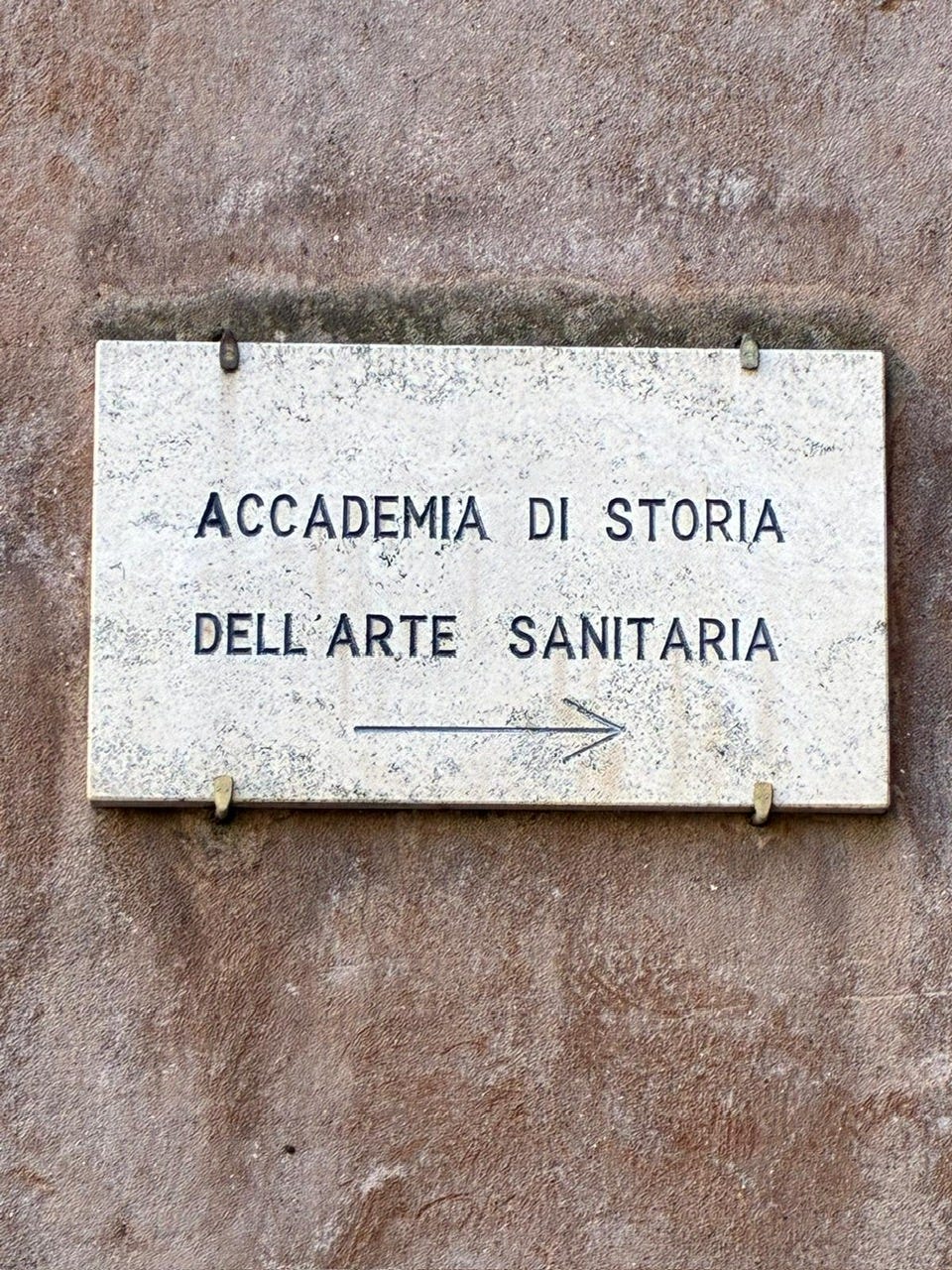
I did not wind up having surgery the next morning— opting to at least consult a specialist and see an x-ray first. Which meant that a few days later, I was able to experience the other end of the Italian health care spectrum, when at my surgeon’s instructions, I checked into ARSbio Medica, a private clinic nestled in the hills of Parioli.
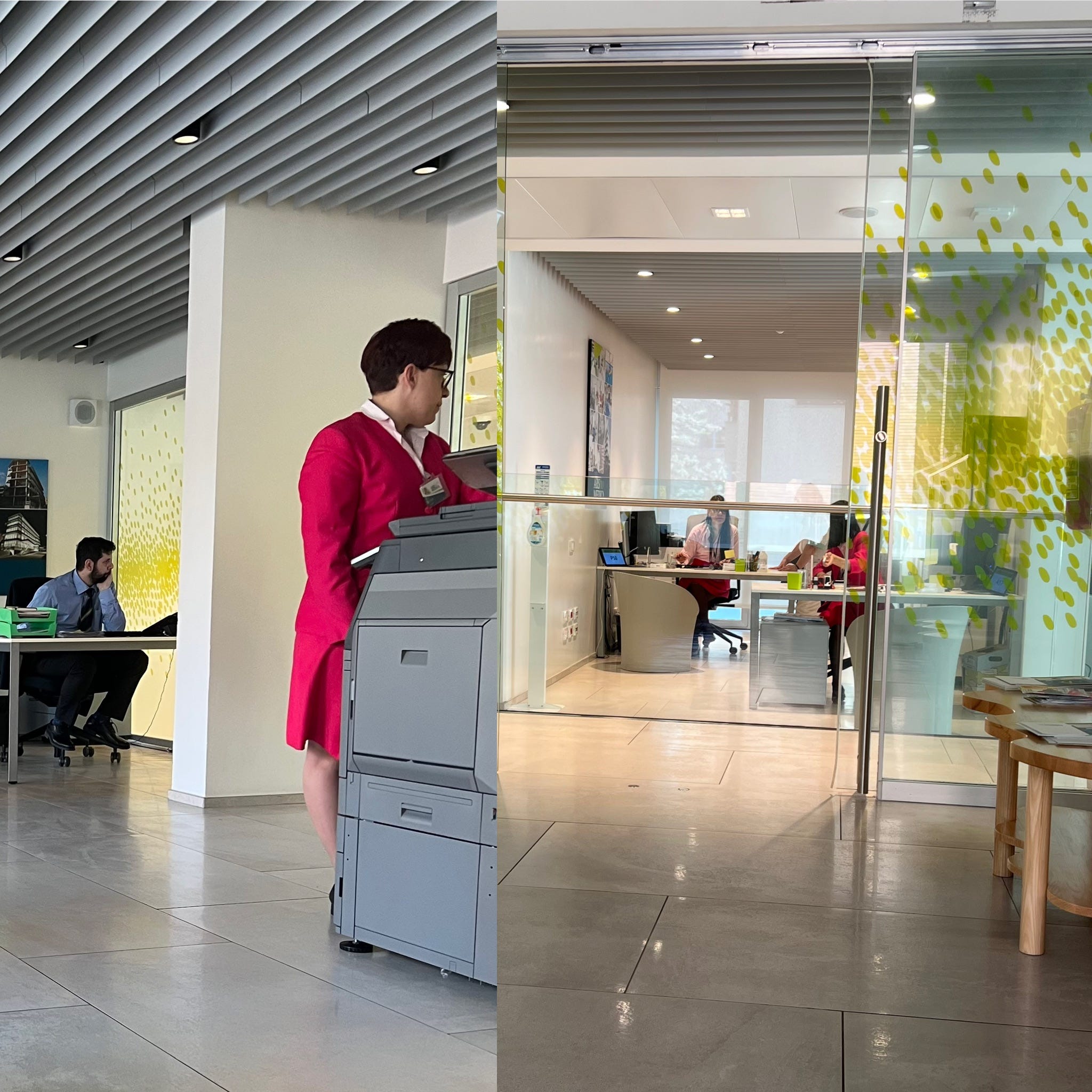
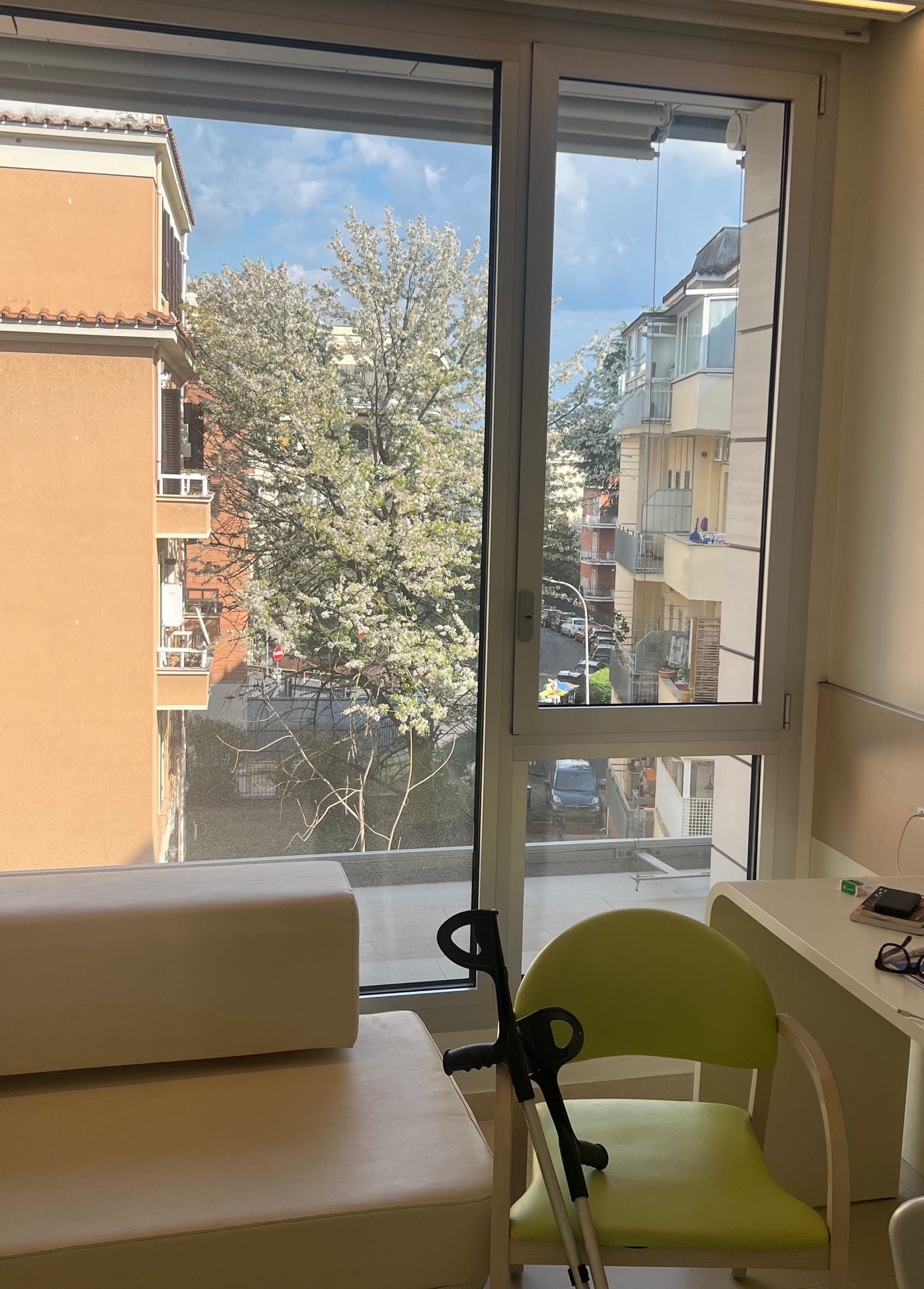
Here, the women on the administrative staff wore matching fuchsia skirt suits, the furniture was Italian mod, and even the green plastic inboxes on every desk were color-coordinated. Picture a sanitarium designed by Lilly Pulitzer. I was surprised to receive a private room, looking onto a street of blossoms and well-planted balconies. If you can’t find a Rome hotel room in the height of tourist season, it might be worth taking a rest cure at ARSbio.
So what did I get out of my brief foray into the world of Italian medicine? Well, certainly the main takeaway was a steel plate and set of pins in what was a pretty badly divided ankle. For that, I’m immensely grateful.
On a larger scale, I would conclude that health care in Italy is—in the most positive sense—very Italian. It can look as scruffy as a Roman trattoria or as lux as a Via dei Condotti boutique. Still in either case, the standard is highly professional and comparable to anywhere in the United States. The average life expectancy in Italy is one of the highest in the world. They must be doing something right.
What is most noticeable to an outsider is that the service here is genuinely personal: casual, a little irreverent, sometimes funny. Like the Italians themselves, it’s innately empathetic. One doctor texts me regularly just to check and see how I’m faring. Another came to the apartment, motorcycle helmet in hand, to deliver and set up my pulsed electromagnetic field machine. “You text me on WhatsApp if you have any questions— any hour, every day,” he explained. “This is medicine you know—not like buying a shirt in a shop. We are always open.”
If the American health care industry seems increasingly corporate, a sort of private equity backed assembly line built to please insurance companies more than patients, Italy manages to maintain the personal touch. In the end, that might be the most healing thing of all.
As I laid in bed in the hospital room after my surgery, listening in the dark to the electronic beeping and bleating that is the soundtrack for hospitals around the world, I thought about my friends from the emergency room at Santo Spirito. I realized I kind of missed them.
Medicine can work miracles of course. But it’s people the who cure you.
No posts
Comments
Nothing yet. Say the first thing.
Sign in to join the conversation.