
Every once in a while, one of my kids will reference a new trend that sounds like a few random words mashed together. The latest one: NeeDoh hunting.
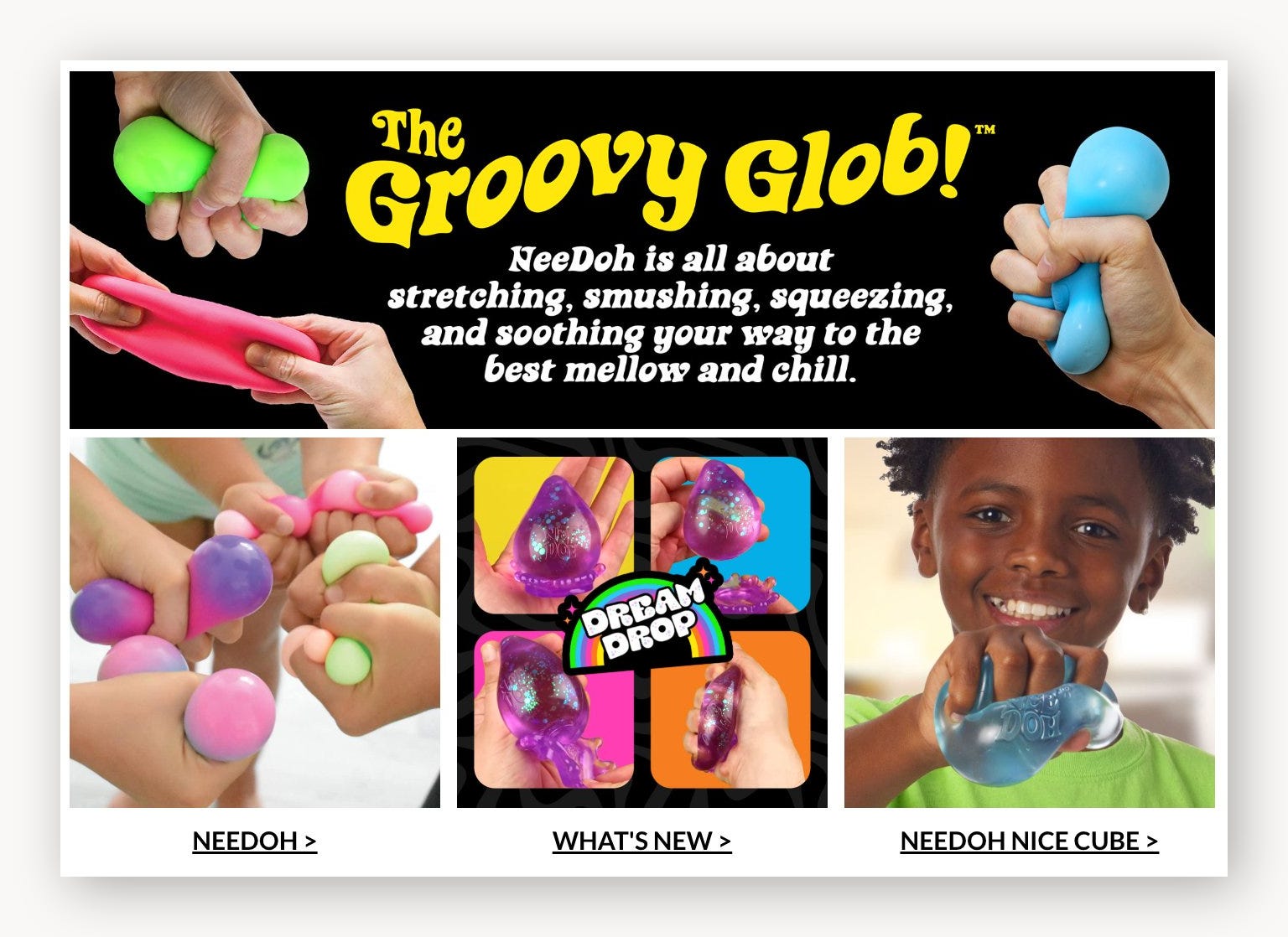
A NeeDoh is basically a stress ball that comes in different shapes, or as it’s described on the NeeDoh website, it’s a “gratifying super soft, super stretchy dough filled groovy glob that started a squish sensation.”
It’s the latest fad to sweep retailers and social media feeds. Instagram and TikTok are filled with NeeDoh hunts and hauls. Stores are selling out of them. The company that sells them has had to pause online orders because of the crushing demand.
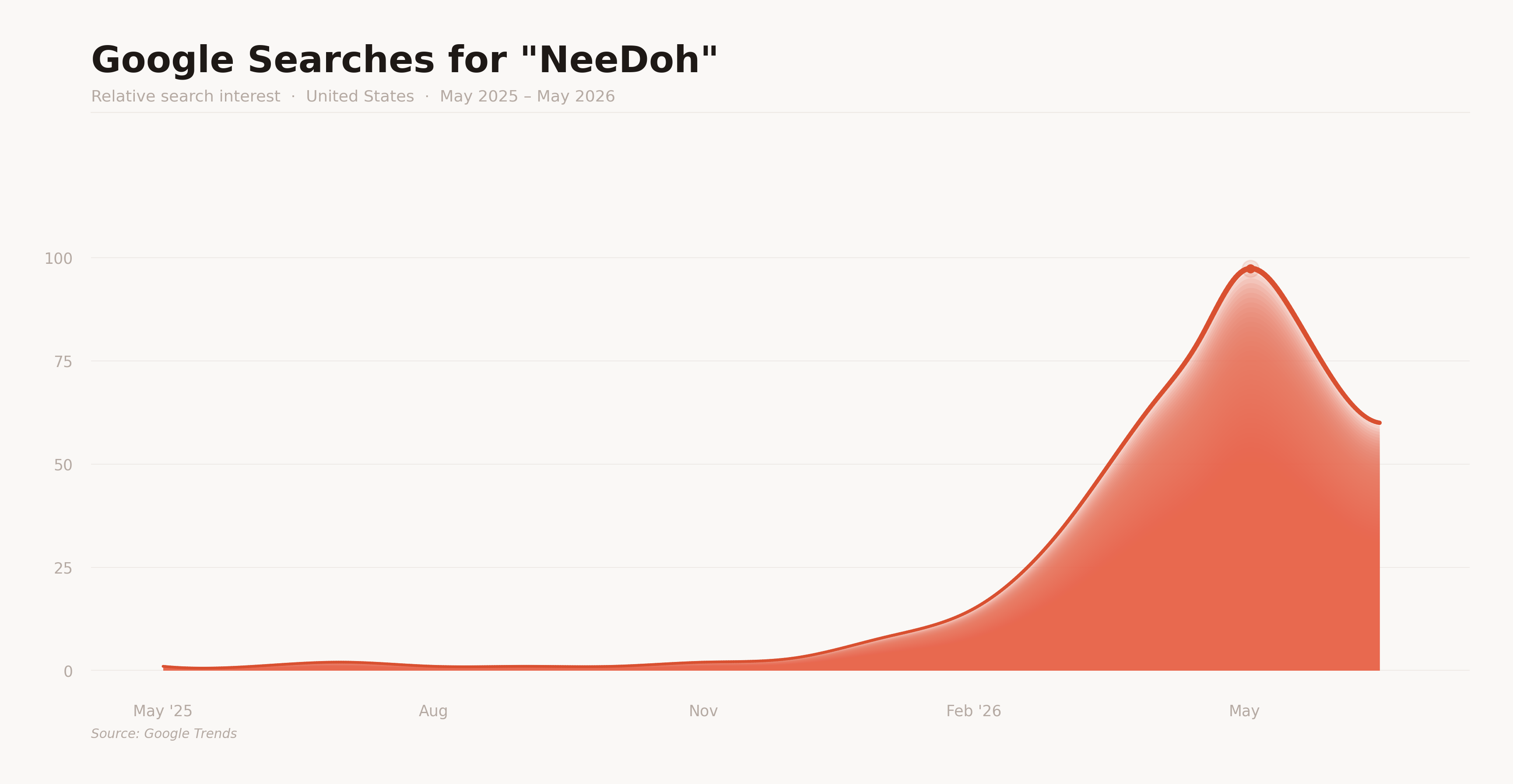
We live in an age of new fads that cycle in and out, winning our time and attention. And our money. A single NeeDoh can cost anywhere between $5 and $15, or more if you’re buying them on eBay, where some are listed for $50 to $100 or more.
Which begs the question: Why do people spend so much time, attention, and money on fads like this one?
In my book, Saying No to New—available for preorder!—I explain some of the science behind why we become hooked on new things. There’s a special recipe behind viral fads. And NeeDohs seem to have combined the right ingredients.
Products that appear novel will win our attention because our brains are hardwired to ignore the familiar and pay attention to the unusual. We don’t want the same old, same old. We want something that’s different.
NeeDohs check this box.
They come in vivid colors different from what we’re used to seeing in the world. The texture of a NeeDoh—the squishy sensation—runs counter to what we expect from an object we hold in our hands.
A wide variety of options with regular new editions means the novelty keeps on flowing, keeping customers’ brains alert to something different.

Novelty is a key ingredient. But a product becomes even more interesting to us when it has a dash of familiarity.
Research has shown that humans prefer a balance. We don’t want something too familiar (boring). But we also don’t want something too novel (too complex). In one study, participants looked at a list of words that ranged from “very unfamiliar to very familiar.” The volunteers preferred the words that were around the middle of the spectrum.
But a novel item that is packaged in familiar shapes? The novelty is interesting. The familiarity is comfortable. It just works.
This is another reason why people are drawn to fads like NeeDohs. NeeDohs are strange objects. But they come in familiar forms. There are NeeDohs that look like pizza and cake.
This balance of new and familiar is a recipe for a hit viral product.
With a new fad designed with the right levels of novel and familiar, the third ingredient that pulls people in is FOMO, or the Fear Of Missing Out.
Research tells us that we like new things that our friends like. It’s a psychological phenomenon called social proof. “Social psychologists have long known that human beings often make choices about what to think, and what to do, based on the thoughts and actions of others,” said an article about the principles of persuasion.
In today’s social media-driven world, social proof is a powerful ingredient underpinning new fads. People watch videos of friends and influencers hunting for NeeDohs, so they do the same.
Then when something is in short supply, scarcity kicks in. With scarcity, our wanting for something increases when it is running out. As one study found, “cookies in scarce supply were rated as more desirable than cookies in abundant supply.”

Thanks for reading.
Eric
No posts
Comments
Nothing yet. Say the first thing.
Sign in to join the conversation.