
I have obsessive-compulsive disorder, which is, contrary to our depictions in media, mostly useless and distressing. The most accurate depiction we’ve got so far in popular fictional media is The Aviator, because it shows how OCD becomes a life-ruining waste of time rather than a superpower bestowed only upon the most worthy of bureaucrats, but it still doesn’t fully depict what can be most acutely painful for OCD sufferers: the obsessions themselves, i.e. intrusive thoughts. Specifically, the profoundly disturbing nature of them.
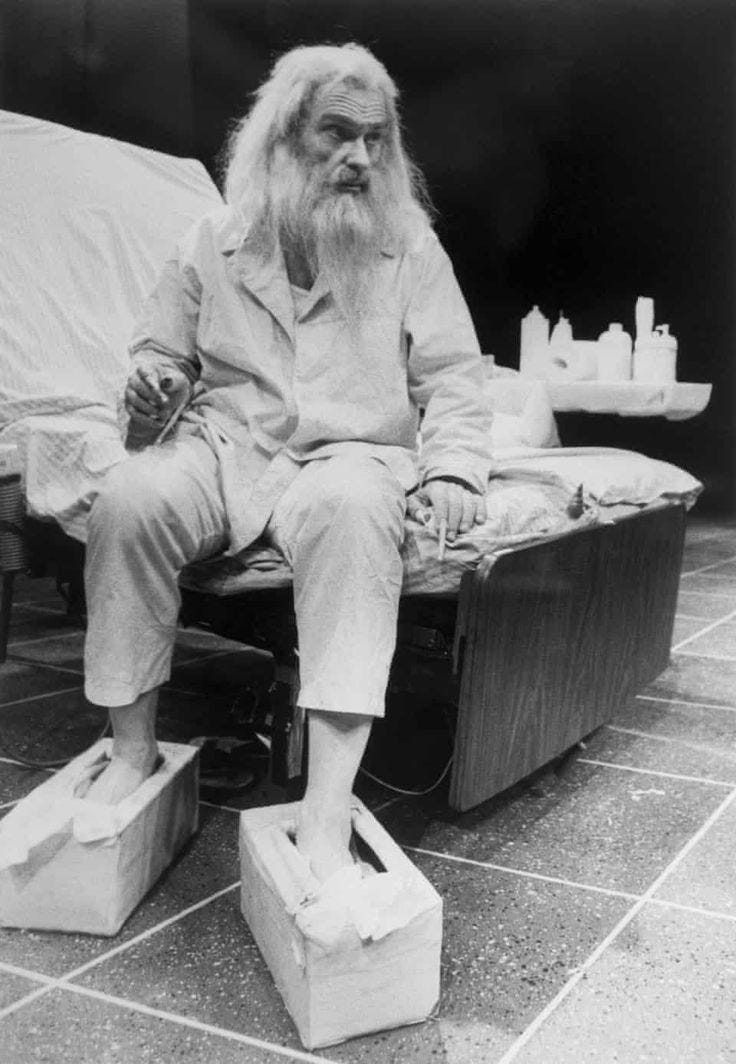
Essentially, when one with OCD has an intrusive thought, it’s the brain’s attempt to convince you that your worst fear is coming to life. The Aviator depicts an OCD obsession we are all probably familiar with: germs, cleanliness, getting sick, and contamination, and the irony of how, in Hughes’ eternal quest to avoid contaminating his mansion, he relegates himself to a single room filled with tape, tissues, and bottles of urine.
But many common intrusive thoughts are so disturbing that we with OCD never talk about them, even to our therapists, psychiatrists, and other practitioners—and definitely not to our family and friends. We find our brains forcing us to ask ourselves questions like…
“I passed a dead bat on the way home today. Could it have had rabies? Could the rabies have gotten in my mouth? My arm muscle just twitched a bit. Now I have rabies and ALS. I’ve just forgotten my godson’s middle name. I have rabies, ALS, and Alzheimer’s disease.”
“Am I gay? Am I straight?” (The intrusive thought would depend on if you’re, respectively, straight or gay.)
“Am I racist? I just walked past a person of a different race and the first thing I thought was a slur. I must be racist. My brain just said a slur when I saw a queer/trans person. I must be a homophobe or transphobe.” (Bizarrely, in OCD support groups, I have heard from people who were themselves non-cishet and reported having this obsession. This is how asinine the illness is, and why intrusive thoughts represent our deepest fears, not what we truly are.)
“What if I’m secretly a rapist or a pedophile? Did I just stare at that child too long? Did I look at that kid in a sexual manner? Am I staring too long at women’s chests?”
“Am I going to murder my wife? My kids? My parents, siblings, nieces, nephews? Am I going to commit a mass shooting?”
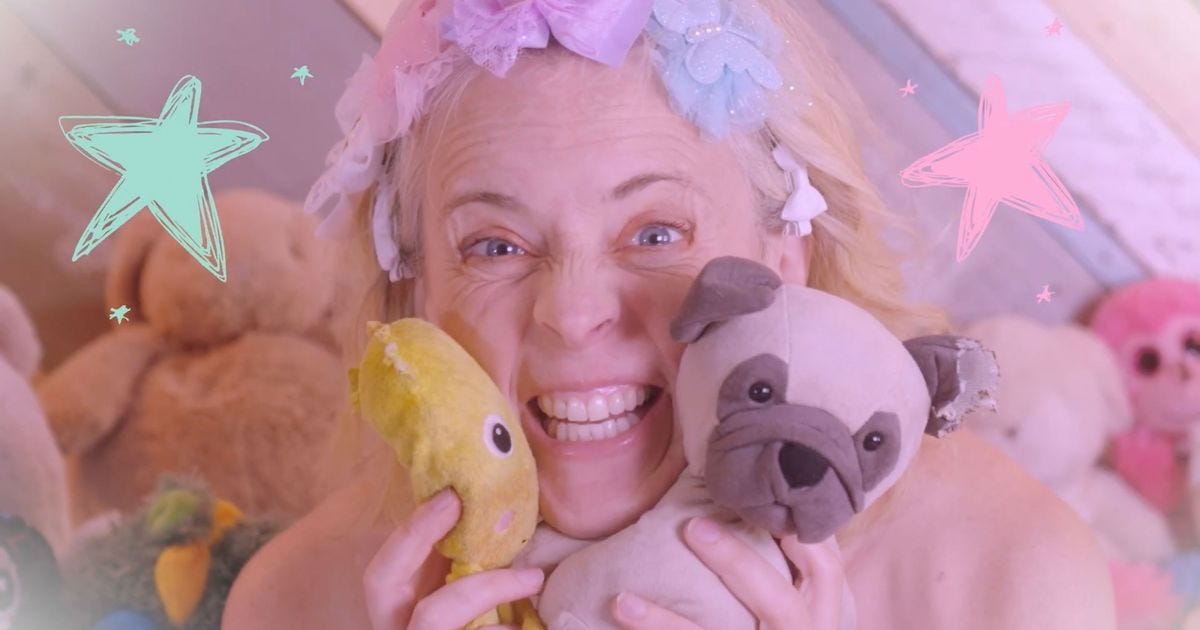
At my lowest points with my OCD, my brain has me thinking all of those thoughts and then some. My onset was age three, and I have, at times, had a moderate case of the condition that has kept me from properly carrying out activities of daily living. This has not been helped by the fact that I have not received proper treatment for it except for the past year. Unfortunately, despite knowing for over a decade that I very likely had OCD, I sought counsel from a series of therapists who disagreed and treated me accordingly, leaving my condition untreated for years. Proper treatment for OCD is a form of therapy called exposure-response prevention, or ERP; basically, if you are afraid of The Thing, you expose yourself to a friendly version of The Thing, sorta like a mental vaccination about your Deepest, Darkest Fear. Let’s say, for example, you’re afraid you’ll stab someone with a cooking knife and so you only keep butter knives in the house, your ERP assignment might be to purchase a proper cooking knife and prepare a meal with it.
Fortunately, I’m now in a quite good position with my mental health these days. I’ve been on a great medication regimen for years and have been working with a skillful, affirming ERP therapist.
And then I wasn’t.
It started when I got into the smartphone decentering movement. Looking for advice on how to turn back the hands of time and return to an era where the letter “S” requires four clicks of the “7” button—can you believe this isn’t Gen Z’s native tongue?—I turned to YouTube creators who were doing the same. At first, they were mostly other retro tech dorks and country kids; as I sit at the intersection of both, this was fine by me. But, of course, YouTube’s algorithm has a way of going further and further, suggesting you more and more content to busy yourself with. Suddenly, after a series of scarier and scarier videos on the state of tech, I found myself watching a video on the hypothetical AI 2027 scenario. (Major content warning and spoiler alert: we die.)
Not only did I start freaking out, I started relapsing in my intrusive thoughts. And the nature of these thoughts were so disturbing that I began to fear, for everyone’s safety, that I should not be around people anymore—especially not my loved ones.
After patiently listening to my fears and algorithm-induced death spiral into the End of Days, as I awaited her verdict that she would declare me an unfit partner and parent, my therapist made a helpful but pithy suggestion:
“How do we feel about no more news anymore?”
“Oh!” I explained, “I already don’t do that. Like, I don’t watch shortform and I’m not on socials. My news is only coming from field experts and NPR.”
“No,” she clarified, “I mean, how do you feel about… no more news, period?”
Oh.
Like OCD, my interest in politics and news has been with me as long as I can remember. I was eight years old when “Minority” by Green Day came out, and nine the next year for 9/11. More underground political punk music soon followed: Aus-Rotten, Crass, Antischism, Appalachian Terror Unit. I’d stay up with my biological father watching Stewart, Colbert, and Keith Olbermann’s Worst Person In the World, but likewise enjoying seemingly smarter discourse from Democracy Now! and other PBS shows.
As I got older, I ran with homeschooled/unschooled/private schooled kids from the local punk scene who knew who Kropotkin and Emma Goldman and Audre Lorde were. I decided, if I did not also know who they were, then I must be a stupid idiot—so I’d better read the stuff they read, too. I protested the Wars in Iraq and Afghanistan. Hell, I would even go up to Tea Partiers and try to debate them in the streets.
And I became quite well-read in the histories of my own people; I am Ashkenazi Jewish and Tagalog Filipino. The Holocaust, the Japanese invasion of the islands, the Philippine-American War, and the US involvement in all of these conflicts became things as easy for me to talk about and draw connections with current events as the weather or what the Packers were up to.
I’m not saying any of this to flex. I’m saying, I have always really been into the news and politics. It’s always been A Thing for me. This became especially true as I got older, acutely sensing that if I, unlike my new punk pals in Madison’s punk scene, wasn’t hip to all the theory and philosophy around political leftism, then I may as well have been A Sheeple like people who shopped at the mall and watched Hulu like a good little American.
So, hearing my therapist, whose advice I have always trusted because she’s good at her job and it works, suggest to me that maybe my news habit was turning into a problem for me, it felt like what I imagine it feels like for an eating disorder patient to hear they must gain weight to survive. To be ignorant, to not stay current, to not wear the smartest pants about the news, made me ashamed to even think about.
“Okay, yeah,” I lied. “I’ll try that.”
I didn’t bring up my concerns with my therapist, because I trusted her completely and figured she had a good head on her shoulders about this stuff. Instead, I went to one of the few people in the world I trust more to give me good advice: my best friend back home in Wisconsin. To assuage my guilt and my fears that news avoidance would condemn me to a lifetime of Sheepledom, she reminded me that we cannot show up for our communities when we are making ourselves “sick from the media,” and it’s things like that which are why I am so blessed to have her in my life.
With the blessings and empowerment by these two women I look up to so much, I started setting boundaries with friends and family about news—mostly asking them to only let me know if something literally nuclear has happened—and, within a week, my symptoms were improving.
Since then, things have mostly gotten… well, you know. We all know.
Avoiding the news is a full-time job. I only use Meta’s socials for sales and communications at this point, thanks to an app that literally holds my browser hostage if I spend too much time on them, and I started vigilantly clicking “Not Interested” on YouTube’s suggested news videos. Instead, I deliberately flooded my algorithm with a series of knitting and crocheting videos. (Get ready for some awesome listicles about what I’ve been working on this winter.)
But, try as one might to avoid the news, it’s damn near impossible in this day and age. You can’t really use Substack and avoid news entirely. I still surf Reddit to chat with folks, and I do use Facebook and Instagram for brief periods when I need to. Avoiding socials entirely in 2026 means avoiding a social life entirely. Hell, even on Neocities and other indie web sites, where I try to spend more time and cultivate those mid-00s-ish relationships we had via forums and chatrooms two decades ago, it’s not like we can avoid news entirely. These platforms require us to have frank conversations about AI and social justice. If we didn’t have those conversations, these sites would cease to exist in their current states, because they are a direct response to the enshittification and monopolization of the web.
My point is that we cannot avoid knowing what’s going on if we want to use our resources for good.
But we can stop making ourselves sick with it.
I think a big reason we compulsively consume news—take it from someone who has wasted a lot of life on compulsions—is because it gives us the false sense of accomplishment. The problems we’re collectively facing in this life are way too big for any of us individually to navigate, much less meaningfully do anything about, and we are kept intentionally separated into nuclear families in order to keep us that way. I don’t blame myself for being a recovering news junkie any more than I blame anyone for still consuming tons and tons of news now.
In the meantime, if you are trying to do more around your community and cultivate that sense of accomplishment without sickening yourself with news, here are some tips that, admittedly, feel kinda pathetic and hastily thrown together during strife this severe, but here we are.
For those new to the concept of mutual aid, they are essentially community action networks meant to deliver resources and service to those most in need. Using existing social media tools, these are pretty easy to find in your local community. For example, on Facebook, there are many mutual aid groups in my community. During the food stamp crisis of November 2025, shelters, aid organizations, and individuals, families, and caregivers were able to solicit food donations from other members of the community. There were even Amazon wishlists established so that Prime members could simply have goods delivered right to people’s doors.
Of course, there is more that can be done in one’s community than offer material resources, as someone who, not that long ago, would’ve been on the “I’m totally fucked” end of the food stamp crisis, myself. Communities are never without need, and human beings are never without skills. Your local library, educational system, hospital system, or neighborhood council may be able to help guide you where your skills will be most helpful.
It’s also important to not compulsively overdo community service. Simply showing up in service to our family and friends is always enough.
A few months ago, I was in Las Vegas on a business trip. It was during the government shutdown; normally I am nervous to fly, but, with the shutdown happening, I was totally terrified.
On my way back to the Midwest, I got into an Uber at about six o’clock in the morning for my flight four hours later, expecting both long TSA lines and my own sweating and shaking. My Uber driver asked me, “Why are you going to the airport so early?”
“I just wanted to make sure I had plenty of time to get through TSA,” I replied, “what with the shutdown and all.”
“What shutdown?” He asked. “Is the airport shut down?”
I blinked a couple times. “No, like, the government shutdown.”
“What is that? What’s the government shutdown?”
By this point, the shutdown was very quickly becoming the longest shutdown in American history. I explained, “The federal government has been shut down for a while, so the TSA agents haven’t been getting paid and neither have the air traffic controllers, but they still have to show up for work.”
“Oh. Yeah, no, I haven’t heard about anything like that happening.”
Did I consider him an ignorant sheeple complicit in the downfall of society? Absolutely not. I considered him a hardworking guy I couldn’t have been more envious of at that moment if I’d tried. I had never been so jealous of anyone in my entire life. And y’know what? Despite the fact that he had no idea what the government shutdown was or that it had been shut down in the first place, I still flew home safely that night. On the flip side, despite the fact that I’d been eating, breathing, and sleeping shutdown for weeks, I still flew home safely that night.
The unfortunate reality is that, in the US, there are 300 million of us and most of us do not have a whole lot of political power. The American billionaire population now holds more wealth than half our entire population. This year, one billionaire in particular officially became wealthier than the entire country my family is from. Years of study did jack shit to stop it happening.
I got home and realized I needed to make changes. I quit shortform videos and started to spend more time on the indie web. I quit news. I started up this Substack.
And the world continues to turn. My blood pressure and heart rate rising do nothing to stop that happening.
More than anything, I just wanted to remind everyone else who struggles with “news withdrawal guilt” that avoiding difficult or upsetting content doesn’t make you weak, ignorant, or complicit in what’s been happening to the world around us. You need to protect yourself and your self deserves to be protected.
For now, all we have is each other, and all we can do is for each other.
No posts
Comments
Nothing yet. Say the first thing.
Sign in to join the conversation.