
All I’ve been craving this summer is big, healthy, & vibrant salads packed with fruits, veggies, beans, nuts, seeds, & herbs! In my opinion, there’s nothing better. And apparently I’m not the only one because every time I bring one of my salads to a gathering, it’s the first thing to disappear! Even the “I don’t eat salads” people end up asking for the recipe;)
What they don’t know is that I’m not just throwing random ingredients in a bowl; I thoughtfully create my recipes to be delicious, healing, & nourishing for your body with tons of health benefits. This salad is filled with some of my favorite antioxidant-rich & anti-inflammatory ingredients that help support your body’s needs from the inside out. Antioxidants are natural compounds found in vibrant plant foods that help protect your cells from everyday damage. They work to counteract free radicals in your body (molecules that can cause stress & damage your cells) and act like tiny protectors that help keep your body healthy & thriving!
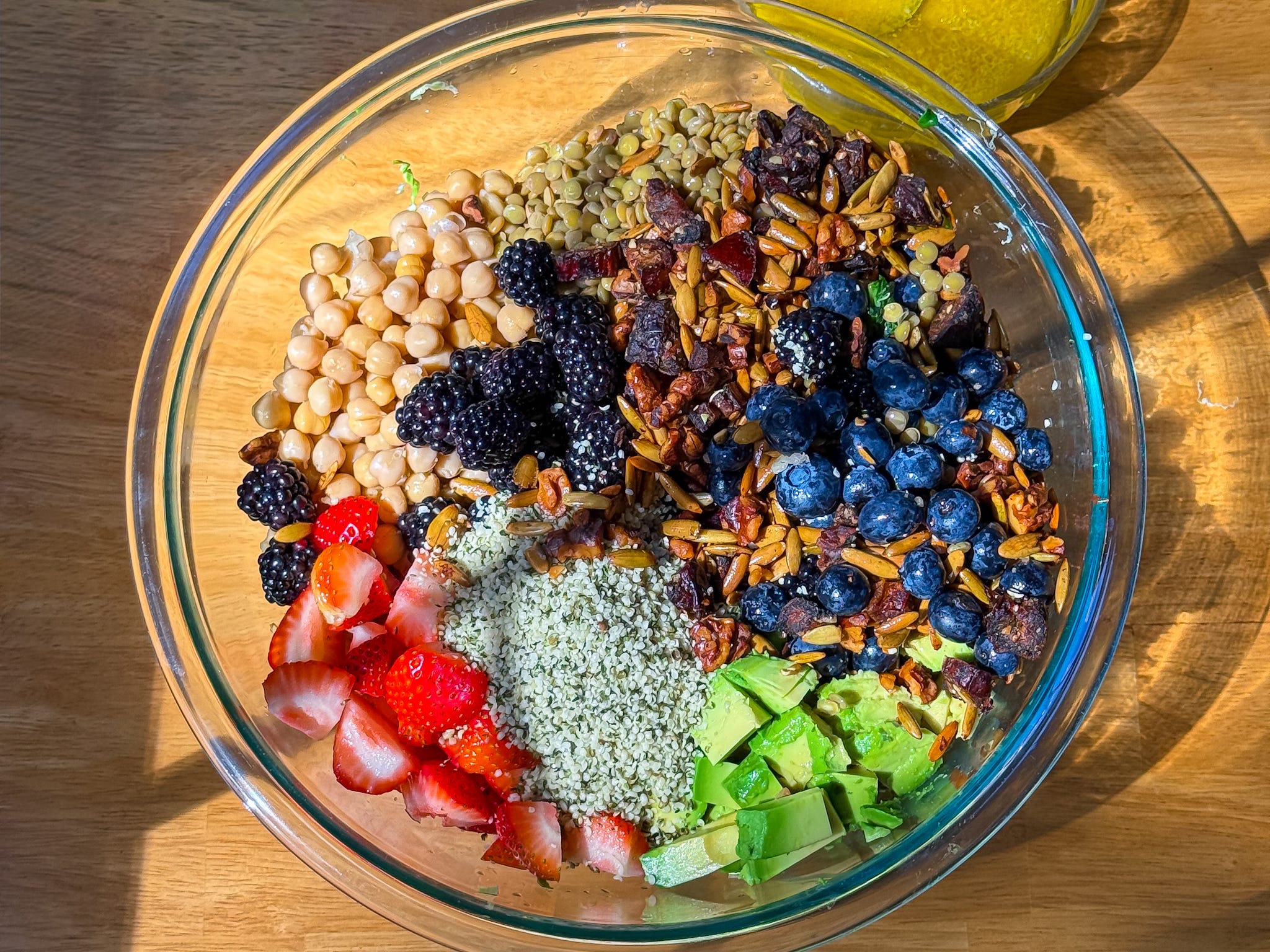
So let me introduce you to my Rainbow Antioxidant-Rich salad! Filled with dark greens, berries, avocado, fiber & protein-rich legumes, fresh basil and mint, Medjool dates, walnuts, pumpkin seeds, & hemp seeds for some omega-3s. All tossed in a lemon vinaigrette!
Serves: 4
Total Time: 30 Minutes
Recipe Difficulty: Easy
Cooking Method: Baking
Main Ingredients: Kale, arugula, blueberries, strawberries, blackberries, avocado, lentils, chickpeas, dates, EVOO
Equipment Needed: Oven or toaster oven
Every recipe I share is built with intention, so whether you’re eating to manage a condition, hit a protein goal, or simply feel your best, I always break down how this recipe may support your goals and why to help you make choices that work for your body!
A note before we dive in: I’m a recipe creator and wellness advocate, not a registered dietitian or physician. The category designations below, like “hormone-friendly” or “PCOS-friendly” are based on general nutritional research and are meant to help you navigate recipes more easily. They are not medical advice. Always check with your healthcare provider before making dietary changes, especially if you’re managing a diagnosed condition. Full disclaimer here.
Gluten-Free: This recipe is naturally gluten-free, made with fresh produce, legumes, nuts, & seeds. Make sure the Dijon mustard brand you’re using is certified gluten-free; some use thickeners derived from wheat.
Dairy-Free: This recipe is completely dairy-free!
Refined Sugar-Free: The sweetness in this salad comes from the fresh fruit & dates! There’s no added sugar present.
Anti-Inflammatory: Hemp seeds, walnuts & pumpkin seeds are rich in omega-3s, while the berries & greens contain polyphenols. The lemon vinaigrette dressing is free of seed oils & refined sugar, and uses olive oil (which contains anti-inflammatory compounds).
High-Protein: The chickpeas, lentils, & hemp seeds bring the protein to about 27 g per serving. A recipe is defined as high-protein if it exceeds 20 grams per serving & this one is well above that number!
High-Fiber: This recipe has about 21 grams of fiber per serving from the legumes, berries, and greens.
Endometriosis-Friendly: The anti-inflammatory omega-3s & high fiber content support estrogen excretion, & are aligned with the dietary approaches women with endometriosis find beneficial.
Mediterranean Diet: Olive oil, legumes, nuts, and fresh produce are the core building blocks of a Mediterranean Diet!
Gut-Supportive: This recipe is diverse in fiber. The legumes & cruciferous veggies feed the short-chain-fatty-acid-producing bacteria in your gut, which is a well-established prebiotic mechanism.
Hormone-Friendly: Cruciferous vegetables are filled with compounds linked to healthy estrogen metabolism.
Cycle Syncing:
Follicular Phase: The pumpkin seeds in this recipe support the seed-cycling approach, which is recommended during the first half of a woman’s menstrual cycle. Combined with fresh produce, this salad fits well with the light, nutrient-dense foods suggested during the follicular phase.
Ovulatory Phase: Fruits, greens, herbs, & healthy fats provide the antioxidants & nutrients recommended during the ovulatory phase!
Perimenopause Support: This recipe is rich in magnesium, zinc, & omega-3s, and contains 27g of protein per serving. These factors align with commonly recommended dietary approaches for women navigating perimenopause.
Autoimmune-Supportive: This recipe is whole-food focused, anti-inflammatory, & nutrient-rich, which aligns well with general autoimmune-supportive eating.
Rheumatoid Arthritis-Friendly: Walnuts, hemp, & pumpkin seeds are rich in omega-3s, which are associated with supporting joint inflammation. Nightshades are a common trigger for those navigating rheumatoid arthritis, and this recipe is nightshade-free.
Vegan: This recipe is completely plant-based.
Vegetarian: This recipe is also completely vegetarian.
Soy-Free: There’s no soy in this recipe. Check your Dijon mustard to be sure it doesn’t use soy lecithin as a stabilizer.
Grain-Free: This recipe is free of all grains! Just legumes, fresh produce, nuts & seeds.
Egg-Free: No eggs in the dish.
Nightshade-Free: This recipe is free of tomatoes, peppers, potatoes, and eggplant, making it completely nightshade-free!
Blood Sugar Friendly: The fiber from greens, beans, lentils, & seeds, paired with the protein & healthy fats in this recipe, helps curb the carb load. The Medjool dates do add a higher amount of natural sugars, which brings the overall carb content in this recipe higher. For an even more blood-sugar-friendly recipe, I suggest you use 1-2 dates instead of 3.
PCOS-Friendly: This salad is full of high-fiber & anti-inflammatory ingredients that align with a PCOS-friendly diet. With that being said, Medjool dates contain higher amounts of natural sugar, which may not align with the insulin-sensitivity focus common in PCOS dietary approaches. Use 1-2 dates instead of 3 to make this recipe more aligned.
Cortisol-Friendly: This recipe contains magnesium & vitamin C, which support mechanisms linked to cortisol balance; however, the carb load may cause blood sugar swings, which can trigger cortisol. Again, use 1-2 dates instead of 3.
Thyroid-Supportive: This recipe is filled with nutrient-dense ingredients that align with a thyroid-supportive diet. However, it does have a higher volume of raw cruciferous vegetables (kale and Brussels sprouts). Cruciferous veggies contain compounds called goitrogens, which some individuals with thyroid concerns monitor. If you are mindful of goitrogen consumption, lightly steam the kale and Brussels sprouts.
Hashimoto’s-Friendly: Lightly steaming the kale & Brussels sprouts makes this recipe a better fit for a Hashimoto’s-friendly diet!
Comments
Nothing yet. Say the first thing.
Sign in to join the conversation.