
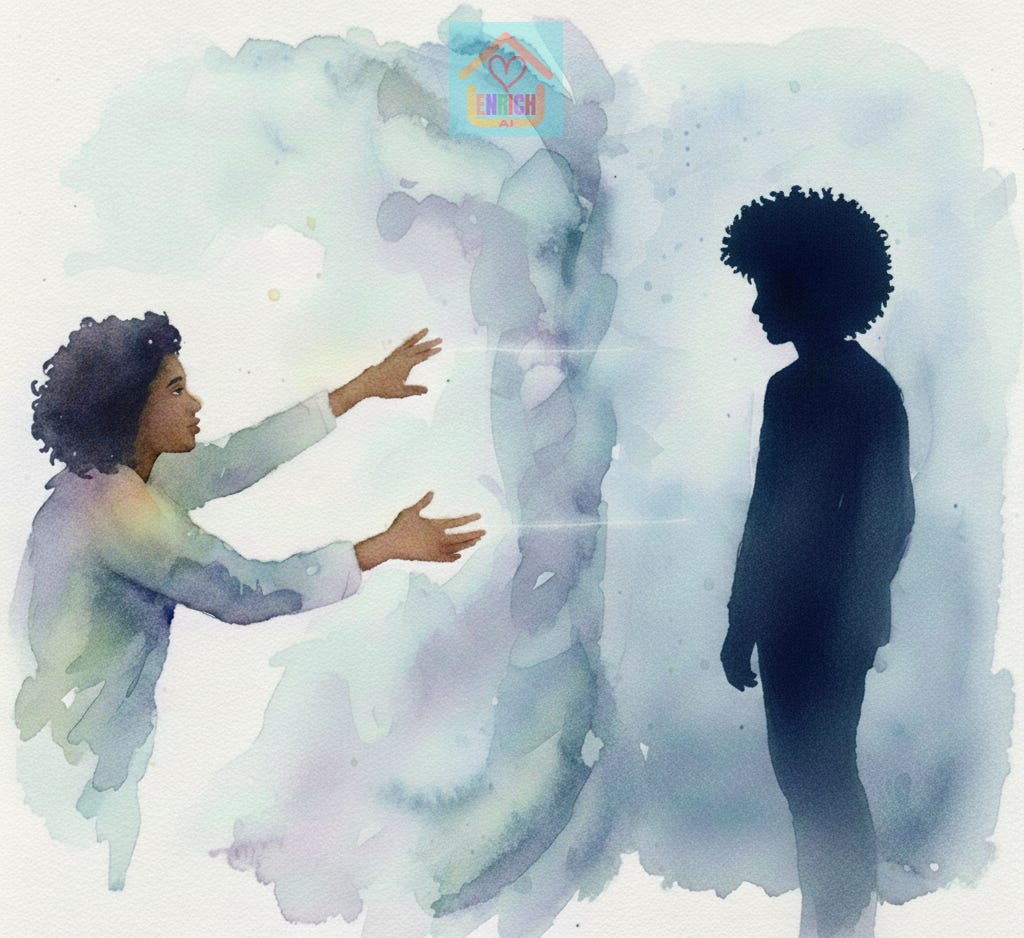
Your teenager slams their bedroom door for the third time this week. At dinner, they contradict nearly everything you say. They roll their eyes at family traditions they once loved. The clothes you suggest are “cringe.” Your advice is “outdated.” Your stories are “boring.”
It hurts. You feel dismissed, disrespected, maybe even heartbroken. The child who once thought you hung the moon now seems determined to prove you’re irrelevant.
But what if I told you this painful pushing away is actually one of the most important developmental tasks of their entire life? What if their rebellion isn’t rejection, but rather the messy, necessary work of being born a second time?
The Second Individuation: Your Teen’s Psychological Birth
Psychoanalyst Peter Blos gave us a profound framework for understanding adolescence. He called it the “second individuation process.” The first individuation happens in toddlerhood, when your child realizes they’re separate from you physically. They learn to walk away, to say “no,” to assert “me do it.”
But adolescence brings a second, deeper separation. This time, it’s not physical. It’s psychological and emotional. Your teenager must separate from your beliefs, your values, your worldview, and decide for themselves who they are and what they believe. Blos called this a “second birth,” and like all births, it’s painful, messy, and absolutely necessary.
To be born as their own person, your teenager must emotionally divorce from you as their primary identity source. They have to challenge what you’ve taught them, question your authority, and sometimes reject your guidance, not because you’re wrong, but because they need to discover their own truth.
The conflict you’re experiencing isn’t them being bad. It’s the labor pains of their selfhood.
What Second Birth Looks Like in Teenage Behavior
This psychological birth shows up in ways that can feel personal, even though it rarely is:
Everything you say is wrong. You suggest a jacket, they refuse on principle. You recommend a strategy for schoolwork, they do the opposite. This isn’t defiance for the sake of defiance. It’s them practicing having their own opinions separate from yours. They’re testing whether they can think differently and still be okay.
They need to criticize you. To separate psychologically, teenagers often need to find flaws in their parents. You become less godlike and more human. This deidealization is actually healthy. They’re developing a more realistic view of you as a person, not just a parent. It hurts to be knocked off the pedestal, but staying there would keep them dependent.
Their values seem to flip. The child who loved church now questions religion. The kid who embraced your political views now challenges them. This isn’t rebellion for shock value. They’re trying on different identities, beliefs, and values to see what actually fits them, not just what they absorbed from you.
They seek other mentors. Teachers, coaches, friends’ parents, even celebrities become suddenly important. This can sting, but it’s necessary. To separate psychologically, they need to see that there are multiple ways of being in the world. Your way isn’t the only way, and learning this expands their capacity to become themselves.
Privacy becomes paramount. They guard their thoughts, their journals, their phone conversations. They’re creating internal space that belongs only to them. This privacy is the womb where their new self gestates. Respecting it, even when it’s hard, honors their birth process.
The Cultural Complexity: Multiple Births and Identity Formation
Here’s where my ENRICH framework (Ethnicity, Nationality, Race, Identity, Culture, Heritage) becomes essential for understanding this second individuation. Many teenagers aren’t just separating from their parents. They’re navigating multiple, sometimes conflicting, identity systems simultaneously.
For teenagers from immigrant families, the Global Majority, or multicultural backgrounds, the second birth is exponentially more complex. They’re asking:
Which parts of my heritage culture do I keep? Which parts of the dominant culture do I adopt? Can I be authentically both? What if my parents’ values conflict with what my peers consider normal? Who am I allowed to become without betraying my family or my community?
This is what I call “layered individuation.” These teenagers aren’t just being born as individuals. They’re being born into multiple cultural contexts, and they must integrate all these pieces into a coherent self. The labor pains are more intense because the birth is more complex.
For parents from collectivist cultures, this second individuation can feel especially threatening. In many cultures, the very concept of separating from family values is seen as disrespectful or even dangerous. The idea that a child should develop beliefs independent from their parents contradicts deeply held cultural wisdom about family loyalty and intergenerational continuity.
But here’s the paradox: when we honor our teenagers’ need to individuate, when we make space for them to question and explore, they often return to family values more authentically. They choose to embrace aspects of their heritage because they’ve decided it fits them, not because they had no choice. This creates a stronger, more sustainable connection to culture and family.
For teenagers of color, second individuation includes developing a racial and ethnic identity that may differ from how their parents navigate race. They’re coming of age in different times, with different languages and frameworks. A Black teenager today might embrace Afrocentricity in ways their parents didn’t. A Latinx teen might claim “Latinx” while their parents prefer “Hispanic.” An Asian American teen might politicize their identity in ways that make immigrant parents uncomfortable.
This isn’t a rejection of heritage. It’s the integration of heritage with their contemporary lived experience. They’re being born into their own relationship with their identity, one that honors the past while claiming their present.
How to Support Your Teen’s Emotional Development During Second Birth
The goal of the second individuation isn’t to sever the parent-child relationship. It’s to transform it from dependency to mature interdependence. Here’s how you can support this birth:
Expect the divorce without taking it personally. When your teenager contradicts you, dismisses your advice, or questions your beliefs, take a breath. Say to yourself: “This is the work of individuation. This is necessary. This isn’t about me.” This reframe alone can help you stay regulated when they’re pushing against you.
Make space for the Great Un-Becoming. Your teenager is actively unlearning things they believed simply because you told them to. This process, what we might call the “Great Un-Becoming,” is sacred work. They’re sifting through everything you’ve given them to decide what they genuinely believe. Some of it they’ll keep. Some they’ll discard. Some they’ll return to years later. All of it is okay.
Ask questions instead of defending. When your teen challenges your values or beliefs, resist the urge to lecture or convince. Instead, get curious. “That’s interesting. What makes you think that?” or “Tell me more about how you see it.” This approach validates their emerging thoughts without requiring you to agree.
Share your own individuation story. Tell them about beliefs you held as a teenager that your parents didn’t share. Talk about how you came to your current values, including what you rejected from your own upbringing. This normalizes the process and shows them that individuation doesn’t destroy family bonds.
Distinguish between values and logistics. You can hold firm boundaries around safety, respect, and family responsibilities while being flexible about beliefs, preferences, and identity exploration. “You need to be home by midnight” is different from “You need to believe what I believe about religion.” Know which hills are worth defending.
Validate both heritage and evolution. For multicultural families, you can say things like: “Our culture has taught us X, and that wisdom has sustained our family for generations. And I also understand you’re navigating a different world than I did. You get to decide how you carry our heritage forward.” This honors both continuity and change.
Building Teen Self-Esteem Through Guided Reflection
During this second birth, teenagers need safe spaces to do the internal work of figuring out who they are. They need prompts that help them distinguish between inherited beliefs and authentic beliefs. They need permission to question, explore, and claim their own truth.
This is where structured self-reflection tools become invaluable for building teenage confidence and self-awareness. A thoughtfully designed mental health workbook for teenagers can provide the scaffolding they need during this vulnerable transition.
One particularly powerful exercise in supporting second individuation involves what we call “The Great Un-Becoming.” It asks teenagers to identify beliefs they once held simply because their parents said so, then to articulate what they actually believe now. It might look something like this:
“List 3 things you used to believe just because your parents said so. Now, list what you actually believe about those same things. It’s okay if they’re different.”
This kind of structured reflection gives teenagers permission to think independently while providing a framework for that thinking. The Mental Health Workbook and Journal for Teenagers offers these kinds of exercises in a private, judgment-free space where teens can explore their developing identity without parental observation or pressure.
The workbook format is particularly effective because it’s their work, done in their space, at their pace. Privacy is crucial. The second birth happens internally before it can be shared externally.
When Second Birth Goes Sideways: Red Flags for Parents
Sometimes, second individuation gets derailed. This happens when:
Parents resist too hard. If every attempt at independent thinking is shut down, criticized, or punished, teenagers either become rigidly compliant (which stunts their development) or rebel so extremely that they define themselves only in opposition to their parents. Neither outcome produces a well-integrated adult.
There’s no safe base to return to. Individuation requires what psychoanalysts call “rapprochement,” the ability to move away and come back. If teenagers fear that disagreeing means losing your love, they can’t individuate healthily. They need to know that challenging you won’t destroy the relationship.
Cultural shame is weaponized. When parents respond to individuation attempts with “You’re betraying your culture” or “You’re becoming too American/too white/too westernized,” it creates an impossible bind. The teenager can’t move forward without cultural betrayal, so they either hide their true self or cut themselves off from their heritage entirely.
Mental health struggles are ignored. Sometimes what looks like normal individuation is actually a teenager drowning. If your teen’s separation involves substance use, self-harm, eating disorders, or deep depression, that’s not healthy individuation. That’s a crisis requiring professional support.
Supporting Adolescent Mental Health with the Right Tools
As your teenager works through this second individuation, they benefit from having their own resources for processing their thoughts and feelings. Giving them tools for self-exploration shows that you respect their privacy while still caring about their wellbeing.
A comprehensive teen mental health journal can serve as a private container for the questions they’re not yet ready to share out loud. It allows them to:
Explore beliefs without defending them
Question inherited values in a safe space
Build self-awareness at their own pace
Develop confidence in their emerging identity
Practice articulating their authentic thoughts
This type of workbook becomes a companion during the lonely parts of identity formation, providing prompts and exercises that guide without controlling, support without smothering.
The Gift on the Other Side of Teenage Rebellion
Here’s what I want you to hold onto during the most challenging moments: successful second individuation creates adults who can have authentic relationships with their parents. Not relationships based on obedience or dependency, but relationships based on mutual respect, chosen connection, and genuine love.
When your teenager emerges from this second birth with a solid sense of self, they come back to you differently. They don’t need you to be their identity anymore, so they can see you clearly. They don’t need to rebel against you to feel separate, so they can appreciate you fully. They can disagree with you without it threatening the relationship because they know who they are.
The parent-child relationship transforms into something richer: an adult-to-adult connection where two separate people choose to love and value each other. That future relationship is worth the labor pains of now.
Practical Strategies for Parenting Teenagers Through Identity Formation
Supporting second individuation doesn’t require perfect parenting. It requires awareness and intentionality. Start here:
Notice when you’re defending yourself unnecessarily. Your teenager doesn’t need you to prove you’re right. They need you to stay solid while they figure out their truth. Practice saying “I hear you” instead of “Let me explain why you’re wrong.”
Create low-stakes opportunities for disagreement. Let them choose the restaurant, the movie, the vacation activity without lobbying for your preference. Practice letting their choice be different from yours without it meaning anything about your relationship.
Affirm the process, not just the outcome. Say things like “I can see you’re really thinking for yourself” or “I appreciate that you’re figuring out what you believe.” Validate the individuation work itself, even when their conclusions differ from yours.
Check your cultural assumptions. If you come from a collectivist culture, examine whether your fear of their individuation is about them or about your own cultural values around family cohesion. Both can be true and important, but knowing the difference helps you respond more skillfully.
Give them tools for the inner work. Provide resources that help them explore their identity, beliefs, and values privately. A workbook designed specifically for teenage self-discovery can give them structure for the questions they’re wrestling with, helping them build the self-esteem and confidence needed to emerge as their authentic selves.
Tell them you’re proud of them. Not for agreeing with you, but for doing the courageous work of becoming themselves. This affirmation can sustain them through the uncertainty of not yet knowing who they are.
How to Help Your Teenager Develop Healthy Self-Esteem
Building genuine self-esteem during adolescence isn’t about constant praise or protecting teens from all discomfort. It’s about supporting them as they develop a realistic, compassionate understanding of who they are, separate from who you are or who you want them to be.
Self-esteem rooted in second individuation is durable because it comes from within. When teenagers do the work of questioning, exploring, and ultimately claiming their beliefs and values, they develop confidence that can’t be shaken by external validation or criticism.
This internal work requires space, privacy, and sometimes guidance. Structured exercises that prompt self-reflection can accelerate this development, giving teenagers language for what they’re experiencing and permission to think thoughts that might feel forbidden.
The Second Birth Is a Gift You Give
As parents, we spend the first decade of our children’s lives teaching them everything we know, pouring our values and beliefs into them, showing them how we navigate the world. It’s instinctive to want them to keep all of it, to become a better version of what we’ve been.
But the second birth asks us to do something counterintuitive: let them question everything we’ve given them. Release our grip on who we thought they’d become. Trust that the foundation we built is strong enough to support their own structure, even if that structure looks different from what we imagined.
This is hard, heartbreaking work. But it’s also sacred. You’re not losing your child. You’re midwifing their emergence as a whole person. You’re giving them the gift every human deserves: the chance to become authentically themselves.
And when they do, when they stand before you as someone who chose their beliefs rather than inherited them, someone who knows themselves rather than performing for you, you’ll see that the pain of labor was worth it.
Because you’ll have helped birth not just a child, but a whole, integrated human being, and, that person, whoever they become, will carry the imprint of your love through their entire life.
Not because you forced them to. Because you loved them enough to let them be born.
About the Author
Sherry Jerimie, MSM, LCSW-R, is a Licensed Psychoanalytic Psychotherapist and Certified Psychoanalyst with almost three decades of experience specializing in supporting individuals, couples, and families in her private practice. As an immigrant herself and the founder of ENRICH Global, she brings both lived experience and clinical expertise to understanding the complexities of raising children across cultures. Her ENRICH framework (Ethnicity, Nationality, Race, Identity, Culture, Heritage) provides culturally responsive approaches to mental health and family dynamics.
Important Disclaimer
This article is for educational and informational purposes only and does not constitute medical or mental health advice. The content should not replace professional therapeutic guidance or treatment. If your teenager is experiencing a mental health crisis, self-harm, suicidal thoughts, or severe emotional distress, please seek immediate professional help by contacting a mental health professional, calling the 988 Suicide and Crisis Lifeline, or visiting your nearest emergency room. Every teenager’s situation is unique, and what’s described as “normal” individuation may require professional assessment in your specific circumstances.
No posts
Comments
Nothing yet. Say the first thing.
Sign in to join the conversation.