One year into the Cheaper Home Batteries program – How’s it going?
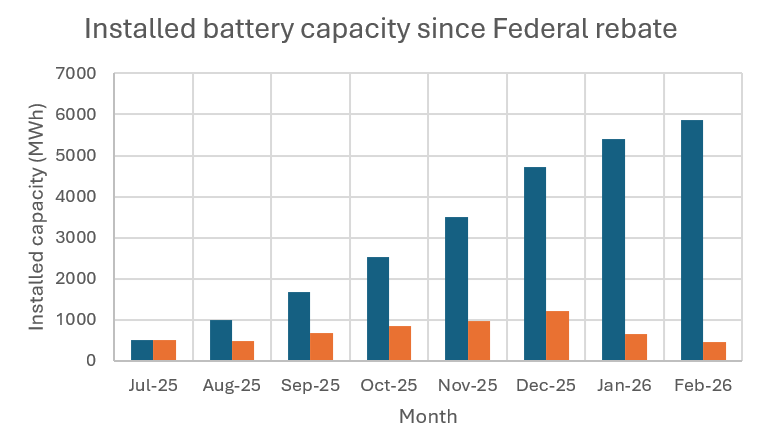
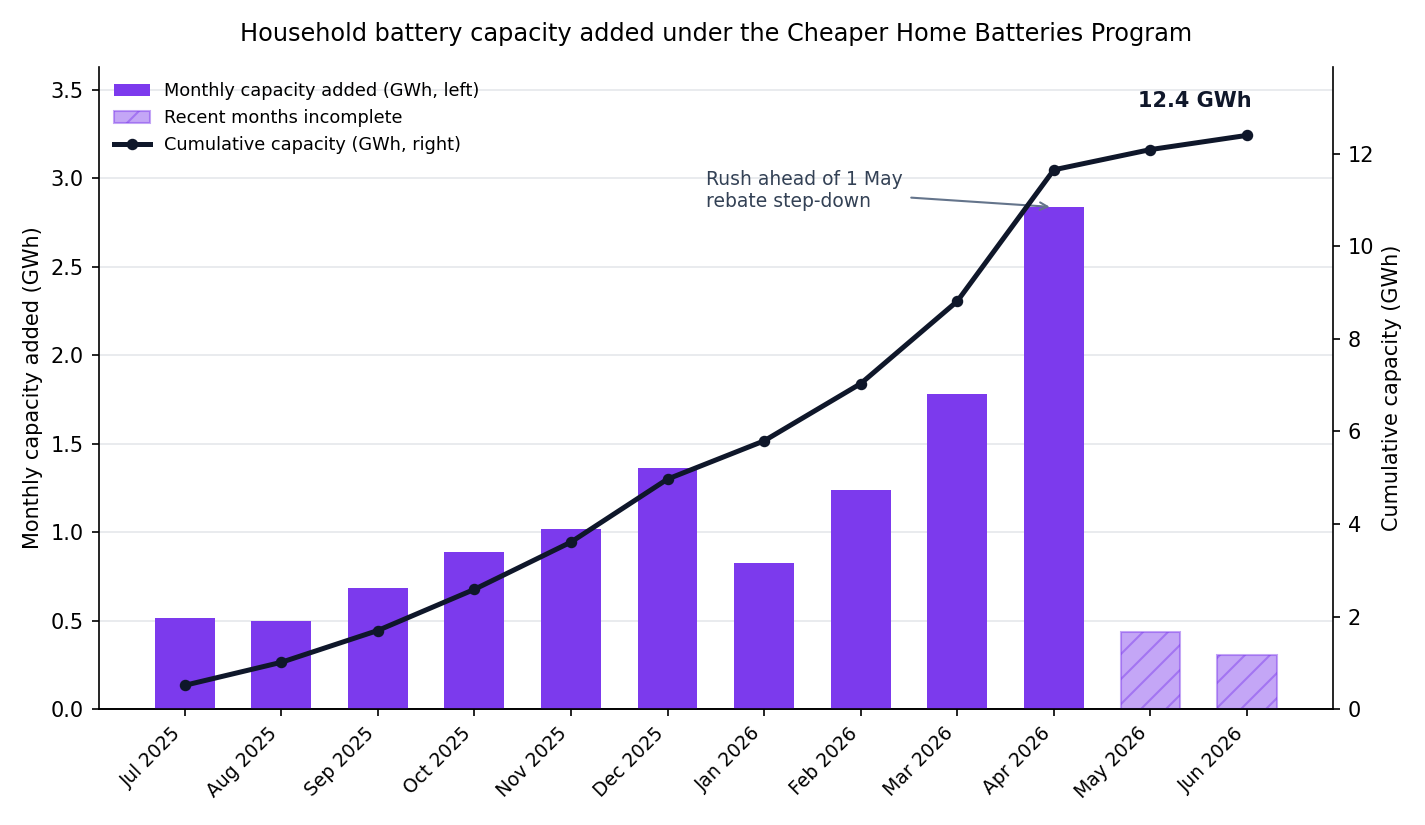
The program has added at least 12.4 GWh — more than quadrupling the home battery fleet in a year

Space science PhD. Energy policy professional. I write about how AI infrastructure is reshaping the electricity system with a focus on Australia — and what that means for the rest of us. All views my own.
Live Last read · last published · next check
The program has added at least 12.4 GWh — more than quadrupling the home battery fleet in a year
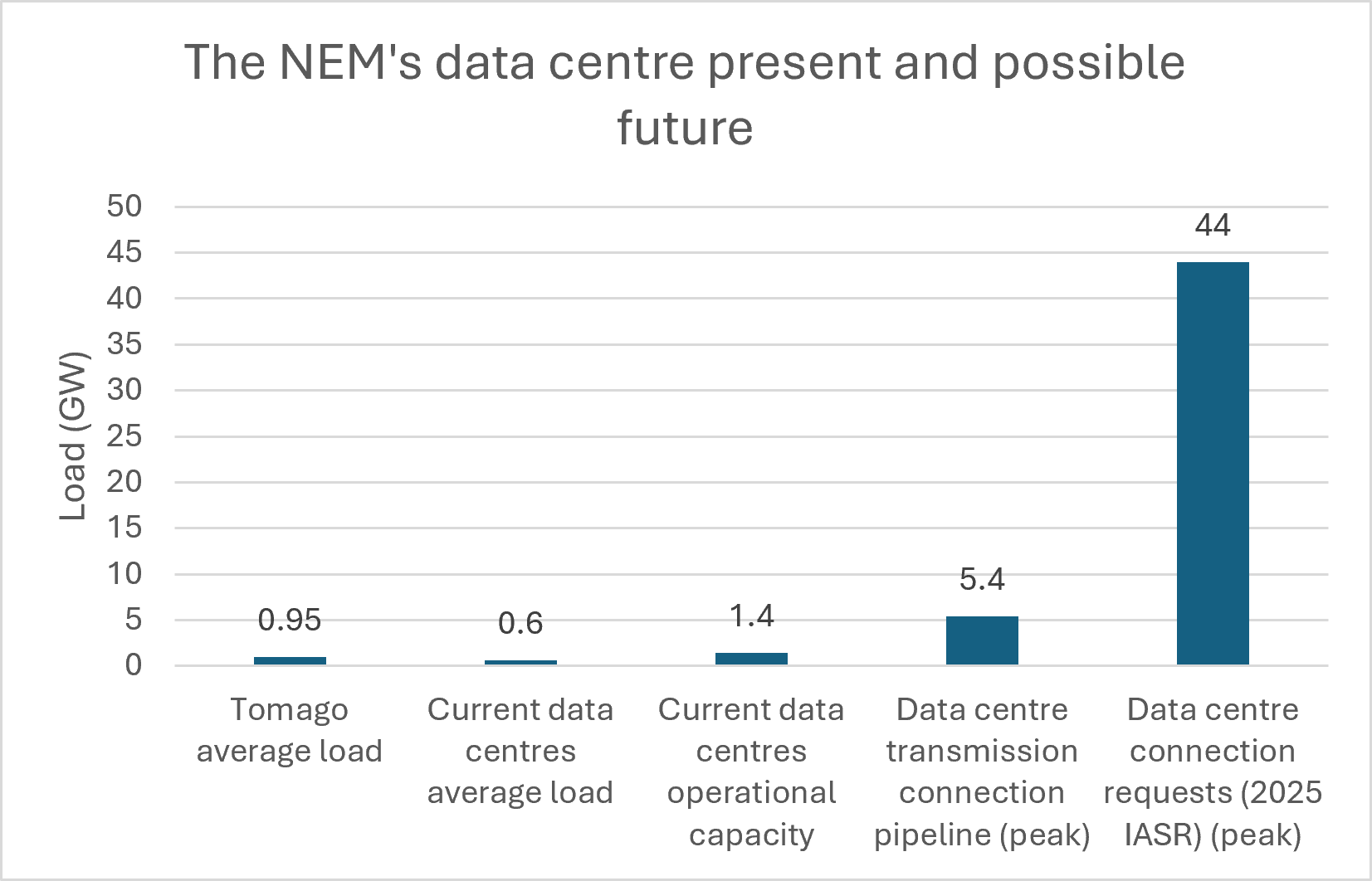
For all the attention data centres have received lately, it may surprise you to know that the average Australian data centre demand across Australia’s entire National Electricity Market (SA, Vic, Tassie, ACT, NSW, Qld) was around 63% (600 MW) that of one aluminium smelter’s average load (
One year into the Australian Cheaper Home Batteries program, Australia’s household battery storage has quadrupled to around 16 GWh.
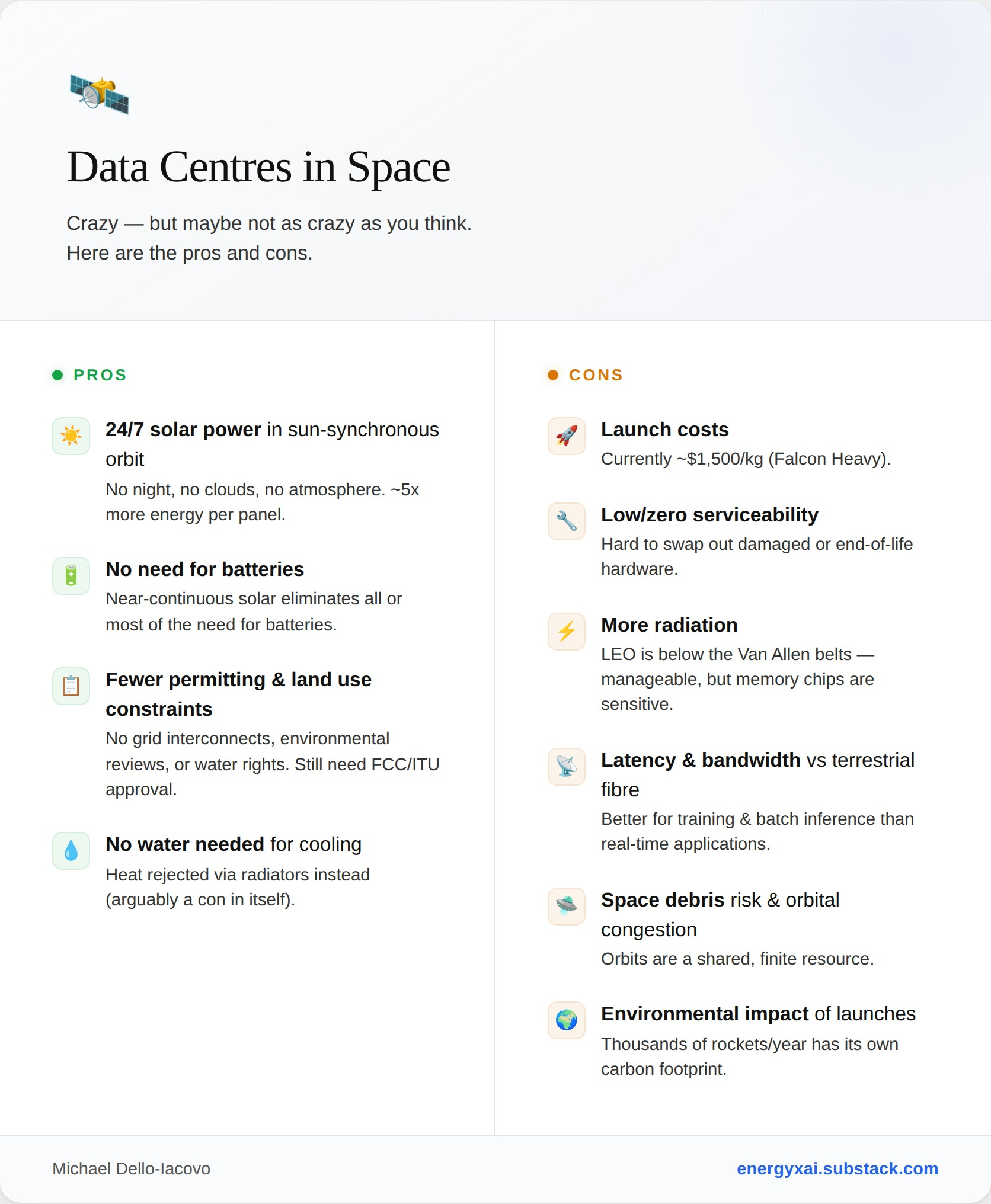
Data centres in space — crazy but maybe not quite as crazy as you think.
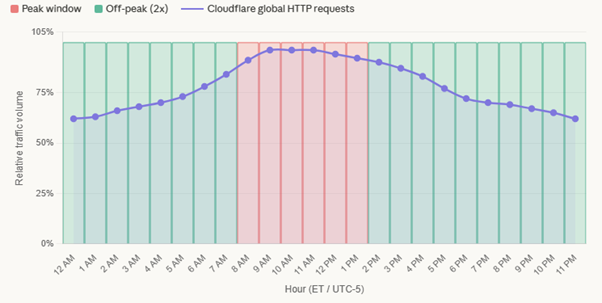
Anthropic’s off-peak Claude promotion is smart for their servers — but it could mean more AI compute when the grid is most stressed.
Anthropic, the creators of Claude, are opening an office in Sydney as part of their expansion to Australia and New Zealand, which rank 4th and 8th globally on per capita Claude usage. What does this mean for Anthropic and Australia?
Australia has the highest Market Price Cap for electricity in the world, and it's going up again in July. Here's why, and what that means.
A few interesting things on data centres and energy this week – one analysis places data centre demand on the Australian National Electricity Market (NEM) as materially lower than headline figures suggest, Australia hasn’t yet figured out who should pay for it, and Anthropic promises they’ll pay for it for their US data centres.