
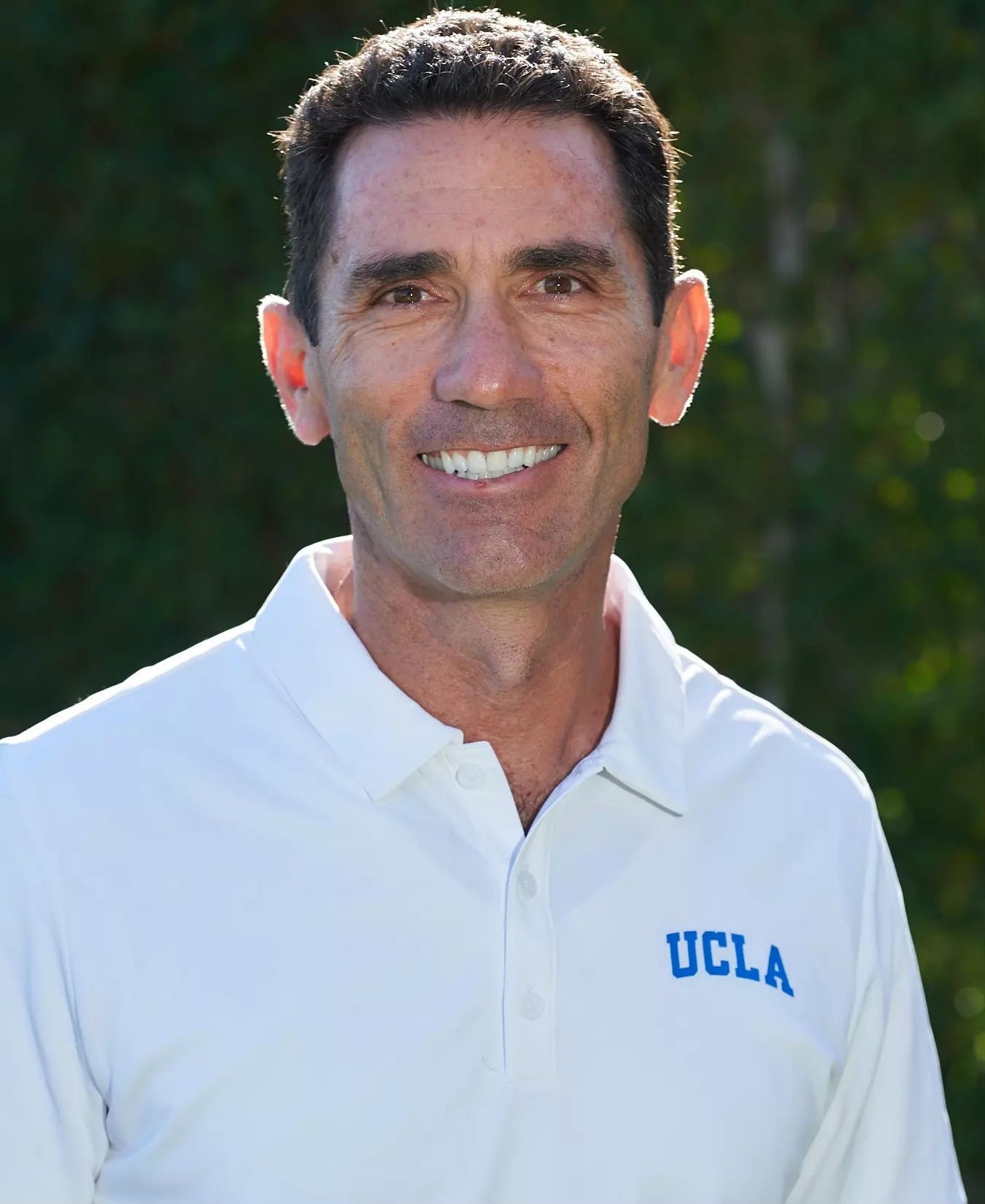
Jeff Troesch doesn’t seek the limelight, but athletes in the limelight seek him. He got his start as a mental performance specialist in 1987 at Cal Poly University in San Luis Obispo, California, and has gone on to work with the Seattle Mariners, the Detroit Tigers, the U.S. Soccer Federation, the IMG tennis academies, and a long list of professional golfers and tennis players. And yes, he’s also worked with world-class endurance athletes, including six-time 800-meter national champion Nick Symmonds.
If Troesch were attention seeking, he would have long ago written a book that shared his unique expertise with the athletic masses. Instead he waited until he’d accumulated thirty-five years of experience to summarize his wisdom in the newly released One Day Better: Mental Performance Concepts to Transform Your Game & Life, a collection of 150 short, practical lessons that athletes can apply immediately to move one step closer to mastery. Collectively, these lessons lead athletes along a mastery-oriented growth process that Troesch developed after becoming disillusioned with cookie-cutter tools like S.M.A.R.T. goal-setting that he learned in graduate school.
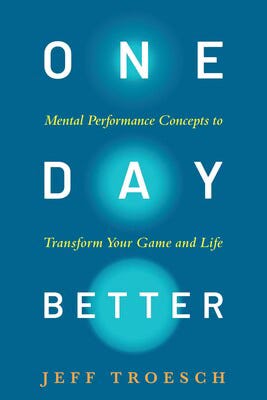
“I noticed that many of the individuals I was working with were constantly anxious about the gap between where they were today and where they thought they needed to be in relation to their goal,” he explains in the introduction to One Day Better. “A lot of my clients seemed relieved with the challenge to bring a little more each day, adding a little more wisdom or experience to their bank account. Thus, I started speaking to the notion of getting a little better each day, with clear intention of the daily gains and an acknowledgment of the gains at the end of the day. This idea seemed to keep my athletes appreciating their small daily ‘wins’, and kept them on track towards what they were attempting to master.”
If you have a short attention span, you’ll appreciate the economy of words that characterizes One Day Better. Few of its 150 chapters runs longer than two pages, and the average length is a page and a half. But there’s a lot of great teaching packed in each lesson, and you could easily spend a whole week meditating on and beginning to implement any single one of them.
Troesch has forgotten more than I’ll ever know about mental performance, but I’ve been around long enough to have some ideas of my own, and I found myself nodding along throughout my reading of One Day Better. Troesch’s pragmatic, holistic, mastery-focused approach to mental performance exactly matches my approach to coaching.
An example from early in the book is “Effective Vs. Right,” a 469-word chapter in which Troesch argues, “There is no [single] right way to exercise or get fit. No right or proper way to train technically, mechanically, or tactically. There is no right technique or right way to eat properly or recover optimally.” As evidence, he points to the myriad different golf swings, pitching styles, and shooting techniques that have landed individual golfers, baseball players, and basketball players in the hall of fame over the decades. Most athletes aren’t clear on the distinction between right and effective and are biased toward rightness because it simplified the process of chasing mastery to a straightforward matter of money see, monkey do. But Troesch isn’t having it.
“I want athletes and coaches to be open-minded to the idea that it’s their job is to figure out what’s most effective for them,” he writes. “This is only discovered through trial and error, through failing and learning, through successes an accurate understanding of how they were achieved. Only then can you intentionally attempt to replicate those successes. Through this process, the athlete homes in on an awareness of what works best for them.”
As a coach, I’m thrilled that One Day Better now exists. I’m going to encourage all of my athletes to get a copy, and when they encounter challenges and opportunities that are addressed in the book, I will point them to the relevant chapter, ask them to read I and take notes, then talk to them about how to implement the concepts it introduces. When they get stuck in “have-to” thinking, I’ll point them to Chapter 5 (“Response Ability”), where Troesch reminds us that “we have the ability to respond in any manner we choose to any circumstance we find ourselves in.” When they fall into the trap of fixating on what just happened instead of letting it go and focusing on the present, I will point them to Chapter 26 (“Current Events, Not History”), where Troesch urges athletes to “focus on the windshield, not the rearview mirror.” And when they express an excessive fear of failure or an exaggerated emotional response to failing, I will point them to Chapter 49, whose title almost says it all: “The Only Failure Is a Failure to Learn.”
As if you needed one more reason to pick up your own copy of One Day Better, know that the book is being published by 80/20 Publishing, which I cofounded. We are the only publisher specializing in books for endurance athletes, and by purchasing our products you not only support your own pursuit of mastery but also help us keep doing what we do. So, thank you!
No posts
Comments
Nothing yet. Say the first thing.
Sign in to join the conversation.