
A revolution is happening in endurance sports. Athletes over the age of fifty are breaking records at an unprecedented rate, performing at levels that were unimaginable ten years ago. This is true not just in running but in all major endurance sports from rowing to triathlon, and the numbers prove it.
Take track, for example. The World Association of Masters Athletes, which is the official governing body for older track and field athletes, ratifies world records for five-year age categories beginning at thirty-five to thirty-nine and going all the way up to 100-plus. Nearly half of the records for events longer than 800 meters and for ages fifty and up have been set since 2020.
Younger athletes are getting faster too, but older athletes are getting faster more quickly. We see this when we look at historical data across age divisions at events like the World Triathlon Age-Group Championships. In 2014, for example, the winner of the women’s 60-64 division finished 22:18 behind the winner of the 30-34 division. Ten years later, the gap was down to 17:14. Meanwhile, on the men’s side, the gap shrank from 18:24 to 13:23.
At the Vanguard
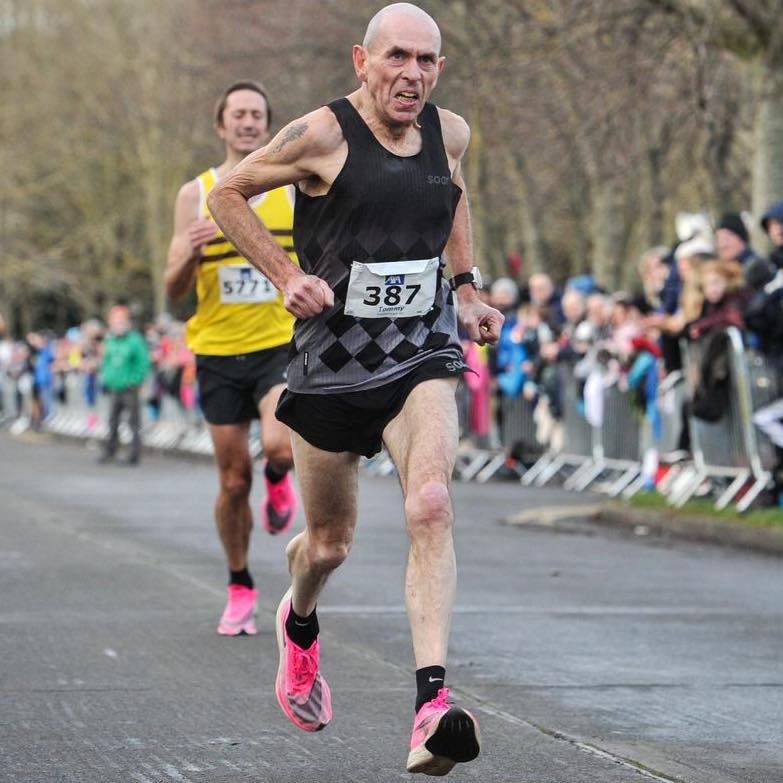
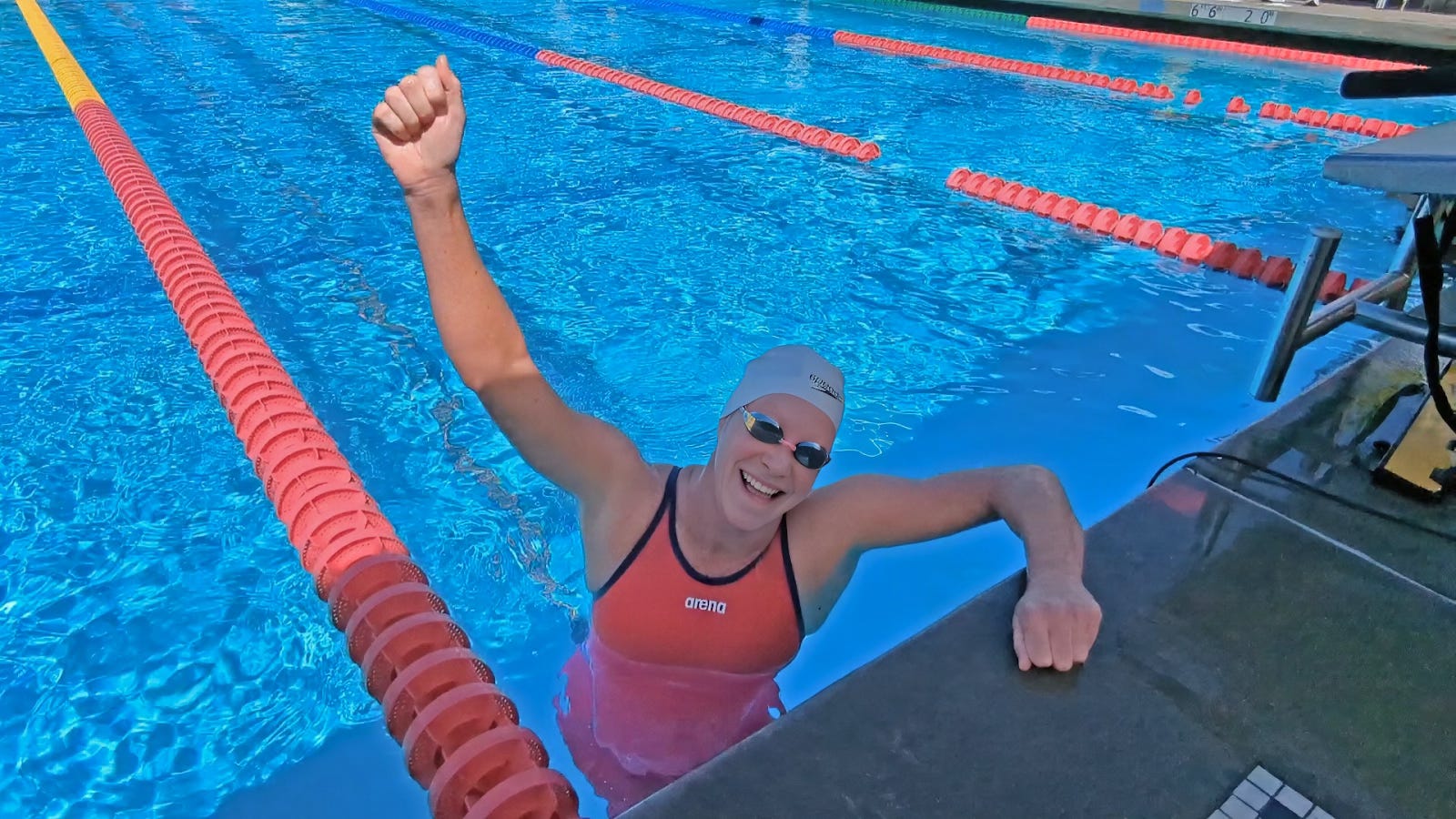
At the vanguard of this revolution are barrier-breaking older athletes like Tommy Hughes, an Irish runner who at fifty-nine completed the Frankfurt Marathon in 2:27:52, lowering the single-age world record by six minutes, and American swimmer Ellen Reynolds, who last year set twenty-six world records in the women’s 60-64 age category, including a mindboggling mark of 19:10.59 in the long-course 1500-meter freestyle event.
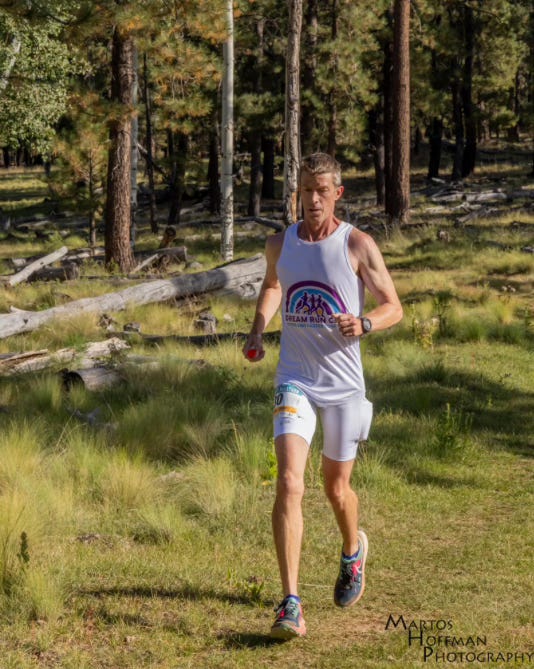
I can’t compare myself to these champions, but I’m trying to do my part to close the gap between younger and older endurance athletes. Just yesterday, in fat, I finished third overall at the Flagstaff Marathon, an absolutely brutal 26.2-miler that starts at 8,000 feet of elevation, gains 2,400 feet from there, and takes place entirely on ankle-twisting, pinecone-strewn snowshoe trails. The winner was thirty-four years younger than me and the runner-up (whom I was reeling in until a race volunteer sent me in the wrong direction with seven miles to go, resulting in an extra 500 meters of running) fifteen years younger. Even with the extra distance, my time was the fastest ever run by someone over fifty in the twenty-year history of the event and would have been good enough to win it on many past occasions. I was, in fact, the oldest runner in the entire field today, and I beat all but two finishers.
As an endurance athlete yourself, and one who, like every other athlete, is getting older every day, you probably want to know what athletes like Tommy Hughes and Ellen Reynolds are doing differently that is allowing them to redefine what’s possible after turning fifty. You’ll have to wait until the 2027 publication of my book for older endurance athletes, Faster Masters, to learn Tommy’s and Ellen’s secrets, but I’ll tell you mine now.
It’s threefold, actually. First, I don’t use age as an excuse to lower my expectations. As I make my way through my fifties, I don’t expect to get slower, recover slower, lose my tolerance for hard training, or lose to athletes young enough to be my children. Reality gets the final say, of course. My body is changing, but so far my decline from my performance peak has been far shallower than it is for most athletes, and my “no excuses” mindset has a lot to do with that.
Second, I exploit the many advantages of getting older. Most athletes harp on the obvious disadvantages of aging, but the advantages are real. If I may say so, I executed a beautiful race today, negative-splitting a course that nobody negative splits and finishing with nothing left in the tank. Except for trusting my gut instead of the volunteer who pointed me the wrong way, there’s nothing I could have done differently from the start of lap one to the end of lap two that would have gotten me to the finish line any quicker. I sometimes executed perfect races when I was young, but they happen much more predictably now that I’m wiser and more mature.
The third ingredient of my recipe for aging well as an endurance athlete is that, for the most part, I’ve taken very good care of my body over the decades. Aside from the three-plus years I lost to long COVID, I’ve maintained a consistently high level of fitness, eaten well, slept plenty, and kept young psychologically by centering my life on my great passions of writing and running. Health is the foundation of fitness, and for aging athletes who are all about fitness, the benefits of prioritizing health in its many dimensions compound as the years go by.
It goes without saying that natural talent plays a role in the record-breaking performances of athletes like Tommy Hughes and Ellen Reynolds. But you don’t need talent to age well as an endurance athlete relative to your own ability. That comes from what you do with what you’ve been given. Athletes at the vanguard of the masters revolution not only inspire us by redefining what’s possible for competitors over fifty but also provide a blueprint for successful aging in endurance sports. By using this blueprint as a model for your journey, you can surprise yourself in the same way Hughes, Reynolds, and others are surprising the world.
No posts
Comments
Nothing yet. Say the first thing.
Sign in to join the conversation.