
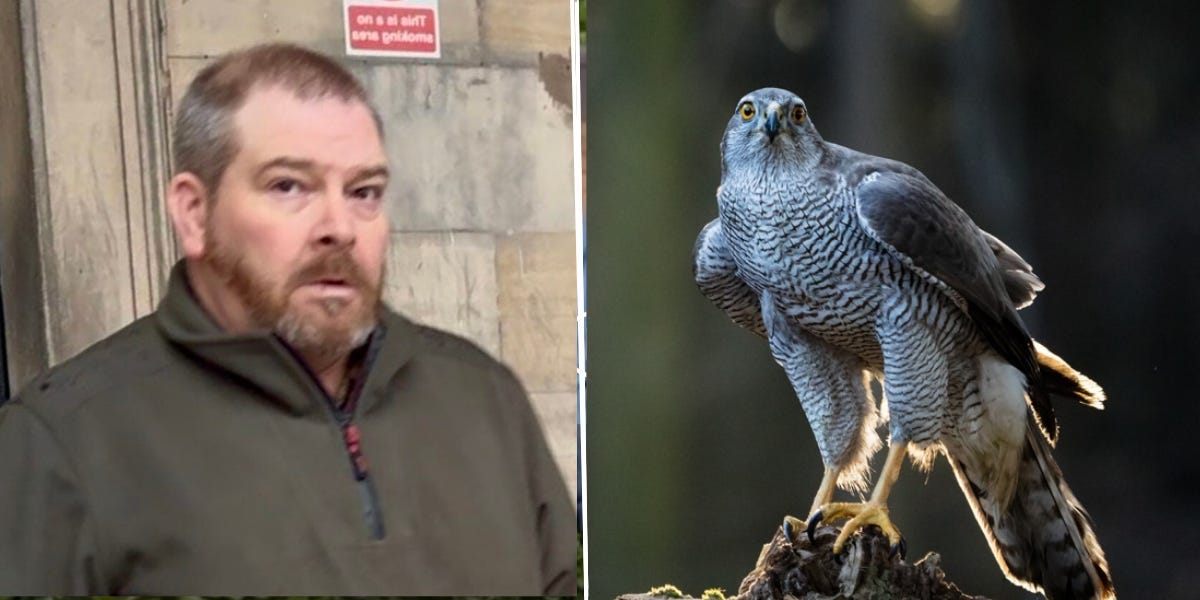
On 7 August 2026, NatureScot announced it was restricting the use of General Licences for three years on parts of two Scottish shooting estates: Milton of Drimmie, near Blairgowrie in Perthshire, and Invermark Estate in the Angus Glens.
On the surface, this looked like decisive action against raptor persecution. Actually, it’s yet another example of a toothless sanction being dressed up as accountability - commercial bird shooting on both estates will carry on exactly as before.
The Milton of Drimmie restriction follows the conviction of former gamekeeper Russell Mason, who was filmed by the RSPB battering a goshawk to death after it became trapped in a (lawful) crow cage on the pheasant-shooting estate in February 2024. Despite his crime passing the threshold for a custodial sentence, Mason walked away with a 200-hour Community Payback Order and an £890 fine for firearms offences.
The Invermark restriction relates to a peregrine found with shotgun injuries near grouse butts in Glen Esk in September 2024. The bird was so badly hurt it had to be put down. Nobody has been prosecuted for shooting the bird, a protected species.
For these two dead birds of prey, NatureScot has suspended three General Licences: 01 (“To kill or take certain birds for the conservation of wild birds”), 02 (“To kill or take certain birds for the prevention of serious damage to livestock, foodstuffs for livestock, crops, vegetables and fruit”), and 03 (“To kill or take or damage or destroy nest and eggs of certain birds for the preservation of public health, public safety and preventing the spread of disease”.
The suspension covers specific parcels of land until August 2029: Cochrage Muir at Milton of Drimmie and Dalbrack Farm at Invermark.
The text ‘announcing’ the ban on NatureScot’s website clearly followed a template it keeps on hand for bans on shooting estates, as it was very similar to the wording on the ban it placed on the Raeshaw Estate earlier this year in relation to the shooting/killing of Merrick, a satellite-tagged Golden Eagle, in October 2023.
General Licences allow land managers to kill birds without applying for individual permission, overriding the protection provided to wild birds by The Birds Directive and Wildlife and Countryside Act 1981.
Removing them does not touch pheasant or grouse shooting, and does not stop an estate managing its land for that purpose. NatureScot’s own announcement admits as much, stating the restrictions are designed to protect wild birds ”while still allowing necessary land management activities to take place.”
Crucially, even the killing of native predators that General Licences normally cover hasn’t actually been banned - it’s just been made slightly more bureaucratic. Both estates remain free to apply for an individual licence covering exactly the same activity: trapping and killing crows, magpies and other so-called “pest” species (often under a faux claim of ‘conservation’).
Estates will have to keep records and file returns, and NatureScot says compliance may be spot-checked, but all the while the shooting continues, the killing of native species continues, and the estates simply fill in more paperwork to keep doing what they were doing before.
Anyone hoping this represents a shooting ban, or even a meaningful curtailment of estate activity, will be disappointed.
Supporters of General Licence restrictions often argue that even if the practical impact is limited, the reputational damage to an estate is itself a deterrent. We’re sceptical. Even commentators sympathetic to using General Licence restrictions as a tool have acknowledged they are “not perfect as an effective sanction” and are, at best, an unreliable reputational lever.
While there may be some limited press coverage, estates frequently issue robust public pushback, anyway, to protect their local standing and commercial viability (as Raeshaw Estate did in February, calling its own restriction 'wholly unjustified’).
Besides, shooting’s complicit clientele appear notoriously immune to the mountains of evidence of raptor persecution, and there is no visible evidence that estates named and restricted in this way suffer any commercial consequence: shooting parties still book in to estates, land management continues, and ownership structures remain untouched.
Given that NatureScot has had the ‘power’ to remove General Licences since 2014 but levels of raptor persecution on estates appear not to have fallen during that time, a three-year restriction on a small patch of an estate announced on a government website is evidently not the kind of consequence that changes behaviour in an industry built on law-breaking and self-policing.
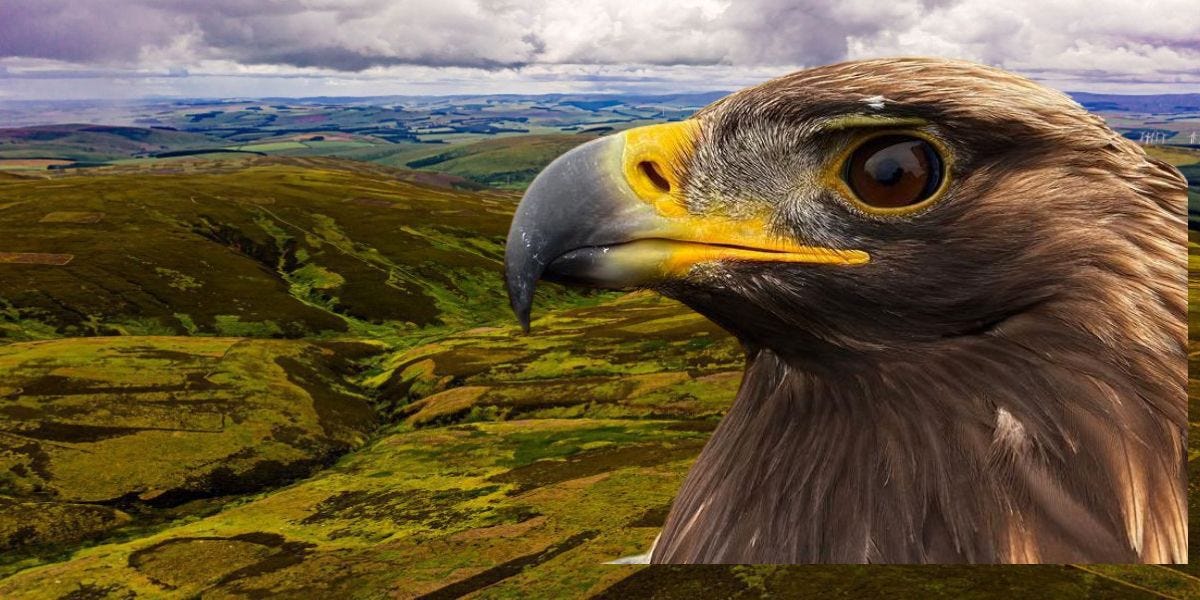
And there is no doubt whatsoever that raptor persecution is routine. It has been illegal to kill a bird of prey in the UK since the Protection of Birds Act 1954, and that protection was strengthened by the Wildlife and Countryside Act 1981: in other words, estates have had over seventy years to stop doing this. But they haven’t.
In the RSPB’s Patterns of Persecution report released in May this year, Ian Thomson, a veteran investigations manager, is quoted saying that “almost two thirds” of recorded incidents of raptor persecution occurred on land managed for “gamebird shooting”.
Goshawks battered to death in traps, Peregrines shot out of the sky near grouse butts, Golden Eagles shot, Hen Harriers killed - these aren’t rare aberrations or incidental; they are symptoms of an industry that depends on suppressing protected raptors to inflate the number of birds available to be shot for ‘sport‘.
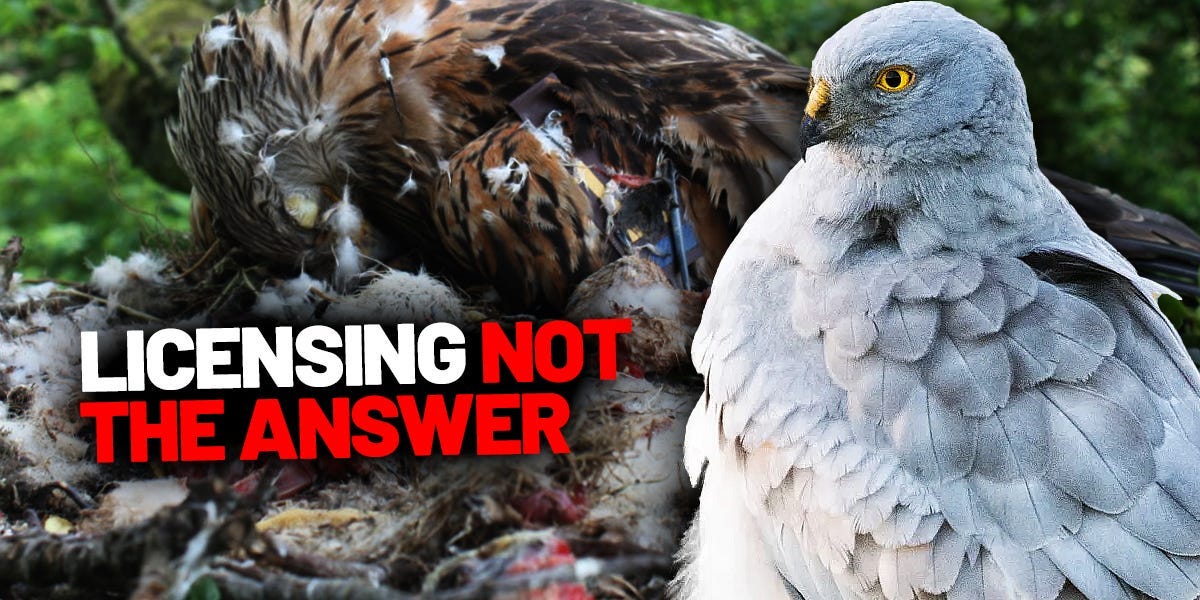
Existing laws already outlaw raptor persecution but estates routinely ignore them - and have done so for seventy years. They have had decades of clear law but have consistently chosen concealment and denial instead: no shooting estate has ever handed over one of its own gamekeepers to the police
The answer to this long-standing and endemic crime, we are assured, is more paperwork: to bring in licences that would cover all shooting operations on estates.
We don’t agree. Bringing in more layers of licensing doesn’t address a shooting culture that is by nature destructive and harmful to wild animals. It will formalise it instead. It will hand estates a route to keep operating exactly as before, and let the shooting industry claim it is now “regulated” and therefore legitimate - precisely the outcome estates want, and precisely what raptors, grouse, pheasants, and native predators cannot afford.
Let’s be honest about this: more licences are just more laws to break, more potential ‘restrictions’ that estates will sidestep, more animals that will die ‘lawfully’ because a piece of paper says it’s ‘okay’.
This is why Protect the Wild has stated many times, through our End Bird Shooting campaign, that licencing shooting - of which General Licence restrictions are a weak forerunner - do not provide any real solution.
Over the coming months our campaign will look at the shooting industry at every level. We will highlight the suppliers — the farms, hatcheries, importers and breeders producing tens of millions of birds under conditions that would provoke public outcry if applied to any other animal. We will expose the providers — the estates and syndicates that take those factory-farmed birds and sell the experience of killing them as leisure. And we will look at the clients — the paying guns who are fully aware of the wildlife crime, the trapping of native predators, and the mass suffering involved, and who have decided that none of it is reason enough to stay away.
This industry survives because suppliers supply, providers provide, and clients pay. We intend to examine them all.
We are working to END BIRD SHOOTING. This suffering has to stop. Please share this article. Share our socials. Follow us for updates.
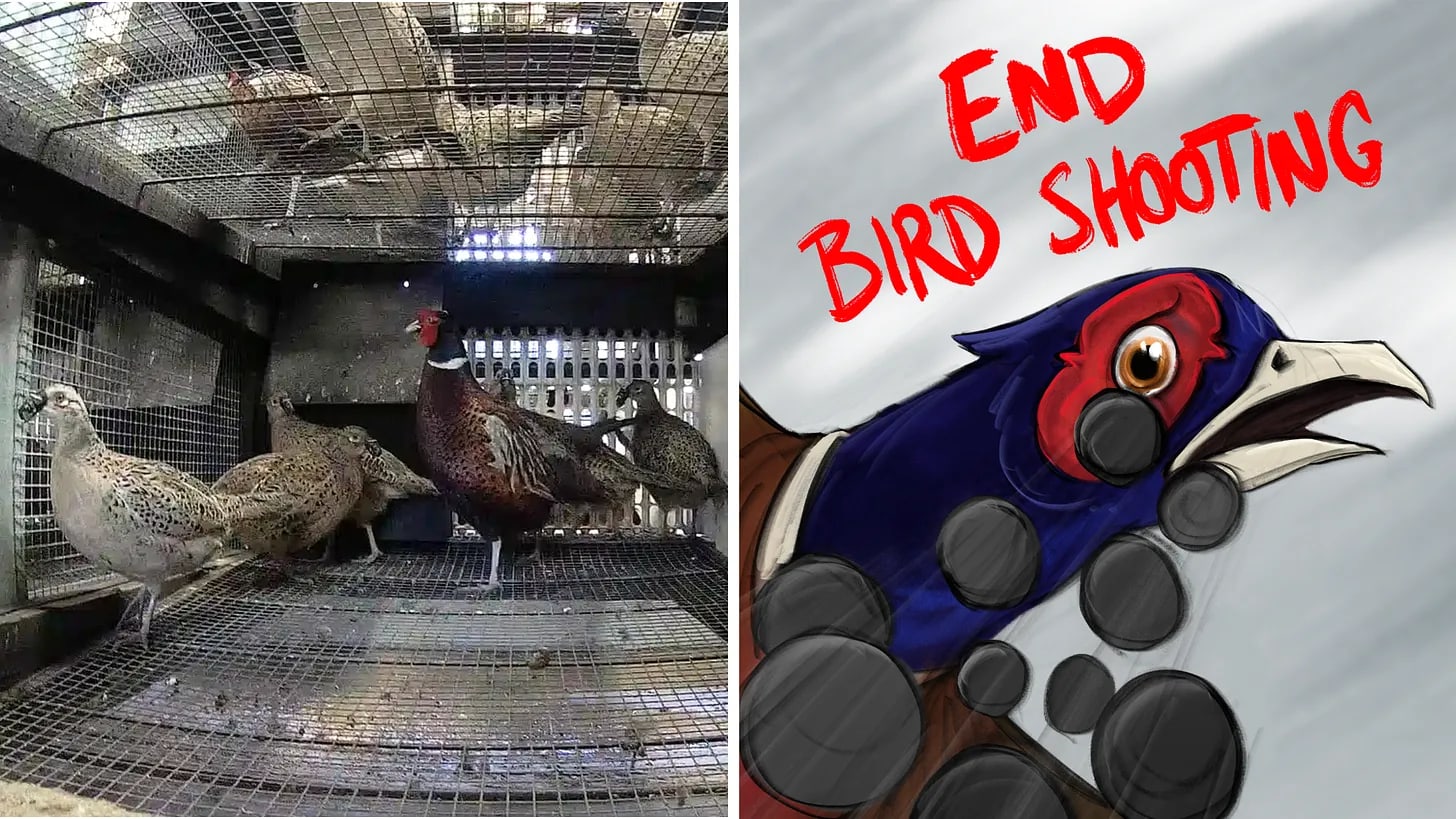
We are asking you to become a Game Changer. To stand with us as we take this fight forward, week by week, piece by piece, until the public, the media and the politicians can no longer look away.
This is the beginning. Please be a part of it.
Comments
Nothing yet. Say the first thing.
Sign in to join the conversation.