
Over the past few months we have been publishing analysis of undercover footage obtained on so-called ‘game farms’ across England. We began by looking at the sheer scale of the shooting industry, then how adult birds (not every bird, but far too many) are sometimes treated, and the enormous numbers of eggs collected and washed - and in some cases dumped unlawfully in open-air trailers. We’ve looked at very young chicks being ‘sexed’ and sorted, at how some will end up being macerated (or ground up alive).
Now we are posting some undercover footage taken inside a shed on a farm in northern England. It is short but - if you have any empathy for young lives at all - upsetting.
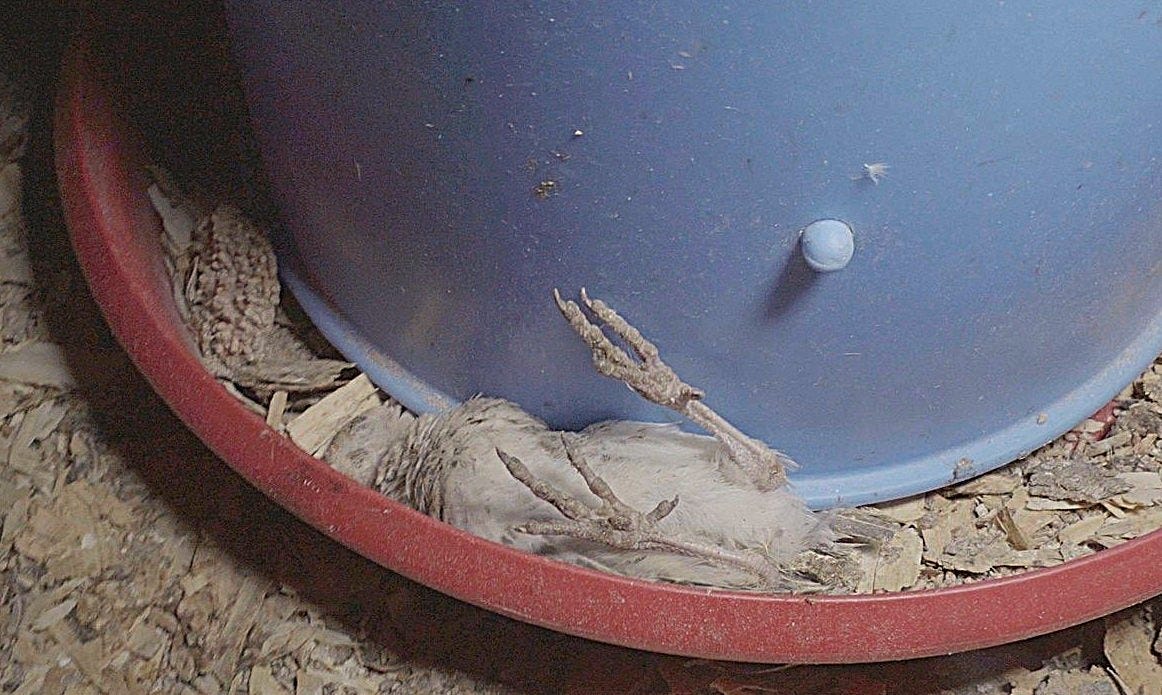
It shows a young pheasant chick. She is lying on her back at the bottom of a feeder, legs in the air, wings folded, her beak wedged in a gap she can't pull free from. By the time our undercover investigator has worked out what they are looking at, set the camera down and freed the chick, she is already dying. Within a short time, she is dead.
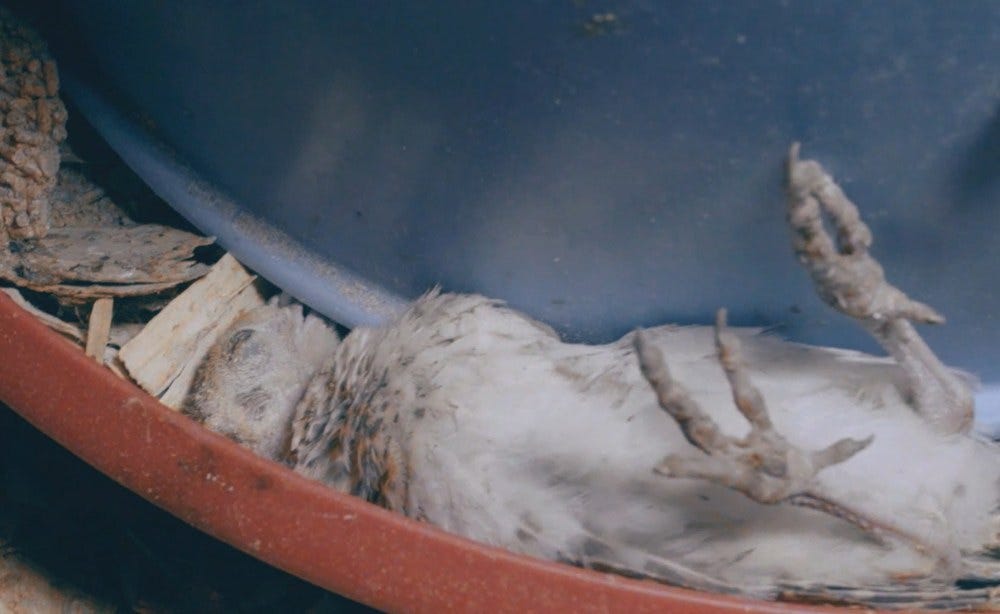
We can’t be certain of the precise sequence of events that trapped the first chick, of course, and we weren't there for the moments before she was found. But the explanation that fits the footage is a plausible one - and it is down to the device fitted to this bird’s face.
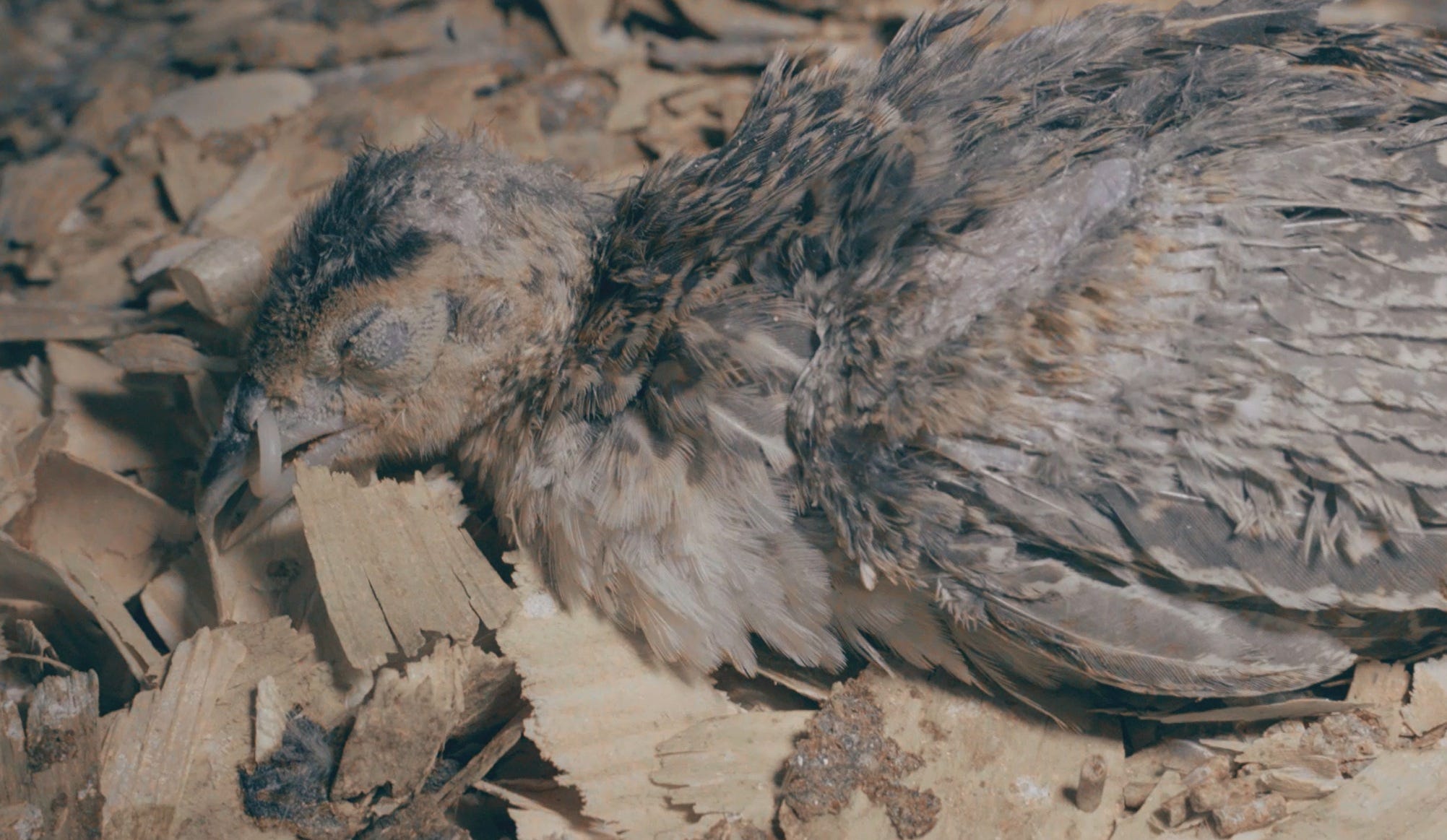
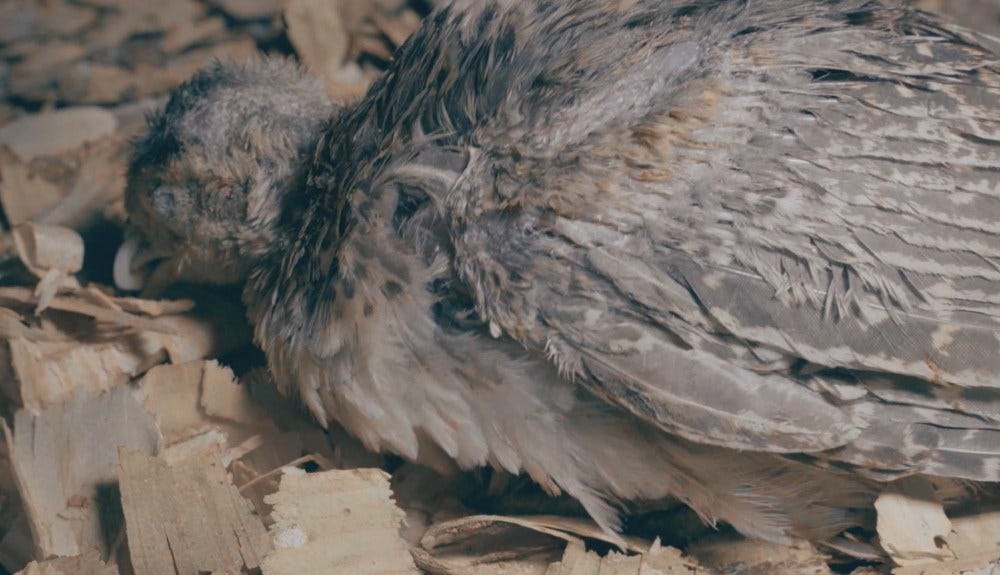
Like most farmed pheasant chicks, this one had been “bitted” - a plastic clip has been pushed through the nasal septum to hold the beak slightly open. The beak can no longer close fully enough to grip and pull feathers from another bird. Feather pecking is linked to stress and the conditions birds are kept in, and bitting - as we detailed in an earlier post - is now standard practice on farms that breed birds for the gun in packed and almost bare sheds.
What the bit does, beyond restricting the beak, is change its shape. A bitted beak isn’t a smooth taper anymore - it has a clip sitting across it, wider and bulkier than bare keratin.
Our reading of the footage is that the chick pushed her beak into a narrow gap in the feeder, probably reaching for grain, and the bit’s edges caught against the edges of gap as she tried to pull her beak back out. It’s the same basic principle as a barbed hook or a cable tie: easy to push in, near-impossible to pull back the way it came.
Once stuck, panic likely set in. Any trapped bird - suddenly, as they would see it, extremely vulnerable to predation - would react in the same way. Thrashing and twisting would have flipped the small, light bird onto her back, jamming the bit we can see in the post-release screenshots even more firmly. The more she struggled, the weaker she would have become.
Though the team rescued her, we believe she died from stress and exhaustion. She gave everything she could and didn’t have the strength to keep going.
We’ve written before, in “Dead Week”, about exhausted and stressed adult birds who have nothing left, who reach a point where they quietly shut down. This feels like the same thing, in miniature, in a small bird that had barely had the chance to grow feathers.
While we all want justice, the law cuts against a tidy ending here.
Farmed pheasant chicks, while still in the shed and under human control, are “protected animals” under the Animal Welfare Act 2006. Section 4 makes it an offence to cause a protected animal unnecessary suffering - but only where the person responsible knew, or reasonably ought to have known, that their act or failure to act would cause it. Section 9 creates a separate duty of care, requiring anyone responsible for an animal to take reasonable steps to meet its welfare needs to the standard of good practice.
On paper, a chick trapped, panicking, and dying in a feeder could fall under one or both sections. In practice, we think a prosecution over this specific chick would struggle before it started: we don’t know how long she was trapped before the investigative team found her, or whether staff had checked that feeder recently. Without a timeline, it’s very hard to show anyone knew, or ought to have known, this particular chick was suffering (which is what Section 4 requires) and equally hard to say what “reasonable steps” were skipped (which is what Section 9 requires).
That’s a weakness in the law, not a defence of the industry. It’s the ordinary, structural difficulty of applying an individual-fault law to an operation that rears and houses animals by the hundred thousand, where no one is watching any single bird closely enough to know the moment they start to suffer.
It’s also worth asking at this point whether this was less a freak accident than something close to inevitable.
We don’t know whether this feeder is a standard model used across the industry, whether other chicks have become stuck in the same way, or whether this particular bird was simply smaller than most - but if a gap exists that a small head can fit through while a bitted beak cannot pull back out of, this becomes less about one unlucky bird and more about equipment rolled out across thousands of sheds without much apparent thought for whether it fits the animals using it.
That’s a hazard built into a system, not created by any single person’s neglect on the day. It’s a different kind of gap in the Animal Welfare Act to the one discussed above, but yet again the law was written to find individual fault, not to ask whether the feeder itself should ever have been in that shed.
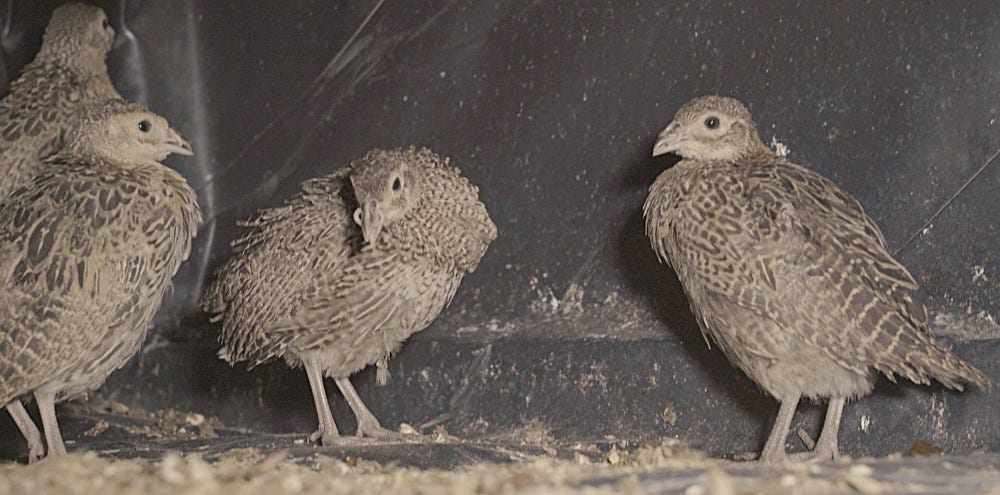
This one chick's death will not matter to the farm. She will not be mourned. On a production line churning out hundreds of thousands of birds a year, a dead chick is not a tragedy; it's a rounding error. Thrown in the bin, her cost will be absorbed into the price of every bird that survives.
But her death had a profound impact - on the team who found her, tried to save her, but couldn’t.
Undercover investigation work asks people to witness exactly this kind of moment - a dying chick, a stuck and panicking animal - but to keep filming, keep documenting, keep to the plan, because that is the only way this evidence reaches anyone.
It would be easy to assume that hardens a person, or that they stop feeling. That is simply not true. The discipline of staying composed in front of suffering they cannot immediately fix is one of the hardest parts of the job, not the easiest. It costs them something every time.
This piece - every article in this series - exists because they were prepared to pay that cost, because they genuinely care about every small bird in a way that people connected to this industry never will.
Video and images recorded by an undercover investigative team in 2025.
We are working to END BIRD SHOOTING. This suffering has to stop. Please share this article. Share our socials. Follow us for updates.
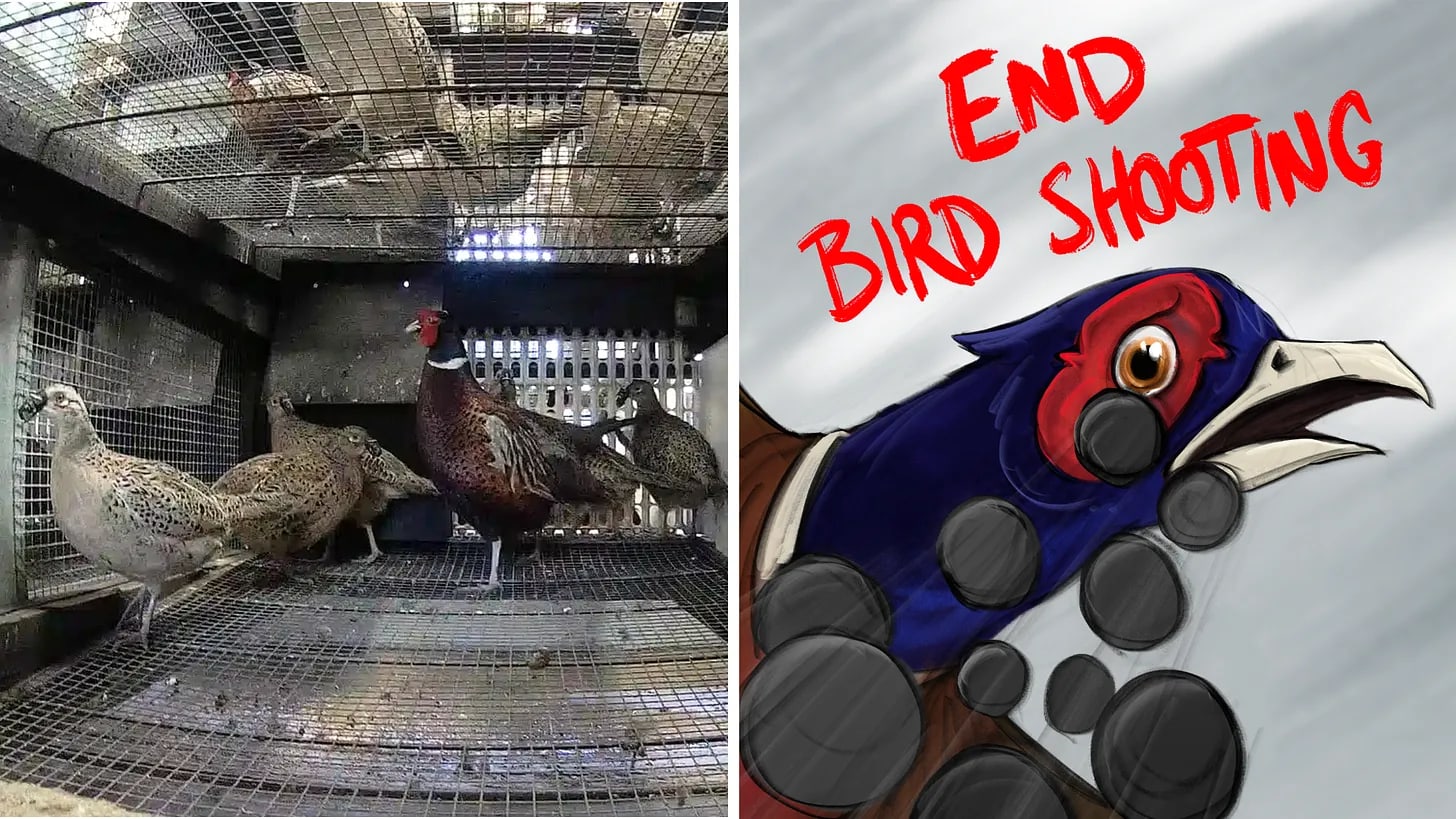
Over the coming months our campaign will look at the shooting industry at every level. We will highlight the suppliers — the farms, hatcheries, importers and breeders producing tens of millions of birds under conditions that would provoke public outcry if applied to any other animal. We will expose the providers — the estates and syndicates that take those factory-farmed birds and sell the experience of killing them as leisure. And we will look at the clients — the paying guns who are fully aware of the wildlife crime, the trapping of native predators, and the mass suffering involved, and who have decided that none of it is reason enough to stay away.
This industry survives because suppliers supply, providers provide, and clients pay. We intend to examine them all.
We are at the beginning of something. Months of undercover work. Hundreds of hours of footage. Farms across the UK exposed. But we are only just getting started.
Many of you have already become a Game Changer, standing with us as we take this fight forward, week by week, piece by piece, until the public, the media and the politicians can no longer look away. We are extremely grateful
Comments
Nothing yet. Say the first thing.
Sign in to join the conversation.