
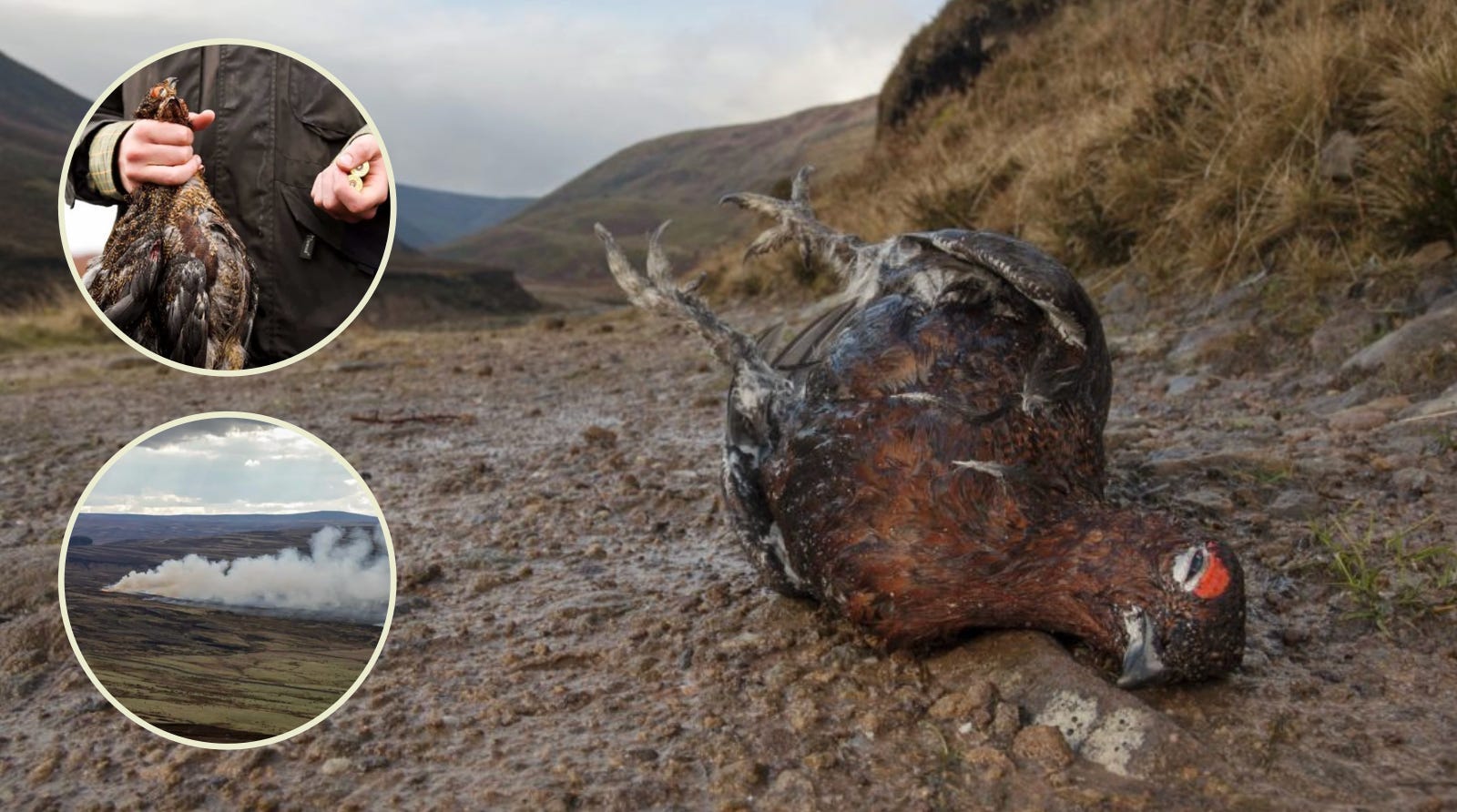
Every 12 August, a small ritual repeats itself in British newsrooms: a journalist lazily reaches for the phrase “Glorious Twelfth” to mark the start of the driven grouse season: four months of slaughtering one of just two birds endemic to Britain and Ireland for “sport”.
But look closely at the use of that phrase today compared with a century ago, and a hypothesis worth testing emerges - that the press has moved from uncritical cheerleading, through a phase of open scepticism, and is now largely disengaging from the story altogether, leaving the shooting industry to make its own case in an increasingly defensive and frustrated tone.
The evidence, gathered across national, regional and trade titles, supports that arc.
The term “Glorious 12th” is a relic of class deference. It entered use after the Game Act 1831 fixed 12 August as the legal opening of the season, and it stuck through the Victorian railway boom, when moorlands became newly accessible to wealthy sportsmen and grouse shooting turned into a fixture of the social season.
For most of the twentieth century, national and regional papers reported the day exactly as landed estates wanted: a “glorious” social occasion, framed around aristocratic house parties, railway grouse deliveries to London restaurants, and gamekeepers’ forecasts of a bumper “bag”.
The framing was celebratory, unquestioning. The press essentially reprinted the industry’s own vocabulary of “sport” and “tradition” without ever challenging it.
By the early 2000s, the unqualified cheer starts to acquire footnotes. These were practical, weather- or disease-driven caveats rather than ethical challenges, but they mark the first cracks in a previously unbroken PR surface.
Environmental and welfare framing followed. Scotland’s Herald has repeated claims that the date is now “more often than not... preceded by the word, ‘controversial’”, pointing to what one campaigner called a “circle of destruction“ around moor management. In 2022 the Herald ran a feature which openly asked whether the start of grouse shooting was “A grand rural tradition or an outdated outrage.”
In 2024 Scotland’s Press and Journal again posed the question, “Is grouse shooting still a celebrated tradition?”
Even inside supposedly sympathetic titles, dissent surfaced. That perhaps reached its apex in 2023, when, in a piece in which he blamed gamekeepers for poisoning a Red Kite, the late Rod Liddle used his Sunday Times column to call the industry’s existence “an absurdity”, a sentence that would have been unthinkable in a right-leaning broadsheet a generation earlier.
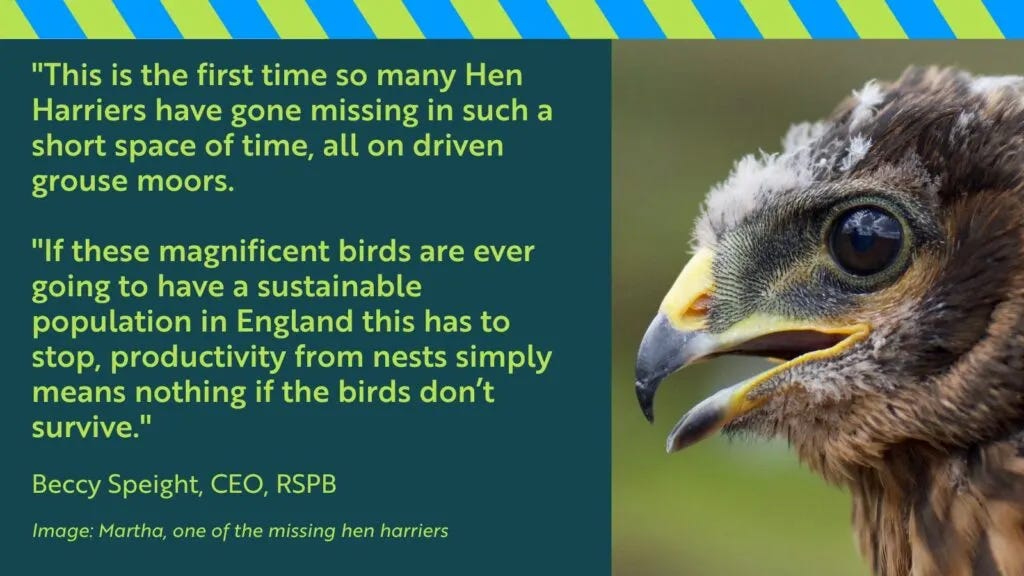
Online coverage of raptor persecution - the illegal killing of Hen Harriers, Golden Eagles and other birds of prey on or near grouse moors - has been central to this shift. Regional titles that once simply announced the shoot now routinely note that Scottish ministers cited “ongoing problems with illegal raptor persecution” when justifying a grouse moor licensing scheme, and mainstream reporting on satellite-tagged eagles that vanish over shooting estates has become a near-annual news beat in its own right.
After yet another ‘hottest summer on record’ and wildfires raging, it’s not difficult to predict that the environmental cost of a niche hobby that impacts important carbon stores and air quality levels will lead future headlines.
What’s striking about the last five years’ coverage is less outright hostility than a kind of editorial shrug.
Most “reporting” is now syndicated wire copy - near-identical short pieces distributed across dozens of regional outlets (Shropshire Star, the Dumbarton Reporter, ITV regional sites) carrying the same PA-agency paragraphs almost verbatim.
The celebratory long-read - the country-house feature, the grouse-on-the-9am-train story - has largely been relegated to lifestyle and luxury titles rather than being featured on the news pages of the Times, Mail or Telegraph. Even the Telegraph, still the most sympathetic of the nationals, now frames the day defensively: in 2024 it reported a “not-so-glorious Twelfth“ amid cancelled shoots and empty hotels.
By 2025 the Scotsman was running a feature asking outright whether it was “time to end the Scottish grouse shooting season“.
Meanwhile, hunt-saboteur “weeks of action” and Extinction Rebellion moor protests now get their own separate news cycle, often crowding out any celebratory framing entirely.
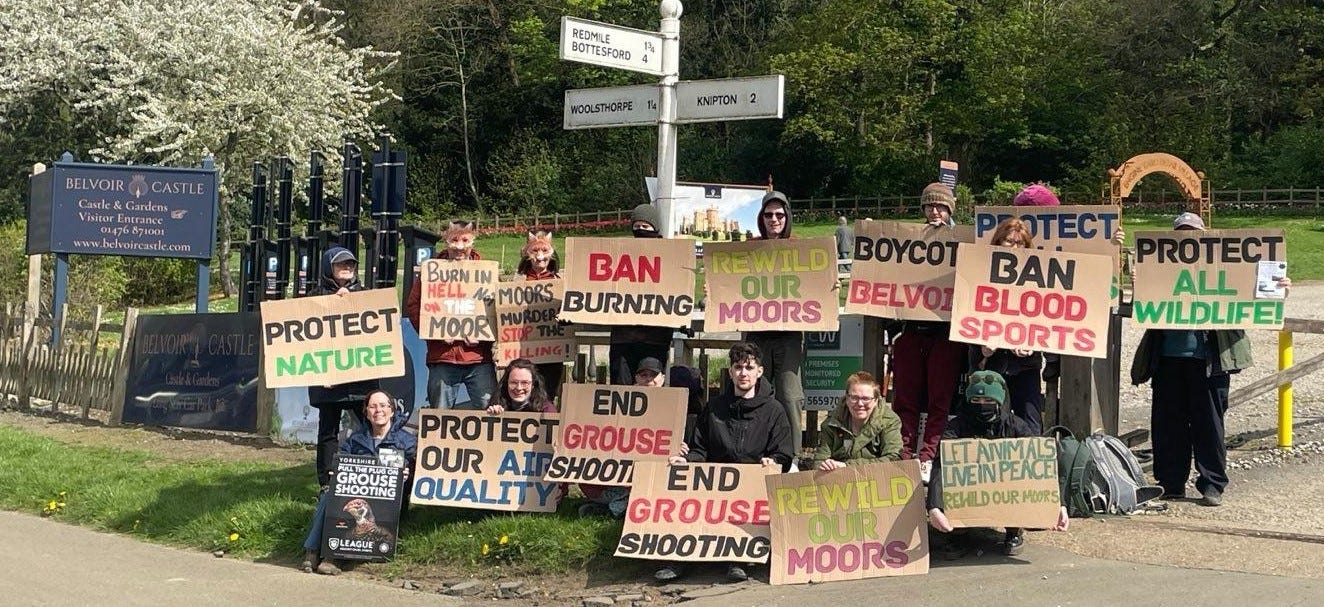
Campaigners have coined a counter-vocabulary. The term ‘Inglorious 12th’, for example, was first used by John Vidal in a Guardian article in 1999, and popularised by ecologist and blogger Dr Mark Avery around 2014. It has since become the standard rallying cry across wildlife and animal-welfare campaigns, hunt-sab networks and Substack commentary - Protect the Wild and End Bird Shooting write only of the “Inglorious 12th”.
The phrase has so far stayed almost entirely outside the national press’s own vocabulary, though. Reporters may quote campaigners using it, but newsroom headlines still default to “Glorious Twelfth”, even in stories that are otherwise sceptical or hostile in content. Campaigners like ourselves will be working to tip “Inglorious Twelfth” from a rallying cry into the term the mainstream press itself reaches for and is comfiortable using.
Where the most telling shift appears to be taking place is inside shooting’s own trade and advocacy output.
Older material extolled the day in almost devotional, salivatory terms - “glorious”, “iconic”, the “New Year’s Day of hunting”. Compare that with recent industry communications, which read more like a legal brief than a celebration.
BASC’s 2025 messaging was framed as a “season of recovery, not reward” rather than triumph. The Moorland Association’s public case now leads not with romance but with (disputed) arithmetic - grouse shooting is “worth £67.7 million a year to England’s economy“ and supports “over 1,500... jobs” - while Scottish Land and Estates claims that public “objections are quite often based on misunderstandings“, a defensive line that suggests the public is largely hostile or indifferent only because it needs re-educating.
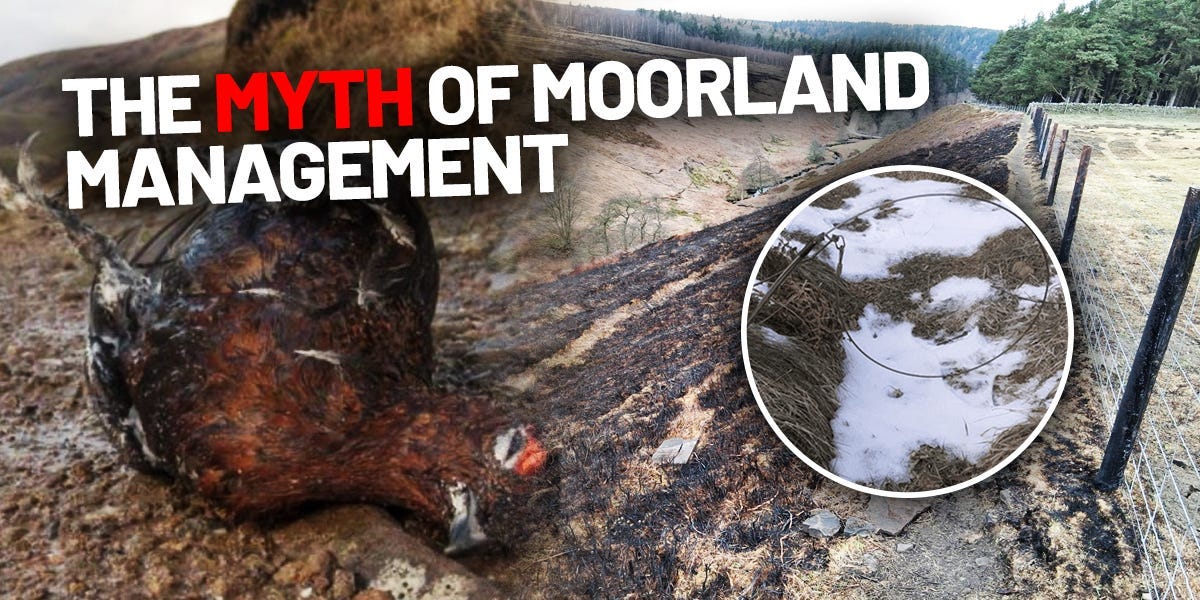
Groups such as the North Yorkshire Moors Moorland Organisation were founded explicitly, in their own words, because keepers felt their “livelihoods... were being threatened... by misinformation and the possibility of a ban”, and set out to “promote the good side of moorland management before it gets to that point” - a defensive mission statement that would have been unimaginable as an industry rallying cry fifty years ago (and one we have countered with articles like ‘The Myth of Moorland Management’).
One factor that has propped up the old framing more than almost any other is the continued, visible participation of the royal family. Grouse shooting at Balmoral has long been “one of the highlights of the royals’ calendar”, and King Charles, as Prince of Wales, shot there regularly for decades. That royal presence has given the industry something no amount of industry statistics can buy: a guaranteed, prestige news hook that keeps “Glorious Twelfth” in circulation regardless of the argument’s merits.
It is also the point at which the industry’s defensive posture and the family’s own public identity sit most awkwardly together.
Prince William has built a public profile around conservation - warning that species like elephants and rhinos could be lost within a generation, and founding the Earthshot Prize to reward environmental solutions - while continuing a family tradition of killing wild birds at Balmoral, a pursuit inseparable from muirburn, snaring and, on some estates, illegal raptor persecution.

Animal welfare campaigners made exactly that point when William took a young Prince George to watch a shoot near Balmoral in 2020, with campiagners arguing it sat uneasily with “a royal family that is trying to promote itself as progressive and compassionate”. Some conservationists have gone further, urging the family to rewild Balmoral’s moorland rather than manage it for driven shoots at all.
Should a future king choose to step back from grouse shooting, it would remove one of the last remaining reasons for the mainstream press to treat 12 August as an automatic news date rather than an optional one.
Royal participation is, in that sense, one of the last load-bearing walls left in the discredited advertising of the “Glorious Twelfth”: take it away, and what coverage remains would have even less support to keep it propped up.
The pattern is not a straight line. Right-leaning titles like the Telegraph still run celebratory content in some years, and trade outlets continue to promote the day to their own readership. It is 12 August 2026 as this is written, and the day is being covered - but nervously and in no way comprehensively.
The Countryside Alliance published a piece on 6 August headlined “A twelfth of August that is once again glorious?” - note the question mark, a hedge that would once have been unthinkable in industry copy. ShootingUK’s season preview is more relieved than triumphant, reporting that 2026 looks like “the best for three years” after two seasons “wrecked by weather and heather beetle”. That is the sound of an industry grateful simply to be out killing wildlife at all, not one confidently declaring a “glorious” day.
Meanwhile, on the day itself and at the time of writing, an online search suggests that none of the major national mastheads - the Times, Telegraph, Guardian, Mail, Herald or Scotsman - have run a distinct, freshly reported news piece marking the Twelfth, as opposed to recycled explainer content or wire-agency copy from previous years still circulating online.
That absence is not proof of anything on its own - coverage can simply lag a live search index by hours, and outlets may yet publish later in the day - but it is worth flagging as a live data point for the pattern the rest of this article sets out to establish: a century-long journey from unquestioning support, through open scepticism, to something closer to indifference in the mainstream press, alongside a shooting industry whose own language has curdled from boast into defence.
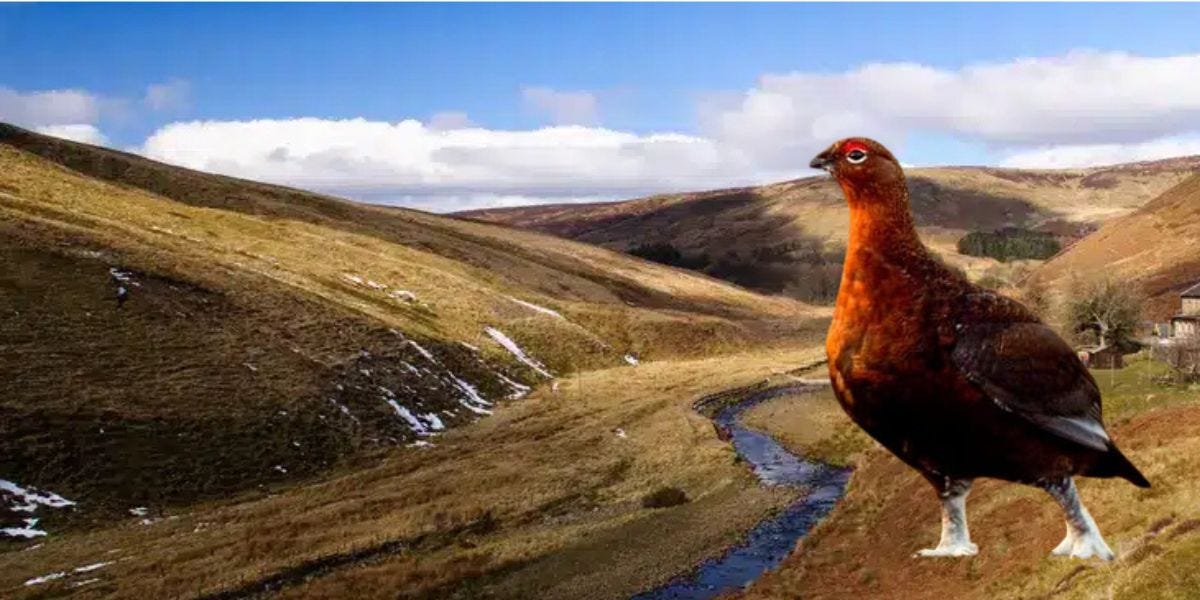
The grouse shooting industry no longer gets to simply declare the Twelfth ‘glorious’ and have the press repeat it; increasingly, it has to argue its case to journalists that appear not to be listening. This shift from “devotion to uninterested” marks a huge opportunity for campaigners.
A press that once needed no persuading to run the industry’s own language does not simply drift away; it walks away because the old story has stopped working - because raptor persecution, wildfire risk and biodiversity loss have made nonsense about “tradition” a hard sell, and because a new, less deferential generation of journalists and editors no longer treat a landed estate’s press release as “news”.
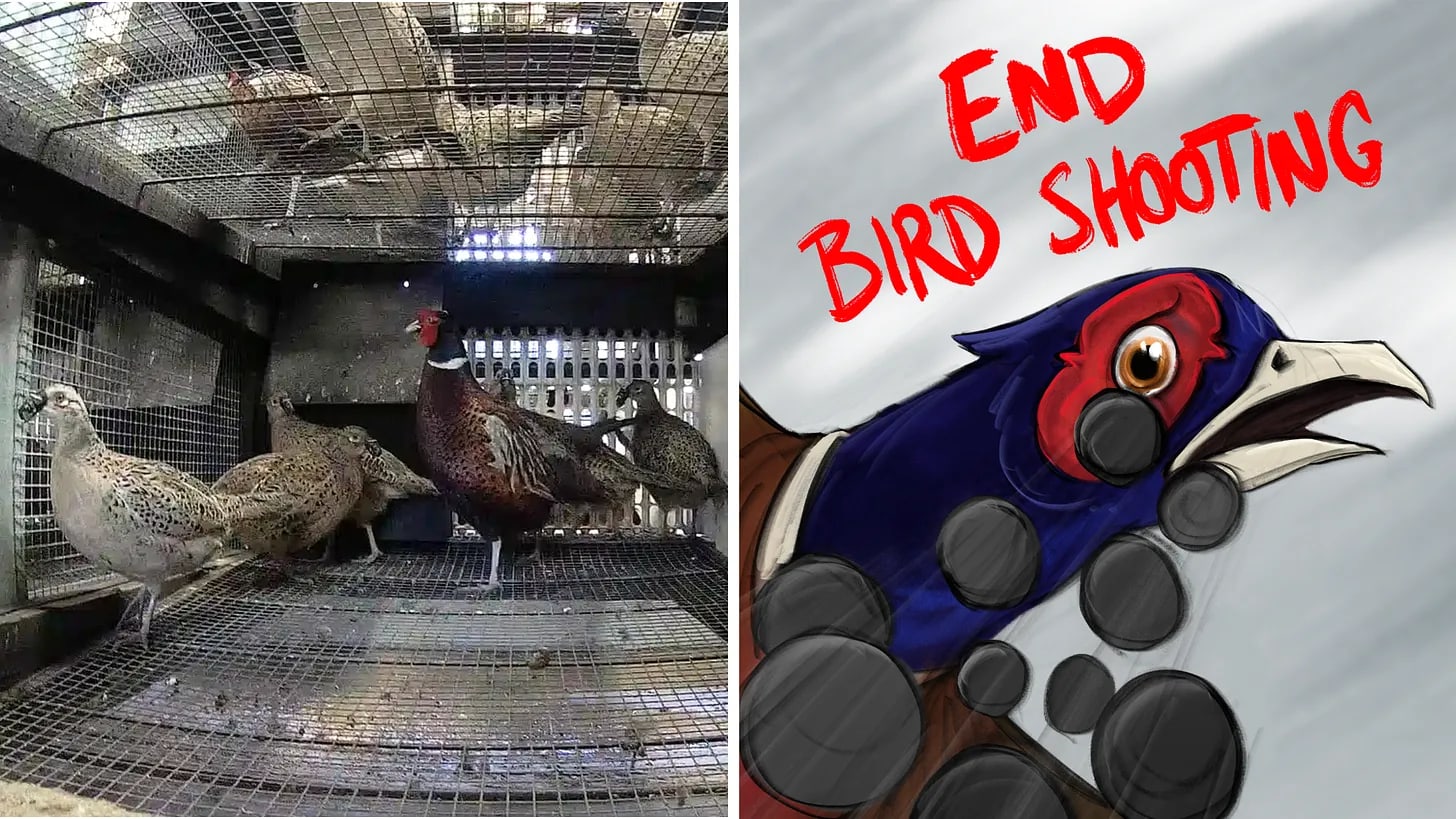
Over the coming months our campaign will look at the shooting industry at every level. We will highlight the suppliers — the farms, hatcheries, importers and breeders producing tens of millions of birds under conditions that would provoke public outcry if applied to any other animal. We will expose the providers — the estates and syndicates that take those factory-farmed birds and sell the experience of killing them as leisure. And we will look at the clients — the paying guns who are fully aware of the wildlife crime, the trapping of native predators, and the mass suffering involved, and who have decided that none of it is reason enough to stay away.
This industry survives because suppliers supply, providers provide, and clients pay. We intend to examine them all.
We are working to END BIRD SHOOTING. This suffering has to stop. Please share this article. Share our socials. Follow us for updates.
We are asking you to become a Game Changer. To stand with us as we take this fight forward, week by week, piece by piece, until the public, the media and the politicians can no longer look away.
This is the beginning. Please be a part of it.
Comments
Nothing yet. Say the first thing.
Sign in to join the conversation.