
Recently we showed you footage of pheasant chicks tipped bodily out of trays onto a shed floor, scrambling over one another before they’d even found their legs. Readers might reasonably have hoped that was as bad as it gets in the first weeks of a gamebird’s life. It isn’t.
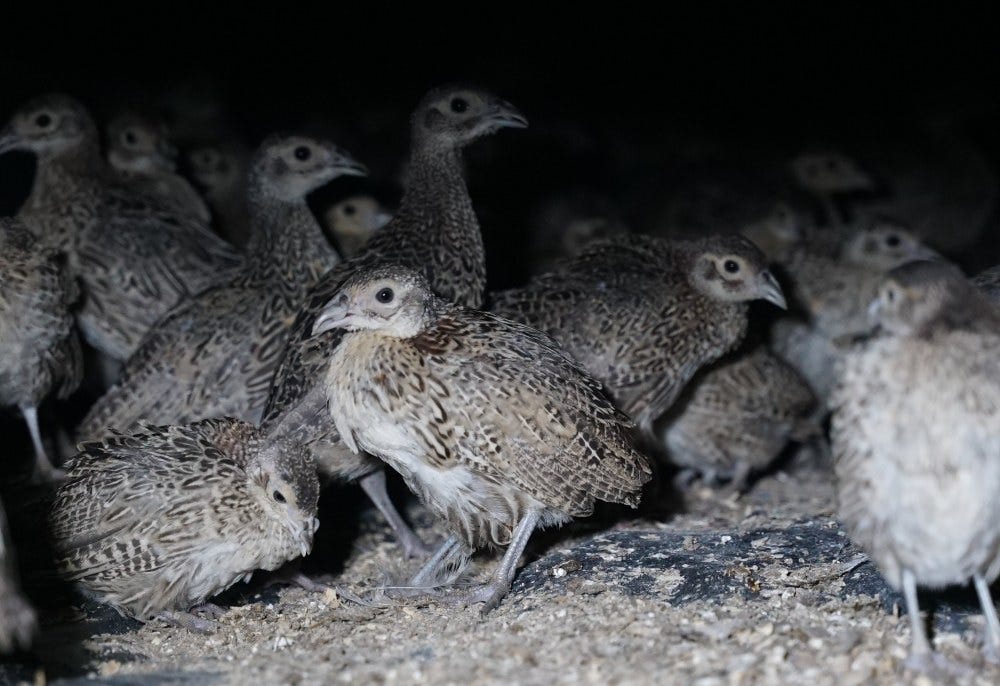
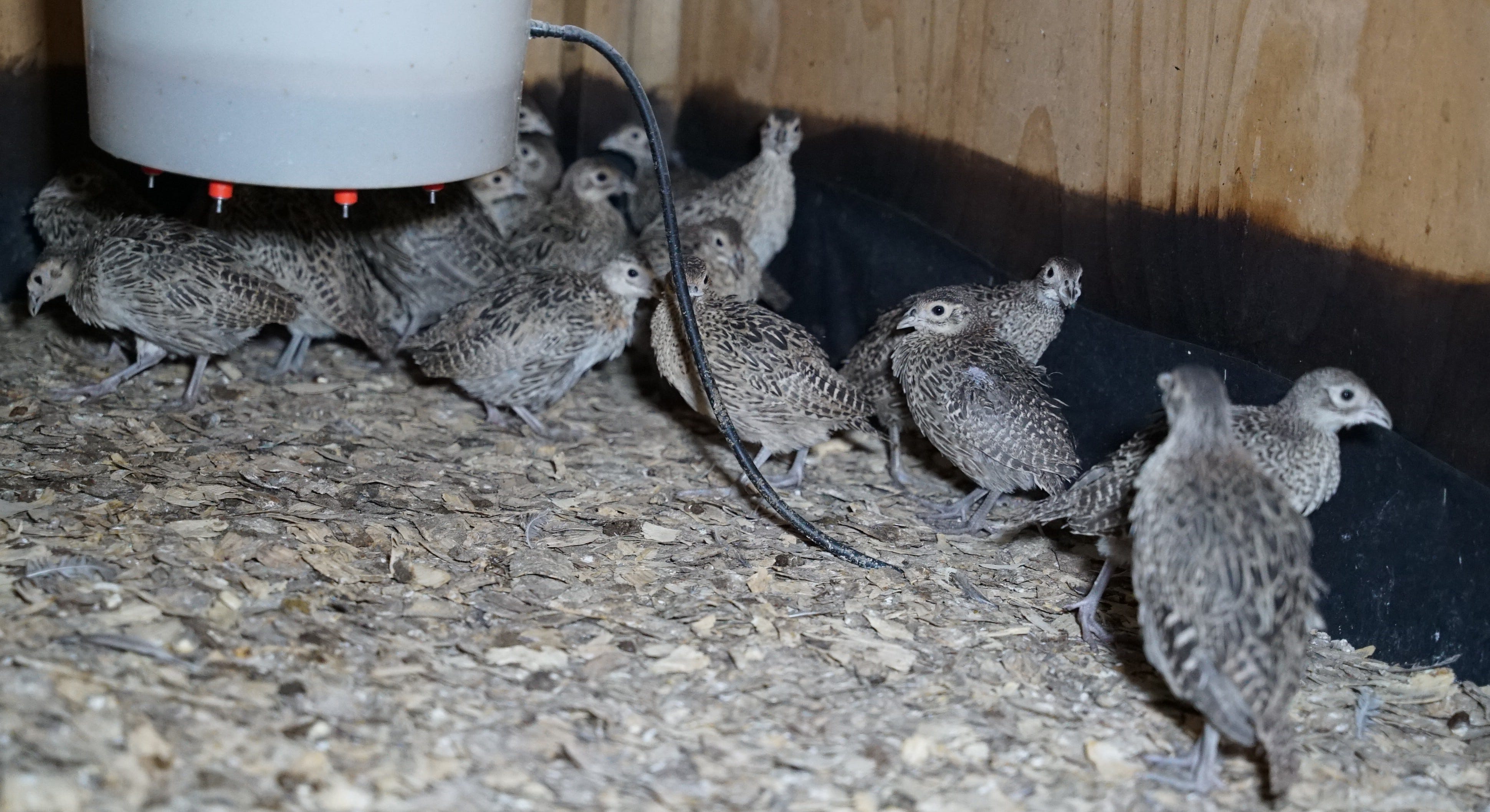
On another farm, investigators filmed young pheasants, and what the camera caught this time was quieter than a tray of chicks hitting sawdust, but no less telling. Every single young pheasant in shot - dozens of them, huddled under a heat lamp, picking through wood shavings, pressing into corners away from the light - had been fitted with a ‘bit’.
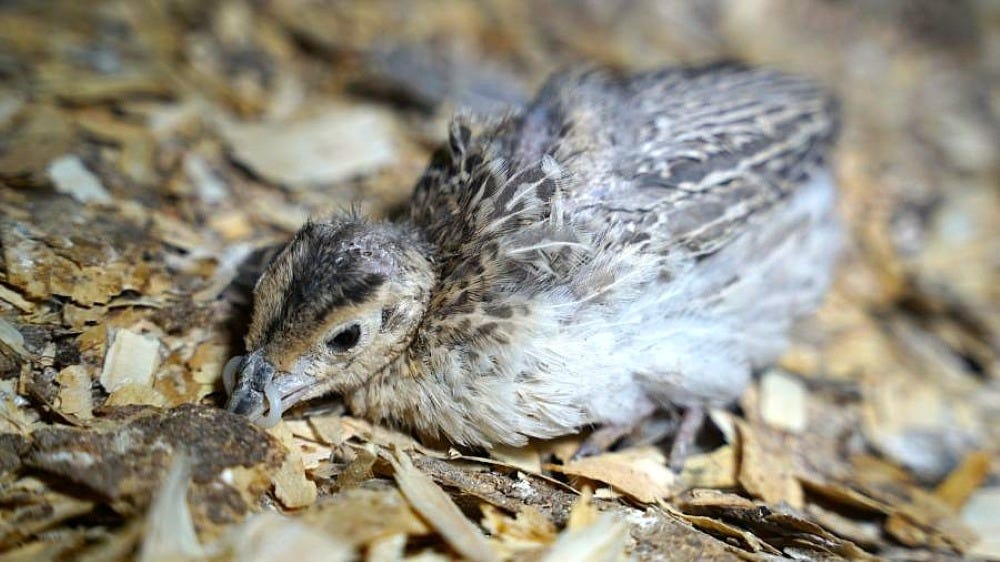
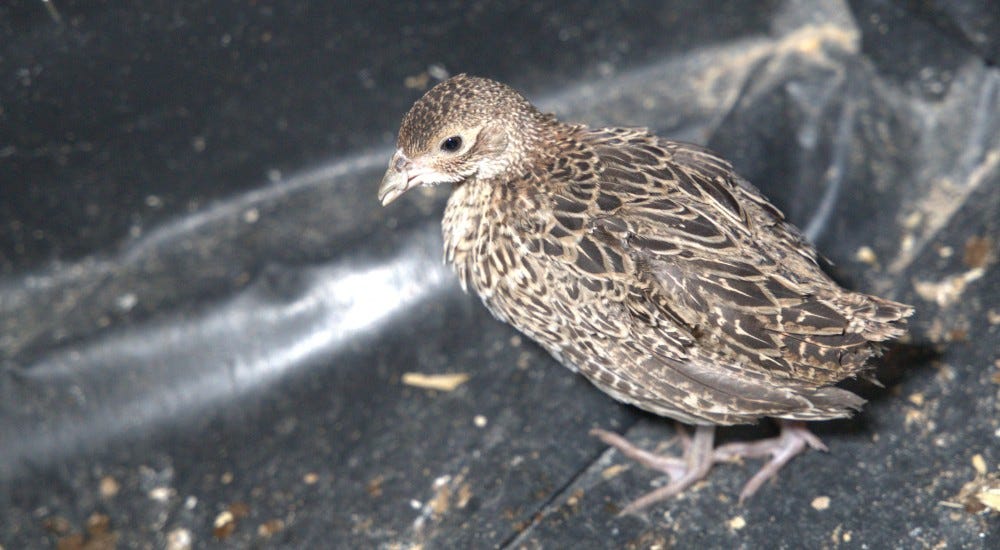
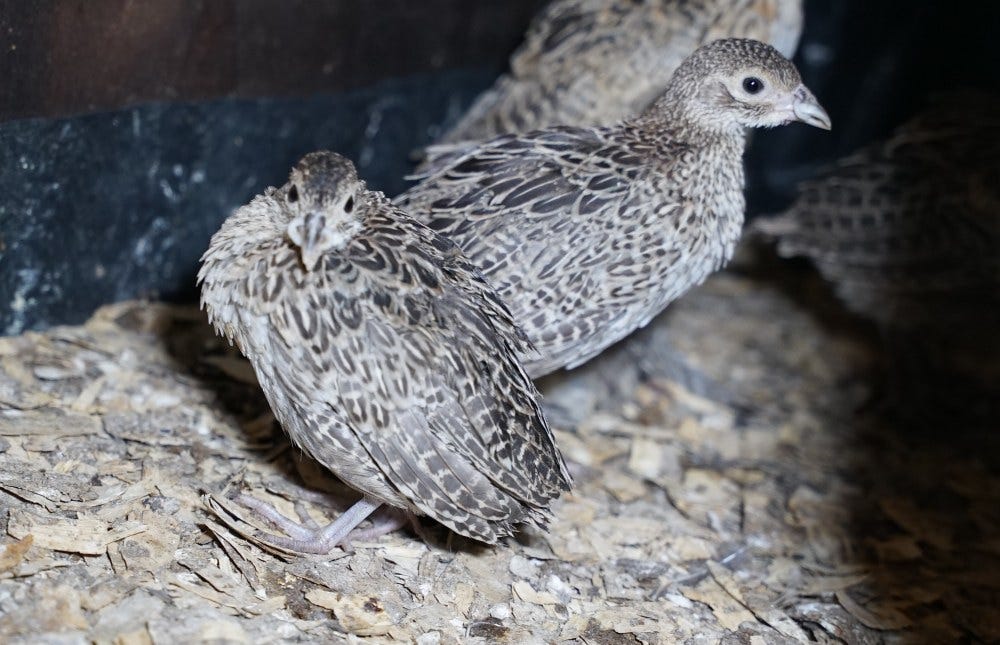
Look closely at the birds in these stills and you can see it: a small pale wedge of plastic lodged in the nares. It’s the kind of detail you could miss on a bird this young and this fluffed-up., but it is there. And it was put there very deliberately, to cure a ‘problem’ the shooting industry itself creates: feather pecking…
Before a bit goes in, a bird has to be caught. Every one of the young birds in this footage - every single one - was picked up out of a scrum of shed-mates, gripped in a human hand, and had something forced between its beak and its face. When they are six to seven weeks old they will be rounded up again, held down, and the bits pulled out.
Chicks have an in-built, evolved fear of something tall, upright and looming, closing in from above. It’s the same instinct that makes a chick freeze under a hawk-shaped silhouette. To a bird only a few weeks removed from the egg, a gloved hand descending out of the gloom of a shed is not so different from a predator. Yet it is caught, restrained, and has a foreign object fitted to a highly sensitive part of its body - and this happens not in an emergency, but as a matter of course because that’s what the system requires to keep the mortality figures down.
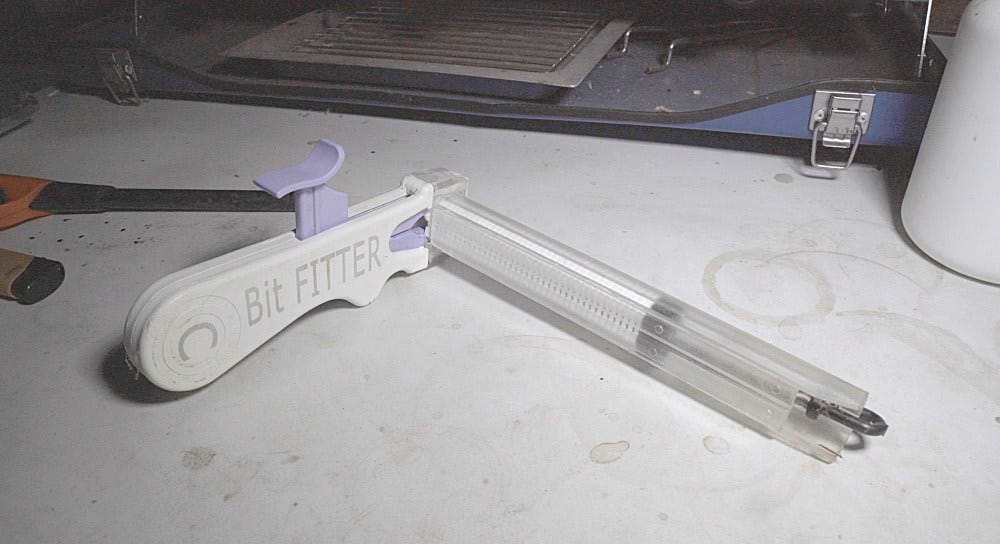
Unlike a beak guard, which clips over the top of the beak, a bit is slid into the nostrils and sits across the beak itself, holding it very slightly open so it can never fully close. It is fitted by hand using a plastic ‘bit fitter’.
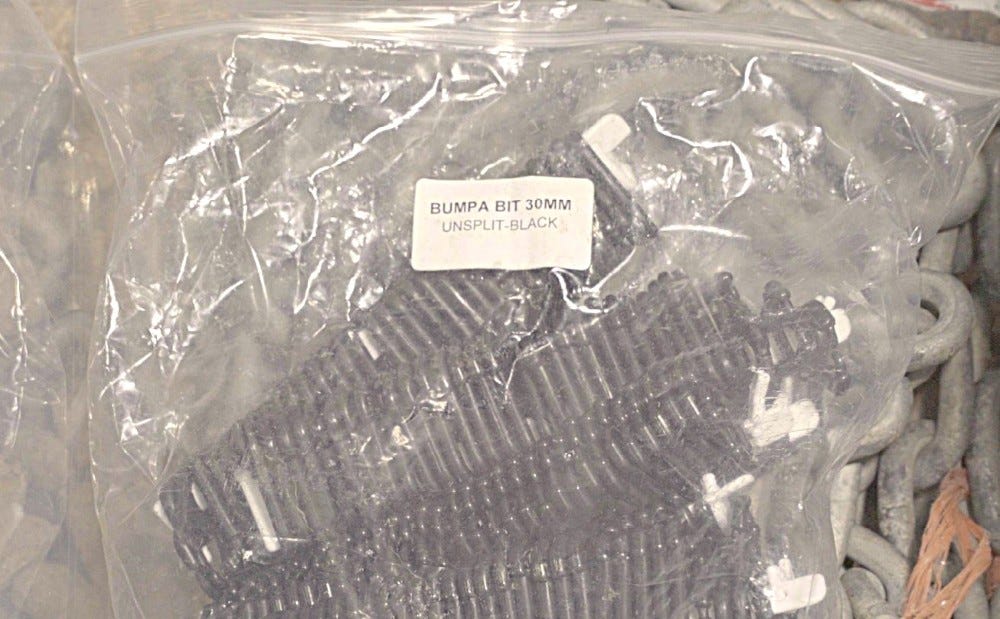
A bit doesn’t stop a bird pecking. It stops a peck from landing. It wedges the beak into a permanently slightly-open position so the bird can no longer close its beak tightly enough to grip and pull out another bird’s feathers.
The industry’s own research body, the Game & Wildlife Conservation Trust (GWCT), is candid about why this is considered necessary: its own studies found that flocks left unbitted suffered higher mortality because of increased feather pecking, and describe feather pecking outright as a welfare problem in flocks of birds being raised to be shot.
Read that again. The industry’s own scientists are telling us that the birds it rears are so prone to attacking each other that farms are having to fit bits on welfare grounds.
In the GWCT’s own trial that happened at five of seven farms tested. That isn’t a footnote. That’s a confession, dressed up as a research summary.
Because pheasants are not born vicious. In the wild, a hen pheasant raises a small brood in open cover with space to range, forage and simply get away from each other when they want to. What the investigative team filmed was the opposite of that: hundreds of chicks crammed under a few heaters in a shed with no natural light, nowhere further than a few feet to retreat to, competing for the same feeders, the same warm spot, the same patch of floor.
Feather pecking in birds bred for the gun is NOT a quirk of pheasant temperament just waiting to be managed with a piece of plastic. It’s a symptom. When young birds are stressed or lack proper outlets, normal pecking behaviour turns destructive.
It is what overcrowded, understimulated, thoroughly stressed young birds do to each other, and the industry’s answer isn’t to fix the conditions causing it - it’s to physically stop the birds from being able to express the behaviour those conditions are producing.
Even the GWCT concedes that pen ‘enrichment’ has had only limited success at preventing it - because enrichment doesn’t fix overcrowding. Only space does. And space costs money. It’s the same pattern we found with breeding cages in ‘Whatever the industry decides it means‘ - enrichment defined narrowly enough to tick a box without addressing the actual problem: not enough space.
Fitting bits is lawful, but read Defra’s own Code of Practice for the Welfare of Gamebirds Reared for Sporting Purposes, and Clause 5.1 says devices like bits, spectacles and hoods should “not be considered as routine” and that keepers should “work towards the ideal of management systems” that don’t need them at all.
Yet “as routine” is exactly what bitting has become. Not the exception reached for when a flock turns aggressive - it’s the default, endorsed by the industry itself, and applied automatically to every chick, because it is cheaper than giving them room to be pheasants.
Just below that Clause 5.3 says that the use of bits in young pheasants for short periods “to prevent injurious behaviour” should be justified and closely monitored on each premise.
That is not what the cameras - which were filming continuously - captured. An occasional visit and a quick glance is not ‘closely monitored’ by any stretch of the imagination.
This isn’t the only time these birds might be handled and fitted with a ‘management device’. It will happen to birds kept back for egg laying when they are older and crammed into raised cages.
In “Pinned Down and Terrified” we showed you breeding birds being fitted with beak guards and spectacles - devices clipped to the top of the beak - and described exactly what fitting one does to a bird held down on a table: the panting, the fixed stare, the visible fluttering of the throat. That footage still stands. This is a different device, filmed on a different farm entirely, on a different day - but it tells us the same underlying story:
Overcrowd the birds, then fit a device to manage the fallout.
Rear them at a density that guarantees stress, then blame ‘pecking behaviour’ on the bird as though it were an unfortunate quirk of the species rather than a predictable consequence of how they’re being kept.
Again, a ‘bit’ is not proof that pheasants are naturally vicious. It is proof, though, that this industry has yet again found it cheaper to fix the bird rather than to fix the conditions they are kept in. And yet again, it has chosen to ignore the Code of Practice that it helped to put together: the so-called ‘Code’ was drafted after extensive consultation with the Game Farmers Association.
Incidentally, when asked in a 2010 consultation on the Code, whether bitting younger pheasants should continue when “justified, monitored and fitted on an enterprise-by-enterprise basis,” the GWCT’s answer was yes - but added that “their use should always be kept under review.”
Sixteen years on, that review appears not to have happened. What we filmed wasn’t monitored, justified case-by-case use. It was every bird fitted - as standard.
There is little point naming this farm, because it is doing what many others do. This is an industry-wide issue.
But then this is an industry that treats live animals as units before selling them off to be shot. That mouths platitudes about ‘not tolerating wildlife crime’ while appearing to look the other way when birds of prey ‘disappear’. That in the midst of climate and biodiversity crises is broadly still behaving as it did a century ago.
As a final thought, the government itself writes in the Preface to its November 2023 updated Code of Practice page that “Failure to comply with a provision of this Code shall not of itself render you liable to proceedings of any kind”. In other words, welfare codes are not law.
It's worth sitting with that. It's true, technically. But look at what "not law" has been made to mean in practice, on this farm as on the others in this series of articles.
Not a floor beneath which no keeper should fall, but a ceiling nobody has to reach.
Not routine has become routine.
Kept under review has become never reviewed.
A Code drafted with the industry's own input has become a document the industry treats as optional the moment it costs money to follow.
Non-law was never supposed to mean law-free. But it’s precisely inside this legal hole where this farm, and all the ones we’ve written about, have chosen to set up camp.
But then, this is the shooting industry: what exactly did politicians think was going to happen…
Photographs taken by undercover investigators in 2025
Code of practice for the welfare of gamebirds reared for sporting purposes Clause 5.1 “The use of management devices or practices that do not allow birds to fully express their range of normal behaviours should not be considered as routine and keepers should work towards the ideal of management systems that do not require these devices. Such devices and practices include mutilations such as beak trimming, procedures to prevent or limit flight such as brailing (placing a band on a wing to prevent extension of the wing), trimming of non-sensitive flight feathers and the use of bits, spectacles and hoods to prevent feather pecking, egg eating or aggression. Their use should be justified on a flock by flock basis and regularly reviewed in the flock health and welfare plan. Any device that is designed to pierce the nasal septum is illegal.”
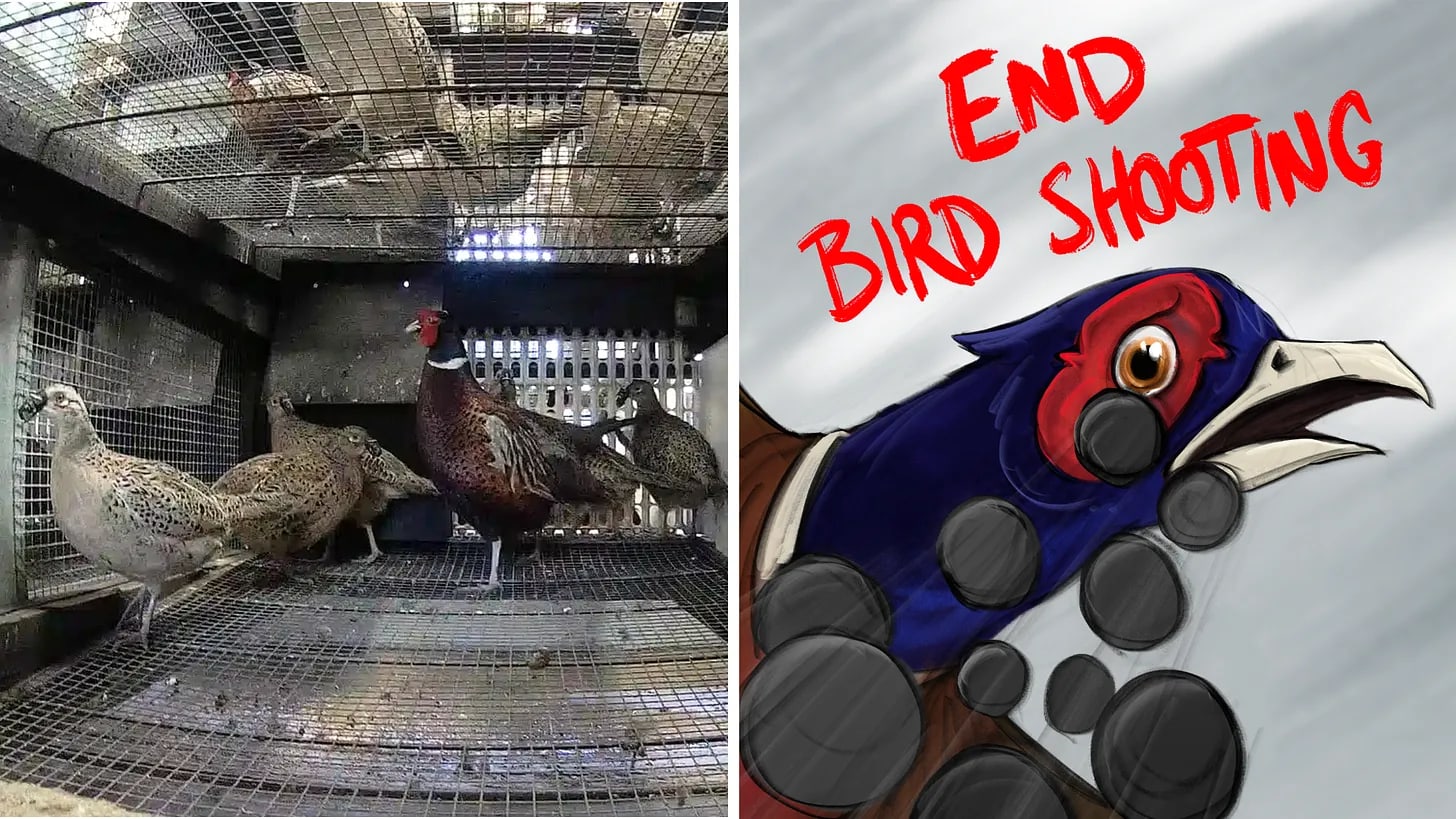
We are working to END BIRD SHOOTING. This suffering has to stop. Please share this article. Share our socials. Follow us for updates.
Over the coming months our campaign will look at the shooting industry at every level. We will highlight the suppliers — the farms, hatcheries, importers and breeders producing tens of millions of birds under conditions that would provoke public outcry if applied to any other animal. We will expose the providers — the estates and syndicates that take those factory-farmed birds and sell the experience of killing them as leisure. And we will look at the clients — the paying guns who are fully aware of the wildlife crime, the trapping of native predators, and the mass suffering involved, and who have decided that none of it is reason enough to stay away.
This industry survives because suppliers supply, providers provide, and clients pay. We intend to examine them all.
We are at the beginning of something. Months of undercover work. Hundreds of hours of footage. Farms across the UK exposed. But we are only just getting started.
Many of you have already become a Game Changer, standing with us as we take this fight forward, week by week, piece by piece, until the public, the media and the politicians can no longer look away. We are extremely grateful
We are reaching a larger audience all the time, though, many of whom won’t know that Game Changers help us fund investigations, take on staff, and make us more effective. So we are going to repeat the call here - this is just the beginning, please be a part of it.
Comments
Nothing yet. Say the first thing.
Sign in to join the conversation.