
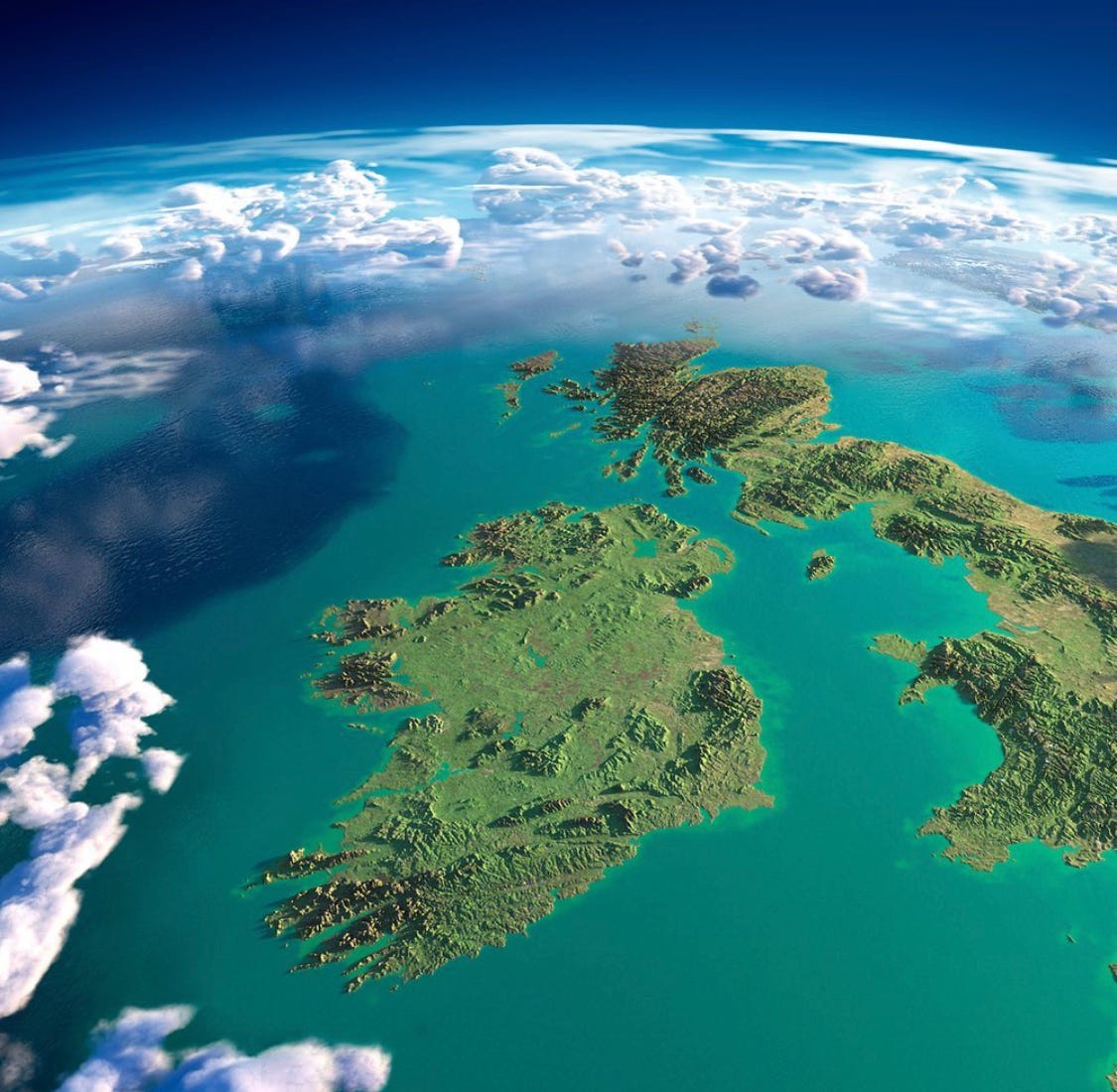
Ever since I could drive a car, I’ve spent a good bit of time exploring, and wandering across Ireland’s ancient lands. For me, following Stoicism as a philosophy of life two things stick with me; one is the principle of living in harmony with nature, and second is understanding what is and isn’t within our control. Where I come from, those words are definitely more than just theory.
At home, each rocky mound and quiet forest i pass through seems to whisper an old wisdom; the earth is sacred, and all things are connected in a single living web. A sentiment you can find across the world in many locations of course. A writer on Celtic spirituality once said that the Earth is holy, and that humans are part of a larger web of life. I feel that truth in my bones. Every moment spent in the great outdoors feels like stepping into a conversation with the divine nature of things.
The environments I have at my disposal are my greatest teachers. There are four kinds of places that, for me, hold their own lessons: the cliffs, the glens, the stone monuments, and boglands. There are others, but these are the four that I regularly visit within proximity to where I live.
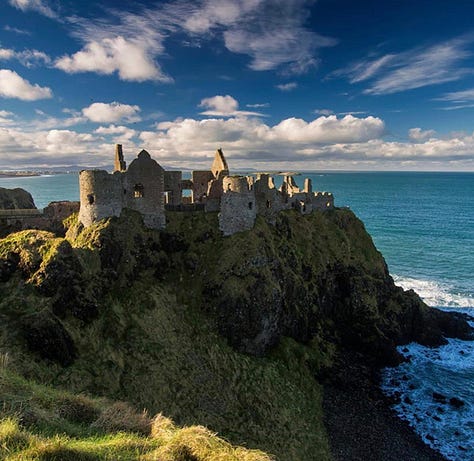
West of the country, the cliffs that face the Atlantic are often wrapped in mist, visibility low, yet you can still feel the sheer vastness of what’s in front of you. Standing there, the roar of the sea below and the endless horizon beyond make you aware of both your smallness and paradoxically your belonging.
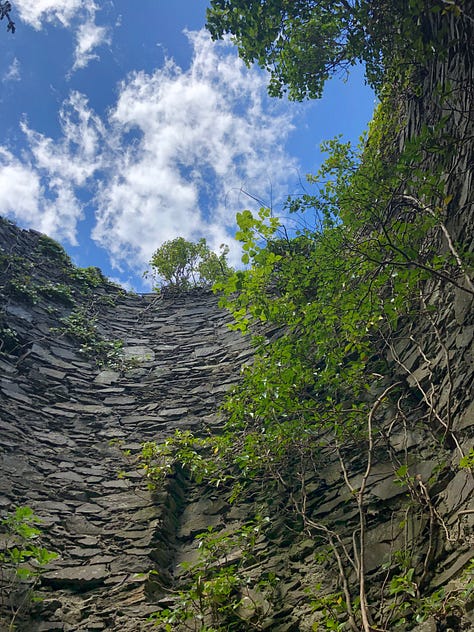
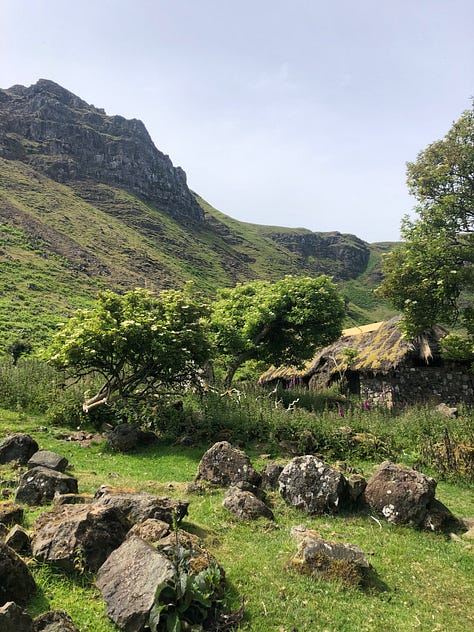
Then there are the thousands of glens and small forests often hidden away or forgotten in cases, mossy, wet, with sacred wells, and usually containing lowly streams. In these, essentially green cathedrals you can find tranquility without much searching for it. Time within one of these spots moves differently, and your grasp on our known reality is loosened.
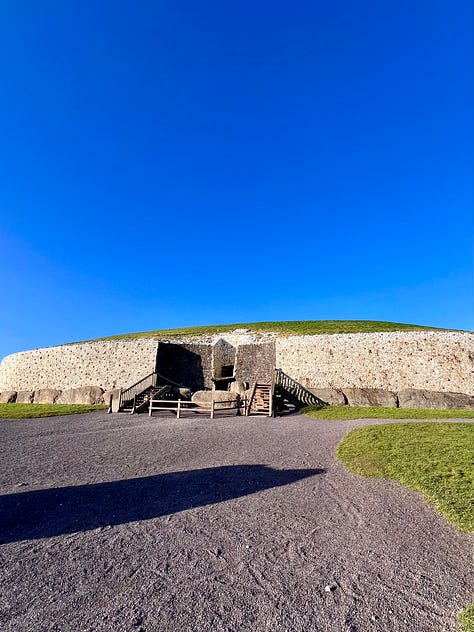
Next are the ancient stone circles and tombs that have always fascinated me, though I approach them with caution and respect. Littered across the country courtesy of our pagan ancestors, and older than the Pyramids in some cases, they were generally aligned to the sun or moon, or served as burial and sacrificial chambers. They’ve stood the test of time for who knows how many millennia.
These monuments carry a presence that humbles me every time I visit one. I can never quite shake the sense that there’s another type of reality or presence there, reminding us that permanence and impermanence are not opposites. They are part of the same truth.
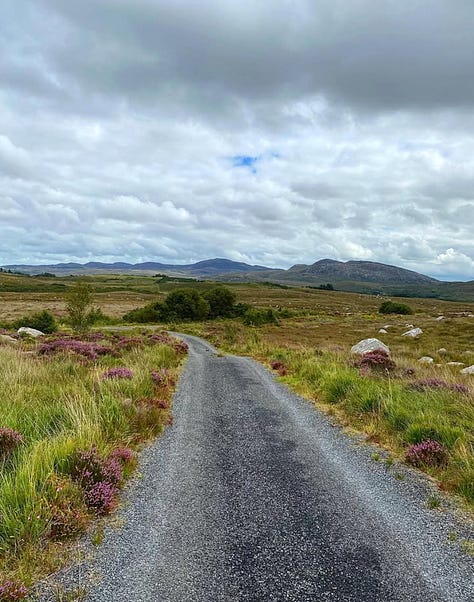
And finally, we have the eerily silent boglands. The dark peat marshes hold time itself, with fossils sleeping beneath their surface. The air is thick and still, colours muted. Anyone who’s experienced the smell of burning turf in an open fire will know that the scent alone can melt away anxiety and bring a calm that feels unparalleled in day to day life. It can stir something deep in the heart of any Irish person.
The bogs especially hold a strange power. Scholars call them liminal spaces, thresholds between worlds. I know of that sensation well.
Each of these four types of landscapes evokes true reverence within me. In these sacred spaces, astonishment and mysticism are effortless. Here, I am small, yet unafraid, part of something immense. The ground beneath my feet and the restless sky above remind me that I am only one thread in a vast tapestry. Everything is connected. Nothing stands alone. Here the web of life, wind, water, and earth all sing together in harmony.
Within these places I am reminded of my part in the great order of things. Small, yes, but part of the same pattern that binds stars and stones alike.
For the Stoics, the universe is infused with Logos – universal reason and order. When I stand in these places, I often sense a hidden order, a rhythm to everything. The winds and tides, the growth of moss, even the drift of clouds all seem guided by a quiet intelligence. Nothing in nature feels totally accidental.
This is the heart of living in harmony with the world, to see reason and rhythm in what unfolds. The waves rise and fall, storms come and go, and the seasons move in their own perfect cycle. I take comfort in that. It reminds me that my role is not to resist or control, but to move with the current, to act with integrity and let the rest unfold as it will.
Living in tune with this, I recall that Stoicism teaches Virtue when we align our actions with nature’s flow. A regular old sunset, the hush of a forest canopy, the constant breathing of the land, these are teachers too. They ask for patience, courage, and understanding. They remind me that nature is not something outside of us; it is the rhythm we live within.
These landscapes teach me another lesson: acceptance. The cliffs bear scars of storm and sea, the forest floor is littered with fallen branches and the remains of woodland creatures, the bog sometimes floods unseasonally. All are part of nature’s way.
I have learned to see that same pattern in my own life. What comes, comes. What goes, goes. To fight the tide only exhausts the soul. Gratitude is the wiser path, for the rain and sun alike, and for both calm and for chaos. The land teaches a kind of love of fate, not resignation but reverence. To greet each dawn or storm and quietly say, “it is what it is”.
A great commentary on Stoicism observes that nature is ultimately in control, and all events—good or bad—are simply “from Nature and we should be accepting and grateful”.
Standing outside on a wind-swept day, I often think that everything here happens exactly as it must. The storms shape the stone, the rain feeds the soil, and the soil feeds life again. It is all one great conversation between elements, and I am just lucky to be a listener for a short period of time.
Out here I also practice being present. A Stoic ideal is that our happiness depends on the quality of our thoughts and living in the moment. The great Stoic teacher Epictetus reminded us to focus on what is in our control and let go of the rest. Surrounded by what I have on my doorstep, there is little choice but to notice the here and now.
When I am out in nature, the noise of modern life fades. My worries dissolve and my mind slows. Peace does not have to be sought, it reveals itself when you stop resisting the moment.
Humility grows naturally too. In a way I am both inconsequential and significant. Insignificant as a single person, but connected as part of this whole. This perspective is freeing. If I am just a small piece of the puzzle, then many pressures – status, possessions, the uncontrollable future – lose their power over me. I find dignity in doing my small part well and letting nature take care of the rest.
From the above thoughts I can distill a few recappable insights:
Harmony (Logos): In the ebb and flow of tides and seasons see reason’s pattern. On the shores, or in my back garden under the stars, I remember we are part of one grand reason, and this keeps me grounded.
Acceptance: Storms and sunshine alike, teach me to accept life as it comes. This encourages me to embrace each day’s change with equanimity, that everything ultimately happens by nature’s design.
Presence: The wild demands presence – there is nowhere else to be. I use it as a tool and practice focusing on the here and now, on things within my power: my thoughts, my actions, my breath. As the Stoics taught, our happiness lies in our own judgements in the present. By observing the animals at work or feeling the elements on my body, I attend fully to this moment, finding Virtue in pure stillness.
Humility and Interconnection: These rugged landscapes humble me. I become a part of something older and vaster. Something that I’ll never fully understand, and this is okay. I am content with my small role in the world’s drama, and through that I feel more compassion and kinship with all life around me.
Walking around my home country at times feels like a pilgrimage of the soul. The wild, mostly untamed beauty draws me into feelings of overwhelming awe and gratitude. I am reminded daily that strength is not found in control, but in understanding, and in learning to live with the world rather than against it. And by embracing what is beyond my power and finding contentment in simple being, I cultivate an inner fortress of serenity, mostly.
In the end, the outdoors has always been my greatest teacher, more so than any person, book or online video and article. I am constantly reminded that the laws of nature are friendly when viewed with the correct perspective, and that to walk peacefully upon the earth is to walk peacefully within myself, and too for the benefit of others around me.

Until next time,
Memento mori,
Enda (The Irish Stoic) 🧠 🖤
This writing was inspired by Manchán Magan, who recently passed away. His wisdom of the knowledge of the natural world, mythology, and original the Irish language was truly inspiring. May he rest in peace.
P.S. The wife and I wrote an essay on handling conflicts within relationships for The Modern Stoicism Blog. Click here.
Comments
Nothing yet. Say the first thing.
Sign in to join the conversation.