
People who read my blogs or attend my workshops know that I love personality tests even though some people dismiss them as astrology. My latest favourite is one that assesses our relationship to time.
The test shows I tend to put more focus on the future and making plans for it, rather than dwelling on the past, or fully living in the present. People with this profile tend to be goal-oriented, health conscious and prone to workaholism. Tick, tick, tick.
“The future is not some place we’re going to but an idea in our mind too. It is something we’re creating that in turn creates us. The future is a fantasy that shapes our present,” writes psychotherapist Stephen Grosz in his wonderful book Loves Labour.
Studies show that our time perspective is influenced by our upbringing, our country of origin, gender, religion and social class. So a future-facing profile like mine is common in the United States, Brazil, Russia and Turkey, according to this research. Pub-going Brits are more likely to be present-oriented hedonists along with the French and Kiwis. Meanwhile, Germans and Chinese show a more fatalistic streak.
Language has a lot to do with how we view time: English speakers imagine the future is ahead of us, Mandarin speakers represent the future as below them and dwellers of the Andes who speak Aymara think of the future as behind them. In my illustration, I have shown the past on the left and the future on the right, but people who read languages like Arabic and Hebrew from right to left would do the opposite.
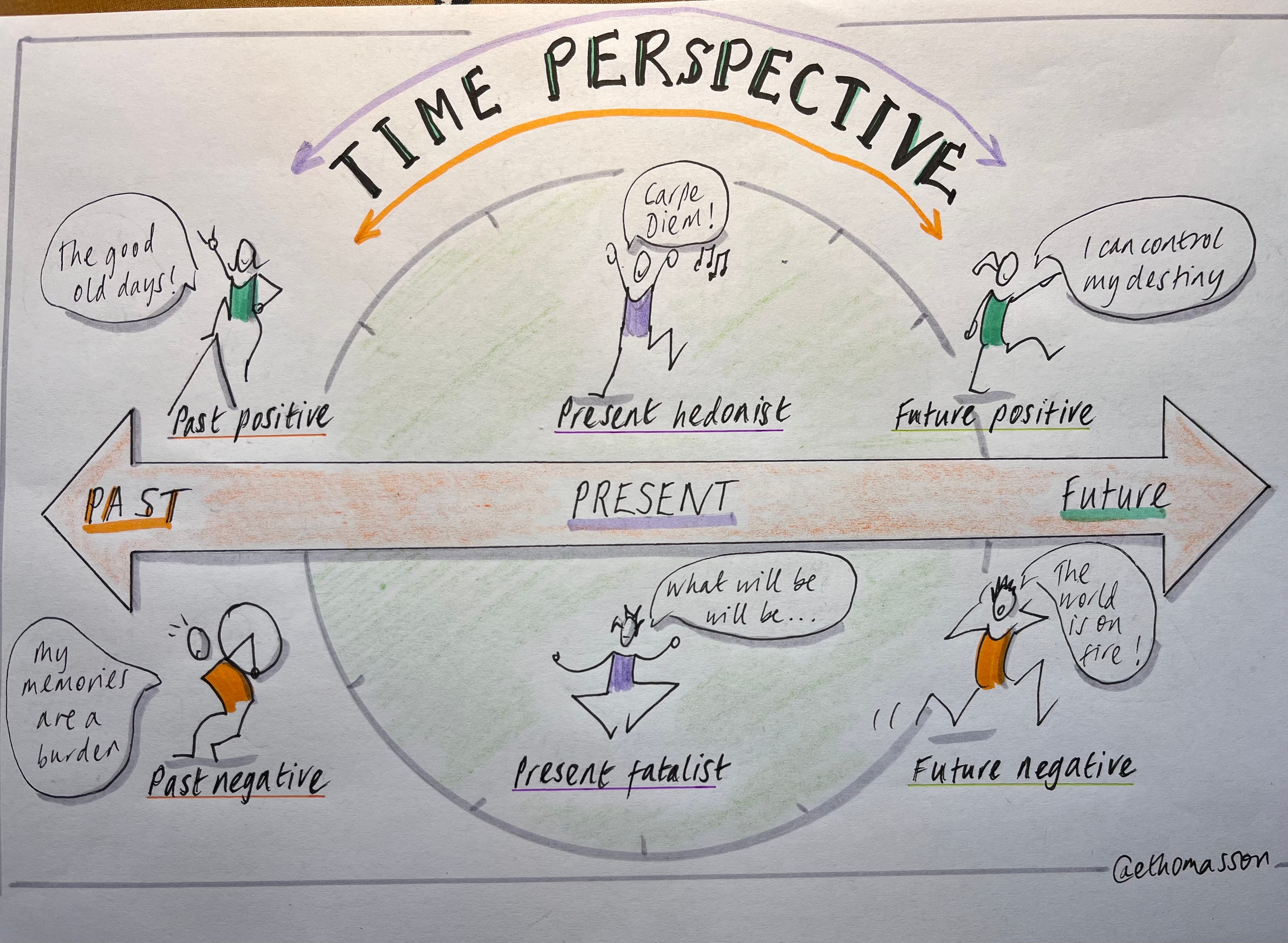
This time test was developed by US psychologist Philip Zimbardo, known for his controversial Stanford prison experiment. The Zimbardo Time Perspective Inventory gives you a score based on whether you have a generally negative or positive view of the past, whether you are more hedonistic or fatalistic in the present, and how much attention you pay to the future. Other versions of the test split the future orientation into positive and negative categories.
I first came across this system when reading The Bright Side by Sumit Paul-Choudhury, who describes his positive view of the future as a personal choice, and a moral obligation, after the death of his wife from cancer.
“I became an optimist the night my wife died,” he writes. “After a year during which branches of the future had been systematically pruned away by the progress of the disease, there were, abruptly, many new paths again. And now it was up to me to choose one.”
Like Paul-Choudhury, my belief that I can shape my own destiny, and my expectation that things will turn out OK in the end mark me out as an optimist. Meanwhile people who ruminate about negative past experiences are more likely to have a pessimistic view of the future. But these perspectives are not set in stone.
Research shows that places with stronger economic growth are more likely to score high on future orientation, while people living in poverty tend to dwell on a negative past or are fatalistic about the present. Unsurprisingly, people become less focused on making plans and more on surviving in the present during economic crises. At a recent journalism conference in Montenegro, colleagues from the Balkans seemed less worried about AI and the bleak financial outlook for our industry and keener to make the most of today than those of us from western Europe.
One study conducted during the COVID pandemic showed that that women had more negative views about time, and used more negative terms to define the present and the future than men, something I can relate to after trying to help my sons with their school work while filing stories from my bedroom during lockdown. Of course time inequality did not start and end with the pandemic and is clearly not limited to gender.
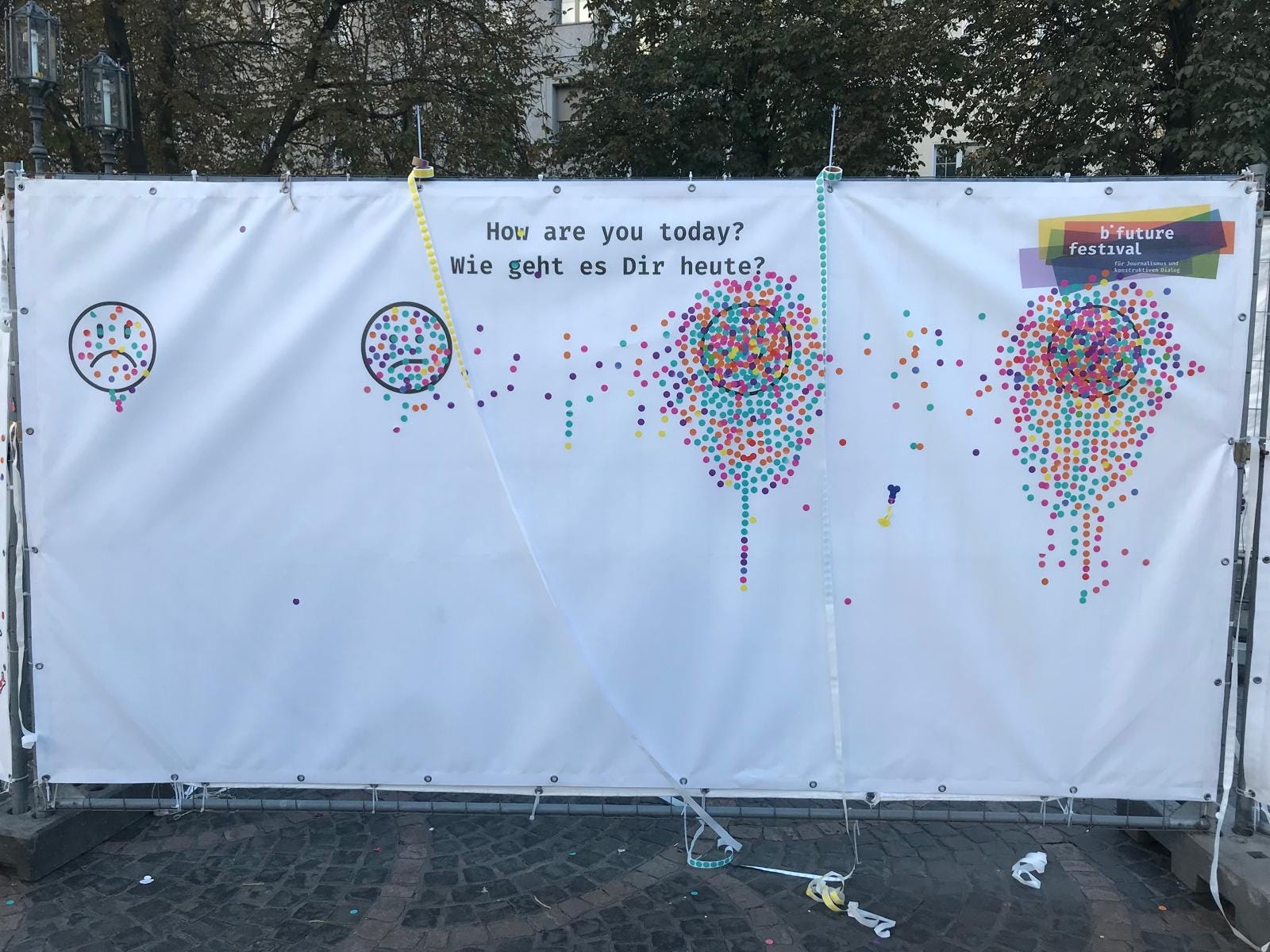
I wonder how journalists’ view of time is influenced by gloomy stories they cover about conflict and crisis. If we mostly chronicle a negative past or forecast a worrying future, we risk alienating those who are more upbeat or who are just getting by in the present. That picture was confirmed to me at a journalism conference in Germany in October 2024. While most reporters were doomscrolling about the war in Gaza, a street poll showed most people were carrying on as happily as ever.
This disconnect helps explain why activists, journalists and politicians struggle to get the message across about the climate crisis. Dire predictions of a global warming emergency in 2050 alienate those people who can’t think beyond the next paycheck, or those who are late to pick their kids up because a protest has held up the traffic.
Zimbardo says present-oriented people focus on activities that bring pleasure or avoid immediate pain: “They tend not to be influenced by educational or persuasive messages, either written or oral, in which the necessary action to take or refrain from taking is in some future context.”
While I could do with a bit more hedonism in my life, there are downsides to carpe diem, as present-focused people are more prone to addiction and other problems.
“They give in easily to temptation, can be distracted from task performance by a host of physical and social stimuli,” Zimbardo writes. That sounds a lot like the social media addiction that seem to be exacerbating symptoms of ADHD for many people I know.
Some experts argue that myopic election cycles, clock-watching capitalism and nationalism have all strengthened a focus on present-mindedness.
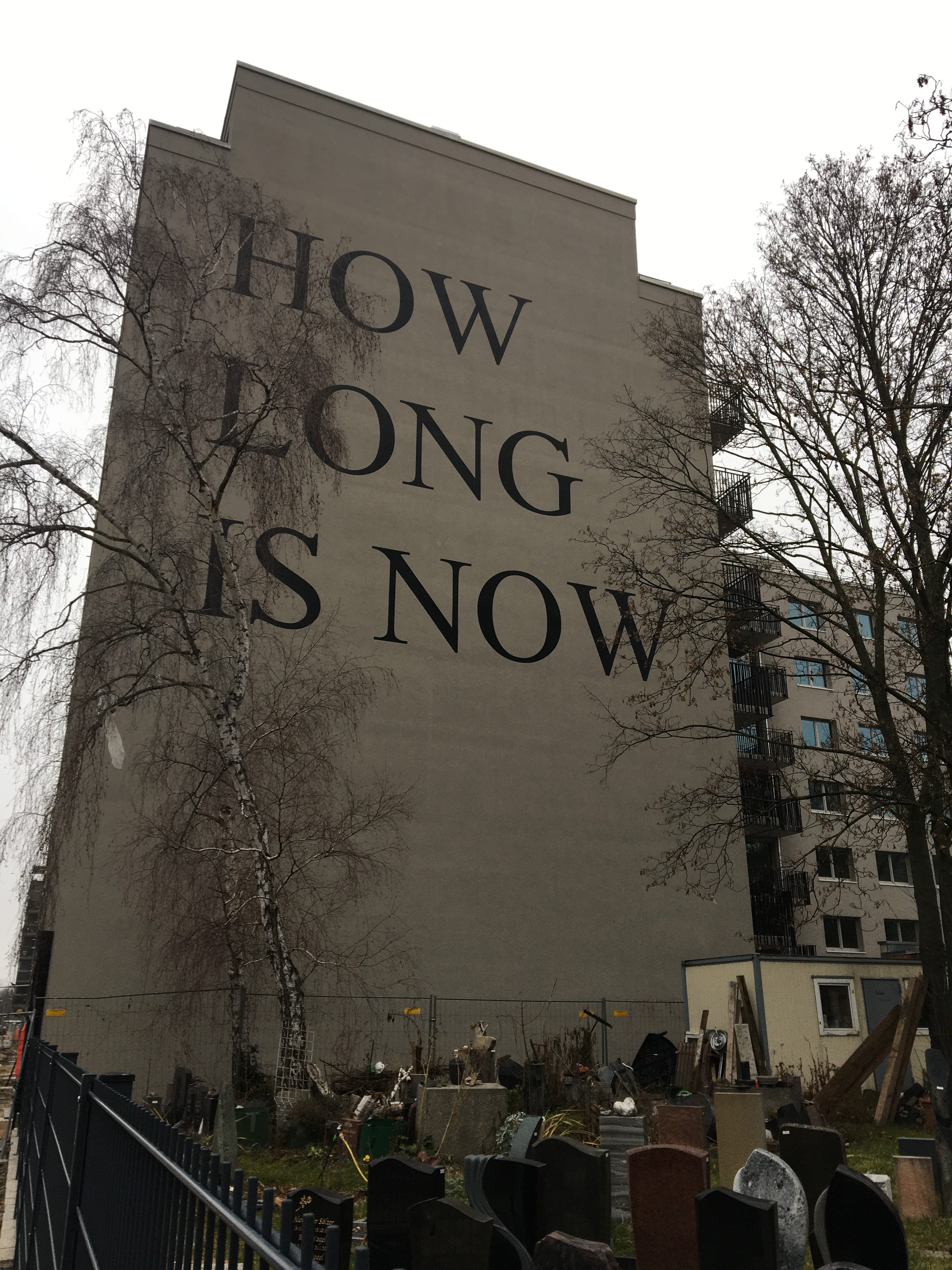
However, John Keane, Sydney university professor of politics, suggests that we are experiencing a new politics of time more focused on the past and the future, that includes restorative justice and the idea of trusteeship for future generations.
“A sense of urgency about the political import of the past, and the future, is becoming part of the common sense of the living. There are refusals to rush through daily life. Political talk of slow journalism, slow cooking and slow living can be heard. And public awareness that our lives are entangled in multiple rhythms is spreading,” Keane writes.
Research shows that people who are more forward looking are more trustworthy, while a new study from business school INSEAD shows that managers can generate more trust with their team members if they focus feedback more on the present and the future rather than the past.
A future vision encourages creativity and motivates action: that is why I use the design thinking approach of framing challenges as opportunities in my workshops, using the “How might we..?” brainstorming format.
So how might we make journalism more focused on the future? My friend Barbara Maas encourages reporters to ask hypothetical questions like these ones:
“Is there anything in your field at the moment that might point to a new development?
“Can you imagine an extreme event that would fundamentally change everything?”
“Imagine it’s 2035. What does the world look like, and what is your life like in relation to our topic?”
I know my hope about the future reflects my privilege, but it is also a choice. I refuse to allow politics of fear to lock me in constant rumination about potential dystopias that makes me fatalistic, and powerless, in the present.
“There is always hope. Even when the world seems dark, there are good people working for justice, peace and a stable future,” said Nadia Murad, a Yazidi human rights activist and Nobel Peace prize laureate.
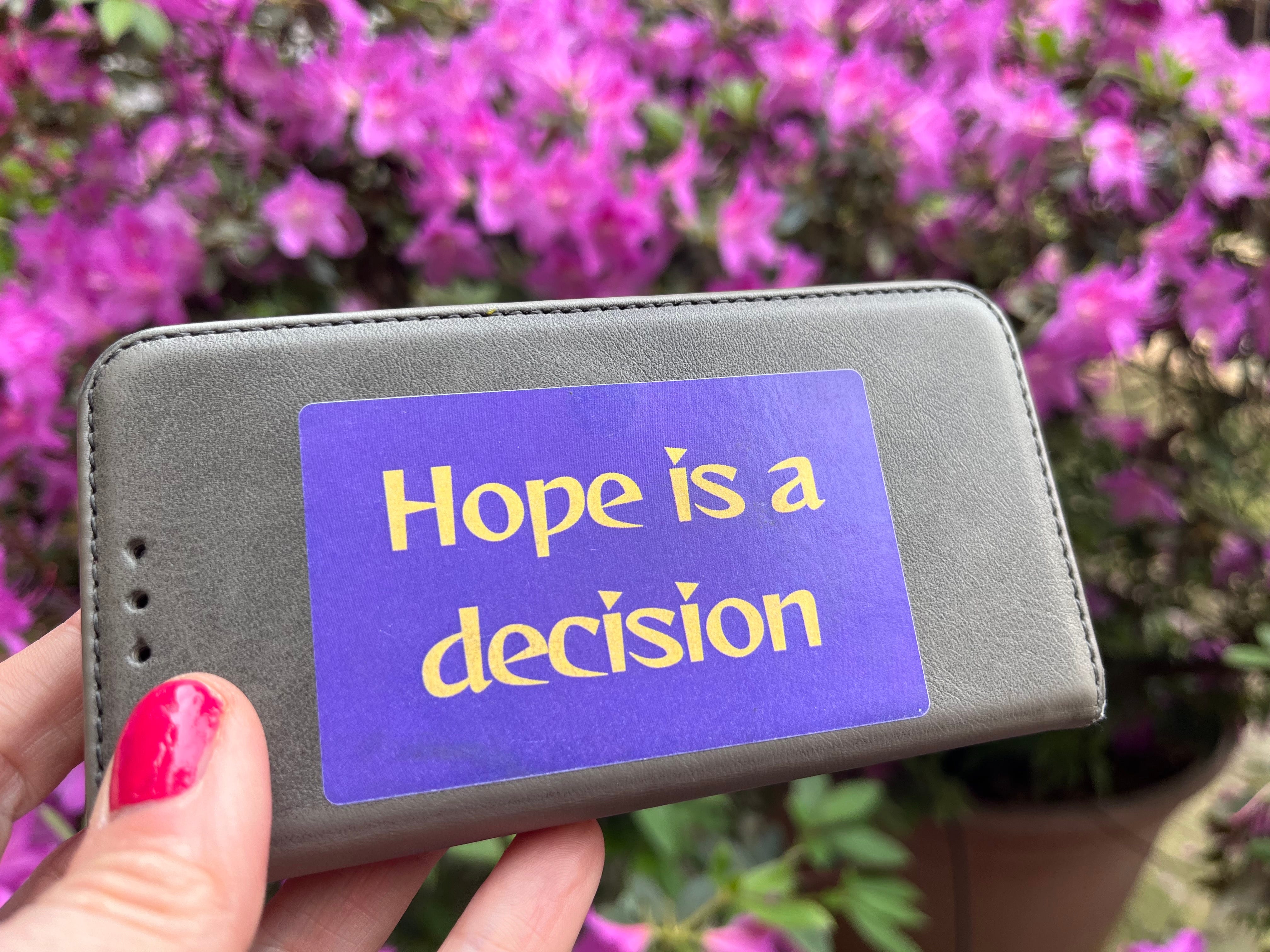
I will be handing out my hopeful stickers at the journalism festival in Perugia this week, where I will be working on practising some present hedonism in the sun, while also gathering ideas for a more hopeful future for the news.
Djinns by Fatma Aydemir - A gripping chronicle of a Kurdish-Turkish-German family mourning the sudden death of the father who came to Germany as a guest worker, told from the perspectives of the different family members. I read it in German but it is out in English too and I can’t wait to hear what my book club made of it.
Wifedom by Anna Funder - I was blown away by this original blending of biography, fiction and personal memoir that tells the untold story of Eileen O’Shaughnessy, the wife of George Orwell, who was his editor and muse but was never credited in his writing although she was a major influence on books like Animal Farm and 1984. I was shocked to discover that she died alone after a botched operation just a few streets away from where I grew up in Newcastle. There should be a plaque to her memory.
Comments
Nothing yet. Say the first thing.
Sign in to join the conversation.