
“We are witches, dissociating into fortune tellers, predicting whether an outfit will get us asked out, or taken seriously, or simply left alone.”
— Emmeline Clein, “The Smartest Women I Know Are All Dissociating”
“We want what other people want because other people want it, and it’s penciled-in eyebrows all the way down, down to the depths of the nth circle of hell where we all die immediately of a Brazilian butt lift, over and over again.”
— Danya Tortorici, “My Instagram”
I spent 2025 buying nothing. Or, that was the idea. I didn’t starve, or anything like that. I had credit card debt, which really meant I had shame. I wanted to get rid of it.
Clothes were the main culprit. Clothes filled with possibility and women-be-shoppin’ dread. Since the pandemic (so the story goes), my online shopping habit had become compulsive. I became weak against The Emails. You know the ones. The braindead want colonizing your inbox. I spent money I didn’t have, mostly at a slick outfit known as The Reformation (no relation to Martin Luther). The Emails promised I could turn myself skinny and mysterious with the swish of a silk skirt and the secret of it costing $200.
It felt good to tell people about this ambitious year of shopping abstinence. Every Wow, good for you and Couldn’t be me felt better than the last.
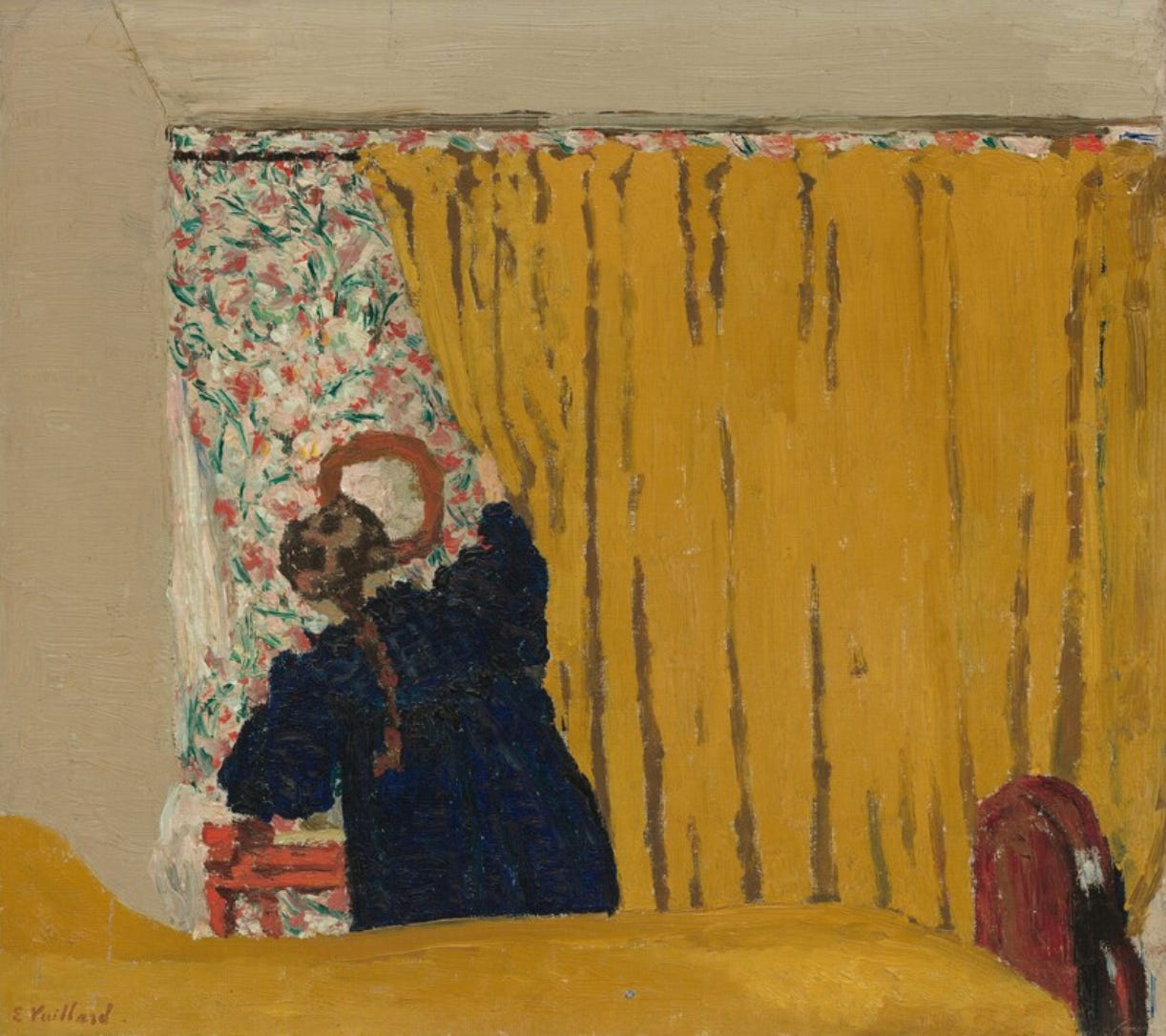
Abstaining from pretty much anything reads as virtuous. It is, after all, a strategy that hinges entirely on your own will power. That’s about all it takes to color us rugged-individual Americans impressed. Self-imposed puritanical deprivation has never gone out of style around here. If you alone are in charge, and you alone succeed in starving yourself, that’s discipline baby.
The more I felt that people were impressed by my decision to try a no-buy year (which meant that they were impressed by me), the clearer the image of myself staring coolly down my nose at The Emails became. Who falls for these? Not I. Before the year of buying nothing had even begun, I’d situated myself in a special little abstinence bubble, wearing the same outfit over and over again, answering to no one. Maybe a true self could be found if I stopped wearing something different every month.
Near the end of 2024, in a post-election spiritual funk, I fell down a months-long YouTube video essay rabbit hole. I told myself I was arming myself with information, but really I was self-soothing. I came across a YouTube channel literally called The Financial Diet. If the ultimate diet is eating nothing, then spending nothing would surely yield some kind of results. An interview on the channel featured a woman detailing how a year of buying nothing helped her reclaim her financial independence and crawl out of some serious credit card debt. Eureka. She said that abstaining from shopping “rewired her brain.” Somewhere around month six, “a switch flipped.” Eventually, the fog dispersed. Spending money on stuff she didn’t need was frivolous and hollow. It seemed she had stopped wanting altogether.
How powerful the draw of a clean before/after threshold is. How glorious it would be to be freed of the messiness of wanting. One year of no shopping, and I could turn into Thich Nhat Hanh? I was craving something true, a tangible kind of enlightenment (take that, The Reformation).
On the whole, I am pretty terrible at following Judy Garland’s advice to be a first-rate version of yourself instead of a second-rate version of somebody else. I do a pretty decent job of performing otherwise, but I’m constantly trying to twist myself into a second-rate someone else. It doesn’t matter who, just someone other than me. Karlie Kloss, Lorrie Moore, that billionaire that got caught cheating at the Coldplay concert (that’s how much attention I want sometimes). This is an objectively miserable way to live, and The Emails know it. They can spot the crowd of aspirational phantoms living inside me from a mile away, nervously milling around and saying mean things to me. Who can say who was there first: the phantoms or The Emails.
If you are a woman (or a man I guess) you understand that desiring things like chic clothes or glass skin is a very normal kind of trap. You’ve felt that sucker punch, when you look down only to see all the other pairs of the exact same shoes you’re wearing in the pile by the door at the party. You try so much, especially inside, to be an individual, to stand out, to make your mark. The market compels it. One path the market offers is Tabi dupes, or a Baggu bag. You’re always double aware: you want what you want, but also there’s a big invisible hand, probably shaped like Mark Zuckerberg’s, guiding your want along by the small of the back.
I want liberation from capitalism, but I also want a sweater. It’s a lot easier to get the sweater. Some retailers may even have you believe that buying their sweater is a good step on the way to liberation. The sweater says something like “Earth Mother” on it. Everyone will know that you respect the Earth as a divine feminine being. That you are eco-conscious hot.
The no-buy year was, in part, supposed to challenge this kind of doublethink. To reorient my desire to more substantial projects. How often had I fantasized about creating more than I consume?
It is a lonely wish, wanting your brain to literally be different. If only I could rewire it. If only a simple year of not-buying could show all of the phantoms inside me the door once and for all. If only I could free myself through something noble and harsh, like abstinence.
I’m not sure why or where I picked up this narrative that cold discipline is obviously better than earnest (albeit fleeting) desire. Maybe it’s part of the famous vibe shift. Like Rachel Syme noted back in 2019, “dissociation is always better than desperation.” But what happens when you’re desperate to dissociate? Desperate to break out of the self, period?
Like anyone who abstains from anything (or starves themselves), I made rules. Rules are very important. I decided on the categories I would abstain from, with a few reasonable loopholes: I was allowed to purchase items in any of the off-limits categories if they were a gift for someone else, and I was allowed to replace my face wash and my shampoo when I ran out. I permitted one book purchase. One salon haircut.
January through March was electric. I was riding high on my anti-consumerist righteousness, feeling significant and pure for all the things I could have bought but didn’t, feeling relieved at watching the balance on my credit card go down. Life was good. Buying nothing was a walk in the park.
Because of course it was. I live in New York City, cultural capital of the world—there are hundreds of free or low-cost events to attend every week. Talks, shows, walking tours, readings—dopamine hits abound. Even better, I live in Brooklyn. One lazy afternoon walk through the neighborhood, and I can find four or five books on my TBR list just sitting in a cardboard box. Gentrification has ensured that we’re all swimming in the same Lisa Says Gah demographic.
If it was always this simple to give it up, what was online shopping doing for me before?
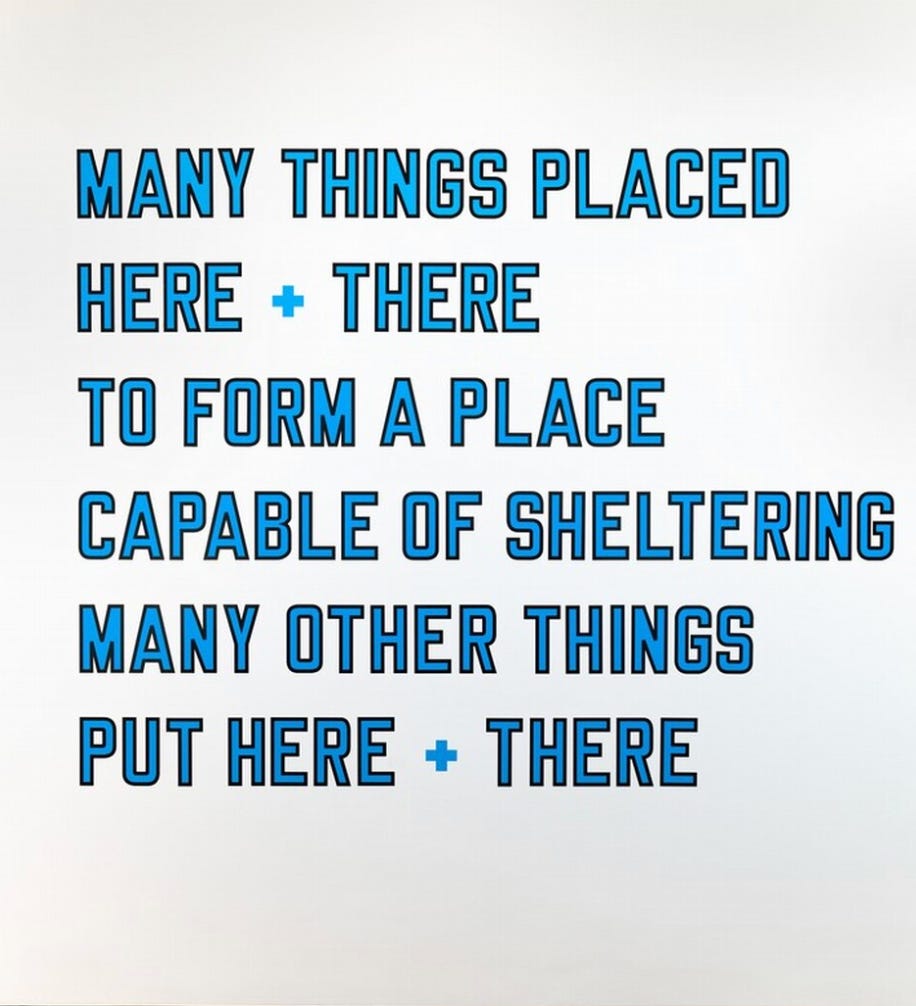
In April, I stood before my closet and examined each garment I owned closely. What did it all mean? Some things were loaded with life—the Yeah Yeah Yeahs T-shirt from the last concert I went to with my dad before he died, the orange dress I got on my 25th birthday in London with an old, complicated friend. These items felt real, precious and rare. But most of what hung before me was empty. I was hit with the nothingness of these objects. They could be replaced with almost any similar object and lose nothing, offend no one. My closet took on a disturbing mutability. Was I also so mutable?
I sensed a switch (maybe) starting to flip. I donated half of my closet to Goodwill.
In May, this distinct, new feeling of not-want—anti-want, even—coursed through me. I was jittery with all of the energy that had once been spent on scouring Etsy reviews. I was feeling very Second Wave—no makeup, no bra, no razors. I was beginning to take a radical approach of no-effort in (almost) everything. I wanted to grab strangers by the shoulders as they walked into a Uniqlo: Can’t you see! Perhaps you’ve also had these moments, when you put on the glasses from They Live and feel ready to evangelize. Maybe you had a moment like this long before I did.
In June, the pink cloud lifted, and it lifted trivially. The weather got warmer. I wanted to reinvent myself. What easier way to do so than to return to my old tricks. It was swimsuit season.
In her book Our Aesthetic Categories: Zany, Cute, Interesting, Sianne Ngai makes a case for an aesthetic of ‘cute’ being, ultimately, an aesthetic of powerlessness. She reflects on ‘cute’ as the premiere aesthetic of the commodity. We look at a cute thing—a swimsuit, a Labubu (arguably), a human infant—and we want to bring it close, to take it under our wing, to protect it. Paradoxically, Ngai argues, the cute object’s maximal passivity also engenders our contempt. How could something so powerless hold such sway over us? It is the most thing-like of things. The most objectified of objects. It is as squishy and blobby as a bathtime sponge.
Ngai offers this framework in part to illuminate the ambivalent relationship that we have to commodities. Marx was onto this, too, with his theory of fetishism. Since I only meet it at its point of sale, the swimsuit could have enough power in its own right to endow me with me-ness. Perhaps it could make me cute, once and for all. What a relief that would be. Now that the swimsuit is calling the shots, I won’t have to think about who I am or what I do. I won’t have to think about who made the swimsuit, who brought it to my door. The blob of labor can float far away, squishy as a sponge.
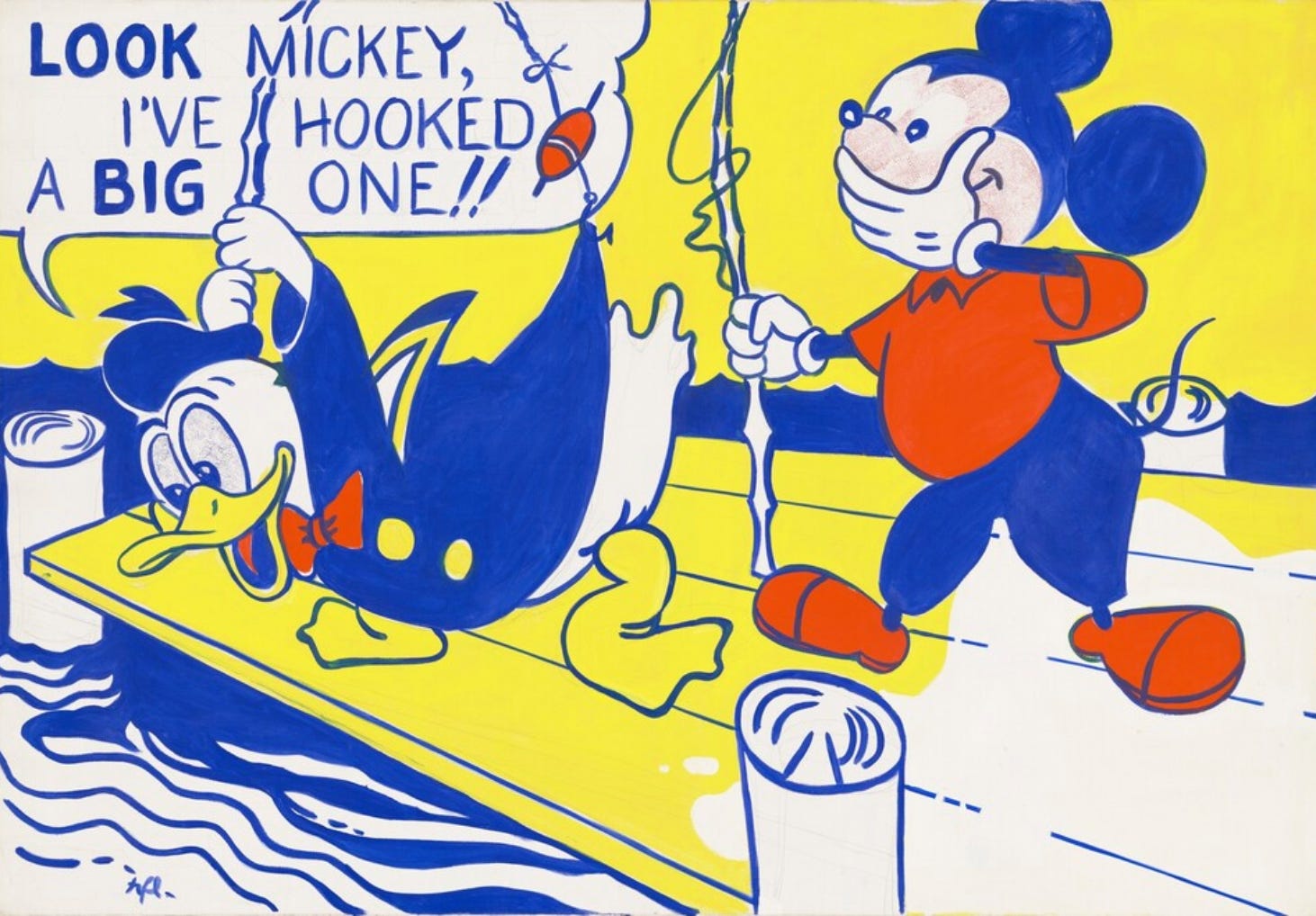
I managed to quash this impulse to buy. I survived the first hurdle of temptation in the year of abstinence. In recovery, they call this ‘surfing the urge.’ No swimsuit necessary.
I was beginning to get to know the phantoms within. The ones who looked at their commodity-counterparts in the world outside and tried to convince me that I must have them, that I needed them, or else. Or else what? Or else I would not be who I wanted people to think I was? The logic of The Emails was becoming too apparent to ignore. Their grip was starting to loosen.
I wish I could say that this newfound relationship to my own want—interrogating how much of it was really mine, what it all meant—continued to evolve to the point of freedom. That would be more impressive than how things actually went. How great it would be if things had ended with a bang, rather than a fizzle. How inspiring.
The truth is, I technically failed my no-buy year. And in a predictable anticlimactic way. Black Friday—the weekend of the year when The Emails are at their most rabid—did me in. In terms of harm reduction, not buying for eleven-ish months out of the year is not a failure. Intense relapse is common when you’re newly sober. I spent thousands in December on things I mostly ended up returning or donating. I was on a bender, inflamed with regret and eager to fill the hole that I’d only just begun to stare into.
Much has been said about consumption. I think about those TikToks of women tap-tapping their acrylics on the lid of a tiny heart-shaped Tupperware, freshly full of Gummy Bears, and I shudder. I think about Khloé Kardashian’s pantry and wilt. I saw a girl in a flouncy skirt on the train and knew exactly where she’d bought it, exactly how much it cost. It is hard to not feel ambivalent about these (literal) things.
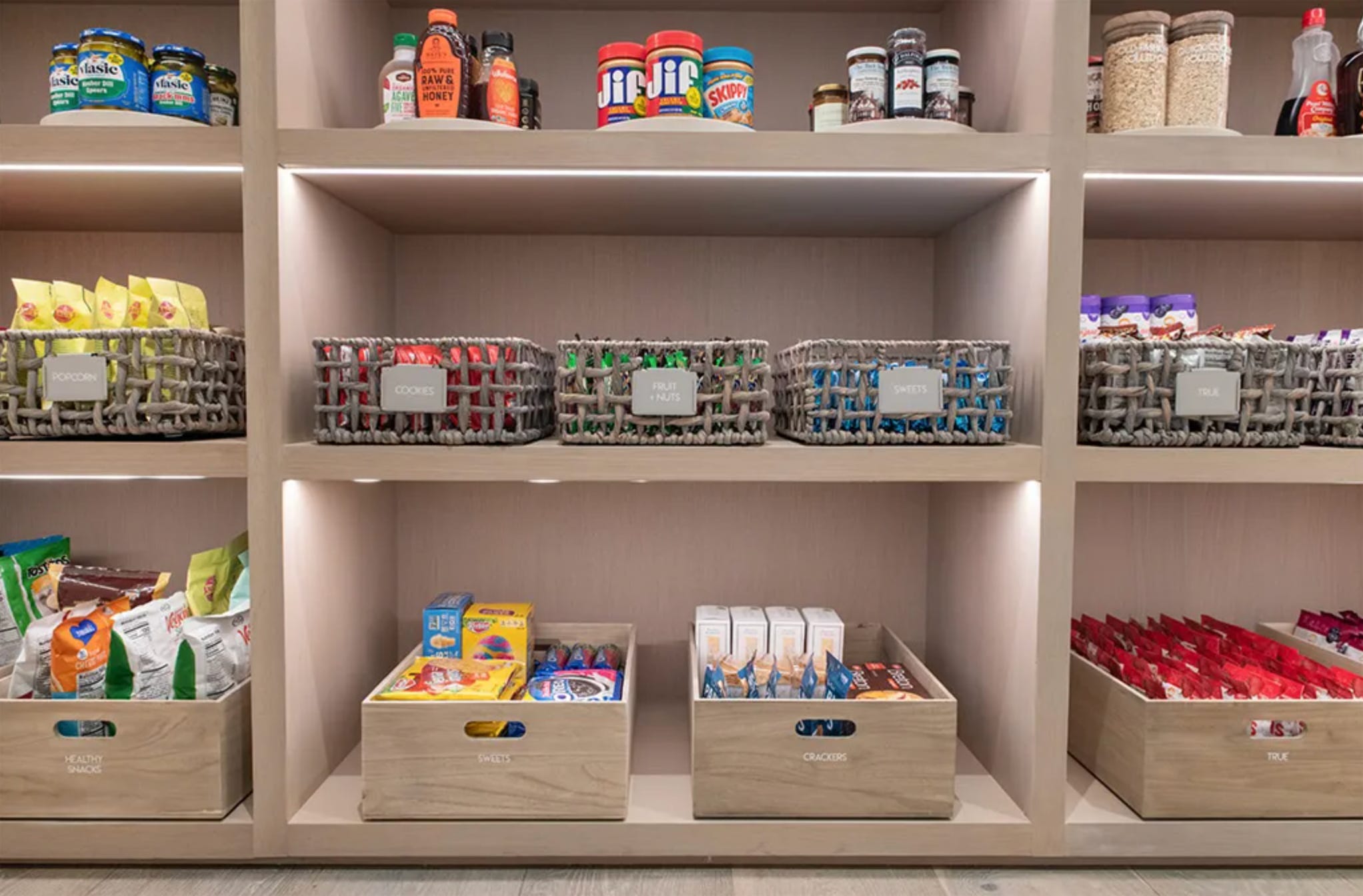
Despite my imperfect example, I encourage you to try a dramatic no-buy phase. Maybe don’t aim for an entire year. One month wouldn’t be nothing. Or even one day. I’m afraid I don’t have a ribbon that can wrap nicely around all this ambivalence. I am still trying to figure it out. Who I am, how I should be, what to consume and what to produce. It all feels squishy, blobby, and, occasionally, cute. I am hoping that is enough, while knowing that it’s not.
Thank you for reading. I am planning on publishing a lot more on here (who’s to say what). If you gleaned something from this, subscribe. You’ll be my favorite ever. ‘Til next time. —ES
No posts
Comments
Nothing yet. Say the first thing.
Sign in to join the conversation.