
We live in a world ruled by the immediate. 2-day shipping, 24-hour news cycles, microtrends, like + subscribe buttons, hot takes, AI email replies. Almost anything can be created, or at least delivered to our door, at the press of a thumb. No need to dive into the archives or consult the village elders for answers. The speed at which we are able to operate necessarily leads to the speed at which we are expected to operate, and this makes us miserable. Importantly, we feel powerless to stop it.
There are too many factors to count in terms of figuring out how we got here. Needless to say, we all feel the ambient miasma of venture capital and algorithmic recommendation schemas encasing us in a constant low-grade dread. I don’t know about you, but my internal landscape has become overrun with long bouts of numbness only to be interrupted by a sudden, frantic inner monologue that can essentially be boiled down to ‘what next? what next? what next?’ Apparently this is just how the world functions now. Get used to it or ‘get left behind.’
This threat of getting left behind is a fascinating one: it sounds more like ‘get on board or die.’ The odd mixture of urgent yet un-actionable threat and good old-fashioned peer pressure creates a kind of paralysis within me—I look into the future that I am supposedly not doing enough to meet and see nothing but millennial greige.
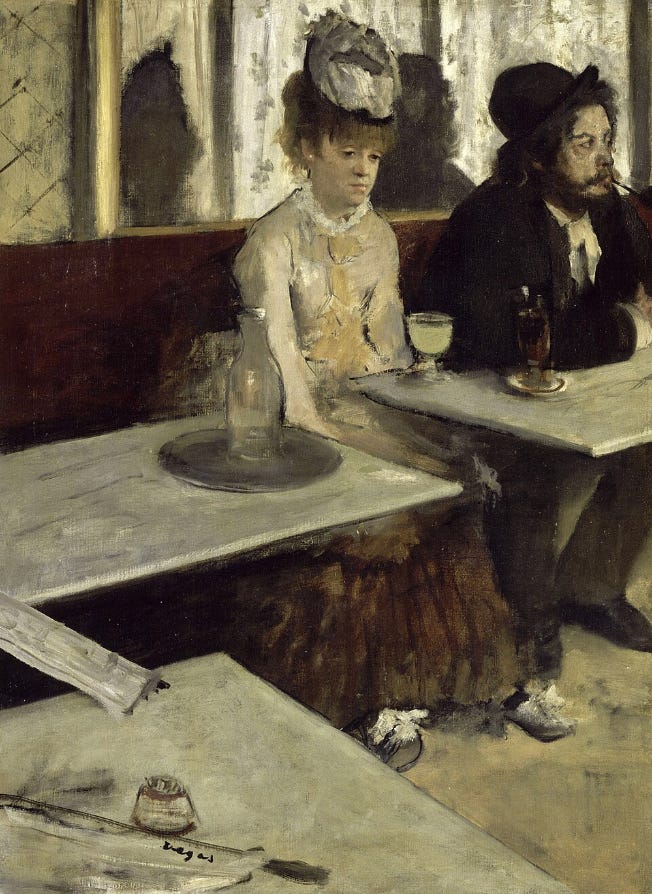
I’ve decided that enough is enough. I am taking my fate into my own hands. For the next six months, I am going to do everything I can to be left behind. This includes reclaiming a deep, sustained quality of attention and making repeated investments in my relationship to reality. I think we are living through a time where it is imperative that we commit to being as idiosyncratic and molasses-slow as possible. After six months, I plan to assess how these strategies panned out and adjust from there.
This experiment was inspired in part by the much-discussed, much-suspected-of-being-AI-generated short story “A Serpent in the Grove”, which was a regional winner of the Commonwealth Short Story Prize this year. Whether the story is fully AI-generated or not, or to what extend the writer might have ‘collaborated’ with AI to write it is less interesting to me than the discussion of ‘laziness’ in writing that it has sparked.
‘Laziness’ is a loaded concept—full of puritanical implication and bootstraps moralizing. Perhaps it was at one point, but these days our world is not structured in a way that fosters or rewards deep, sustained effort. Here in America, it is (mostly) enough to perform the motions of competency, and even that is too high a standard for our government, so the point might be moot. All this to say, I think our growing reliance on AI, or any other kind of convenience-maxxing technology, is partly a symptom of our economy/culture’s demand for fast-paced, high-volume output at every turn.
A meaningful resistance to late-capitalist entropy won’t be achieved by me alone, but knowing that a likely AI-generated work won a prize has rekindled my desire to wrest back my attention from the corporations that want to colonize it. I have always been a bit of a contrarian—tell me to go fast, and I’ll go as slow as humanly possible out of spite.
Below is my (rough) plan. It is not a plan for you. It is a plan for me. But if you live in a big city with access to most things you could ever want/need and don’t have children, maybe you can give it a whirl as well.
Read physical books
This is probably an obvious strategy, but it is nonetheless the foundation of my plan. There are few activities that require my sustained attention the way that reading a physical book does. It must be relatively quiet in order for me to absorb what the words are telling me, and if it is not quiet enough, then I have to work harder at concentrating (this is a bonus).
I am not someone who believes that listening to an audiobook ‘doesn’t count’ as reading (lame, baby-brained way to think), but for the purposes of this project, I am going to keep passive listening to an absolute minimum1. This means that if I want to listen to an audiobook, I have to sit down and really listen to it.
I will aim to carry a physical book with me everywhere I go. I expect this to not be possible all the time, in which case I will read from the Kindle app on my phone (but only if absolutely necessary).
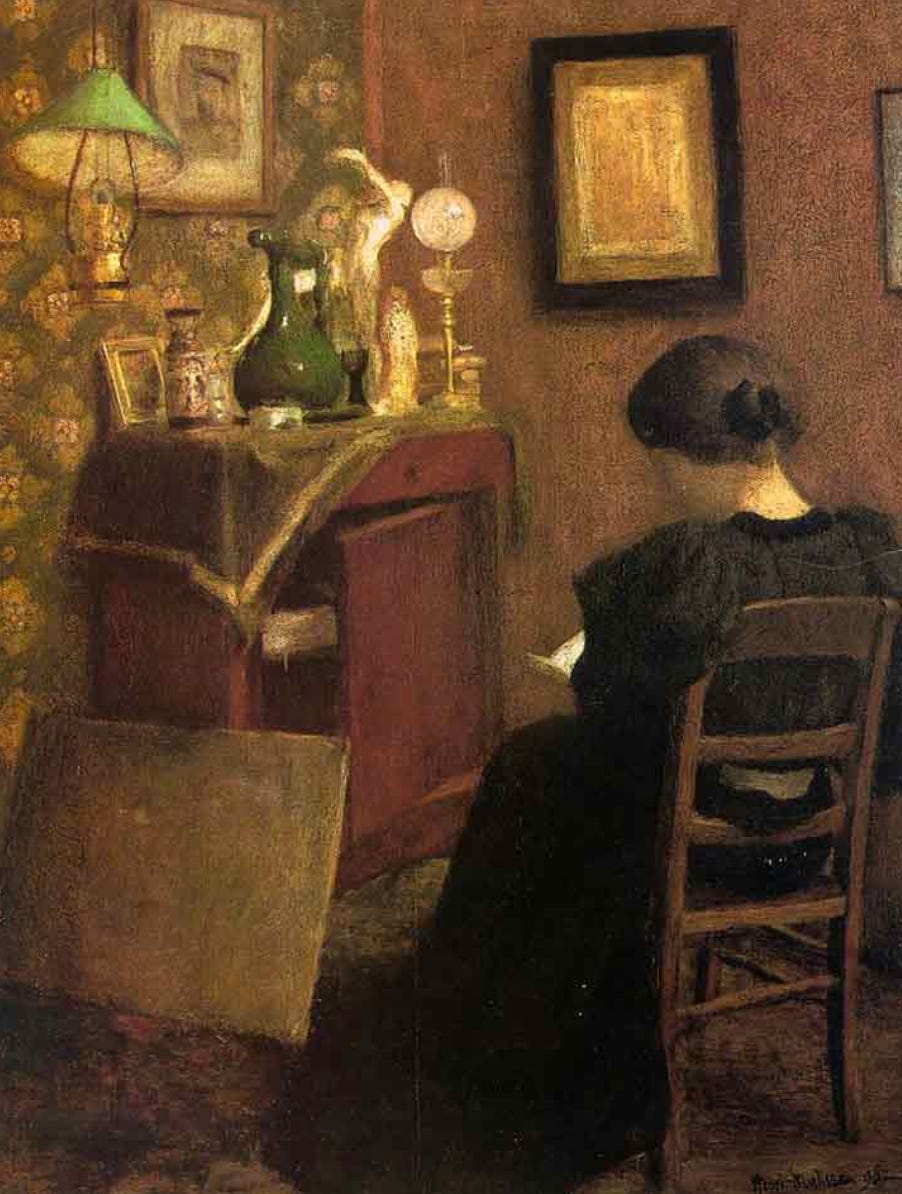
The book I’ve chosen to start the project is In Search of Lost Time by Marcel Proust, in order to maximize density, depth, and effort. I may not get to all seven volumes in six months. All the better, since I will be taking my time.
Do not order anything online
This is borrowing from, but slightly different to my attempted no-buy year. That was a blanket ban on nonessential purchases period—this is specifically a ban on online purchases. I’m not limiting buying things categorically. I will make some exceptions, undoubtedly, but I will aim to buy everything in-person for the next six months. This is part of a larger theme in the project: to intentionally court inconvenience as a strategy against atrophying patience.
Spend a minimum of six hours a week outdoors
This time can be spent doing anything that doesn’t require a screen, but it must be done outdoors. The home is the locus of convenience—our world/economy is designed to maximize the comfort of and time spent in our personal dwelling. In order to reclaim (and autonomously direct) my human drive for connection/experience, I must venture outside. Some activities that will undoubtedly be in the rotation (especially as summer approaches): picnics, sunset (or sunrise) walks, stoop sales, bike rides, late night romps through the rain-soaked streets of Lower Manhattan (always fun and fascinating), dog/bird/people watching.
Write longhand
I’m not going to commit to writing letters (it’s something I’ve said I’ll do many times and almost never follow through with), but I am going to commit to writing longhand. I am obviously not going to write everything longhand (alas, I have a day job that requires emailing), but in terms of first drafts of pieces, journaling, or just taking the odd note here and there, it’s pen and paper only for the next six months. I already carry this notebook and this pen with me everywhere I go, so the learning curve should be manageable.

No phones in company
It’s true: some relationships are precious and strong enough to withstand time spent in each others’ presence while otherwise occupied. But, for the purposes of intentionally engaging with whatever is in front of me, I am placing a ban on touching or looking at my phone while in another person’s presence for the next six months.
This is obviously going to take some negotiating. Are there going to be moments when I absolutely have to look at my phone while in another person’s presence? Yes. Of course. The point is that I am seeking to consistently connect (or reconnect when my attention strays) to the person before me, whatever that demands.
This isn’t to say that whoever I’m spending time with and I have to be conversing, or even engaged in each other, at every moment. Some of the most peaceful, under-appreciated moments of my life have been spent resting my feet in the lap of my lover while we flip through our separate novels.
Think about what to say before replying to a text/email
Texts and emails trigger an ancient and instantaneous people-pleasing Midwesternry within me—as soon as I see one, I feel compelled to respond. I’m not saying I won’t get back to people, far from it—I might even get back to you quite quickly. But for the next six months, I am going to consider my responses in a way that I heretofore have not. Perhaps I will even edit my responses for maximal social efficacy or entertainment.
Commit to home-cooking
This one is also probably an obvious solution, but I am going to eschew convenience meals for the next six months. No more quick, microwavable slop, no fast food unless it’s an emergency. The meals I make might require little effort, but the physical discipline of chopping my own produce will slowly dissolve the numbness within me. Ideally, this will scale slowly up to hosting a dinner party where all of the people I love gather together and delight in a stew I made just for the occasion, nary a phone in sight. But we’ll see. (“Low and slow” might be a good motto for the next six months more broadly.)
Harshly bracketed scrolling time
I have never imposed this kind of limit on myself, so I’m very curious to see how it goes. Part of me thinks I will hate it, and another part of me wants to prove that part wrong. So I’m limiting myself to 10 minutes in the morning, 10 minutes at night. I’ve deleted shopping apps from my phone and installed a timer. (I’ve allowed myself one hour of YouTube a week, since I do like/feel enriched by some long-form content on there.)
Commit to embodied activity
I’m being vague with this one because I abhor/do not want to proliferate fitness culture. The goal is to feel in my body everyday, no matter how that manifests. It’s not about looking a certain way or getting a certain amount of strong. When it comes to my body, I can only do things that allow for as much margin of error as possible. Right now, that looks like a stretching routine that kind of resembles a yoga flow, walking most places, and lifting weights when the mood strikes. The specific activity/ies might change, but the central principle of sustaining an embodied kind of attention will remain.
Monthly visit to the museum
This is kind of borrowing from Julia Cameron’s idea of the ‘Artist Date’ but tailored to my interests. Taking my time and allowing myself to be transformed by a work of art in a museum or gallery is one of my greatest pleasures, and it’s only happened to me like three times. This is because I am usually at the museum with someone else or with a group of people, and they’re on the move. But no more. I am committing to a monthly museum visit, for which I am blocking off at least five hours on a given Saturday and will execute solo so that I can read all the curation notes and everything. I will have my phone on do-not-disturb, and I will bring my notebook (because I will be bringing my notebook everywhere).
No drugs, minimal alcohol
I am not convinced that doing drugs necessarily makes one less present, but for the sake of this experiment, I’ll be taking a six-month break from smoking weed and plan to drink only socially/not to excess (a glass of wine or two at dinner with a friend, a cocktail for someone’s birthday, etc.).
Practice a very unofficial and improvisational kind of mind-wandering every day
I know that if I say something concrete and useful like “Meditate for ten minutes a day” it’s going to feel completely joyless and I will immediately lose interest (contrarian streak), so I’m tricking myself by saying that I won’t meditate, but I will build into my daily routine some unstructured time to stare into space. Boredom and daydreams are vitally important for writing, so I am looking forward to these moments of uninhibited mind-wandering. My attention may not be directed at anything specific but at least it will still be mine.
That’s the rough plan for now. I am not asking for recommendations, but if you have done things to improve your attention/reclaim some of your precious time on this earth, I’d love to hear how it went for you.
I’ll try to check in occasionally about this experiment—and I’ll let you know how I’m enjoying Proust.
‘Til next time,
E
I will allow myself to occasionally passively listen to podcasts while cooking or in the shower (though I want to mostly avoid it), but not on public transit/while walking.
No posts
Comments
Nothing yet. Say the first thing.
Sign in to join the conversation.