
My apartment’s radiators don’t make normal sounds. The radiators of my youth would clang or hiss, but the ones I live with now sound like pretty convincing Foley reproductions of other things. Here is the list I started when I moved in:
Bees (multiple)
Bee (singular)
Bees (angry)
Dying man’s final breath
Crickets at night
Shortwave radio static
Nose with a cold
Jingling bell on a cat collar
I find myself noticing sounds lately. Maybe the monotonous grey of Chicago winter drives me to attune to senses beyond sight. Or maybe moments of overstimulation make everything seem louder. Whatever the reason, I’m in a listening mode.1
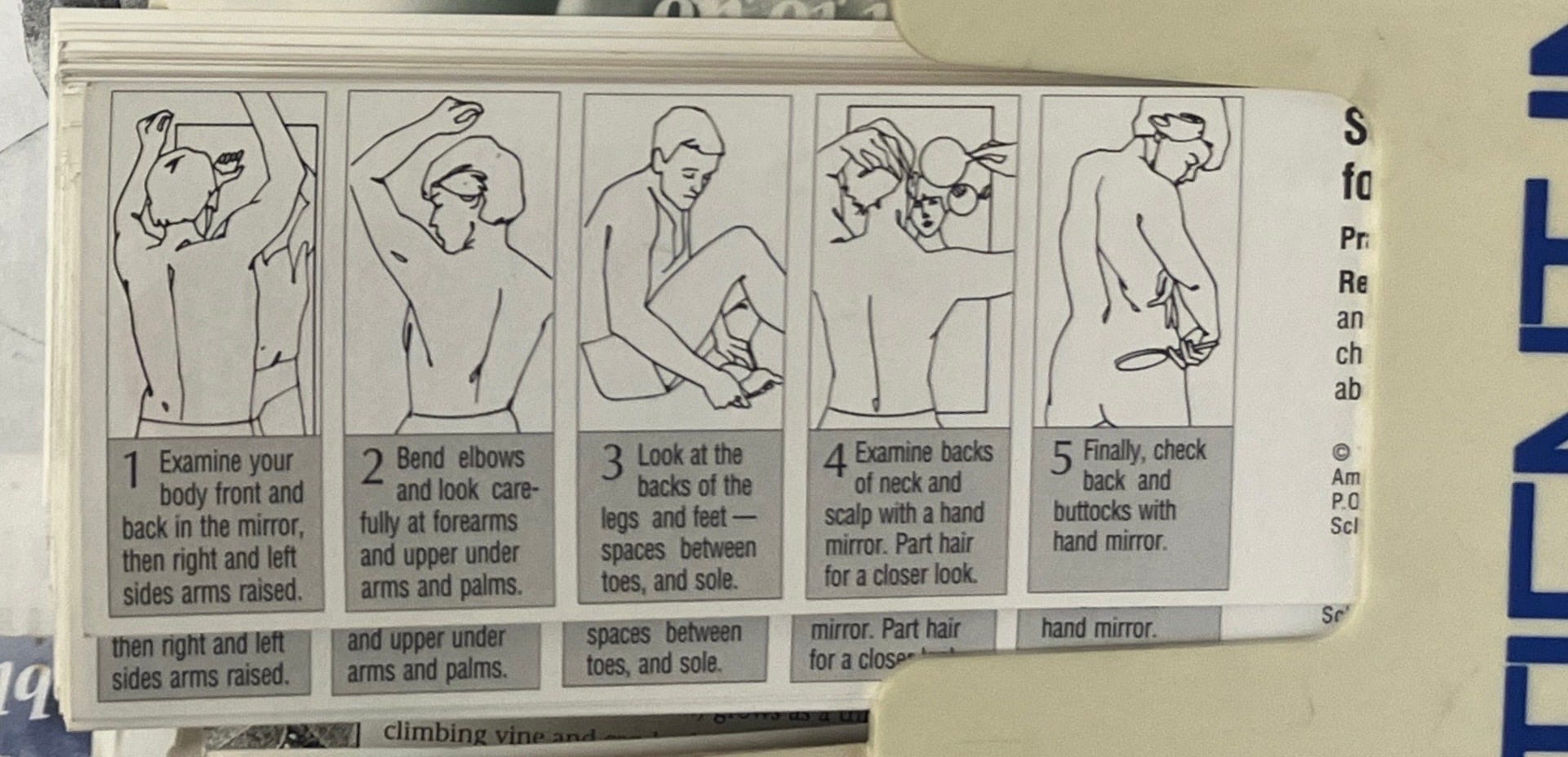
This orientation toward sound plays out in my exhibition, For the World to Come, which opens on March 20 at Patient Info in Chicago. The gallery was once a dermatologist’s office, and curator Brian Jucas has preserved much of the infrastructure of its former life. Where a white cube gallery tries for neutrality and inevitably fails2, the environment of Patient Info is in constant conversation with the artwork it hosts. There’s a poster in the lobby warning of the dangers of tanning beds, pamphlets on various skin diseases, an examination room with wood-panelled walls, and so on. Among these treasures is an old intercom system that immediately caught my attention.
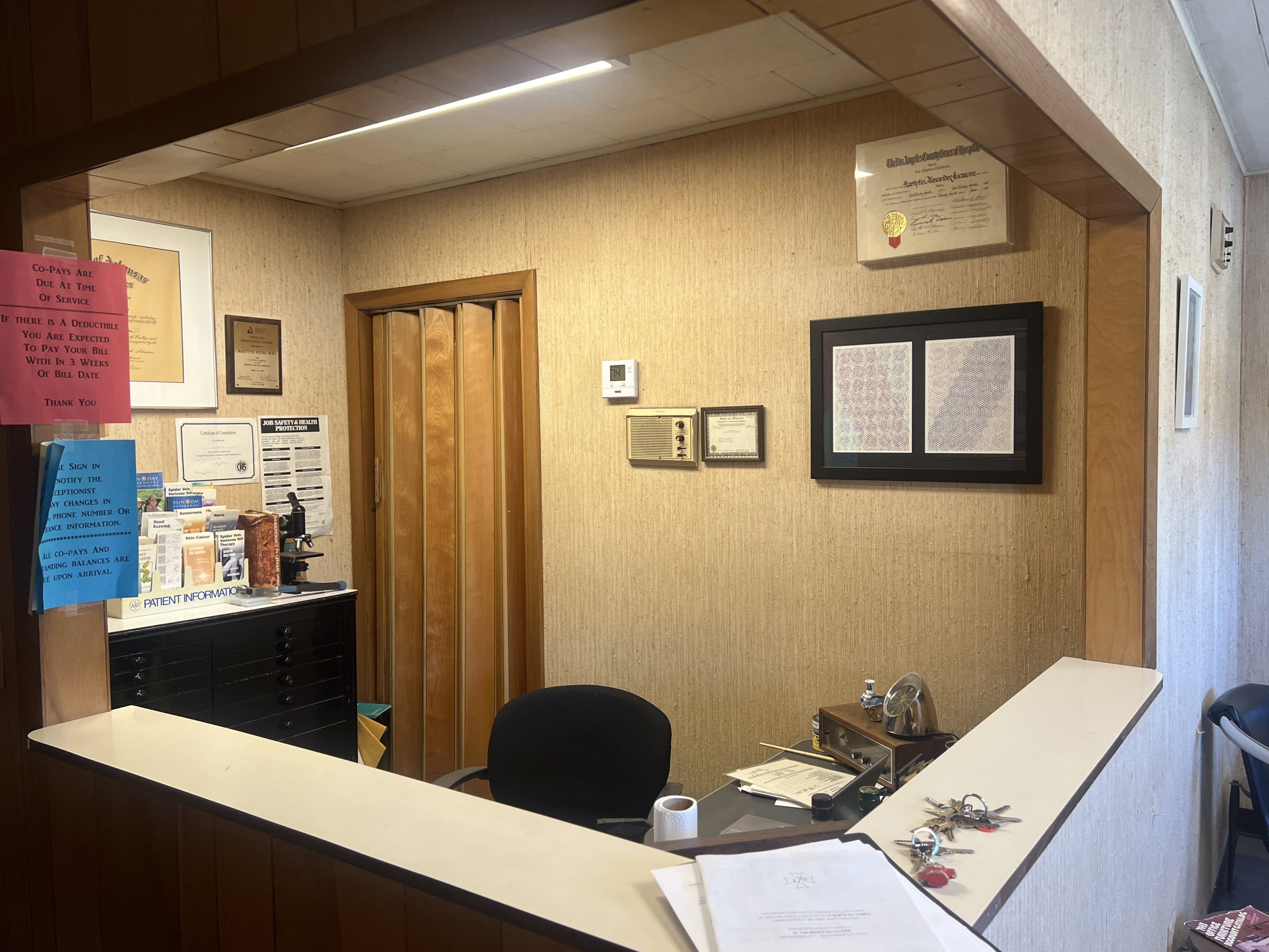
After Brian saw the Department of Eschatology3 last summer, we started talking about what it would mean to put my office in his office. Excited about the space’s idiosyncrasies, I developed a few new site-specific (mostly sound-based) elements for the show.
I’ve spent the last several weeks recording the sounds of the lake almost every day, aiming to get clean enough audio to play the lapping water over the office intercom. When I first learned to record audio in 2014, I was delighted by the reactivity of the amplified world. Now I’m reminded of that delight. I point the mic downwards as I walk and hear the sand shifting beneath me. I point it toward a group of people in the distance, bringing their voices closer than I know them to be.
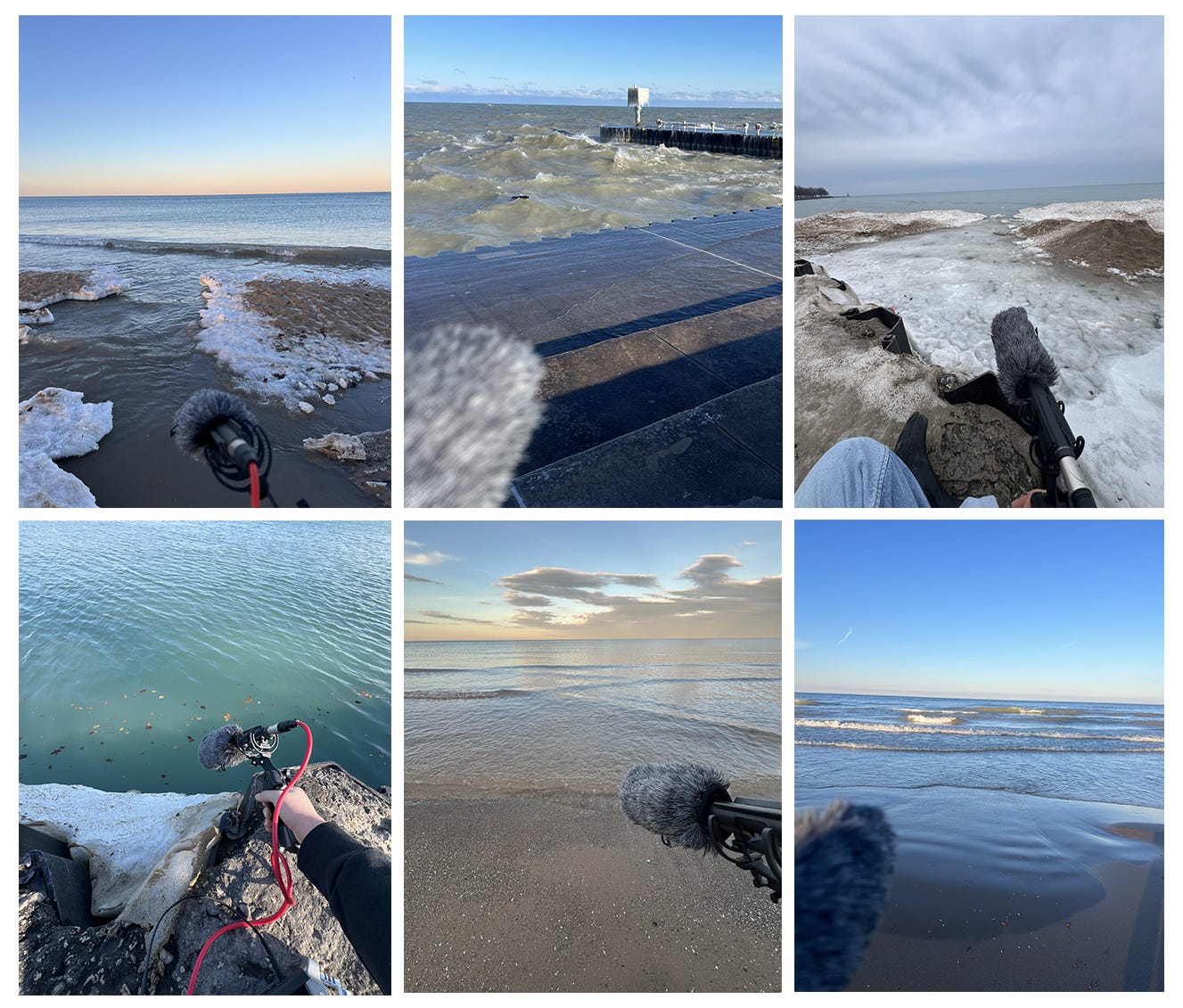
The Great Lakes, despite having tides, are considered to be “non-tidal” bodies of water. Their tides happen twice daily as ocean tides do—tiny, less than 5cm fluctuations that are so slight as to not count. Still, there are plenty of shifts I can perceieve. On February 16 (bottom left), all I could hear was the leaky faucet drip of melting ice. The water moved slowly and soundlessly with no real rhythm. February 23 (top center) was a dramatic and moody day. The lake roared like an ocean, waves shooting up when they hit the concrete barrier and then slapping down loudly on the slabs. February 27 (bottom center) was the first day when the lake’s behavior matched what I’d envisioned for the recording. After days of trying to mitigate wind distortion by squatting low over the water or balancing precariously on melting ice sheets, I welcomed a comprehensible soundtrack.
Intercoms are used for simple announcements, nothing abstract or secret or beautiful. I want the recording of water that ends up on the intercom to be a different kind of communication. “Attention!” it will wordlessly announce, “This is important in a different way.” Trapped inside an outdated apparatus inside a room inside a building, maybe the single-sense representation of waves becomes its own kind of inland sea.
When I write, I always imagine the words spoken rather than read silently. I’ll read the text aloud every paragraph or so and adjust sentences based on what feels awkward leaving my mouth. This method makes writing for performance (plays, voiceovers, videos, etc.) come more naturally than other forms.
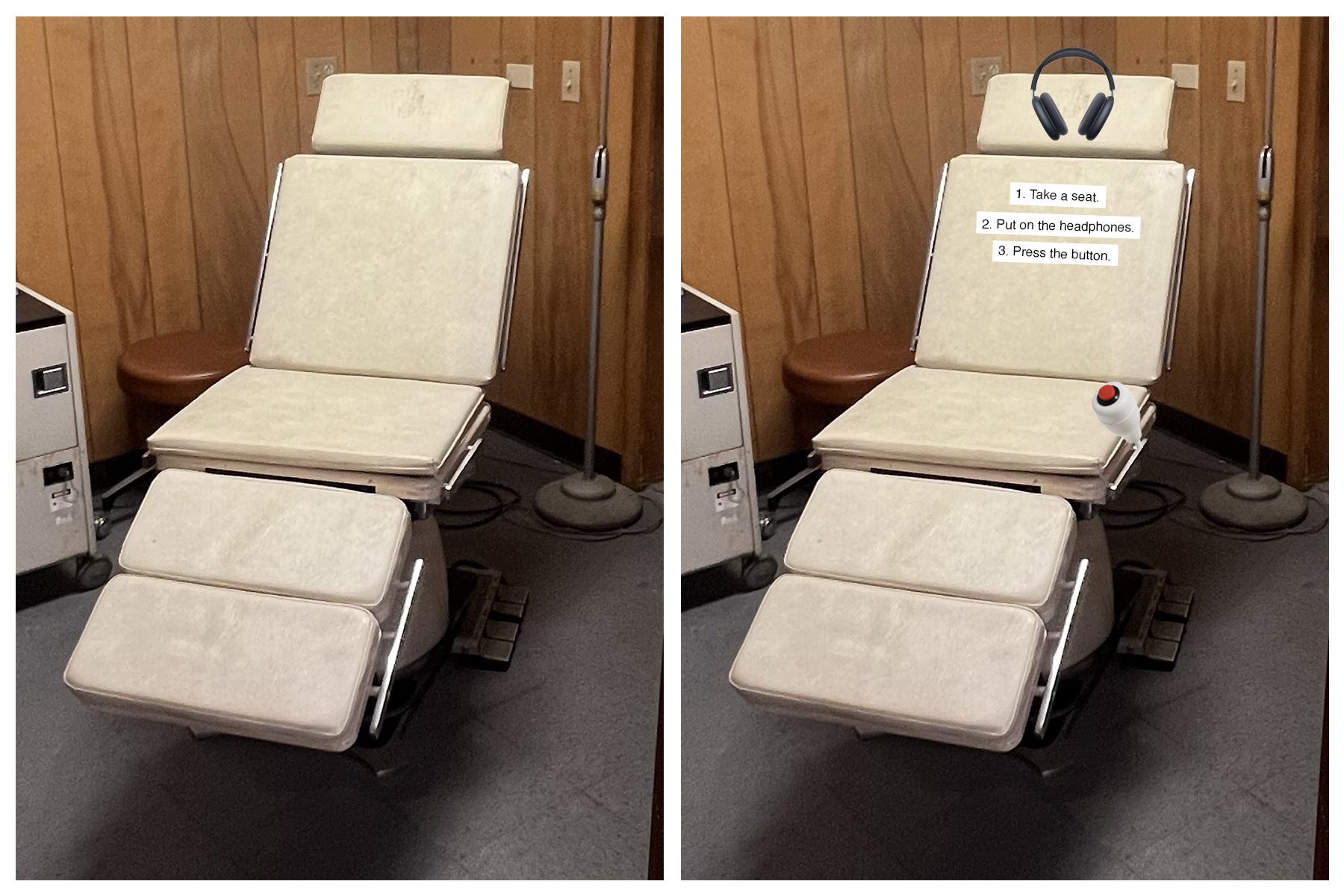
I’m working on an audio piece for Patient Info’s examination room. The piece, Field Work, is inspired by guided meditations and ASMR. I liked the idea that a room initially intended for doctors to examine patients could be used for a more abstract form of self-examination. I also wanted a space to play out collisions of fantasy and reality, prompting participants to oscillate between the two in a way that mirrors the work of envisioning alternative ways of living.
Here are two short excerpts from the script:
The flattened box reveals a great expanse of space
This, too, is yours.
We’ll call it Your Field
All its properties yield to your preference.
Maybe it is a literal field with tall grasses and flowers
Or maybe it is a color field, an ever-deepening shade spread out in all directions
Or your field of vision, containing in it whatever feels to you most open and endless.
Take a moment to envision Your Field.
Then, two pages later:
Can you remember what it is you forgot?
Was it deviled eggs for the potluck?
Or one of those giant sticky notes you’ve been told fosters creative problem solving?
No, maybe it was a book you meant to lend.
As you turn to leave and retrieve that thing you left behind,
You hope that your friends can be trusted
To represent your interests
And that Your Field will retain something of itself
Until you return.
The script is now in the hands of my collaborator Sille Kima, who will record the voiceover and shape the soundscape. As always, working with people feels better than working alone.
(1 hour commitment + $50 thank you cash)
If you want to be a part of For the World to Come at Patient Info, here’s your chance!
I’m looking for people to participate in filmed image interpretation sessions at Patient Info in Chicago on March 28 and 29. At each session, one participant will put on a costume and respond a slideshow of images that have been integral to the work.
The signup sheet will be at the gallery starting March 20, but I’m hoping to fill a few of the 12 slots before then.
Please reach out if you’re interested.
A quick recommendation: While most of what I’ve been listening to lately isn’t exactly music, there’s a notable exception. My partner Ben showed me the album noise (meaning) by Monte Booker a few months ago and I love everything about it. There are sounds in there I haven’t heard anywhere else (like a somehow pleasurable version of the distortion of a blown-out speaker).
Every space tells you something about how to act in it.
You can read more about the project—which examines failing systems, apocalyptic projections of the future, and alternative life structures—in the last three newsletters.
I just learned this term for large, landlocked bodies of water. I like that it gets at the awed feeling of trying to square the vastness of Lake Michigan with previous ideas of “lake.”
No posts
Comments
Nothing yet. Say the first thing.
Sign in to join the conversation.