
This essay is about the deep-seated connection between OCD and eating disorders. In my first traditionally published novel, Guy’s Girl, I wrote about anorexia and bulimia—both of which I have suffered from—but I have never written publicly about the connection between those illnesses and OCD, even though it’s something I think about all the time.
TW: OCD, anxiety, eating disorders
In my late twenties, I called a truce with my body at last.
It was hard-won. The result of ten years of battles, bartering, and more than a few close calls with self-destruction. I starved her, flooded her with alcohol, exercised her to the point of injury, and did more than a few other things I’m not so terribly proud of. While the peace we’ve brokered is far from perfect and in fact most closely resembles that of two groups that loathe each other but are forced to share the same country, it’s peace nonetheless.
The peace to which I’m referring is eating disorder recovery. That’s right, folks—in a surprise to absolutely fucking nobody, I (highly driven young woman raised in our current society) did a decade-long tango with the devil (Anorexia Nervosa).
Eating disorders are extremely misunderstood. Those who have never experienced them think that they’re about wanting to be skinny; they aren’t. Eating disorders are a coping mechanism. They’re about control. They’re about self-loathing. They’re about numbing yourself, silencing your mind, ridding yourself of intolerably painful thoughts and emotions. Only one small part of eating disorder recovery is learning how to eat again; the rest is about learning how to cope with all the sh*t your ED was covering up.
For me, it was about OCD.
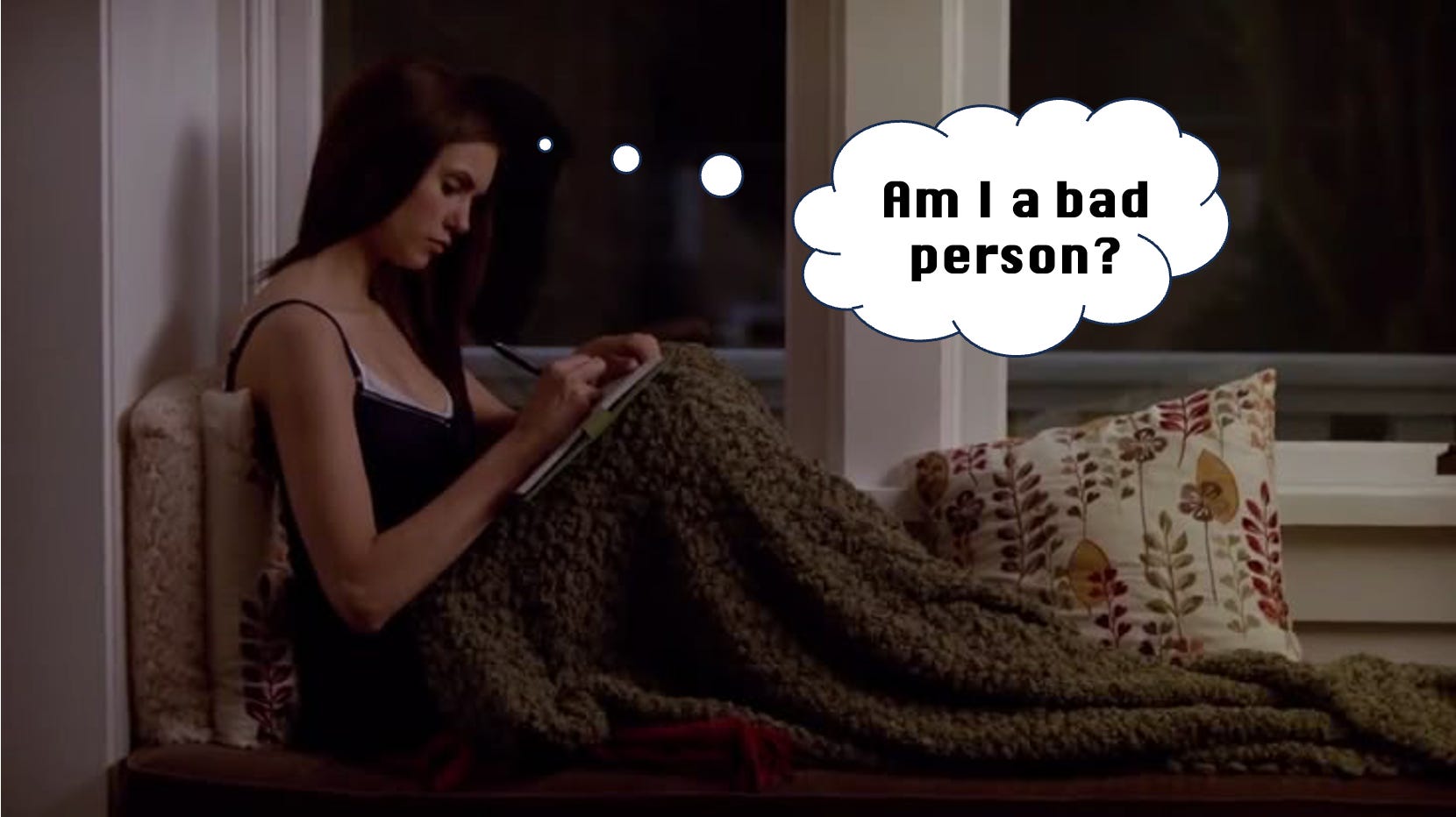
Let me explain. It all started the summer before I left for college. I went on a mission trip to a different country with the church I attended as a child. I’m not particularly religious, but my mom is. She’d long been encouraging me to go on one of these trips. That summer, I finally did.
I was eighteen years old. If you read my last post, you’ll know that my OCD symptoms first appeared when I was twelve; by the time I got on that airplane, I had been terrified of the inside of my own brain for over half a decade.
Like I said, I’m not particularly religious. In fact, the worse my OCD got, the more uncomfortable I felt at church. Though I wanted desperately for it not to be true, my brain was constantly trying to convince me that I was a murderer (Harm OCD), or a pedophile (POCD), or in love with one of my family members (incest OCD). How on Earth is someone like that supposed to feel comfortable inside a place of worship?
(If you are religious, OCD can and does attack your relationship to faith. It’s called Religious Scrupulosity OCD. You can read more about it here.)
On the mission trip, there was quite a lot of physical labor. We were building a schoolhouse. And while they did feed us three meals a day, the meals weren’t particularly large, and I was too shy to ask for seconds.
By the time I got home, I had lost ten pounds.
I want to be clear: my body was perfectly normal to begin with. But when I looked at the scale that day, something shifted inside my brain. A dark sort of pleasure flooded through me. I thought: looking at this number feels good. I thought: let’s keep it that way.
So, I made a plan. I had heard about the Zone diet quite a bit growing up, and I decided to follow my own loose version of it. I would eliminate starch from my plate—no bread, no rice, no potatoes, nothing of the sort. In their place: vegetables. Protein. And I would go for a 3-mile run every day, no matter what.
For weeks, I followed this plan to the letter. And as I did, something amazing happened.
The thoughts went away.
I stopped worrying obsessively about being a pedophile or a murderer or in love with one of my siblings. Instead, I thought, from sunup to sundown, about food. What to have for my next meal. What I could have done better with the previous one. I scrolled food blogs, saving recipes to Pinterest. I logged my meals in a little notebook, circling each carbohydrate I’d had that day.
To my childhood therapist, I said, “I’m doing so much better. I think I’ve cured myself.”
Oh, how wrong I was.
Side note: As I’ve been writing this, my hand has occasionally wandered down to my belly, to pinch the little hill of fat that sits at its bottom, rolling it between my fingers. I know this habit is left over from my eating disorder. It crops up from time to time, when I’m at my most anxious. When my husband catches me doing it, he will reach over and physically pull my hand off my stomach—or do what he did in the TikTok below, which I recorded in 2023.
This is what it feels like to starve yourself:
The levers that activate your emotions switch off. You feel nothing. No fear. No sadness. No guilt or terror or memories threatening to eat you alive from the inside out. Nothing. Only stillness.
You start to float. You float right out of your body. Not the way you do when you die, or when something so traumatic happens to you that you drift upward and look down at your own body. It’s more of a wonderful detachment. Things happen, but you don’t care. Life continues, but it no longer feels like yours.
Self-imposed starvation isn’t about resisting hunger. It’s about learning to ignore your body. To ignore the signals it sends, the ones meant to keep you alive: dizziness, fatigue, rumbling stomach, vertigo. You receive those same signals, but you brush them away.
Eventually, they cease. They do. If you can wait out that pain point, the rumbling stops. You no longer feel hungry, so you think you aren’t hungry.
But it’s not true. You’re perpetually hungry. Your body just shows it in different ways, in clues that you willfully divide, refusing to see the truth to which they add up.
That truth was this:
I had not cured myself; I had traded one monster for another.
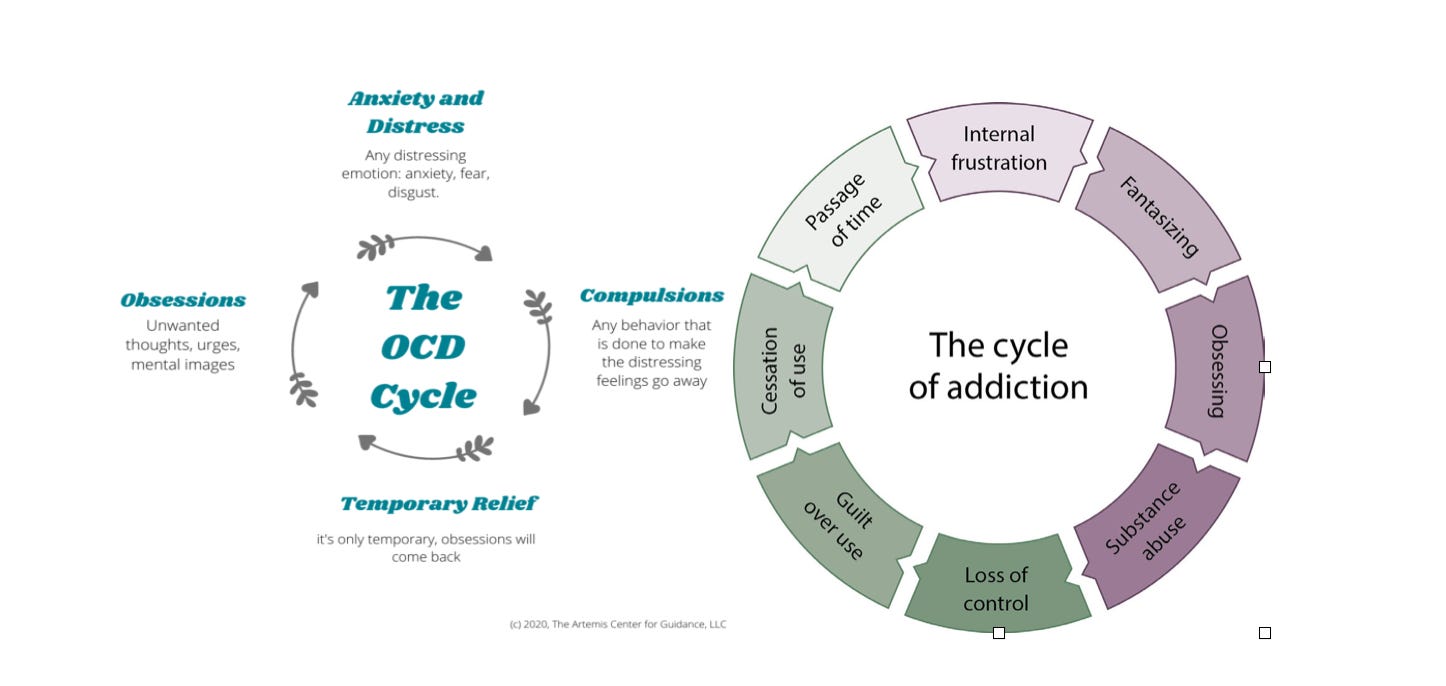
It didn’t take long for me to start feeling the negative impacts of the “cure” I’d found for myself. Already, during that summer before college, the cracks started to show: meal-planning and recipe-pinning, which at first had felt like a fun distraction, became obsessive. I had divided foods into “good” and “bad” categories, and when I ate “bad” foods, I felt guilt and discomfort. At one point, my friends saw me picking grains of rice out of a bowl of soup and confronted me about my behavior. I brushed it all off, telling them I didn’t have a problem.
And then I left for college, where no one knew me. Where I could craft a whole new identity. One that would protect my new disordered eating habits (though I hadn’t yet accepted that that’s what they were).
I told everyone I was celiac. “My stomach is just sensitive to starch,” I said, “so I can’t eat much of it.”
Lies. No doctor had diagnosed me with anything of the sort.
My anorexia grew slowly, insidiously, shaving a few pounds off at a time, never so much as to cause immediate concern. There was a brief moment of panic from my loved ones when I went abroad to Spain and came back twenty pounds lighter than when I’d left. After an intervention from my parents, sister, and childhood therapist, I made an effort to “get better” without ever really getting better. I gained enough weight back to assuage everyone’s concern, but I never really healed.
Then came the pandemic.
During the pandemic, my anorexia morphed seamlessly into bulimia. I’ll spare you the ugly details of that transition in this post (though if you want a raw, realistic portrayal of how anorexia can turn into bulimia, you can find it in Guy’s Girl). Suffice to say that it was painful. Extremely painful. The year I spent binging and purging in secret was one of the most painful of my life.
Finally, in 2020, I was living in NYC and started seeing a new therapist. I was seeing him primarily for treatment for anxiety/OCD, but during our first session, he said, “Wait a minute, you’re throwing up how often?” Then he referred me to a colleague he trusted who specialized in eating disorder treatment.
It took me a long time to work up the nerve to call her number. At that point, I had been struggling with an eating disorder, mostly in secret, for almost seven years. I didn’t want to let go of my coping method. I hadn’t even admitted to myself how bad it truly was.
One afternoon, I went out for a walk through Stuy Town. As I wandered through the parks and playgrounds, I pulled my phone out of my back pocket. I felt like I was watching from several feet away as I opened the referral email and clicked on the ED therapist’s phone number. As the phone rang. As I left a voicemail, my voice Midwest-chipper as I told her about how I was vomiting at least twice a day and could we please set up an appointment?
The woman who called me back was named Kelley. We did set up an appointment. And many more appointments afterward. I won’t go into detail about recovery now (honestly, it warrants its own post), but it was hard. Probably the hardest thing I’ve ever done — as well as the most important. To this day, I credit Kelley (and my eventual nutritionist, Kristi) with saving my life.
Six years and thousands of dollars in therapy later, my eating disorder is very well-managed. I threw my bathroom scale down the concrete stairwell of my building (satisfying). I stopped clicking on YouTube videos with titles like 10 MINUTE AB ROUTINE FOR GUARANTEED SIX PACKS!!!! I eat bread and sugar whenever I want. That might not sound like much, but for someone who used to eat less than 1,200 calories every day and would regularly compare the weights of individual eggs within one carton to try and determine which one was slightly lighter, it’s practically a miracle.
As is no doubt also the case with any two groups recently past a civil war, my mind and body are still figuring out how to communicate properly. I might now be a perfectly average size and weight for a 30-year-old woman, but sometimes, when I look in the mirror, the figure I see looking back still looks like what can only be described as a feminine Michelin man.
This is nothing new. What’s new, a result of all that money and therapy, is that I no longer do anything about that fact. Instead of letting the thought that I hate my body spur me to action, to skipping lunch and running six miles and eating only vegetables for dinner, I do nothing about it. I let the thought exist in my head, floating about with all the other garbage I’ve accumulated over the years, and I do nothing. I watch, I witness, I let it drift on. That’s the trick to recovery. It isn’t about learning to do something new; it’s about learning to do nothing at all.
It sounds easy, but it isn’t. In truth, doing nothing is often the most difficult task of all.
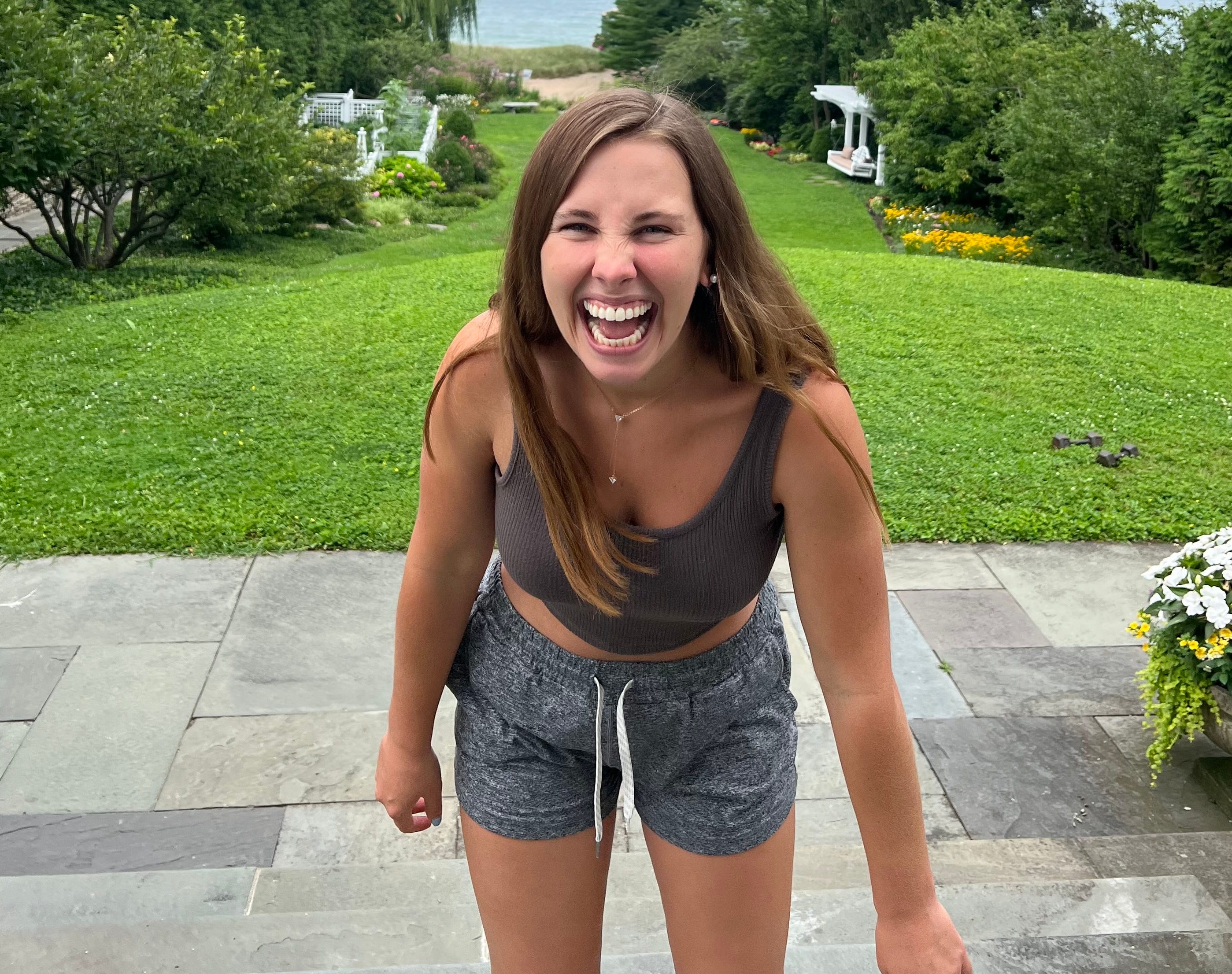
In the thick of ED recovery, I often wanted to reach back in time and shake eighteen-year-old Emma. Stop it! I wanted to yell. Stop what you’re doing! You’re only making things so much worse!
Now, with time and space, the thing I feel most toward her is tenderness. Empathy. Eighteen is so young. I knew nothing about the world, or the finer nuances of mental illness, and I had spent six years drowning in constant terror. Of course I grabbed ahold of the first life raft that I came across. Of course I stayed in denial about what I was doing to myself for so long. My brain—however misguided its methods—was only trying to protect me.
And I’m learning how to love my brain, even with all her flaws.
If you liked this article…
My book Guy’s Girl, a romantic contemporary novel with raw, realistic ED rep, is available in libraries and anywhere books are sold - though if you want to buy it from an indie bookstore (which I encourage!!!), they may have to order it for you as it has been out since 2023.
Bonus: you can see an interview I did with CBS about the book here. :)
No posts
Comments
Nothing yet. Say the first thing.
Sign in to join the conversation.