
The events of January in Minnesota changed something in my heart. In the downtown of the city where I live, huge posters of Renee Good and Alex Pretti have been pasted on scaffolding, and the other day I found myself at a strange ideological intersection, looking at a poster of Pretti that said “NRA” at the bottom of it. I reached out to touch the poster, the way one might want to touch an urn at a funeral. Something about physical contact with the deceased, or an emblem of the deceased, feels like a way to honor the way in which their life — which had value — was snuffed out.
I often listen to Washington Journal on C-SPAN when I wake up. On a recent episode, gun rights were debated. Host Greta Brawner deftly wove between callers of various persuasions and a man called in who wanted to defend ICE. He seemed to excuse the actions of the officers who killed Pretti, characterizing Minnesota protesters as “brainwashed communists.” It was an easy way to make a senseless killing make sense — a clean, two-word epithet, a simple one-two punch that erased the humanity of his opponents.
Such epithets have become common in today’s political rhetoric. “Illegal aliens,” repeated ad nauseam by J.D. Vance, is one of them. “Childless cat ladies,” also by J.D. Vance, is another. Despite the rather uncanny number of things I have in common with Vance, and despite once finding his ideas interesting, I have come to realize that I will never vote for a J.D. Vance — neither for him nor anyone resembling him. Something must be done to restore the humanity of those people who are dismissed by these few-word epithets. That is the purpose of my post today.
I have thought deeply over the past few weeks about women who do not have children. Not only because I believe that not having children is a valid path in life, the reasons for which I will illustrate, but because I am tired of the shame heaped upon these women. I am tired of the way such shame is accepted or ignored.
There have been many women throughout history who did not become mothers, or even marry. Some of them played a vital role in the beginnings of Christianity. In the days before monastic vocations were institutionalized and made official, a number of young women were martyred for saying they did not want to marry but instead give their lives to Christ. Saint Agnes is one of them. She was pierced through the throat for deciding to preserve her allegiance to God, which for her meant refusing a marriage proposal as a teenager. She is recognized today as one of the earliest and most important Christian female martyrs.
In a provocative article for The New Statesman from Spring 2023, the writer Rose Lyddon explained why the trad-wife ideal is perhaps a distortion of Christian values. She posits that this newly popular traditionalism “looks suspiciously like something dreamt up by 1950s advertising executives.” In “the earliest Christian communities,” she writes, “the ideal state” was instead “the gift of one’s whole life and attention to God.” In the first centuries after the death of Christ, his followers originated “entirely new forms of social life” as “an alternative to the reproductive life of the family” — environments where they could radically seek Christ, together.
One of the things I love about the Catholic Church is the respect it has for motherhood and maternal energy. The figure of Mary, of course, is venerated everywhere, through astounding artworks as well as daily prayer. The Church is pro-life in its deepest sense. It honors the capacity of women to conceive and give birth, and extols the refuge that the archetypal figure of mother represents for many people. But the Church also cherishes, perhaps even more greatly, women who are called to religious life. In his 1996 letter Consecrated Life, Pope John Paul II speaks about certain souls requiring a singularity of purpose in order to fulfill their calling:
Consecrated persons will be missionaries above all by continually deepening their awareness of having been called and chosen by God, to whom they must therefore direct and offer everything that they are and have, freeing themselves from the obstacles which could hinder the totality of their response.
It does seem to be a characteristic of certain great people, even beyond the confines of Christianity or religion in general, that they have an inner solitude or must forswear all forms of distraction which could keep them from reaching their destiny. There are, of course, women who manage to be both mothers and great leaders, artists, or writers, but history is full of distinguished examples who made the rarer choice to focus solely on an alternate pursuit. For some of these women, it was not a choice. It may have been what fate arranged. But that circumstance allowed them to dedicate their whole life energy to something greater than themselves — something that was capable of inspiring millions of others.
In the intriguing book Single For a Greater Purpose, Catholic writer Luanne D. Zurlo suggests that we may be living in a time when God has chosen an increased number of people to give themselves entirely to service outside the institutional structures of a religious vocation. These potential saints are living in the world, fulfilling their individual callings, but are not part of a monastic community. She calls them “dedicated lay singles” (as in the ecclesial term layperson, or laity). “Does a post-Christian society have a greater need of hidden vocations,” she asks, “harkening back to the early years of the Church?” This may be a way that having a calling from God “can also be understood in broader terms,” she writes. The people who are chosen for this purpose “are God’s ‘free agents,’ so to speak.”
It’s an interesting idea. A similar understanding is possible in the secular world. I think that a woman who masterfully dedicates herself to something other than marriage and childbearing is not evidence of an erroneous path, but of a life fulfilled differently. As long as one is dedicated to something greater, there is the opportunity to be generous and life-giving. The following are examples of such women.
Georgia O’Keeffe
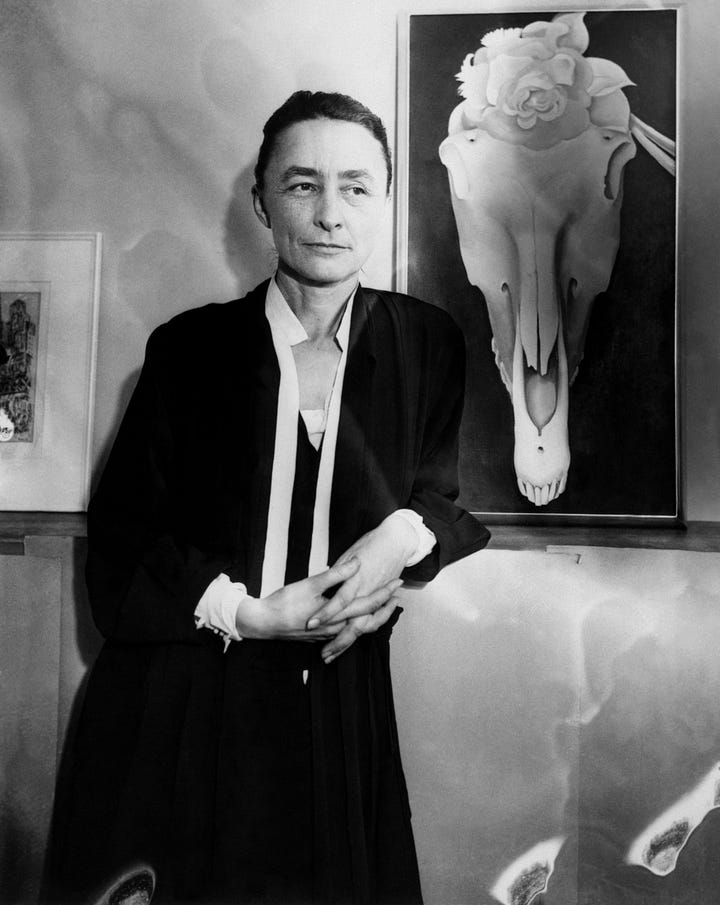

The great twentieth-century artist Georgia O’Keeffe lived all over the country, including Wisconsin, Chicago, Virginia, and New York City. Her work is perhaps most associated with the American Southwest. Although she was married to the love of her life, Alfred Stieglitz, who vociferously supported her creative genius, she never had children. At least one source claims that she said the following: “I was not meant to be a mother. I’m an artist.”
Mary Magdalene
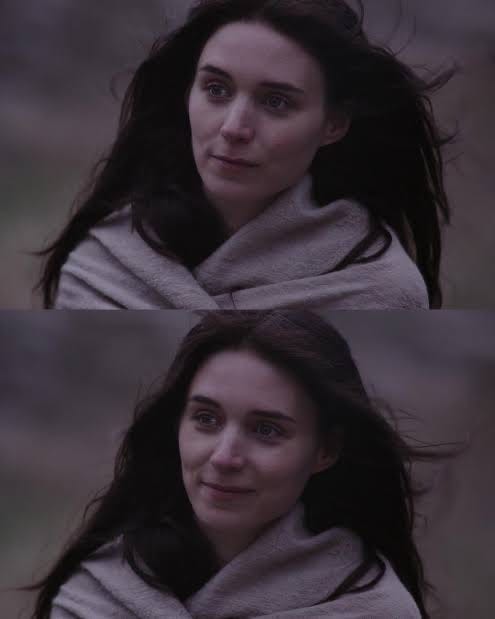
There is no evidence that Mary Magdalene, Christ’s close friend and female disciple, ever had children. She holds an unmatched place in salvation history by being the first apostle to tell the others that she had seen the risen Christ. Like many of Jesus’s followers, she likely left everything behind (family members, possessions, former occupation) to be faithful to him and ensure that more people were saved. She herself was healed of seven afflictions (Mark 16:9), although their nature remains mysterious.
Emily Dickinson
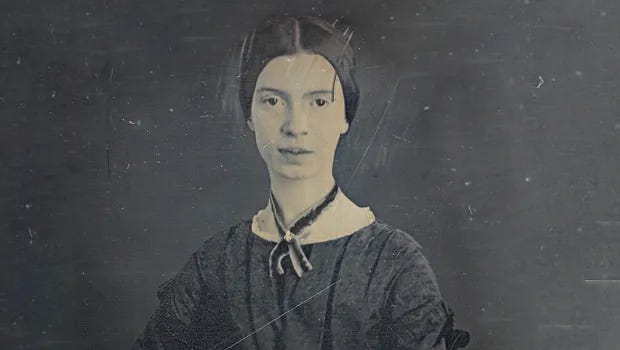
Emily Dickinson lived her life in utter devotion to her calling as a poet. Famously living much of her life in her room at her family’s house in Amherst, Massachusetts, her life could be understood in a spiritual sense as that of a contemplative of the highest order. She composed almost 1,800 poems, few of which were published during her lifetime. She never married or gave birth to children. Dickinson once wrote in a letter to a friend: “God keep me from what they call households, except that bright one of ‘faith’!”
Coco Chanel
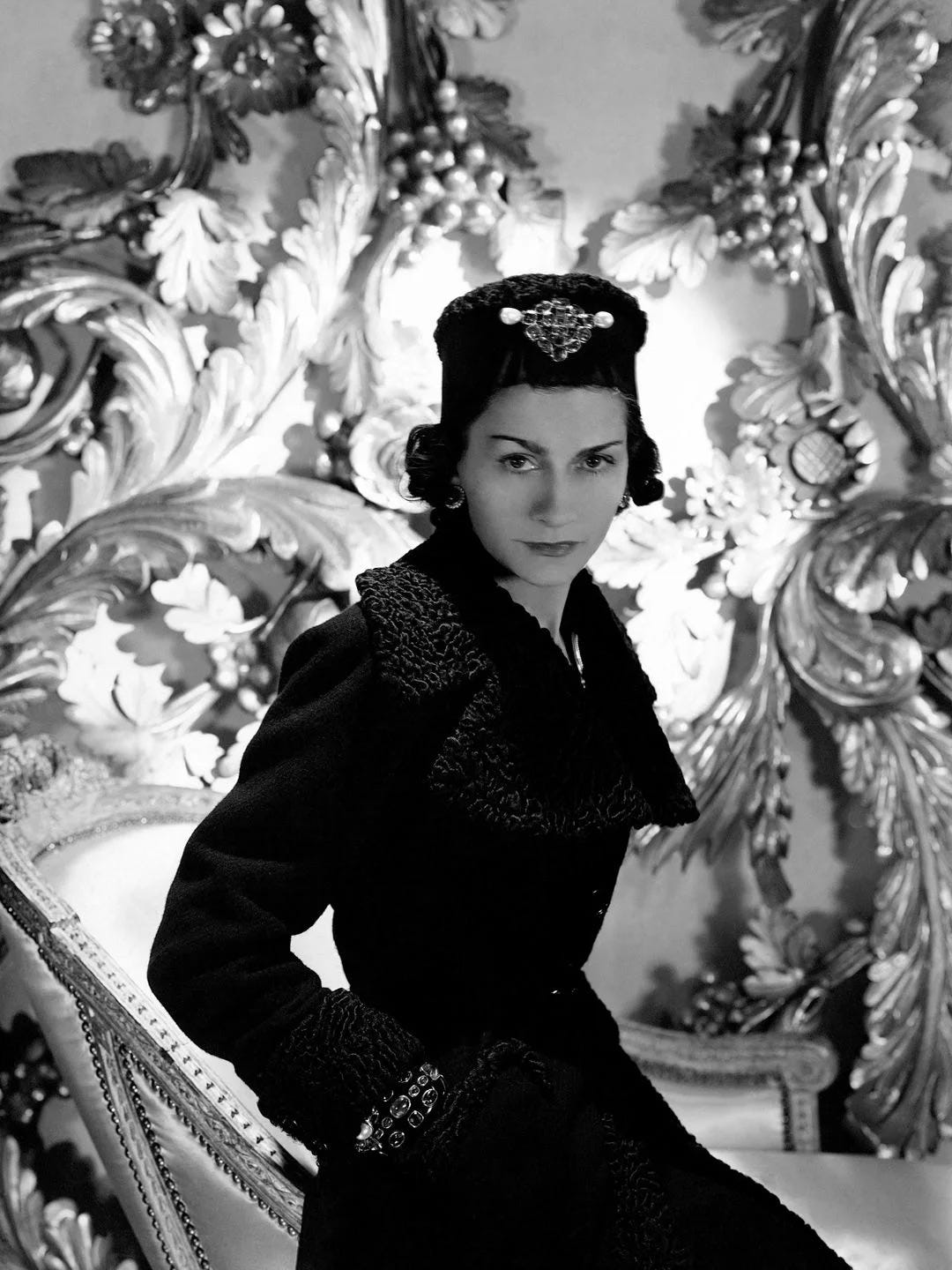
A woman of what I like to call “business genius,” Gabrielle (called Coco) Chanel founded a fashion and luxury company which of course still stands as a giant today. Her beginnings were not so luxurious. She grew up in rural poverty before being placed in an orphanage at age 11. After being the companion to a wealthy man in her youth, she realized she wanted to work. Biographer Lisa Chaney writes that “work indeed became Gabrielle’s new conviction; it was her only possibility of escape … She would later recall how, as a mere twelve-year-old, she had realized that ‘without money you are nothing, that with money you can do anything … I would say to myself over and over, money is the key to freedom.’” Unless you grew up in an orphanage, it is best to not judge such a statement. Gabrielle’s deep visual intuition allowed her to perceive aesthetic shifts decades in advance. This ability saved her from destitution and despair. It was a gift from God. She never married or had children.
Rosa Parks
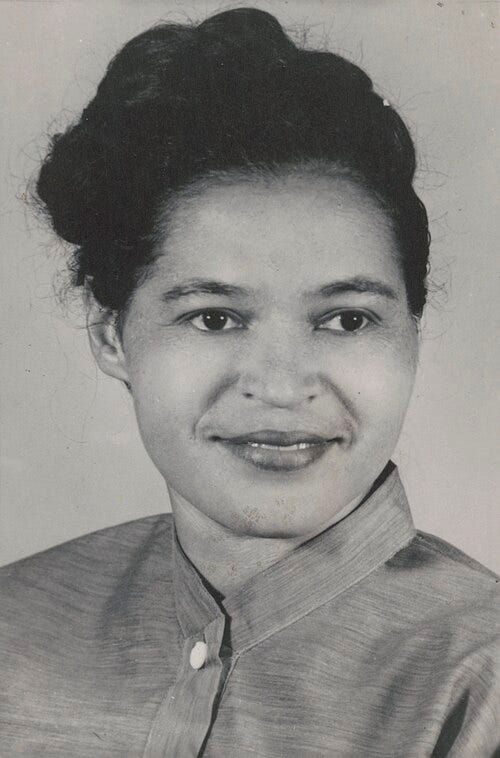
Rosa Parks is famous in the American consciousness for choosing to not surrender her bus seat and therefore her humanity because of the color of her skin. Although she was married to her husband Raymond Parks for forty-five years, they never had children. Both were activists. Parks later said of that day on the bus in Montgomery, Alabama:
People always say that I didn't give up my seat because I was tired, but that isn't true. I was not tired physically, or no more tired than I usually was at the end of a working day. I was not old, although some people have an image of me as being old then. I was forty-two. No, the only tired I was, was tired of giving in.
Although she was not a mother in the conventional sense, Rosa Parks is often spoken of as the “mother of the civil rights movement.”
Joan of Arc
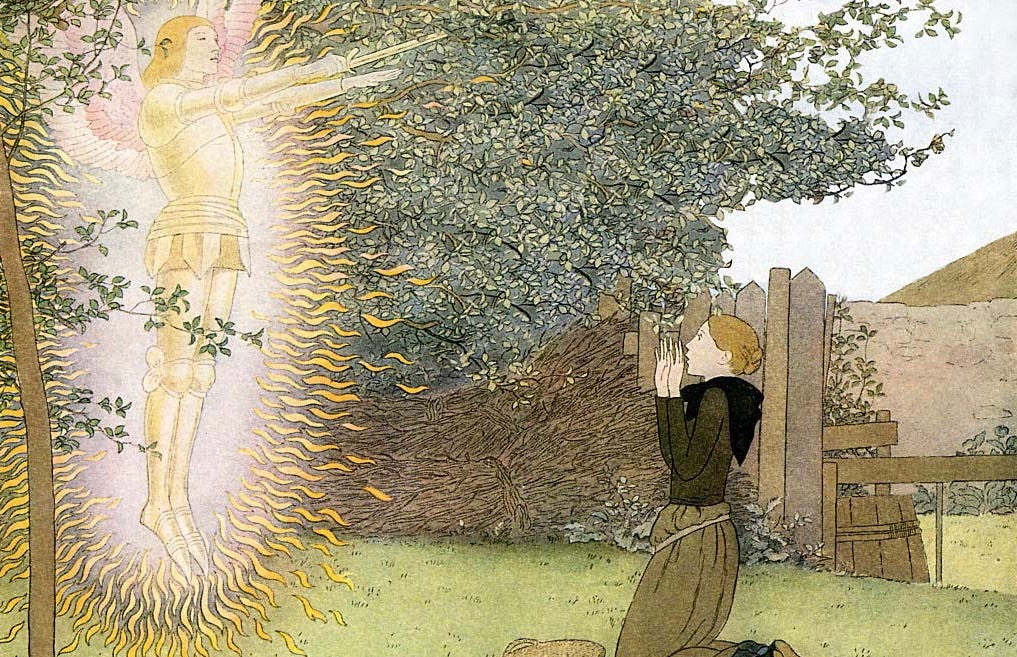
Many people know the story of Saint Joan of Arc. As a young shepherdess in provincial France, she began hearing the voices of the Archangel Michael, Saint Catherine, and Saint Margaret who urged her to go into battle to save her country. After reclaiming part of France from the English, she was put on trial and executed for heresy. Her case was later reopened and she was exonerated and then canonized. She never married or had children, and died while still a teenager. She is recognized today as one of our most important mystics and an example of the female warrior archetype.
Emily Brontë
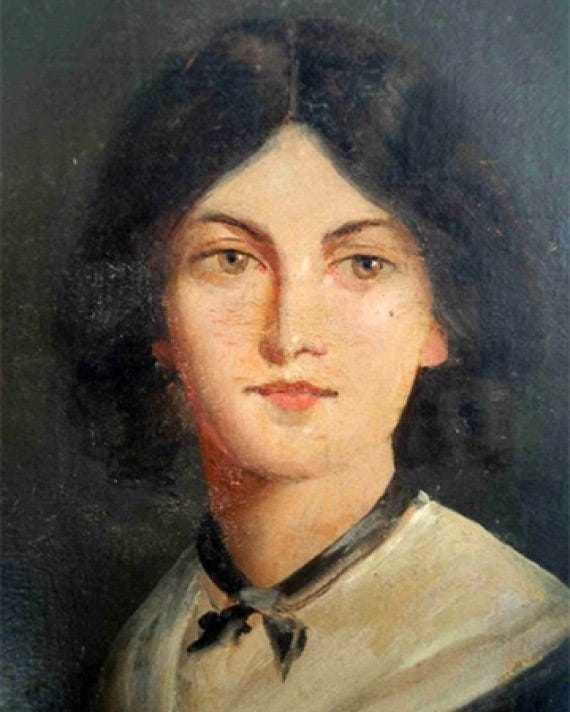
Emily Brontë was a novelist and poet of genius who died at the age of 30, one year after publishing her masterpiece, Wuthering Heights. A sister to Charlotte Brontë, the author of Jane Eyre, she was raised in the moorland of northern England. Her work is deeply associated with this landscape. She never married or had children. Camille Paglia theorized in Sexual Personae that, rather than being the sweaty object of female fantasy, “Heathcliff is Emily Brontë” (italics mine). Inverting the tendency of the male Romantic genius to “seize” upon the “powers of feminine receptivity,” Paglia writes, a female artist like Brontë “must extend her … reach in the other direction, toward the masculine.”
Annie Oakley
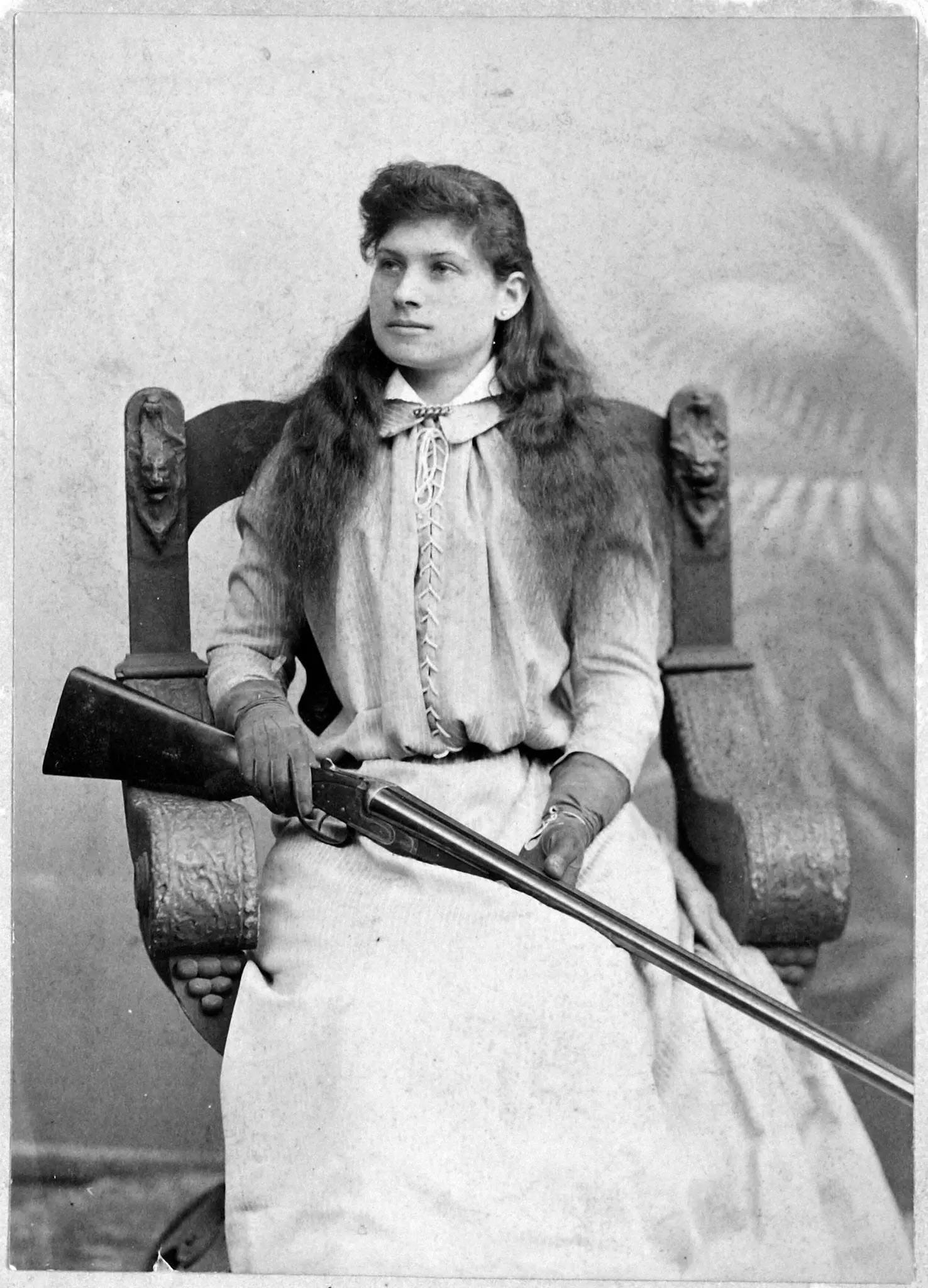
I wrote about Annie Oakley in an editorial for The Wall Street Journal last month. One of my all-time heroines, she gained fame for her astounding sharpshooting skills which were the result of a childhood spent in the woods of Darke County, Ohio. Although she married the American marksman Frank Butler and toured with him throughout the country for decades, they never had children. No one knows why. Annie had a particular destiny.
Thérèse of Lisieux
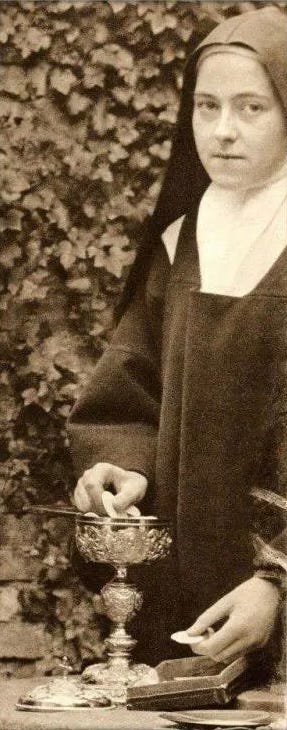
One of the most beloved Catholic saints, Thérèse became a member of the Carmelite order at the young age of 15. Her book, Story of a Soul, delineates the spiritual philosophy known as the “Little Way,” which she defined as a path of “trust and absolute surrender.” Thérèse remarked that rather than in trying to be something we are not, “holiness consists simply in doing God’s will, and being just what God wants us to be.” She did not have her own family but lived in spiritual community with other women. She entered eternal life at the earthly age of 24.
I illustrate the lives of these women in order to show that despite not having children, there is nothing deficient about them. On the contrary: each one of these people was exceptional. But even if that were not the case — even if they had been regular women, leading simple lives — they would have had dignity just the same. That the Right, drenched in cruelty, cannot understand this, seems to be an abdication of its traditional alliance with religious thought.
The unmitigated cruelty and crassness of the Right as it is currently constituted is what will ultimately doom it. Americans are still fundamentally decent people. I believe that decency will make a comeback, and when it does, it will probably be on the Left.
The truth is that you never know why another woman doesn’t have children, or doesn’t have them yet. She may be facing infertility. She may have some other, private health issue. She may have grown up in an abusive home and family life holds no romance for her. It may be the most painful issue in her life. Dismissing a woman through a verbal eyeroll as “childless” is not honorable. It is best to respect the mystery of that person’s life, and not pronounce too harshly upon it.
There have also always been people who, in the highest and noblest sense possible, have wanted to give their lives to something other than marriage and childbearing. They may answer the call to monastic life, or devote themselves entirely to being an artist. For some people, writing is a biological imperative. (I can attest to this myself: on a recent Saturday morning, I lay in bed, feeling ill. My head was aching and thoughts were tumbling ceaselessly in my brain. My heart raced and my stomach tossed and turned. I hadn’t planned to work that day, but I thought I’d better sit down and write. Within twenty minutes of losing myself on the page, the symptoms had ceased.) Such impulses and imperatives have not only been protected by the Catholic imagination, they have been respected by the ethos of American individualism.
In an interesting conversation put on by the Foundation for Individual Rights and Expression in 2018, Andrew Sullivan spoke about the tension between those who would seek to re-institute a pressurized group mentality, similar to the tribalism of past eras of history, and the individualism which is this country’s heritage. Beginning at 28 minutes into the panel, he makes a haunting case for continuing to protect the individual conscience:
We are actually individuals; we have our own selves, and we construct our societies to defend ourselves as individuals, not as groups. We therefore recognize, for example, freedom of religion as a fundamental right — because no group can tell you what to believe about the universe … And we believe that when we’re trying to figure out the truth in society the way we do that is argument … Power is really less important than truth … the forces of the group over the individual are immensely powerful right now … what matters, it seems to me [is that] individuals … are allowed their own conscience, allowed their own voice, and treated no better and no worse than anyone else … Are you an individual, capable of making up your own mind, sometimes bucking your own group, saying what you think, and having that taken seriously on its own terms? … That’s what’s at stake here. The silencing of individuals. The intimidation of individuals … the loss of imagination and understanding of our society as really one of equals, and individuals, rather than groups, and power. That’s really what’s at stake.
For all of these reasons, I am pro-life but not pro-natalist. Pro-life because I believe that once a child is conceived, it has a soul and indeed, a life; not pro-natalist because I do not believe procreation should be urged upon those whose lives do not call for it.
“The most important thing,” as John Paul II said in Consecrated Life, “is to serve God freely.” It is to quietly discern, as Thérèse of Lisieux illustrated, which way God may be calling us, and come to peace with it. In more secular or Jungian terms, it is to perceive the deepest want of the Self, in its truest sense, and grow into a love of one’s fate (amor fati). It is to offer oneself wholly to God, and trust that the world will be served by our gift.
Comments
Nothing yet. Say the first thing.
Sign in to join the conversation.