
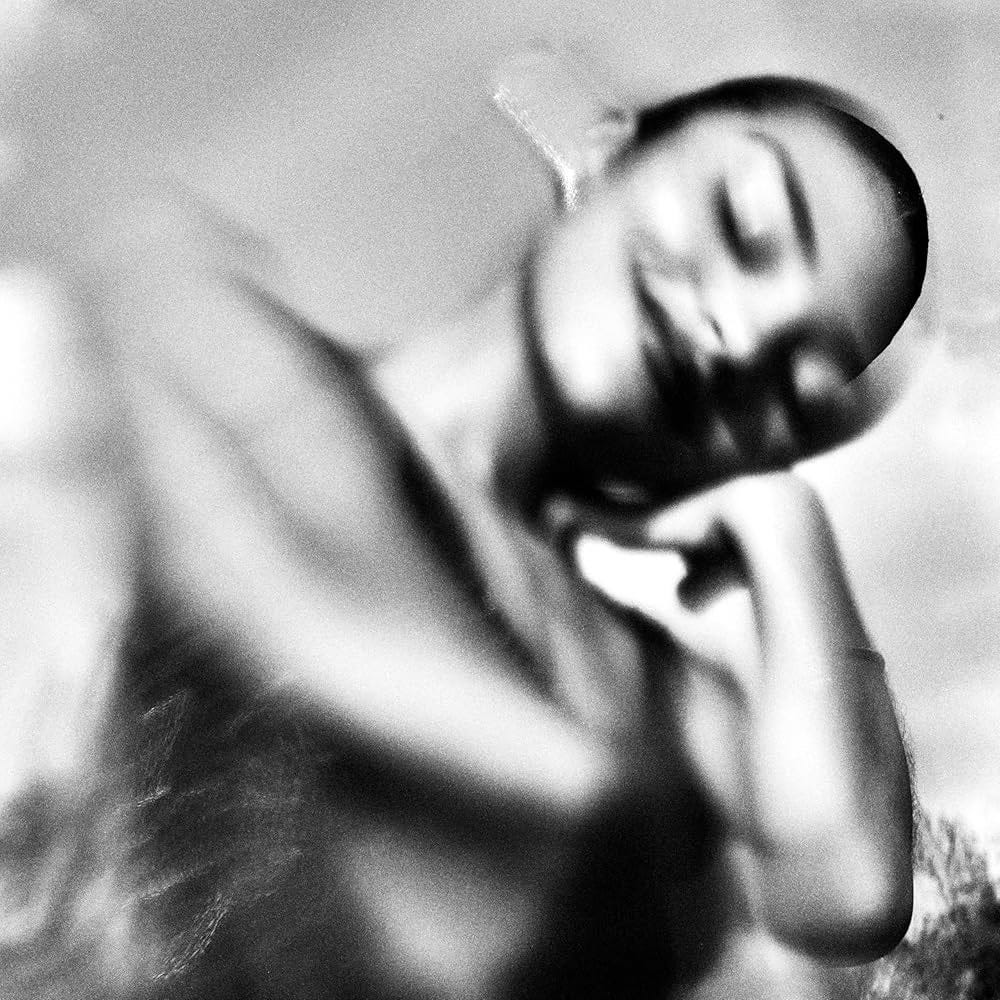
The Art of Loving—Olivia Dean
Released September 26, 2025
When I first wrote about Olivia Dean in 2024 I thought then “this girl’s going to be big and it’s only a matter of time.” And now here we are a year and a half later and she’s gone and done it. On her first album, she had her signature warm vocals down but I had written that I felt it was lacking in Dean herself, meaning that I didn’t get much of her personality or identity in the songs, even though she had co-writing credits on them. I was really hoping her next album, the one that became The Art of Loving, would be the one that adjusted ever so slightly to finally nail it. And much to my joy and delight, it has.
Dean’s star has been rising slowly, but ever so surely for the last few years and finally, with the release of this album alongside her collaboration with Sam Fender on “Rein Me In,” which was my personal pick for 2025’s song of the summer, Dean is here, she’s arrived, and she’s not messing around.
Dean’s story starts out the same as many who have come before her like Amy Winehouse and Adele as well as contemporaries Raye and Lola Young as a student at the BRIT School, a famed performing arts school. A state-funded school with an extremely narrow merit-based acceptance rate, Dean first studied theatre and only later switched songwriting. At 19, she started singing background vocals for dance-pop group Rudimental before releasing her own music in 2018. She would release five EPs and tour pubs, cafes, and small venues as part of a post-pandemic scheme to revive live music before her debut album Messy (2023) earned Dean 3 BRIT award nominations, a spot on the shortlist for 2023’s Mercury Prize, as well as spots playing the Pyramid stage at Glastonbury in 2024, and being named BBC Music Introducing Artist of the Year in 2023.
Following the release of Messy, it truly seemed like she was on her way to becoming “a genuine household name” and ever since then, she has continued to be booked and busy. She appeared on Jools Holland’s Hootenanny in 2024 doing a version of “You Can’t Hurry Love,” and wrote a new song for the soundtrack of Bridget Jones: Mad About the Boy (2025). As well as embarking on her own headlining tour in North America, Dean also opened for Sabrina Carpenter, both on her US tour in the fall of 2025, but also at Carpenter’s two-show date at BST Hyde Park in July alongside other artists like Rachel Chinouriri, Beabadoobee, Clairo, and Ambar Mark. Also in the summer, Dean was touring with Sam Fender, with whom she was featured on Fender’s single “Rein Me In” from his fourth album People Watching (2025).
She did everything right to slowly, but still organically raise her public profile so that when she released her next album, it would be the one to launch her to the next level. It was while she was on tour with Fender that Dean announced her forthcoming second album, The Art of Loving, which was released on September 26.
My favorites on this album are “Nice to Each Other,” “Lady Lady,” “Close Up,” “So Easy (To Fall in Love),” “Man I Need,” “Baby Steps,” “A Couple Minutes,” and “I’ve Seen It.”
From the first second I heard Olivia Dean’s music, I was impressed by her voice, of course. But after her first album, I came away not feeling like it was so close to being a perfect album for me, it was just ever so slightly off, but I couldn’t put my finger on what it needed. But as soon as I heard the first singles from The Art of Loving, I thought “There she is. She did it.”
The album opens with a short interlude into the album’s world. “The Art of Loving (Intro),” is warm like the old school singers like Julie London and you can almost hear the crackle of the vinyl, even when listening on streaming.
The first three singles “Nice To Each Other,” “Lady Lady,” and “Man I Need,” were, from the jump, how I knew she had done it. She had taken what worked from Messy, improved upon the distant personality in the songwriting, and brought in a brighter, more ‘70s inspired aesthetic to finally nail the sound that we hear now. And I’m not the only one who thinks this. “Man I Need,” with its over 100 million streams on Spotify, is the song that she needed to become the pop star she was destined to be.
For this album coming out in September, this whole album and in fact this whole era of Olivia Dean is so summer-coded. From her song with Sam Fender, plus the summery shimmer vibes of “Man I Need” and “Nice To Each Other” made it so this album is really hitting this time of year when we’re getting the first peeks of summery warm weather.
Lyrically, “Nice To Each Other” is “about the push and pull of exploring your independence in dating…[and] enjoying someone in the present and allowing it to be both light and meaningful.” It’s a joyful, playful song that is a “simple, radical rejection of pressure, of expectations, of tired dating scripts.” At a time where daters are expressing a fatigue, both from the dating apps as well from hearing headlines about the Male Loneliness Epidemic, which is not lining up with many daters lived experiences, a lyric like “I don’t want a boyfriend” is refreshing and Dean is offering, as an alternative, “an invitation to try something simpler and more honest instead.”
“Lady Lady” has this cool confidence that can be heard throughout the album, but on this song in particular. It’s Dean with a “smooth and sure energy” while she’s embracing “the unknown and the beauty of trusting what’s to come.”
“Man I Need” is the ultimate example of Dean’s confidence on this album. She knows she doesn’t need a partner, she’s whole and complete as she is, but if she maybe did want someone beside her, she’s keeping it light but still bold, “telling someone exactly what she wants without an ounce of cynicism.” And it’s not posed as a challenge either but rather a fun, playful invitation which “radiates optimism” but also shows Dean knows her worth and isn’t willing to settle for anything less.
While the lead singles from this album made Dean the TikTok It girl princess I always expected she would be, but the flip side of that is that I had heard a majority of these songs, at least in various 30 second snippets, before I heard the entire song on the album. So while very few of these songs were complete surprises to me, I did have a few sneak up on me in terms of how much I liked them. Amongst those in that category is “Close Up.” It’s a somber, mournful moment where “Dean is hoping for something more, but feeling foolish when it doesn’t end up as she’d wished.” This song is amongst the three that Julian Bunetta co-produced with Dean’s fellow collaborators. Bunetta has become one of those names that when I see it I know I can expect quality. Bunetta is most known, at least to me, for his work with One Direction, Niall Horan as a solo artist, and Sabrina Carpenter and for perfecting this late 2010s and 2020s pop sound.
“So Easy (To Fall in Love)” is the single released with the album and is easily the internet’s standout pick for this album. Co-written with Amy Allen, recent Grammy winner for Songwriter of the Year for her work with Sabrina Carpenter, Tate McRae, and Halsey as well as writing songs with Harry Styles, Niall Horan, and Charli XCX. The line “I’m the perfect mix of Saturday night and the rest of your life” is such a perfect example of this cheeky sung-with-a-wink style Allen has made her signature, particularly in her work with Carpenter. The song overall is “flirty, playful and makes you want to twirl around your room or text your crush first.” But like so many of the songs on this album, there’s an undercurrent of confidence and self-assurance. Dean is confident in herself and knows what she brings to the table. She’s not begging for scraps of affection, but knows that she’s whole on her own, and this possible romance only adds something to her life, rather than needing it to affirm herself. This song has a slight hint of a bossa nova sound, which Dean mentions on “Man I Need,” and a jazziness that has only previously in recent times been seen in pop music with Laufey.
So much of this album is Dean again and again making the tough choice to choose herself over a romantic relationship that isn’t working or putting time and energy into someone who isn’t reciprocating, or worse, who isn’t treating her all that kindly. That’s the theme of “Let Alone The One You Love,” which is exploring “the pain of loving someone who can’t love you the way you deserve.” But where this same song in the hands of another artist at another time would have been about the pain of not being good enough, Dean is not a “Stand By Your Man” kind of singer. Dean is making the deliberate choice, despite how painful it is, to know her worth and leave the relationship when she’s not getting what she needs from it and it’s hurting her. This song could also be applied outside the arena of romantic love, but really to any kind of hurt done by “a lover, a friend, even family.”
In all of the therapy-speak albums that have been released, with Ariana Grande’s eternal sunshine (2024) and Kacey Musgraves’ Deeper Well (2024), these albums that reference Saturn returns and healing from heartbreak and trauma, on “Something Inbetween,” Dean isn’t subscribing to this idea that you must be healed before you can move forward. It’s a song to remind us that “you don’t have to have it all figured out to be loved. You’re allowed to be in progress and still worthy of connection.”
“Baby Steps” could either be the independent girls’ anthem or a song that feels like a particularly apt song for Gen Z, of which Dean and I are both members. For those of us between the ages of 22 and 29, it can feel like the world we are inheriting is nothing like we were told and grew up thinking it would be and the milestones we thought we’d be hitting by this point in our young lives are still far off, but we look around at our peers who are still making some strides and wondering when it’ll be our turn. With this song, Dean is reframing our feeling of being behind and like our accomplishments are lesser than our peers and is instead saying “your timeline is your own, and it’s worthy of celebration. The community you build and the home you make for yourself are milestones too.”
“A Couple Minutes” is that moment where you see your ex on the street and you’re immediately transported back to the moments you shared together. For Dean it’s a moment of closure and acceptance, and ultimately a moment of “wanting them to shine, and just achieve everything that they want with their life, whether that includes you or not.” Taking from the Clairo Charm (2024) playbook with the same warmth and softness in the vocals, both Clairo and Dean worked with Leon Michels, who brings that jazzy sound with him in all his collaborations from Aloe Black and Norah Jones, to Remi Wolf and Kali Uchis.
“I’ve Seen It” is the thesis statement of the album. For every person that exists, there are that many experiences of love and that wide ranging spectrum from romantic to familial to platonic is what Dean is exploring in these songs. Dean said that she “cried in the studio” when she wrote the song and that her friends, who she specifically calls out by name, also cried when they heard it. Dean said her relationships with her friends are “the most consistent place for love in my life.” The breadth of the song is an ambitious undertaking but one which highlights that, to quote Hugh Grant, love really is all around—from “love in her parents’ favorite films, love at a dinner table with friends, love in a glance on public transport.” And these little glimmers of love can be as powerful, transformative, and meaningful as any romantic love.
While this album is certainly a shift from her more neo-soul and “gorgeously brassy reto-pop” sound on Messy to more “contemporary twists on R&B” on this album with a “slight sheen of pop,” this is so much more than a pop album and Dean is more than a pop artist. Bringing in those hints of R&B, and still having elements of that neo-soul, Dean is also experimenting with bossa nova, jazz pop, “Latin influences, and acoustic textures” while borrowing sounds from a wide variety of influences. There’s “a spare set of bongos from a Laurel Canyon open mic, a buttery Brill Building Rhodes organ, and some well-placed bah-bah-bahs courtesy of Motown girl-groups” as well as “channelling a Ronson-era Amy Winehouse” on “Close Up” with “its moody exposition [that] glides into a sunlit major chorus, lifted by its punchy brass.” Like with Winehouse, Dean’s arrangements center around her exceptional voice and “rich storytelling.”
Anymore sounds from jazz, bossa nova, or even singer-songwriter all get conflated into the lacking and nonexistent genre of “coffee shop pop.” Soft pop songs with possible jazz influence by artists like Norah Jones or Regina Spektor might get this label. But Dean is not coffee shop pop. In the same way that Laufey is “bringing jazz traditions to a new generation,” Dean is compiling all of these influences and inspirations to bring a Bossa Nova-inflected wider depth of jazz-inspired pop sounds to Gen Z. And neither she nor Laufey are alone in this venture. Artists like Lady Gaga, with her collaborations with Tony Bennett, and Kendrick Lamar in his work with Kamasi Washington on To Pimp a Butterfly (2015) while Billie Eilish has been known to cover jazz standards as well as pay homage in songs to the style of Sinatra on “Xanny” and also to Bossa Nova, as heard on “Billie’s Bossa Nova.”
It’s really not that often that we get these real crooner type singers, so of course Dean is going to be compared to other singers like Amy Winehouse, who Dean specifically cites as an inspiration. But she also cites classic singer-songwriters like Carole King and has been inspired by watching live performances of Paul Simon, shown to her by a teacher when she was 17 years old. After seeing Simon’s performance of “Diamonds on the Soles of Her Shoes,” Dean said “it just sparked something in me.” She said she was inspired by “the coming together of the quite traditional singer-songwriter thing that Paul Simon does so well, with this South African music, and the players, and the brass.” After that performance she thought “Oh, I’d love to do that. How could I do that?” and the whole experience was “for want of a better phrase, it was a kick up the arse.”
Dean has also shown her influences in her choice of covers, performing songs by the Supremes and Nat King Cole, tipping her hat and showing her reverence for the vintage music that she’s now reviving for a new generation and the artists who made that music. And of course with Dean’s dip into the bossa nova territory, her song “So Easy to Fall in Love” is seen as “perhaps the most forthright attempt at reviving Astud Gilberto’s impactful and achingly beautiful vocals.”
Dean has always seemed to have an old soul, partly influenced by her grandmother, with whom Dean shared a room as a child and who is paid tribute on Dean’s song “Carmen” from her first album. During the writing of Messy, Dean said her grandmother “wasn’t doing so well, and we were spending a lot of time together, and I was asking her lots of questions about her life.” Dean’s grandmother was part of the Windrush generation, a period of time in British history in which immigrants from the Carribean islands came to the UK over a period of 24 years after the end of World War II “following an invitation from the UK for Commonwealth citizens to help rebuild the nation.” Dean’s grandmother was only 18 when she arrived in England and already had four children by the time she was Dean’s age putting into perspective for the young Dean the idea that her grandmother had “made a life for herself with the foresight that she wanted the life of her children, and their children, to be a better one. I thought ‘This is a story that needs to be told and celebrated.’” Continuing to carry the memory and legacy of her grandmother and her story when Dean accepted her first Grammy award for Best New Artist in February 2026, amidst ongoing terrorization by ICE agents against both documented and undocumented immigrants, as well as native born citizens, Dean said “I want to say I’m up here as the granddaughter of an immigrant…I’m a product of bravery and I think those people deserve to be celebrated.”
After achieving her three goals of releasing an album, performing on Jools Holland, and playing at Glastonbury, Dean said she felt “daunted” by the idea of a second album. She particularly developed “a bit of studio anxiety” around never having had her own studio to make music from, but rather always “coming into other people’s spaces and trying to justify myself.” But on this album, Dean got her wish, recording in a house in London which she transformed into a live work studio for the duration of the eight-week recording period. Living there “pretty much full time throughout the creation,” Dean made the space her own, bringing her own piano as well as “photos from my house,” even inviting friends over and having parties at the studio-house, making it a “real, living, breathing space.”
Having this stable space was also important for Dean after a year of “moving house three times against my will. My whole building got evicted, and then there were some problems with another flat I was living in, and it was super disruptive.” Having the house gave Dean a sense of ownership and stability over her space, with her saying it was “the best place I’ve ever made music in because it was mine….just lots of nature around, bird noises. The door was open…At its core, it felt like having people over. I’ve never made music in that way before. I’m always the person coming over.”
Returning to produce this album with Dean are many of her collaborators from her first album, including Matt Hales, Bastian Lagebaek, and Max Wolfgang as well as newcomers Julian Bunetta, Leon Michels, Zach Nahome, John Ryan, and Matt Zara. Hales is an artist in his own right, performing under the name Aqualung as well as writing and producing for other artists. Ryan is, like Bunetta, a former One Direction songwriter and producer who has gone on to work with the band members on their solo projects as well working on Sabrina Carpenter’s last three albums including Emails I Can’t Send (2022), Short’n’Sweet (2024), and Man’s Best Friend (2025). Zara is a frequent collaborator of Bunetta and Ryan’s, recently known for writing “Bad Dreams” for Teddy Swims and producing “Lost in Translation” for Kacey Musgraves and Carín León. In addition, Dean co-wrote two songs including the breakout “Man I Need” with Tobias Jesso Jr., who is known for writing “Boyfriends” with Harry Styles as well as songs off Radical Optimism (2024) with Dua Lipa and wrote with Dijon for Justin Bieber’s Swag I and II (2025) and Dijon’s own second solo record.
I’ve written before about my longtime support of Max Wolfgang, who was my first interview when I was 15 years old and he was playing in a band called Wolf Gang. From his kindness to a scared and socially anxious teenager just trying to something new, I will always be a fan of his and wish for his success, which seems to be coming to him in spades with his collaborations with Dean. In addition to his work as songwriter and producer, Wolfgang also contributed backing vocals and playing the organ, bass, piano, guitar, and synthesizer on several tracks.
This is the album that launched Dean from UK’s best kept secret to a bona fide international pop star, with “Man I Need” being the fifth most played song in the world according to Spotify in September 2025. When “Man I Need” reached number one on the UK Singles Chart the same week as the album reaching number one on the UK Albums chart, Dean became the first British solo female artist to top the albums and singles charts simultaneously in four years, since 2021. Simultaneously, Dean had three songs in the Top 10 that week, with “Nice to Each Other” reaching number 4 and “So Easy (To Fall in Love)” at 9.
Additionally to Dean’s credit, not only did she break a record last held by Adele for a female artist to have three top 10 singles simultaneously on the charts, but she did so at a time where “Golden” from KPop Demon Hunters was an international hit and “Man I Need” finally overtook the number one spot after eight weeks of “Golden” holding the position.
Both the title and idea for the album were inspired by bell hooks’ all about love published in 1999 and specifically Mickalene Thomas’ exhibition created in response to hooks that Dean caught while it was on display at The Broad in Los Angeles in 2024. Both hooks’ book and Thomas’ art “explore themes of intimacy, femininity, and affection,” themes that are very much at the forefront of Dean’s songs as well. Dean’s inspiration from hooks came from a passage “about the craft of loving one’s own life,” which served as the thesis for the album.
The songs were written in sequential order “processing her experience in real time.” Some songs were more raw than others, having been written much closer to the album’s release than others in the track listing, but Dean said “it’s exciting…I enjoy the intensity of having just written something three months ago [and not having] a chance to even overthink it.” The songs are also covering “the full emotional spectrum: ‘It can’t just all be happy “ooh, come be the man I need!”’ she says. ‘Sometimes it’s “Oh wow, you didn’t want to fall in love with me — that hurt.”’” After the initial ten songs were written, Dean had considered the album as nearly finished, but a belief that “12 is the magic number of tracks” sent her back to writing, this time thinking about how to round out the ending, with Dean saying “Where are we going to leave this with you, girl? What’s the end of the story?”
Dean is far, far from the first artist to make love a central theme in her music,“it has been painstakingly dissected and enshrined for centuries in the written word, films, and songs that both shatter and mend hearts,” but she may be amongst the first to tackle the all-encompassing subject as a spectrum ranging from the “the excitement of new relationships” to love in different forms such as familial, “platonic, [or] self-love.”
Dean took the name of the album from a particular quote of hooks’ which points us to the ultimate theme of the album: “Knowing how to be solitary is central to the art of loving,..When we can be alone, we can be with others without using them as a means of escape.” Because as much as Dean’s album is an exploration of romantic love, it is likewise a meditation on not accepting just anything merely because it is attention or affection. Rather, knowing she’s worthy of real love and a real connection, she’s comfortable and willing to hold out for something worthwhile and continues to live her life in the meantime.
While Dean is aware that love is “obviously a topic that a lot of people have written songs about,” she does so in a way that shows “a vivid mosaic of modern love—imperfect, intoxicating, and alive.” There’s also an overarching story being presented here, “about being loved, losing love, and finding it again in places you might not expect” while also tracing “the way we rebuild ourselves in [love’s] aftermath, step by step, song by song.” But it’s about more than that, it’s also about “loving yourself enough to walk away, loving your friends fiercely, falling in love even when you’re not sure you’re ready and letting go when it’s time.” Rather than telling you what love is, Dean “sketches out all its shapes and contradictions” and ultimately “she redefines it as something multidimensional, universal and beautifully human.”
And what makes Dean’s portrayal of love in all its varieties all the more poignant is that you get the sense that she “captures the small, human rhythms of love with the precision of someone who’s lived every word she sings.” She’s not interested in showcasing love as perfect, but simply advocates for presence, “the quiet grace of showing up, again and again, no matter how uncertain the ground feels.”
Dean’s reading of hooks was particularly relevant at a time in her life where she needed the time and space to reflect on the past two years of her life “and everything that’s happened.” She now recognizes that love isn’t “just magic that happens to you…I think you’ve got to put the time in; it’s a craft.”
Dean knows she doesn’t have all the answers, nor does she claim to. At only 26, “she’d be the first to admit that most of her findings have been inconclusive.” But if there was any semblance of an answer in this album it would be best summed up in the album closer “I’ve Seen It.” In the song, Dean describes as she’s “witnessed love shape-shift…[and] watched as it took the form of her parents’ standard-setting romance, young couples finding each other and growing apart, and older ones losing memories to time.” Dean says that it makes her cry thinking that “I am able to give it back the way it gives to me…The more you look, the more you find. It’s all around you, all the time.”
It’s a record that’s relatable in the sense that it “feels less like a record and more like a diary cracked open. Not just hers, but mine, yours and anyone who has ever wrestled with the messiness of love in its many forms.” Dean put it best when she said “for some reason, it’s seen as this mystical, untouchable thing that we’re all supposed to just have a go at and figure out.” But, she posits, what if there was a simple answer—“love shouldn’t be so hard if we’re honest and take the pressure off our ourselves.” The breezy nature of this album makes it feel real that it could be that easy.
With a watchful eye kept on Dean’s follow-up from 2023’s Messy, this album “marks the next chapter in Dean’s career, one as a popstar risen.” Called both “a continuation and a step forward” from her debut album, there is a new level of “maturity and authenticity” that Dean brings to this new project. Remaining from her first album is, as always, her “crystalline, versatile and laced with warmth” vocals and diaristic writing style, but this time around shedding the “neo-soul cliches” for some ’70 inspired soft rock and pop.
Critics called Dean’s message of appreciating love in all its forms wise, “without becoming preachy.” If there were any critiques, it was said that the album “could have benefited from a slightly longer runtime” and that “her production is utterly unblemished, glossy to the point of almost being too perfect.” Others seemed to think that her reliance on sounds of the past could feel “overly cautious” and made many of the songs sound similar, “blurring into one another”, with others wondering if on the next album she will “start throwing some paint around” and be “more or less comfortable shedding the comforts of classics and trying to add more dimension to her canvas.”
Dean was praised for her “timeless grace” but also it was suggested that she invokes a “bygone, indeterminate era in music and celebrity, one that maybe never existed to begin with,” further suggesting that the vintage aesthetic Dean is creating is an example of Retrotopia, or the idea that one is seeking comfort in the past, perhaps a false or imagined memory of the past, to escape discomfort in the present. But even if this were truly Dean’s intention or impact, she’s hardly the only artist working now to invoke anachronistic vintage aesthetics through a romanticized lens. The reality is that there is obviously a market and a hunger for this aesthetic and sound and stars have been made of Winehouse, Adele, and Raye, who likewise borrow from this sound.
One of the more egregious critiques of Dean is that “her music isn’t bad by any means. It’s just not very interesting…I think she’s got potential, but she would waste her recent rise out of obscurity if she keeps up this coffee shop pop sound.” Aside from the fact that coffee shop pop is not a definable style, saying that Dean’s “not bad, but she’s not much better than someone you’d see playing live at a local coffee shop,” is not only insulting to Dean who has spent the better part of the last ten years developing into the star she is now becoming, but it’s also insulting to all of the other musicians who are simply trying to make the dream happen for themselves too. Now of course I do know what coffee shop singer means and is intended to convey, but that doesn’t make it any less demeaning to people who are just simply trying.
On one hand, sure, this might be an album to “play like background music” or is “in all sincerity, a perfect album to cook or clean to” and maybe it is an album “that risks fading into the background, sometimes sliding towards sameness.” But if you take the more generous reading, it’s “the perfect record for sinking into a cushioned chair and letting your mind wander along with the soft harmonies.” Dean isn’t the first to combine this “deep and breezy” sound, with Minnie Riperton giving us “Lovin’ You” in 1974 with “all those casual la-la-las sinking into something profound” and Corinne Bailey Rae in the 2000s with “Put Your Records On,” creating this sound of feel-good acoustic pop-soul.
But here’s the thing about music, its ubiquity means that it soundtracks our lives. Not all music, not every album is going to be one you sit down with and listen to beginning to end and with the lyrics pulled up. If that is you, that’s great but for the vast majority of us who are losing our attention spans quicker by the second thanks to never-ending overstimulation, then the music we listen to is accompanying something else, whether that’s cooking, cleaning, working, driving to work, or making the bed. And while I can understand from an artists’ perspective, they put so much time and so much of themselves into the music they make for most of us to be only half listening and distracted, but on the flip side of that isn’t there something intimate about being part of someone’s life in the way that they’re always there through the good, the bad, and the mundane.
Of course the thing that stands about about Dean’s music and makes it identifiably hers is her voice. It’s both strong and light, grounded but still airy, and ultimately “versatile and laced with warmth.” But we knew this from her first album. This follow-up project “pushes Dean into an elevated tier,” and while still maintaining her identity—you know Dean’s voice when you hear it—she doesn’t fall into diva territory. Never one to belt just to belt, on this album Dean instead “takes the harder route of reserving her most powerful vocals for the biggest crescendos.” The minimal production allows her voice to take center stage and “the clarity it affords her makes every lyric land with intention.” In the same way that her lyrics are from her real life and from her heart, you get the sense that her vocals are equally coming from her heart.
But even more than her vocals, Dean’s secret to her success is her writing, her artistry, and the confidence she has in herself. This album in particular is wide ranging, not just “full of summer bops, but it’s the most beautiful and cohesive album I’ve listened to in a very long time.” Dean’s writing is relatable in a sense that “she writes like she’s sitting across from you” and imbued with an honesty and vulnerability that comes from Dean’s willingness to say what she means. She only writes songs that are real and that are true to her and her experience, saying “I would never write a song if it wasn’t something that actually happened to me.” She says that she does that “for the feeling of the documentary-ness of it…I do it so that I can listen back to it in 10 years and be like ‘OK, that was about that breakup.’ ‘That was about that time in my life.’” Including when writing about situations that are difficult or painful, she says “the lyrics that you’re scared to say are probably the best ones…They’re always the ones where people are like ‘Oh, that one really got me.’”
She’s “intentional with everything she does,” but especially with her songwriting, doing everything she can “to serve the song rather than showboat [which] is another old-fashioned virtue.” And a large part of her writing, the part that speaks to people, is Dean’s vulnerability, and the way that she’s not afraid to “sing to the whole world that you have been let down or that somebody didn’t want to fall in love with you. And you’ve been broken by it.”
Dean’s keen sense of vision and focused process—where some artists “will want to write…200 songs, and we’ll get 10… once [Olivia] had an idea of the record she wanted to make, she would go, ‘This is the timeframe I want to do it in, let’s do it’”—shows a confidence Dean has in herself and her art. Her collaborator Tobias Jesso Jr. said he loves working with artists like Dean, “who have very strong opinions, because I believe that’s where the soul of any given song comes from—an artist’s ability to know themselves.” Dean’s artistry, then, comes not just from this intentionality, but also “this resolve and clarity of vision” she has in which she “always just made music that I hopefully would want to listen to.”
Part of Dean’s artistry is also how “people connect to Olivia’s sincerity…she shows up as fully herself, vibrant, grounded, and relatable.” Her confidence in her vision comes down to her confidence in herself, this self-assurance that she knows who she is, what she wants to say, and is so “secure in her taste, so [that when she’s collaborating with others] nothing is taken too personally, and [they] can just get down to business finding the best ideas and the best way to convey them.”
Dean isn’t one to get caught up in the thrill of being a popstar and lose herself in it, but she also “isn’t resisting pop stardom so much as defining it on her own terms.” She’s not bothered if someone doesn’t like what she puts out, saying “Well, that’s fine I love it and it’s real,” and she isn’t pushing herself to make music that sounds like any other artist for the sake of keeping up with trends, saying “I work really well in my comfort zone.” That isn’t to she doesn’t hold herself to a high standard and doesn’t want to make the very best work she can, but rather she does all of it with a boundary up, saying “I really feel like I’m turning up to do my job and trying to do it really well—and then I’m going home.” And no doubt that separation and protecting her peace has made her a better artist.
Dean is the latest in a long lineage of crooners, but she’s updating that vintage aesthetic for a new audience. She obviously borrowing sounds from the past, from 1960s Motown to ‘70s soft rock and even her style, from her on-stage outfits to her hair and “soft-glam makeup,” Dean is referencing a particular period of time. Even her videos for singles “Nice to Each Other” and “Man I Need” play with that vintage aesthetic by being filmed on soundstages, “a nod to the silver-screen artifice inherent to the tradition she’s working in.” And as easy and put together as it looks, it’s really Dean’s curation that brings the entire thing together. But it’s not as if Dean’s entirely cut-copy-and-pasting the aesthetics of the past without any update, and in fact throughout the album she “straddles the line between retro and modern.” It’s her melodies which “feel timeless” and her writing with its fresh perspective that brings that vintage aesthetic into the modern age.
As an introduction, Messy really showed Dean’s “versatility” and range of what she can do, whereas this album “feels more focused” and zeroed in on what she does best, which is being herself in that cool, older sister kind of way. And where the focus of Dean’s first album was on exploring “vulnerability through self-discovery and reflection,” while this album “turns its gaze outward—toward connection, intimacy, and the slow, deliberate work of care.” But what remains the same across both albums is “Dean’s signature sincerity” and “her voice [as] the thread that binds it all together.”
Even more exciting than watching Dean nail her sound and style with this album is watching her find the audience she was always meant to have. Because even as good as her studio recordings are, her live shows are where her magic really shines. She “performs with composure and clarity of purpose” as well as having “both the otherworldly poise of Diana Ross and the charm of your best friend killing it at karaoke” and if this is the album that will bring more eyes to her live performances, than it has served its purpose because “there’s something thrilling about watching her step into bigger stages and brighter spotlights, because she deserves every flower, every standing ovation and every fan who finds themselves in her words.” They flock to her, not only because she “demonstrates that beauty is found in all places and faces, especially in the quiet moments in between,” but also because she “has become the voice of a generation whose romantic lives have been complicated by dating apps and other digitally mediated mating rituals.”
When she first started performing for small audiences when she was just starting out to last year playing small 1,200 seat venues on her own headlining tour, to now opening for Sabrina Carpenter and finally, as of just last month, playing her own headlining shows. Her live shows are just as beautiful as her music, and likewise harken back to a time in music’s past with “no ornate stage set-up behind her,…no rigmarole of choreography…no theatrics of flashing lights timed to the beat.” Her shows feel “personal, understated, and entirely” her. She doesn’t even do an encore, saying that “the ordeal of feigning the end of the show only to come back on after a few minutes was ‘tired.’”
You’d be hard-pressed to find a reason not to root for Olivia Dean. While her “star power is radiant and fueled by more than just charisma,” and certainly it’s her “talent and personality that shines.” But what really makes Deans performance so magical is her palpable joy. She has an “unfussy exuberance,” “grooves in perfect time with an expertly assembled band,” which gives us moments like “Baby Steps” where Dean “studies every page of the Motown playbook.” For the exact same reason that Alysia Liu’s triumphant return to the Olympics after two years away from skating was marked by her playful, excitement, and sense that she was having the best time, Dean is likewise appearing to be having the time of her life and it’s a feeling that radiates. In doing things her way, defining pop stardom on her own terms by showing up, telling the truth, and guarding her peace, she’s able to be herself and just have fun, which in turn allows her audience to do the same.
For an album titled The Art of Loving, Dean “positions herself defiantly at the center of its romantic core.” In her interpretation of a love album, it’s less about finding a romantic love and more about exploring all different types of love that life has to offer. This taking of focus away from centering romantic love and this conditioning “that you need a partner, or once you’re with a partner you lose an independence and your own sense of self” is, what the internet may call, decentering men. Dean’s songs like “Man I Need” and “So Easy to Fall in Love” are unique in the sense that they show a confidence and a comfort in being alone. In “So Easy” “the person it’s addressed to is barely visible,” and “Man I Need” is “a testament to knowing your worth and asking for what you want,” while “Something Inbetween” is exploring this questions of “Well, what is that something in between where I am in love with you, but I’m also able to remain myself outside of this relationship.”
This is not the album that tells young women that their value is in their connections to men, instead this is an album that “sings not just about love, but dissects it, honors it, and even questions it.” Dean says she gets this perspective from her mother and aunt, who “are very strong, independent women.” Dean’s mother worked the Women’s Equality Party in the UK, meaning “it just would be impossible for me to not be a really strong feminist.” But Dean acknowledges that we’re in a time where dating “feels so combative” between dating apps, ghosting, and during a time where there has historically been so much messaging is thrown at young women about settling down, getting married, and being mothers. This messaging has only ramped up now with the global rise in conservatism, family values, and online tradwife content. She isn’t trying to “downplay the challenges or risks” of modern dating, but recognizes that, while she may “live in a bit of an echo chamber, maybe, [so] that not everybody feels that way,” but she feels “it’s important for me to drum that message home….[that] as women we always think about what we could be for somebody else and how we could kind of slot into their lives and make it better, and [we] forget to think about what that person’s bringing to us. Because we’re fabulous.” So as this album “de-complicates and de-escalates romance,” Dean reminds us that “when we get into relationships with people, we focus a lot on — as we should — how brilliant they are. But I think it’s important to remember that you’re also excellent, and you bring a lot to the table. Why shouldn’t somebody want to fall in love with you? You’re amazing!”
It’s hard to say what it was I heard in this album that I just knew she had done it. It’s one of those you-know-it-when-you-hear-it things. I just feel so proud of Dean like she were one of my own personal friends and although she’s only a few dates into her “mega-headline” tour which is set to include not one, not two, but four sold-out nights at the O2, I think I’m really going to regret not getting tickets to see her live. But as thrilled as I was with this album and its evolution from her first, I’m still always left thinking about where an artist can go from here. It seems like she’s nailed this current iteration of her look and her sound, but will it be enough to sustain a long career or will she be forced to pivot? After critiques that her sound is too safe and her production too perfect, that led me to thinking about where could she go next to shake things up. As a professed disco fan, I would love to see her take on a more Diana Ross or even Donna Summer inspired aesthetic, or she could continue to mine this starlet aesthetic and take it further than anyone ever has before. But no matter what direction she goes in, she’ll always have that voice and her songwriting formula that she’s perfected on this album to carry her.
No posts
Comments
Nothing yet. Say the first thing.
Sign in to join the conversation.