
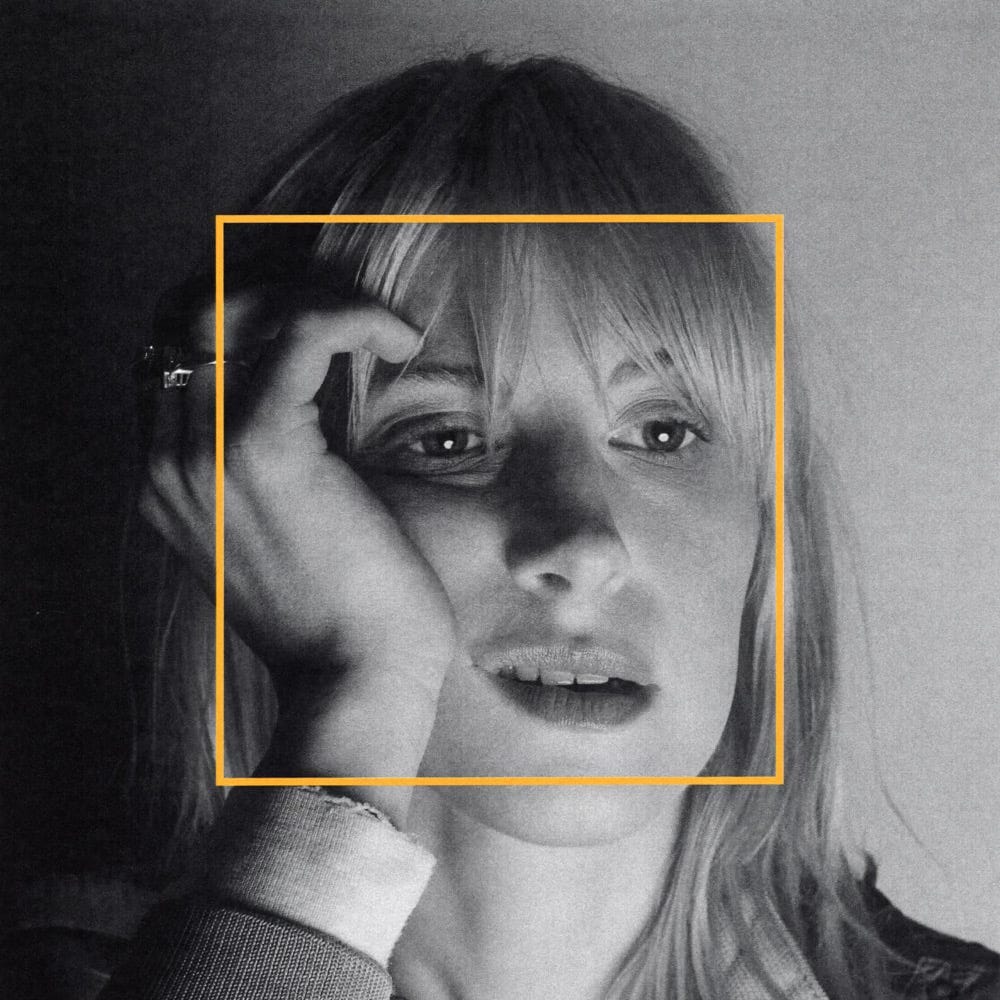
Ego Death at a Bachelorette Party—Hayley Williams
Released November 7, 2025
I’ve been an admirer of Hayley Williams from afar. Admittedly, I have not dug in too deep on Paramore beyond the singles because I always assumed they’d be too pop-punk for my liking. But knowing how beloved she is by Paramore fans, and knowing of her outspokenness for social issues that are also close to my heart, I’ve never had an ill thought towards her, but also never quite found a reason to look into her music. That is until I saw videos of her live performances from this album and thought this might be my in.
This album is Williams’ first solo release as an independent artist, her contract with Atlantic Records having expired in 2023. Williams had been signed to Atlantic for over 20 years, signing a solo deal in 2003 at 15 years old. Initially it was the intention of Atlantic to develop Williams as a pop act, but upon her insistence that she wanted to play in a band with her friends, the label acquiesced and partnered with a indie label to sign the band Paramore.
Paramore’s lineup was, at the beginning, made up of Williams, brothers Josh and Zac Farro and Jeremy Davis, with the addition of Jason Bynum coming later. Williams had known the Farros from a weekly program for home-schooled kids and she met Davis when they played in a cover band together. Bynum was a neighbor of Williams’. While Williams was officially signed to Atlantic, the band signed to the smaller niche label Fueled by Ramen with the idea being that, as a rock label without any of the stigma of being a major label, it fit the band’s punk rock ethos. In their time with Fueled by Ramen, the group would go on to sell over 7 million records.
The band was signed to a “360 deal” in which a label is entitled to “a percentage from touring, merchandising, publishing and more.” At the time of the 360 deals, label were struggling to make a profit as “file sharing siphoned revenue from music sales.” Other artists like Lady Gaga and JoJo were signed to these exploitative deals with mixed results, including JoJo being tied up in legal disputes with the label and unable to release music for several years. Rock band 30 Seconds to Mars ended up in a $30 million dollar legal dispute with their label EMI when they tried to get out of their 360 deal after discovering that, despite selling millions of records, they had never been paid and were instead millions of dollars in debt to the label as a result of their 360 deal. The dispute was eventually ended when the band cited a California labor statute called the De Havilland Law, named for actress Olivia De Havilland, that states an artist can not be contracted for more than seven years. 30 Seconds to Mars had been signed to their 360 deal with EMI for nine. The band ended up signing a new deal, less exploitative deal with EMI and made a documentary Artifact (2012) about the legal process and shining a light on exploitative contractual practices musicians face.
In the case of Paramore, who were among the first to sign a 360 deal, internal conflicts about their contract is what led original members Josh and Zac Farro to leave the band in 2010--although Zac Farro later returned in 2017 and is currently one of three official band members as of 2026. Now as free agents Paramore has yet to sign with another label and Williams has started her own label to release her solo work, aptly titled Post Atlantic.
My favorite songs on this album are “Glum,” “Disappearing Man,” “Brotherly Hate,” “Negative Self Talk,” “Hard,” “True Believer,” “Dream Girl in Shibuya,” “Parachute,” and “Good Ol’ Days.”
There’s a wide variety of sound and influences across this album. The album opener “Ice In My OJ” sounds like Damon Albarn’s Gorillaz while “Disappearing Man” is borrowing from the ‘90s pop of Alanis Morrissette and Liz Phair and “Mirtazapine” is that classic Paramore pop-punk sound that fans have come to associate with Williams. But later on in the tracklist, on “Blood Bros,” the sound shifts again, this time taking on a folkier, Katie Gavin style.
“Glum” showcases Williams’ vocals, especially when compared to other tracks on the album like “OJ” and “Hard” that employ more of a talk-singing or digitally distorted vocal technique.
“Kill Me” touches on a common theme in recent pop music of the plight of eldest daughters. For Williams, this looks like breaking the pattern of carrying generational trauma and putting down the need to always do what’s right. Lyrics like “Eldest daughter comes to stop the cycle/A job you never asked for is paying in dust” also speaks to the pressure eldest daughters feel to be the ones to break these long-held generational cycles and the toll that takes over their lives.
On the title track, Williams references a “racist country singer’s bar,” which was later confirmed to be referring to Morgan Wallen’s bar. Wallen, of course, was caught on camera using a racial slur while “on hour 72 of 72 of a bender.” The incident led to Wallen being suspended from his label, but that suspension was only temporary as he is currently listed on the website of his label Big Loud. Williams has long considered Nashville home and in addition to distancing herself from the type of country musicians that have come to overtake the city, in this song she’s also reflecting on the change Nashville has undergone from Music City, home to Hank Williams, Johnny Cash, and others to this celebrity bar on Broadway and bachelorette party destination. She approaches this again on “True Believer,” singing about “longing for the Nashville of yore” and the city’s ongoing gentrification.
“True Believer” pulls back further in scope than the title track and tactfully examines the “religious hypocrisy and racism” that is still ever-so present in her beloved Nashville. She checks this hypocrisy when she sings “They say that Jesus is the way but then they gave him a white face / So they don’t have to pray to someone they deem lesser than them.” The song also references “Strange Fruit,” the Billie Holiday song about the lynching of Black Americans. Williams ties this to her “anger towards people who use God to justify hate… [and] invokes the racist history of the United States, one where God has been used to justify many of America’s racist actions.”
A large part of this album is about the dissolution of Williams’ relationship with bandmate Taylor York and several songs chronicle Williams’ many complicated feelings, but songs like “Love Me Different,” “Parachute,” “Dream Girl In Shibuya” and “Disappearing Man” are as damning in their lyrics as they are musically varied and interesting.
Yet, the choice to put “I Won’t Quit on You,” followed by “Parachute” is perhaps the most telling on the album about this situation in her life. All this time that Williams is reflecting on the relationship with York, she’s still holding onto this hope which is wrapped up in “I Won’t Quit,” in which she “promises she won’t give up on her relationship.” But then comes “Parachute,” which makes abundantly clear “that hope is lost.”
“Good Ol’ Days” is the song that made me want to listen to this album after seeing it make its way around the internet, particularly Williams’ performance of it during her live shows. It’s the perfect TikTok song for this album, from its cadence to Williams’ dancing during the live show. Williams has been known for her dancing skills during Paramore shows, and this particular performance did not disappoint. If “Parachute” is the song that lays Williams’ feelings most bare, then this is the song that sums up Williams’ side most succinctly, which is also to the benefit of social media virality. The line “We could sneak around like we’re on tour/Even if that’s all you want me for/You could call me Miss Paramore,” playing on the homophone paramour, meaning a secretive lover, and Paramore the name of her band, made it easy to sympathize with Williams and understand how she had been wronged. And in the same way that the internet loves albums that feel like gossiping, Williams’ direct allusions to the Hard Times period of Paramore’s career, which can be presumed to be the period in which Williams’ relationship with York was ongoing, feeds the public’s desire for details and “tea.”
As with her work with Paramore, Williams is listed as a co-writer and co-producer alongside Daniel James who has previously worked with Williams on her two prior solo albums, and who also performs multiple instruments across the album. Working with James on several tracks were Jim-E-Stack, known for his collaborations with Caroline Polachek, Dominic Fike, Bon Iver, and Lorde, Brian Robert Jones and Joey Howard, both of whom are Paramore touring musicians.
The marketing and launch for this music was shrouded in mystique as the first “single,”—put in quotes as there was, at that time, no intents to release the music officially as an album—“Mirtazapine” was played on WNXP in Nashville in July 2025. It was the first solo Williams music in nearly five years since her solo album Flowers for Vases / Descansos in 2021. Williams then appeared two days after the song’s release at Newport Folk Festival to play the song with Bleachers during their scheduled festival slot. Three days after the Newport appearance, Williams uploaded the song and 16 others to her site. To gain access to the songs, fans had to input a 16-digit code that they were sent after purchasing from Good Dye Young, Williams’ hair dye company. The site was designed to look like a 2000s Microsoft Windows desktop display with the tracks featuring unordered as files on the screen. 24 hours after going live, the site was scraped clean and replaced with the message “Thank you for listening.” The songs were not officially ordered nor was the collection of songs given an official title, but in writing about the release, journalists dubbed the collection Ego, that matched the background of the desktop on Williams’ site.
When the album was officially released on streaming platforms on August 28, it featured the 17 already known tracks plus “Parachute” which was then pushed to radio. In posting on her social media about the project’s release on streaming, she included spots for tracks 19 and 20 with a blank space next to them, revealing that there were to be two more songs added. On October 24, “Good Ol’ Days” was added to the album on streaming and the final track “Showbiz” was added on November 7, the same day as the album’s physical release. The initial release of physical copies only included 1,500 but all subsequent vinyls and CDs sold now include the full 20 song tracklist.
This album was unique amongst its peers in that Williams engaged in very little promotion and even returned to old-school early aughts approaches like radio and exclusive drops to artist websites. The ethos behind this marketing idea was to “make music tangible” and more of “an experience,” said Williams’ manager Leah Hodgkiss. It stemmed from the reality that listeners don’t “even pay attention to what [they are] listening to” in the age of constant music and streaming platforms like Spotify and Apple Music which are largely curated playlists. There is “hope that this approach to sharing music becomes contagious” particularly as nostalgia for analog and the way things used to be and against the backdrop of ever-more-exploitative modes of making money in the music industry emerge, like “bad streaming royalties, merch cuts, and a shrinking critical ecosystem.”
Because the songs were massed uploaded to Williams’ site as individual songs rather than being intended as an album, it was left to the fans to structure and order the tracklist as they saw fit, leading to thousands of fan-curated playlists. All of the playlists were later compiled into a website by “an overzealous Haleyhead [sic].” This whole process of “fan collaboration” mimicked “the early-aughts days of Limewire downloads and the detailed labor of CD and cassette mixtapes” and Williams said that by giving her fans the freedom to do with the music as they wished, it allowed her to “shirk the weighty responsibility [of ordering the songs] onto fans and gain inspiration from the way they received the music.” The final tracklist that appears on the album is informed by fans’ own playlists.
While the physical versions of the album on vinyl and CD do feature the same tracklisting as is on streaming, Williams said she was still “listening to potential track-list orders and still trying to create [her] own,” which suggests there might be re-releases or repackagings of the album in the future.
Williams’ live shows for this project were her first ever as a solo artist. There was an initial solo tour planned in 2021 in support of her first solo album which was cancelled due to the ongoing COVID-19 pandemic. But in December 2024, Williams publicly announced a renewed intent to play solo shows. Due to the cancellation of the earlier tour, as well as public support for the new collection of songs, the “overwhelming demand” for Williams’ shows led to more dates being added on November 12, 2025.
Possibly from years of playing Warped Tour, an event that has been known for its affordable ticket prices, Williams partnered with Openstage, an online platform for marketing to fans, is indicative of Williams’ integrity. Openstage’s mission is to empower artists to build direct-to-fan relationships, including through verified presale registration in the hope to combat bots and scalpers and give “fans a better chance to access tickets.”
Performing with Williams were the “ParaFour,” made up of musicians Logan Mackenzie and Brian Robert Jones on guitar, Joey Howard on bass, and Joey Mullen on drums. All the members of Williams’ backing band on this run of solo shows have been touring members of Paramore.
While on tour, Williams welcomed a number of guests to join her on stage, including Noah Kahan in April 2026 at her show at the Ryman Auditorium and Jason Isbell in New York City. Taking on songs of her guests’ writing, Williams performed “Downfall” with Kahan and “Cover Me Up” with Isbell.
Over the course of their 20 plus year career, Paramore have largely been known as a pop-punk band, associated with the 2000s era bands of Warped Tour. But in more recent years of the band’s evolution they have played with new-wave and sounds post-punk, even dabbling in dance music. Likewise on this solo effort, Williams takes the opportunity to showcase a variety of sounds and influences ranging from alternative rock and pop, indie rock, trip hop, and folk, but still including sounds familiar to Paramore listeners like synth-pop and some shoegaze.
Elsewhere in her solo work, Williams “deliberately carved a path outside Paramore’s sound.” On her first outing, 2020’s Petals for Armor, she took on a more art pop sound and on her follow-up, 2021’s Flowers for Vases/Descansos, she stripped everything back to a “spare intimacy.” But this album, which started its life more as collection of songs rather than a cohesive body of work, takes on a more playlist style of ranging across multiple pop subgenres like “indie pop, pop rock, [and] dream pop.”
Aa solo project from Williams, one of the chief creative forces behind the band Paramore, it might have been expected that she would take a very Paramore-esque approach to the sound. But instead this album “still feels distinctly separate…[with] only faint traces of the new wave and taut post-punk sounds explored on After Laughter and This Is Why.” One of Williams’ strengths as a solo artist is that “the miscellany is never reduced to randomness, only a curation.”
That investment of 20 years time into her craft is well showcased here, proving this to be “undoubtedly [her] best offering of solo music to-date,” but also a probability that this is “among her most impressive music period.” For a variety of reasons, including misogyny, being a woman fronting a pop-punk band, and dislike for her outspoken nature, Williams has been dismissed as a songwriter and a vocalist within Paramore, but in recent years the perception around Williams’ voice and writing has started to shift and more respect has been given to her name in large part due to this album. This album proves Williams’ brilliance both outside of and within her group Paramore. By showcasing “a remarkable variety of genres…adorned with her most thoughtful, incisive, and personal lyrics to date,” no one can deny that Williams is the driving force behind Paramore’s ethos. She has been doubted before, largely “underestimated [in] her songwriting capabilities,” but she’s now proven she has “it,” “the voice, the presence, the soul that pulls you in.” Williams is now “at the peak of her powers”— showcasing her voice, wide breadth of genre, and personal, but still powerful songwriting.
The album received “universal acclaim” appearing high on year-end best-of lists from Amanda Petrusich writing for the New Yorker, Rolling Stone, Kerrang!, The Line of Best Fit, and Clash. It also topped the US and UK lists for Independent albums.
The best demonstration of a powerful songwriter like Williams is when they’re vulnerable and honest. To start this next chapter in her career, it might have been easier or even more pleasant to make this album “a hard-earned celebration or a justified victory lap,” but instead she dives head first into what feels like a still-open wound. It’s fairly well known by now that this album is largely about her relationship with bandmate Taylor York and what sounds like the abrupt end of that relationship, so it feels brave for Williams to be as open, honest, and no-holds-barred as she is in these lyrics given that the public will very easily be able to decipher the story she’s telling.
If only one major theme had to be assigned to the project overall, it’d be the grief that hangs over Williams and this is an “exploration of [her] life lived under the scrutiny of misogyny and in the public eye.” We know grief can come in many forms, which is what informs the varied musical sounds on this album. There’s a grief for York and their relationship, the love she still feels for him, the friendship they once had. But then there’s also a grieving for who Williams used to be, grieving a life without mental health struggles, and grieving a dream that played out differently than she planned 20 years ago. Songs like “Kill Me” tackle the “hyper-independence that can come from reckoning with trauma,” while “True Believer” is about the grief of watching your hometown, a place you love, change and not always for the best.
The grief that Williams specifically feels following the end of her relationship with York is sprinkled in details throughout the album. It seems like Williams and York always had something between them and when they finally got together after Williams’ divorce and years of will-they-won’t-they-ing, Williams thought this was it, the real deal, the reason she went through everything she had been through. But when it became clear to Williams that York maybe wasn’t as totally all-in as she was and it turned out their years of yearning weren’t part of a grand love story, but rather the relationship just ended, she was left with this grief and “charged anger” we hear on the album, particularly on “Parachute.” The song is “raging with regret” and is the most cutting amongst the album’s tracks. She laments and grapples with the betrayal of “being abandoned by a once-unshakeable partner.” She rails against York that he didn’t stop her from having to go through all the pain and trauma she endured, especially if it wasn’t going to have been worth it in the end and lead to a happy ending with York.
This album fits into this emerging genre of heartbroken confessionals, sitting alongside other projects from the year like Lily Allen’s West End Girl and Amanda Shires’ Nobody’s Girl, both of which take on the writer’s personal side of the dissolution of a marriage, whereas Williams’ album differs in that it’s not mourning a marriage, but a long-term on-and-off romantic relationship that was also intertwined with their creative work, as well as touching on other themes. I don’t believe any of these albums are really meant to be an airing of dirty laundry or a “look what he did” making of a villain story, but rather in Williams’ case, as I do also believe for Allen and Shires as well, these albums represent “an acknowledgement of all she’s endured.” It’s an honest look at the highly emotional end of a relationship that has been played out, at least in some part, in the public eye.
I’ve long held an admiration for Williams, not just for all her endeavors outside of music including Good Dye Young, but for the way she’s used her celebrity for causes that matter to her. Her voice is strong, her lyrics stronger, but her integrity is what makes her the artist that she is. This album proves to any naysayers still holding on that she’s not just another girl in a band, but is a force unto herself. Whatever’s next for Williams, either with or without the band Paramore, there’s no doubt that she will continue to bring the same force and integrity to any project she’s apart of.
No posts
Comments
Nothing yet. Say the first thing.
Sign in to join the conversation.