
Happy Pride Month and happy Atmosphere release week, dear readers! It’s possible you haven’t been anxiously awaiting Taylor Jenkins Reid’s latest novel as long as I have, but I wanted to take this edition of Emi on Earth to celebrate that one of the big publishers’ certified Books of the Summer for 2025 is sapphic AF.
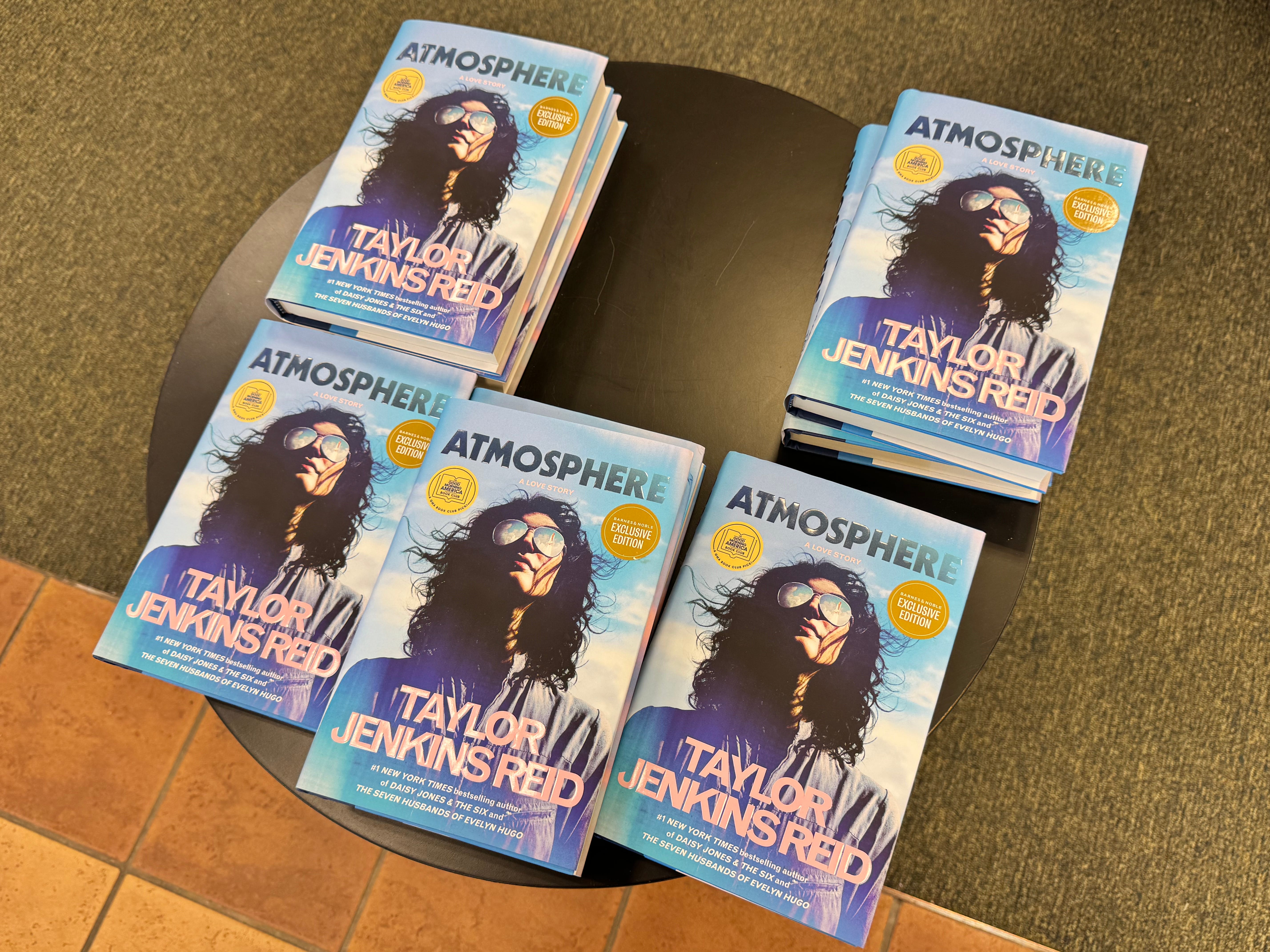
The last few years have seen a lot of major literary successes in sapphic fiction, like Yael van der Wouden’s The Safekeep getting shortlisted for the Booker Prize and Jen Beagin’s Big Swiss becoming a “must-read” for literary girls of my generation. And it is huge, huge, to see the publishing industry promoting Atmosphere the way they are, not just in context of 2025 — when it politically matters that major American retailers like Target and Barnes & Noble are compelled to purchase a queer novel and display it prominently in their stores — but in context of the entire recorded history of sapphic literature.
And yes, this is when I hop on my gay soap box and remind you that, due to various systemic repressions and censorship regimes, there is a two thousand and five hundred year gap in sapphic Western Literature between the death of Sappho in 570 BCE and the publication of Patrica Highsmith’s Carol in 1952 CE.1 [1] Not that you can count 1952 as a renaissance, of course, as Highsmith published Carol under a pseudonym and different title – “The Price of Salt by Claire Morgan” – because she didn’t think her literary career could survive the reputational hit of publishing a novel where sapphicness is considered a good thing for its characters to be. (Was she right about her reputation? I don’t know, but I don’t want to imagine literature without The Talented Mr. Ripley, so I guess things worked out the best they could for everyone …) There’s an argument to be made that Virginia Woolf is a better writer to put at the start of sapphic literature — would Highsmith have been a writer at all without Woolf? — but this is a blog, not a PhD dissertation defense. And I think we can agree that moving the post-Sappho resurgence back to ca. 1925 CE doesn’t change that there was a two thousand and five hundred year gap in sapphic literary history.
And I’m happy to debate this, too, but by my observation, it’s only been within the last five-ish years that sapphic sexualities have become acceptable enough literary terrain that a novelist like me could even aspire to have agents and mainstream publishers interested in her work. Before that, the majority of American sapphic literature came out through very, very small presses, with modern classics like Chloé Caldwell’s Women and Imogen Binnie’s Nevada having to be pulled up from “out of print” status and reissued in order to find the readerships they have today. Obviously, this is not a knock on the small presses — and, in fact, they deserve tremendous gratitude and ongoing love for bringing sapphic literature to life,2 and keeping it alive in the present era of hardcore market consolidation — but it matters that people who don’t have access to indie bookstores or consider themselves “alternative” enough to walk into one are able to access diverse literature.
Because how do I even explain the strangeness in living so much of my life without stories about what love might feel like when I fall into it, let alone out of it? Can I? Or is this one of those things that I’ll never be able to explain, because I’m trying to explain a thing that never happened? Am I just imagining that I could have been more normal about relationships if I’d hypothetically read Women at 23 instead of 33? (Also – I will throw my copy of Neil Postman’s Amusing Ourselves to Death at anyone who asks, “But didn’t you have The L Word?” Sorry to be all dramatic, but, like, no, TV is not the same as books.) All I can say for sure is it’s weird to be on the edge of 34 and still feel like I’ve been taught more by literature about the “politics” of my sexuality than what sapphic love feels like to experience. And not to get all Adrienne Rich about this, but I have to think if I’d had more opportunities to learn about sapphic love, then I would not have spent so much of my life trying to make it work with men (sorry, all the boys it turns out I did not love before) because I didn’t have enough context to understand myself.
Anyway, dear reader, I hope you’re having a wonderful pride month, however you celebrate. I’ll be back in your inboxes shortly with my regular culture round-up, featuring the novel I’m shocked I haven’t written up yet, my June playlist (JK I’m too excited – here’s the rough cut via Apple Music), and more! And if you have any sapphic novels you wanna shout out, the comment section is wide open! Thanks again for reading along, dear readers!
Cheers,
Emi
Books & Essays referenced (note: if you choose to purchase any of these titles through Bookshop.org, I will receive a small commission as an affiliate, but as always, buy books wherever makes you happy, and support your local physical bookshops, too.)
Atmosphere by Taylor Jenkins Reid (2025)
The Safekeep by Yael van der Wouden (2024)
Big Swiss by Jen Beagin (2023)
The Price of Salt, or Carol by Patricia Highsmith (1952)
The Talented Mr. Ripley by Patricia Highsmith (1955)
Women by Chloé Caldwell (2014/2024)
Nevada by Imogen Binnie (2013/2022)
Amusing Ourselves to Death by Neil Postman (1985)
“Compulsory Heterosexuality and Lesbian Existence” by Adrienne Rich (1980)
To All the Boys I’ve Loved Before by Jenny Han (2014)
I am purposefully excluding the pulp novels required by legally enforced morality standards to end with gay women marrying men, being put in mental institutions, or straight-up killing themselves because it was (and maybe still is?) considered a threat to society to be lesbian and happy.
Fun fact: Virginia and Leonard Woolf started Hogarth Press, and that was where the vast, vast majority of her own work was published. We wouldn’t even have Virginia Woolf if she didn’t have the resources to start her own press!
No posts
Comments
Nothing yet. Say the first thing.
Sign in to join the conversation.