
Christie Marchese (Founder, Kinema) and I gave a talk about our partnership at Ford Foundation’s Bending the Algorithm event in New York City during the Tribeca Film Festival. We felt it important to share publicly because the orientation we are offering is one we hope we can all share. It has been lightly edited to work for this format.
We can all feel the culture of scarcity that’s challenging us to compete with each other.
It’s hard to find money and good information and the technology that lays under all our work is…scary.
Which is why Ford Foundation has gathered us to ask how we can reorient our industry toward the common good.
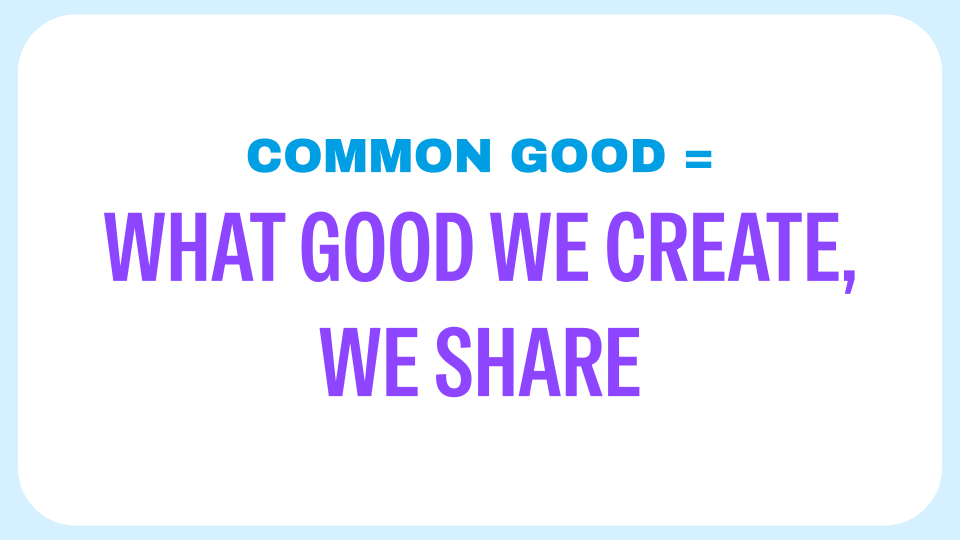
The common good means any good we create, we share. We build systems where the upside accrues to the many - creators and their audiences - not just to those who can already afford to invest.
Christie and I are two founders of for-profit companies — Seed&Spark and Kinema — who could have chosen vertical integration and profit extraction. We didn’t.
As startup founders and CEOs, the premise we inherited says: fight for your slice of the pie. Protect your market position. Guard your relationships.
But we don’t think that’s in the audience’s best interest.
So instead, we chose radical collaboration: an initiative we call The Independence Partnership that seeks to grow the pie for everyone.
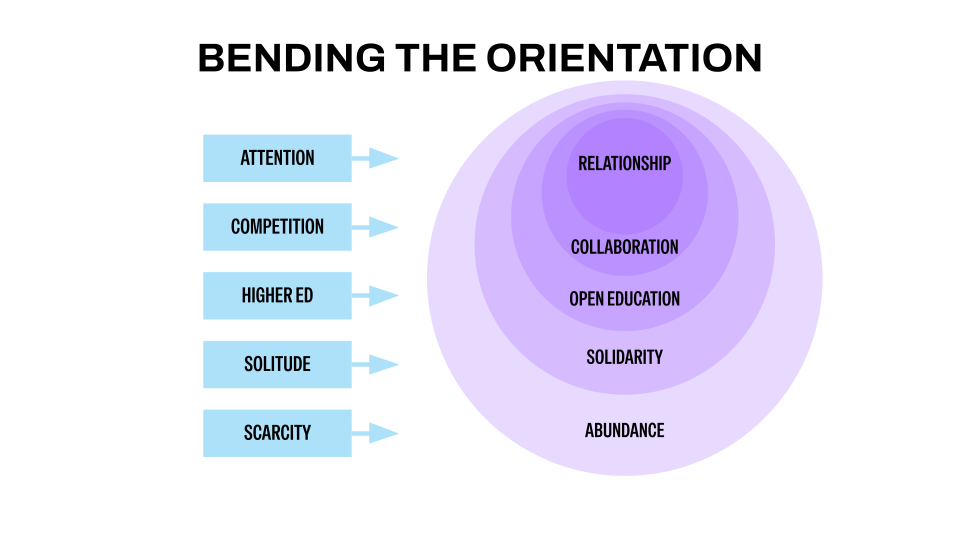
To do so requires all of us to bend our orientation toward a new playbook:
From attention to relationship, from competition to collaboration, from higher education to open education, from solitude to solidarity — and if we resource those efforts —we will all go from scarcity to abundance.
This all starts with a relationship.
We have been friends for about a decade. We started meeting monthly during the pandemic — mostly just to stay sane while fundraising for entertainment startups as women.
If you’re not familiar with the platforms we’ve built:
Seed&Spark is the #1 crowdfunding platform for independent artists with the highest campaign success rate in the world. We’ve helped the most demographically and geographically diverse pipeline of creators creators raise nearly $100M to date from more than 1M audience members, and most of that money gets spent on creator wages, representing 400,000 paid work days for creators mostly outside major market
Kinema is a global distribution platform for film & tv, built with the creators at the center. We power community screenings and direct to audience streaming, where filmmakers retain their rights, get access to their audience data and keep the lion’s share of the revenue. In addition to hundreds of thousands of direct to audience streams, we have delivered over 10,000 screening events - and in person audiences alone have reached over 1.1 million.
Attention » Relationship
The dominant operating systems for how media platforms are built is rooted in the Attention Economy. In the attention economy, relationships are a means — a metric to be optimized, a resource to be harvested.
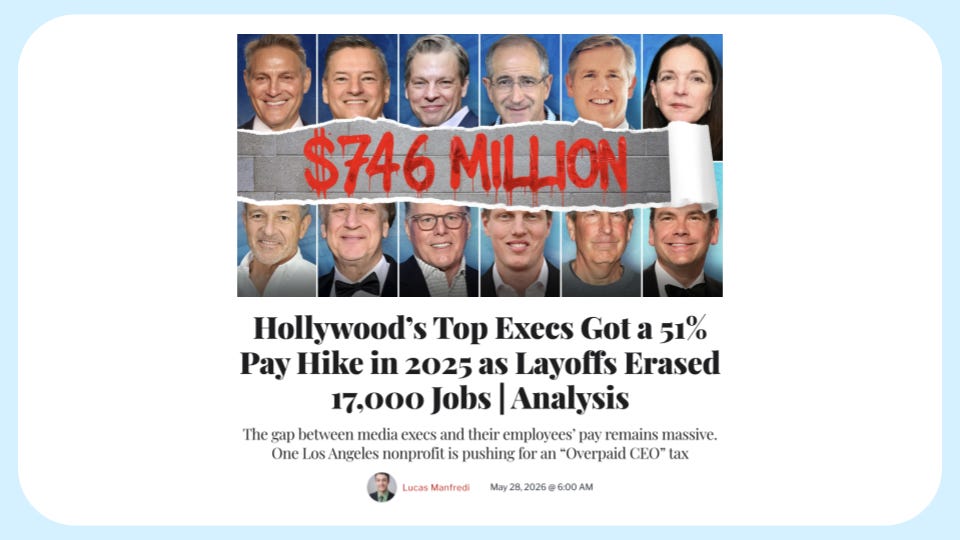
In this model, you’re competing for a fixed slice of a pie that is incredibly capital intensive. Look at what it costs just to compete (and not always succeed!):
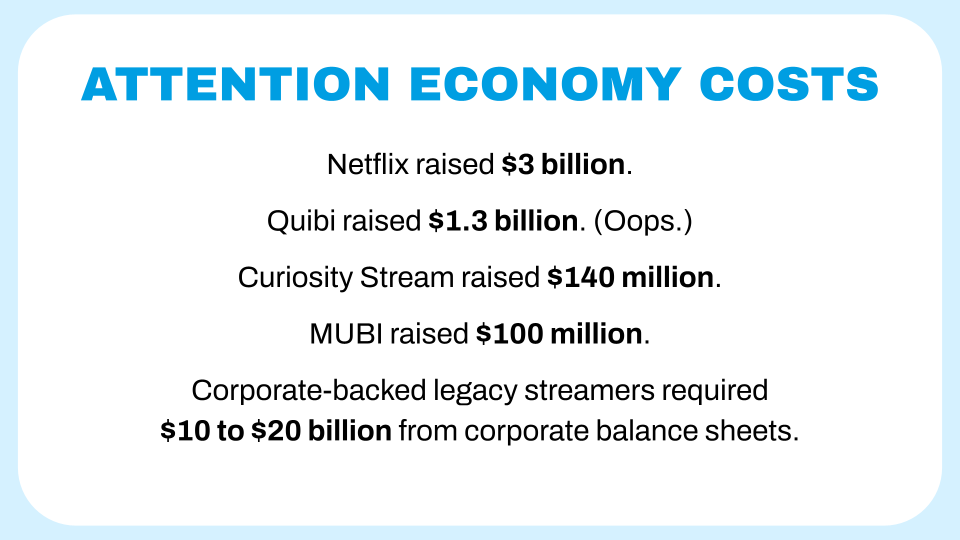
The platform owns the audience, the data, and the IP from which they extract value. For ROI at this level, you need vertical integration to cut costs which is prioritized over audience experience. The artist is simply a supplier of IP hoping for some benefit from exposure, but the long-tail upside always accrues to the shareholders.
We believe that the sustainable future is the relationship economy, and it is rooted in Middle Out Economics. Middle-out says durable growth is generated not from the top trickling down, but from the middle expanding out. The economy grows best when lots of people have enough money to participate not when almost all the gains go to a tiny group:
Middle out economics means that thousands of independent creators, industry service providers and local communities have the opportunity and ability to make money - and thus the whole ecosystem becomes stronger.
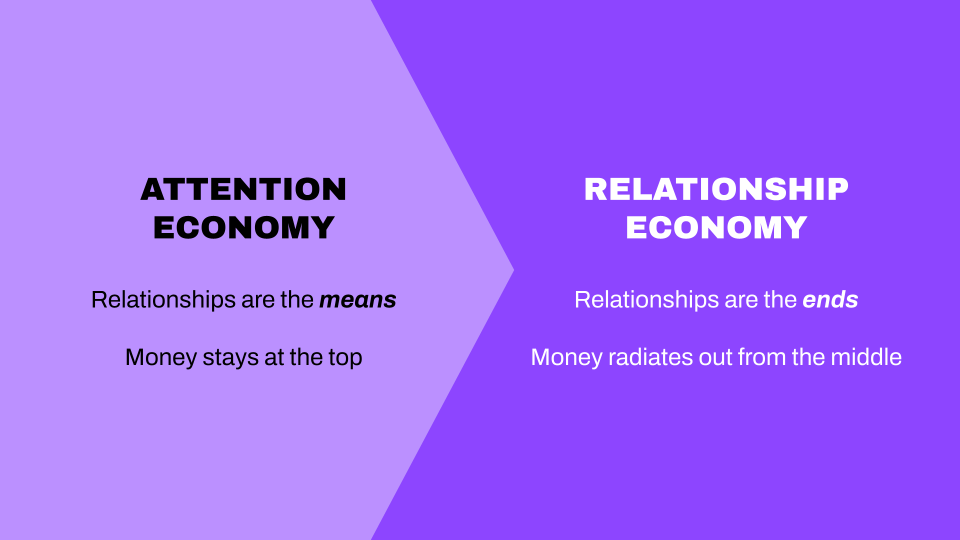
In the Relationship Economy, relationships are not the means but the ends.
Creators on Seed&Spark understand that to greenlight the work that really matters to them in relationship with their audiences, to bring their audiences along as partners, is a form of community care.
Hosts on Kinema don’t host screenings because an algorithm told them to. They host because they have a relationship with their community — they know what their neighbors need, what conversations are missing, what stories will land.
The relationship economy cannot be built on “engagement optimization.” It’s built slowly, person by person, community by community.
It’s built at the speed of trust.
So if we want to make the relationship economy a viable alternative, we need a way for everyone’s individual relational trust to accrue to the collective good – what good we create we share. So, to simplify:
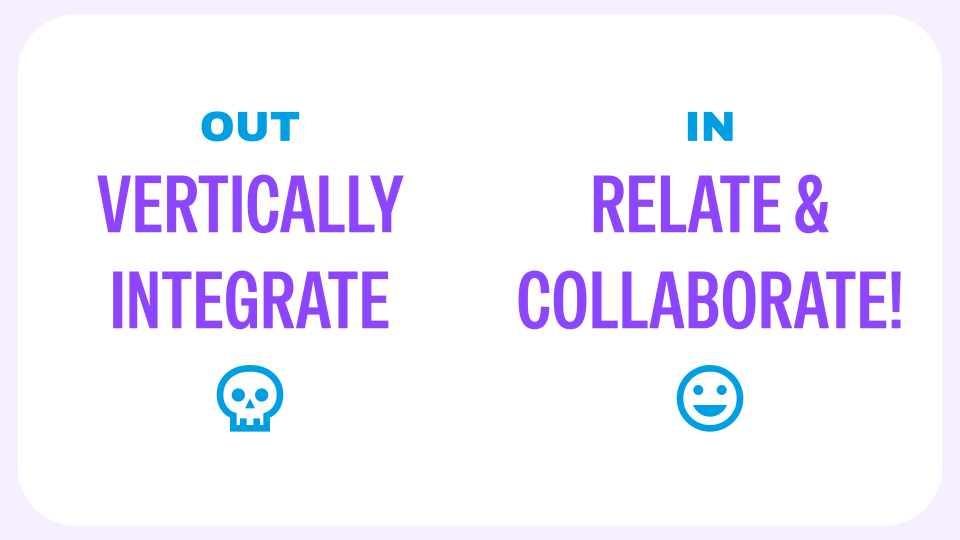
That’s why together we started exploring a way for our friendship to become a collaboration that would help aggregate and accelerate how relationships can be built, shared and maintained.
We didn’t just theorize the relationship economy. We ran an experiment:
In 2024, Emily ran a crowdfunding campaign for the impact campaign for a feature documentary she produced called Ratified — about the 101-year struggle to enshrine gender equality in the US Constitution. In addition to the standard campaign rewards, she offered our supporters the guarantee to watch the film on Kinema — and the opportunity to host screenings.
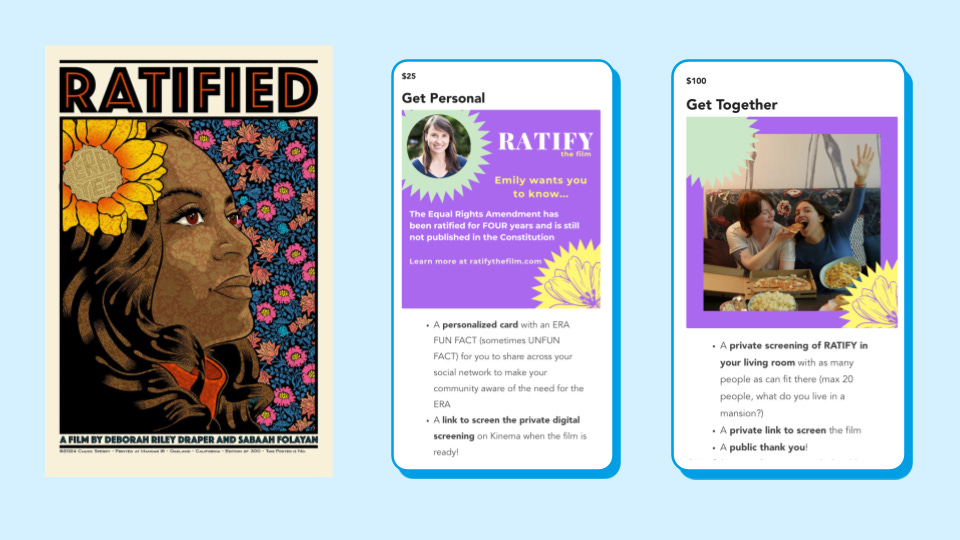
As the producer, Emily built deep relationships with non-profits advancing this work, and their outreach to their mailing lists helped them exceed their funding goal, but more importantly, 14% of the campaign supporters became screening hosts on Kinema.
Before any formal release of the film there were 70 private screenings hosted on Kinema for more than 10,000+ audience members. That momentum helped RATIFIED raise the last 30% of our budget and our impact budget — and garner the attention of our dream broadcast partner, Independent Lens, where we premiered last October.
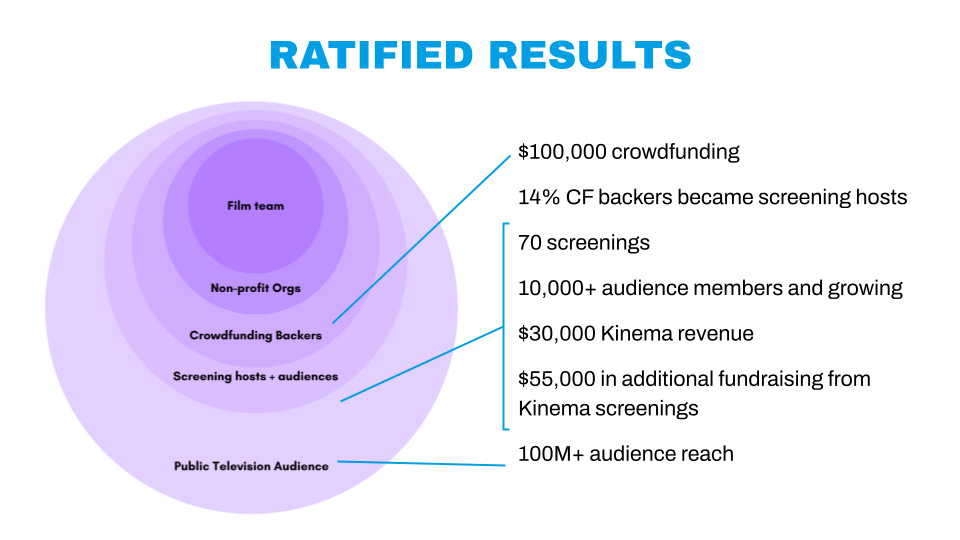
We carved out our community screening rights and Kinema screenings of the film continue across the country.
What the relationship gave the Ratified team was the agency to release the film exactly as they wanted without waiting for a prestige festival premiere or a big distributor.
And that became the goal of the Independence Partnership: to hand filmmakers agency by helping them leverage crowdfunding momentum for direct distribution.
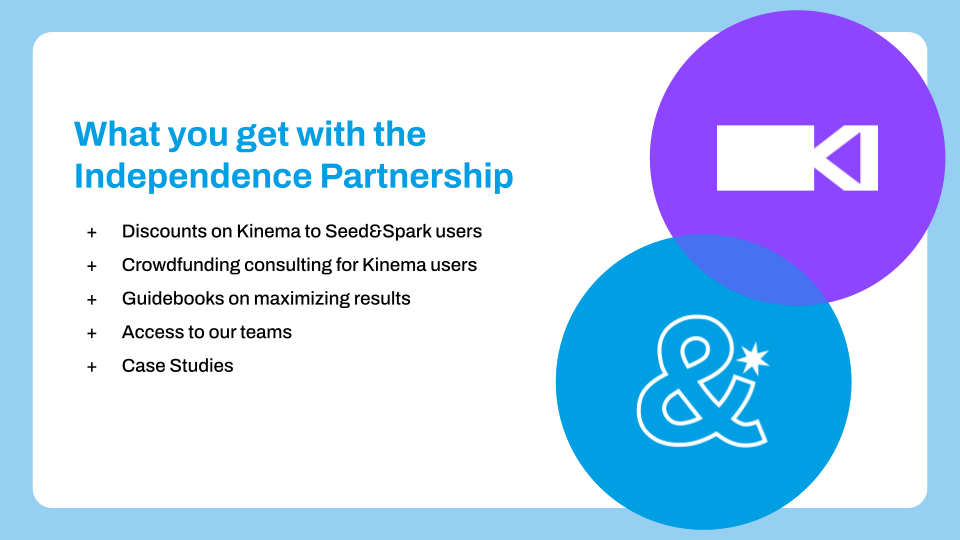
Seed&Spark users now get our Independence Partnership deck when they’re submitting their projects to crowdfunding. And we incentivize them with discounts, strategic guidance, and access to our teams.
Additionally, through this partnership, filmmakers can secure part of their distribution at the fundraising stage, which triggers the qualification for tax credits in many states. All while keeping their IP and collecting audience information.
This is not just great for creators, this has been great for both of our businesses:
Seed&Spark has had a 100% increase in new projects on the platform. That’s three times our historical growth rate!
Film submissions to Kinema doubled. Within months of launching, more than 300 new Seed&Spark projects specifically named Kinema in their campaign rewards - and more than 1000 filmmakers have downloaded the partnership deck since we launched. Those films have gathered nearly 100,000 new audiences collectively, before they’ve even hit the festival circuit.
We spent zero dollars marketing this.
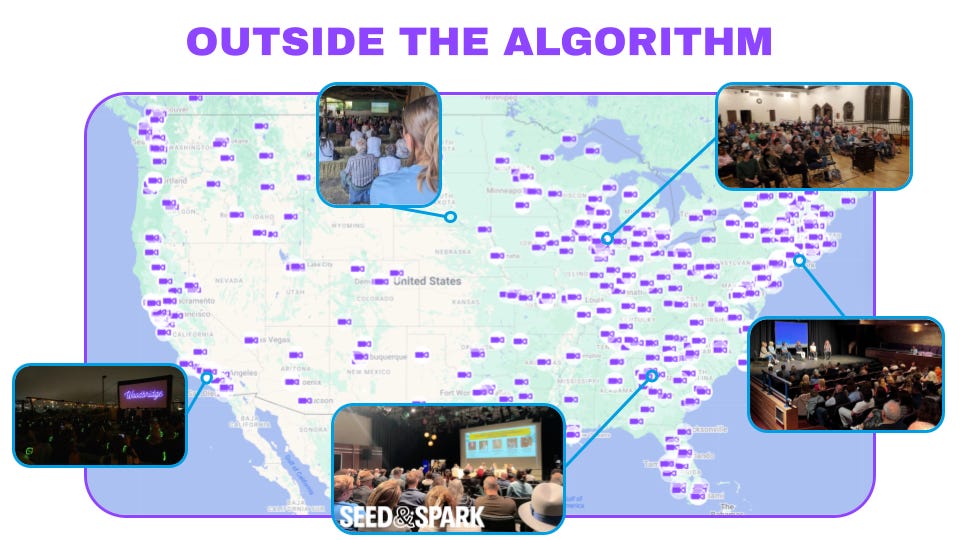
In fact, our marketing motion leverages Seed&Spark and Kinema’s combined organizational footprint: more than 400 active organizational partners, who host us all over the country for live and in person workshops where we meet filmmakers and give them tools and inspiration to leverage the partnership.
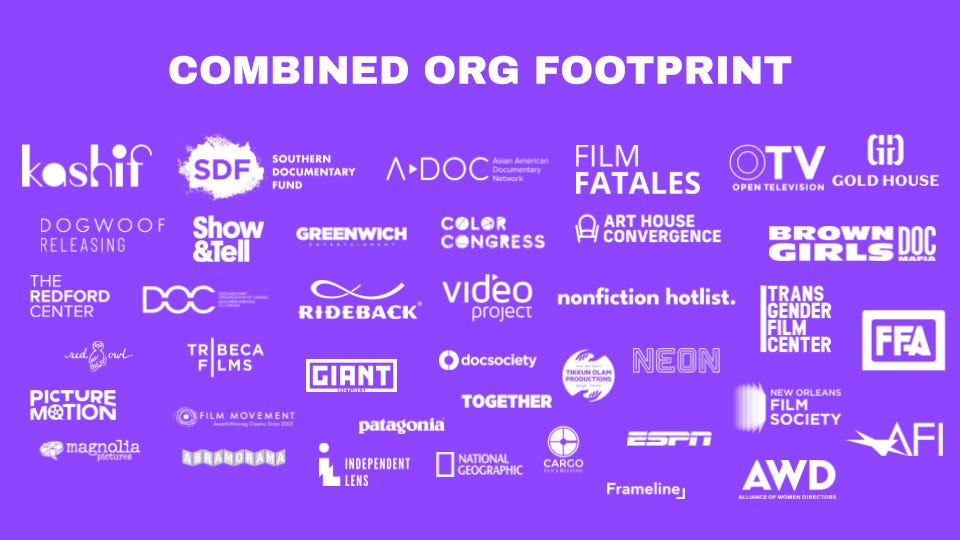
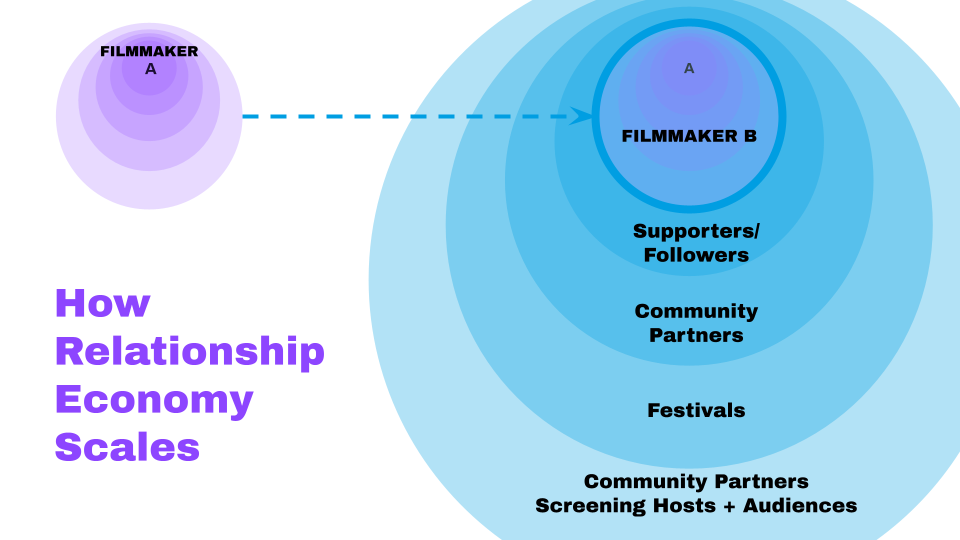
Each filmmaker who launches a campaign grows their own pie from their team, to their backers, to partner orgs. Then they go to festivals and can then leverage Kinema’s partner footprint along with the thousands of screening hosts already on the platform to reach the millions of audiences they represent.
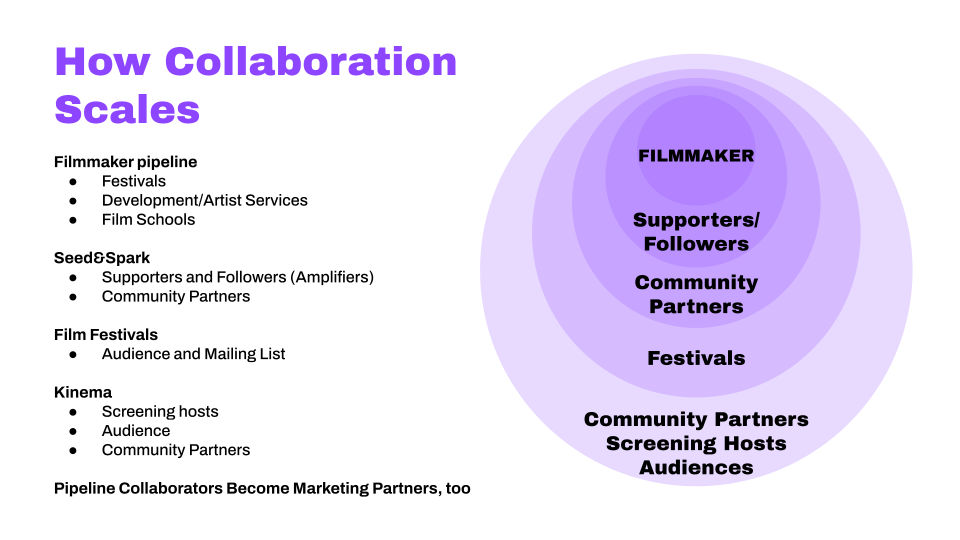
And when one film’s distribution is finished, the filmmakers owns the infrastructure they built in the form of emails and audience location and engagement data and we preserve it on our platforms so the next filmmaker starts from a bigger pie.
Every filmmaker who uses this partnership grows and scales audience for everyone who comes after. What good we create we…SHARE! Now you are getting it!
Which means: the more skilled a filmmaker is in utilizing this way of working, the faster the pie grows. It doesn’t benefit the ecosystem to lock up the critical education they need to succeed behind paywalls and expensive graduate programs.
So we gathered the expertise from hundreds of professionals and we made it free.
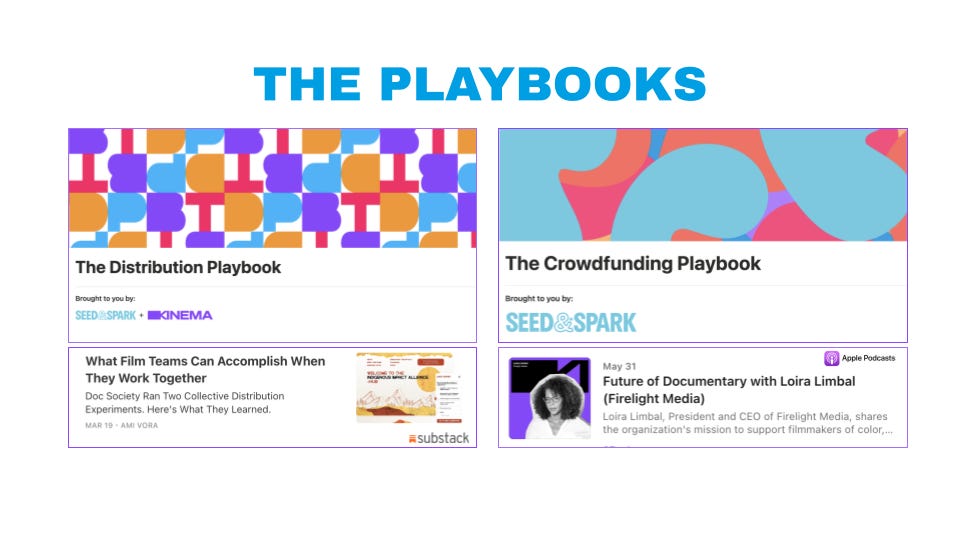
The Crowdfunding Playbook and The Distribution Playbook are two of the most comprehensive and actionable resources available anywhere for filmmakers to succeed in funding and distribution. And to keep up with the pace of change, they are also open-culture, living documents — updated constantly with new information, best practices and case studies.
When filmmakers have good information, they run better campaigns, build bigger audiences, and lift the whole ecosystem — our businesses and all of yours. Their success is all of our success. Kinema is publishing case studies on Substack and bringing filmmakers onto their podcast to show example after example of how middle-out economics can work as designed.
In the relationship economy, we need people on our teams whose whole job is to tend that trust. So this fall, along with Ivan Askwith and Popular Demand Studios, we will launch a third playbook: The Community Producer Playbook, a practical guide for filmmakers and media makers on how to intentionally build, steward, and sustain community around their projects — from first idea through distribution and beyond.
To build awareness and excitement for creators to utilize these playbooks, we host conferences all over the country called Creative Sustainability Summits, which also serve as a platform for local and national organizations to connect more deeply with creative communities outside major markets.
Growing the pie in this way requires capital, of course. And the orientation of the people deploying the capital is critical.
Instead of asking us to compete for funding as individual projects, you can fund in solidarity: putting money into radical collaboration where your dollars will have exponentially more impact.
Funding in solidarity requires multi-year investments, patient capital and genuine ongoing relationships that can’t be put on hold during strategic planning sessions.
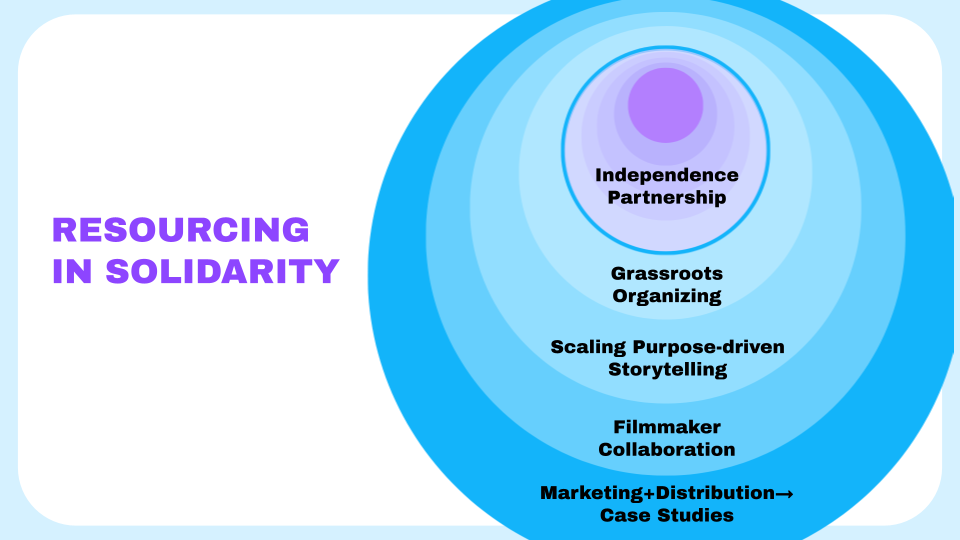
The partnership between Seed&Spark and Kinema has become an engine for accelerating the work of other organizations. All from the middle out.
For example:
If you want to support essential grassroots organizing, enable the Future Film Coalition to participate in the Creative Sustainability Summits in order to build connections with organizations and creators in every state.
If you want more stories on a specific subject to get made and seen faster, sponsor a crowdfunding rally with Seed&Spark —like Gold House did for AAPI storytelling or OTV did for intersectional creators. In just two years, for a total investment of $50,000 in prize money, creators raised $1.5M for over 100 projects and reached 75,000 new audience members and have all qualified themselves to distribution on Kinema.
If you want to resource creators to work together better, fund DocSociety’s filmmaker cohorts - like the Indigenous Impact Alliance or the Global Climate Playlist - so they can collectively distribute on Kinema.
If you want to empower a creator-owned ecosystem, fund a cohort of Community Producers and give them a marketing & distribution budget at the production stage. Filmmakers would control their own strategic releases and become the next case studies in The Crowdfunding, Distribution and Community Producer Playbooks.
We have at least 15 more examples!
This moment is hard because it requires something of a beginners mindset, and nobody in here is a beginner. We’re all being asked to fundamentally reimagine our ways of working. The Independence Partnership is one example of how radical, horizontal collaboration can ensure that every relationship we build can become the foundation for the next one.
We’ve shown you a lot of concentric circles today, and this is what it looks like when each ring is activated and expanding: each one represents a choice someone made to share and expand rather than compete and divide. That’s radical collaboration in practice. A decision, made again and again, that what good we create, we share.
No posts
Comments
Nothing yet. Say the first thing.
Sign in to join the conversation.