
“I’m not sure that seaweed, for example, is food.”
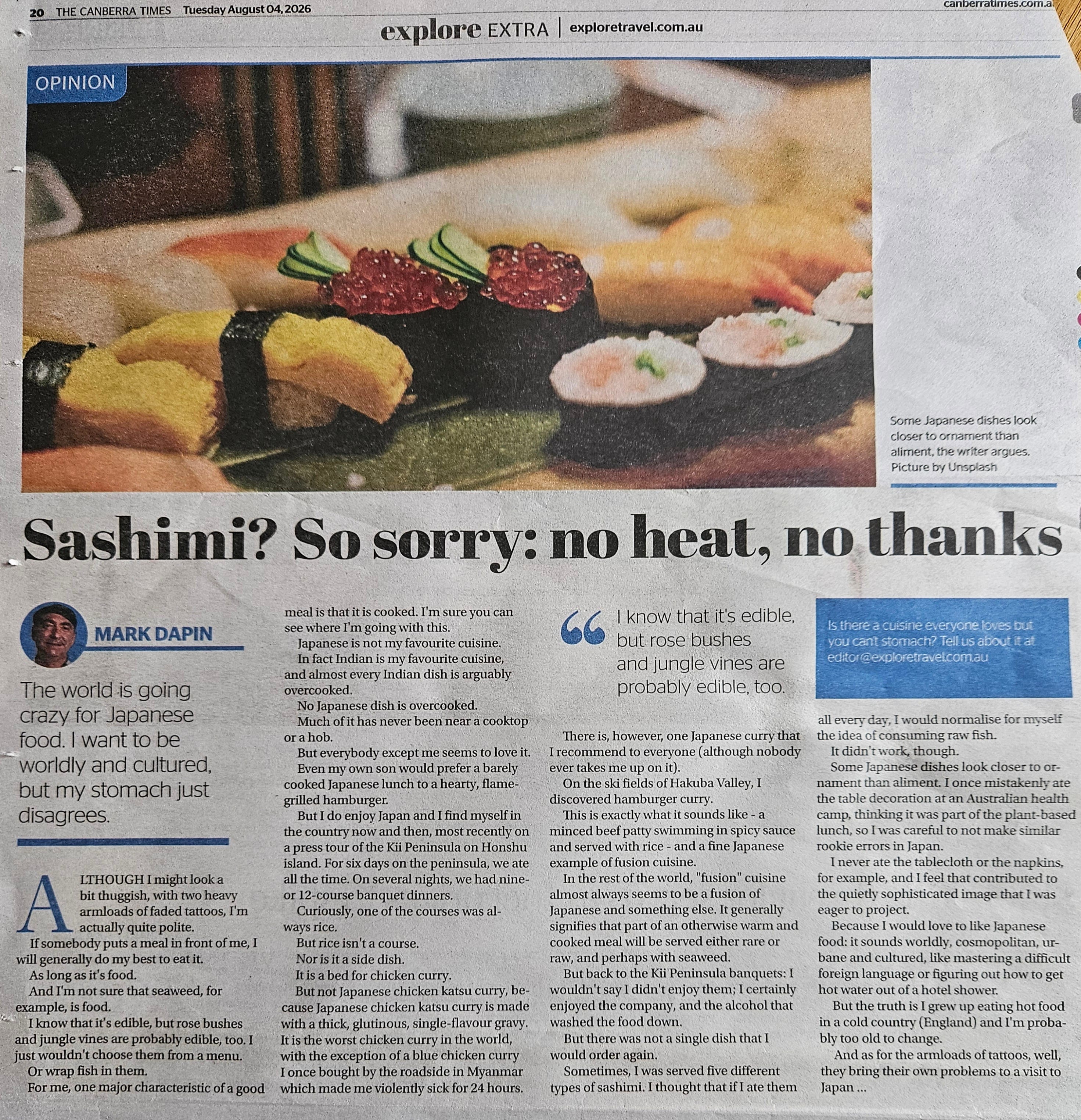
I’m only a few sentences in to a newspaper article that my father has cut out and left on my desk and I can feel the hairs on the back of my neck bristle. It’s titled Sashimi? So sorry: no heat, no thanks [edit on August 16, 2026: the online version was changed on August 12 after I wrote this with a less culturally insensitive title — see my instagram post to understand why “So sorry” is a disgusting, mocking trope from about a century ago] and no, it was wasn’t written in 1956, it was published in The Canberra Times — the newspaper of the Australian capital, along with many other regional Australian newspapers — on August 4, 2026.
It gets worse, line after line. I try to ignore it. In fact, the article sat on my desk for a few days before I could even bring myself to read it.
“If you write a letter to the editor and it gets published, I’ll frame it,” my dad jokes.
I finally got the courage to read the rest of it. You know that feeling that you have when you read (or watch) something and you feel dumber for it? This was a bit like that. Except along with the sheer ignorance that emanates from this article, I can feel my blood boil. It’s a racist, ignorant opinion piece othering the entirety of Japanese cuisine based on one type of dish — sushi and sashimi. Even if it was meant to be a joke — just, no. It’s bad taste. He’s basically that terrible uncle that no one likes who makes insensitive and terrible jokes at other people’s expense.
This isn’t about what people like or don’t like to eat. I honestly don’t care what other people want to eat. But the author, Mark Dapin, is a seasoned British-Australian journalist and author. I would expect journalists to, I don’t know, research a bit, or be curious before writing something that makes them look like an ignorant bigot. How embarrassing to be so blind to think that one dish defines an entire cuisine. Even travelling there wasn’t enough to open his eyes.
I post about it on instagram and a fury of allies respond in like to my rage. And someone hits the nail on the head for me for why this is particularly infuriating. Issha Marie, who writes Amalgam: An Immigrant’s Approach to the Global Pantry (go read and subscribe!), wrote to me and this bit stuck out, "I really struggle with my shyness and my voice in culinary journalism… oh if only I had an iota of this guy’s confidence but still retain my tact.”
Here we are holding back on our work and our worth because of imposter syndrome (it took me years to get the courage to send out my proposal for Gohan to a new publisher because I didn’t think I was “Japanese enough” to write it), but here’s a white man that has the audacity to voice his completely uninformed opinion (even after multiple trips to Japan) and even get it published!
The author isn’t the only one responsible — how did the editors of a newspaper even think this was a good idea to publish? In fact, if you do wish to contribute your thoughts, I encourage you to respond to editor@exploretravel.com.au on how Dapin’s piece made you feel.
My intention was only to write a short comeback to send to the editor, expressing how offensive this opinion piece was to the culture of an entire nation — my culture. But it turned out I had a lot more to say.
First. Here is a passage from the article:
“If somebody puts a meal in front of me, I will generally do my best to eat it.
As long as it's food.
And I’m not sure that seaweed, for example, is food.
I know that it’s edible, but rose bushes and jungle vines are probably edible, too. I just wouldn’t choose them from a menu.
Or wrap fish in them.
For me, one major characteristic of a good meal is that it is cooked. I’m sure you can see where I’m going with this.
Japanese is not my favourite cuisine.
In fact Indian is my favourite cuisine, and almost every Indian dish is arguably overcooked.
No Japanese dish is overcooked.
Much of it has never been near a cooktop or a hob.
But everybody except me seems to love it.
Even my own son would prefer a barely cooked Japanese lunch to a hearty, flame-grilled hamburger.
But I do enjoy Japan and I find myself in the country now and then, most recently on a press tour of the Kii Peninsula on Honshu island. For six days on the peninsula, we ate all the time. On several nights, we had nine or 12-course banquet dinners.
Curiously, one of the courses was always rice.
But rice isn’t a course.
Nor is it a side dish.
It is a bed for chicken curry.
But not Japanese chicken katsu curry, because Japanese chicken katsu curry is made with a thick, glutinous, single-flavour gravy.
It is the worst chicken curry in the world, with the exception of a blue chicken curry I once bought by the roadside in Myanmar which made me violently sick for 24 hours.”
Here are some choice parts I wanted to respond to:
And I’m not sure that seaweed, for example, is food.
Where to even start, Mark? Seaweed has long been an important, native food source even in your homeland, England, which is part of an archipelago — like Japan. There are some 600 different varieties of edible seaweeds found today in British waters; it’s an incredibly nutritious, economical food that sustained the British people for at least 8000 years — in fact, it was an ancient, staple food across the continent and only dropped off most menus in the 1800s. It’s not just the ancient British and Asians who prized seaweed as food, but in South America there are 14,000 year old seaweed middens that lay inland, meaning the seaweed was important enough to be carried all the way from the sea, and in Australia, First Nations people have used seaweed as not only as food, but for medicine, ceremonial uses, even practical items like water carriers, for 65,000 years. You can hear more about it on Sydney’s Powerhouse Museum Culinary Archive Podcast on seaweed with Lee Tran Lam.
In fact, the European Commission believes seaweed could be the sustainable answer to feeding the world’s growing population and that by the 2040s, it could produce 100 million tonnes of extra food. You might need to get used to the idea that seaweed is food. Here’s a BBC piece on 10 of the most common ones that you can find in British waters, including laver, which is similar to the nori that you believe isn’t food.
Japan’s nori seaweed culture was all but decimated after the Second World War. The fact that we have it today, that it was wrapped around the fish you ate, is thanks to a British scientist, Kathleen Mary Drew-Baker. Her seaweed studies in Wales led her to the discovery that the microscopic spores of algae that grow in seashells in the summer were the same as the leafy algae that you see in the winter turned into a theory that you could produce and harvest nori year round. It revolutionised nori farming, which was notoriously difficult to grow before her discovery. She died without ever knowing the enormous impact she had on Japanese agriculture and cuisine but to the Japanese she is known as the ‘mother of the sea’ and is celebrated every year in the town of Uto in Southern Japan for her contribution to Japanese culture.

“No Japanese dish is overcooked.
Much of it has never been near a cooktop or a hob.”
This one really made me wonder how an experienced journalist did not bother to try to educate himself before, during or after visiting Japan. I almost don’t need to respond to this one because I think everyone else knows that these statements are just wrong — not opinion, just fact.
Fans of Tonkotsu Ramen know that the broth is made of pork bones that have been cooked for at least 12 hours. If that isn’t cooked, I don’t know what is. One of my personal favourite cold weather family meals, oden, is a hot pot of slow cooked winter vegetables and fish balls. Okonmiyaki is a close second, a sort of pancake batter with plenty of cabbage and seafood cooked on a hotplate, on par with a bowl of steaming, thick and chewy udon noodles in a light broth with soy sauce-infused boiled eggs or my grandmother’s breakfast, which was usually miso soup, grilled fish and tofu — which is made by cooking soy beans for hours, then blending and squeezing out the soy milk, before cooking again. My husband’s favourite dish is fried eggplant with miso sauce that then cooked a second time, grilled in the oven. My dad’s favourite is grilled eel. My kids love yakitori — chicken skewers grilled over charcoal flames. In fact, pretty much all the food that I was ever made as the child of a Japanese mother was cooked. Sushi and sashimi are rarely made at home and are often reserved for special occasions.
Japanese cuisine has a long and important history of cooking, particularly over an open fire, the main heat source for Japanese cooking until the early 1900s. Japanese stoves until this period were built on the ground or low to the ground, and the cook had to sit or squat to cook — because of lengthy preparation and cooking times. Kitchens were only built for standing in once European and American kitchens became influential in the Taisho period, about one hundred years ago, when gas and electric kitchens were also introduced and helped cut women’s work at home in half.
If you are lucky enough to come across the archeological artefacts of the Jomon period (14,000-300 BC) in a museum, you will find that fire was of the utmost importance to this ancient, likely matriarchal culture for cooking. In fact, what is left behind is predominately a vast variety of decorative but practical terracotta pots for stewing and cooking food over significant open fires, which were built to represent the female body that hold life-giving and nourishing fire.
Cooking in the footsteps of the Jomon, a prehistoric year old Japanese culture
·
December 15, 2025
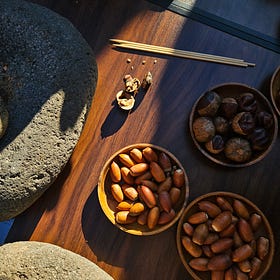
I have been in Japan for the last two weeks, immersed in winter traditions, hot springs and mountains. My culinary retreat in Chino, Nagano, has just finished, over a year in the making, and while I already knew it was going to be special, of course, it really blew me away HOW special this week was.
It’s incredible to think how this format of cooking didn’t change for so many millennia. Odd for a cuisine where “Much of it has never been near a cooktop or a hob”, isn’t it?
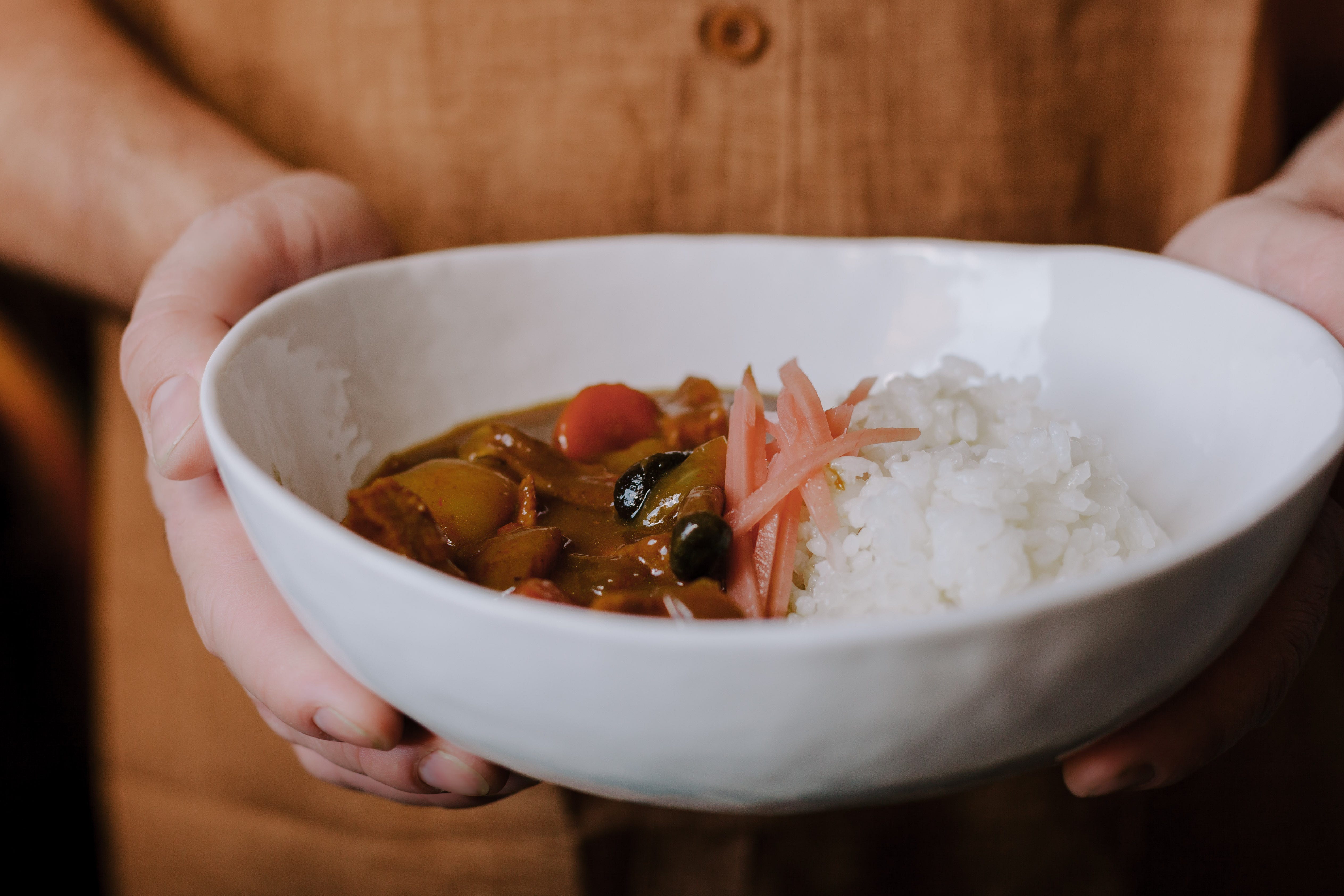
“Japanese chicken katsu curry is made with a thick, glutinous, single-flavour gravy. It is the worst chicken curry in the world.”
It’s completely fine to not like something. Really. I don’t even make my kids eat something they don’t like (life is too short). But it is not fine to make sweeping statements about an entire country’s cuisine.
I think you’ll like this story, though. Japanese curry was adopted into Japanese culture through the British Royal Navy. In the second half of the 1800s, after 265 years of isolation from foreign influence, Japan gave in and opened their doors. The Emperor also decided to introduce eating meat for the first time in 1,200 years, which meant that they also needed to look to western cuisine for ideas on how to cook meat. There was another problem. The Japanese navy was plagued with the vitamin B1 deficiency beriberi, and once the Japanese saw that the British navy didn’t suffer from it, they realised that the curry was key and adopted it with verve. The first recipe for curry in a Japanese cookbook dates to 1872.
The Japanese Navy still make and serve it for lunch every Friday — here is the recipe from Japan’s Ministry of Agriculture for Yokosuka Navy curry, which by tradition and for nutritional balance, is always served with a glass of milk and a salad. It found its way into the schools and the hearts of children and families alike. It is the pride of Japan (read more about the national curry obsession here).
Tonkatsu (breaded pork cutlet), which is sometimes added to curry, was invented by a Tokyo chef in the early 1900s after being inspired by Italian veal cotoletta. The classic S&B curry spice mix (the “single-flavour” one) commonly used for Japanese curry was created in the 1920s to replace the expensive, imported British blend of mild curry that the Japanese had been using up until then. And Japanese curry has to be thickened with a roux so that when it’s on the rice, you can still eat it with chopsticks. Once rice gets wet, you can no longer pick it up with chopsticks. Oh, and the thick curry helps to avoid splashing when cooking it on board.
“Curiously, one of the courses was always rice. But rice isn’t a course. Nor is it a side dish. It is a bed for chicken curry.”
He doesn’t even know why rice is served as the final course of the many 12 course banquet dinners he was served on his press trip to Japan. This is the one that breaks my heart. It’s not that he didn’t know this before visiting Japan, it’s that he didn’t bother to ask why on the press trip to Japan where he were served this multiple times. He just assumed it was an oddity and then wrote this without looking further.
In kaiseki (the banquet) meals, rice is served at the end for a number of important, thoughtful reasons. Rice would not only cover up the flavours of the more delicate flavours that are served first, but it also fills you up too quickly. Enjoying the rice on its own means you can reflect on the taste of pure rice, which is particularly special when it is new season autumnal rice.
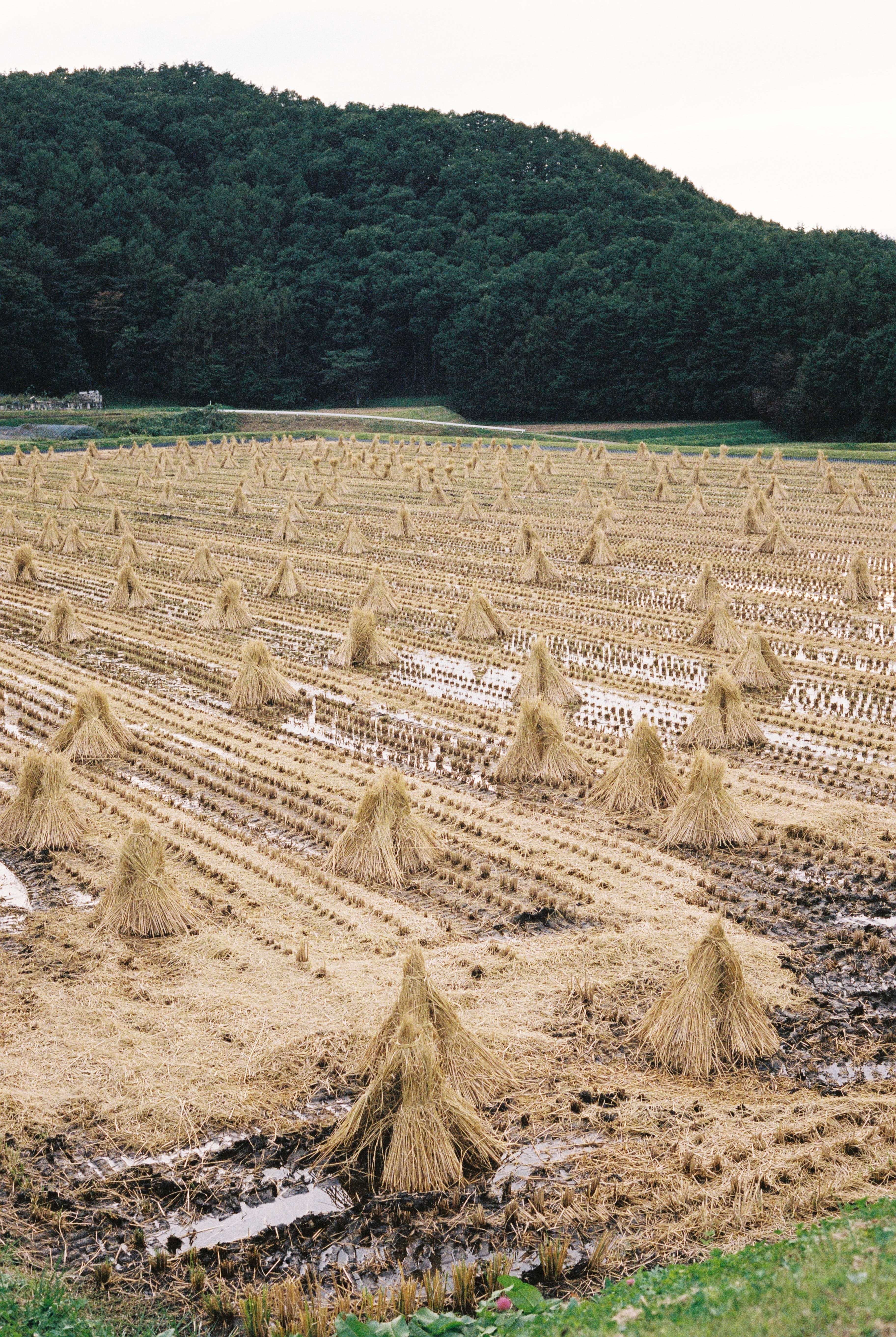
But perhaps the less obvious (though most important) reason for serving rice at the end of a meal is because it is a gesture of the utmost respect the Japanese have for this prized food.
It would even be an understatement to say that rice is the most important dish in Japanese cuisine. Rice is not just a staple, it is vital to Japanese culture. There’s its role in making sake and vinegar, essential ingredients — in sake’s case, also for religious reasons. But even outside of the kitchen, the rest of the rice plant was used too. It was essential for making paper and glue for books, fuel, for making tatami mats and building materials. Rice was even used as currency. Gohan, the word for a bowl of cooked rice, means also “meal”, particularly a home cooked meal. Growing rice has always been a laborious challenge in a volcanic land that is three-quarters mountains, and susceptible to earthquakes, typhoons and tsunamis, so communities came together to grow rice together (they still do), sharing resources and labour to ensure a successful harvest.
Each grain of rice is the result of the hard work of many.
Every grain is celebrated and none will ever be wasted.
There is a saying in Japan, “seven gods live in one grain of rice” — it is a phrase that teaches gratitude and appreciation for these challenges, hurdles and the hard manual work that goes into growing, harvesting, transporting and cooking the rice that sits in your bowl. Seven gods live in each grain of rice, each grain is prized — even Japanese children know this.
You were served it as a last course, Mark, like the best last bite, by the hands of kaiseki chefs who intended to express to you thousands of years of their culture, sharing with you this gratitude and appreciation. And it went right over your head.
Comments
Nothing yet. Say the first thing.
Sign in to join the conversation.