
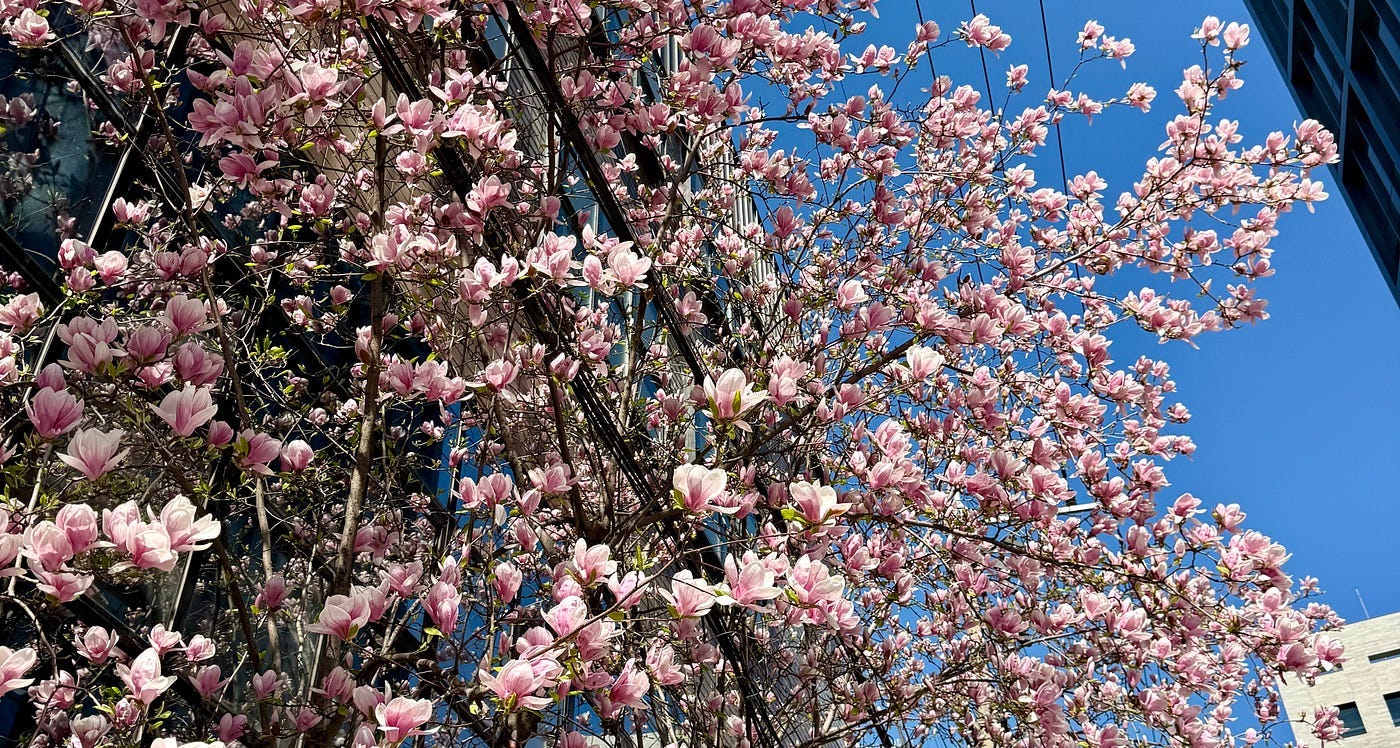
South Korea is globally recognized as an innovation hub for beauty and wellness. Over the past few years, I’ve watched hours of K-beauty content on YouTube, learning about popular ingredients, innovative form factors, and the endless quest for “glass skin.” Snail mucin and salmon sperm just scratch the surface of what K-beauty has to offer, but nothing quite prepared me for experiencing it firsthand.
I recently stopped in Seoul for the first time and visited some of the most iconic beauty retail destinations in the city. It was truly a masterclass in how beauty retail can and should be done.
My first stop was Myeongdong, where many Korean brands have flagship stores and you can’t walk more than a few feet without being offered a face mask. PDRN (a skincare ingredient derived from salmon DNA), exosomes, and stem cells were prominently featured across products at the local pharmacies. These ingredients that are only beginning to surface in U.S. and at much higher price points.
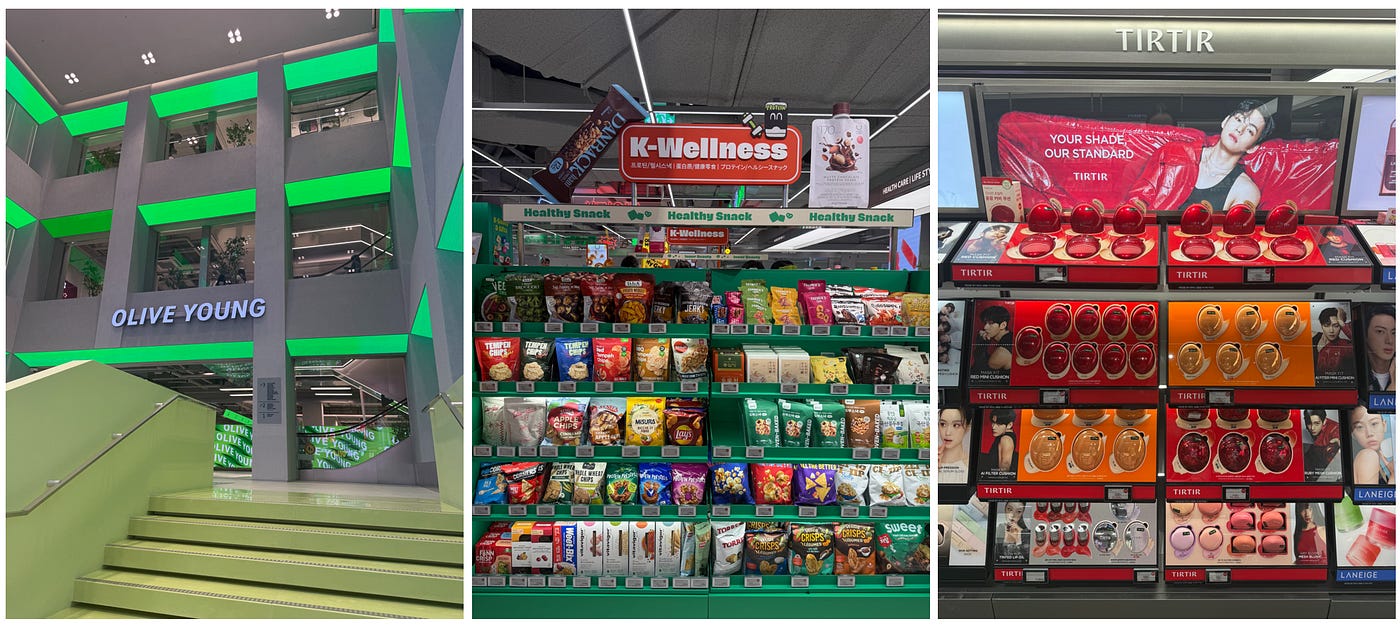
The anchor of the neighborhood is Olive Young’s flagship store — three floors of beauty and wellness unlike anything I’ve encountered stateside. The closest analogy I can offer: imagine Glossier’s flagship, Erewhon, and Ulta all merged into a single beautifully merchandised space. It was crowded at opening time, buzzing with energy, and visually dynamic. There was digital signage showcasing products in use that floated above every brand block.
The assortment was expansive: skincare, makeup, a full food mart of wellness snacks and supplements, and a massive personal care section featuring one of the most impressive oral care sections I’ve ever seen! What also stood out was the cross-gender merchandising. Beyond a dedicated men’s section, male models appeared throughout the store. TIRTIR, known for their cult cushion foundation, prominently featured a male model in their campaign imagery — a reflection of how Korean beauty culture has evolved well beyond the gender binaries that still dominate U.S. retail today.
Olive Young operates over 1,300 doors across South Korea, ranging from their three-story flagship scale to convenience store sized locations built for replenishment of bestsellers. The retailer is entering the U.S. market in a meaningful way in 2026, with multiple L.A. locations opening soon and a partnership with Sephora to bring a curated K-beauty assortment to their consumers.
Also in Myeongdong, I visited the flagship for SKIN1004, a popular Korean skincare brand built around hero ingredient, Centella extract, sourced from Madagascar. The formulations are gentle, efficacious, and at an accessible price point, but the store experience elevated the brand into something more. Product testers were woven into an art installation that captured the brand’s deep connection to nature. The whole visit felt thoughtful and serene, a sharp contrast to the sensory overload of the surrounding streets, and a reminder of what a great brand flagship can do.
After Myeongdong, I made my way to Seongsu to visit AMORE Seongsu, the flagship concept from AmorePacific (parent company of Laneige, Innisfree, Sulwhasoo, and more). In an increasingly online world, AMORE Seongsu showed me how powerful in store experience can still be.
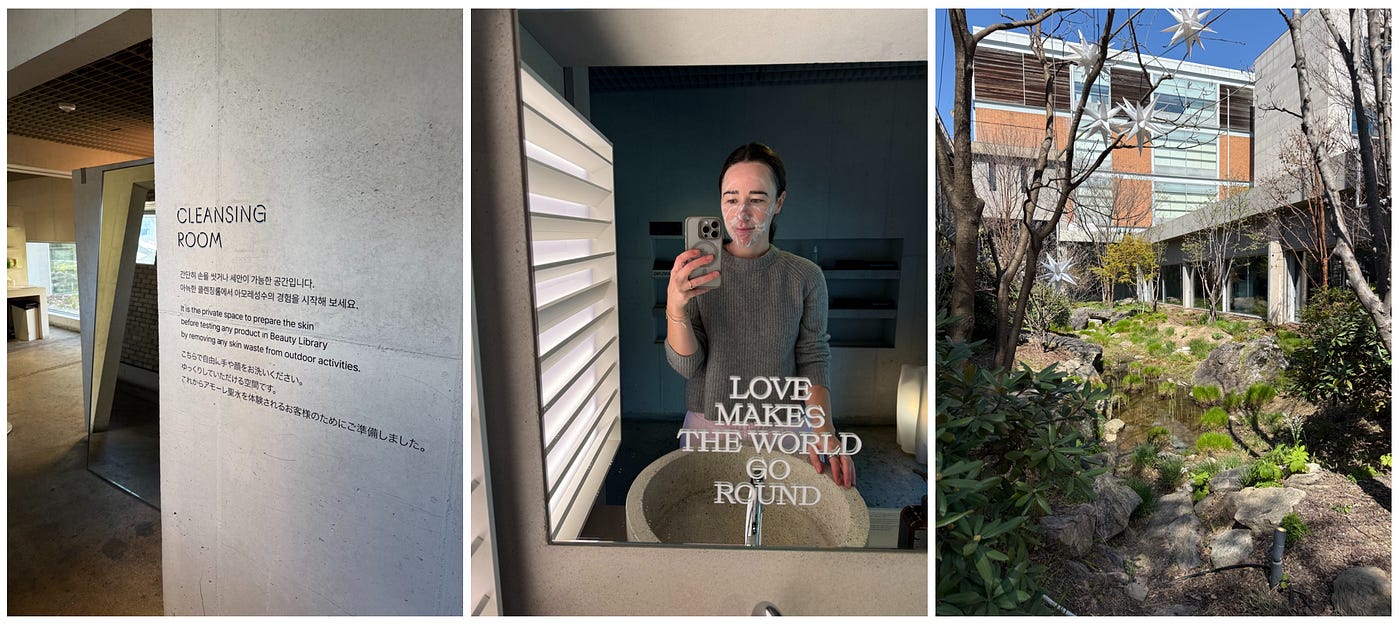
The space itself is stunning. A creek with moss covered rocks and trees borders the building, visible from throughout the store. Before you even enter the shopping floor, there are cleansing stations where you can wash your face with products from different AmorePacific brands — a small but brilliant detail that allows you to actually try products on a clean face.
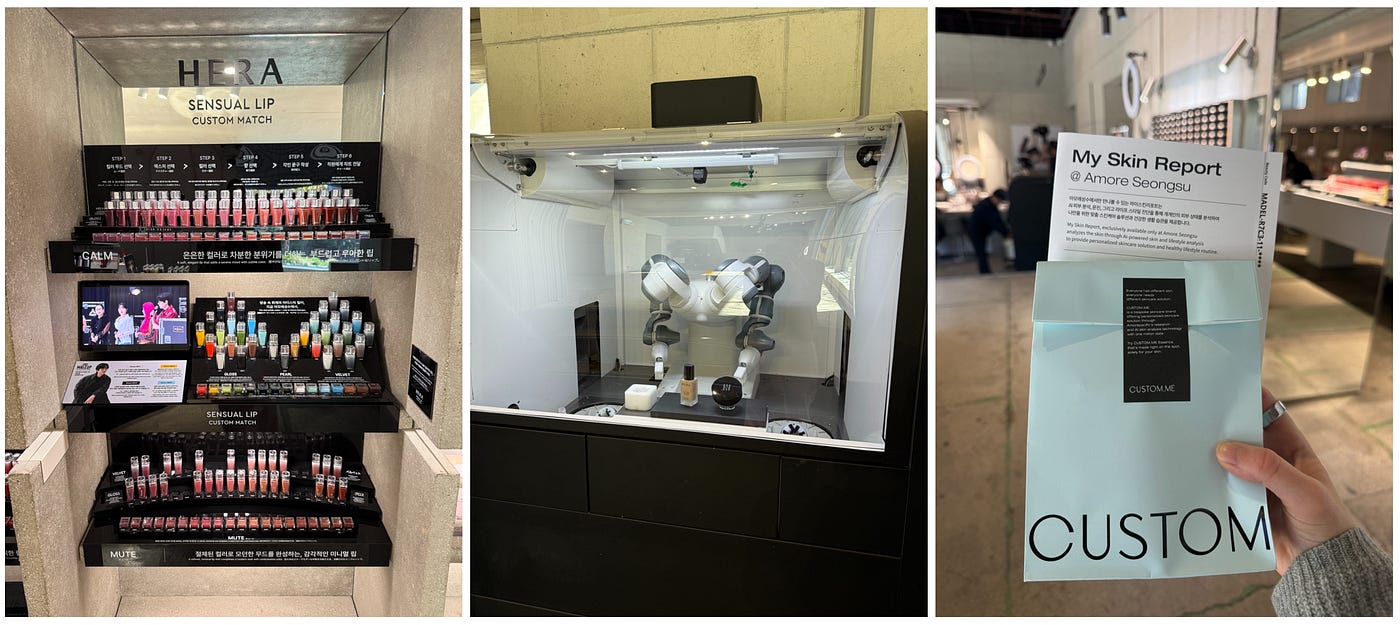
From there, the experience only deepens. An AI skin analysis tool helps you formulate a personalized essence based on your skin type and preferences. An AI color matching robot generates your ideal foundation shade. There’s even a bespoke lip product station that creates a custom color based on your coloring and preferences. By the time I left, I wanted something from every single brand in the portfolio.
Walking away from Seoul, one question kept surfacing: why don’t more global beauty conglomerates create experiences like this? AmorePacific has built a space that makes you fall in love with an entire brand ecosystem in an afternoon. It’s the kind of retail logic that should translate anywhere — imagine walking into a single destination to shop Aesop, Maybelline, and Medik8, all under one thoughtfully designed roof.
The stores that stood out in Seoul shared a few things in common: they met consumers with genuine personalization, created moments that couldn’t be replicated online, and treated the physical retail experience as a brand asset rather than just a distribution channel. In a world where e-commerce continues to erode the case for brick and mortar, K-beauty retailers are making a compelling counter argument that the right in-store experience doesn’t just convert, it builds lasting affinity.
With increasing pressures from online retailers like TikTok Shop and Amazon, beauty retailers in the U.S. need to continue to create unique in store experiences. There is a lot to learn from the ingredients, the formats, and the retail philosophy in South Korea. The only question is how quickly U.S. retailers will adapt and who will execute best.
No posts
Comments
Nothing yet. Say the first thing.
Sign in to join the conversation.