
If your team lives in Microsoft 365 or ChatGPT, the AI just got a job description. This week both OpenAI and Microsoft shipped AI assistants built for non-techy roles — sales, finance, marketing, ops. You no longer need a developer to put AI to work. Pick the one tool your team already pays for and check what its new AI add-on actually does before you buy anything else.
Replace a real interpreter on your next foreign-language call. Palabra.ai does live voice translation in 60+ languages and claims it’s about 9x cheaper than hiring a human. If a language barrier has ever cost you a deal, run your next call through it.
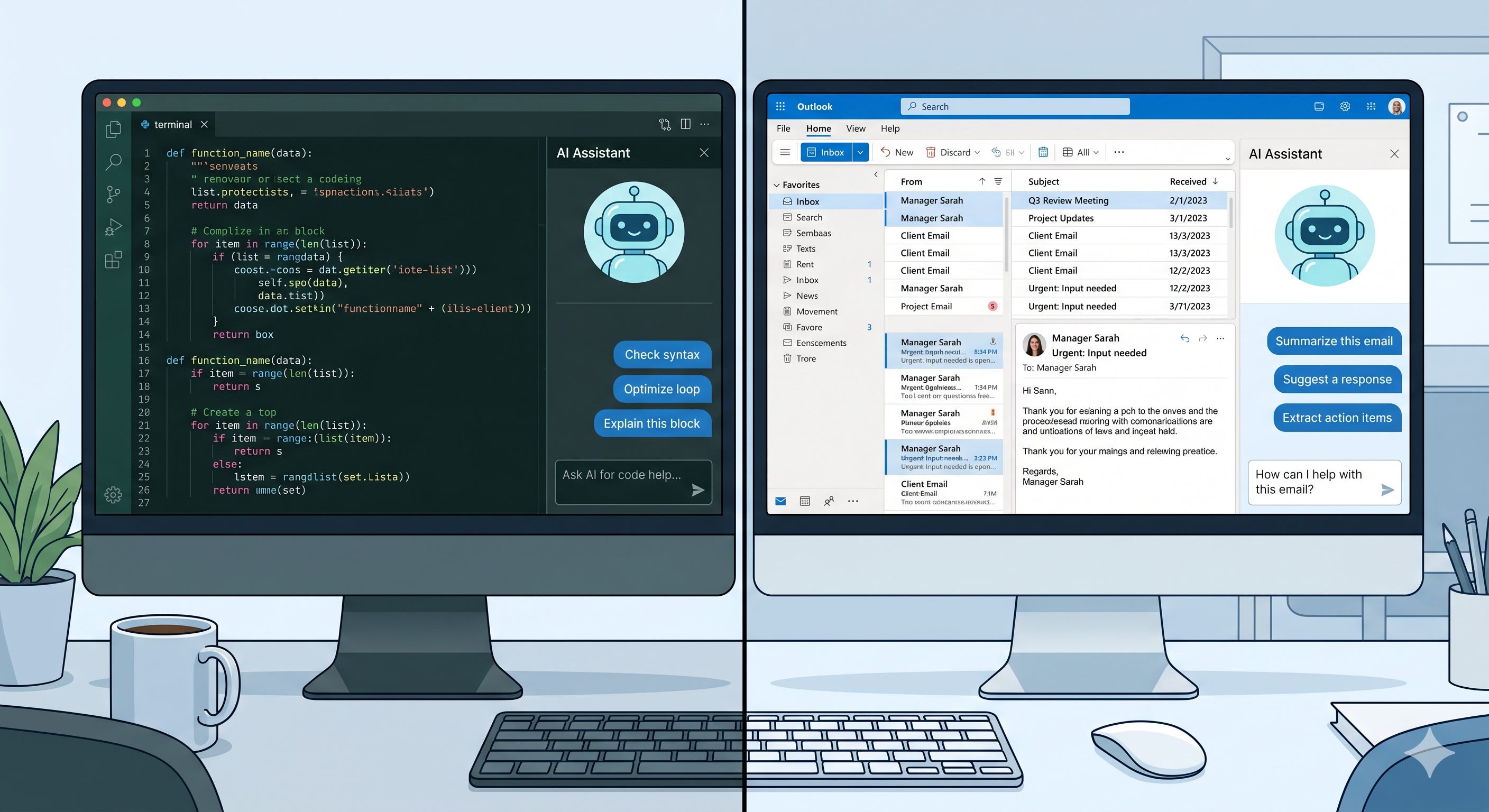
For two years, the most powerful AI tools were basically built for programmers. This week, that quietly ended — and it’s the most important shift for normal business owners in months.
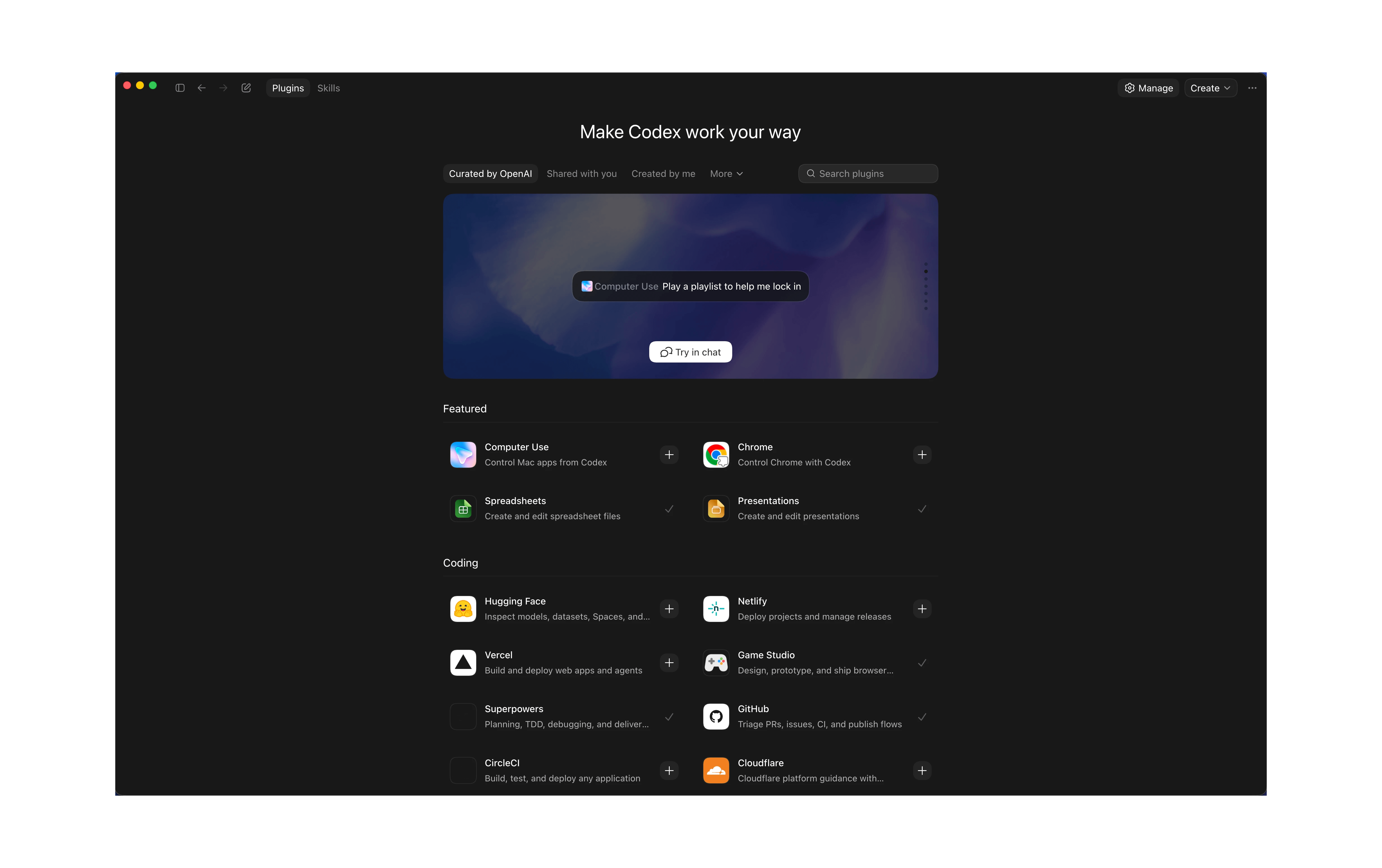
OpenAI took Codex (its AI work assistant) and shipped six ready-made “plugins” for specific jobs: sales, data analysis, creative work, product design, equity investing, and investment banking — with Corporate Finance, Marketing, and Legal coming next. Translation: pick your role, and the AI already knows the apps and tasks that go with it. It also added Sites, which turns whatever the AI builds into a shareable web page your team can actually open and use — no code, no setup.
The same day, Microsoft launched Scout - an “always-on” AI that works quietly in the background across Outlook, Teams, OneDrive, and SharePoint. Unlike the old Copilot (which only acts when you ask), Scout watches your priorities and takes action without being prompted. It’s in private preview now, with general availability targeted for October.
What this means for you: Before you go shopping for some shiny new AI platform, check what the software you already pay for just added. Half the time, the capability you want is now baked into a tool sitting in your toolbar.
Codex Business Plugins — OpenAI’s new role-based AI packs for sales, finance, marketing, and more — 62 connected apps and 110 skills out of the box.
Try this: if your team has ChatGPT for Business, turn on the plugin that matches your biggest department and have it run one recurring report you do by hand every week.
Ramp Stack — An AI accounting assistant that helps with the dreaded month-end close: reconciling accounts, prepping schedules, and showing its sources so your bookkeeper can check the work.
Try this: if closing the books eats two days every month, this is the exact kind of grind worth testing first.
Bloom — Feeds your brand assets, website, decks, and social profiles into one system so AI tools always generate on-brand graphics and copy instead of generic junk. Try this: if every AI image you make looks nothing like your brand, this fixes the root problem.
Lightfield — Sales agents that sit on top of your existing customer list, build the prospect list, write the outreach, and flag the replies that actually need you.
Try this: point it at your past won deals and let it tell you which cold prospects look most like your best customers — useful even if you never send a single email through it.
The shift to watch: AI is moving from a thing your developers use to a thing that fits the work you already do.
Notice the pattern in everything above - Codex plugins for your role, Microsoft Scout inside the apps you already open, accounting AI that does your close. The winners this year aren’t the flashiest models. They’re the tools that slide into a habit you already have and produce something visible fast. McKinsey found 62% of companies are experimenting with AI agents but only 23% have actually rolled them out. The gap between those two numbers is where the advantage is right now.
What to do: If you’d rather have someone map out where AI actually fits in your business (and where it’s just noise), that’s literally our job at LowCode Agency. Reply and I’ll take a look.
AI traffic to retail sites is up 393% — a year ago AI was the worst channel sending shoppers to stores. Now it outperforms every other channel by 48%. If you sell anything online, getting recommended by AI is no longer optional.
Google AI Studio now connects to Gmail, Drive, and Sheets — you can build little apps that read your own Google files without wrestling with technical setup. Worth a peek if your business runs on Google Workspace.
Figma Make now works on your real code and a new wave of image tools (Ideogram 4.0) shipped — design and visuals keep getting cheaper and faster. Handy if you’ve ever needed a clean graphic but can’t use Photoshop.
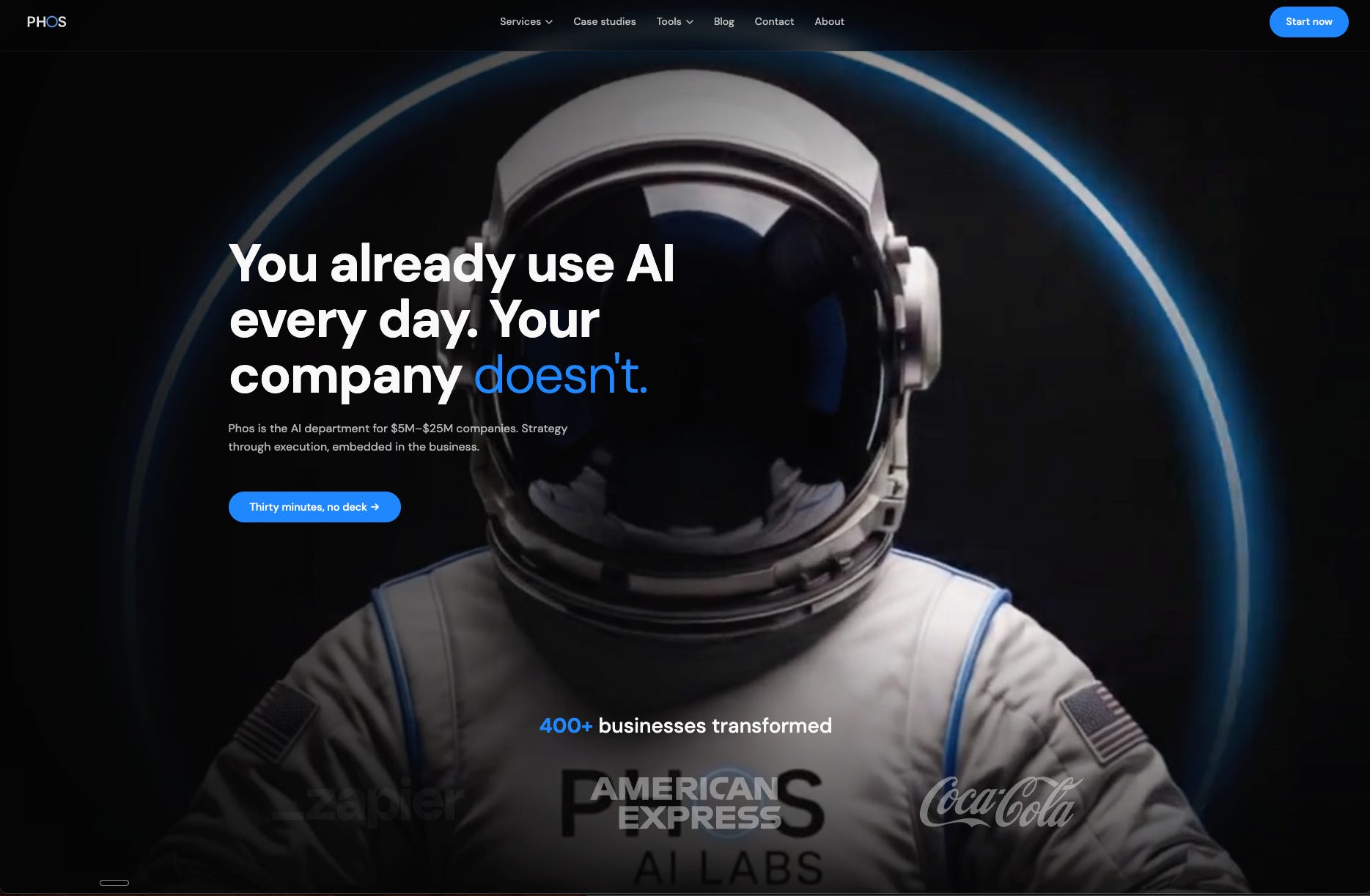
This is bigger than my usual “here’s what I shipped” note, so bear with me. After six years of LowCode Agency, I just launched a second company — Phos AI Labs — and it’s the most personal thing I’ve built in a long time.
Here’s the short version of why.
When clients first asked us about AI four years ago, it was a feature request: “Can you plug a model into our app? Can you add a chatbot?” We built it, shipped it, moved on. That’s not the question anymore. Now it sounds like: “We know AI matters, but we don’t know where to start, what’s real, or who to trust.”
That last part is what stuck with me. There’s so much noise right now - every LinkedIn feed has someone selling an AI workshop they built last Tuesday.
The number of people offering AI strategy who’ve never actually shipped an AI product is remarkable, and business owners can feel the gap between the pitch and the proof.
I’ve been building AI products since 2022. Not advising on them - building them, shipping them, watching them break in production and fixing them. That experience is worth more right now than it’s ever been, because the people who need help most are the ones most likely to get burned by the wrong advisor.
So why a separate company instead of doing it inside LowCode Agency? Because they’re different disciplines. LowCode Agency is a product company - you come to us to get software built. But AI work isn’t set-it-and-forget-it. It needs constant training, constant iteration, every single week. That doesn’t look like a development contract. It looks like having an AI team inside your company.
That’s exactly what Phos is: the embedded AI department your business doesn’t have yet.
If you run a company doing $5M–$50M, you already know you need to adopt AI - but hiring a Big 4 firm gets you a six-month engagement that ends with a PDF, not a partner who’s still in the room when things get real. Phos stays. We embed with your team, figure out what’s actually worth building, and then build it (or tell you it’s not worth building yet).
The name Phos means light in Greek - because the job is making things visible that aren’t yet. Where the time goes. Where the money leaks. Where the real opportunity is versus where everyone assumes it is.
If you’re a LowCode Agency client, nothing changes - same team, same process. But if your questions have started sounding less like “build this” and more like “help us figure out what to do with AI,” now there’s a dedicated team for exactly that. Two brands, same mission, different deliverables.
If that’s the conversation you’ve been wanting to have, just reply. I’d love to tell you more.
That’s your week in AI. Forward this to someone who keeps asking “should I be using AI?” — the answer is yes, and this newsletter is their starting point.
No posts
Comments
Nothing yet. Say the first thing.
Sign in to join the conversation.